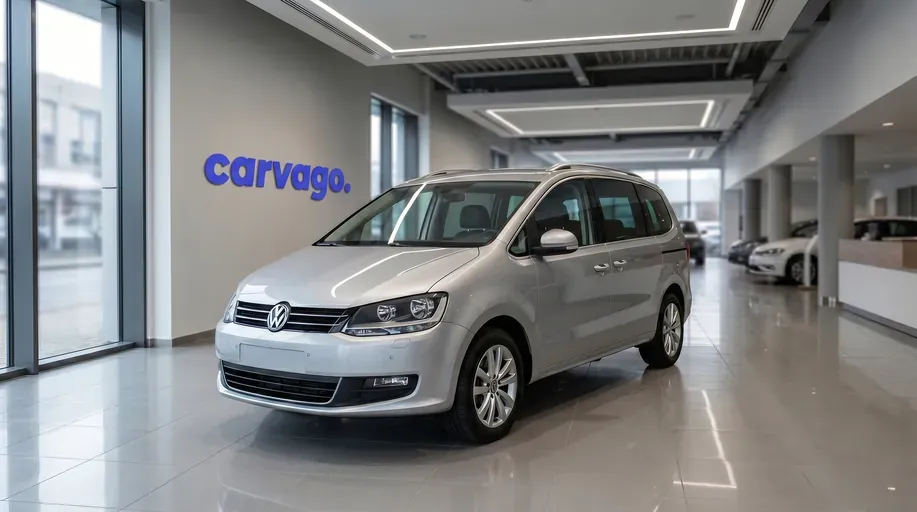
Review
Review Volkswagen Sharan: What do owners and experts really say?
Volkswagen Sharan (Typ 7N) review: real owner experience, common faults, running costs and used prices — everything you need before you buy.
Oct 19, 2026
Articles
Review
SEAT Alhambra review: real owner experience, common faults, engine picks and used prices — everything you need before buying this 7-seater.
October 25, 2026
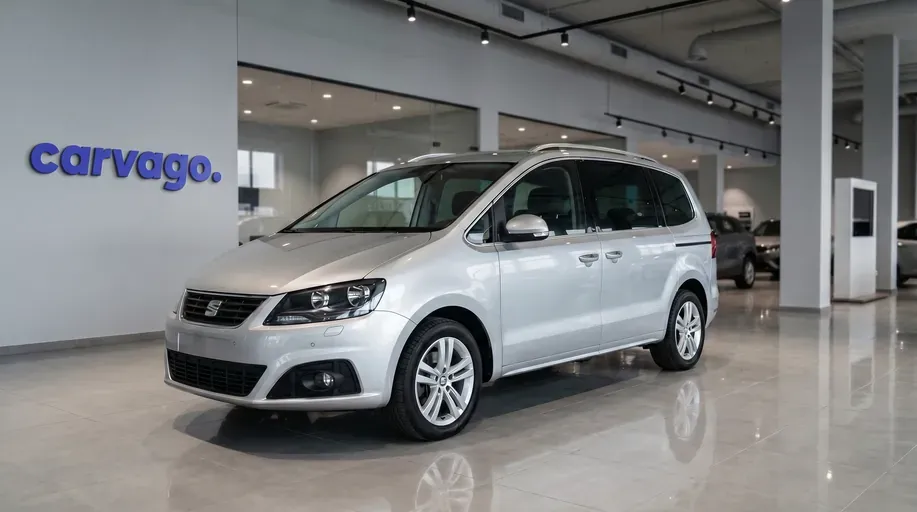
The second-generation SEAT Alhambra MPV (Typ 7N) represents the Spanish brand’s offering in the full-size multi-purpose vehicle segment. Built in Palmela, Portugal, series production commenced in June 2010, followed by the first customer deliveries across Europe in October 2010. Aimed at large families and long-distance transport fleets, the Alhambra prioritised utility with sliding rear passenger doors and factory seating for five or seven occupants.
SEAT broadened the model range in March 2011 with the introduction of an all-wheel-drive variant. A mid-cycle facelift was officially unveiled on 15 April 2015, with customer deliveries starting in July 2015. This update introduced discreet exterior revisions, updated infotainment systems, and an overhauled engine range meeting Euro 6 emissions standards.
Assembly of the SEAT Alhambra ceased on 30 March 2020, ending the vehicle’s production run without a direct multi-purpose successor. On the used-car market, this generation targets buyers who need dedicated seating flexibility, wide door apertures for child seats, and substantial luggage capability that contemporary sport-utility vehicles rarely match.
Official vehicle inspection records and long-term owner reports show that the second-generation SEAT Alhambra suffers from accelerated chassis wear due to its substantial vehicle mass. Periodic roadworthiness data reveals that the rear rubber-metal bushes on the front lower wishbones deteriorate significantly faster than the passenger-car average. Worn bushes cause vague steering response, low-speed knocking over road imperfections, and uneven tyre wear across the inner tread.
Owners frequently report mechanical issues with the optional electrically operated sliding side doors. Over time, the drive cables within the lower runner tracks fray or bind, and internal microswitches within the latch actuators fail. This causes the doors to bounce back, generate grinding noises, or refuse to operate under motorized power. Standard manual sliding doors remain unaffected by these motorized drive failures. In models fitted with the panoramic glass sunroof, tests describe water ingress caused by drainage hoses shrinking, disconnecting, or clogging at their outlet bungs. Escaping rainwater can soak the headlining, run down the windscreen pillars, and penetrate footwells, risking damage to underlying electrical wiring looms.
On the diesel SEAT Alhambra, owners report recurrent faults in the exhaust aftertreatment system. In some cases, the internal electrical heating element within the AdBlue reservoir burns out, and exhaust NOx sensors degrade. Either failure triggers an engine-restart countdown on the instrument cluster that cannot be cleared by refilling the tank, requiring replacement of the failed heating module or sensors. Early Euro 5 diesel variants were also subject to a pan-European software campaign to remove non-compliant emissions test-cycle detection logic.
Several safety recalls have been issued across the European Union for the second-generation Alhambra, covering passenger protection and electrical systems.
| Component / Affected Variant | Production Window | Defect and Workshop Action |
|---|---|---|
| Driver front airbag inflator | 15 June 2012 to 06 September 2017 | Propellant degradation can cause the inflator to rupture upon deployment, projecting metal fragments toward occupants. The remedy is free replacement of the driver airbag module. Specific urgent sub-batches received official instructions to stop driving immediately until repaired. |
| Airbag control unit | 21 April 2015 to 11 December 2015 | An improperly treated capacitor in the control module may fail, causing airbags and seatbelt pretensioners to deploy unexpectedly or fail to activate. Addressed via a control unit software update. |
| Starter motor relay (Diesel with start/stop) | 18 March 2011 to 28 May 2011 | A defective return spring on the solenoid switch can stick, leaving the starter motor permanently energised and causing overheating that presents a fire hazard. The solenoid switch must be replaced. |
| Front passenger airbag | 13 September 2016 to 02 November 2016 | An inadequate welded connection between the detonator and gas generator may prevent airbag deployment in an accident. The passenger airbag module requires replacement. |
| Side airbag module | 27 January 2015 to 28 January 2015 | Defective gas generator casing may fracture and eject fragments upon side airbag deployment. Requires workshop inspection and module replacement. |
Prospective buyers should check the specific vehicle’s identification number against manufacturer and national databases, or have the car's documented history and physical integrity verified through a service like CarAudit.
The second-generation SEAT Alhambra was delivered across European markets with turbocharged four-cylinder petrol and common-rail diesel engines, paired with front-wheel drive or all-wheel drive.
| Engine | Fuel | Power | Drivetrain | Gearbox | Model Years |
|---|---|---|---|---|---|
| 1.4 TSI | Petrol | 110 kW (150 hp) | Front-wheel drive | 6-speed manual, 6-speed automatic | 2010–2015 |
| 1.4 TSI | Petrol | 110 kW (150 hp) | Front-wheel drive | 6-speed manual, 6-speed automatic | 2015–2020 |
| 2.0 TSI | Petrol | 147 kW (200 hp) | Front-wheel drive | 6-speed automatic | 2010–2015 |
| 2.0 TSI | Petrol | 162 kW (220 hp) | Front-wheel drive | 6-speed automatic | 2015–2018 |
| 2.0 TDI | Diesel | 85 kW (115 hp) | Front-wheel drive | 6-speed manual | 2011–2015 |
| 2.0 TDI | Diesel | 85 kW (115 hp) | Front-wheel drive | 6-speed manual | 2015–2019 |
| 2.0 TDI | Diesel | 103 kW (140 hp) | Front-wheel drive, All-wheel drive | 6-speed manual, 6-speed automatic | 2010–2015 |
| 2.0 TDI | Diesel | 110 kW (150 hp) | Front-wheel drive, All-wheel drive | 6-speed manual, 6-speed automatic, 7-speed automatic | 2015–2020 |
| 2.0 TDI | Diesel | 125 kW (170 hp) | Front-wheel drive | 6-speed manual, 6-speed automatic | 2010–2013 |
| 2.0 TDI | Diesel | 130 kW (177 hp) | Front-wheel drive | 6-speed manual, 6-speed automatic | 2012–2015 |
| 2.0 TDI | Diesel | 135 kW (184 hp) | Front-wheel drive, All-wheel drive | 6-speed manual, 6-speed automatic, 7-speed automatic | 2015–2018 |
| 2.0 TDI | Diesel | 130 kW (177 hp) | Front-wheel drive, All-wheel drive | 6-speed automatic, 7-speed automatic | 2018–2020 |
For urban driving and short suburban commutes, a petrol SEAT Alhambra avoids the exhaust aftertreatment complications that trouble diesels on repeated cold cycles. The post-facelift 1.4 TSI provides sufficient response for unladen errands and school runs. With seven passengers on board, however, this small-displacement unit works hard to maintain pace, which causes fuel consumption to rise sharply on the motorway. The larger 2.0 TSI delivers rapid overtaking acceleration, but high fuel consumption limits its appeal to low-mileage buyers seeking petrol refinement.
For mixed daily driving and holiday touring, a diesel SEAT Alhambra with the mid-range 2.0 TDI is widely considered the most balanced option. Both the pre-facelift and revised post-facelift versions deliver strong low-end pull that carries heavy passenger loads without straining. The base 2.0 TDI, by contrast, feels lethargic when fully laden and is best left to commercial fleet duties.
Drivers who tow heavy trailers or regularly encounter winter conditions benefit from the top-output 2.0 TDI. In all-wheel-drive form, an all-wheel-drive SEAT Alhambra prevents wheel slip on wet inclines and enhances directional stability with heavy loads.
In terms of transmissions, a manual SEAT Alhambra keeps maintenance demands simple, though moving a loaded car from rest places heavy mechanical load on the clutch. An automatic SEAT Alhambra removes the strain from congested urban traffic and long motorway journeys, provided the transmission fluid and filter have been renewed on schedule.
For detailed insights into engine mechanical longevity, timing components, and exhaust aftertreatment systems, refer to the owner experiences section.
| Parameter | 5-seater | 7-seater |
|---|---|---|
| Length (mm) | 4,854 | 4,854 |
| Width (mm) | 1,904 | 1,904 |
| Height (mm) | 1,720 | 1,720 |
| Wheelbase (mm) | 2,919 | 2,919 |
| Boot capacity – all seats upright (l) | 955 | 267 |
| Boot capacity – maximum folded (l) | 2,430 | 2,297 |
Large sliding rear side doors define everyday access in the SEAT Alhambra MPV, easing entry and exit in confined parking bays without contacting adjacent vehicles. The second row features three separate, identical individual seats that slide fore and aft independently, recline, and fold flat into the floor without requiring heavy lifting or cabin removal. This setup fits three child seats abreast across the middle row. In seven-seat models, two additional individual third-row seats stow flush beneath the cargo floor and provide sufficient headroom and knee room for adult passengers. Folding the rear seats flat—optionally combined with a fold-flat front passenger backrest—creates a continuous, level loading floor for oversized cargo in the SEAT Alhambra. With all seats deployed in seven-seat models, remaining cargo room is restricted to small bags and routine groceries.
Professional tests consistently highlight the SEAT Alhambra for its pliant high-speed composure and subdued cabin noise on motorways. Long-distance damping absorbs undulating surfaces smoothly, though the chassis feels firm across scarred urban tarmac. Road holding remains stable and predictable, aided by dependable front-end grip. Body roll is noticeable when cornered aggressively, and testers note a wide turning circle in tight spaces. Steering provides reassuring weight off-centre, though feedback can feel muted straight ahead.
Cabin assembly reflects wider Volkswagen Group standards, featuring sturdy switchgear alongside functional dashboard ergonomics, although hard plastics persist lower down. Thick pillars and restricted rearward sightlines impede parking manoeuvres on examples without reversing sensors.
Reviewers agree that the vehicle prioritises settled cruising manners over dynamic agility, trailing smaller rivals in cornering responsiveness. Testers diverge mainly on low-speed ride quality, with some finding the suspension unyielding over sharp city ridges. The mid-cycle update introduced acoustic refinements that lowered ambient noise further.
All market charts in this section draw on listings for the entire SEAT Alhambra model family across available generations, rather than the reviewed generation alone, and do not establish a separate price level exclusively for the second generation. Across the advertised inventory, the median asking price ranges from €19,900 for 2016 models to €28,800 for 2020 models, reaching €41,800 for 2023 registrations. Buyer demand centres on diesel variants with documented transmission servicing, which sustain higher asking figures than neglected examples across later model years.
The chart tracks the number of Seat Alhambra listings advertised each month from April 2026 to September 2026, reaching a peak of 888 in May before declining to 673 by September. The monthly figures below illustrate how the available selection developed over this period.
Active listings over time
| Month | Seat Alhambra |
|---|---|
| 2026-04 | 871 |
| 2026-05 | 888 |
| 2026-06 | 853 |
| 2026-07 | 820 |
| 2026-08 | 713 |
| 2026-09 | 673 |
Source Carvago
With 673 cars advertised in the most recent month, buyers still have a wide pool of listings to explore, though the overall volume on offer contracted through the late summer months.
Across used listings advertised today, the median asking price of cars registered in 2016 is €19,900, while the median asking price of cars registered in 2023 is €41,800.
Median advertised price by year of manufacture
| Model year | Seat Alhambra |
|---|---|
| 2016 | 19 900 |
| 2017 | 22 000 |
| 2018 | 23 800 |
| 2019 | 26 500 |
| 2020 | 28 800 |
| 2021 | 30 000 |
| 2022 | 31 000 |
| 2023 | 41 800 |
Source Carvago
Buyers exploring 2017 models see a median asking price of €22,000, while stepping up to 2020 models reflects €28,800 and 2022 examples reach €31,000.
The chart tracks active monthly listings by fuel type between April and September 2026, opening with 483 petrol and 386 diesel cars on offer. It illustrates how the available volume of each engine type changed over this six-month span.
Supply composition by fuel type
Petrol
Diesel
| Month | Petrol | Diesel |
|---|---|---|
| 2026-04 | 483 | 386 |
| 2026-05 | 459 | 427 |
| 2026-06 | 422 | 430 |
| 2026-07 | 388 | 431 |
| 2026-08 | 337 | 375 |
| 2026-09 | 326 | 346 |
Source Carvago
By September 2026, the market was split almost evenly between 346 diesel and 326 petrol listings, with zero alternative or electrified powertrains recorded. Buyers can expect an accessible choice between standard petrol and diesel engines, but will not find hybrid or electric options.
Between April 2026 and September 2026, the average asking price for the Seat Alhambra started at €23,000 before easing to €22,700 in May, as shown in the chart below.
Average price development over time
| Month | Seat Alhambra |
|---|---|
| 2026-04 | 23 000 |
| 2026-05 | 22 700 |
| 2026-06 | 22 300 |
| 2026-07 | 22 300 |
| 2026-08 | 22 300 |
| 2026-09 | 22 200 |
Source Carvago
Across the six months, the average moved from €23,000 down to €22,200, holding at €22,300 from June through August and showing only a slight overall shift relative to asking prices.
Sliding rear doors ease access in tight spaces, and the middle row accommodates three child seats abreast
Adult-sized third-row seating folds completely flat into the floor alongside individual middle chairs
Settled cruising composure with subdued cabin noise on long-distance motorway journeys
Accelerated front lower wishbone bush wear and frequent mechanism faults on optional electric sliding doors
Diesel models suffer from AdBlue heater and sensor failures that trigger engine-restart countdowns
Noticeable body roll when cornering and thick rear pillars that restrict parking visibility
The mid-range 2.0 TDI offers the best compromise between pulling power and fuel economy for family travel. For short suburban trips, the petrol 1.4 TSI avoids diesel exhaust aftertreatment issues, though it works harder at motorway speeds.
Key inspection areas include front lower wishbone bush wear, water leaks from panoramic sunroof drains, and binding electric sliding doors. On a diesel SEAT Alhambra, ensure there are no AdBlue restart countdown warnings on the dashboard.
Yes, sliding rear doors simplify tight parking and the second row fits three child seats abreast. The third row accommodates adults comfortably, though cargo space is minimal with all seven seats deployed.
Verify the vehicle identification number against official databases to confirm all workshop remedies have been completed. Key campaigns include driver and passenger airbag inflator replacements and starter motor relay repairs on early diesels.
Sources: seat.co.uk, adac.de, kba.de, autobild.de, autocar.co.uk
This article was prepared using artificial intelligence tools. The section guarantor is Petr Dušek.
Volkswagen Sharan (Typ 7N) review: real owner experience, common faults, running costs and used prices — everything you need before you buy.
Oct 19, 2026
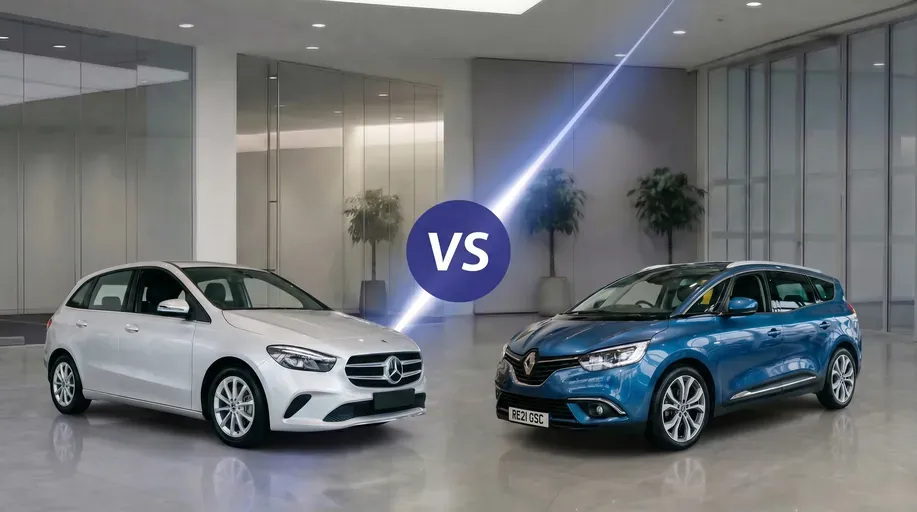
Detailed comparison of the Mercedes-Benz B-Class and Renault Grand Scénic MPVs. Find out which used family car offers better space, equipment, and value for money.
Oct 16, 2026

Detailed comparison of the Ford S-Max vs. Volkswagen Sharan MPVs. Find out which used car offers more space, better driving characteristics, and reliability for the family.
Oct 16, 2026