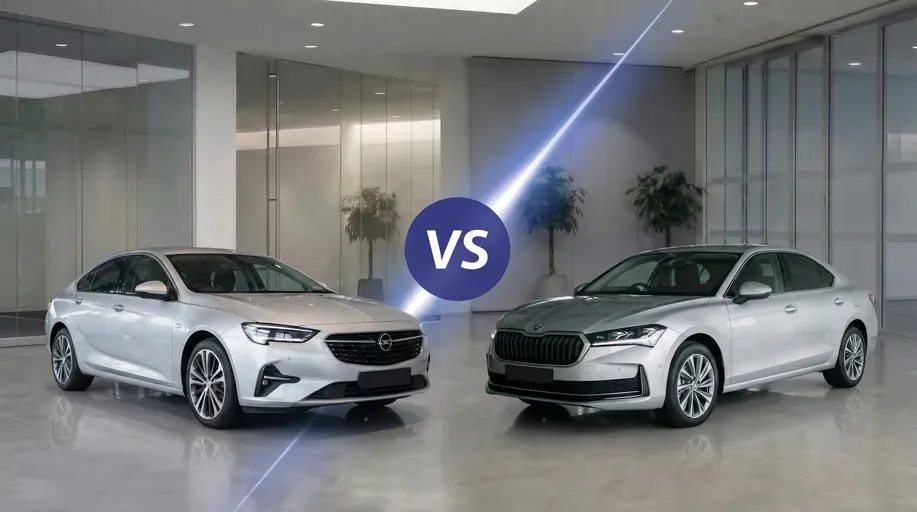
Car battle
Opel Insignia vs. Škoda Superb: Complete comparison 2026
Detailed comparison: Opel Insignia vs. Škoda Superb. Find out which car offers better space, reliability, and driving characteristics. Read our verdict!
May 20, 2026
Renault Talisman (2015-2022) review: real owner experience, common faults, engine picks, and used prices — our verdict on the saloon and estate.
October 17, 2026
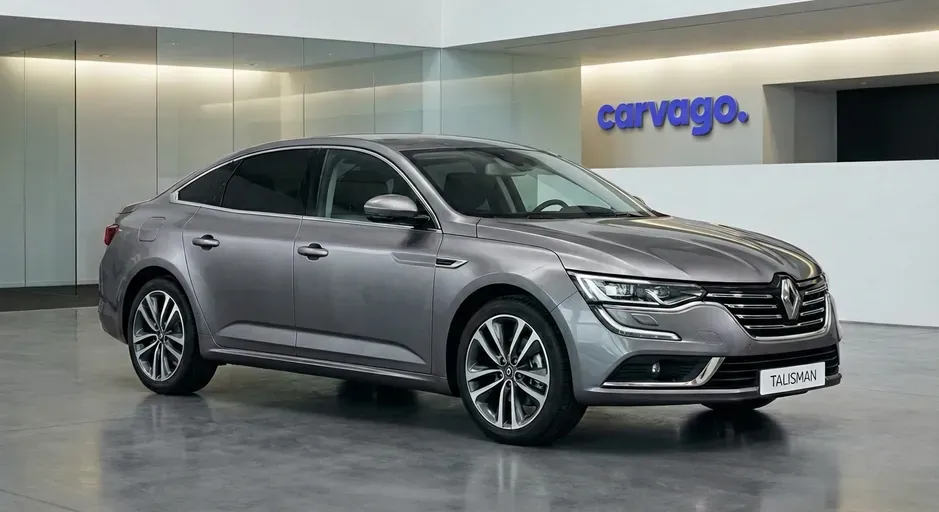
The Renault Talisman served as the French manufacturer's flagship entry in the European mid-size (D-segment) category. This review covers its sole European generation, produced from 2015 until manufacturing ceased in February 2022 at Renault’s Douai plant in France. Positioned primarily as a comfortable long-distance cruiser, it targeted company-car fleets, business commuters, and private buyers seeking an alternative to established German saloons and estates.
Renault offered the model in two body styles: a four-door Renault Talisman Saloon, which began customer deliveries in December 2015, and the Renault Talisman Estate, which followed with first deliveries in March 2016. A mid-cycle update was revealed in February 2020 and rolled out to European markets in June 2020, introducing revised exterior lighting, subtle bumper adjustments, and updated onboard technology before the nameplate was permanently phased out in 2022.
Early production years of the Renault Talisman generated a noticeable volume of workshop visits, primarily driven by software instability and early chassis teething troubles. Vehicles built from the June 2020 facelift benefited from revised electronics and improved component matching, which resolved many of the initial grievances.
Several official safety recalls were issued across European markets for the model:
Tests describe widespread stability issues with the R-Link 2 infotainment system fitted to cars produced before the 2020 facelift. Typical symptoms included unprompted black screens, frozen navigation displays, and dropped Bluetooth connections. While official dealer software updates resolved these lockups in most cases, severe hardware memory corruption required full replacement of the radio-navigation unit. The system was replaced entirely during the 2020 facelift by a newer multimedia interface with substantially fewer reported errors.
On an automatic Renault Talisman equipped with the dual-clutch transmission, tests describe low-speed clutch shudder, hesitations when accelerating from a standstill, and metallic shifting noises. Software reprogramming and clutch touch-point calibration smoothed engagement in some instances, but persistent shuddering required replacement of the dual-clutch pack or hydraulic actuator module.
Among engine options, the twin-turbo 1.6 dCi diesel Renault Talisman requires caution. Tests describe premature turbocharger wear—often showing up below 80,000 km—alongside coolant leaks around the exhaust gas recirculation cooler. The single-turbo 1.6 dCi and the later 2.0 Blue dCi diesel engines show far fewer repeated mechanical complaints.
On models built between 2015 and 2018, tests describe metallic clicking or creaking noises from the rear torsion beam over low-speed bumps. Dealers initially injected acoustic dampening foam into internal cavities, though persistent cases required complete axle beam replacement under technical bulletins. Furthermore, on cars equipped with optional four-wheel steering, wear in the rear tie-rod ball joints and electronic steering actuators can produce knocking noises over uneven surfaces, according to owner reports and workshop bulletins. Accelerated wear on front stabiliser drop links and lower wishbone rubber bushings is also reported by workshops, particularly on cars fitted with larger 19-inch wheels or the heavier Renault Talisman Estate body style.
Throughout its production run from 2015 to 2022, the Renault Talisman was sold exclusively with front-wheel drive and turbocharged four-cylinder engines. The powertrain line-up underwent a major restructuring in late 2018 to meet stricter emissions standards, replacing the original engine family with updated units.
| Engine | Fuel | Power | Gearbox | Model years |
|---|---|---|---|---|
| Energy TCe 150 | Petrol | 110 kW (150 hp) | 7-speed automatic | 2016–2018 |
| Energy TCe 200 | Petrol | 147 kW (200 hp) | 7-speed automatic | 2016–2018 |
| TCe 160 GPF | Petrol | 117 kW (160 hp) | 7-speed automatic | 2019–2022 |
| TCe 225 GPF | Petrol | 165 kW (225 hp) | 7-speed automatic | 2018–2020 |
| Energy dCi 110 | Diesel | 81 kW (110 hp) | 6-speed manual | 2016–2018 |
| Energy dCi 110 | Diesel | 81 kW (110 hp) | 6-speed automatic | 2016–2018 |
| Energy dCi 130 | Diesel | 96 kW (130 hp) | 6-speed manual | 2016–2018 |
| Energy dCi 130 | Diesel | 96 kW (130 hp) | 6-speed automatic | 2016–2018 |
| Energy dCi 160 | Diesel | 118 kW (160 hp) | 6-speed automatic | 2016–2018 |
| Blue dCi 120 | Diesel | 88 kW (120 hp) | 6-speed manual | 2018–2019 |
| Blue dCi 150 | Diesel | 110 kW (150 hp) | 6-speed manual | 2018–2020 |
| Blue dCi 160 | Diesel | 118 kW (160 hp) | 6-speed automatic | 2018–2022 |
| Blue dCi 190 | Diesel | 138 kW (190 hp) | 6-speed automatic | 2021–2022 |
| Blue dCi 200 | Diesel | 147 kW (200 hp) | 6-speed automatic | 2018–2020 |
For drivers whose routine consists primarily of urban commuting and short local trips, a petrol Renault Talisman is the most suitable path. The 1.3 TCe (badged TCe 160 GPF) is the primary recommendation for this usage, warming up quickly on brief runs and avoiding the emissions filter complications that can affect diesels driven in town. The earlier Energy TCe 150 and Energy TCe 200 also suit urban duty.
For mixed everyday driving combining suburban commutes with occasional weekend highway journeys, the TCe 160 GPF provides balanced flexibility. Buyers who prefer a traditional manual transmission on mixed routes should look at the Blue dCi 120 or Blue dCi 150, which pair durable low-end pull with a six-speed manual gearbox.
For regular long-distance motorway driving, a diesel Renault Talisman equipped with the 2.0 Blue dCi engine is the most capable choice. Available as the Blue dCi 160, Blue dCi 200, and later Blue dCi 190, this larger diesel pairs with a wet dual-clutch automatic transmission to provide quiet cruising manners, low engine speeds at highway pace, and steady overtaking reserves. The older Energy dCi 130 and twin-turbo Energy dCi 160 handle motorway travel adequately, though the twin-turbo unit lacks pulling power when fully laden at higher speeds.
Buyers planning to tow trailers or caravans should note the Blue dCi 190 and Blue dCi 200 offer the highest torque output in the line-up, though the model's highest braked towing limit of 1,850 kg is available across the estate variants of the Blue dCi 200 and several smaller engines. For those seeking brisk straight-line pace in a petrol model, the TCe 225 GPF delivers ample overtaking reserves on fast roads, though it was discontinued at the end of 2020.
For detailed breakdown histories, recurring mechanical faults, and component wear rates across these powertrains, refer to the owner experiences section of this review.
| Parameter | Saloon | Estate |
|---|---|---|
| Length (mm) | 4,849 | 4,865 |
| Width (mm) | 1,868 | 1,868 |
| Height (mm) | 1,456 | 1,465 |
| Wheelbase (mm) | 2,809 | 2,809 |
| Boot volume – seats up / folded (l) | 608 / 1,022 | 572 / 1,681 |
Standard boot volumes include the underfloor storage compartment. Vehicles fitted with the optional Bose premium audio system have reduced underfloor space due to the subwoofer housing.
In the rear passenger compartment, the Renault Talisman provides adequate room for two adults, with wide rear door openings that facilitate passenger access and child-seat installation. All variants come standard with a fixed rear bench featuring a 60/40 split-folding backrest and a centre ski through-loading hatch. While the Renault Talisman Saloon provides a longer boot floor in five-seat configuration, its traditional boot lid creates a comparatively narrow loading aperture. The Renault Talisman Estate improves everyday utility with a flush loading sill, boot-side release levers to drop the rear backrests, and substantially greater vertical clearance when carrying taller cargo up to the roofline.
Road tests consistently praise the Renault Talisman as a relaxed, quiet motorway cruiser. Cabin noise is effectively suppressed, with well-isolated engines and subdued wind rush on the open road. Seating comfort is a clear highlight across professional reviews, featuring supportive cushioning that accommodates occupants over long journeys. The optional four-wheel steering system earns favourable reviews for low-speed agility and eager turn-in, allowing both the saloon and the Renault Talisman Estate to corner with the nimbleness of a smaller vehicle.
Testers disagree, however, on ride compliance and road feel. While the chassis glides over gentle motorway undulations, broken surfaces and transverse ridges cause noticeable thumps through the cabin. This brittleness is particularly pronounced on cars fitted with the largest optional wheels, where even optional adaptive dampers struggle to cushion sharp urban imperfections. Without four-wheel steering, standard passive suspension allows noticeably more body roll. Testers also point out that four-wheel steering numbs road feedback, leaving the helm feeling artificial around the centre.
Pre-facelift models drew frequent criticism for a distracting touchscreen with complex menu structures, as well as harder plastics lower down in the cabin. The mid-cycle update directly improved everyday ergonomics by introducing dedicated rotary dials for climate control alongside a more intuitive touchscreen interface. While revised suspension tuning softened everyday manners, versions on large wheels still transmit sharp jolts over sunken manhole covers and broken tarmac.
The charts in this section are drawn from Carvago's listings across the whole model family, including other generations represented in the data, rather than strictly reflecting the reviewed generation alone. Across current listings for the Renault Talisman, the median asking price stands at €14,000 for 2016 models and reaches €18,900 for 2020 examples. The final production years reflect the highest figures on offer, recording a median asking price of €22,900 for 2021 and €23,000 for 2022, supported by strong market demand for updated cabin tech and estate versatility.
Between April 2026 and September 2026, active Renault Talisman listings moved from 600 to 521 on the market. The chart below outlines the total number of vehicles advertised in each of these months.
Active listings over time
| Month | Renault Talisman |
|---|---|
| 2026-04 | 600 |
| 2026-05 | 612 |
| 2026-06 | 590 |
| 2026-07 | 578 |
| 2026-08 | 519 |
| 2026-09 | 521 |
Source Carvago
Shoppers consistently had more than 500 cars to choose from each month, with selection peaking at 612 in May 2026 before easing to 521 by September 2026.
The median asking price of cars advertised today, built in 2015, is €14,500, while the median asking price of cars advertised today, built in 2016, is lower at €14,000. Rather than showing a strictly continuous increase across every model year, asking prices reflect this initial dip before higher figures appear for subsequent build years.
Median advertised price by year of manufacture
| Model year | Renault Talisman |
|---|---|
| 2015 | 14 500 |
| 2016 | 14 000 |
| 2017 | 14 900 |
| 2018 | 15 900 |
| 2019 | 17 800 |
| 2020 | 18 900 |
| 2021 | 22 900 |
| 2022 | 23 000 |
Source Carvago
Buyers exploring earlier options will find the median asking price of cars advertised today, built in 2017, is €14,900. For the newest vehicles in the dataset, the median asking price of cars advertised today, built in 2022, is €23,000.
Active listings show an offer split entirely between diesel and petrol, recorded in April 2026 at 320 diesel and 280 petrol cars. The breakdown across the six observed months illustrates how available inventory divides between the two fuels:
Supply composition by fuel type
Petrol
Diesel
| Month | Petrol | Diesel |
|---|---|---|
| 2026-04 | 280 | 320 |
| 2026-05 | 267 | 345 |
| 2026-06 | 268 | 322 |
| 2026-07 | 250 | 328 |
| 2026-08 | 237 | 282 |
| 2026-09 | 218 | 303 |
Source Carvago
Diesel remains the majority choice, ending the period in September 2026 with 303 advertised cars against 218 petrol options. With zero hybrid, electric, or gas listings recorded, buyers will find the market concentrated exclusively on these two conventional powertrains.
Between April 2026 and September 2026, the average asking price began at €17,400 before shifting slightly across the following months, as shown below.
Average price development over time
| Month | Renault Talisman |
|---|---|
| 2026-04 | 17 400 |
| 2026-05 | 17 100 |
| 2026-06 | 17 200 |
| 2026-07 | 17 000 |
| 2026-08 | 17 200 |
| 2026-09 | 17 100 |
Source Carvago
Across the recorded span, the average saw small alternating movements within a narrow range between €17,000 and €17,400, finishing the period at €17,100.
Quiet and relaxed high-speed motorway cruising with comfortable seating
Agile handling and responsive low-speed turning with optional four-wheel steering
Practical cargo capacity with convenient loading in the estate body style
Brittle ride quality over sharp bumps and potholes, especially on large wheels
Infotainment software freezes and display blackouts on pre-facelift models
Hesitation and low-speed clutch shudder on dual-clutch automatic transmissions
Facelifted models produced from June 2020 onward show far fewer faults, as revised electronics replaced the troublesome early multimedia system and suspension components were improved. Earlier vehicles require scrutiny for dual-clutch transmission shudder and rear-axle noises.
Examples built from June 2020 are the most rounded recommendation, offering intuitive physical climate dials, updated software, and fewer mechanical complaints. If choosing an earlier car on a stricter budget, 2019 builds avoid the earliest production teething troubles.
The 2.0 Blue dCi diesel Renault Talisman is the most capable choice for long distances, delivering quiet cruising manners alongside a durable wet dual-clutch transmission. By contrast, the older twin-turbo 1.6 dCi requires caution due to documented turbocharger wear below 80,000 km.
Test the dual-clutch gearbox for hesitation or shudder during low-speed crawling, and listen for knocking over bumps on models equipped with four-wheel steering. In addition, request an authorised dealer VIN check to confirm that official recalls for the fuel line and braking systems were completed on that Renault Talisman.
Sources: presse.renault.de, adac.de, ec.europa.eu, autobild.de, caradisiac.com
This article was prepared using artificial intelligence tools. The section guarantor is Petr Dušek.
Detailed comparison: Opel Insignia vs. Škoda Superb. Find out which car offers better space, reliability, and driving characteristics. Read our verdict!
May 20, 2026
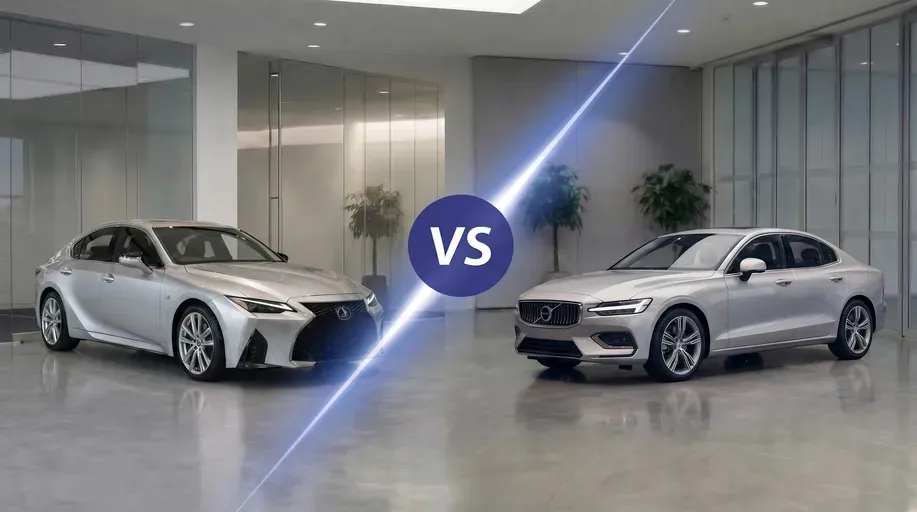
Lexus IS vs Volvo S60: A detailed comparison of premium sedans. Discover the key differences in driving characteristics, equipment, and reliability before your purchase.
Oct 16, 2026
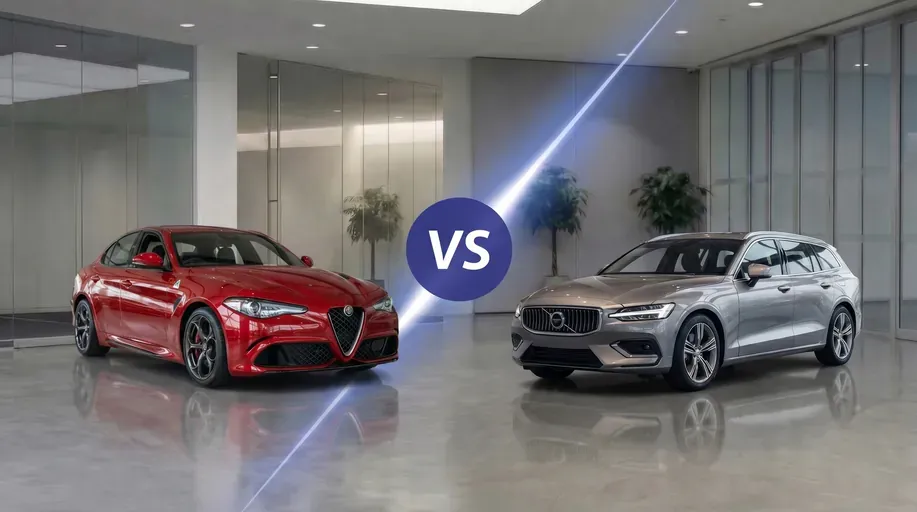
Detailed comparison of Alfa Romeo Giulia vs Volvo V60. Discover the differences in driving characteristics and equipment, and read our verdict for a safe used car choice.
Oct 16, 2026