Review Renault Kangoo: What do owners and experts really say?
Renault Kangoo review: real owner experience, practicality, engine picks, running costs and used prices — everything you need before you buy.
October 26, 2026
Verdict at a Glance
Who it suits: Families and practical buyers prioritising carrying capacity, dual sliding doors, and modular seating over crossover styling.
Recommended engine: The stronger petrol with the automatic gearbox for everyday mixed driving, or the range-topping diesel for motorway hauling.
What to avoid: Cars lacking documented recall work—verify by VIN—and diesel variants driven exclusively on short city trips.
Introduction
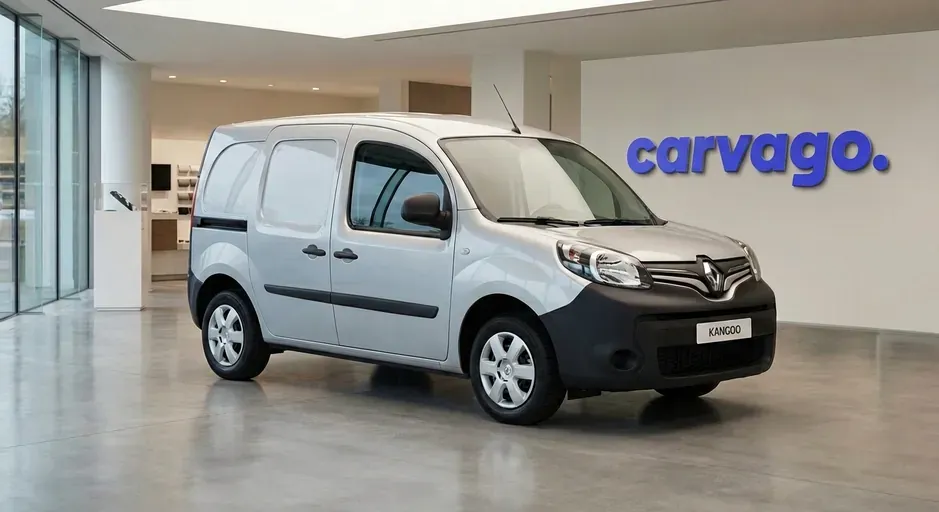
The third-generation Renault Kangoo occupies a distinctive place in the leisure activity vehicle segment, bridging the gap between light commercial utility and passenger-focused family transport. Built on a dedicated passenger-car architecture, this generation entered production in 2020, with European customer deliveries commencing in June 2021. As of October 2026, it remains in active series production without a mid-cycle facelift delivered to date, having received only regulatory equipment updates in 2024 ahead of an expected mid-cycle refresh planned for 2027.
The lineup has expanded steadily since its debut. Alongside the standard five-seat passenger Combispace, European customer deliveries of the electric Renault Kangoo commenced in January 2023. Practicality expanded further with the introduction of the long-wheelbase Renault Kangoo people carrier variants, known as the Grand Kangoo, which reached their first European customers in the first quarter of 2024 with both combustion and electric options.
This generation targets private buyers who prioritise carrying capacity, dual sliding doors, and modular seating over the styling cues of a conventional crossover or estate. Whether configured for everyday family commuting or outdoor leisure, it focuses strictly on functional versatility.
Owner Experiences: Common Faults and Recalls
The third-generation Renault Kangoo represents a complete departure from earlier platforms, sharing its mechanical underpinnings with modern passenger cars rather than legacy utility architectures. Across European ownership forums and fleet data, the platform has largely left behind the structural and mechanical issues of previous generations. However, real-world ownership records and professional fleet tests highlight a few specific software, exhaust, and wear items that prospective buyers must account for.
Software stability on the central Easy Link multimedia system is a frequent subject of fleet and test reports. Tests describe occasional system lockups, slow wake-up times from sleep, and repeated dropped connections when replicating smartphones via Apple CarPlay or Android Auto. Dealership software flashes have resolved system freezing and improved connection stability in most cases. Additionally, some tests report transient driver-assistance error alerts or slow rear-view camera feeds, which are typically addressed through these dealership updates.
For diesel models equipped with the 1.5 Blue dCi engine, some owners describe premature "Check Anti-Pollution System" alerts accompanied by the spanner warning light. This issue predominantly affects vehicles driven almost exclusively on short urban cycles, where soot condensation fouls the differential pressure sensor or AdBlue crystallises around the dosing injector tip. Replacing the sensor alongside an engine control unit calibration update has cured persistent false-positive alerts, though occasional sustained motorway driving remains necessary to keep the exhaust aftertreatment clear.
Physical chassis wear is another verified point of attention. Official roadworthiness test data indicates that running gear defects—specifically front lower wishbone silentbloc bushings, ball joints, and track rod ends—account for a notable portion of first-time inspection rejections, frequently leading to accelerated or uneven front tyre wear due to the vehicle's high unladen mass and payload capacity.
Three official safety recall campaigns have been recorded across European registers for this generation:
Safety Recall Defect
Affected Production Window
Geographic Scope & Action
Rear swing door strikers: Exposed upper strikers protrude when doors are open, posing a risk of user head injury during loading or unloading.
15 May 2020 to 16 May 2025
Worldwide (162,680 vehicles; affects models with asymmetric rear swing doors). Authorised workshops install protective plastic trim covers over the upper strikers.
Rear swing door hinges: Possible missing shaft or non-conforming hinge assembly on rear doors.
18 October 2024 to 29 October 2024
Europe (including 18 vehicles in the UK). Authorised workshops inspect all four rear hinges and replace assemblies if a shaft is missing.
Passenger seat base frame: Front seat frame defect and Isofix anchorage malfunction, increasing injury risk in an accident due to potential seat frame displacement.
16 May 2023 to 20 June 2023
European Union (184 vehicles worldwide). Authorised workshops inspect the front passenger seat frame and replace defective structures.
Buyers of an electric Renault Kangoo should note that long-term battery degradation data beyond six-figure mileages remains limited across public inspection databases, owing to its market introduction in early 2023.
🔍 What to check before buying
Have the vehicle's VIN verified through an authorised dealer database to confirm completion of any applicable safety recalls, particularly the rear swing door striker covers and the passenger seat frame inspection.
Inspect the front tyres for uneven inner-edge wear and listen for knocking or clunking sounds from the front suspension bushings over low-speed road bumps.
On the diesel Renault Kangoo, scan for active or stored anti-pollution error codes and check the AdBlue dosing area for signs of crystalline build-up.
Test both sliding side doors along their full tracks to ensure smooth latching into the door jambs without dashboard "door open" sensor errors.
On electric models, check behind the front badge to verify whether optional DC rapid-charging pins are fitted, and request a certified traction battery State of Health readout.
Engines: Which One to Choose
The third-generation Renault Kangoo offers an engine lineup comprising turbocharged petrol units, four-cylinder diesels, and a fully battery-electric powertrain. All versions send drive exclusively to the front wheels via manual or dual-clutch automatic gearboxes.
Engine
Fuel
Power
Gearbox
Model years
1.3 TCe 100
Petrol
75 kW (100 hp)
6-speed manual
2021–present
1.3 TCe 130
Petrol
96 kW (130 hp)
6-speed manual / 7-speed automatic
2021–present
1.5 Blue dCi 95
Diesel
70 kW (95 hp)
6-speed manual / 7-speed automatic
2021–present
1.5 Blue dCi 115
Diesel
85 kW (115 hp)
6-speed manual / 7-speed automatic
2021–present
E-Tech Electric
Electric
90 kW (122 hp)
Automatic
2022–present
Choosing the right powertrain
For buyers focused on urban errands, school runs, and short delivery hops, the electric Renault Kangoo or the entry petrol unit are the most suitable choices. The electric model provides quiet operation and immediate low-speed response without cold-start wear, though its capped top speed and modest high-speed efficiency limit its long-distance touring breadth. The base petrol serves urban buyers who cover lower annual mileages and want to avoid the exhaust aftertreatment components required by modern diesels.
For mixed everyday driving combining suburban commuting and routine highway trips, the stronger petrol Renault Kangoo represents the most well-rounded option. It offers refined running with low vibration, and choosing an automatic Renault Kangoo with the seven-speed dual-clutch transmission eliminates the vague shift action of the manual. However, pushing this engine hard with a full cabin or sustaining brisk motorway speeds causes fuel use to rise steeply due to the bluff aerodynamics.
Drivers covering high annual mileages on the motorway or frequently hauling heavy family gear and towing will find their match in a diesel Renault Kangoo. The range-topping diesel provides reassuring pulling power that maintains highway cruising speed on steep motorway inclines without requiring downshifts. The mid-tier diesel delivers excellent fuel economy in regional running, but it feels measured when executing high-speed overtakes while fully laden.
Detailed insights into exhaust aftertreatment maintenance and mechanical durability are covered in the owner experiences section.
Space & Practicality
Body Style / Model
Length (mm)
Width (mm)
Height (mm)
Wheelbase (mm)
Boot Capacity – Seats Up / Folded (l)
Standard Combispace (5 seats)
4,486
1,860
1,838
2,716
775 / 2,800
E-Tech Electric Combispace (5 seats)
4,486
1,860
1,838
2,716
500–850 / 2,500
Grand Kangoo (7 seats)
4,910
1,860
1,815
3,100
500 / 3,050
Width excludes door mirrors; height excludes optional roof bars. E-Tech standard boot volume varies with the sliding bench position; Grand Kangoo maximum capacity reflects rows two and three fully removed.
Everyday practicality remains the primary selling point for the third-generation Renault Kangoo estate. The standard five-seat passenger model provides upright seating with wide sliding rear side doors that simplify child-seat installation and school runs in tight parking bays. The rear bench splits and folds flat into the floor, while versions fitted with an optional flat-folding front passenger seat accommodate lengthy cargo with minimal fuss. On pure electric variants, a sliding second-row bench travels fore and aft to prioritise either second-row legroom or cargo space. Buyers needing full multi-passenger usability should look toward the longer Grand Kangoo, which replaces the standard bench with five independent, sliding chairs across the second and third rows. These individual seats accommodate adult passengers comfortably even in the rearmost positions, though lifting them out completely requires real physical effort due to the weight of each individual seat unit.
What the Tests Say
Professional tests describe the third-generation Renault Kangoo as a substantially more car-like vehicle to drive than its predecessor, crediting its modern passenger-car underpinnings. On smooth tarmac and undulating motorways, the suspension absorbs long dips well and ensures stable straight-line tracking, especially in the extended-wheelbase version. However, testers consistently note that when unladen, the chassis reacts stiffly across sharp transverse joints, cobblestones, and urban potholes. Steering is light, making city manoeuvres easy, though it provides muted road feel around the centre. While cornering produces noticeable body lean, handling remains safe and predictable, with early electronic stability intervention stepping in during sudden lane changes.
In the cabin, reviewers commend the assembly quality and the retention of straightforward physical rotary controls for the climate system beneath the central display on equipped models. The upright windscreen and large mirrors provide good forward visibility, though they generate prominent aerodynamic wind rustle at motorway cruising speeds. Testers also agree that the interior prioritises durability over luxury: textured, hard plastics cover the dashboard and doors, and the unlined plastic cargo walls scratch easily when hauling gear. The front seats feature relatively flat cushions that lack pronounced lateral support during longer trips.
Testers broadly agree that the model serves well as an honest, versatile utility carrier, praising practical touches such as the sliding glovebox drawer available on higher trims. Divergence appears primarily around ease of seat modularity.
Prices and Market Offer
All the charts in this section are drawn from Carvago’s listings of the whole Renault Kangoo model family, including other generations represented in the data, rather than exclusively the reviewed generation. Across the advertised model years, the median asking price sits at €11,000 for 2019 vehicles and reaches €31,700 for 2026 examples. Because these figures aggregate older and newer builds across passenger and commercial variants alike, this market overview does not establish a separate, standalone price level for the third generation alone.
Between April 2026 and September 2026, active Renault Kangoo listings ranged from a low of 3,142 in May to a peak of 3,578 in July. The chart below tracks how the volume of advertised vehicles developed across these six months.
Renault Kangoo - availability over time
Active listings over time
Month
Renault Kangoo
2026-04
3 176
2026-05
3 142
2026-06
3 466
2026-07
3 578
2026-08
3 492
2026-09
3 428
Source Carvago
With consistently more than 3,100 vehicles advertised each month, buyers have a broad selection to explore, even as overall numbers shifted up and down through the summer.
Among listings advertised today, the median asking price is €11,000 for vehicles built in 2019, whereas the median asking price of cars advertised today built in 2026 reaches €31,700. The chart below details how these median asking prices compare across each build year.
Renault Kangoo - median price by model year
Median advertised price by year of manufacture
Model year
Renault Kangoo
2019
11 000
2020
11 500
2021
13 500
2022
18 600
2023
24 800
2024
27 900
2025
29 600
2026
31 700
Source Carvago
Buyers considering older options see a median asking price of €11,000 for 2019 models or €13,500 for 2021 models. For newer production years, the median asking price stands at €24,800 for 2023 models and reaches €31,700 for 2026 vehicles.
This depreciation curve shows how the Renault Kangoo's residual value declines as it ages, losing 16% of its initial value in the first year and 32% by age three.
Renault Kangoo - value loss by age
Residual value by vehicle age
Vehicle age
Renault Kangoo
New
31 200
1 yr
26 200
2 yrs
23 600
3 yrs
21 200
4 yrs
18 100
5 yrs
13 300
6 yrs
12 100
7 yrs
10 900
Source Carvago
Over the seven years shown, the model sheds 65% of its initial residual value, with annual losses moderating to under 10% after age five.
Between April and September 2026, diesel and petrol accounted for the vast majority of advertised cars, starting at 1,723 diesel and 924 petrol listings in April 2026. The chart below illustrates how active listings were split by fuel type across each month.
Renault Kangoo - supply by fuel over time
Supply composition by fuel type
Petrol
Diesel
Hybrid
Electric
Month
Petrol
Diesel
Hybrid
Electric
2026-04
924
1 723
1
528
2026-05
892
1 767
0
483
2026-06
883
2 084
0
499
2026-07
919
2 133
0
526
2026-08
807
2 158
1
526
2026-09
858
2 024
1
544
Source Carvago
Diesel clearly dominates the available selection, recording 2,024 listings in September 2026 compared to 858 petrol and 544 electric vehicles. Buyers will find the deepest pool of choices among diesels, while petrol and electric offer viable secondary options and hybrids remain negligible at just 1 listing.
Between April 2026 and September 2026, the average asking price for a Renault Kangoo started at €20,500 and dipped to €19,800 in June and July, as shown in the monthly figures below.
Renault Kangoo - price trend over time
Average price development over time
Month
Renault Kangoo
2026-04
20 500
2026-05
20 300
2026-06
19 800
2026-07
19 800
2026-08
19 900
2026-09
20 600
Source Carvago
Across the six months, the average moved from €20,500 to €20,600, remaining within a narrow range despite the slight decline to €19,800 in June and July.
High passenger versatility supported by wide sliding rear doors and flexible folding seats
Stable highway tracking and light steering well suited to urban driving
Straightforward cabin ergonomics with physical climate dials and practical storage solutions
Cons
Central multimedia display prone to occasional freezing, slow wake-up, and dropped smartphone mirroring
Stiff low-speed ride over sharp road imperfections when unladen, accompanied by body lean in corners
Removing the heavy individual rear seats on extended models requires significant physical effort
Frequently asked questions
Which engine is best for mixed everyday driving?
The stronger petrol Renault Kangoo is the most well-rounded choice for suburban driving and routine highway trips, offering smooth running without the exhaust aftertreatment concerns of diesel engines, though high motorway cruising speeds will cause fuel consumption to rise.
What common problems should be checked before buying?
Inspect the front suspension bushings and tyres for premature wear, and verify that the infotainment has received dealership software updates. On a diesel Renault Kangoo, check for anti-pollution warning lights triggered by short urban trips.
Have there been any official safety recalls?
European registers list recalls covering the rear swing door strikers and hinges, as well as an inspection of the front passenger seat frame. Prospective buyers should have the specific vehicle's VIN verified through an authorised dealer database to ensure all applicable remedial work was completed.
Is the electric version practical for long motorway journeys?
While the electric Renault Kangoo is well suited to urban school runs and local delivery duties, its capped top speed and modest high-speed efficiency limit its long-distance touring appeal. Buyers planning motorway trips should also ensure the car is equipped with the optional DC rapid-charging port.