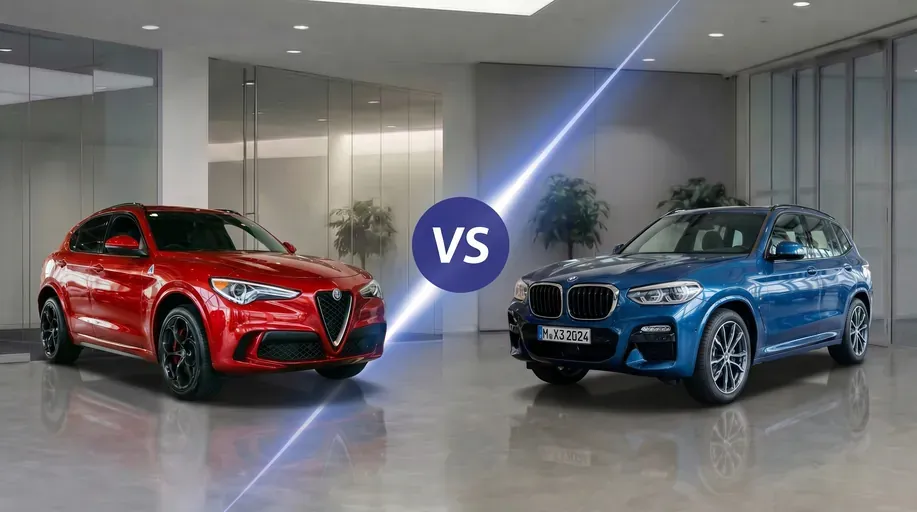
Car battle
Alfa Romeo Stelvio vs. BMW X3: Complete comparison 2026
Alfa Romeo Stelvio vs. BMW X3: Which premium SUV to choose? Detailed comparison of used cars, real-world experience, equipment comparison, and the final verdict.
May 13, 2026
Articles
Review
Renault Espace VI review: real owner experience, hybrid efficiency, interior modularity and common faults — our verdict before you buy.
October 22, 2026
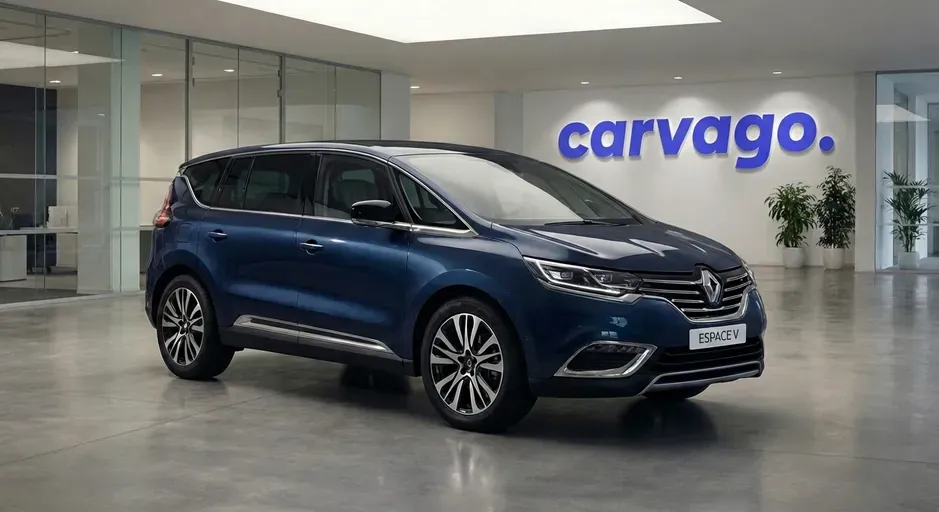
The sixth-generation Renault Espace marks a decisive transition for the long-standing nameplate, shifting from a traditional multi-purpose vehicle into the mid-size crossover segment. Built on the Alliance CMF-CD platform, this generation celebrated its world premiere on 28 March 2023, with first European customer deliveries starting on 07 July 2023. Available in both five-seat and seven-seat configurations, the Renault Espace SUV targets drivers seeking practical passenger space alongside standard petrol-electric propulsion.
A mid-cycle facelift premiered on 20 March 2025, introducing a redesigned front fascia, updated exterior lighting, revised seating, and an optional electrochromic glass roof. A revised powertrain calibration followed on 16 June 2025, before running equipment and technology updates opened for order on 03 March 2026.
Aimed primarily at families needing modular seating and drivers prioritising passenger comfort, the hybrid Renault Espace combines estate-like cabin versatility with an elevated driving position. This review evaluates the sixth-generation model across the European used market to help buyers decide if its blend of comfort and interior flexibility suits their needs.
Because European customer deliveries of the sixth-generation Renault Espace began in July 2023, fleet data over high mileages remains limited and long-term mechanical durability is not yet fully established. Early owner reports and technical service bulletins primarily concern drivetrain calibration, early infotainment software integration, and factory recall campaigns.
The clutchless multi-mode automatic transmission in the hybrid Renault Espace operates via dog clutches to blend electric drive and combustion power. Tests describe and owners report low-speed hesitation, driveline shudder, and occasional clunks during urban stop-and-go driving when the system alternates between propulsion sources. In some early production models, sensitive sensor thresholds triggered transient instrument warnings advising transmission inspection without mechanical damage. Calibration updates released in June 2025 addressed these shift transitions and warning sensitivities. Additionally, on vehicles built up to December 2024, degradation of the crankcase oil vapour return hose can lead to fuel odours in the cabin, fuel dilution of the engine oil, and premature oil level alerts. Workshops replace the breather assembly and update engine management software to prevent progressive lubrication breakdown.
On early production examples built throughout 2023 and into early 2024, tests describe and owners report intermittent latency on the central touchscreen, including delayed start-up initialization and occasional lag when engaging the reversing camera feed. These glitches have largely been resolved through over-the-air firmware updates and workshop programming. Electronic stability can also suffer if the 12-volt auxiliary battery drops in charge, which can generate false fault alerts across various cabin systems. On vehicles equipped with optional four-wheel steering and larger wheels, tests describe uneven tyre tread wear along the inner and outer shoulders if rear-axle suspension alignment deviates.
Official European registers record two verified safety recall campaigns for this generation:
| Defect | Affected Build Window | Market Reach | Workshop Action |
|---|---|---|---|
| Front seat retraction injury risk | March 2023 to November 2023 | Worldwide | Reprogramming the seat control module software to restrict rearward travel |
| Parking brake actuator sensor misalignment | April 2024 to May 2025 | European Union | Inspection, realignment, reprogramming, or replacement of the parking lock actuator |
The seat recall addresses vehicles where the automatic seat-retraction feature could push the front backrest into contact with a rear passenger's legs. The parking brake recall targets an incorrectly angled actuator position sensor that may prevent the mechanical transmission lock pin from seating when selecting park, turning off the vehicle, unfastening the driver seatbelt, or opening the driver door. While the secondary electric parking brake remains functional to immobilise the car, official notices advise owners to have the primary lock inspected and rectified.
The sixth-generation Renault Espace adopts a streamlined mechanical strategy, dispensing with traditional diesel and purely petrol variants entirely. Every example sold across European markets features the same front-wheel-drive petrol-electric full hybrid paired with an automated multi-mode transmission.
| Engine | Fuel | Power | Gearbox | Model years |
|---|---|---|---|---|
| 1.2 E-Tech Full Hybrid 200 | Petrol full hybrid | 147 kW (200 hp) | Automatic | 2023–present |
City driving and daily commuting
Urban traffic is where the hybrid Renault Espace performs most naturally. The powertrain starts under electric power from a complete stop, navigating low-speed stop-and-go congestion smoothly without running the combustion engine continuously. Energy recuperation on deceleration routinely replenishes the battery in town, making the vehicle well suited to suburban errands and daily family runs.
Mixed everyday driving
On regional routes and ring roads, the interplay between the electric traction motor and the turbocharged three-cylinder petrol engine remains balanced as long as throttle inputs are progressive. For general family duties combining town and secondary roads, the setup delivers flexible performance.
Long motorway journeys
Long-distance high-speed travel reveals the physical limits of the package. At sustained motorway cruising speeds, the electric drive provides minimal assistance, leaving the compact three-cylinder petrol unit to shoulder the load of the vehicle on its own. While it maintains touring pace steadily, demanding brisk acceleration on uphill gradients forces the combustion engine to rev continuously, which increases noise levels in the passenger compartment. Drivers who regularly cover long motorway distances should note that it lacks the cruising reserves of traditional long-distance tourers.
Towing
For towing tasks, the Renault Espace is limited to lighter duties such as small utility trailers or occasional leisure equipment. The clutchless multi-mode transmission and reliance on a downsized combustion engine mean the vehicle is not engineered for hauling heavy horseboxes or large double-axle caravans over demanding terrain.
For detailed records of software updates, component recalls, and recurring mechanical issues reported by drivers, consult the owner experiences section of this review.
| Specification | 5-seater | 7-seater |
|---|---|---|
| Length (pre-facelift / facelift) | 4,722 / 4,740 mm | 4,722 / 4,740 mm |
| Width (excluding mirrors) × Height | 1,843 × 1,645 mm | 1,843 × 1,645 mm |
| Wheelbase | 2,738 mm | 2,738 mm |
| Boot volume (upright) | 581–777 l | 159 l (477–677 l with 3rd row folded) |
| Boot volume (maximum rear rows folded) | 1,818 l | 1,714 l |
In everyday family use, the Renault Espace relies on a modular rear seating layout to balance passenger space and luggage capacity. The second-row bench slides longitudinally and features adjustable backrest rake, providing ample knee room for tall adults when set fully rearward. Sliding the bench forward expands cargo room while retaining practical seating for smaller passengers. In seven-seat versions, the third row consists of two individual jump seats that stow flush into the boot floor. Professional evaluations consistently note that the rearmost row functions primarily as emergency transport for children, as low cushions and scarce footwell space make adult accommodation uncomfortable on anything beyond short urban trips. Accessing row three involves folding and sliding the second row forward, an operation testers describe as somewhat awkward. Drivers who rarely carry more than four passengers may prefer the five-seat configuration, which yields a noticeably deeper boot compartment without the space compromises of the stowed rear mechanisms.
Professional road tests describe the Renault Espace as a taut crossover rather than a soft family wagon. The suspension prioritises body control and high-speed stability, which translates to a firm edge over urban ruts and transverse ridges. Four-wheel steering, standard on higher trims, sharpens low-speed agility in tight spaces. Testers note, however, that the direct rack can cause nervous responses to minor inputs at speed, with muted road feel around the centre.
Powertrain refinement varies by driving mode. While the hybrid Renault Espace glides quietly under pure electric propulsion, the petrol engine introduces noticeable booming and vibration when cold or recharging under heavy load. Testers also observe that the multi-mode automatic transmission hesitates under sudden acceleration and can hunt between drive ratios.
Inside, the cabin scores well for clear, responsive Google-based infotainment and straightforward physical switchgear. Upper surfaces feature soft-touch materials, though harder plastics line the lower console, and thick pillars obstruct rear visibility. The mid-cycle update brought redesigned front seating and subtle trim refinements, but the underlying ride firmness and gearbox behaviour remain largely unchanged.
All market charts in this section are drawn from Carvago listings of the entire Renault Espace model family, including earlier generations represented in the data, rather than the reviewed generation alone. Because listings are grouped purely by build year, the dataset does not establish a separate price level for the reviewed generation. Across the wider lineup, the median asking price sits at 23000 EUR for 2019 vehicles and reaches 40000 EUR for 2023 examples. For 2026 production, advertised cars command a median asking price of 47500 EUR.
Between April and September 2026, the count of advertised Renault Espace models rose steadily from 1,564 to 1,721, as tracked in the chart below.
Active listings over time
| Month | Renault Espace |
|---|---|
| 2026-04 | 1 564 |
| 2026-05 | 1 576 |
| 2026-06 | 1 602 |
| 2026-07 | 1 622 |
| 2026-08 | 1 631 |
| 2026-09 | 1 721 |
Source Carvago
With inventory consistently increasing across all six months to reach 1,721 active listings, buyers currently have an expanding pool of vehicles to choose from.
Among used Renault Espace listings advertised today, the median asking price for cars built in 2019 is €23,000, while listings built in 2026 show a median asking price of €47,500.
Median advertised price by year of manufacture
| Model year | Renault Espace |
|---|---|
| 2019 | 23 000 |
| 2020 | 27 000 |
| 2021 | 27 900 |
| 2022 | 33 000 |
| 2023 | 40 000 |
| 2024 | 41 900 |
| 2025 | 43 000 |
| 2026 | 47 500 |
Source Carvago
Buyers focusing on 2020 or 2021 models see median asking prices of €27,000 and €27,900, while newer 2023 listings require a median asking price of €40,000.
The depreciation curve shows how the Renault Espace loses value as it ages, with the car shedding roughly 18% of its initial residual value in the first year alone. By age three, cumulative value loss reaches approximately 34%.
Residual value by vehicle age
| Vehicle age | Renault Espace |
|---|---|
| New | 46 000 |
| 1 yr | 37 900 |
| 2 yrs | 33 900 |
| 3 yrs | 30 200 |
| 4 yrs | 26 000 |
| 5 yrs | 23 700 |
| 6 yrs | 21 100 |
| 7 yrs | 18 200 |
Source Carvago
Over the seven-year span, the model loses around 60% of its initial residual value, with the steepest decline occurring in the first year before settling into more moderate annual reductions.
Between April and September 2026, active listings were led primarily by hybrids, which grew from 1124 cars in the initial month to 1307 by the end of the period. The chart below illustrates how advertised inventory broke down across each powertrain over these six months.
Supply composition by fuel type
Petrol
Diesel
Hybrid
Electric
| Month | Petrol | Diesel | Hybrid | Electric |
|---|---|---|---|---|
| 2026-04 | 67 | 373 | 1 124 | 0 |
| 2026-05 | 69 | 353 | 1 154 | 0 |
| 2026-06 | 86 | 338 | 1 178 | 0 |
| 2026-07 | 82 | 343 | 1 196 | 1 |
| 2026-08 | 60 | 323 | 1 246 | 2 |
| 2026-09 | 69 | 345 | 1 307 | 0 |
Source Carvago
In September 2026, hybrid variants accounted for the vast majority of choice with 1307 listings, alongside 345 diesel and 69 petrol cars. Buyers will realistically encounter the widest selection among hybrid models, while petrol options remain comparatively scarce.
The chart below outlines the average asking price for the Renault Espace between April 2026 and September 2026, opening at €34,100.
Average price development over time
| Month | Renault Espace |
|---|---|
| 2026-04 | 34 100 |
| 2026-05 | 34 300 |
| 2026-06 | 34 300 |
| 2026-07 | 34 100 |
| 2026-08 | 34 800 |
| 2026-09 | 34 700 |
Source Carvago
Over the six-month period, the average asking price moved from €34,100 in April to €34,700 in September, with a peak of €34,800 in August. This net shift of under two percent represents very little movement relative to the vehicle's asking price.
Sliding and reclining second row provides ample knee room for adults
Responsive Google-based infotainment paired with straightforward physical switchgear
Quiet, smooth electric operation during low-speed urban driving
Cramped third-row seating with scarce footwell space, unsuitable for adults
Firm ride over urban ruts and transverse road ridges
Transmission hesitation under sudden acceleration and engine booming under load
Long-term mechanical durability is not yet fully established because European customer deliveries commenced in July 2023. Early production issues have largely been addressed through factory recall campaigns and workshop software updates.
No. The third row consists of compact jump seats with limited footwell space, making them suitable only for children on short journeys. Buyers who rarely carry extra passengers will find the five-seat version more practical due to its deeper cargo compartment.
There is only one choice, as the hybrid Renault Espace comes exclusively with a petrol-electric full hybrid powertrain and an automatic transmission. It performs smoothly in urban and suburban use, though it works harder and lacks deep cruising reserves at sustained motorway speeds.
Check workshop records by VIN or arrange a CarAudit inspection to confirm that safety recalls and software updates have been completed. During a test drive, ensure the hybrid transmission operates smoothly at low speeds and inspect the rear tyres for uneven wear on versions with four-wheel steering.
Sources: media.renault.com, adac.de, ec.europa.eu, greenncap.com, autobild.de
This article was prepared using artificial intelligence tools. The section guarantor is Petr Dušek.
Alfa Romeo Stelvio vs. BMW X3: Which premium SUV to choose? Detailed comparison of used cars, real-world experience, equipment comparison, and the final verdict.
May 13, 2026
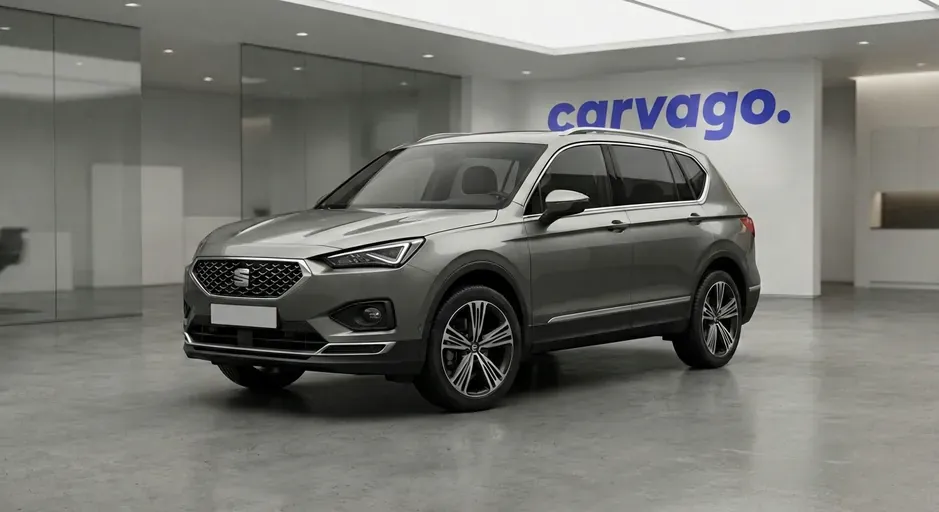
SEAT Tarraco review: real owner experience, common faults, running costs, engine picks and used prices — everything you need to know.
Oct 17, 2026
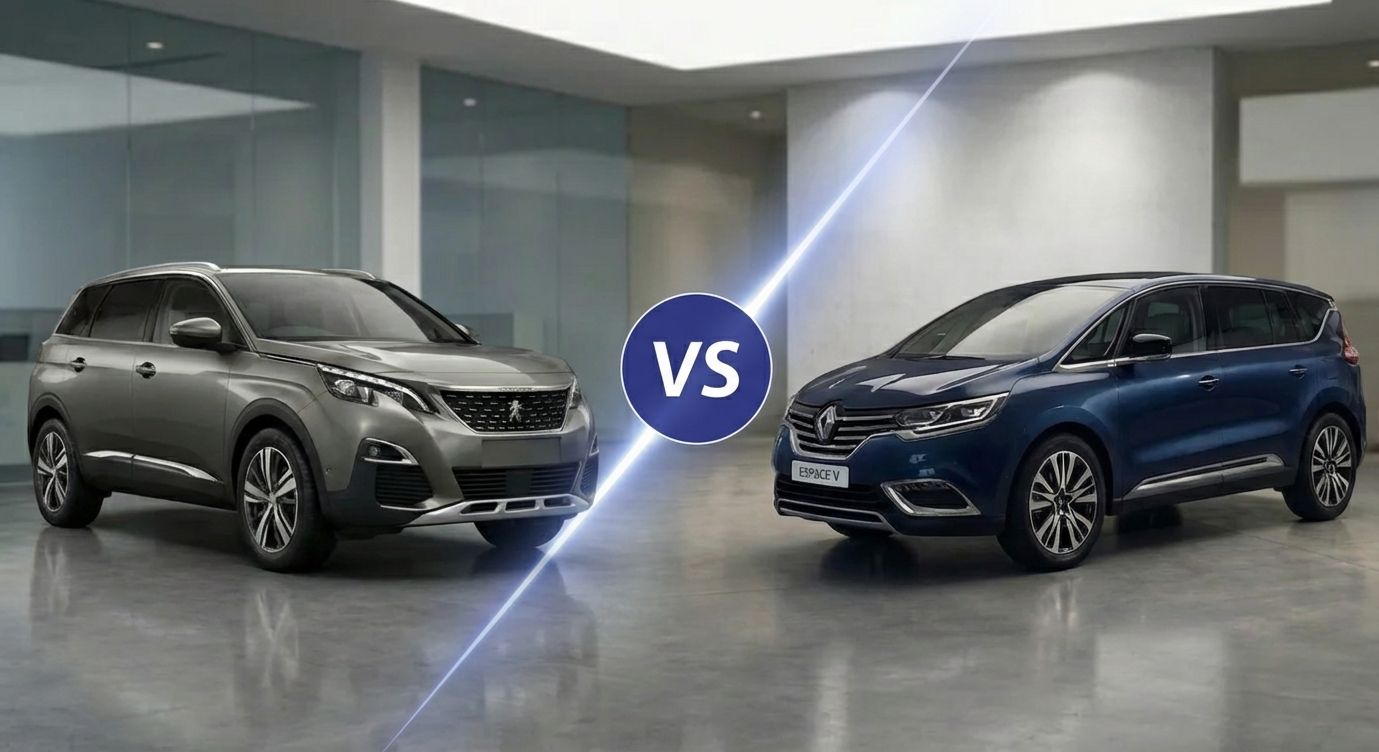
Detailed comparison of Peugeot 5008 vs Renault Espace. We reveal real-world experiences, equipment details, and a clear verdict. Find out which 7-seater car to choose.
Oct 16, 2026