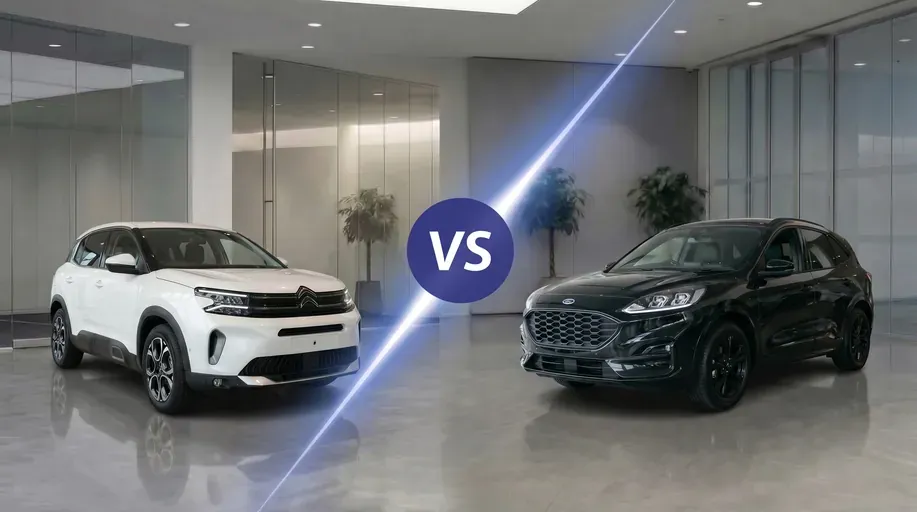
Car battle
Citroën C5 Aircross vs. Ford Kuga: Complete comparison 2026
Used car comparison: Citroën C5 Aircross vs. Ford Kuga. Find out which SUV offers better space, equipment, and reliability. Read our detailed verdict!
May 4, 2026
Renault Austral review: real owner experiences, E-Tech hybrid performance, common issues, running costs, and our definitive buying verdict.
October 25, 2026
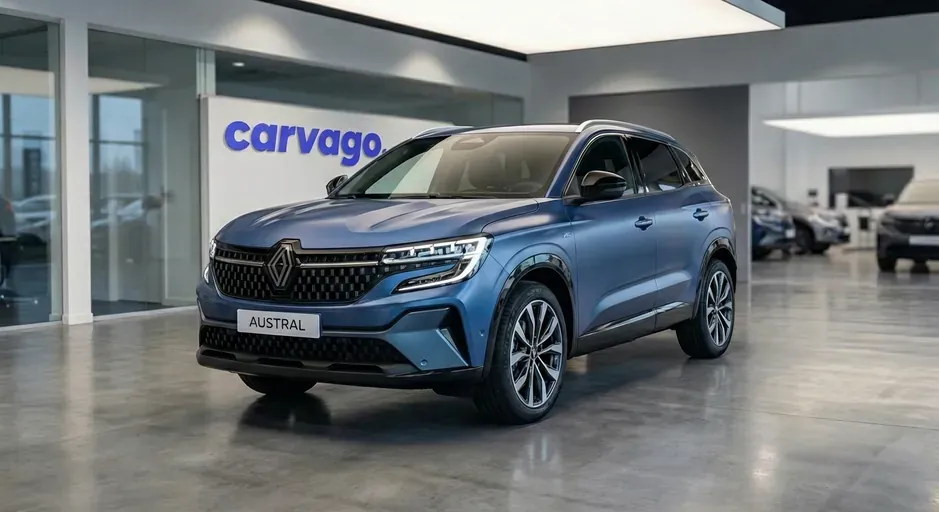
The Renault Austral is a compact C-segment crossover, offered exclusively as a five-door Renault Austral SUV. This review covers its first generation, which began customer deliveries in Europe in December 2022 after pre-orders opened on 30 June 2022, with production continuing into 2026.
Designed primarily for family buyers and company fleet drivers seeking an electrified crossover, the model emphasizes modular interior packaging and digital connectivity.
On 3 April 2025, Renault unveiled a mid-cycle facelift, followed by dynamic presentations on 19 May 2025. This guide examines both the original release and the updated models to help navigate the European used-car market.
European owner experiences with the first-generation Renault Austral centre primarily on software calibration and the complex hardware of the full hybrid powertrain. While the underlying CMF-CD platform feels mechanically robust, early production examples (2022 to 2024) frequently exhibited teething issues in electronics and powertrain management. Because customer deliveries of the facelifted version only began for the 2025/2026 model year, long-term fleet reliability for updated models remains unestablished.
On the mechanical side, the 1.2-litre E-Tech Full Hybrid has been subject to a manufacturer technical campaign across Europe covering vehicles built between 6 June 2022 and 20 December 2024. In these units, oil vapour recycling line blockage and crankcase condensation caused fuel or vapour odours inside the cabin, sporadic low oil alerts, and oil dilution. The official workshop remedy requires replacing the oil separator and breather pipework, carrying out an oil flush, and updating the engine calibration. Furthermore, tests describe and owners report low-speed hesitation, mechanical thuds, and false gearbox warning messages from the clutchless multimode dog-ring transmission on early builds. These symptoms typically stem from synchronisation timing discrepancies between the electric motor and the mechanical dog gears, which workshops have largely resolved through hybrid control unit software updates.
In the cabin, early cars frequently suffered from OpenR Link infotainment glitches. Owners report the central screen occasionally freezing on navigation tabs, turning black mid-drive, or failing to engage parking camera feeds. Most of these occurrences have been addressed via rolling over-the-air firmware updates and dealer multimedia gateway reprogrammings.
Official European safety recalls have addressed several distinct vehicle systems:
| Issue | Production Window | Scope | Official Defect Description & Remedy |
|---|---|---|---|
| ABS-ESP Diagnostic Alerts | 23 Mar 2023 – 23 Jan 2025 | Worldwide (24,112 vehicles) | Incorrectly programmed control unit prevents braking system failures from warning the driver that ABS, ESP, or emergency braking assistance are unavailable. Workshops reprogram the module. |
| Parking Brake Actuator | 12 Apr 2024 – 7 May 2025 | Europe-wide multi-model | Misaligned position sensor on the parking brake actuator can prevent the locking pawl from engaging in "P lock". Addressed by actuator inspection and replacement. |
| Easy Access Seat Travel | 21 Apr 2022 – 28 Nov 2023 | Worldwide (27,893 vehicles) | Retracting front seatback can come into contact with rear passengers when using the access function, risking leg injury. Resolved by updating the seat control unit to limit travel. |
| Wheel Fixing Screws | 17 Aug 2022 – 5 Dec 2022 | Worldwide (393 vehicles) | Insufficiently tightened fixing screws posed a detachment risk on early production batches. Workshops inspect and re-torque the wheel bolts. |
When shopping for a used hybrid Renault Austral, having a physical inspection and checking the service history via CarAudit to ensure that all outstanding factory service campaigns and recall procedures were completed at an authorised dealer is vital to avoid unresolved software bugs or crankcase condensation faults.
The first-generation Renault Austral arrived exclusively with electrified petrol powertrains, omitting diesel options entirely from the lineup. Depending on the production year, buyers can choose between three-cylinder and four-cylinder mild hybrids or an advanced multi-mode full hybrid.
| Engine | Fuel | Power | Gearbox | Model years |
|---|---|---|---|---|
| 1.2 Mild Hybrid Advanced 130 | Petrol (48V mild hybrid) | 96 kW (130 hp) | 6-speed manual | 2022–2025 |
| 1.3 Mild Hybrid 140 | Petrol (12V mild hybrid) | 103 kW (140 hp) | 6-speed manual | 2022–2024 |
| 1.3 Mild Hybrid 140 | Petrol (12V mild hybrid) | 103 kW (140 hp) | Automatic | 2022–2023 |
| 1.3 Mild Hybrid 160 | Petrol (12V mild hybrid) | 116 kW (160 hp) | Automatic | 2022–2025 |
| 1.3 Mild Hybrid 150 | Petrol (12V mild hybrid) | 109 kW (150 hp) | Automatic | 2025–present |
| 1.2 E-Tech Full Hybrid 200 | Full hybrid | 146 / 147 kW (200 hp) | Automatic | 2022–2025 |
| 1.2 E-Tech Full Hybrid 200 | Full hybrid | 146 / 147 kW (200 hp) | Automatic | 2025–present |
For predominantly urban driving and stop-start commuting, the hybrid Renault Austral is particularly well suited. Its multi-mode full-hybrid system prioritises electric-only propulsion away from rest and during low-speed crawling, providing quiet progress in city traffic alongside low urban petrol consumption.
For mixed everyday driving and frequent motorway journeys, the four-cylinder petrol Renault Austral paired with the automatic gearbox is the more straightforward, conventional choice. Its four-cylinder engine runs with low vibration at cruising speeds and delivers predictable throttle response under overtaking loads. By comparison, the entry-level three-cylinder mild hybrid with the manual transmission requires frequent gear changes to maintain pace on motorway gradients, making it best approached as an honest, budget-conscious choice on the used market.
For drivers who regularly tow trailers or caravans, the mild-hybrid versions are preferable to the full hybrid, as they offer higher maximum braked towing limits.
For details on mechanical faults, transmission software updates, and official recall campaigns across these powertrains, see the owner experiences section.
| Dimension / Capacity | Pre-facelift (2022–2025) | Facelift (2025–present) |
|---|---|---|
| Length (mm) | 4 510 | 4 533 |
| Width (excluding mirrors, mm) | 1 825 | 1 830 |
| Height (mm) | 1 618–1 645 | 1 621–1 645 |
| Wheelbase (mm) | 2 667 | 2 667 |
| Boot volume – Mild hybrid (seats up / folded, l) | 500 / 1 525 | 555 / 1 761 |
| Boot volume – Full hybrid (seats up / folded, l) | 430 / 1 455 | 527 / 1 736 |
Full hybrid variants feature lower luggage capacities due to the high-voltage traction battery packaged beneath the boot floor.
Inside, the Renault Austral provides sufficient legroom and headroom across both rows to seat taller adults comfortably in the outer rear positions. Cabin practicality benefits from an asymmetrical split-folding rear bench mounted on longitudinal rails (standard on higher trims or optional), allowing owners to slide the seats forward to expand cargo space or slide them back to prioritise knee room. The rear backrests also feature multi-position rake recline, helping rear passengers adjust their posture on longer journeys. For day-to-day utility, the Renault Austral SUV offers a wide loading aperture and useful underfloor storage, though choosing the full hybrid powertrain eliminates the deepest section of the underfloor compartment.
Professional testers consistently characterise the Renault Austral as an agile but firmly sprung family crossover. On larger alloy wheels, ride quality draws divided opinions: some evaluations note composed body control and stable high-speed tracking, whereas others criticise a stiff, restless low-speed ride over patched tarmac that lacks suppleness. The optional rear-wheel-steering system (offered on pre-facelift full hybrids) divides opinion just as sharply. Testers appreciate how it shrinks the turning circle in tight city manoeuvres, yet several note that early calibrations felt twitchy and unnatural when turning in at higher speeds, making standard-steering setups feel calmer and more predictable.
Cabin refinement is generally praised at cruising speeds, though testers frequently register coarse vibrations and an audible drone from the three-cylinder full hybrid during cold starts and urban acceleration. By contrast, the cabin architecture and ergonomics earn positive feedback. The Google-based OpenR infotainment receives acclaim for its sharp display resolution, logical menu layouts, and the retention of physical toggle switches beneath the touchscreen for primary climate adjustments. Criticisms inside are limited to compromised rearward visibility caused by the thick rear pillars and exposed painted metal along the inner door frames.
Updates introduced in 2025 addressed several early complaints. Reworked door seals and supplementary under-bonnet sound deadening improved open-road acoustic insulation. Inside, revised front seats offer thicker cushioning, while software recalibrations smoothed the hybrid powertrain's transitions and brought a more progressive, reassuring steering feel to everyday cornering.
All market charts in this section draw from advertised listings of the complete Renault Austral model family across Europe rather than a generation-filtered subset, though this single-generation nameplate means the figures represent the reviewed model directly. In the current market offer, the median asking price sits at €29,000 for 2022 models and rises gradually to €29,900 for 2023 examples. Cars built in 2024 command a median asking price of €33,000, while newer iterations reach €35,900 for 2025 and €39,500 for 2026 models, reflecting market demand concentrated around the full hybrid powertrain alongside recent mid-cycle production updates.
The chart tracks the number of advertised Renault Austral models each month between April and September 2026, opening at 4,358 listings and rising to 6,139 by the end of the period.
Active listings over time
| Month | Renault Austral |
|---|---|
| 2026-04 | 4 358 |
| 2026-05 | 4 579 |
| 2026-06 | 4 914 |
| 2026-07 | 5 417 |
| 2026-08 | 5 594 |
| 2026-09 | 6 139 |
Source Carvago
Buyers can expect a substantial and expanding selection to choose from, as the total volume of active listings grew in every month shown.
The median asking price of cars advertised today, built in 2022, is €29,000, whereas the median asking price of cars advertised today, built in 2026, is €39,500, reflecting how prices differ across build years.
Median advertised price by year of manufacture
| Model year | Renault Austral |
|---|---|
| 2022 | 29 000 |
| 2023 | 29 900 |
| 2024 | 33 000 |
| 2025 | 35 900 |
| 2026 | 39 500 |
Source Carvago
Buyers looking at 2022 and 2023 models see median asking prices of €29,000 and €29,900, while those considering 2024 and 2026 models encounter median asking prices of €33,000 and €39,500.
This depreciation curve illustrates how the Renault Austral loses value over time, shedding roughly 18% of its original residual value in the first year and 33% by age three. The data below traces this decline across the model's first seven years.
Residual value by vehicle age
| Vehicle age | Renault Austral |
|---|---|
| New | 39 300 |
| 1 yr | 32 100 |
| 2 yrs | 28 500 |
| 3 yrs | 26 400 |
| 4 yrs | 24 900 |
| 5 yrs | 21 800 |
| 6 yrs | 20 700 |
| 7 yrs | 17 200 |
Source Carvago
Across the full seven-year span shown, the model sheds 56% of its initial value. The steepest annual decline takes place in the first year, after which the rate of loss moderates noticeably between ages two and four.
Between April 2026 and September 2026, advertised Renault Austral vehicles were divided exclusively between hybrid and petrol options, with hybrid listings growing from 2624 to 3614. The following chart details the monthly count of active listings across each fuel type.
Supply composition by fuel type
Petrol
Hybrid
| Month | Petrol | Hybrid |
|---|---|---|
| 2026-04 | 1 730 | 2 624 |
| 2026-05 | 1 729 | 2 845 |
| 2026-06 | 1 926 | 2 983 |
| 2026-07 | 2 204 | 3 206 |
| 2026-08 | 2 302 | 3 287 |
| 2026-09 | 2 521 | 3 614 |
Source Carvago
In September 2026, hybrid versions led the market with 3614 active listings alongside 2521 petrol options, while alternative fuels such as diesel and electric recorded zero listings. Buyers searching the market will realistically choose between hybrid and petrol engines, with hybrids consistently providing the largest volume of available cars.
The chart tracks the average asking price for the Renault Austral from April 2026 to September 2026, beginning at €31,600.
Average price development over time
| Month | Renault Austral |
|---|---|
| 2026-04 | 31 600 |
| 2026-05 | 31 600 |
| 2026-06 | 31 300 |
| 2026-07 | 31 100 |
| 2026-08 | 31 100 |
| 2026-09 | 31 000 |
Source Carvago
Across the six months shown, the average asking price moved from €31,600 down to €31,000, representing a minor decrease of roughly 2 percent.
Modular interior with sliding and reclining rear seats (standard on higher trims or optional)
User-friendly OpenR infotainment with physical climate buttons
Low fuel consumption during city driving in full hybrid versions
Stiff, restless low-speed ride quality on larger wheels
Early full hybrids suffer from transmission hesitation and software glitches
Full hybrid battery placement noticeably reduces boot capacity
Early Renault Austral models from 2022 to 2024 suffered from software glitches and teething troubles with the full hybrid system, while long-term reliability for facelifted models is not yet established. Selecting an example with documented dealer campaign work and software updates eliminates the most common early faults.
Facelifted versions from 2025 onwards offer improved acoustic insulation and smoothed powertrain software, but they command higher market prices. Earlier builds from 2022 and 2023 represent the most affordable entry point, provided all technical service campaigns have been completed.
The hybrid Renault Austral is best suited to urban driving and daily commuting due to quiet electric crawling and low city fuel consumption, though it offers less boot space. Drivers who frequently travel on motorways or tow should choose the four-cylinder petrol mild hybrid with an automatic gearbox for lower vibration and higher towing limits.
Verify the car's VIN against European recall databases to confirm that safety campaigns were completed. On full hybrid models, check the engine bay for vapour smells and confirm during a test drive that the transmission shifts without hesitation.
Sources: renault.co.uk, renaultgroup.com, adac.de, autocar.co.uk, autoexpress.co.uk
This article was prepared using artificial intelligence tools. The section guarantor is Petr Dušek.
Used car comparison: Citroën C5 Aircross vs. Ford Kuga. Find out which SUV offers better space, equipment, and reliability. Read our detailed verdict!
May 4, 2026
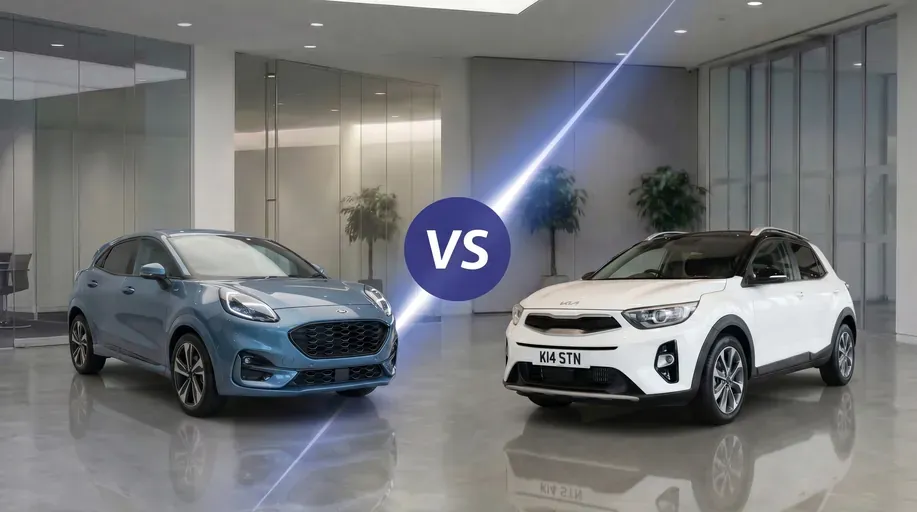
Ford Puma vs. Kia Stonic Comparison: Which city crossover offers better engines, equipment, and space? Read our detailed verdict and choose the right one for you.
Oct 16, 2026
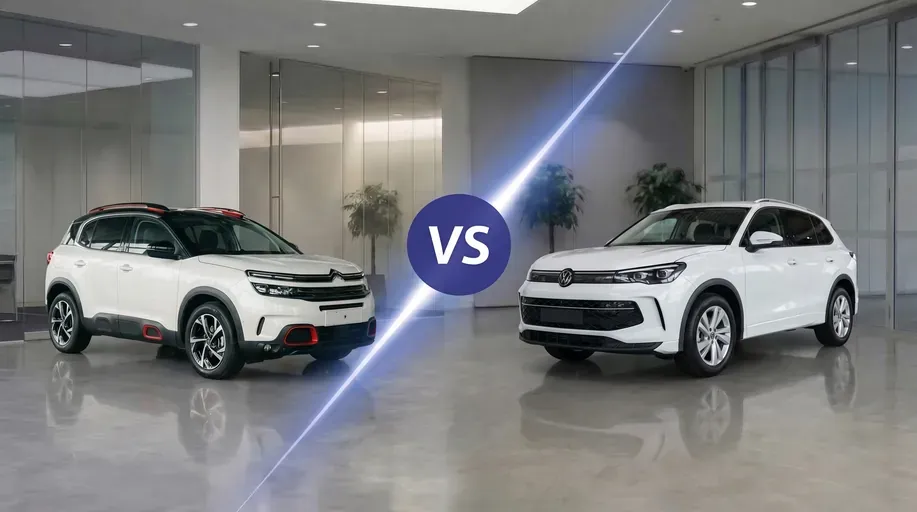
Detailed comparison of the Citroën C5 Aircross vs. Volkswagen Tiguan. We compared equipment, comfort, and reliability. Our verdict will help you choose a used SUV.
May 7, 2026