Car battle
Toyota Aygo X vs. Volkswagen up!: Complete comparison 2026
Toyota Aygo X vs Volkswagen up! (VW Up): Detailed comparison of city cars. Discover the differences in space, fuel consumption and equipment, and read our verdict.
Oct 16, 2026
Peugeot 208 review: real owner experience, common faults, petrol and EV picks, running costs and prices — everything you need before you buy.
October 29, 2026
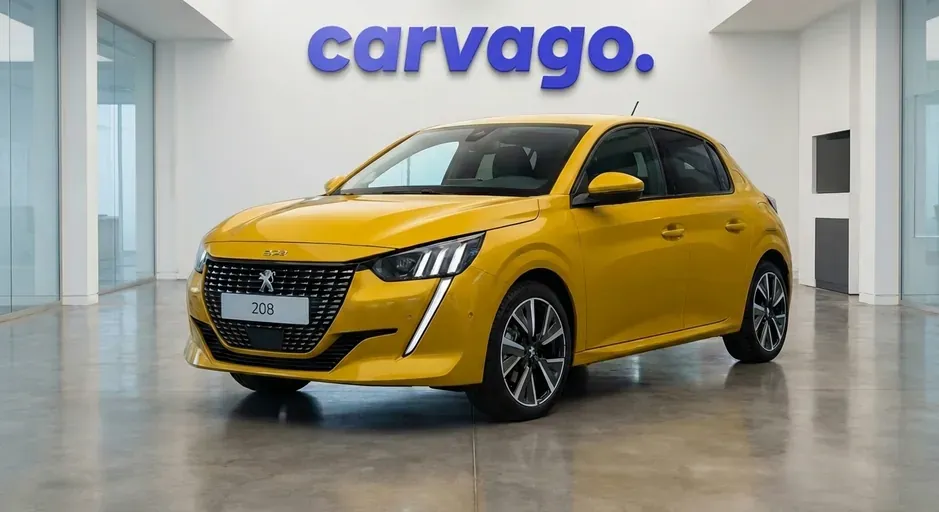
The second-generation Peugeot 208 represents the French manufacturer in the competitive European B-segment supermini class. Sold exclusively as a five-door Peugeot 208 hatchback, initial customer deliveries commenced across Europe in October 2019 for petrol and diesel versions, followed in January 2020 by the electric Peugeot 208.
A mid-cycle update was unveiled on 6 July 2023, with European deliveries starting in November 2023. Alongside altered front-end light signatures and updated interior displays, the facelift added 48V mild-hybrid powertrains and an upgraded battery and motor setup for the electric version. Ahead of this refresh, diesel production ended in December 2022.
The Peugeot 208 primarily targets urban commuters, smaller households looking for an efficient runabout, and fleet buyers requiring manageable exterior proportions for dense city traffic. This review covers the second-generation model across both its original and facelifted forms from 2019 through 2026.
Owner reports on the second-generation Peugeot 208 across European markets show that overall ownership satisfaction depends heavily on powertrain selection and strict adherence to service requirements. While the chassis and cabin hardware generally hold up well, distinct mechanical and electrical weaknesses have emerged across the different engine variants.
On the petrol Peugeot 208 built prior to the late-2023 update, the 1.2 PureTech engine utilises a timing belt running directly in engine oil. Fuel dilution and thermal cycling cause the rubber belt to swell, craze, and shed particulate debris into the lubrication circuit. This debris accumulates in the oil pick-up strainer and vacuum pump feed, triggering low oil pressure alerts and risking a loss of braking vacuum assistance or engine seizure. Owners and independent workshops report that dropping the oil sump, cleaning the pickup strainer, and installing the manufacturer's revised belt resolves the issue preventatively. Post-facelift mild-hybrid versions replace this design with an internal timing chain.
Alternative powertrains feature their own verified failure points. On the diesel Peugeot 208, owners frequently report emissions warning lights accompanied by an engine restart countdown. This is often linked to failure of the integrated delivery pump or crystallisation of urea within the AdBlue reservoir, in some cases requiring replacement of the tank and pump module. For the electric Peugeot 208, owners describe failures of the factory-fitted on-board charger. While rapid DC charging continues to work normally, the unit refuses AC charging from home wallboxes or destination chargers due to internal component burnout, requiring replacement of the charging unit or specialist board repair.
Official safety registers record several European recalls that prospective buyers must account for:
Given the scope of these technical actions, having any prospective vehicle checked through an independent service like CarAudit ensures its maintenance documentation and mechanical health are properly verified before signing.
The second-generation Peugeot 208 offers internal combustion engines alongside mild-hybrid and all-electric powertrains across pre-facelift and facelifted versions. Front-wheel drive is standard on every model, paired with manual, dual-clutch, or torque-converter automatic transmissions depending on the production year.
| Engine | Fuel | Power | Gearbox | Model years |
|---|---|---|---|---|
| 1.2 PureTech 75 | Petrol | 55 kW (75 hp) | 5-speed manual | 2019–present |
| 1.2 PureTech 100 | Petrol | 74 kW (100 hp) | 6-speed manual | 2019–present |
| 1.2 PureTech 100 | Petrol | 74 kW (100 hp) | 8-speed automatic | 2019–2023 |
| 1.2 PureTech 130 | Petrol | 96 kW (130 hp) | 8-speed automatic | 2019–2023 |
| 1.5 BlueHDi 100 | Diesel | 75 kW (100 hp) | 6-speed manual | 2019–2022 |
| 1.2 Hybrid 100 e-DCS6 | Petrol MHEV | 74 kW (100 hp) | 6-speed automatic | 2023–present |
| 1.2 Hybrid 136 e-DCS6 | Petrol MHEV | 100 kW (136 hp) | 6-speed automatic | 2023–present |
| e-208 | Electric | 100 kW (136 hp) | Single-speed automatic | 2020–present |
| E-208 156 | Electric | 115 kW (156 hp) | Single-speed automatic | 2023–present |
For urban commuting and short errands, the entry-level naturally aspirated petrol Peugeot 208 is mechanically straightforward, though its five-speed gearbox and modest pace make it poorly suited to faster roads. Drivers with home charging who stay mostly in town will find the electric Peugeot 208 quiet and quick off the mark, with the updated higher-output electric motor bringing greater cold-weather cruising efficiency.
For mixed daily driving, the mid-range turbocharged petrol paired with the six-speed manual gearbox represents the most balanced all-rounder, delivering flexible low-end response for city merging and country roads alike. Buyers seeking an automatic for stop-and-go commuting should look at the facelifted hybrid Peugeot 208, which uses an integrated electric motor inside the dual-clutch transmission to handle low-speed crawling with the petrol engine switched off. The earlier pre-facelift petrol models equipped with the eight-speed torque-converter automatic shift smoothly at speed.
For frequent long-distance motorway journeys, the diesel Peugeot 208 is the specialist pick as a used car, offering relaxed pulling power once settled at cruising speed despite audible diesel clatter at cold idle. Drivers buying newer model years for motorway duty are better served by the more powerful mild hybrid or the earlier high-output turbo petrol.
For towing, the electric variants cannot be used because they have no homologated towing capacity. Anyone needing to pull a small trailer must choose the turbocharged petrol, the mild hybrid, or the used diesel.
For known mechanical vulnerabilities, timing-drive concerns, and factory recall campaigns across these powertrains, see the owner experiences section.
| Dimension / Capacity | Hatchback (Combustion & Hybrid) | Hatchback (Electric) |
|---|---|---|
| Length (mm) | 4,055 | 4,055 |
| Width excluding mirrors (mm) | 1,745 | 1,745 |
| Height (mm) | 1,430 | 1,430 |
| Wheelbase (mm) | 2,540 | 2,540 |
| Boot capacity – seats up (l) | 311–352 | 265–309 |
| Boot capacity – seats folded (l) | 1,106–1,163 | 960–1,118 |
The Peugeot 208 hatchback prioritises compact outer dimensions and styling over rear cabin space. Second-row accommodation is noticeably restricted, with limited knee room and foot space when taller occupants travel in the front seats. The descending roofline and narrow door apertures also compromise rear headroom and make entering or exiting the rear bench awkward for adults.
As standard across the range, the rear bench is fixed without fore-aft sliding adjustability, featuring a split-folding backrest to expand luggage capacity when needed. The boot provides a practical, square layout for routine shopping, though loading heavy items requires clearing a fairly pronounced lip, and folded backrests leave a stepped cargo floor rather than a continuous flat surface.
Professional road tests describe the Peugeot 208 as a composed cruiser that prioritises suppleness over sportiness. On open roads, the chassis absorbs frost heaves and undulating surfaces comfortably, while wind and engine noise remain well suppressed. In urban driving, however, sharp tarmac ridges and recessed drain covers send firm thuds into the cabin. The electric Peugeot 208 feels calmer over smaller urban ruts due to its added mass, though it exhibits more vertical body movement over rolling crests. Roadholding through corners is safe, but the diminutive steering wheel creates an artificial off-centre weighting that lacks genuine road feedback and can feel twitchy on motorways.
Inside, upper dashboard surfaces feature tactile soft-touch materials, although scratch-prone hard plastics remain common lower down. Cabin ergonomics remain the most contentious area among testers. The compact steering wheel forces taller drivers into an unnatural seating position to avoid obscuring the instrument cluster (digital on higher trims) with the steering wheel rim. Climate controls routed entirely through the central touchscreen also draw criticism for distracting the driver on the move.
Professional evaluations agree on the model’s strong motorway refinement and stable handling, but they disagree on suspension tuning: some praise its open-road suppleness, while others find low-speed urban bumps unyielding. The mid-cycle facelift brought fresh digital displays and updated powertrains, yet drew criticism for removing physical shortcut toggles, making everyday cabin adjustments even more screen-dependent.
All the charts in this section reflect Carvago listings across the entire Peugeot 208 model family, encompassing earlier generations alongside the current one, rather than filtering strictly to the reviewed generation. Consequently, this data does not establish a separate price level exclusively for the reviewed generation. Across current listings grouped by build year, the median asking price stands at €11,000 for 2019 examples and reaches €21,500 for 2026 cars, with 2023 models recording a median asking price of €17,900.
Active listings for the Peugeot 208 shifted from 16,062 in April 2026 to 14,744 in September 2026, reaching a low of 14,568 in August. The chart below tracks this month-by-month availability.
Active listings over time
| Month | Peugeot 208 |
|---|---|
| 2026-04 | 16 062 |
| 2026-05 | 15 988 |
| 2026-06 | 15 780 |
| 2026-07 | 15 517 |
| 2026-08 | 14 568 |
| 2026-09 | 14 744 |
Source Carvago
Buyers benefit from substantial choice in the used market, with advertised stock consistently remaining above 14,500 cars despite the mild net decline across the period.
Among used listings advertised today, the median asking price of cars built in 2019 is €11,000, while listings built in 2026 show a median asking price of €21,500. The chart below details how median asking prices compare across model years.
Median advertised price by year of manufacture
| Model year | Peugeot 208 |
|---|---|
| 2019 | 11 000 |
| 2020 | 14 900 |
| 2021 | 15 300 |
| 2022 | 16 000 |
| 2023 | 17 900 |
| 2024 | 18 300 |
| 2025 | 18 900 |
| 2026 | 21 500 |
Source Carvago
Buyers looking at 2020 models encounter a median asking price of €14,900 among currently advertised cars, whereas 2023 models reflect a median asking price of €17,900. Those seeking cars built in 2026 will find a median asking price of €21,500.
This depreciation curve illustrates how the Peugeot 208's residual value decreases with vehicle age, shedding roughly 21% of its initial value in the first year and 31% by age three. The chart below traces this trajectory across seven years of ownership.
Residual value by vehicle age
| Vehicle age | Peugeot 208 |
|---|---|
| New | 22 400 |
| 1 yr | 17 800 |
| 2 yrs | 17 400 |
| 3 yrs | 15 400 |
| 4 yrs | 14 600 |
| 5 yrs | 13 400 |
| 6 yrs | 12 200 |
| 7 yrs | 9 800 |
Source Carvago
Across the seven years shown, the model loses approximately 56% of its value overall. The steepest annual drop occurs in the first year, after which depreciation slows markedly between age one and two before continuing a steady decline.
From April to September 2026, petrol cars made up the largest volume of advertised Peugeot 208 listings, recording 11,825 vehicles in April and 11,795 in September. The breakdown across available fuels over this period is shown below.
Supply composition by fuel type
Petrol
Diesel
Hybrid
Electric
LPG
| Month | Petrol | Diesel | Hybrid | Electric | LPG |
|---|---|---|---|---|---|
| 2026-04 | 11 825 | 1 094 | 109 | 2 889 | 76 |
| 2026-05 | 12 419 | 1 126 | 134 | 2 168 | 66 |
| 2026-06 | 12 346 | 1 158 | 178 | 1 972 | 65 |
| 2026-07 | 12 159 | 1 125 | 212 | 1 888 | 69 |
| 2026-08 | 11 580 | 950 | 260 | 1 665 | 55 |
| 2026-09 | 11 795 | 936 | 314 | 1 588 | 63 |
Source Carvago
In September 2026, petrol dominated the advertised selection with 11,795 cars, while electric models numbered 1,588, diesel 936, and hybrids 314. Buyers will have by far the easiest time finding a petrol model, whereas electric and diesel options offer a smaller pool and hybrids remain comparatively rare.
Between April 2026 and September 2026, the average asking price for the Peugeot 208 started at €16,400 before tracking across the months shown below.
Average price development over time
| Month | Peugeot 208 |
|---|---|
| 2026-04 | 16 400 |
| 2026-05 | 16 300 |
| 2026-06 | 16 300 |
| 2026-07 | 16 300 |
| 2026-08 | 16 500 |
| 2026-09 | 16 600 |
Source Carvago
Prices stayed within a narrow band across the period, holding at €16,300 from May to July 2026 before ending at €16,600 in September 2026, an overall shift of just over one percent.
Composed open-road ride with well-suppressed engine and wind noise
Flexible daily performance from the mid-range turbocharged petrol engine
Plentiful availability and choice across used vehicle listings
Pre-facelift petrol engines risk timing belt degradation and oil strainer blockage
Restricted rear passenger space with limited knee room and narrow door openings
Driving position can obscure instrument dials and relies heavily on touchscreen menus
Reliability depends heavily on the powertrain, as pre-facelift petrol engines require documented timing-belt maintenance and diesel models can suffer emissions system issues. Choosing a post-facelift mild hybrid or thoroughly verifying the service history on earlier cars offers the greatest peace of mind.
The mid-range turbocharged petrol Peugeot 208 with the six-speed manual gearbox provides the most balanced response and flexibility for mixed driving. Urban drivers who prefer an automatic are best served by the facelifted mild hybrid, whereas used diesel models remain the specialist option for frequent motorway travel.
Inspect the timing belt on petrol engines and verify AC charging operation on the electric Peugeot 208. Buyers should also have an authorised dealer verify by VIN that all statutory recalls have been completed.
The Peugeot 208 is better suited to commuters and smaller households than to primary family duty. Rear passenger space is restricted, and folding the rear seats leaves a stepped cargo area rather than a flat load floor.
Sources: media.stellantis.com, peugeot.co.uk, adac.de, autocar.co.uk, autoexpress.co.uk
This article was prepared using artificial intelligence tools. The section guarantor is Petr Dušek.
Toyota Aygo X vs Volkswagen up! (VW Up): Detailed comparison of city cars. Discover the differences in space, fuel consumption and equipment, and read our verdict.
Oct 16, 2026
Hyundai i10 vs. Toyota Aygo X: A detailed comparison, real-world insights, and a verdict to help you choose the right small city car.
Apr 2, 2026
Detailed comparison of the Suzuki Swift and Toyota Yaris. Which city hatchback should you choose? Discover the differences in fuel consumption, equipment, and reliability. Read our verdict.
Apr 16, 2026