Car battle
Audi Q3 vs. Volkswagen T-Roc: Complete comparison 2026
Detailed comparison of Audi Q3 vs Volkswagen (VW) T-Roc. Discover the differences in space, equipment, and real-world reliability. Read our clear verdict before you buy.
Apr 23, 2026
Peugeot 2008 review: real owner experiences, common faults, engine picks and used prices — everything you need to know before buying.
October 27, 2026
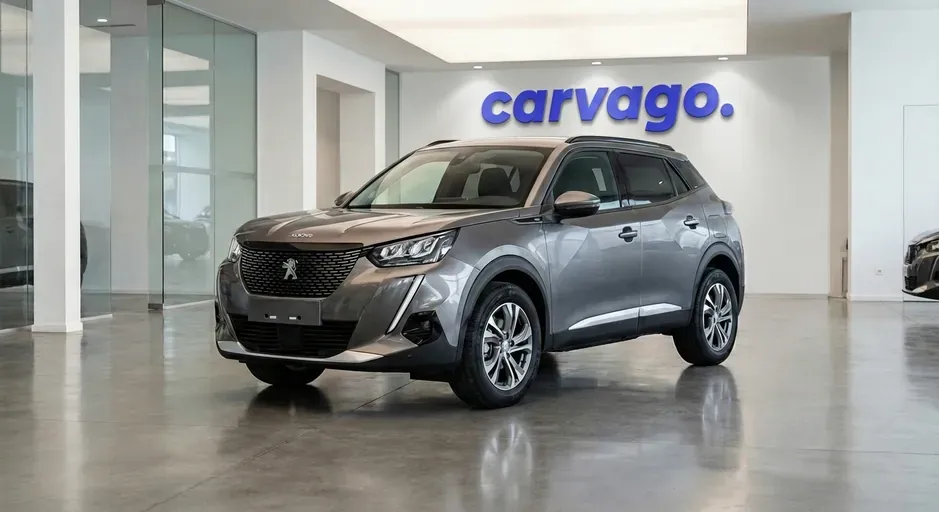
The Peugeot 2008 competes in the crowded European subcompact crossover segment. This review focuses exclusively on the second generation (internal code P24), which began European customer deliveries in February 2020 for combustion versions, followed by the all-electric e-2008 in April 2020. Sold solely as a five-door small SUV, it targets urban commuters, downsizers, and small families seeking elevated seating paired with compact exterior dimensions.
A mid-cycle refresh was unveiled on 4 May 2023, with order books opening on 12 June 2023 and European deliveries starting in July 2023. The update brought a redesigned front grille bearing the brand’s revised crest, distinctive three-claw light signatures, upgraded infotainment screens, and an updated electric powertrain. The model range evolved further with the opening of orders for a 48V mild-hybrid version on 26 January 2024 and the introduction of a revised petrol option on 17 March 2026, keeping the second generation in active series production.
The second-generation Peugeot 2008 has maintained steady European sales since its 2020 launch, but ownership reports reveal specific mechanical and electronic patterns across different drivetrains. Most recurring owner complaints center on early petrol variants, initial electric vehicle electronics, and central touchscreen stability, while official safety recalls cover several manufacturing defects across internal combustion and electrified variants.
On petrol Peugeot 2008 versions fitted with the 1.2 PureTech engine built from 2019 to 2023, the primary mechanical concern involves the "wet" timing belt operating submerged in engine oil. Fuel dilution from short-distance driving chemically degrades the belt elastomer over time. Shed rubber particles collect in the oil pan and obstruct the oil pump pick-up strainer mesh, causing low oil pressure warnings and potentially restricting oil feed to the brake vacuum pump, which leads to reduced braking assistance. Workshops address this by removing the sump to clean the strainer mesh and installing an updated oil-resistant belt. For the hybrid Peugeot 2008 introduced from 2024, the valvetrain was redesigned with a conventional timing chain.
For the all-electric Peugeot e-2008 produced between 2020 and 2023, specialist diagnostic reports identify internal hardware faults within the integrated on-board charger (OBC). Defective internal power components cause the car to trip domestic wallboxes or public destination AC chargers and reject AC power, while DC rapid charging via the CCS port continues to function normally. Permanent repair requires hardware replacement or remanufacturing of the charger assembly, as software updates cannot rectify internal board component failures. Across all powertrains from 2020 to 2024, owners and vehicle tests also note occasional central touchscreen freezes, slow responsiveness, or reboot cycles. Because ventilation and climate functions are controlled exclusively through the digital display, stability issues temporarily lock out cabin temperature settings. In most instances, updating the system firmware at an authorised workshop resolves the latency.
Multiple European safety notifications have addressed specific component batches and assembly tolerances across the model range:
The second-generation Peugeot 2008 launched with a broad powertrain portfolio encompassing turbocharged three-cylinder petrol units, four-cylinder diesels, 48-volt mild hybrids, and battery-electric variants. Power is delivered exclusively to the front wheels across the entire model run, with no all-wheel-drive configurations produced.
| Engine | Fuel | Power | Gearbox | Model years |
|---|---|---|---|---|
| 1.2 PureTech 100 | Petrol | 74 kW (100 hp) | 6-speed manual | 2020–2026 |
| 1.2 Turbo 100 | Petrol | 74 kW (100 hp) | 6-speed manual | 2026–present |
| 1.2 PureTech 130 | Petrol | 96 kW (130 hp) | 6-speed manual | 2020–2024 |
| 1.2 PureTech 130 | Petrol | 96 kW (130 hp) | 8-speed automatic | 2020–2025 |
| 1.2 PureTech 155 | Petrol | 114 kW (155 hp) | 8-speed automatic | 2020–2021 |
| 1.2 Hybrid 110 | Mild hybrid (petrol) | 81 kW (110 hp) | 6-speed dual-clutch automatic | 2025–present |
| 1.2 Hybrid 136 | Mild hybrid (petrol) | 100 kW (136 hp) | 6-speed dual-clutch automatic | 2024–present |
| 1.2 Hybrid 145 | Mild hybrid (petrol) | 107 kW (145 hp) | 6-speed dual-clutch automatic | 2025–present |
| 1.5 BlueHDi 100 | Diesel | 75 kW (100 hp) | 6-speed manual | 2020–2021 |
| 1.5 BlueHDi 110 | Diesel | 81 kW (110 hp) | 6-speed manual | 2021–2022 |
| 1.5 BlueHDi 130 | Diesel | 96 kW (130 hp) | 8-speed automatic | 2020–2023 |
| e-2008 (50 kWh) | Electric | 100 kW (136 hp) | 1-speed fixed gear | 2020–2024 |
| e-2008 (54 kWh) | Electric | 115 kW (156 hp) | 1-speed fixed gear | 2023–present |
City driving and short commutes:
For low-mileage urban use, the electric Peugeot 2008 operates smoothly with immediate response from a stop, eliminating cold-start wear. Among combustion options, the hybrid Peugeot 2008 with its dual-clutch transmission handles stop-and-go congestion cleanly thanks to low-speed electric crawling. The entry-level PureTech petrol with a manual gearbox serves as an accessible choice on the second-hand market for short journeys, though it requires frequent gear changes in dense traffic.
Mixed daily use:
Drivers splitting time between suburban roads and motorways will find the PureTech 130 paired with the eight-speed automatic a balanced used buy, offering stronger mid-range pull than the base engine without the vague shift action of the manual. In later model years, the Hybrid 136 effectively assumed this role, providing seamless automatic operation and low-end electric assistance for general family use.
Motorway touring and towing:
For regular long-distance highway travel, the discontinued diesel Peugeot 2008 is the most suitable used option, delivering relaxed high-speed gearing and steady pulling power, despite a noticeable diesel clatter at idle. For towing duties up to the vehicle's rated trailer limits, choose the automatic diesel or the higher-output petrol Peugeot 2008; the all-electric e-2008 is not type-approved for pulling trailers and permits towbar installation solely for bicycle carriers.
For detailed information on known mechanical vulnerabilities, timing system revisions, and safety recalls across these powertrains, refer to the owner experiences section.
| Dimension / Capacity | Pre-facelift (2020–2023) | Facelift (2023–2026) |
|---|---|---|
| Length (mm) | 4,300 | 4,304 |
| Width excluding mirrors (mm) | 1,770 | 1,770 |
| Height excluding roof bars (mm) | 1,530 | 1,523–1,530 |
| Wheelbase (mm) | 2,605 | 2,605 |
| Boot volume seats up / folded (l) | 434 / 1,467 | 434 / 1,467 |
Choosing the optional premium audio system places a subwoofer in the boot cavity, which deletes the underfloor spare-wheel recess.
Built on an extended platform compared to its supermini sibling, the Peugeot 2008 provides adequate knee room and headroom for adults in the outer rear seats. Carrying three adults across the back bench remains tight for shoulder width over longer journeys. The rear bench is fixed in place rather than sliding, but the seatbacks fold down in an asymmetric split to create a flat loading area when the dual-position boot floor (standard on higher trims, or optional) is secured in its upper position. A wide opening and a flush threshold simplify sliding heavy luggage inside, and packaging the electric battery beneath the floor pans ensures petrol, hybrid, and fully electric versions retain identical cargo practicality.
Professional road tests describe the Peugeot 2008 as a crossover focused on relaxed everyday cruising rather than driver engagement. High-speed stability and vibration isolation are strong, and tyre roar remains well suppressed on motorways. However, the suspension struggles with sharp potholes and broken urban tarmac, particularly on larger wheels. Quick direction changes reveal noticeable body lean in bends and body float over undulating crests. The steering feels light and predictable in town traffic, but testers consistently note a lack of road feedback. The electric Peugeot e-2008 follows the same pattern, offering quiet operation alongside safe, front-wheel-drive handling.
Interior assessments praise the tactile dashboard materials, which compare favourably to more expensive rivals, though harder plastics persist on the lower door casings and centre console. The front seats earn praise for long-distance lateral support, but lumbar adjustment was restricted to higher trims. The driving position divides opinion: the compact steering wheel can partially obscure the instrument cluster (which features a digital display on higher trims) depending on driver height and seating posture. Routing the climate controls entirely through the touchscreen is frequently cited as distracting on the move.
Reviewers agree that the cabin finish and motorway refinement are strengths, while the chassis lacks the sharpness of sportier competitors. Testers diverge mainly on low-speed compliance, where some find the ride pleasantly cushioned and others note fidgety reactions over sharp expansion joints. The mid-cycle facelift introduced updated display graphics and minor trim revisions, but left the underlying ride characteristics largely unchanged.
All the charts in this section are drawn from Carvago listings of the whole model family, including other generations represented in the data, and do not establish a separate price level for the reviewed generation alone. Across current advertisements for the Peugeot 2008, the median asking price ranges from €13,500 for 2019 examples to €26,400 for 2026 vehicles. Intermediate model years record median asking prices such as €18,000 for 2020 and €22,000 for 2024, reflecting differences in mileage, powertrain, and equipment across the offered stock.
The chart tracks the number of advertised Peugeot 2008 models from April 2026 to September 2026, opening at 16,652 listings and reaching a high of 17,689 in July.
Active listings over time
| Month | Peugeot 2008 |
|---|---|
| 2026-04 | 16 652 |
| 2026-05 | 17 030 |
| 2026-06 | 17 160 |
| 2026-07 | 17 689 |
| 2026-08 | 16 717 |
| 2026-09 | 16 895 |
Source Carvago
Overall supply has remained steady across the period, with counts holding between 16,652 and 17,689 to provide buyers with substantial ongoing choice.
Among used listings of this model advertised today, the median asking price for cars built in 2019 is €13,500, compared to €26,400 for those built in 2026. While newer model years generally command higher figures, the median asking price of cars advertised today built in 2021 is €17,900, which sits slightly lower than the €18,000 recorded for 2020 models.
Median advertised price by year of manufacture
| Model year | Peugeot 2008 |
|---|---|
| 2019 | 13 500 |
| 2020 | 18 000 |
| 2021 | 17 900 |
| 2022 | 19 000 |
| 2023 | 21 900 |
| 2024 | 22 000 |
| 2025 | 23 400 |
| 2026 | 26 400 |
Source Carvago
Buyers looking at 2022 to 2024 build years face a median asking price of cars advertised today between €19,000 and €22,000. Stepping up to 2025 and 2026 models requires budgets aligned with a median asking price of cars advertised today of €23,400 and €26,400 respectively.
This depreciation curve illustrates how the Peugeot 2008 loses value over time, shedding 20% of its initial residual value by its first year and 32% by age three. The data below tracks this decline across the model's first seven years.
Residual value by vehicle age
| Vehicle age | Peugeot 2008 |
|---|---|
| New | 26 600 |
| 1 yr | 21 300 |
| 2 yrs | 20 000 |
| 3 yrs | 18 000 |
| 4 yrs | 16 300 |
| 5 yrs | 15 600 |
| 6 yrs | 14 300 |
| 7 yrs | 10 600 |
Source Carvago
Across the seven years shown, the model sheds 60% of its residual value overall. Following the sharp drop in the first year, the pace of depreciation eases considerably between ages one and five before steepening again into the seventh year.
Across recent months, petrol models have represented the vast majority of advertised Peugeot 2008 inventory, reaching 12,443 listings in September 2026 compared to 2,336 diesels. The breakdown below details how monthly listing volumes compare across each fuel type.
Supply composition by fuel type
Petrol
Diesel
Hybrid
Electric
LPG
| Month | Petrol | Diesel | Hybrid | Electric | LPG |
|---|---|---|---|---|---|
| 2026-04 | 11 275 | 2 620 | 157 | 2 492 | 31 |
| 2026-05 | 11 979 | 2 778 | 219 | 1 934 | 32 |
| 2026-06 | 12 243 | 2 768 | 265 | 1 772 | 33 |
| 2026-07 | 12 785 | 2 710 | 318 | 1 765 | 35 |
| 2026-08 | 12 190 | 2 401 | 318 | 1 706 | 30 |
| 2026-09 | 12 443 | 2 336 | 343 | 1 675 | 30 |
Source Carvago
Petrol dominates the current selection by a wide margin, while diesel and electric variants offer the next most accessible options, with 2,336 and 1,675 listings respectively in September 2026. In contrast, hybrid choices accounted for 343 cars and LPG for 30, meaning buyers seeking those powertrains will encounter a much narrower pool of vehicles.
The chart tracks the average asking price for the Peugeot 2008 from April 2026 to September 2026, starting at €19,100.
Average price development over time
| Month | Peugeot 2008 |
|---|---|
| 2026-04 | 19 100 |
| 2026-05 | 19 200 |
| 2026-06 | 19 300 |
| 2026-07 | 19 400 |
| 2026-08 | 19 500 |
| 2026-09 | 19 600 |
Source Carvago
Across these six months, the average rose each month to reach €19,600, reflecting an overall increase of less than three percent.
Quiet cabin refinement and stable manners at motorway speeds
Tactile dashboard materials and supportive front seating
Practical boot capacity preserved identically across combustion and electric versions
Wet timing belt on early petrol engines can degrade and restrict oil pressure
Small steering wheel can obscure the instrument cluster depending on driver posture
Ventilation and climate functions lack physical buttons and rely entirely on the screen
Reliability depends heavily on the powertrain and service history. Early petrol Peugeot 2008 models require documented oil changes to avoid timing belt degradation, whereas later hybrid Peugeot 2008 variants resolve this by adopting a timing chain.
For mixed suburban and motorway driving, the mid-range petrol paired with the automatic gearbox or the newer mild hybrid offers the smoothest balance of response and convenience. Urban commuters are well served by the all-electric Peugeot e-2008, while regular long-distance travelers will find the discontinued diesel most suitable.
No. The all-electric model is not type-approved for pulling trailers, limiting towbar installation strictly to accessories such as bicycle carriers.
On early petrol versions, inspect the timing belt through the oil filler cap for cracking or fraying, and connect electric versions to an AC charger to ensure the on-board charger operates properly. Have an authorised dealer confirm by VIN that all safety recall campaigns are complete, or verify the vehicle's mechanical condition prior to purchase with CarAudit.
Sources: media.stellantis.com, adac.de, autocar.co.uk, autoexpress.co.uk, whatcar.com
This article was prepared using artificial intelligence tools. The section guarantor is Petr Dušek.
Detailed comparison of Audi Q3 vs Volkswagen (VW) T-Roc. Discover the differences in space, equipment, and real-world reliability. Read our clear verdict before you buy.
Apr 23, 2026
Detailed comparison of Citroën C3 Aircross vs. Kia Stonic. Discover the differences in spaciousness, equipment, and fuel consumption. Our verdict will make it easier to choose the right used SUV.
Apr 23, 2026
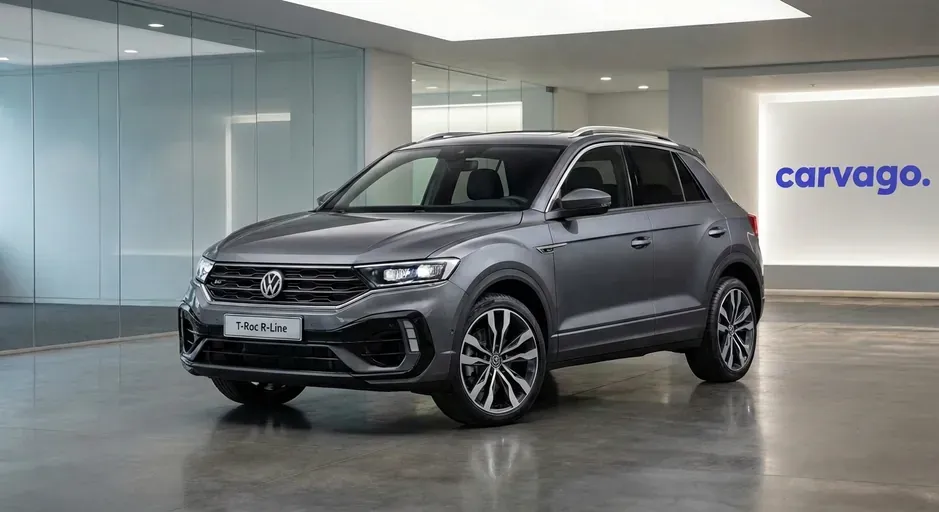
Volkswagen T-Roc review: real owner impressions, practical boot space, new eTSI mild-hybrid engines, running costs, and our definitive verdict.
Oct 17, 2026