Review Nissan Juke: What do owners and experts really say?
Nissan Juke review: real owner experience, hybrid efficiency, common faults, running costs and used prices — what you need before you buy.
November 3, 2026
Verdict at a Glance
Who it suits: Urban commuters and small households seeking distinctive styling and an elevated driving position for daily town driving.
Recommended engine: The 1.6 Hybrid for city traffic, or the manual 1.0 DIG-T petrol for smoother everyday journeys.
What to avoid: Dual-clutch automatic petrol models due to low-speed throttle lag, and any car without documented recall repairs verified by VIN.
Introduction
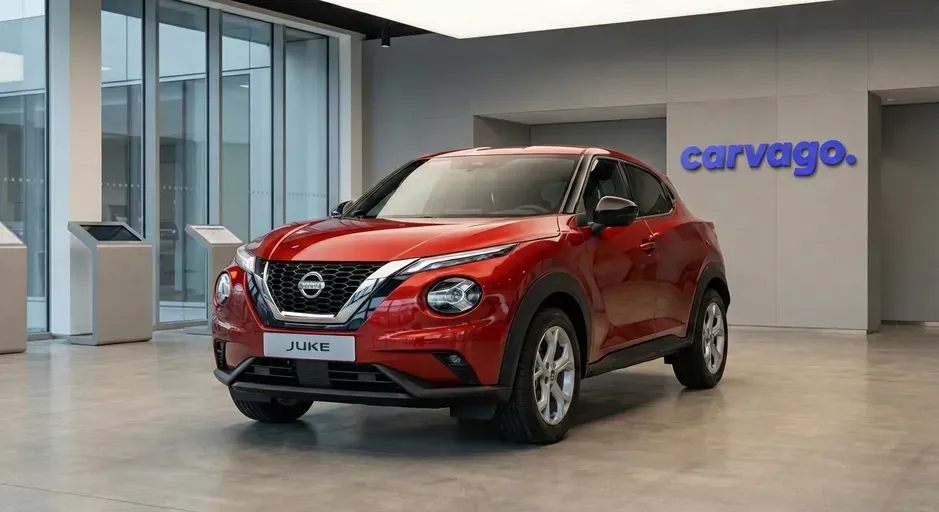
The second-generation Nissan Juke (internal code F16) is a subcompact crossover competing in Europe's B-SUV segment. Built at Nissan's Sunderland plant in the UK, series production officially began on October 10, 2019, with the first European customer deliveries following in late November 2019. This review focuses exclusively on this second generation, covering vehicles delivered across Europe from late 2019 through to ongoing production.
Sold exclusively as a five-door body style, the lineup launched with a turbocharged petrol engine before expanding to include a full hybrid option, which opened for orders in June 2022 ahead of first customer deliveries that July. On February 14, 2024, Nissan revealed a mid-cycle update that entered production immediately, reaching European customers from April 2024. The update focused on the cabin, introducing redesigned dashboard architecture, larger digital displays, and revised interior materials.
The Nissan Juke crossover is aimed primarily at urban drivers, downsizers, and small households seeking distinctive styling and an elevated seating position within compact exterior dimensions suited to daily town driving.
Owner Experiences: Common Faults and Recalls
On petrol versions fitted with the seven-speed dual-clutch transmission, tests and owners describe noticeable hesitation when accelerating from a standstill or navigating low-speed roundabouts. After an initial lag upon throttle input, the clutch can engage abruptly, causing an automatic Nissan Juke to lurch forward. While authorised workshop software updates for the engine and transmission control modules improve engagement in some cases, professional road tests describe this low-speed calibration as an inherent characteristic of the gearbox rather than a mechanical failure.
Owners report that premature discharge of the auxiliary 12-volt battery is a recurring issue across the range. Depletion tends to occur when a Nissan Juke is left parked for one to two weeks or used primarily for short urban trips. In the Nissan Juke Hybrid, a discharged auxiliary battery prevents the high-voltage system from booting, displaying error messages and disabling the drivetrain. In pure petrol variants, low auxiliary voltage disables the start-stop system and causes starter hesitation. Owners report that fitting an AGM battery with enhanced capacity, together with software updates addressing control module sleep states, resolves the issue in some cases.
In independent European reliability surveys, petrol models of this generation have logged lower satisfaction scores than class averages. A notable share of owners reported faults related to engine management electronics, auxiliary electrical systems, and brakes, frequently accompanied by longer workshop diagnostic times. Prospective buyers verifying the maintenance history or confirming that open campaigns have been cleared can use an independent inspection service such as CarAudit before concluding a purchase.
Official safety recalls recorded across European markets include:
Rear seatback latch mechanism: Announced in October 2021, covering 56,132 vehicles worldwide manufactured between 18.09.2019 and 28.08.2020. An internal chamfer on the rear seatback lock button can catch the latch actuation rod, preventing upward movement. As a result, the rear seatback may not latch securely when returned to an upright position, increasing the risk of injury in an accident. Authorised workshops replace both rear seat lock knobs.
Hybrid control module reset: Announced in April 2023, affecting hybrid models built between 16.06.2022 and 14.12.2022 across the EU and UK. Simultaneously pressing the accelerator and brake pedals can trigger a reset of the hybrid control module. Under cold-start conditions immediately after driving off, this can cause the engine to stumble or stall. Authorised dealers reprogram the control module software.
Front seat belt inspection: Announced in April and May 2025, covering 15,955 vehicles worldwide built between 02.04.2024 and 06.09.2024. Front seat belts may have suffered damage during pre-assembly preparation, resulting in cuts or grooves that fail safety requirements. Authorised workshops inspect both front seat belts and replace damaged assemblies.
Rear door welds: Announced in April 2024 for a limited batch of model-year 2023 vehicles in the UK. Welds on the right-hand rear door may be out of specification, leading to door rattles; in an extreme impact, the hinge could fail and allow the door to open. The remedy is replacement of the entire right-hand rear door assembly.
🔍 What to check before buying
Verify official recall completion via the vehicle identification number (VIN), confirming that campaigns for the rear seat latches, hybrid control software, and front seat belts have been carried out.
During the test drive on dual-clutch automatic petrol variants, test low-speed crawling and pulling away from a standstill to evaluate throttle hesitation and clutch smoothness.
Test the condition of the auxiliary 12-volt battery, ensuring the engine starts without hesitation, the start-stop system functions, and no electronic warning messages appear.
Inspect the boot floor, lifting the false floor to check the tyre repair well and rear insulation for moisture or water ingress.
Engines: Which One to Choose
The second-generation Nissan Juke arrived with a streamlined engine range designed for European emissions requirements. The platform launched exclusively with a turbocharged three-cylinder petrol unit before adding a full hybrid option.
Engine
Fuel
Power
Gearbox
Model years
1.0 DIG-T 117
Petrol
86 kW (117 hp)
6-speed manual / 7-speed automatic
2019–2020
1.0 DIG-T 114
Petrol
84 kW (114 hp)
6-speed manual / 7-speed automatic
2020–present
1.6 Hybrid 143
Full Hybrid (Petrol)
105 kW (143 hp)
Multi-mode automatic
2022–present
Which engine to choose
City driving and short tripsFor urban commuting, the hybrid Nissan Juke is the most suitable configuration. Its electric drive motor initiates acceleration from a standstill, allowing the car to manage stop-and-go congestion without firing the petrol engine immediately. This electric assistance minimizes mechanical strain during repeated cold starts and short hops.
Mixed daily useFor general everyday driving across town and country roads, the petrol Nissan Juke is a practical choice. Drivers prioritizing smooth operation should opt for the manual Nissan Juke over the dual-clutch automatic Nissan Juke.
Motorway journeysLong-distance drivers will encounter specific trade-offs with both options. The 1.0 DIG-T settles into a quiet cruise at steady motorway speeds, although overtaking reserves at higher speeds require planning and downshifting. The 1.6 Hybrid provides stronger mid-range responsiveness, but sudden acceleration or steep climbs cause its transmission to hold elevated engine speeds, which intrudes on cabin quietness.
Towing and utilityFor pulling trailers, the petrol engine is the clear choice over the hybrid. The 1.0 DIG-T is certified for substantially heavier braked trailers, whereas the hybrid version has a much lower towing ceiling due to the thermal and packaging constraints of its electrical hardware.
For reported mechanical faults and transmission behaviour, refer to the owner experiences section.
Space & Practicality
Version
Length (mm)
Width (mm)
Height (mm)
Wheelbase (mm)
Boot volume (seats up / folded, l)
1.0 DIG-T Petrol
4,210
1,800
1,593
2,636
422 / 1,305
1.6 Hybrid
4,210
1,800
1,593
2,636
354 / 1,237
The Nissan Juke SUV provides seating for five, though its interior accommodation is shaped noticeably by its tapered silhouette. While front passengers benefit from an elevated driving position, rear-seat accommodation is tighter. Taller occupants face constrained knee clearance and headroom compared to boxier segment rivals, and rear ingress requires negotiating a relatively narrow door opening. The rising shoulder line and thick rear pillars also pinch the side windows, restricting outward visibility and giving the rear quarters a somewhat cocooned atmosphere. Everyday seating flexibility relies on a standard 60/40 split-folding rear bench with a fixed base, as sliding rear seat adjustments are not offered. Cargo versatility differs between powertrains: the hybrid Nissan Juke cedes underfloor luggage volume to accommodate its traction battery, giving the petrol version a clear advantage for taller or bulkier items.
What the Tests Say
Professional road tests describe the Nissan Juke as an agile and composed crossover, featuring disciplined body control in corners and predictable steering well-suited to city driving. However, ride compliance divides opinion across evaluations. While the suspension remains stable on standard wheels, testers note an unsettled edge over urban potholes, and specifying larger optional wheels makes low-speed travel noticeably fidgety. Cabin refinement is mixed; tyre rumble and wind noise around the door mirrors intrude at motorway speeds. Under acceleration, the petrol engine generates a vocal thrum under heavy load, while the Nissan Juke Hybrid delivers silent urban running on electric power but revs noticeably when calling for swift highway overtaking.
Inside, testers consistently commend the driving position and the retention of tactile climate controls alongside durable dashboard assembly. Against those strengths, rear three-quarter visibility is heavily restricted by wide rear roof pillars and the upward window line. The mid-cycle update addressed earlier infotainment complaints by introducing a significantly larger, faster central touchscreen with clearer menus, although scratch-prone hard plastics remain evident on the lower doors and centre console.
Prices and Market Offer
All charts in this section are drawn from Carvago listings covering the entire Nissan Juke model family, including earlier generations represented in the data, rather than the reviewed generation alone. Because the data pools the full model line, it does not establish a separate price level specifically for the reviewed generation. Across current listings, the median asking price starts at €13,400 for model year 2019 and stands at €18,100 for model year 2022. For later manufacture, the median asking price reaches €22,400 for model year 2024 and €24,500 for model year 2026.
Between May and October 2026, monthly listings for the Nissan Juke fluctuated across the market, opening at 8,089 listings in May and reaching a high of 8,230 in June, as shown below.
Nissan Juke - availability over time
Active listings over time
Month
Nissan Juke
2026-05
8 089
2026-06
8 230
2026-07
8 206
2026-08
7 637
2026-09
7 677
2026-10
7 187
Source Carvago
Although active listings decreased to 7,187 by October, buyers can still expect a substantial volume of available vehicles to choose from across the market.
Across used listings advertised today, the median asking price for vehicles built in 2019 is €13,400, compared to €24,500 for those built in 2026. The chart below details how median asking prices compare across each build year in the dataset.
Nissan Juke - median price by model year
Median advertised price by year of manufacture
Model year
Nissan Juke
2019
13 400
2020
16 900
2021
17 300
2022
18 100
2023
21 200
2024
22 400
2025
23 500
2026
24 500
Source Carvago
Buyers focusing on earlier model years will find a median asking price among current listings of €16,900 for cars built in 2020, while securing a 2025 model corresponds to a median asking price of €23,500.
This depreciation curve illustrates how the model loses value with age, showing a 15% decline in residual value by age one and 27% by age three. The chart outlines this progression across the vehicle's first seven years.
Nissan Juke - value loss by age
Residual value by vehicle age
Vehicle age
Nissan Juke
New
24 200
1 yr
20 600
2 yrs
19 100
3 yrs
17 700
4 yrs
17 000
5 yrs
15 400
6 yrs
14 000
7 yrs
12 100
Source Carvago
Over the seven-year span shown, the model sheds 50% of its initial residual value. The sharpest drop occurs during the first year, after which annual depreciation moderates.
Between May 2026 and October 2026, active listings were concentrated in petrol and hybrid models, with petrol counting 5,989 listings and hybrid counting 1,935 listings in May. The following chart illustrates the monthly volumes across each fuel type.
Nissan Juke - supply by fuel over time
Supply composition by fuel type
Petrol
Diesel
Hybrid
LPG
Month
Petrol
Diesel
Hybrid
LPG
2026-05
5 989
140
1 935
17
2026-06
6 095
133
1 982
14
2026-07
6 006
124
2 049
21
2026-08
5 554
120
1 935
19
2026-09
5 533
142
1 967
23
2026-10
5 108
146
1 896
25
Source Carvago
In October 2026, petrol cars made up 5,108 listings and hybrids accounted for 1,896, while diesel totaled 146 and LPG stood at 25. Buyers will have an easy time finding petrol or hybrid examples on the market, but diesel and other fuel types make up only a small fraction of the available choice.
From May 2026 to October 2026, the average asking price for the Nissan Juke opened at €19,900, tracing the progression shown in the chart below.
Nissan Juke - price trend over time
Average price development over time
Month
Nissan Juke
2026-05
19 900
2026-06
19 800
2026-07
19 800
2026-08
19 800
2026-09
19 600
2026-10
19 500
Source Carvago
Over this six-month period, the average asking price edged down by roughly 2% from €19,900 to €19,500. The overall shift was very small relative to the level of the asking price, with values remaining unchanged at €19,800 from June through August 2026.
Disciplined body control in corners with predictable steering suited to city driving
Silent and smooth electric operation in low-speed urban traffic on hybrid models
Ergonomic driving position retaining physical climate controls alongside updated infotainment
Cons
Dual-clutch automatic hesitates off the mark and engages abruptly at low speeds
Tight rear passenger space and poor rear three-quarter visibility
Auxiliary 12-volt battery prone to premature discharge during short trips or parking
Frequently asked questions
Is the second-generation Nissan Juke reliable?
Independent surveys show petrol models scoring below average, with auxiliary 12-volt battery drain being a frequent issue across the range. Battery depletion can immobilise the Nissan Juke or prevent hybrid systems from starting if left parked or driven only on short trips.
Which engine is best to choose?
The hybrid Nissan Juke is well suited for city driving because it operates smoothly on electric power in congestion. For mixed use and towing, the petrol manual Nissan Juke is preferable, avoiding the low-speed hesitation common to dual-clutch models.
What should you check before buying?
Verify official recall completion by VIN, particularly regarding seat latches, hybrid software, and front seat belts. On an automatic Nissan Juke, test low-speed take-off for jerky clutch engagement and inspect the boot well for dampness.
Is the interior spacious enough for family use?
It suits small households well, but rear accommodation is tight for taller passengers due to limited knee clearance and a sloping roofline. Petrol versions provide adequate boot space for daily needs, while hybrid models lose underfloor storage to the battery.