Review
Review Volkswagen ID.5: What do owners and experts really say?
Volkswagen ID.5 review: real owner experience, common faults, charging speeds, running costs, and used prices — everything before you buy.
Oct 25, 2026
Articles
Review
Mercedes-Benz EQC review: real owner experience, real-world range, charging performance, common faults, and used prices before you buy.
October 30, 2026
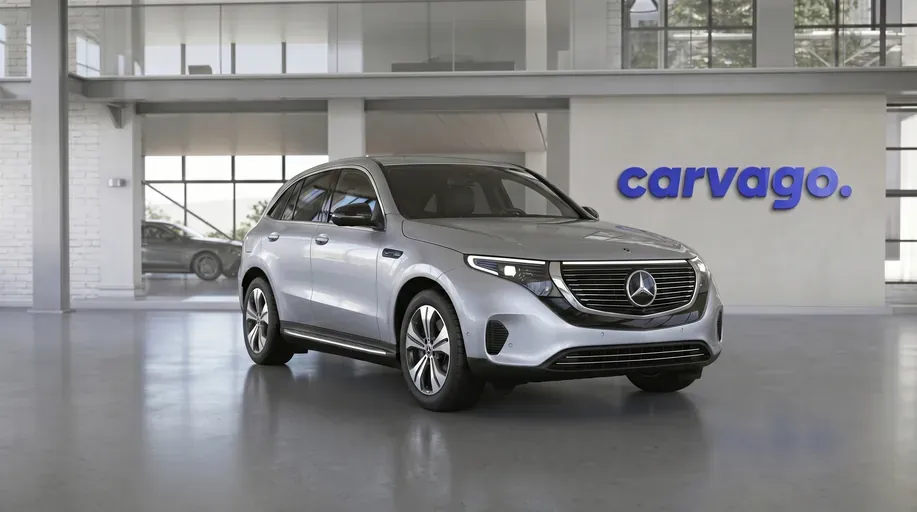
The Mercedes-Benz EQC arrived in European showrooms as the manufacturer's first dedicated series-production electric vehicle under the EQ sub-brand, positioned in the premium mid-size SUV class. This review covers the first-generation model (internal designation N293). Following its world premiere in September 2018, series production commenced and order books opened in May 2019, with first customer deliveries arriving in July 2019. Production ended in May 2023 without an immediate direct successor.
Instead, a running technical revision arrived in November 2020 that replaced the original single-phase on-board alternating-current charger with a three-phase unit to reduce standard wallbox charging times.
On the second-hand market, this model primarily attracts buyers looking for a refined, premium family crossover that avoids the minimalist ergonomics and screen-dominated interiors common in later ground-up electric platforms. Its conventional controls and familiar layout make it a logical choice for drivers seeking a straightforward transition into battery-electric driving.
Workshop reports and roadworthiness data indicate that the Mercedes-Benz EQC can experience accelerated wear on its front lower suspension control arm bushes and ball joints, frequently emerging between 50,000 km and 70,000 km. Because the model shares its underlying suspension architecture with lighter internal-combustion predecessors, its substantial kerb weight places heavy dynamic loads on rubber-metal joints. Replacing the lower control arms restores factory alignment and eliminates clunking over rough surfaces, but replacement components remain subject to the same accelerated wear cycle under regular use.
Closely connected to vehicle mass and instantaneous torque delivery is tyre consumption. Official roadworthiness datasets record elevated failure rates caused by tyre tread depth dropping below legal thresholds or exposing tyre cords. Front and rear camber dynamics combine with drive forces to produce severe inner-shoulder scrubbing, frequently exhausting tyres within 20,000 to 30,000 km. Maintaining four-wheel alignment and strictly observing recommended tyre inflation pressures helps mitigate, but does not eliminate, rapid shoulder wear on the electric Mercedes-Benz EQC.
Technical teardowns and engineering failure analyses describe a vulnerability regarding the electric drive units over higher operating hours. The mechanical silicon carbide seal on the liquid-cooled rotor shaft can degrade, allowing coolant to weep past the seal face into the electric motor stator chamber. Drivers typically notice this via recurring instrument cluster alerts to top up coolant or intermittent high-voltage isolation warnings. If left unaddressed, coolant accumulation degrades high-voltage winding insulation and can prompt drivetrain shutdown. Authorised retailer protocol requires replacing the complete drive unit assembly, although independent electric-vehicle specialists have developed precision rebuild kits to replace the damaged seal without fitting an entirely new motor.
Official safety registers across Europe show several safety campaigns launched between 2019 and 2023 for the all-wheel-drive Mercedes-Benz EQC. Investigations through European safety databases confirm that no new recall campaigns were announced during 2025 or 2026. The verified campaigns addressed early production defects in mechanical components, battery casing protection, and steering wiring.
| Announced | Affected Build Window | Reach | Defect & Remedy |
|---|---|---|---|
| November 2019 | 22 February 2019 to 06 October 2019 | Worldwide (~1,700 vehicles) | "The bolt in the front axle differential transmission might not meet durability specifications." Retailers replace the complete front-axle electric drive assembly free of charge. |
| November 2020 | 11 December 2019 to 18 May 2020 | Worldwide (~35,000 across platforms) | "The wiring harness for the steering control device may have been damaged during the production process and can allow moisture to ingress into the control unit," creating a risk of losing power steering or a short circuit. Workshops inspect and rework or replace the harness. |
| July 2021 | 27 May 2019 to 01 October 2019 | Worldwide (1,463 vehicles) | "Due to inadequate corrosion protection of the high-voltage battery housing, moisture could penetrate into the housing in the event of corrosion," risking a failure to restart or fire. Retailers inspect the casing and apply secondary sealing and corrosion protection. |
| October 2021 | 22 February 2019 to 17 December 2020 | Worldwide (19,253 vehicles) | "Water could enter the wiring harness through damaged insulation and travel into the steering control unit over time," potentially causing sudden power steering assistance failure. Workshops inspect and reseal the wiring insulation. |
| October 2023 | 18 February 2022 to 06 May 2022 | Worldwide (1,102 vehicles) | "The adjustment of the headlamps might not meet specifications and blinding of oncoming traffic may not be ruled out." Workshops inspect and adjust headlamp beam alignment. |
Because several recalls involve labour-intensive harness resealing or drivetrain replacement, prospective buyers should verify that all factory actions have been completed before concluding a purchase. Independent evaluation through services such as CarAudit provides an objective check of the chassis components, tyre conditions, and diagnostic status.
The first-generation Mercedes-Benz EQC was offered across European markets in a single powertrain configuration throughout its entire production cycle. It features two asynchronous electric motors—one per axle—providing permanent all-wheel drive through fixed-ratio direct-drive transmissions.
| Engine | Fuel | Power | Gearbox | Model years |
|---|---|---|---|---|
| EQC 400 4MATIC | Electric | 300 kW (408 hp) | 1-speed automatic | 2019–2023 |
Because Mercedes-Benz offered only one motorisation, choosing a used model comes down to production timing and intended usage rather than powertrain options. For short trips and urban commuting, the dual-motor setup delivers instant, linear throttle response, with the front motor handling light cruising demands to preserve energy; however, the vehicle's substantial physical mass naturally limits stop-start efficiency in dense city traffic. On mixed suburban and rural routes, the electric all-wheel-drive system provides surefooted traction in all weather, distributing drive seamlessly without mechanical transfer hardware.
For long motorway journeys, the electric Mercedes-Benz EQC maintains a composed and quiet cruise, though aerodynamic drag increases energy demands significantly at higher speeds, causing acceleration to taper and cruising range to shorten between rapid chargers. When used for towing, the standard all-wheel-drive configuration ensures confident stability and controlled pull from a standstill, but pulling a trailer leads to a steep reduction in operating distance between charging stops.
For details on electric powertrain durability, internal motor seals, and factory safety recalls, refer to the owner experiences section.
In daily operation, seasonal temperatures dictate how far the car travels between stops. While mild weather yields predictable and consistent driving distances, winter conditions bring a marked decline in operational range as cabin heating and battery thermal conditioning draw heavily on stored energy.
Charging characteristics depend directly on the vehicle's build date. Early production models manufactured before November 2020 feature a single-phase on-board AC charger, which results in prolonged charging sessions when connected to common European three-phase domestic wallboxes. Cars built from November 2020 onward received a factory upgrade to a three-phase on-board charger, significantly cutting overnight AC replenishment times. At public direct-current rapid stations, the charging profile maintains steady throughput across mid-state battery levels before tapering, making route planning and battery pre-conditioning essential for uninterrupted long-distance journeys.
| Dimension / Parameter | Value |
|---|---|
| Length | 4,762 mm |
| Width (excluding mirrors) | 1,884 mm |
| Height | 1,624 mm |
| Wheelbase | 2,873 mm |
| Boot capacity (seats up / folded) | 500 / 1,460 l |
Because the Mercedes-Benz EQC shares its core architecture with combustion-engine models, interior packaging differs from purpose-built electric platforms. In the rear, a fixed bench seat splits in a practical 40:20:40 arrangement, folding down without creating an awkward step in the luggage area. Second-row passenger space accommodates two adults, but knee clearance is tighter than in dedicated electric alternatives, and the presence of a pronounced central tunnel restricts foot room for a middle occupant.
Everyday cargo loading benefits from a wide aperture and level floor, supplemented by an underfloor well intended for charging cables. However, the Mercedes-Benz EQC provides no front luggage compartment, as electric drive components and power electronics occupy the space beneath the bonnet.
Professional road tests characterize the electric Mercedes-Benz EQC 4MATIC as a relaxed long-distance cruiser that prioritizes quietness over agility. Testers consistently highlight its hushed cabin environment, where wind and road roar remain effectively subdued at motorway speeds, though some noted a faint high-frequency whine from the electric motors under brisk acceleration. Handling is predictable but detached; the steering provides minimal road feedback, and considerable vehicle mass leads to noticeable body lean in bends and early front-tyre understeer.
Suspension behaviour divides opinion among professional drivers. The chassis absorbs long motorway undulations smoothly, but the rear air setup struggles with sharp transverse joints, and cars fitted with larger optional wheels can crash over urban ruts and sunken drain covers. Undulating country roads reveal noticeable float and wallow, which switching damper modes fails to disguise.
Inside the Mercedes-Benz EQC, front-seat contouring and upper cabin materials earn positive marks, with solid assembly that remained rattle-free in long-term endurance testing. Conversely, several testers noted flexible lower dashboard plastics and multi-layered menu layouts within the dual-screen interface. While reviewers broadly align on the serene motorway refinement and ponderous cornering, they diverge on low-speed ride suppleness. The model received no mid-cycle cosmetic facelift before discontinuation, leaving its driving character and cabin architecture unchanged throughout its production run.
All charts in this section are drawn from Carvago's listings of the whole Mercedes-Benz EQC model family, including other generations represented in the data, not only the reviewed generation. Because this data reflects the wider lineup, it does not establish a separate price level for the reviewed generation alone. Currently, the median asking price sits at €38,000 for 2019 cars, €37,700 for 2020 models, and €39,000 for 2021 examples. Later listings show a median asking price of €44,900 for 2023 cars and €59,800 for 2024 vehicles.
Between April 2026 and September 2026, active listings for the Mercedes-Benz EQC started at 731 before dipping to a low of 504 in June. The chart below shows the number of advertised cars available in each month.
Active listings over time
| Month | Mercedes-Benz EQC |
|---|---|
| 2026-04 | 731 |
| 2026-05 | 583 |
| 2026-06 | 504 |
| 2026-07 | 547 |
| 2026-08 | 558 |
| 2026-09 | 604 |
Source Carvago
With 604 cars advertised in September 2026, buyers have a sizable pool of vehicles to browse, though overall market supply has fluctuated rather than remaining flat.
For used listings advertised today, the median asking price of cars built in 2020 is €37,700, while the median asking price of cars advertised today built in 2024 reaches €59,800. The chart below shows how median asking prices compare across build years from 2019 to 2024.
Median advertised price by year of manufacture
| Model year | Mercedes-Benz EQC |
|---|---|
| 2019 | 38 000 |
| 2020 | 37 700 |
| 2021 | 39 000 |
| 2022 | 40 900 |
| 2023 | 44 900 |
| 2024 | 59 800 |
Source Carvago
Buyers examining earlier production years will find median asking prices of €38,000 for 2019 and €37,700 for 2020 models. Those considering newer stock need a median asking price of €44,900 for a 2023 model or €59,800 for a 2024 car.
Between April and September 2026, all advertised vehicles were electric, shifting from 731 listings in April 2026 to 504 listings in June 2026. The chart below traces how these monthly listings developed.
Supply composition by fuel type
| Month | Electric |
|---|---|
| 2026-04 | 731 |
| 2026-05 | 583 |
| 2026-06 | 504 |
| 2026-07 | 547 |
| 2026-08 | 558 |
| 2026-09 | 604 |
Source Carvago
In September 2026, electric vehicles represented the entire offer with 604 listings, while petrol, diesel, and hybrid options each registered 0. Buyers searching the market will find exclusively all-electric examples to choose from.
The chart tracks the average asking price from April 2026 to September 2026, when listings began at €34,600.
Average price development over time
| Month | Mercedes-Benz EQC |
|---|---|
| 2026-04 | 34 600 |
| 2026-05 | 34 900 |
| 2026-06 | 34 600 |
| 2026-07 | 35 500 |
| 2026-08 | 35 400 |
| 2026-09 | 35 600 |
Source Carvago
Across the six months, the average fluctuated mildly between €34,600 and €35,600, representing an overall change of under 3%.
Quiet cabin with well-suppressed wind and road noise at motorway speeds
Familiar interior layout with conventional controls rather than a screen-dominated interface
Surefooted all-wheel-drive traction with smooth, immediate throttle response
Accelerated wear on front suspension bushings and rapid inner-shoulder tyre wear
Compromised interior packaging with tight rear knee room, an intrusive floor tunnel, and no front boot
Detached steering feel with noticeable body lean and early understeer in bends
Models built from November 2020 onward are the preferred choice because they include an upgraded three-phase AC on-board charger for substantially faster wallbox charging. Earlier Mercedes-Benz EQC examples rely on a single-phase unit that prolongs domestic replenishment.
Verify by VIN that all factory safety recalls have been documented as completed by an authorised retailer. In addition, have the chassis components and tyre condition inspected for accelerated wear resulting from the vehicle's high mass.
No, the electric Mercedes-Benz EQC was manufactured exclusively in a single dual-motor, all-wheel-drive configuration throughout its entire production run. Selection on the used market is therefore determined by build date and optional equipment rather than powertrain alternatives.
It accommodates four adults comfortably with a level cargo floor and split-folding rear seats, but packaging derived from a combustion-engine architecture leaves a prominent central floor tunnel that limits middle-seat foot room, and there is no front luggage compartment beneath the bonnet.
Sources: mercedes-benz-media.co.uk, adac.de, ec.europa.eu, autocar.co.uk, autoexpress.co.uk
This article was prepared using artificial intelligence tools. The section guarantor is Petr Dušek.
Volkswagen ID.5 review: real owner experience, common faults, charging speeds, running costs, and used prices — everything before you buy.
Oct 25, 2026
Volvo C40 Recharge review: real owner experience, real-world range, common faults and used prices — everything you need before you buy.
Oct 22, 2026
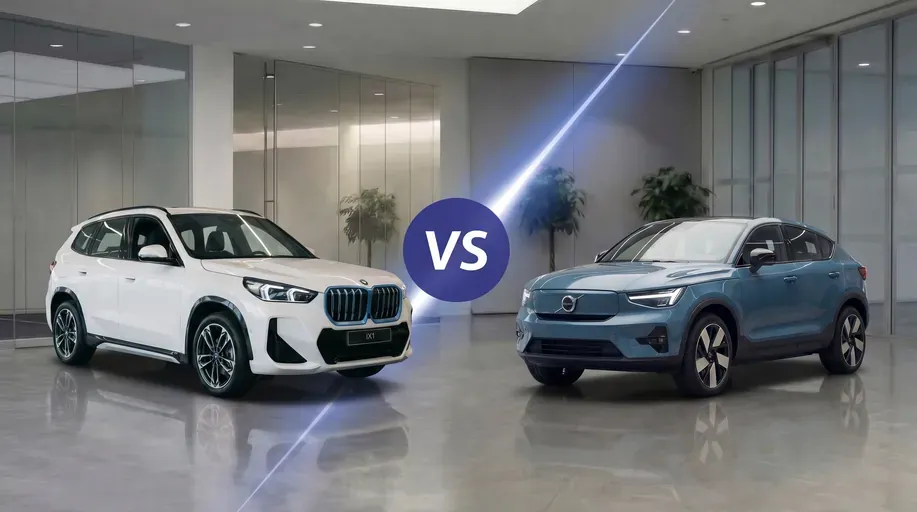
Detailed comparison of the BMW iX1 and Volvo C40 Recharge (EC40). We evaluated the real-world range, equipment, and driving characteristics. Read the verdict and choose the right SUV.
Apr 24, 2026