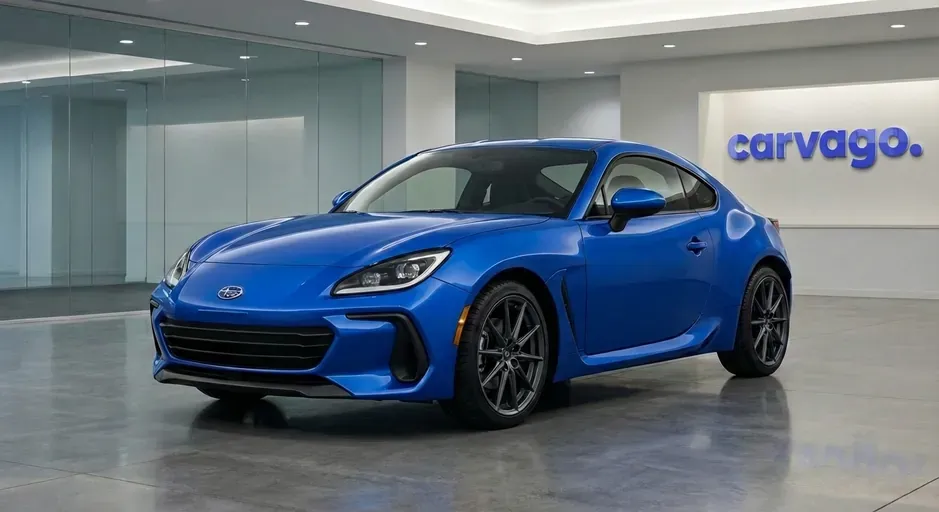
Review
Review Subaru BRZ: What do owners and experts really say?
Subaru BRZ (ZD8) review: real owner insights, 2.4-litre performance, European pricing, running costs and buyer verdict on the rare sports coupe.
Oct 25, 2026
McLaren 720S review: real owner insights, common faults, running costs, and used market prices — everything you need to know before you buy.
November 5, 2026
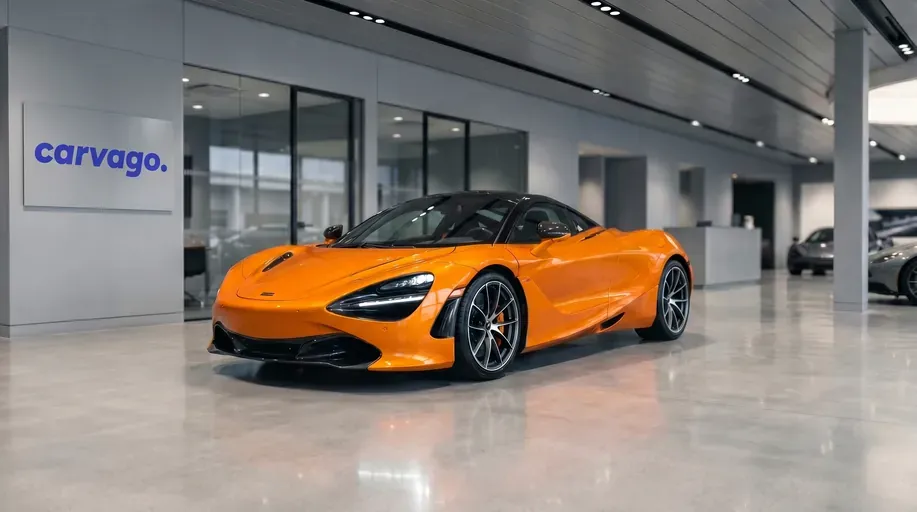
The McLaren 720S represents the core of the British manufacturer's supercar lineup, occupying the middle ground between entry sports models and limited-run hypercars. This review covers the first and sole generation of the car, which was produced from March 2017 through December 2022, when production officially concluded at the factory in Woking.
Buyers chose between two distinct body styles built around a carbon-fibre passenger cell. The McLaren 720S Coupé made its public debut on 07 March 2017, with European customer deliveries starting in May 2017. The open-roof McLaren 720S Spider, featuring a folding hardtop mechanism, had its world premiere on 08 December 2018, reaching European owners from March 2019.
The car primarily attracts performance drivers looking for circuit capability without sacrificing road usability. In the pre-owned market, it appeals to enthusiasts seeking mid-engine proportions and carbon construction rather than traditional front-engine grand tourers.
Official safety databases record three manufacturer recalls affecting European examples of the McLaren 720S. The most widespread safety campaign, announced in May 2020 for vehicles produced between 07 October 2016 and 26 February 2020 across the European Union and the United Kingdom, addressed a noise and vibration foam pad placed beneath the fuel tank. The pad could trap environmental moisture against the aluminium tank shell, leading to micro-corrosion, potential fuel leaks, and a corresponding fire risk. Authorised workshops inspect the tank, remove the foam pad permanently, and replace any tanks showing corrosion or pitting.
Braking systems prompted two further safety actions. In March 2022, an alert covering vehicles built between 08 July 2019 and 10 December 2019 identified caliper banjo bolts produced without internal fluid drillings, which prevented hydraulic pressure from reaching the affected corner and caused violent vehicle pulling under heavy deceleration. Retailers inspect the bolts and replace any defective units. In April 2025, a worldwide recall covering a production window between 17 April 2019 and 09 July 2024 warned of crossed hydraulic brake lines at the stability control unit, which could cause an electronic stability intervention to brake the incorrect rear wheel and provoke a sudden loss of control. Authorised workshops verify hydraulic line routing, correct the connections where required, and recalibrate the stability system.
| Safety Concern | Affected Build Window | Geographic Reach | Workshop Remedy |
|---|---|---|---|
| Fuel tank corrosion from moisture-retaining foam | 07/10/2016 – 26/02/2020 | Worldwide (EU & UK) | Remove foam pad; inspect tank surface and replace fuel tank if pitted |
| Undrilled brake caliper banjo bolts | 08/07/2019 – 10/12/2019 | Worldwide (Europe) | Inspect caliper banjo bolts, replace unvented hardware, bleed brakes |
| Crossed hydraulic rear brake lines at ABS/ESP unit | 17/04/2019 – 09/07/2024 | Worldwide (EU & UK) | Verify pipe routing, swap connections if crossed, bleed and recalibrate |
Beyond official recalls, specialist technicians and long-term endurance tests highlight a recurring issue with the hydraulically linked suspension accumulators. Over three to five years or between 30,000 and 60,000 km, the nitrogen-charged rubber diaphragms inside the hydraulic spheres can lose pressure or rupture. When this occurs, damping compliance deteriorates sharply, causing harsh rebound bouncing, thudding noises over low-speed road seams, and dashboard chassis alerts that disable the optional hydraulic nose-lift mechanism. Replacing the accumulators in axle pairs or complete sets of four, followed by an electronic system bleed and fluid repressurisation, in most cases restores standard ride behaviour.
On the McLaren 720S Coupé, owners report stress cracks developing in the optional glazed upper door roof panels. In some cases, these fractures propagate outward from the clamping fasteners without prior stone chipping, triggered by thermal expansion differences and rigid factory torque against the carbon-fibre door frame. Retailers resolve this by fitting revised glass assemblies with flexible rubber isolator sleeves torqued to updated specifications, while some owners opt for solid carbon-fibre inserts to eliminate glass vulnerability entirely. This issue does not affect the folding roof arrangement of the McLaren 720S Spider.
The dense packaging of the twin-turbocharged V8 engine subjects ancillary pipework to sustained thermal loads. Specialist inspections note that factory-fitted spring-band and screw hose clamps on low-temperature cooling loops and turbocharger coolant lines can loosen over time, leading to subtle fluid weeping, a faint sweet coolant smell after spirited driving, and gradual expansion-tank fluid loss. Replacing factory clips with lined constant-tension stainless clamps cures the seepage.
Throughout its production run, the McLaren 720S was offered with a single powertrain across the entire range. Both the fixed-roof McLaren 720S Coupé and the open-top McLaren 720S Spider share the identical dry-sump petrol engine and dual-clutch transmission driving the rear wheels, with no mechanical revisions introduced before production ended.
| Engine | Fuel | Power | Gearbox | Model years |
|---|---|---|---|---|
| 4.0 V8 | Petrol | 537 kW (720 hp) | 7-speed automatic | 2017–2022 |
As a used car, the petrol McLaren 720S delivers rapid straight-line pace, but the character of its powertrain makes it far better suited to certain environments than others.
Town driving and short trips: The twin-turbo V8 and the automatic McLaren 720S gearbox are poorly suited to urban errands. In stop-and-go congestion, the transmission exhibits low-speed hesitation, hunting, and occasional clutch judder during crawling or tight parking manoeuvres. Furthermore, the compact mid-engine layout accumulates considerable ambient heat during prolonged idling without sustained airflow.
Motorway and mixed use: On open motorways, the powertrain settles into a relaxed cadence with vast reserves for overtaking.
Fast open roads and track use: This is where the powertrain delivers its intended performance. Once past the lower engine speeds, boost arrives with intensity, while the transmission executes rapid shifts in its performance driving modes via the rocker paddle.
Towing: The vehicle is not homologated for pulling trailers, and no certified towing capacity exists.
For detailed information on recurring mechanical faults, cooling-system vulnerabilities, and transmission pressure sensor warnings, refer to the owner experiences section.
| Dimension / Capacity | Coupé (2017–2022) | Spider (2019–2022) |
|---|---|---|
| Length (mm) | 4,543 | 4,543 |
| Width without mirrors (mm) | 1,930 | 1,930 |
| Height (mm) | 1,196 | 1,196 |
| Wheelbase (mm) | 2,670 | 2,670 |
| Cargo capacity front / rear (l) | 150 / 210 | 150 / 58 (roof raised) |
As a dedicated mid-engined sports car, the McLaren 720S is strictly a two-seater with a fixed bulkhead and no rear bench or through-load facility. The cabin accommodates taller occupants without tight headroom. Cabin access is shaped by the dihedral doors swinging upward and forward, requiring clearance at the side and a deliberate step across wide carbon sills, which complicates parking in narrower spaces.
Luggage carrying is split between two separate areas. The deep front compartment holds soft overnight luggage securely. Rear storage differs by body style: the McLaren 720S Coupé incorporates a rear parcel shelf behind the seats with luggage tie-down points, whereas the convertible houses its folding roof mechanism in that space, leaving a shallow recess under the tonneau that is only accessible when the roof is raised.
Professional road tests consistently highlight the unexpected ride compliance of the McLaren 720S. Its interlinked hydraulic suspension absorbs surface imperfections like a performance saloon while eliminating roll through corners. The electro-hydraulic steering earns widespread praise for pure road texture and front-end precision. However, cabin refinement suffers on coarse motorways, where tyre roar and stone spray dominate. Testers also describe the twin-turbocharged V8 as boost-heavy and industrial, lacking melodic drama and exhibiting a low-frequency drone under mid-range load.
Cabin ergonomics present clear contrasts. A low scuttle and ultra-thin pillars provide clear forward sightlines, while glazed rear buttresses on the McLaren 720S Spider eliminate typical three-quarter blind spots. Conversely, climbing across wide carbon sills requires effort, optional electric seat controls are awkwardly squeezed against the central tunnel, and light dashboard leather causes distracting windscreen glare. Reviewers universally find the portrait touchscreen sluggish to boot, laggy to touch, and unintuitive to navigate.
Where testers agree without reservation is on the chassis balance and high-speed stability, though standard cold carbon-ceramic brakes demand firm pedal effort in daily traffic. Disagreement only surfaced on the limit: while composed on cross-country roads, sustained track testing revealed front tyre thermal degradation and understeer on standard rubber. McLaren introduced no mid-cycle facelift, keeping the mechanical feel and cabin layout consistent throughout the model's production run.
All market charts in this section are drawn from Carvago listings of the broader McLaren 720S model family across all represented years rather than being filtered exclusively to the reviewed generation, meaning these figures do not establish a separate price level for specific sub-variants. In current listings, the median asking price starts at €199,900 for 2017 models and reaches €228,800 for 2020 examples. For later builds, the median asking price stands at €259,700 for 2022 and €279,800 for 2023 cars, where verified service documentation and optional equipment like the front nose lift strongly influence seller valuations.
From May 2026 to October 2026, advertised McLaren 720S listings began at 75, reached a high of 81 in June and July, and finished at 64. The chart below traces the number of active listings recorded each month.
Active listings over time
| Month | McLaren 720S |
|---|---|
| 2026-05 | 75 |
| 2026-06 | 81 |
| 2026-07 | 81 |
| 2026-08 | 73 |
| 2026-09 | 73 |
| 2026-10 | 64 |
Source Carvago
Shoppers had between 64 and 81 vehicles to choose from across this span, though the volume of cars on offer narrowed in the final months.
Among listings advertised today, the median asking price of cars built in 2017 is €199,900, while 2023 cars advertised today record a median asking price of €279,800. The chart below illustrates these median asking prices across each represented build year.
Median advertised price by year of manufacture
| Model year | McLaren 720S |
|---|---|
| 2017 | 199 900 |
| 2018 | 212 000 |
| 2019 | 221 000 |
| 2020 | 228 800 |
| 2021 | 250 000 |
| 2022 | 259 700 |
| 2023 | 279 800 |
Source Carvago
Buyers considering an entry point will find that cars advertised today built in 2017 carry a median asking price of €199,900, whereas securing a 2023 car advertised today requires a median asking price of €279,800.
Between May 2026 and October 2026, advertised listings for the model shifted from 75 petrol cars to 64, as shown across the monthly counts below.
Supply composition by fuel type
| Month | Petrol |
|---|---|
| 2026-05 | 75 |
| 2026-06 | 81 |
| 2026-07 | 81 |
| 2026-08 | 73 |
| 2026-09 | 73 |
| 2026-10 | 64 |
Source Carvago
Petrol is the sole fuel type represented on the market, making up all 64 available listings in October 2026 with zero hybrid, diesel, or electric alternatives. Buyers searching for this model will find only petrol options.
The chart tracks the average asking price for the McLaren 720S from May 2026 to October 2026, starting at €238,500 before shifting over subsequent months.
Average price development over time
| Month | McLaren 720S |
|---|---|
| 2026-05 | 238 500 |
| 2026-06 | 237 700 |
| 2026-07 | 228 300 |
| 2026-08 | 226 600 |
| 2026-09 | 227 200 |
| 2026-10 | 223 400 |
Source Carvago
Across the six-month period, the average asking price decreased by approximately 6% to €223,400, declining in most months despite a brief uptick to €227,200 in September 2026.
Rapid straight-line acceleration paired with fast gearshifts in performance driving modes
Interlinked hydraulic suspension delivers pliant bump absorption without body roll
Low dashboard scuttle and slim pillars provide clear outward forward visibility
Hydraulic suspension accumulators degrade over time, causing harsh bouncing and chassis alerts
Dihedral doors and wide carbon sills complicate entry and exit in narrow parking bays
Sluggish portrait touchscreen infotainment with slow startup and laggy touch response
The McLaren 720S Coupé provides a dedicated rear luggage shelf, but its optional glazed door panels can develop hairline stress fractures. The McLaren 720S Spider avoids the glass issue entirely, though its rear storage recess is only accessible when the folding roof is raised.
The most frequent issue involves hydraulic suspension accumulators losing pressure over time, which causes harsh bouncing and chassis alerts. In some cases, cooling hose clamps can also loosen and weep fluid under sustained thermal loads.
Check by VIN that the fuel tank recall to remove moisture-retaining foam was carried out to prevent corrosion. Confirm also that dealer inspections for brake caliper bolts and hydraulic line routing were completed.
Median asking prices start at €199,900 on the used market. Documented maintenance records and options like the front nose-lift significantly affect individual vehicle values.
Sources: cars.mclaren.press, mclaren.com, car-recalls.eu, autocar.co.uk, evo.co.uk
This article was prepared using artificial intelligence tools. The section guarantor is Petr Dušek.
Subaru BRZ (ZD8) review: real owner insights, 2.4-litre performance, European pricing, running costs and buyer verdict on the rare sports coupe.
Oct 25, 2026
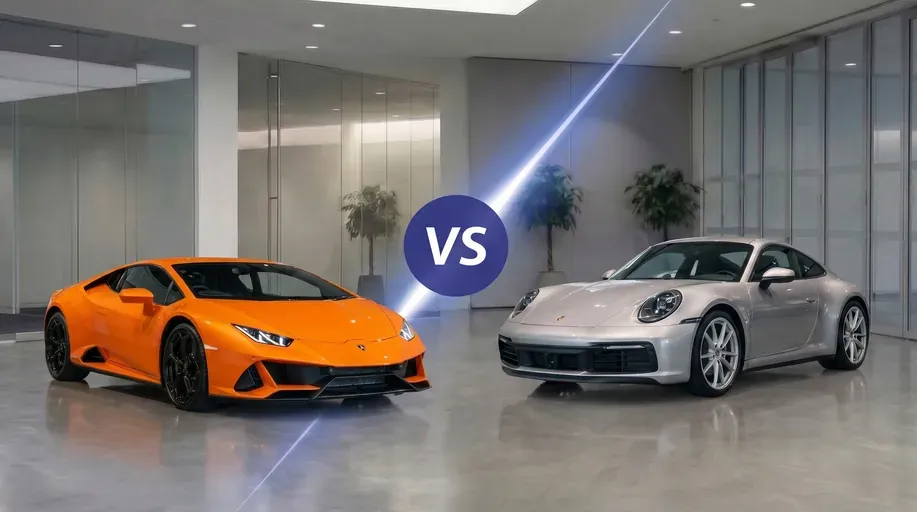
Detailed comparison of Lamborghini Huracán vs Porsche 911 (Carrera). Discover the differences in performance, real-world experience, and the verdict for an easy supercar choice.
May 20, 2026
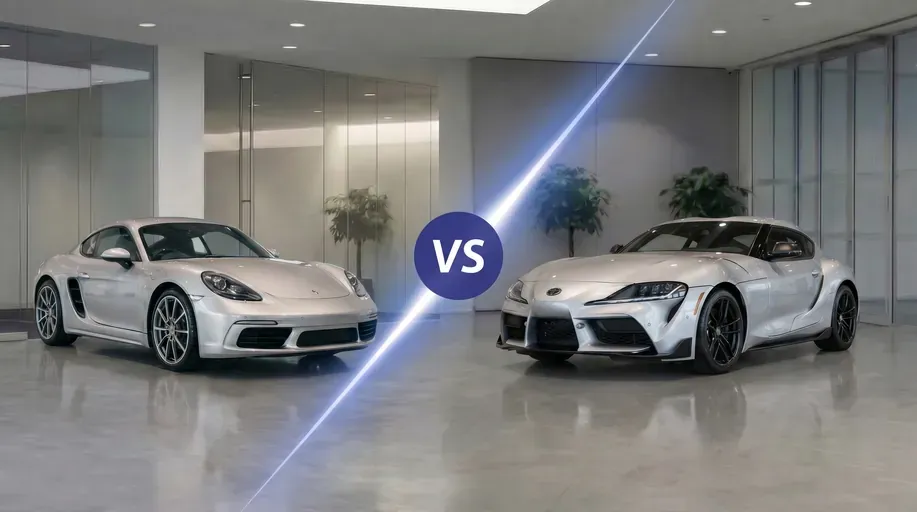
Detailed comparison of the Porsche 718 Cayman vs Toyota GR Supra. Discover the differences in performance and driving characteristics and read our verdict. Which coupe to choose?
Apr 25, 2026