Car battle
Maserati MC20 vs. McLaren 720S: Complete comparison 2026
Detailed comparison of the Maserati MC20 vs McLaren 720S supercars. Discover the differences in performance, equipment, and real-world driving. Read our verdict!
May 4, 2026
Subaru BRZ (ZD8) review: real owner insights, 2.4-litre performance, European pricing, running costs and buyer verdict on the rare sports coupe.
October 25, 2026
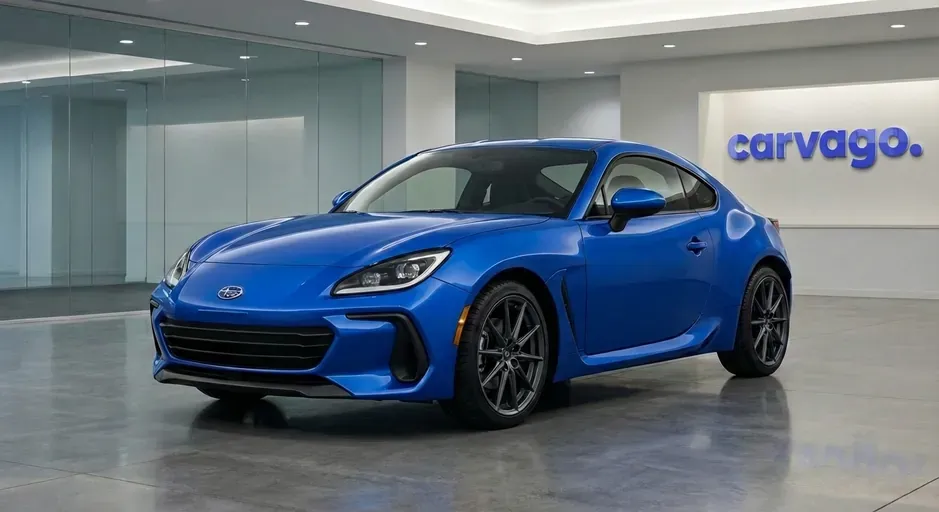
The second-generation Subaru BRZ occupies a focused niche in the sports car segment: a lightweight, rear-wheel-drive coupe engineered around mechanical directness and driver involvement. Offered exclusively as a 2+2 fastback coupe, it appeals primarily to driving enthusiasts, track-day hobbyists, and buyers seeking an agile performance car without the weight or complexity of larger grand tourers.
This review covers the second generation (ZD8) delivered to European buyers. European order books opened in March 2023, with the first customer deliveries commencing in April 2023. Market availability was strictly limited from the outset, culminating in a final allocation announced in June 2024 before ordering concluded across the European Union in July 2024 due to safety regulation transitions.
On the pre-owned market, the Subaru BRZ coupe is found with either a six-speed manual or a six-speed automatic gearbox. Because total European delivery volumes remained low throughout its production run, finding an unmolested example requires a clear understanding of its mechanical layout and ownership history.
With European customer deliveries beginning in April 2023 and ordering concluding in July 2024 due to regulatory safety requirements, the second-generation Subaru BRZ arrived in strictly limited numbers. Official vehicle safety registers record zero safety recalls for this generation across European markets.
Because of the small allocation and recent market arrival, long-term high-mileage reliability data remains limited. Nevertheless, European roadside assistance records and inspection databases report no systemic breakdown patterns or electronic fault trends for either the automatic or the manual Subaru BRZ. The electrical architecture, switchgear, and general chassis components have proven reliable in ordinary road use.
The primary technical discussion among owners and specialist circles concerns the naturally aspirated petrol boxer engine under hard driving conditions. Tests and owner forums report instances where excess factory liquid gasket sealant from the timing cover and oil pan detached and collected in the oil pickup screen. Under high-speed track conditions with sustained lateral forces, drops in oil pressure have also been observed. However, no recurring pattern of engine starvation or mechanical failure has emerged under standard road driving.
Wear items on this generation are closely tied to how previous owners used the car. Tests observe that the factory paint application on the front bumper and aluminium bonnet is relatively thin, leaving the nose susceptible to road rash and stone chips. On manual cars, aggressive starts or track outings can accelerate clutch wear and produce noticeable driveline lash through the rear differential. Given the enthusiast nature of the coupe, having a used example professionally inspected through CarAudit provides clarity on mechanical health and past track exposure before finalizing a purchase.
In its second European generation, the Subaru BRZ was supplied exclusively with a single naturally aspirated four-cylinder petrol boxer engine. Buyers choose between two distinct transmission setups that define how the sports coupe behaves in daily use.
| Engine | Fuel | Power | Gearbox | Model years |
|---|---|---|---|---|
| 2.4i | Petrol | 172 kW (234 hp) | 6-speed manual | 2023–2024 |
| 2.4i | Petrol | 172 kW (234 hp) | 6-speed automatic | 2023–2024 |
Because this generation arrived in Europe with only one engine, choosing the right used Subaru BRZ depends entirely on transmission preference and how you plan to use the car.
For drivers who prioritise mechanical involvement on twisting country roads, the manual petrol Subaru BRZ coupe best matches the car's intended character. Its short mechanical throws and firm clutch weighting reward an active driving style, giving the driver immediate control when working through the rev range on spirited weekend runs.
For routine urban commuting, frequent stop-and-go traffic, or regular motorway cruising, the automatic petrol Subaru BRZ coupe is the easier everyday proposition. The torque-converter gearbox operates smoothly in city congestion and relaxes high-speed transit, while steering-wheel paddle shifters still allow manual ratio control when exiting onto open roads.
Neither variant is approved for towing trailers, maintaining the model's dedicated focus on passenger driving.
For details on mechanical durability and known service findings, refer to the owner experiences section.
| Metric | Subaru BRZ (Coupe) |
|---|---|
| Length (mm) | 4,265 |
| Width (mm) | 1,775 |
| Height (mm) | 1,310 |
| Wheelbase (mm) | 2,575 |
| Boot volume, seats upright (l) | 237 |
| Boot volume, seatback folded (l) | —* |
*Subaru lists only the baseline upright VDA volume; an expanded VDA figure for the folded configuration is not officially published.
The Subaru BRZ coupé uses a strict 2+2 seating layout where the rear bench serves as supplementary storage rather than realistic passenger accommodation. Legroom and headroom behind the front sport seats are negligible for adult passengers, and installing child seats is hindered by the low roofline and narrow cabin access. Everyday utility improves considerably when the car is treated as a dedicated two-seater. The one-piece rear seatback folds flat to create an uninterrupted load floor, specifically tailored to carry a full set of spare wheels and tyres along with tools for track outings, or two golf bags. Although cabin storage cubbies and door pockets are scarce, the fold-flat luggage area provides sufficient practicality for weekend travel and track-day equipment.
Professional tests consistently highlight the chassis balance and steering accuracy of the Subaru BRZ coupé. The front axle delivers sharp turn-in, while the rear suspension maintains composure with high grip levels, allowing progressive, throttle-steered cornering without sudden breakaway. The manual shifter offers a distinctly mechanical action, complemented by steering that provides weighted, communicative road feedback. However, ride comfort divides opinion: while some testers find the damping sufficiently compliant to absorb broken asphalt during daily use, others judge the setup uncompromisingly stiff over repetitive highway undulations. Cabin refinement draws unanimous criticism, with elevated tyre roar and mechanical noise making sustained motorway trips tiring.
Inside, the cabin layout prioritises driver ergonomics above all else. Reviewers single out the low seating hip-point, firm lateral bolstering of the sports seats, and natural alignment of the major controls. Straightforward physical switches and clear instruments make everyday operation simple, avoiding complex touchscreen submenus. Surface tactility remains functional rather than luxurious, with widespread hard plastics on the doors and center console.
Where professional assessments firmly agree is on the car’s pure driver engagement, communicative chassis, and linear throttle response. Opinions diverge primarily on long-distance usability, specifically whether the stiff damping and cabin noise remain tolerable for daily commuting. Deliveries of the second-generation Subaru BRZ ended in Europe without any mid-cycle facelift revisions.
All the charts in this section are drawn from Carvago listings of the whole Subaru BRZ model family, including other generations represented in the data, not only the reviewed generation. Consequently, this overview does not establish a separate price level for the reviewed generation alone. Across advertised listings, the median asking price stands at €26,500 for 2017 models and €30,700 for 2021 cars, compared to €40,900 for 2023 examples and €38,900 for 2024 models. This difference between earlier and later model years reflects enthusiast demand for scarce, late-production manual coupés.
Between April 2026 and September 2026, the count of advertised Subaru BRZ models ranged from 34 to 53 cars. The chart below displays the total active listings for each month across this period.
Active listings over time
| Month | Subaru BRZ |
|---|---|
| 2026-04 | 43 |
| 2026-05 | 51 |
| 2026-06 | 53 |
| 2026-07 | 44 |
| 2026-08 | 34 |
| 2026-09 | 43 |
Source Carvago
Choice for buyers has varied from month to month, with active listings dropping to 34 in August before rising back to 43 in September.
The median asking price of Subaru BRZ cars advertised today, built in 2017, is €26,500, while the median asking price for those built in 2025 stands at €39,900. The chart below illustrates how these median asking prices compare across the available model years.
Median advertised price by year of manufacture
| Model year | Subaru BRZ |
|---|---|
| 2017 | 26 500 |
| 2018 | 25 500 |
| 2019 | 28 000 |
| 2020 | 29 000 |
| 2021 | 30 700 |
| 2023 | 40 900 |
| 2024 | 38 900 |
| 2025 | 39 900 |
Source Carvago
Advertised listing values do not climb continuously from year to year, as cars built in 2018 show a median asking price of €25,500 compared to €26,500 for 2017 models, and 2024 models sit at €38,900 compared to €40,900 for 2023 cars. For buyers, targeting 2018 through 2021 models means navigating median asking prices between €25,500 and €30,700, whereas listings from 2023 through 2025 require median asking prices from €38,900 to €40,900.
Across the observed period from April 2026 to September 2026, petrol was the only powertrain advertised, with inventory moving from 43 listings in April to 53 in June. The chart below illustrates the monthly listing counts across all recorded fuel types.
Supply composition by fuel type
| Month | Petrol |
|---|---|
| 2026-04 | 43 |
| 2026-05 | 51 |
| 2026-06 | 53 |
| 2026-07 | 44 |
| 2026-08 | 34 |
| 2026-09 | 43 |
Source Carvago
In September 2026, petrol accounted for all 43 listings on offer, while all other fuels recorded 0. Buyers will realistically find only petrol models when browsing available stock.
Between April 2026 and September 2026, the average asking price for the Subaru BRZ fluctuated within a narrow band, starting at €36,000 and reaching €36,600 at its peak in July. The chart below tracks these monthly average figures over the period.
Average price development over time
| Month | Subaru BRZ |
|---|---|
| 2026-04 | 36 000 |
| 2026-05 | 35 400 |
| 2026-06 | 36 000 |
| 2026-07 | 36 600 |
| 2026-08 | 35 900 |
| 2026-09 | 35 300 |
Source Carvago
Across the entire six months, the average moved from €36,000 to €35,300, a net change of under two percent. Because individual month-to-month movements also stayed below two percent, overall asking prices remained largely level throughout the timeframe.
Communicative chassis balance with precise steering and progressive cornering
Ergonomic cabin layout with supportive sport seats and straightforward physical controls
Flat-folding rear seatback creates practical cargo space for track tyres and luggage
Rear seating provides negligible room for adult passengers or child seats
High tyre and mechanical noise levels make motorway journeys tiring
Firm suspension damping and widespread hard plastics reduce touring comfort
European models have recorded no safety recalls or systemic breakdown patterns in standard road use. However, track driving has highlighted potential oil pressure drops and detached factory sealant in the oil pickup screen.
The manual Subaru BRZ is the preferred choice for driver involvement on winding roads. For regular city commuting or frequent motorway travel, the automatic Subaru BRZ provides a smoother, less fatiguing daily drive.
Confirm via the vehicle identification number that the car is an official European-specification model. Review service documentation for regular oil maintenance and check the drivetrain and chassis for signs of heavy track use.
It functions best as a two-seater because the rear seats offer negligible room for adult passengers. While elevated cabin noise makes long motorway journeys tiring, the folding rear seatback creates a practical flat cargo floor.
Sources: subaru-presse.de, subaru.de, adac.de, autobild.de, autocar.co.uk
This article was prepared using artificial intelligence tools. The section guarantor is Petr Dušek.
Detailed comparison of the Maserati MC20 vs McLaren 720S supercars. Discover the differences in performance, equipment, and real-world driving. Read our verdict!
May 4, 2026
Lamborghini Huracán vs McLaren 720S: A detailed comparison of supercars. Find out everything about performance, driving characteristics, and read our final verdict.
Oct 16, 2026
Detailed comparison of the Hyundai i30 N vs Volkswagen Golf GTI. Find out which hot hatch offers better performance, equipment, and everyday usability. Read the verdict.
May 15, 2026