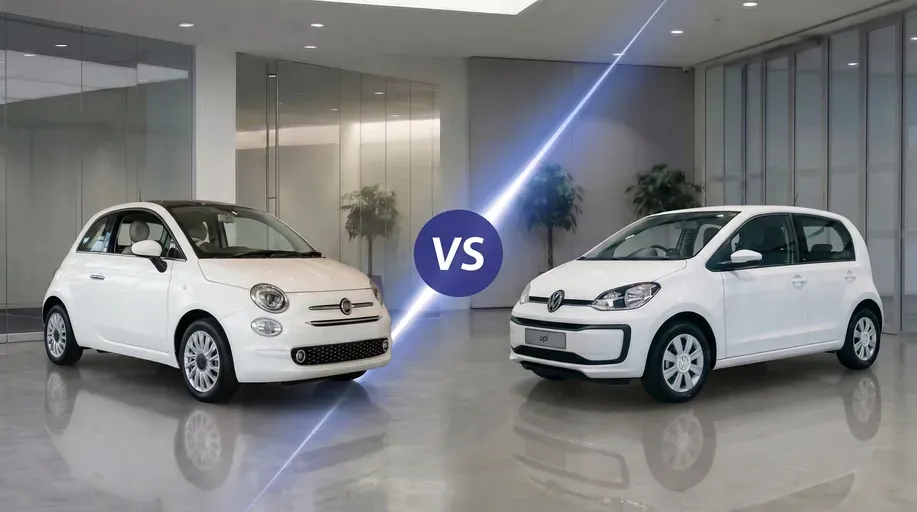
Car battle
Fiat 500 vs. Volkswagen up!: Complete comparison 2026
Fiat 500 vs Volkswagen up! (VW up!) Comparison: Which used city car to choose? Find out details about fuel consumption, reliability, and equipment. Read our verdict!
May 16, 2026
Mazda 2 (2015-2025) review: real owner experience, common faults, running costs and used prices — everything you need to know before you buy.
November 3, 2026
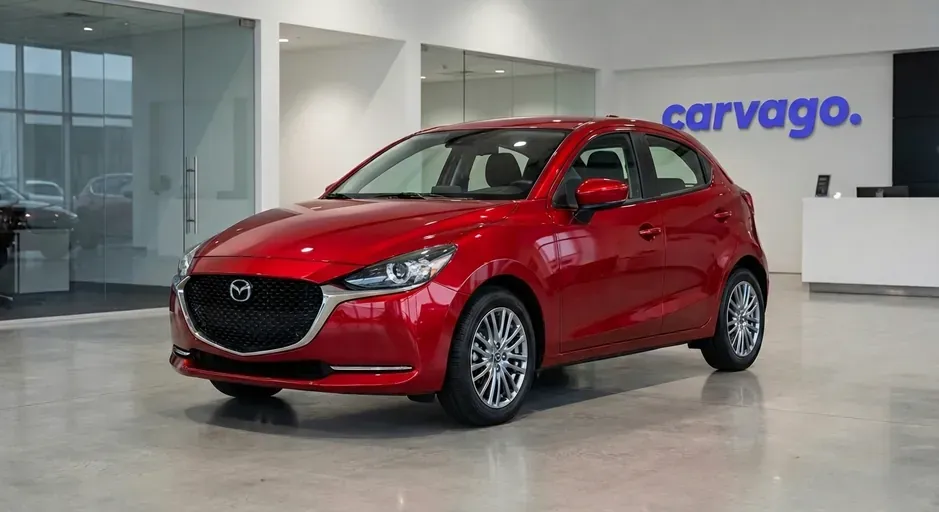
The third-generation Mazda 2 competes in the European supermini segment as a compact, urban-focused five-door hatchback. With European customer deliveries commencing in March 2015 and order books closing in February 2025, this DJ-series model represents the final B-segment generation engineered and produced natively by Mazda. It was sold in European showrooms alongside a separate, badge-engineered hybrid model that joined the brand's line-up in spring 2022.
During its decade on sale, the Mazda 2 hatchback underwent two distinct visual and technical revisions. The first facelift premiered in July 2019, with European deliveries beginning in November 2019, introducing updated exterior styling and 24-volt mild-hybrid petrol engines. A second update premiered on 27 January 2023, reaching European customers in June 2023 with reprofiled front grilles and reshaped bumpers.
Offered in European markets exclusively in a front-wheel-drive five-door body style, the third-generation Mazda 2 is aimed primarily at city commuters, downsizing drivers, and small households seeking a maneuverable and straightforward runabout for daily driving.
Owner reports and roadworthiness test data show that the third-generation Mazda 2 delivers dependable mechanical service, though it is not entirely free of repeated minor defects. The most widespread complaint involves the air conditioning system. Independent tests and technical bulletins identify corrosion on the lower exposed rows of the aluminium condenser behind the front bumper, alongside shrinking pipe O-rings. The result is escaping refrigerant, leaving the cabin vents blowing ambient air or producing an audible hissing noise. Standard regassing offers only a temporary fix until the corroded condenser and seals are renewed.
On 2015 to 2019 pre-facelift models equipped with the standalone seven-inch central screen, owners report occasional display malfunctions known as ghost touch. Thermal cycles break down the optical adhesive bonding the digitizer to the display glass, creating spider-web cracking or edge delamination. At stationary speeds, the screen registers phantom inputs that cause navigation maps to scroll or radio stations to skip unprompted. Owners find that replacing the outer digitizer panel resolves the issue, while physically unplugging the display's touch ribbon cable acts as a cost-free stopgap by limiting navigation strictly to the rotary commander dial on the centre console.
Chassis inspections highlight accelerated wear at the rear axle. Roadworthiness tests regularly single out premature damping loss and fluid misting on the rear shock absorbers, often occurring between 60,000 and 80,000 km, accompanied by knocking noises over uneven road surfaces. Fitting revised dampers, bump stops, and top mounts in most cases resolves the noise.
| Defect / Affected Component | Affected Model Years | Scope & Remedy |
|---|---|---|
| Low-pressure fuel pump impeller | 2017–2020 petrol | Worldwide recall; dealer replaces deformed fuel pump assembly |
| DC-DC converter (i-ELOOP) | 2014–2017 (1.5 Skyactiv-G) | European recall; ECU software update and converter replacement |
| High-pressure fuel pipe clearance | 2018 | EU recall; bracket modified or fuel pipe replaced if contact wear is present |
| 1.5 Skyactiv-D abnormal combustion | 2015–2017 diesel | European recall; dealer recalibrates powertrain control module |
| Rollover valve weld | 2014–2015 launch phase | European / UK recall; complete fuel tank assembly replaced |
The model has been subject to several verified European safety recalls. In January 2022, a worldwide campaign addressed low-pressure fuel pumps on petrol models built between October 2017 and February 2020, where the internal plastic impeller could deform, leading to fuel starvation, engine stalling, or failure to start. A September 2018 European recall for cars built between October 2014 and August 2017 targeted variants equipped with the capacitor-based i-ELOOP system, where a defective direct-current converter control unit risked an internal short circuit and fire. An earlier January 2019 European notification addressed cars built between March and April 2018, where contact between the high-pressure fuel pipe and the purge solenoid valve bracket risked a fuel leak.
For the diesel variant, an April 2018 campaign required a software update for models built between February 2015 and November 2017 to eliminate abnormal combustion caused by unburnt fuel and blow-by gas accumulation during idling. Additionally, launch-phase vehicles from 2014 and 2015 were recalled to replace the entire fuel tank due to silicone contamination on the rollover valve weld that could induce fuel leakage.
Across its European production run, the third-generation Mazda 2 relied primarily on naturally aspirated petrol engines with high compression ratios, supplemented early in its lifecycle by a small turbodiesel and later by mild-hybrid technology.
| Engine | Fuel | Power | Gearbox | Model Years |
|---|---|---|---|---|
| 1.5 Skyactiv-G 75 | Petrol | 55 kW (75 hp) | 5-speed manual | 2015–2019 |
| 1.5 Skyactiv-G 75 | Petrol | 55 kW (75 hp) | 6-speed manual | 2020–2025 |
| 1.5 Skyactiv-G 90 | Petrol | 66 kW (90 hp) | 5-speed manual | 2015–2019 |
| 1.5 e-Skyactiv G 90 M Hybrid | Petrol mild hybrid | 66 kW (90 hp) | 6-speed manual | 2020–2025 |
| 1.5 Skyactiv-G 90 | Petrol | 66 kW (90 hp) | 6-speed automatic | 2015–2025 |
| 1.5 Skyactiv-G 115 i-ELOOP | Petrol | 85 kW (115 hp) | 6-speed manual | 2015–2019 |
| 1.5 e-Skyactiv G 115 M Hybrid | Petrol mild hybrid | 85 kW (115 hp) | 6-speed manual | 2021–2025 |
| 1.5 Skyactiv-D 105 | Diesel | 77 kW (105 hp) | 6-speed manual | 2015–2018 |
For purely urban commuting and short errands, a petrol Mazda 2 in its entry-level tune is adequate, though it lacks reserve power when joining faster traffic flows. Buyers who frequently navigate stop-and-go congestion are better served by the mid-range petrol paired with the torque-converter automatic. This gearbox shifts predictably and crawls smoothly in slow traffic, avoiding the low-speed hesitation common to small dual-clutch alternatives.
For mixed everyday driving, the mid-range petrol in a manual Mazda 2 represents the sweet spot of the entire range. Its naturally aspirated setup delivers linear throttle response and steady progress without the sudden power surges of small turbocharged rivals, while the manual transmission features short, mechanical throws. Later models also benefit from mild-hybrid assistance that enables smoother engine restarts around town.
For long motorway journeys, the top-output petrol is the most capable choice. Unlike the lower-powered versions that rely on taller gear ratios to preserve fuel, the range-topping engine features closer transmission gearing, which allows for responsive overtaking without laboriously working the engine through every incline. High-mileage commuters looking at early production years can also consider the diesel Mazda 2, which offers strong low-end pulling power and relaxed cruising, though it was dropped from European sale in 2018.
For occasional towing of small utility trailers, either the diesel or the top-spec petrol is recommended, as the lower-output petrol variants struggle to maintain speed under load on steeper gradients.
For an overview of powertrain durability, mechanical issues, and verified safety recalls, consult the owner experiences section of this review.
The third-generation Mazda 2 hatchback prioritises compact urban agility over outright cabin volume. The front seats offer wide slide and height adjustability for the driver, but the rear compartment is noticeably tighter than in several B-segment rivals. Narrow rear door openings hinder entry, while legroom and knee clearance are limited behind taller front occupants. The rear bench also features relatively flat cushions that provide modest under-thigh support, making the back row best suited for children or shorter journeys.
Everyday cargo versatility is straightforward thanks to a 60:40 split-folding rear bench, standard on higher trims. However, the luggage compartment requires lifting items over a pronounced load sill, and the boot floor does not sit completely flat when the rear backrests are pushed forward.
| Dimension | Measurement (DJ generation) |
|---|---|
| Length | 4,060–4,085 mm |
| Width (excluding / including mirrors) | 1,695 / 2,028 mm |
| Height | 1,495–1,524 mm |
| Wheelbase | 2,570 mm |
| Boot capacity (seats up / folded, VDA) | 255 / 887 l |
The measurements above apply strictly to the European five-door hatchback; pre-facelift launch literature occasionally quoted higher figures under alternate packing methods, and dimensions vary slightly across the mid-cycle updates.
On the road, professional road tests highlight the agile handling of the Mazda 2 hatchback. The chassis changes direction eagerly with progressive body roll, complemented by a crisp, tactile manual gearshift. Suspension tuning is noticeably firm, however. While the ride settles into a composed stride at higher cruising speeds, town driving reveals an unforgiving edge over expansion joints and patched tarmac. Naturally aspirated engines cruise quietly but become vocal under hard acceleration, and tyre roar becomes noticeable at motorway speeds.
Inside, hard plastics dominate the cabin, yet tight panel fit and durable switchgear deliver a sturdy feel. Ergonomics earn widespread praise: the physical rotary dial on the centre console allows distraction-free operation of the infotainment system on the move, while separate heating dials avoid touchscreen fiddling. The driving position accommodates various driver heights well, though broad rear pillars compromise over-the-shoulder visibility.
Testers agree on the car's driver engagement and tactile controls, but diverge on ride comfort. Some praise its composed body control on winding roads, whereas others criticise the urban ride as overly stiff compared with rival hatchbacks. Mid-cycle updates addressed earlier complaints about the Mazda 2 by introducing more supportive front seats and additional acoustic insulation to reduce road boom.
All market charts across this section reflect Carvago listings for the entire Mazda 2 model family across multiple generations, rather than exclusively the reviewed generation. Consequently, the data does not establish an isolated price level for this specific generation alone. Across current listings, the median asking price stands at €13,700 for 2019 models, with 2022 cars recording a median of €17,000 and 2026 vehicles reaching €24,000. These figures capture what European sellers currently ask across different production years without tracking individual value changes over time.
Between May 2026 and October 2026, the volume of active Mazda 2 listings peaked at 3,293 in July before dropping to 2,697 by the end of the period. The chart below tracks these monthly listing counts across the six-month span.
Active listings over time
| Month | Mazda 2 |
|---|---|
| 2026-05 | 3 226 |
| 2026-06 | 3 261 |
| 2026-07 | 3 293 |
| 2026-08 | 3 024 |
| 2026-09 | 2 948 |
| 2026-10 | 2 697 |
Source Carvago
Buyers still have a broad selection of vehicles to choose from across the market, though the total number of cars on offer narrowed by several hundred listings heading into the autumn.
Among used listings advertised today, the median asking price of cars built in 2019 is €13,700, while for those built in 2026, the median asking price reaches €24,000. The chart below shows how median asking prices compare across build years.
Median advertised price by year of manufacture
| Model year | Mazda 2 |
|---|---|
| 2019 | 13 700 |
| 2020 | 14 800 |
| 2021 | 15 000 |
| 2022 | 17 000 |
| 2023 | 19 000 |
| 2024 | 21 500 |
| 2025 | 22 900 |
| 2026 | 24 000 |
Source Carvago
Buyers looking at 2019 to 2021 models encounter median asking prices between €13,700 and €15,000. For the newest examples from 2025 and 2026, median asking prices stand at €22,900 and €24,000.
This depreciation curve illustrates how the Mazda 2 loses residual value as it ages, shedding an average of 14% in its first year and 24% by age three. The progression across the years is tracked in the chart below.
Residual value by vehicle age
| Vehicle age | Mazda 2 |
|---|---|
| New | 23 700 |
| 1 yr | 20 400 |
| 2 yrs | 19 100 |
| 3 yrs | 18 000 |
| 4 yrs | 17 300 |
| 5 yrs | 15 800 |
| 6 yrs | 15 100 |
| 7 yrs | 13 200 |
Source Carvago
Across the seven years shown, the model sheds 44% of its initial residual value, maintaining over half of its original value past age seven. The sharpest drop occurs in the first year, after which annual losses moderate substantially through age four.
The market offer is heavily concentrated in two powertrains, recording 2003 hybrid and 1217 petrol listings in May 2026. The breakdown below shows the monthly count of advertised cars across each fuel type through October 2026.
Supply composition by fuel type
Petrol
Diesel
Hybrid
Electric
| Month | Petrol | Diesel | Hybrid | Electric |
|---|---|---|---|---|
| 2026-05 | 1 217 | 4 | 2 003 | 0 |
| 2026-06 | 1 252 | 4 | 2 003 | 0 |
| 2026-07 | 1 264 | 5 | 2 018 | 0 |
| 2026-08 | 1 145 | 6 | 1 868 | 0 |
| 2026-09 | 1 096 | 6 | 1 836 | 2 |
| 2026-10 | 1 028 | 5 | 1 655 | 1 |
Source Carvago
In October 2026, hybrids led the available selection with 1655 listings alongside 1028 petrol options, while diesel and electric totaled 5 and 1 respectively. Anyone shopping for a car will find widespread availability for hybrid and petrol models, whereas other fuel choices are virtually non-existent.
Between May 2026 and October 2026, the average asking price for the Mazda 2 began at €19,700 before finishing the recorded period at €19,900.
Average price development over time
| Month | Mazda 2 |
|---|---|
| 2026-05 | 19 700 |
| 2026-06 | 19 600 |
| 2026-07 | 19 600 |
| 2026-08 | 19 700 |
| 2026-09 | 19 700 |
| 2026-10 | 19 900 |
Source Carvago
Across these six months, values fluctuated within a narrow band, dipping to €19,600 in June and July before rising by roughly one percent to conclude at €19,900.
Agile handling with an engaging chassis and crisp manual gearshift
Intuitive cabin ergonomics featuring physical climate controls and a rotary infotainment dial
Smooth and linear throttle delivery from naturally aspirated petrol engines
Tight rear passenger space, narrow rear door openings, and a pronounced boot load sill
Firm, unforgiving low-speed urban ride and noticeable tyre noise at cruising speeds
Air conditioning condenser prone to corrosion and premature rear shock absorber wear
Yes, the Mazda 2 delivers dependable mechanical service with low major breakdown rates. However, buyers should inspect for common minor issues such as air conditioning refrigerant leaks and verify that all manufacturer recalls were completed.
The mid-range petrol in a manual petrol Mazda 2 is the best choice for everyday driving, offering linear power delivery and low fuel consumption. Commuters facing frequent stop-and-go congestion may prefer the torque-converter automatic instead.
Verify the car's VIN with an authorized dealer to ensure all safety recalls have been carried out. On the test drive, confirm the air conditioning blows cold and check that the rear suspension remains quiet over bumps.
It is practical for couples or small households, but too tight for regular family use. The rear bench offers restricted legroom and narrow door openings, making it best reserved for children or occasional short trips.
Sources: mazda-press.com, service.gov.uk, adac.de, autocar.co.uk, whatcar.com
This article was prepared using artificial intelligence tools. The section guarantor is Petr Dušek.
Fiat 500 vs Volkswagen up! (VW up!) Comparison: Which used city car to choose? Find out details about fuel consumption, reliability, and equipment. Read our verdict!
May 16, 2026
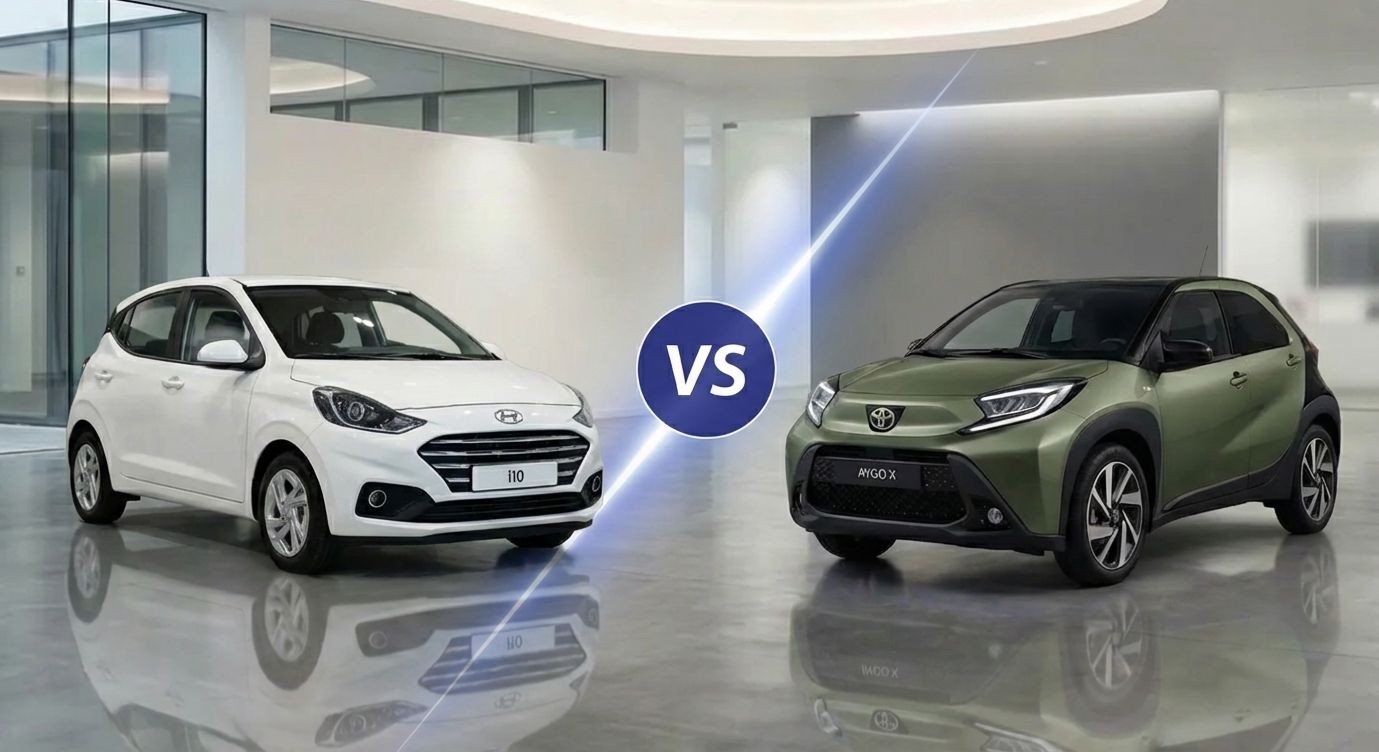
Hyundai i10 vs. Toyota Aygo X: A detailed comparison, real-world insights, and a verdict to help you choose the right small city car.
Apr 2, 2026
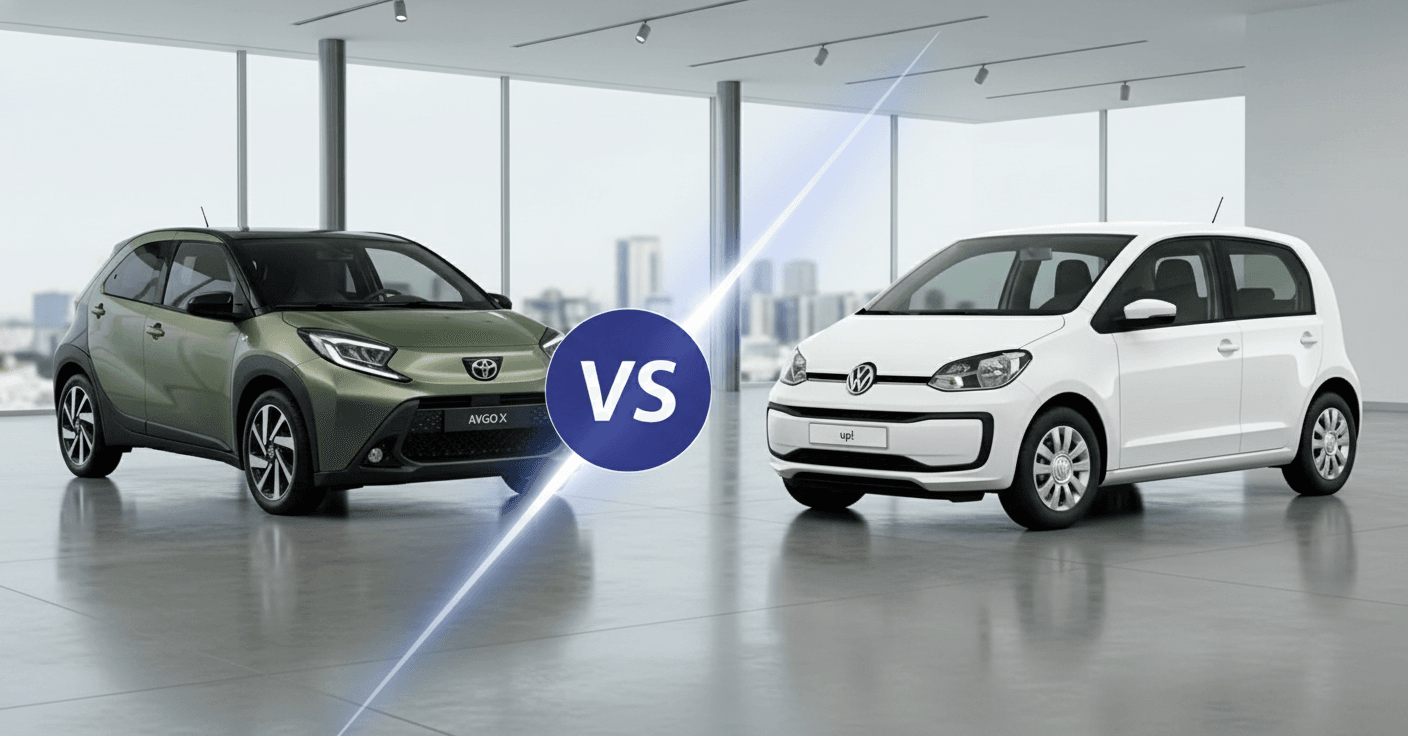
Toyota Aygo X vs Volkswagen up! (VW Up): Detailed comparison of city cars. Discover the differences in space, fuel consumption and equipment, and read our verdict.
Oct 16, 2026