Review Maserati MC20: What do owners and experts really say?
Maserati MC20 review: real owner experience, common issues, running costs and used prices — everything you need to know before you buy.
October 29, 2026
Verdict at a Glance
Who it suits: Enthusiasts and sports car collectors seeking a dedicated two-seat performance machine with compliant cross-country usability.
Recommended engine: The twin-turbo petrol V6, which thrives on sweeping open roads and sustained motorway journeys.
What to avoid: Daily short-distance city driving, and any example without documented recall repairs verified by VIN.
Introduction
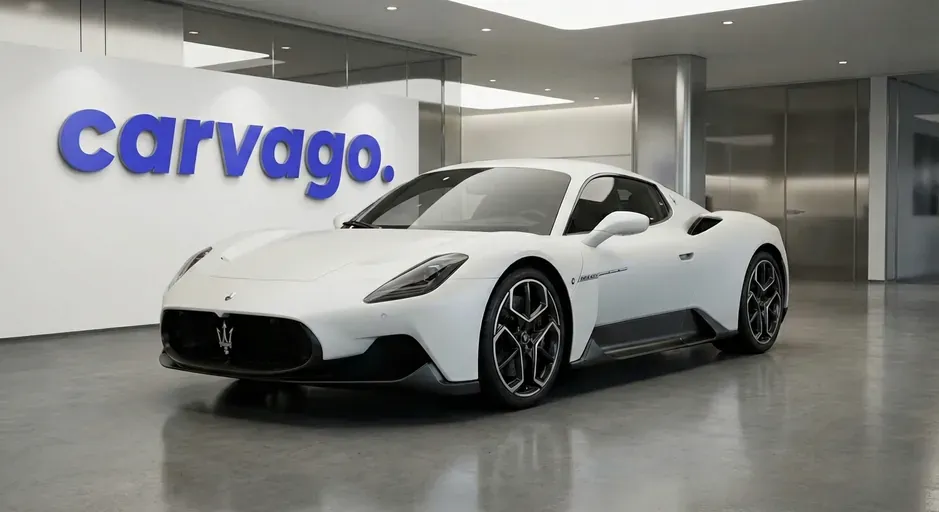
The Maserati MC20 marks the Italian marque's return to the mid-engine supercar segment, competing against established rivals from Ferrari, McLaren, and Porsche. Built around a carbon-fibre monocoque in Modena, Italy, the first generation (internal code M240) celebrated its world premiere on 09 September 2020, with initial European customer deliveries commencing in the second quarter of 2021.
Maserati broadened the range with the open-top convertible Maserati MC20 Cielo, unveiled on 25 May 2022 featuring an electrochromic retractable glass roof, with customer deliveries starting in February 2023. Track enthusiasts were subsequently offered the road-legal GT2 Stradale, presented on 16 August 2024 with European handovers beginning in February 2025. In July 2025, the lineup received a mid-cycle styling and mechanical update under the MCPURA evolution.
This review covers the first-generation coupe Maserati MC20, the Cielo spyder, and the GT2 Stradale derivative built from late 2020 through 2026. The MC20 primarily attracts driving enthusiasts and sports car collectors seeking a dedicated two-seat performance machine with cross-country usability.
Owner Experiences: Common Faults and Recalls
As a low-volume supercar built around a carbon-fibre monocoque, the Maserati MC20 does not generate the massive fleet-mileage data typical of mainstream performance cars. High-mileage examples remain scarce across European markets. Long-term reliability is not yet established over extended operating cycles, but dealer campaigns, safety registers, and specialised road tests highlight several distinct areas requiring attention.
European safety authorities have recorded three safety recall campaigns covering early production phases of the model family. The first involved the fuel delivery system on vehicles manufactured between 01 November 2020 and 08 October 2021, where the pressure and temperature sensor built into the fuel line could develop leaks, presenting a potential power loss and fire risk. Dealership workshops resolve this by inspecting the fuel line junction and replacing the sensor and pipe assembly. A second campaign affected an initial batch of 38 vehicles worldwide built between 24 May 2021 and 10 September 2021, addressing improperly welded rear auxiliary frames that could compromise subframe durability and stability under engine load and vibration, requiring workshop inspection and subframe replacement where necessary. A third recall, affecting vehicles built from 30 September 2022 through 23 June 2023, addressed missing or improperly sealed reinforcement pins in the windscreen frame that could negatively affect crash safety, remedied by workshop inspection and installation of the proper retaining hardware.
Verified European Safety Recalls
Defect & Stated Risk
Affected Build Window
Reach
Workshop Remedy
Fuel Sensor Leak: Leaking fuel line sensor causing potential power loss and fire risk
01/11/2020 – 08/10/2021
Worldwide (1,276 across model ranges)
Inspection and replacement of fuel line sensor components
Inspection and sealing or installation of retaining pins
Beyond official safety recalls, professional tests describe low-speed binding and shuddering during tight parking manoeuvres on examples equipped with the optional electronic limited-slip differential. This acoustic grabbing behaviour stems from the multi-plate clutch calibration when cold; in documented cases, updated differential software and fresh fluid help alleviate the symptom, though a degree of resistance remains characteristic of the system.
On the open-top Maserati MC20 Cielo, official manufacturer documentation notes that the door-latch control software can fail to execute the window short-drop sequence quickly enough upon handle pull. This timing mismatch allows the upper edge of the door glass to catch against the exterior A-pillar moulding, causing cosmetic pinching or deformation. Dealerships rectify this with a module software update and replacement mouldings if physical damage occurred. Additionally, owners report that quiescent battery drain from active telematics and onboard computers will trigger spurious transmission warning flags and low-voltage error codes if the vehicle is parked for extended periods without its factory battery maintainer connected.
Before committing to a purchase, you can have a specific car independently evaluated through CarAudit to ensure all chassis and electronic components are in order.
🔍 What to check before buying
Recall completion by VIN: Ask an authorised dealer to confirm through the vehicle identification number that the fuel sensor, windscreen frame pin, and rear subframe weld recall campaigns were completed.
Cielo window drop and A-pillar trim: On the convertible, test both door handles from the outside to ensure the glass drops instantly without catching or scoring the A-pillar weatherstrip moulding.
E-Diff low-speed manoeuvring: Perform tight full-lock turns at walking speed to check for excessive mechanical binding from the optional electronic differential, ensuring software updates have been applied.
Battery health and fault logs: Request a diagnostic scan for historic low-voltage fault codes, and verify the car includes its dedicated magnetic battery trickle charger.
Brake condition: Inspect the carbon-ceramic brake discs for chipped outer edges or surface flaking, as complete axle renewals represent significant wear expenditure.
Engines: Which One to Choose
The first-generation Maserati MC20 relies on a proprietary mid-mounted twin-turbo petrol unit developed in Modena. Power across the lineup is routed exclusively to the rear wheels through an eight-speed dual-clutch transmission.
Engine
Fuel
Power
Gearbox
Model years
3.0 V6 Nettuno
Petrol
463 kW (621 hp)
8-speed dual-clutch
2021–2025
3.0 V6 Nettuno (GT2 Stradale)
Petrol
471 kW (640 hp)
8-speed dual-clutch
2025–2026
Which Engine and Gearbox to Choose
Because Maserati fitted a single engine and gearbox combination across standard production models, selecting an MC20 as a used car comes down to matching its performance characteristics to your driving profile rather than comparing different engine sizes.
Short trips in town: The Nettuno twin-turbo V6 incorporates a specialized pre-chamber ignition system and dry-sump lubrication, both of which require heat to operate cleanly. In stop-and-go city driving, the dual-clutch transmission can feel hesitant when moving from a dead stop before its fluids reach full operating temperature. Daily short-distance commuting is not the operating environment this powertrain was designed for.
Mixed use and open roads: Sweeping secondary roads and track sessions represent the powertrain's intended operating window, whether in the fixed-roof Maserati MC20 Coupé or the convertible Maserati MC20 Cielo. The engine builds boost smoothly from low engine speeds before delivering an aggressive rush of acceleration toward the upper rev range. Gearshifts via the paddle shifters are rapid and crisp when dialed into performance driving modes.
Long motorway distances: At sustained highway speeds, the powertrain settles into a relaxed rhythm in its tallest gears, while mechanical noise recedes to a steady hum.
Towing: The MC20 is not type-approved for towing, is not rated for hauling, and cannot be fitted with a tow bar.
The Nettuno unit has demonstrated solid mechanical durability when maintained on schedule, with issues primarily confined to peripheral sensors and cold-temperature characteristics.
Space & Practicality
Parameter
Coupé
Convertible (Cielo)
Length (mm)
4,669
4,669
Width (mm)
1,965
1,965
Height (mm)
1,221
1,224
Wheelbase (mm)
2,700
2,700
Boot volume, rear / front (l)
100 / 50
100 / 50
Maximum boot volume (l)
—
—
The figures in the table do not apply to the track-focused GT2 Stradale edition, which features a modified aerodynamic profile, lowered suspension, and omits the front luggage compartment.
Built around a lightweight carbon-fibre monocoque, the Maserati MC20 Coupé and convertible Maserati MC20 Cielo are strict two-seaters with a structural firewall positioned directly behind the seats, leaving no space for a second row or through-loading hatch. Forward-rising butterfly doors create a wide opening to facilitate entry and exit over the substantial carbon sills, though interior oddment storage remains sparse.
Everyday cargo capacity is split between a shallow front compartment intended for small soft bags and an enclosed rear luggage area positioned directly behind the engine bay, which is subject to heat soak over longer journeys.
What the Tests Say
Professional road tests highlight a compliant suspension setup that isolates occupants from sharp road imperfections without unsettling the lightweight carbon-fibre tub. The Maserati MC20 Coupé demonstrates fluid chassis agility and natural self-centring steering, though testers diverge on feedback: some praise its intuitive weighting, while others find the helm light compared to direct supercar rivals. Pushed hard on standard road rubber, entry understeer emerges before the playful rear balance engages. The open-top Maserati MC20 Cielo maintains structural rigidity with negligible cowl shake and controlled wind buffeting, whereas track-oriented editions trade acoustic insulation for noticeable gravel clatter against the bare underbody.
Acoustically, the twin-turbo V6 delivers pronounced wastegate flutter and low-frequency induction, but road testers consistently observe an absence of the high-revving vocal character found in naturally aspirated peers. The optional carbon-ceramic brakes also draw criticism for a numb pedal sensation until properly warmed.
Inside, the Maserati MC20 offers a focused driving position and excellent forward sightlines. The minimalist architecture blends matte carbon fibre and Alcantara, but testers frequently point out functional compromises: rearward visibility remains restricted, and the push-button transmission controls feel clunky in daily use. Shared corporate switchgear on the steering wheel and infotainment display further detracts from the cabin's otherwise bespoke ambience.
Prices and Market Offer
All charts in this section are drawn from Carvago listings of the whole Maserati MC20 model family, including other generations represented in the data, rather than exclusively the reviewed generation. Across the advertised model years, the median asking price stands at €222,900 for 2021 builds, €215,000 for 2022 vehicles, €249,000 for 2023 examples, and €268,000 for 2025 cars. Because the available listings do not break out individual derivatives or factory specifications, this data does not establish a separate price level for the reviewed generation.
Between April and September 2026, the number of advertised Maserati MC20 models reached a high of 92 listings in June before dropping to 78 in September. The chart below tracks how monthly availability shifted over this six-month period.
Maserati MC20 - availability over time
Active listings over time
Month
Maserati MC20
2026-04
90
2026-05
88
2026-06
92
2026-07
85
2026-08
84
2026-09
78
Source Carvago
Buyers generally have between 78 and 92 active vehicles to choose from, though overall selection narrowed slightly during the late summer months.
In used listings advertised today, the median asking price of cars built in 2021 is €222,900, while the median asking price of cars built in 2025 is €268,000. The chart below details how median values differ across the available model years.
Maserati MC20 - median price by model year
Median advertised price by year of manufacture
Model year
Maserati MC20
2021
222 900
2022
215 000
2023
249 000
2024
255 000
2025
268 000
Source Carvago
Buyers comparing listings will find the lowest figures among 2022 models, where the median asking price is €215,000, sitting below the €222,900 recorded for 2021 cars. For newer build years, median asking prices are higher, standing at €249,000 for 2023 models, €255,000 for 2024 models, and €268,000 for 2025 cars.
Between April and September 2026, advertised listings consisted entirely of petrol models, beginning at 90 cars in April and finishing at 78 in September. The monthly breakdown across fuel types is detailed below.
Maserati MC20 - supply by fuel over time
Supply composition by fuel type
Month
Petrol
2026-04
90
2026-05
88
2026-06
92
2026-07
85
2026-08
84
2026-09
78
Source Carvago
Petrol accounts for every active listing on offer, with all 78 cars in September 2026 running on petrol and 0 recorded for diesel, hybrid, or electric alternatives. Buyers exploring the model family will realistically encounter only petrol-powered vehicles on the market.
The chart traces the average asking price for the Maserati MC20 from April 2026 to September 2026, opening at €227,700 before rising to €233,300 in May.
Maserati MC20 - price trend over time
Average price development over time
Month
Maserati MC20
2026-04
227 700
2026-05
233 300
2026-06
229 300
2026-07
224 500
2026-08
223 900
2026-09
216 300
Source Carvago
Prices then moved downward through each subsequent month to finish at €216,300 in September 2026, an overall reduction of roughly 5% across the recorded months.
Compliant suspension absorbs road imperfections well without compromising chassis agility
Focused driving position with clear forward sightlines and wide-opening butterfly doors
Twin-turbo powertrain pairs responsive high-speed acceleration with relaxed motorway cruising
Cons
Very limited interior oddment storage and rear luggage space prone to engine heat soak
Hesitant low-speed transmission response in town and numb pedal feel from cold brakes
Early production cars require VIN verification for fuel sensor, subframe, and windscreen recalls
Frequently asked questions
Is the Maserati MC20 reliable for regular use?
Long-term reliability remains unproven over high fleet mileages, and the powertrain is poorly suited to short urban trips before reaching operating temperature. Connecting the factory battery maintainer during storage is necessary to prevent low-voltage electrical faults.
What should you check before buying an MC20?
Verify by VIN with an authorised dealer that all safety recalls covering the fuel line, rear subframe, and windscreen frame have been completed. On the convertible Maserati MC20 Cielo, inspect the door handles to confirm the window short-drop operates cleanly without catching the pillar moulding.
Is the Maserati MC20 practical for long-distance touring?
A compliant suspension setup allows the Maserati MC20 to cruise motorway distances with composed ride comfort uncommon among mid-engine supercars. However, touring requires packing restraint because cabin oddment storage is minimal and the rear luggage compartment absorbs heat from the engine bay.
What does a used Maserati MC20 cost?
Early model years offer the most accessible median asking prices on the pre-owned market, starting around €215,000, while newer examples command a substantial premium. Available European listings for the Maserati MC20 consist exclusively of petrol-powered models.