Review
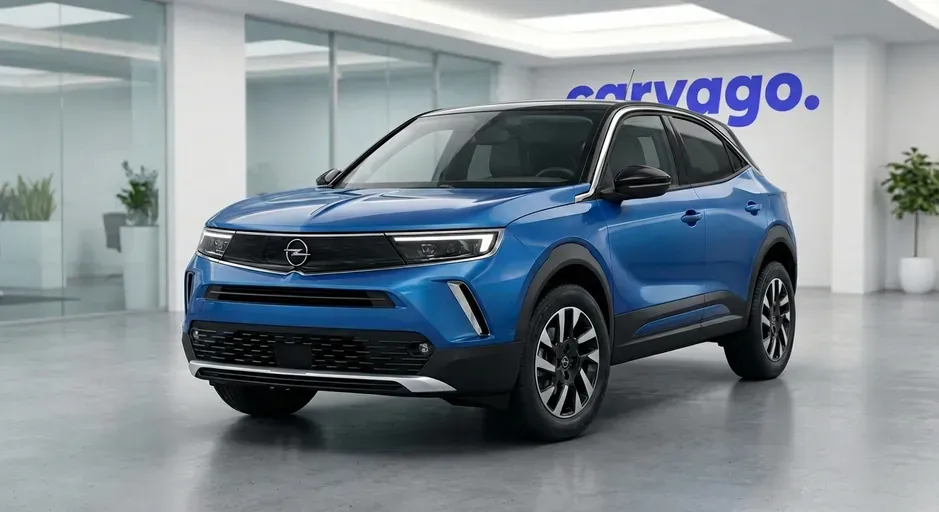
Review Opel Mokka: What do owners and experts really say?
Opel Mokka review: real owner insights, petrol and EV running costs, common faults, and used prices — everything you need before you buy.
Nov 1, 2026
Articles
Review
Kia Stonic review: real owner experiences, common faults, practical space, running costs and used prices — everything you need to know.
November 2, 2026

The Kia Stonic is a subcompact crossover designed for drivers who want an elevated seating position and protective exterior styling in an agile, city-friendly footprint. Offered exclusively as a five-door, front-wheel-drive model, the Kia Stonic crossover primarily attracts urban commuters, downsizers, and small households seeking manageable exterior dimensions without moving to a conventional supermini.
This review covers the first-generation model, which entered production in July 2017, with European customer deliveries starting in October 2017. The vehicle has received two factory updates during its production run. The first arrived in August 2020, introducing mild-hybrid electrification, upgraded infotainment, and refreshed exterior detailing, with deliveries starting in October 2020.
A second update was announced in October 2025, reaching European showrooms in December 2025. This revision introduced redesigned front and rear fascias alongside a dual-display dashboard layout. With production ongoing into 2026, the car represents an established presence in the European small crossover market.
The first-generation Kia Stonic has developed a broadly dependable record since its 2017 introduction, yet used examples display several well-documented technical weaknesses. Across official registers and owner forums, issues predominantly concentrate on transmission behaviour in urban traffic, cold-start drivability in early petrol variants, and two official safety recalls. Through November 2026, no new European safety campaigns were issued for the model in 2025 or 2026.
Two manufacturer safety campaigns have affected European models:
In urban stop-and-go driving, owners report noticeable hesitation, snatchy gear engagement, and judder when pulling away in first or second gear on the automatic Kia Stonic equipped with the seven-speed dry dual-clutch transmission. Tests describe early hesitation being mitigated by transmission control software updates and clutch recalibration. However, vehicles subjected to continuous city traffic over higher mileages frequently suffer clutch-pack glazing and wear, requiring full replacement of the dual-clutch pack and release bearings.
For pre-facelift petrol models built between 2017 and 2019 with the naturally aspirated 1.4-litre engine and manual transmission, owners frequently describe surging and sudden power dips during cold pull-aways and low-speed gear changes. Dealerships addressed this hesitation primarily with updated engine management software calibrations, though some persistent complaints also required cleaning the throttle body.
On 1.0 T-GDi models equipped with a gasoline particulate filter, short urban trips without sustained load can trigger the filter warning light because exhaust gas temperatures remain too low for passive soot burning. Operating the vehicle at higher engine speeds on open roads typically clears the soot loading, though neglected cases require a forced workshop diagnostic regeneration.
Long-term testing of the manual Kia Stonic highlighted scratching gear shifts between first and second gear and premature clutch wear on three-cylinder turbo petrol engines. Mechanical teardowns also revealed gradual coolant seepage from the water pump gasket; because the coolant reservoir lacks an electronic level sensor, owners must visually monitor fluid levels to prevent overheating. Additionally, owners of earlier model years occasionally report system freezes and unresponsive touchscreens on the central infotainment display.
Across its production run, the Kia Stonic has featured an engine range spanning naturally aspirated petrol units, turbocharged three-cylinders with optional mild-hybrid assistance, and turbodiesels. All versions route drive exclusively through the front wheels.
| Engine | Fuel | Power | Gearbox | Model years |
|---|---|---|---|---|
| 1.2 MPI | Petrol | 62 kW (84 hp) | 5-speed manual | 2017–2020 |
| 1.2 DPi | Petrol | 62 kW (84 hp) | 5-speed manual | 2020–2024 |
| 1.2 DPi | Petrol | 58 kW (79 hp) | 5-speed manual | 2024–2025 |
| 1.4 MPI | Petrol | 73 kW (100 hp) | 6-speed manual, 6-speed automatic | 2017–2020 |
| 1.0 T-GDi | Petrol | 74 kW (100 hp) | 5-speed manual | 2018–2020 |
| 1.0 T-GDi | Petrol | 74 kW (100 hp) | 6-speed manual, 7-speed automatic | 2020–2025 |
| 1.0 T-GDi | Petrol | 74 kW (100 hp) | 6-speed manual, 7-speed automatic | 2025–present |
| 1.0 T-GDi | Petrol | 88 kW (120 hp) | 6-speed manual, 7-speed automatic | 2017–2020 |
| 1.0 T-GDi 48V | Petrol MHEV | 88 kW (120 hp) | 6-speed manual, 7-speed automatic | 2020–2024 |
| 1.0 T-GDi 48V | Petrol MHEV | 74 kW (100 hp) | 6-speed manual, 7-speed automatic | 2024–2025 |
| 1.0 T-GDi 48V | Petrol MHEV | 85 kW (115 hp) | 6-speed manual, 7-speed automatic | 2025–present |
| 1.6 CRDi | Diesel | 81 kW (110 hp) | 6-speed manual | 2017–2018 |
| 1.6 CRDi | Diesel | 85 kW (115 hp) | 6-speed manual | 2018–2020 |
| 1.6 CRDi | Diesel | 100 kW (136 hp) | 6-speed manual | 2018–2020 |
For short urban commutes, a naturally aspirated petrol Kia Stonic fitted with the 1.2 MPI, 1.2 DPi, or 1.4 MPI is a sensible used buy. These port-injected units lack turbochargers and particulate filters, avoiding soot loading on brief journeys. However, they lack mid-range torque, requiring frequent gear changes and high engine speeds to keep up outside built-up areas.
Buyers seeking a balanced commuter for mixed driving will find the lower-output 1.0 T-GDi better suited to daily traffic, delivering responsive low-end pulling power without needing high revs. While an automatic Kia Stonic with the dual-clutch transmission adds commuting convenience, drivers who spend significant time in crawling city traffic may prefer a manual Kia Stonic.
For frequent motorway trips and sustained cross-country driving, the higher-output 1.0 T-GDi and its 48V mild-hybrid iterations provide the necessary overtaking reserves under load. As a used car, a diesel Kia Stonic with the 1.6 CRDi suits high-mileage drivers who prioritize cruising fuel economy, though cold-start clatter is noticeable and the heavier engine slightly blunts front-end agility.
Buyers who plan to tow should note that earlier used model years were homologated with higher maximum braked trailer limits than later facelift revisions.
| Dimension | Pre-facelift & Facelift 1 (2017–2025) | Facelift 2 (from late 2025) |
|---|---|---|
| Length | 4,140 mm | 4,165 mm |
| Width | 1,760 mm | 1,760 mm |
| Height | 1,485–1,520 mm | 1,505–1,520 mm |
| Wheelbase | 2,580 mm | 2,580 mm |
| Boot volume (seats upright / folded) | 352 / 1,155 l | 352 / 1,155 l |
Boot volume decreases on versions equipped with the optional space-saver spare wheel.
Front-seat occupants in the Kia Stonic benefit from extensive seat adjustment travel, allowing tall drivers to find an accommodating driving position. In the second row, space is noticeably tighter: knee room and headroom restrict comfort for taller adults seated behind a tall driver, making the rear bench best suited to children or shorter urban journeys. The rear seat is fixed without sliding functionality, though standard split-folding backrests allow longer items to extend forward into the cabin.
In the luggage compartment, an adjustable load floor creates a flat surface when the rear seats are lowered, eliminating the awkward step over the seat hinges. On mild-hybrid variants, the cavity beneath the floor panel is occupied by the battery pack, whereas standard petrol versions retain that concealed lower recess for loose items or charging cables.
On the road, the Kia Stonic prioritises body control over plush suspension compliance. Testers consistently describe the low-speed ride as firm and fidgety, with transverse expansion joints, potholes, and broken urban asphalt transmitting sharp vertical impulses directly into the cabin. While the chassis settles somewhat on smoother tarmac and controls body roll competently around bends, its rear axle struggles to absorb sudden road imperfections. Steering responses are alert and precise around town, aiding manoeuvrability, though some evaluations note a slightly numb feel on centre and limited cornering bite on eco-focused tyres. Cabin refinement draws widespread criticism: tyre roar across coarse surfaces is prominent, and the three-cylinder petrol engine thrums noticeably under load.
Inside, the cabin prioritises durability over tactile indulgence. The assembly proves robust and free of rattles over high mileages, but hard, scratchy plastics cover virtually every surface. From late 2025, factory updates modernised the dashboard layout with twin digital displays, though the dual-purpose touch-sensitive strip that toggles between climate and media controls proves distracting on the move.
Professional reviewers largely align on the Stonic’s shortcomings: road noise, brittle urban damping, and basic cabin textures leave it feeling utilitarian on long journeys. Disagreements emerge mainly over its dynamic appeal—some testers commend its disciplined cornering posture as engaging, whereas others conclude the chassis is safely predictable rather than genuinely rewarding to drive.
All charts in this section are drawn from Carvago listings of the whole Kia Stonic model family, including other generations represented in the data, and do not establish a separate price level for the reviewed generation alone. The median asking price begins at €14,000 for 2019 models and increases across subsequent years to €18,000 for 2023 cars. More recent listings reflect higher values, recording a median asking price of €20,300 for 2024 examples up to €23,300 for 2026 vehicles.
Between May 2026 and October 2026, the volume of advertised Kia Stonic cars moved between a peak of 6,747 listings in July and a low of 5,607 listings in October. The chart below shows the month-by-month changes in active listings over this period.
Active listings over time
| Month | Kia Stonic |
|---|---|
| 2026-05 | 6 136 |
| 2026-06 | 6 556 |
| 2026-07 | 6 747 |
| 2026-08 | 6 074 |
| 2026-09 | 6 139 |
| 2026-10 | 5 607 |
Source Carvago
Buyers can expect broad overall choice in the market, though the number of vehicles on offer fluctuated over these six months rather than holding steady.
Across used listings of this model advertised today, the median asking price of cars built in 2019 is €14,000, whereas the median asking price of cars built in 2026 reaches €23,300. The chart below illustrates how these median asking prices compare across recent model years.
Median advertised price by year of manufacture
| Model year | Kia Stonic |
|---|---|
| 2019 | 14 000 |
| 2020 | 15 100 |
| 2021 | 15 500 |
| 2022 | 15 800 |
| 2023 | 18 000 |
| 2024 | 20 300 |
| 2025 | 21 200 |
| 2026 | 23 300 |
Source Carvago
Buyers focusing on 2019 to 2021 model years see median asking prices from €14,000 to €15,500, whereas newer options built in 2025 and 2026 reflect median asking prices of €21,200 and €23,300.
This depreciation curve tracks how the Kia Stonic's residual value declines with age, showing that the model loses 11 % of its value in the first year and 29 % by age three.
Residual value by vehicle age
| Vehicle age | Kia Stonic |
|---|---|
| New | 23 700 |
| 1 yr | 21 000 |
| 2 yrs | 19 100 |
| 3 yrs | 16 900 |
| 4 yrs | 16 100 |
| 5 yrs | 14 700 |
| 6 yrs | 13 200 |
| 7 yrs | 12 700 |
Source Carvago
Over the seven-year span shown, the model sheds 46 % of its residual value, with the steepest losses concentrated in the first three years before the rate of decline eases from age four.
Across the six months from May to October 2026, petrol cars formed the vast majority of advertised inventory, peaking at 6,225 listings in July 2026 before dropping to 5,147 in October 2026. The chart below shows how active listings split across each fuel type over this period.
Supply composition by fuel type
Petrol
Diesel
Hybrid
CNG
LPG
| Month | Petrol | Diesel | Hybrid | CNG | LPG |
|---|---|---|---|---|---|
| 2026-05 | 5 716 | 247 | 58 | 2 | 97 |
| 2026-06 | 6 088 | 270 | 73 | 1 | 109 |
| 2026-07 | 6 225 | 288 | 82 | 1 | 137 |
| 2026-08 | 5 541 | 310 | 87 | 0 | 126 |
| 2026-09 | 5 606 | 302 | 82 | 1 | 136 |
| 2026-10 | 5 147 | 282 | 67 | 1 | 96 |
Source Carvago
Petrol heavily dominates the available selection, with alternative fuels trailing far behind in October 2026 at 282 diesel listings, 96 LPG, and 67 hybrid. Buyers will have an easy time finding petrol models, while locating a diesel or hybrid requires browsing a much smaller pool of cars.
Between May 2026 and October 2026, the average asking price for the Kia Stonic started at €18,100 and followed a gentle downward course, as outlined in the chart below.
Average price development over time
| Month | Kia Stonic |
|---|---|
| 2026-05 | 18 100 |
| 2026-06 | 18 000 |
| 2026-07 | 17 700 |
| 2026-08 | 17 700 |
| 2026-09 | 17 600 |
| 2026-10 | 17 600 |
Source Carvago
Across the six months, the average shifted from €18,100 to €17,600, holding flat at points such as €17,700 in both July and August. This represents a minor overall movement of less than 3%, indicating that advertised prices stayed largely stable over the period.
Alert steering and disciplined body control around corners
Robust interior assembly that resists rattles over high mileages
Practical flat cargo floor when folding the rear seats
Firm, fidgety low-speed ride over uneven urban surfaces
Noticeable tyre roar and engine noise under acceleration
Restrictive rear-seat knee room and headroom for taller passengers
The Kia Stonic holds a broadly dependable reputation overall, but dual-clutch automatics frequently develop clutch judder and premature wear under continuous city driving. Buyers should also verify that all manufacturer safety campaigns have been completed by VIN.
The lower-output 1.0 T-GDi offers the best balance of responsive low-end pull and efficiency for mixed daily commuting. However, naturally aspirated petrol engines remain simpler choices for strictly short urban trips, while the diesel suits high-mileage motorway cruising.
During a used-car inspection with CarAudit, test the dual-clutch automatic transmission for low-speed shudder and inspect the engine bay for coolant weeping around the water pump gasket. Buyers should also confirm with an authorised dealer that all safety recalls were completed by VIN.
It suits small households and urban runabouts, but restricted rear legroom and headroom make the back bench uncomfortable for taller adults sitting behind a tall driver. Because the rear seat is fixed and cannot slide, it functions far better as a daily commuter or second car than a primary family vehicle.
Sources: kia.com, adac.de, kba.de, autobild.de, autocar.co.uk
This article was prepared using artificial intelligence tools. The section guarantor is Petr Dušek.
Opel Mokka review: real owner insights, petrol and EV running costs, common faults, and used prices — everything you need before you buy.
Nov 1, 2026

Detailed comparison: Citroën C5 Aircross vs. Hyundai Tucson. Discover the real differences in comfort, equipment, and reliability. We'll help you choose the right family SUV.
May 20, 2026

Comparison of the Kia Sportage and Toyota RAV4 SUVs. Find out how they perform in real-world tests of fuel consumption, reliability, and equipment. Choose the best used car!
Apr 28, 2026