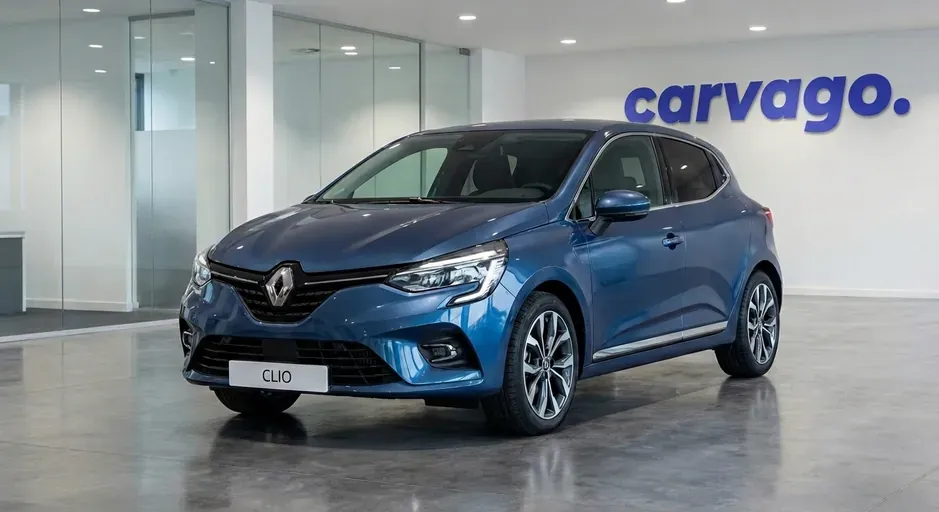
Review
Review Renault Clio: What do owners and experts really say?
Renault Clio VI review: real owner feedback, hybrid running costs, boot space, pricing and our definitive verdict on the new supermini.
Oct 22, 2026
Articles
Review
Kia Rio (2017–2023) review: real owner experience, common faults, engine picks and used prices. Everything you need to know before you buy.
November 2, 2026

The Kia Rio represents the Korean manufacturer’s entry in the competitive European supermini class. This review focuses exclusively on the fourth generation, which began customer deliveries across Europe in February 2017 after production commenced in November 2016. For European buyers, this generation was sold exclusively as a five-door Kia Rio hatchback.
A mid-cycle facelift was unveiled on 26 May 2020, with European deliveries getting underway in September 2020. The update brought subtle exterior styling adjustments, modernized cabin electronics, and introduced 48-volt mild-hybrid technology paired with a clutch-by-wire manual gearbox. Kia announced its departure from the European segment in February 2023, closing order books before European sales concluded late that year and global production finished in December 2023 without a direct European successor.
Positioned for urban drivers, commuters, and small households needing functional, straightforward transport, this generation of the Kia Rio prioritised ease of use and sensible packaging. On the used market, it attracts buyers who value unpretentious daily transport over segment trends.
Real-world owner reports and periodic vehicle inspections indicate that the fourth-generation Kia Rio offers dependable everyday mechanics, though several recurring transmission quirks and documented safety campaigns require attention on the second-hand market.
Official European safety registries record two primary safety campaigns directly involving this generation, alongside a broad cross-generational campaign:
Drivetrain behavior accounts for the most common owner grievances. On the manual Kia Rio paired with the 1.25 MPI, 1.2 DPi, or 1.0 T-GDi petrol engines, owners report noticeable clutch judder and driveline vibration when moving off in first gear. This symptom occurs predominantly on cold starts or in damp weather and tends to dissipate once the friction surfaces warm up. Authorized workshops frequently addressed the issue by applying engine management updates to smooth out low-rpm response alongside clutch disc replacements.
On the automatic Kia Rio equipped with the 1.0 T-GDi engine and the seven-speed dual-clutch transmission, tests describe and owners report low-speed hesitation, jerky take-off, and occasional shudder during stop-and-go urban traffic. Extended crawling in heavy traffic can also trigger gearbox temperature warnings. In most cases, a transmission control software update and clutch touch-point recalibration resolve the uneven engagement, though neglected or heavily worn units eventually require replacement dual-clutch packs.
Periodic roadworthiness tests describe elevated failure rates for minor electrical and lighting components across all model years. Blown daytime running light bulbs, failed rear license plate illumination, and misaligned halogen headlamp reflectors are common inspection findings. In addition, front suspension drop links and strut top mounts show accelerated wear on vehicles driven regularly over poor urban road surfaces, leading to knocking noises over road imperfections. Buyers seeking peace of mind regarding suspension integrity and electronic faults can arrange an independent pre-purchase inspection through CarAudit.
During its European production run, the fourth-generation Kia Rio offered naturally aspirated four-cylinder petrol engines, downsized turbocharged three-cylinders, and an early four-cylinder diesel option. Mid-cycle revisions brought updated fuel injection systems, six-speed manual gearboxes across more versions, and 48-volt mild-hybrid technology.
| Engine | Fuel | Power | Gearbox | Model years |
|---|---|---|---|---|
| 1.25 MPI | Petrol | 62 kW (84 hp) | 5-speed manual | 2017–2020 |
| 1.2 DPi | Petrol | 62 kW (84 hp) | 5-speed manual | 2020–2023 |
| 1.4 MPI | Petrol | 74 kW (100 hp) | 6-speed manual | 2017–2019 |
| 1.4 MPI | Petrol | 74 kW (100 hp) | 4-speed automatic | 2017–2019 |
| 1.0 T-GDi | Petrol | 74 kW (100 hp) | 5-speed manual | 2017–2020 |
| 1.0 T-GDi | Petrol | 74 kW (100 hp) | 6-speed manual | 2020–2023 |
| 1.0 T-GDi | Petrol | 74 kW (100 hp) | 7-speed automatic | 2020–2023 |
| 1.0 T-GDi | Petrol | 88 kW (120 hp) | 6-speed manual | 2017–2020 |
| 1.0 T-GDi | Petrol | 88 kW (120 hp) | 7-speed automatic | 2018–2020 |
| 1.0 T-GDi EcoDynamics+ | Mild hybrid (petrol) | 88 kW (120 hp) | 6-speed manual | 2020–2023 |
| 1.0 T-GDi EcoDynamics+ | Mild hybrid (petrol) | 88 kW (120 hp) | 7-speed automatic | 2020–2023 |
| 1.4 CRDi | Diesel | 57 kW (77 hp) | 6-speed manual | 2017–2018 |
| 1.4 CRDi | Diesel | 66 kW (90 hp) | 6-speed manual | 2017–2018 |
For drivers covering mostly urban commutes and short local hops, the naturally aspirated four-cylinder petrols—the early 1.25 MPI and the updated 1.2 DPi—suit this operating profile best. Their indirect injection layout prevents intake valve carbon build-up, and they avoid the extra hardware of turbochargers or particulate filters. However, their modest pulling power demands frequent downshifting and high engine speeds when entering motorways or climbing hills. The pre-facelift 1.4 MPI offers slightly more mid-range flexibility, though its optional four-speed torque-converter automatic feels sluggish due to wide ratio spacing.
For mixed daily use on urban and rural roads, the turbocharged three-cylinder petrol Kia Rio in its lower-output 1.0 T-GDi specification provides the most balanced package, delivering accessible low-end pulling power. Buyers seeking a manual gearbox will find the facelifted version more refined on open roads thanks to its six-speed transmission, which replaces the earlier five-speed unit. The optional seven-speed dual-clutch automatic adds urban convenience for daily driving.
Motorway drivers who cover higher annual mileages will prefer the higher-output 1.0 T-GDi or the facelifted hybrid Kia Rio EcoDynamics+, which offers smooth engine-off coasting at cruising speeds and stronger overtaking reserves. The early diesel Kia Rio 1.4 CRDi remains an economical used purchase for sustained long-distance travel, though it quickly develops particulate filter clogging if driven primarily on short urban trips. For towing light trailers, the higher-output manual petrol or the diesel models offer the highest factory towing limits, whereas automatic and mild-hybrid configurations carry lower permissible ratings.
For a compact supermini, the Kia Rio hatchback offers a sensibly packaged interior. Up front, occupants find adequate headroom and shoulder room. In the rear, the roofline preserves sufficient headroom, though knee clearance becomes tight for taller passengers seated behind a tall driver. As is typical in this segment, the rear bench accommodates two adults in reasonable comfort, but carrying three across compromises shoulder width and foot space. Everyday usability is supported by a standard 60:40 split-folding rear seatback, though the rear bench in the Kia Rio does not slide fore and aft. The luggage compartment provides a broad aperture and a practical, square load area. On higher trims, an adjustable dual-level luggage floor sits level with the folded seatbacks to form a continuous loading surface; base configurations without the dual floor leave a pronounced step and an inner sill to lift cargo over.
| Dimension / Capacity | Hatchback (2017–2023) |
|---|---|
| Length | 4,065 mm |
| Width (excluding mirrors) | 1,725 mm |
| Height | 1,450 mm |
| Wheelbase | 2,580 mm |
| Boot volume (rear seats upright) | 325 l |
| Boot volume (rear seats folded, 2017–2020) | 980 l |
| Boot volume (rear seats folded, 2020–2023) | 1,103 l |
Professional road tests consistently characterise the Kia Rio hatchback as firmly sprung. Around town, the suspension reacts sharply to sunken manholes, potholes, and fractured tarmac, transferring noticeable jolts into the cabin—an effect exacerbated on versions equipped with larger wheels. Composure settles somewhat at motorway speeds, though coarse asphalt induces distinct tyre roar, and three-cylinder petrol units growl audibly under acceleration. Through corners, body roll is well contained and roadholding is dependable, even during sudden evasive manoeuvres. The steering is light and accurate for city parking, yet testers agree it provides minimal road feedback, delivering safe competence rather than driver engagement.
Inside, testers praise the straightforward, highly functional ergonomics. Physical rotary dials and clear buttons ensure climate and primary functions can be operated without distraction, while the central touchscreen on equipped models responds promptly. Assembly is robust and free from rattles, but reviewers universally point out the extensive presence of hard, unyielding plastics across the dashboard and door tops, which lacks visual and tactile warmth. Front seating proves functional, though some evaluations note limited thigh and lumbar support during longer motorway stints.
The mid-cycle update brought subtle powertrain refinement through mild-hybrid technology and a revised infotainment interface, but the fundamental road manners—namely the rigid low-speed ride and modest acoustic insulation—remained largely unchanged throughout production.
The charts in this section are drawn from Carvago listings covering the entire Kia Rio model family, including other generations represented in the data, rather than the reviewed generation alone. Because listings are grouped solely by year of manufacture, the data does not establish a separate price level for the reviewed generation. Across the available model years, advertised listings show a median asking price of €10,400 for 2017 cars, €14,000 for 2021 models, and €17,300 for 2024 examples. Differences between model years primarily reflect equipment levels, engine choices, and manufacturing date.
Between May 2026 and October 2026, the number of advertised Kia Rio models fluctuated, peaking at 1,332 listings in June before dropping to 1,073 listings by the end of the period. The chart below tracks these monthly listing volumes across the market.
Active listings over time
| Month | Kia Rio |
|---|---|
| 2026-05 | 1 295 |
| 2026-06 | 1 332 |
| 2026-07 | 1 273 |
| 2026-08 | 1 183 |
| 2026-09 | 1 193 |
| 2026-10 | 1 073 |
Source Carvago
Even with the dip toward 1,073 vehicles in October, buyers still have over a thousand active listings to explore, providing a wide selection across different model years and specifications.
Among used listings advertised today, the median asking price of cars built in 2017 is €10,400, while the median asking price of 2024 listings is €17,300. The chart below illustrates how these median asking prices compare across available model years.
Median advertised price by year of manufacture
| Model year | Kia Rio |
|---|---|
| 2017 | 10 400 |
| 2018 | 11 500 |
| 2019 | 12 500 |
| 2020 | 13 800 |
| 2021 | 14 000 |
| 2022 | 14 000 |
| 2023 | 16 000 |
| 2024 | 17 300 |
Source Carvago
A buyer considering older model years faces a median asking price of €11,500 for 2018 cars and €12,500 for 2019 cars. Both 2021 and 2022 builds share an identical median asking price of €14,000, while 2023 listings stand at €16,000 and 2024 listings at €17,300.
Petrol listings accounted for the majority of the offer across the period, starting at 1,154 cars in May 2026 and ending at 968 in October 2026. The chart below illustrates how advertised volumes split by fuel type month by month.
Supply composition by fuel type
Petrol
Diesel
Hybrid
CNG
LPG
| Month | Petrol | Diesel | Hybrid | CNG | LPG |
|---|---|---|---|---|---|
| 2026-05 | 1 154 | 57 | 38 | 0 | 39 |
| 2026-06 | 1 185 | 57 | 41 | 0 | 42 |
| 2026-07 | 1 142 | 58 | 35 | 1 | 32 |
| 2026-08 | 1 051 | 58 | 40 | 1 | 29 |
| 2026-09 | 1 064 | 53 | 41 | 0 | 33 |
| 2026-10 | 968 | 43 | 26 | 0 | 34 |
Source Carvago
In October 2026, petrol dominated available listings with 968 cars, while diesel recorded 43, LPG had 34, and hybrid stood at 26. Buyers will find widespread availability for petrol models, whereas those seeking diesel, hybrid, or LPG variants have very few vehicles to choose from.
Between May 2026 and October 2026, the average asking price for the Kia Rio began at €12,400 and saw only minor month-to-month variation across the tracked listings.
Average price development over time
| Month | Kia Rio |
|---|---|
| 2026-05 | 12 400 |
| 2026-06 | 12 400 |
| 2026-07 | 12 400 |
| 2026-08 | 12 200 |
| 2026-09 | 12 200 |
| 2026-10 | 12 400 |
Source Carvago
The average dipped slightly to €12,200 in August and September 2026 before returning to €12,400 in October 2026, leaving the overall figure unchanged across the six months.
Straightforward cabin ergonomics with physical dials and intuitive controls
Dependable roadholding with well-controlled body roll through corners
Practical, square luggage compartment with a wide loading aperture
Firm low-speed ride that transmits sharp jolts over broken road surfaces
Known drivetrain quirks including manual clutch judder and dual-clutch low-speed hesitation
Cabin dominated by hard plastics alongside noticeable tyre roar at cruising speeds
Mechanically, the Kia Rio is generally dependable for daily use, though drivetrain quirks such as manual clutch judder and dual-clutch low-speed hesitation require attention. Buyers should confirm by VIN that all recall campaigns have been completed.
The naturally aspirated 1.2-litre petrol engines suit urban commutes best with their simple indirect injection layout. For mixed driving, the turbocharged petrol Kia Rio 1.0 T-GDi offers stronger low-end pulling power, particularly when paired with the six-speed manual gearbox.
Check the car's history by VIN to verify completed safety recalls and examine the manual clutch and dual-clutch transmission for smooth low-speed engagement. Listen for clunks from the front suspension drop links over broken tarmac.
The suspension is firmly sprung and reacts sharply to urban potholes, transferring noticeable jolts into the cabin. It settles somewhat at motorway speeds, though coarse tarmac generates distinct tyre roar.
Sources: kia.com, adac.de, autobild.de, autocar.co.uk, autoexpress.co.uk
This article was prepared using artificial intelligence tools. The section guarantor is Petr Dušek.
Renault Clio VI review: real owner feedback, hybrid running costs, boot space, pricing and our definitive verdict on the new supermini.
Oct 22, 2026
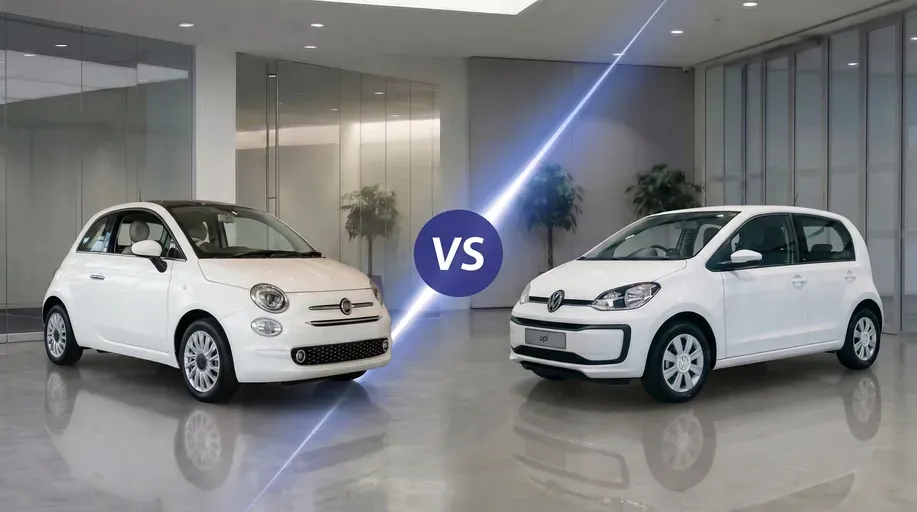
Fiat 500 vs Volkswagen up! (VW up!) Comparison: Which used city car to choose? Find out details about fuel consumption, reliability, and equipment. Read our verdict!
May 16, 2026
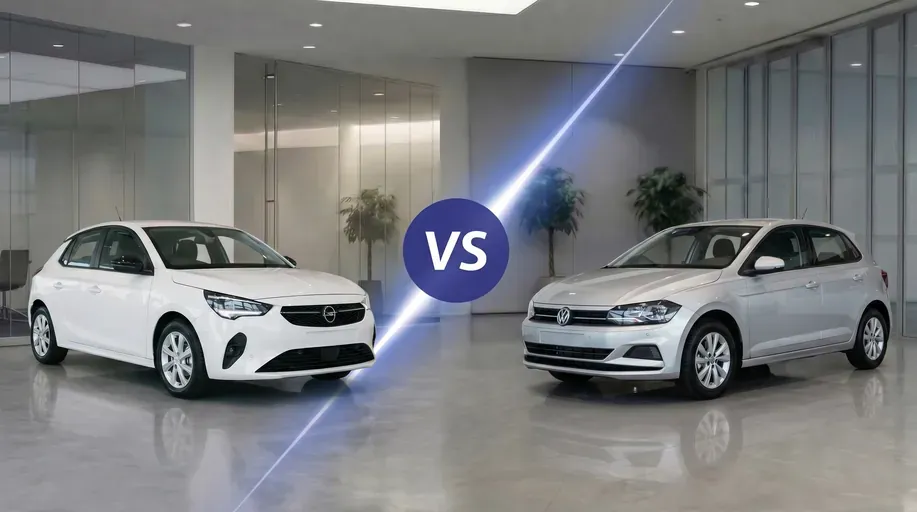
Detailed comparison of Opel Corsa vs. Volkswagen Polo (VW Polo). Discover real-world experiences, differences in equipment, and the verdict for choosing the ideal used hatchback.
Oct 16, 2026