Renault Mégane vs. Volkswagen Golf: Complete comparison 2026
Detailed comparison of Renault Mégane vs Volkswagen (VW) Golf. Evaluation of equipment, engines, and reliability. Find out which used hatchback is the better choice.
May 14, 2026
Kia Ceed review: real owner experiences, reliability, running costs, engine picks and used prices. The complete verdict before you buy.
November 5, 2026

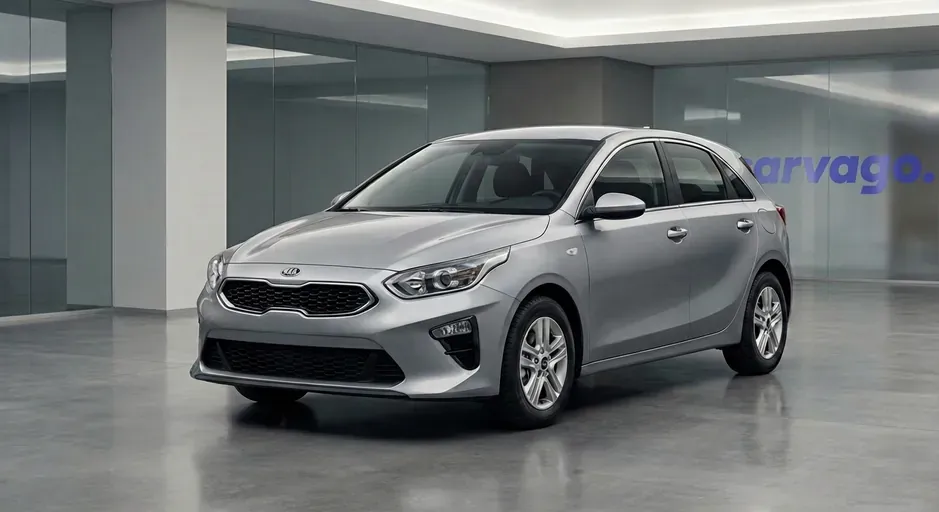
The third-generation Kia Ceed (CD) competes in Europe’s compact segment, offering a straightforward alternative to established competitors. Built at the Žilina manufacturing facility in Slovakia, series production began in May 2018, with initial customer deliveries of the Kia Ceed hatchback starting in July 2018. The Kia Ceed Sportswagon estate entered production in summer 2018, with plug-in hybrid and 48V diesel mild-hybrid versions joining the range in January 2020.
Kia premiered a mid-cycle facelift on 14 July 2021, starting production in August 2021 and delivering the first updated cars to European customers in October 2021. The revision introduced reshaped bumpers, brand-new corporate badging, revised lighting signatures, and upgraded cabin connectivity. Series production of the generation ended in August 2025.
Offered across two core body styles—a five-door hatchback and a practical estate—the Ceed targets private commuters and family buyers looking for conventional controls, predictable road manners, and usable luggage space. This review covers the third generation throughout its European production run, outlining what to expect from both pre-facelift and facelifted models on the used market.
The third-generation Kia Ceed has established a dependable reputation across European markets, though owner reports and professional tests highlight specific mechanical and electronic areas to inspect. The most prominent talking point on owner forums involves the optional seven-speed dry dual-clutch transmission. On an automatic Kia Ceed mated to petrol or diesel engines, owners report low-speed shudder, friction vibrations when creeping in dense traffic, and jerky engagement in first and second gear. Heavy urban driving accelerates friction disc glazing, and at higher mileages between 80,000 and 120,000 km, electric clutch actuators can trigger gear dropouts. Transmission software recalibrations mitigate mild hesitation, but in many cases resolving physical shudder requires replacing the dual-clutch friction pack and relearning engagement tolerances.
Electrified variants introduce their own operational nuances. On mild-hybrid models equipped with the clutch-by-wire intelligent manual transmission, tests describe delayed engine restarts or failures to enter coasting sailing mode. The electronic clutch actuator relies on its own separate hydraulic circuit; skipping fluid renewals or running on a degraded 48V auxiliary battery prevents proper actuator function. For onboard electronics, owners of pre-facelift and early post-facelift cars with the widescreen 10.25-inch infotainment display frequently report occasional freezing, unresponsive touch inputs, or completely blank screens while audio keeps playing. While official software updates resolve most software lock-ups, in some cases unrecoverable black screens require complete display unit replacement.
Official European recall campaigns have addressed several hardware safety issues across the generation's run. In early 2025, a European recall covered the plug-in hybrid model—specifically hybrid Kia Ceed units built between November 2019 and August 2023. The notice stated that the printed circuit board in the hydraulic clutch actuator can become contaminated with fluid, causing an electrical short that could potentially result in an engine-compartment thermal incident while driving. Dealerships inspect the actuator for diagnostic trouble codes and fluid ingress, fitting a lower-rated fuse and modifying the fuse board, or replacing the complete actuator assembly if leaks or error codes are detected.
Braking and restraint systems have also seen targeted European safety campaigns. In autumn 2023, a recall applied to the diesel Kia Ceed fitted with the 1.6 CRDi engine, covering cars manufactured between October 2018 and October 2020. A faulty mesh filter inside the tandem pump could become blocked, causing insufficient oil supply and vacuum pump failure, which results in a loss of vacuum assistance and an increased braking distance. Authorised workshops remedy this by removing the internal filter mesh and replacing the vacuum pump and drive belt if internal wear is discovered. Additionally, a June 2022 campaign covering vehicles built between November 2021 and February 2022 resolved a front seat belt pretensioner defect by replacing both front assemblies, while an earlier batch built between June 2019 and March 2020 required brake fluid replacement and master cylinder renewal due to factory fluid contamination.
| Recall Subject | Affected Engine / Model | Build Window | Reach | Stated Defect & Remedy |
|---|---|---|---|---|
| Hydraulic Clutch Actuator | 1.6 GDi Plug-in Hybrid | Nov 2019 – Aug 2023 | Worldwide / EU | Fluid contamination on actuator PCB creates short circuit and thermal risk; fuse modified or actuator replaced. |
| Tandem Pump Mesh Filter | 1.6 CRDi Diesel | Oct 2018 – Oct 2020 | Worldwide / EU | Mesh filter blockage can cause vacuum pump failure and loss of brake assistance; filter mesh removed and damaged parts replaced. |
| Front Seat Belt Pretensioners | All variants in batch | Nov 2021 – Feb 2022 | Worldwide / EU | Defective tensioners could fail to deploy correctly in a crash; dealer replaces driver and passenger assemblies. |
| Brake Master Cylinder | All variants in batch | Jun 2019 – Mar 2020 | European markets | Factory topping-up with incorrect brake fluid; master cylinder replaced and hydraulic system flushed. |
Throughout its production run from 2018 to 2025, the third-generation Kia Ceed offered a wide spectrum of powertrains, ranging from simple naturally aspirated petrols and turbocharged three- and four-cylinder units to efficient diesels and an electrified plug-in hybrid.
| Engine | Fuel | Power | Gearbox | Model Years |
|---|---|---|---|---|
| 1.4 MPi | Petrol | 73 kW (100 hp) | 6-speed manual | 2018–2020 |
| 1.0 T-GDi | Petrol | 74 kW (100 hp) | 6-speed manual, 7-speed automatic | 2019–2025 |
| 1.0 T-GDi | Petrol | 88 kW (120 hp) | 6-speed manual, 7-speed automatic | 2018–2024 |
| 1.4 T-GDi | Petrol | 103 kW (140 hp) | 6-speed manual, 7-speed automatic | 2018–2021 |
| 1.5 T-GDi | Petrol | 118 kW (160 hp) | 6-speed manual, 7-speed automatic | 2021–2024 |
| 1.5 T-GDi | Petrol | 103 kW (140 hp) | 6-speed manual, 7-speed automatic | 2024–2025 |
| 1.6 T-GDi GT | Petrol | 150 kW (204 hp) | 6-speed manual, 7-speed automatic | 2018–2024 |
| 1.6 CRDi | Diesel | 85 kW (115 hp) | 6-speed manual, 7-speed automatic | 2018–2020 |
| 1.6 CRDi | Diesel | 100 kW (136 hp) | 6-speed manual, 7-speed automatic | 2018–2023 |
| 1.6 GDi PHEV | Petrol Plug-in Hybrid | 104 kW (141 hp) | 6-speed automatic | 2020–2025 |
For purely urban use, the earlier naturally aspirated 1.4 MPi is an unpretentious used choice that avoids turbochargers and exhaust particulate filters entirely. The three-cylinder 1.0 T-GDi is zippy around town, though cars driven strictly on short, cold trips require occasional open-road runs to clear exhaust soot. In urban stop-and-go traffic, the manual transmission is the more durable choice over the dry-clutch automatic.
The four-cylinder turbo petrol Kia Ceed variants represent the sweet spot for general duties. The earlier 1.4 T-GDi provides linear, predictable power delivery, while the newer 1.5 T-GDi adds noticeably stronger mid-range responsiveness when overtaking. Even in its later detuned specification introduced to meet Euro 6e rules, the 1.5 T-GDi remains the most well-rounded engine in the line-up for combined commuting.
Frequent long-distance drivers should look toward the diesel Kia Ceed fitted with the 1.6 CRDi engine. While diesels were phased out before the end of production, they deliver long cruising range and strong pulling reserves under load. For buyers who regularly pull trailers or load a Kia Ceed Sportswagon to capacity, the higher-output diesel and the manual 1.5 T-GDi provide the strongest rated towing capacities, though exact braked limits depend on market homologation and gearbox.
The estate-only hybrid Kia Ceed plug-in hybrid suits drivers who can charge at home and complete daily commutes primarily on electricity, though acceleration feels relaxed once battery reserves deplete. Meanwhile, enthusiastic drivers will appreciate the halo Ceed GT, which pairs firm chassis tuning with the punchy 1.6 T-GDi.
For recurring mechanical faults, transmission behaviour, and specific component checks across these drivetrains, refer to the dedicated owner experiences section.
Both body styles of the third-generation Kia Ceed hatchback and Kia Ceed Sportswagon share an identical wheelbase, delivering practical accommodations for four adults. Up front, broad adjustment ranges allow drivers of most heights to settle in comfortably. The rear bench is fixed, offering reasonable knee clearance for average-sized passengers, though taller occupants will notice that the seat base is positioned somewhat low, reducing under-thigh support. A wide cabin width accommodates three across for shorter hops, and the standard 60:40 split-folding rear backrests drop easily to expand the cargo area when moving bulkier loads.
| Body Style | Length (mm) | Width (mm) | Height (mm) | Wheelbase (mm) | Boot Capacity (seats up / folded, l) |
|---|---|---|---|---|---|
| Hatchback | 4,310–4,325 | 1,800 | 1,442–1,447 | 2,650 | 395 / 1,291 |
| Sportswagon | 4,600–4,605 | 1,800 | 1,460–1,465 | 2,650 | 625 / 1,694 |
| Sportswagon Plug-in Hybrid | 4,605 | 1,800 | 1,465 | 2,650 | 437 / 1,506 |
The standard boot capacities listed above do not apply to 48V mild-hybrid configurations, which lose underfloor storage space to the secondary battery pack.
On the road, the Kia Ceed delivers composed handling with tight body control and reassuring stability during sudden swerves. Its steering is direct, centering neatly and placing the car accurately, though testers consistently point out an absence of tactile road-surface feedback. Ride comfort is biased toward the firm side. While the chassis settles well on smooth surfaces, it feels fidgety over scarred tarmac and sharp transverse ridges. Versions fitted with sportier suspension tuning transmit cobblestones and urban road seams more abruptly into the passenger compartment. Mechanical refinement is respectable at motorway pace, with subdued engine acoustics and well-contained wind rush, though degraded asphalt produces noticeable tyre roar.
Inside, testers widely praise the Kia Ceed for its practical ergonomics. While contemporary rivals migrated essential controls into touchscreen submenus, the Ceed retains physical rotary dials and dedicated buttons for ventilation and audio, ensuring straightforward operation on the move. Assembly quality is robust with tight shut lines and an absence of cabin rattles, although cost-conscious hard plastics are readily apparent on the lower door casings and centre console beneath the padded upper dashboard.
With the mid-cycle facelift from model year 2022, an upgraded digital instrument cluster became available on higher trims alongside a larger central display that modernised the cabin without undermining menu clarity. Reviewers broadly agree on the car’s reassuring road manners and ergonomic logic. Where verdicts diverge is ride compliance: evaluations on smooth continental motorways rated the chassis as stable and securely planted, whereas tests conducted on coarse, undulating secondary tarmac judged the suspension unyielding and unsettled over continuous bumps.
All market charts in this section draw from advertised listings across the broader Kia Ceed model family on Carvago, including other generations represented in the data rather than isolating the third generation. Because generation-specific breakdowns are not separated here, these figures do not establish a distinct pricing tier for the reviewed version alone. In today’s snapshot, the median asking price starts at €15,600 for 2019 models and scales to €26,000 for 2026 vehicles. Buyers navigating the used market will notice newer model years reflect late-run updates, lower recorded mileages, and remaining factory warranty coverage.
Between May 2026 and October 2026, the number of advertised Kia Ceed vehicles fell each month, decreasing from 9,425 active listings to 7,117. The chart below tracks how listings moved over this six-month period.
Active listings over time
| Month | Kia Ceed |
|---|---|
| 2026-05 | 9 425 |
| 2026-06 | 9 018 |
| 2026-07 | 8 789 |
| 2026-08 | 7 937 |
| 2026-09 | 7 618 |
| 2026-10 | 7 117 |
Source Carvago
Buyers still have several thousand cars to choose from across the market, although overall selection narrowed continuously across the months recorded.
Among listings advertised today, the median asking price of cars built in 2019 is €15,600, whereas the median asking price for 2026 models reaches €26,000. The chart below shows the median asking price for each model year currently available.
Median advertised price by year of manufacture
| Model year | Kia Ceed |
|---|---|
| 2019 | 15 600 |
| 2020 | 16 900 |
| 2021 | 18 000 |
| 2022 | 19 000 |
| 2023 | 22 900 |
| 2024 | 24 400 |
| 2025 | 24 800 |
| 2026 | 26 000 |
Source Carvago
Buyers targeting 2019 through 2022 builds encounter median asking prices between €15,600 and €19,000. For a 2023 model, the median asking price is €22,900, culminating at €26,000 for 2026 vehicles.
This depreciation curve illustrates how the Kia Ceed loses value with age, shedding about 10% of its initial residual value in the first year and 25% by age three. The chart below tracks this decline across the first seven years of vehicle age.
Residual value by vehicle age
| Vehicle age | Kia Ceed |
|---|---|
| New | 25 300 |
| 1 yr | 22 700 |
| 2 yrs | 21 600 |
| 3 yrs | 19 000 |
| 4 yrs | 17 500 |
| 5 yrs | 15 800 |
| 6 yrs | 14 500 |
| 7 yrs | 12 900 |
Source Carvago
Across the seven years shown, the model sheds roughly 49% of its baseline residual value, retaining just over half of that figure at age seven. While the largest single-year declines take place in the first year and between ages two and three, depreciation continues downward across every recorded year.
Between May and October 2026, advertised petrol models decreased from 7,895 to 5,720 listings. The chart below illustrates how active listings split across each fuel type over this timeframe.
Supply composition by fuel type
Petrol
Diesel
Hybrid
LPG
| Month | Petrol | Diesel | Hybrid | LPG |
|---|---|---|---|---|
| 2026-05 | 7 895 | 329 | 1 171 | 13 |
| 2026-06 | 7 554 | 333 | 1 109 | 10 |
| 2026-07 | 7 387 | 321 | 1 060 | 12 |
| 2026-08 | 6 638 | 288 | 998 | 9 |
| 2026-09 | 6 231 | 287 | 1 092 | 5 |
| 2026-10 | 5 720 | 287 | 1 098 | 8 |
Source Carvago
Petrol and hybrid options form the overwhelming bulk of the supply, with 5,720 petrol and 1,098 hybrid cars advertised in October 2026. Buyers searching for a diesel will see a much narrower selection at 287 listings, while LPG alternatives stand at 8.
Between May 2026 and October 2026, the average asking price for the Kia Ceed began at €20,300, as shown in the monthly data below.
Average price development over time
| Month | Kia Ceed |
|---|---|
| 2026-05 | 20 300 |
| 2026-06 | 20 100 |
| 2026-07 | 19 800 |
| 2026-08 | 19 800 |
| 2026-09 | 19 700 |
| 2026-10 | 19 700 |
Source Carvago
Over the six-month span, the figure eased slightly to €19,700, representing a minor overall drop of roughly 3% alongside periods of unchanged averages from July to August and September to October.
Straightforward interior ergonomics with physical controls for ventilation and audio
Large luggage volume, especially in the estate body style
Composed and reassuring road manners with tight high-speed body control
Dual-clutch automatic prone to low-speed shudder and friction wear
Firm ride that feels fidgety and unyielding over rough road surfaces
Noticeable tyre roar transmitted into the cabin on coarse tarmac
The third-generation Kia Ceed delivers solid dependability, backed by durable petrol engines and robust interior assembly. The primary caveat is the optional dry dual-clutch automatic, which is prone to friction shudder and jerky low-speed engagement in heavy urban traffic.
The four-cylinder 1.5 T-GDi petrol is the most versatile option for mixed driving, offering confident overtaking performance and composed cruising manners. Purely urban drivers are well served by the simpler naturally aspirated petrol engine or the three-cylinder turbo, while high-mileage commuters should look for the 1.6 CRDi diesel.
Have an authorised workshop check the car's VIN to confirm that European safety recalls—notably the diesel tandem pump filter and the plug-in hybrid clutch actuator—were completed. On the test drive, verify that automatic transmissions crawl smoothly without judder and that the central touchscreen responds without freezing or blanking out.
The Kia Ceed Sportswagon is the better choice for families, providing a substantially larger cargo compartment on the same wheelbase. Buyers should note that mild-hybrid and plug-in hybrid variants lose some of that underfloor storage space to accommodate their secondary batteries.
Sources: kia.com, adac.de, autoexpress.co.uk, whatcar.com, autocar.co.uk
This article was prepared using artificial intelligence tools. The section guarantor is Petr Dušek.

Detailed comparison of Renault Mégane vs Volkswagen (VW) Golf. Evaluation of equipment, engines, and reliability. Find out which used hatchback is the better choice.
May 14, 2026

Detailed comparison of Citroën C4 vs Peugeot 308. Real-world driving experience, equipment comparison, and a detailed verdict for the right choice of your next car.
Apr 19, 2026

SEAT Leon Mk4 review: real owner experience, common faults, engine picks, and running costs. Read our expert verdict before you buy.
Oct 24, 2026