Review
Review Peugeot 2008: What do owners and experts really say?
Peugeot 2008 review: real owner experiences, common faults, engine picks and used prices — everything you need to know before buying.
Oct 27, 2026
Jaguar E-Pace review: real owner experiences, common faults, running costs and used prices. What you need to know before buying this luxury SUV.
November 3, 2026
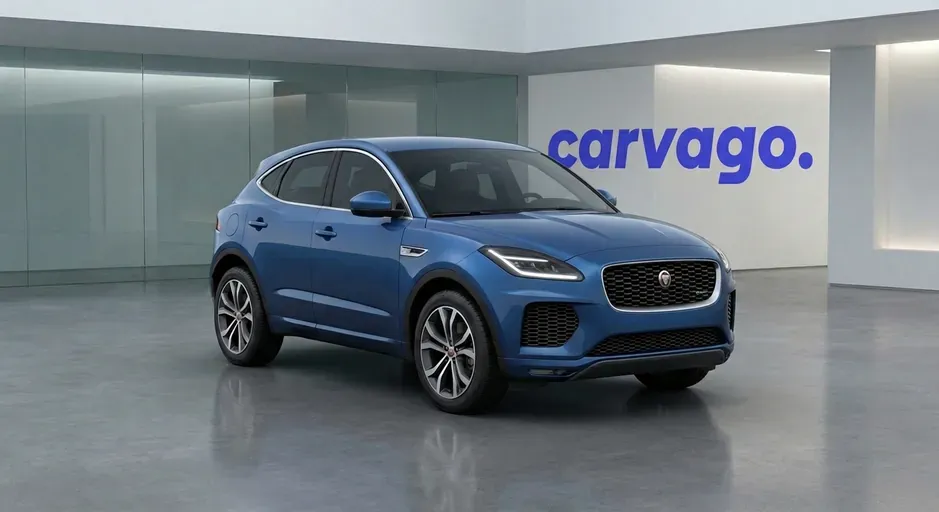
The Jaguar E-Pace SUV entered the premium compact crossover segment to offer sports-car-inspired exterior styling combined with daily practicality. This review covers the first generation, which opened for European orders on 13 July 2017, with production beginning that same month. First customer deliveries in Europe followed in January 2018. European assembly at Magna Steyr in Graz, Austria, concluded in December 2024 with no direct successor planned.
Available solely as a five-door SUV, the Jaguar E-Pace received a comprehensive mid-cycle refresh unveiled on 28 October 2020, with customer deliveries starting in early 2021. This update migrated the car to the Premium Transverse Architecture, introduced a redesigned cabin featuring the Pivi Pro infotainment system, and expanded the powertrain line-up to include 48-volt mild-hybrid units and a plug-in hybrid.
On the pre-owned market, the model appeals primarily to urban commuters and small families looking for an individualistic aesthetic, an elevated seating position, and an alternative to established German rivals.
On the European used market, the reliability of the Jaguar E-Pace varies significantly depending on the powertrain and the production period. The most critical mechanical issue involves the 2.0-litre four-cylinder Ingenium diesel engine. Professional teardowns and long-term workshop tests describe premature stretching of the timing chains, accompanied by degradation of the plastic guides and tensioner failure. In this transverse layout, the problem is compounded on short-journey cars by fuel dilution, where incomplete particulate filter regenerations allow unburnt diesel into the sump and thin the engine oil. Slack chains produce a prominent metallic rattle from the rear of the engine on cold starts; left unaddressed, the chain can jump teeth or break, causing severe engine damage. Jaguar introduced an uprated chain and guide kit in November 2019, which owners and technicians report addresses the issue on later builds or repaired earlier units.
Electrical glitches are another frequent subject of owner and technician reports across all model years. Parasitic 12V battery drainage is widely documented, caused by vehicle control modules failing to switch into low-power sleep mode after the car is locked. A depleted 12V battery then triggers a cascade of false dashboard alerts upon startup—such as spurious emergency braking or lane-assist warnings—or leaves the keyless entry unresponsive in freezing weather. In the cabin, pre-facelift models using the older touchscreen system frequently suffer from screen freezing, delayed reversing camera feeds, and sudden rebooting. The newer infotainment setup introduced with the late 2020 facelift proved substantially more responsive, though early 2021 and 2022 builds occasionally experienced transient instrument-cluster blanking before receiving software updates.
Several safety recalls have been issued across European markets that prospective buyers must verify by vehicle identification number (VIN).
| Defect Description | Affected Models & Powertrains | Production Window | Reach | Required Workshop Remedy |
|---|---|---|---|---|
| Traction battery thermal overload and fire hazard | Plug-in hybrid models | 9 November 2020 – 10 July 2024 | Worldwide | Inspection of high-voltage battery; replacement of defective cells or pack modules |
| Hybrid control software error causing loss of drive power | Hybrid models (MHEV & PHEV) | 17 November 2021 – 15 October 2024 | Worldwide (5,422 units) | Reprogramming of the hybrid powertrain inverter control software |
| Front passenger airbag tearing during deployment | All engine variants | 26 May 2020 – 28 May 2024 | Worldwide (over 18,500 units) | Inspection and replacement of the passenger airbag module or dashboard door panel rework |
| Turbocharger oil feed pipe clamp looseness and road oil leaks | 2.0-litre diesel models | 27 May 2020 – 22 January 2024 | Pan-European | Pipe removal, replacement of O-ring seals, and installation of an additional retaining clamp |
| Restraints control wiring error affecting driver seatbelt pre-tensioner | All engine variants | 16 June 2020 – 24 February 2021 | Pan-European | Correction of wiring connector terminal pin positions |
| Front brake flexible hose contact with wheel and fluid loss | Early production models | 4 October 2017 – 22 December 2017 | Pan-European (1,789 units worldwide) | Inspection and replacement of front brake hose retaining brackets |
Before committing to a diesel Jaguar E-Pace or any hybrid variant, having an independent specialist inspect the vehicle's historical maintenance files and physical running gear through CarAudit provides essential peace of mind.
The first-generation Jaguar E-Pace launched with an all-four-cylinder line-up of turbocharged petrol and diesel engines, before its mid-cycle update introduced three-cylinder mild-hybrid and plug-in hybrid options alongside revised architectures. As European production concluded at the end of 2024, used buyers can choose between conventional combustion engines and electrified setups across front- and all-wheel-drive configurations.
| Engine | Fuel | Power | Gearbox | Drivetrain | Model years |
|---|---|---|---|---|---|
| 2.0 D150 | Diesel | 110 kW (150 hp) | 6-speed manual | Front-wheel drive | 2018–2020 |
| 2.0 D150 AWD | Diesel | 110 kW (150 hp) | 6-speed manual / 9-speed automatic | All-wheel drive | 2018–2020 |
| 2.0 D180 AWD | Diesel | 132 kW (180 hp) | 6-speed manual / 9-speed automatic | All-wheel drive | 2018–2020 |
| 2.0 D240 AWD | Diesel | 177 kW (240 hp) | 9-speed automatic | All-wheel drive | 2018–2020 |
| 2.0 P200 AWD | Petrol | 147 kW (200 hp) | 9-speed automatic | All-wheel drive | 2018–2020 |
| 2.0 P250 AWD | Petrol | 183 kW (249 hp) | 9-speed automatic | All-wheel drive | 2018–2020 |
| 2.0 P300 AWD | Petrol | 221 kW (300 hp) | 9-speed automatic | All-wheel drive | 2018–2020 |
| 2.0 D165 | Diesel | 120 kW (163 hp) | 6-speed manual | Front-wheel drive | 2021–2023 |
| 2.0 D165 AWD MHEV | Mild hybrid diesel | 120 kW (163 hp) | 9-speed automatic | All-wheel drive | 2021–2023 |
| 2.0 D200 AWD MHEV | Mild hybrid diesel | 150 kW (204 hp) | 9-speed automatic | All-wheel drive | 2021–2024 |
| 1.5 P160 MHEV | Mild hybrid petrol | 118 kW (160 hp) | 8-speed automatic | Front-wheel drive | 2021–2024 |
| 2.0 P200 AWD MHEV | Mild hybrid petrol | 147 kW (200 hp) | 9-speed automatic | All-wheel drive | 2021–2023 |
| 2.0 P250 AWD MHEV | Mild hybrid petrol | 184 kW (249 hp) | 9-speed automatic | All-wheel drive | 2021–2024 |
| 2.0 P300 AWD MHEV | Mild hybrid petrol | 221 kW (300 hp) | 9-speed automatic | All-wheel drive | 2021–2023 |
| 1.5 P300e AWD PHEV | Plug-in hybrid petrol | 227 kW (309 hp) | 8-speed automatic | All-wheel drive | 2021–2023 |
| 1.5 P270e / P300e AWD PHEV (Euro 6e) | Plug-in hybrid petrol | 198 kW (269 hp) | 8-speed automatic | All-wheel drive | 2023–2024 |
For urban commuting and short daily trips, the front-wheel-drive P160 mild-hybrid petrol offers quiet low-speed manners, while the plug-in hybrid Jaguar E-Pace is the sensible option for drivers able to charge regularly at home. The PHEV covers short urban journeys on electricity alone, while diesel variants are poorly suited to exclusively city use.
For mixed everyday driving, the mid-tier four-cylinder petrol Jaguar E-Pace P250 provides brisk acceleration without feeling strained. However, the all-round sweet spot for most used buyers is the facelifted D200 mild-hybrid diesel. It delivers sufficient low-end pull to mask the vehicle's substantial kerb weight while maintaining reasonable running costs across varied routes.
Motorway drivers should focus primarily on a diesel Jaguar E-Pace. The entry-level D150 and D165 feel sluggish when fully laden, requiring high engine revs that expose coarse diesel clatter. By contrast, the D180 and updated D200 cruise relaxed at higher speeds. The range-topping twin-turbo D240 offers strong overtaking reserves, though its thirst is noticeably higher.
For towing duties, an all-wheel-drive diesel Jaguar E-Pace such as the D200 is clearly the top candidate, combining stout pulling power with the highest braked trailer rating in the line-up.
For a detailed breakdown of timing chain wear, oil dilution concerns, and documented recalls across the powertrain range, refer to the dedicated owner experiences section.
| Parameter | Specification |
|---|---|
| Length | 4,395 mm |
| Width (mirrors folded) | 1,984 mm |
| Height | 1,648–1,649 mm |
| Wheelbase | 2,681 mm |
| Boot volume (standard, seats upright / folded) | 494 / 1,170 l |
| Boot volume (plug-in hybrid with traction battery) | 425 / 1,170 l |
Note: Stated luggage volumes reflect the VDA block standard. Underfloor storage present in petrol and diesel models is deleted in plug-in hybrid variants to house the traction battery and rear axle motor.
The Jaguar E-Pace accommodates four adults comfortably, offering sufficient rear legroom and headroom even for taller passengers. However, the rising beltline, substantial rear pillars, and small rear windscreen lend the second row an enclosed atmosphere. Everyday cargo flexibility is functional rather than versatile: the rear bench remains fixed without fore-and-aft sliding adjustment across all model years; pre-facelift models came standard with a 60:40 split-folding backrest, which the late-2020 facelift upgraded to a standard 40:20:40 arrangement. The load area provides a flat surface once the rear backrests fold down, though a pronounced load sill requires extra effort when hoisting heavier cargo. In standard versions of the Jaguar E-Pace SUV, a practical underfloor compartment secures charging leads and smaller loose belongings, a space entirely sacrificed in electrified plug-in derivatives.
Professional road testers consistently describe the Jaguar E-Pace as an overtly firm, sport-biased crossover. Around town and across broken tarmac, the chassis struggles to isolate road defects, resulting in a jiggly low-speed ride that communicates potholes directly into the cabin. It settles significantly on the motorway, delivering composed high-speed stability and muted wind noise. Although the front axle turns in keenly and lateral grip remains dependable through corners, testers emphasize that the car’s substantial mass dulls genuine agility and hampers urban manoeuvrability. Diesel engines prove vocal under hard acceleration, though they quieten down to a serene cruise at steady speeds.
The driving position is lofty and well-aligned, paired with supportive seats. Outward visibility, however, earns widespread criticism due to thick roof pillars, a rising beltline, and a shallow rear window.
Early production years drew sharp criticism for scratchy plastics on the lower dashboard and door pockets that fell short of premium expectations. The late-2020 mid-cycle revision resolved this deficit, introducing noticeably softer materials, tactile switchgear, and a contemporary curved touchscreen infotainment system praised for rapid responses and crisp menus. While the revised underpinnings and hybrid powertrains delivered smoother, quieter power delivery, the underlying suspension firmness and heavy feel through tight corners remained defining traits of the chassis throughout its production run.
All the charts in this section are drawn from Carvago's listings of the whole Jaguar E-Pace model family, including other generations represented in the data, not only the reviewed generation, and do not establish a separate price level for the reviewed generation alone. Across current listings, the median asking price stands at €23,500 for 2018 examples, reaching €28,900 for 2021 cars. A clear division separates 2022 models at a median of €31,900 from 2023 cars at €44,000, up to €56,000 for 2025 registrations, where used demand strongly favours late builds with refreshed infotainment and electrified engines.
Active Jaguar E-Pace listings numbered 1,242 in May 2026 before easing to 1,123 by October 2026. The chart below tracks how the volume of advertised vehicles developed over this six-month period.
Active listings over time
| Month | Jaguar E-Pace |
|---|---|
| 2026-05 | 1 242 |
| 2026-06 | 1 224 |
| 2026-07 | 1 167 |
| 2026-08 | 1 115 |
| 2026-09 | 1 146 |
| 2026-10 | 1 123 |
Source Carvago
With listings hovering between 1,115 and 1,242 throughout the recorded months, buyers have had a fairly consistent volume of vehicles to browse despite slight month-to-month fluctuations.
Among used listings advertised today, the median asking price stands at €23,500 for cars built in 2018 and reaches €56,000 for cars registered in 2025.
Median advertised price by year of manufacture
| Model year | Jaguar E-Pace |
|---|---|
| 2018 | 23 500 |
| 2019 | 24 500 |
| 2020 | 26 900 |
| 2021 | 28 900 |
| 2022 | 31 900 |
| 2023 | 44 000 |
| 2024 | 48 600 |
| 2025 | 56 000 |
Source Carvago
Buyers considering 2018 to 2022 model years see median asking prices ranging from €23,500 to €31,900, whereas moving to 2023 models represents the largest single gap between consecutive years, with a median asking price of €44,000.
Diesel made up the largest portion of advertised Jaguar E-Pace listings from the start, opening at 607 diesel cars alongside 320 hybrids and 302 petrol vehicles in May 2026. The breakdown below illustrates how the available supply across each powertrain developed over the following months.
Supply composition by fuel type
Petrol
Diesel
Hybrid
| Month | Petrol | Diesel | Hybrid |
|---|---|---|---|
| 2026-05 | 302 | 607 | 320 |
| 2026-06 | 290 | 601 | 315 |
| 2026-07 | 302 | 557 | 295 |
| 2026-08 | 288 | 530 | 284 |
| 2026-09 | 288 | 535 | 312 |
| 2026-10 | 277 | 540 | 297 |
Source Carvago
By October 2026, diesel still accounted for the greatest availability with 540 listings, while buyers considering alternatives have a balanced choice between 297 hybrid and 277 petrol models. With 0 electric listings recorded throughout the period, realistic options remain concentrated in diesel, hybrid, and petrol power.
Between May 2026 and October 2026, the average asking price began at €26,700 before easing lower, as traced in the monthly figures below.
Average price development over time
| Month | Jaguar E-Pace |
|---|---|
| 2026-05 | 26 700 |
| 2026-06 | 26 100 |
| 2026-07 | 26 000 |
| 2026-08 | 25 900 |
| 2026-09 | 25 900 |
| 2026-10 | 25 600 |
Source Carvago
Across the six months shown, the average asking price moved from €26,700 down to €25,600, representing an overall decline of about 4 percent with identical averages of €25,900 recorded in August and September.
Composed high-speed motorway stability and muted wind noise
Keen front-axle turn-in with dependable cornering grip
Higher-grade cabin materials and responsive touchscreen infotainment on facelifted models
Firm, jiggly low-speed ride over uneven urban tarmac
Premature timing chain wear and oil dilution risks on four-cylinder diesels
Restricted outward visibility due to thick roof pillars and a shallow rear window
Reliability on the Jaguar E-Pace depends heavily on the powertrain and production year, with post-facelift models proving more dependable. Four-cylinder diesels require caution regarding timing chain wear, and early cars suffered frequent electrical glitches.
The facelifted D200 mild-hybrid diesel represents the strongest all-round choice, delivering stout low-end pull to offset the vehicle's substantial mass while keeping cruising fuel costs reasonable. For predominantly urban commuting, choose the plug-in hybrid or mild-hybrid petrol instead, as short journeys provoke particulate filter troubles in diesels.
Models produced from the late 2020 facelift onward are the preferred choice thanks to higher interior quality and improved electronics. Buyers should verify by vehicle identification number (VIN) that all safety recall remedies have been completed.
Listen carefully during a cold start on a diesel Jaguar E-Pace for metallic chain slapping from the rear of the engine block, which signals timing chain slack. Verify documented proof of regular oil changes to guard against fuel dilution, or have the vehicle inspected independently via CarAudit.
Sources: media.jlr.com, jaguar.com, adac.de, autocar.co.uk, autoexpress.co.uk
This article was prepared using artificial intelligence tools. The section guarantor is Petr Dušek.
Peugeot 2008 review: real owner experiences, common faults, engine picks and used prices — everything you need to know before buying.
Oct 27, 2026
Hesitating between the Citroën C5 Aircross and the Škoda Karoq? Our detailed comparison and verdict will help you choose the right SUV for your needs.
Oct 16, 2026

Mercedes-Benz GLB review: real owner feedback, 7-seat practicality, electric range, running costs, and expert verdict on the all-new model.
Oct 20, 2026