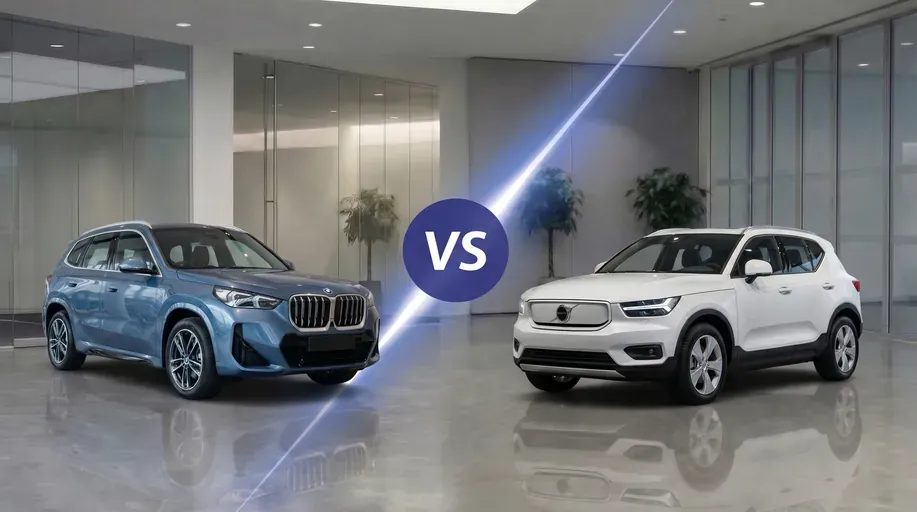
Car battle
BMW iX1 vs. Volvo XC40 Recharge: Complete comparison 2026
Detailed comparison of BMW iX1 vs Volvo XC40 Recharge (EX40). Which electric SUV has better range, equipment, and features? Read our clear verdict.
Oct 16, 2026
Articles
Review
Hyundai Ioniq 5 review: real owner experience, battery picks, common faults, running costs and prices — everything you need before you buy.
November 4, 2026
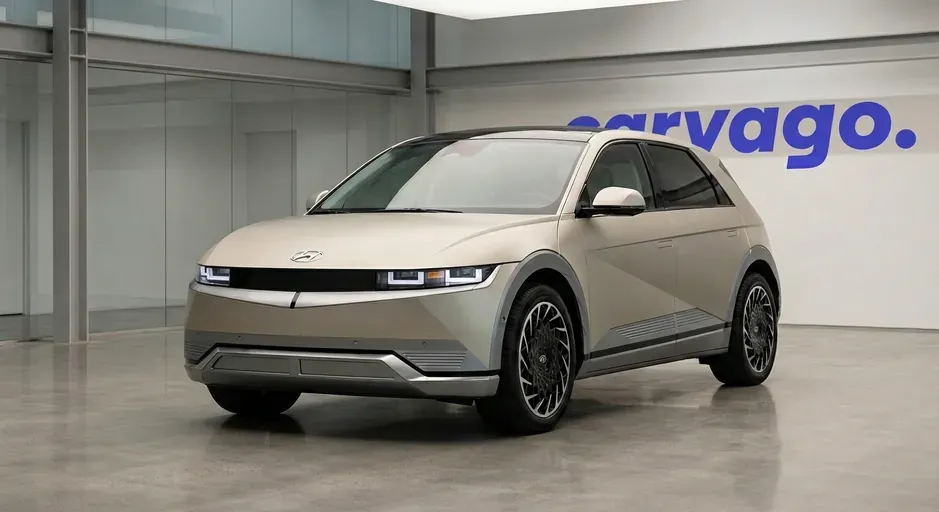
The Hyundai Ioniq 5 is a mid-size electric crossover competing in the heart of Europe’s family EV segment. Sold exclusively as a five-door crossover, this review focuses on the first generation, which entered series production in March 2021, with initial European customer deliveries commencing in May 2021.
A high-performance all-wheel-drive variant premiered in July 2023, reaching European customers in early 2024. Hyundai followed with a mid-cycle facelift in March 2024, with deliveries starting in September 2024. This update brought subtle exterior styling adjustments, interior ergonomic revisions, and updated battery packs, with the model remaining in continuous European delivery through 2026.
Targeted at private family buyers and company car drivers alike, the electric Hyundai Ioniq 5 aims to serve motorists looking for a spacious daily driver capable of handling routine urban commuting as well as regular long-distance motorway travel.
Real-world ownership data for the Hyundai Ioniq 5 shows that while the mechanical foundation is dependable, early production years encountered distinct teething issues primarily concentrated in high-voltage charging logic and auxiliary power management.
Several safety recalls have been registered across European authorities for this generation. Prospective buyers should check official records against the vehicle identification number to confirm completion:
Beyond formal recalls, owners report several recurring issues on earlier model years:
The first-generation electric Hyundai Ioniq 5 offers a purely battery-electric line-up with single-motor rear-wheel-drive or twin-motor all-wheel-drive configurations. Battery capacities and power outputs evolved across its production run, all paired with a single-speed automatic reduction gear.
| Engine | Fuel | Power | Gearbox | Drivetrain | Model years |
|---|---|---|---|---|---|
| Standard Range (58 kWh) | Electric | 125 kW (170 hp) | Automatic | Rear-wheel drive | 2021–2024 |
| Standard Range (58 kWh) AWD | Electric | 173 kW (235 hp) | Automatic | All-wheel drive | 2021–2022 |
| Long Range (72.6 kWh) | Electric | 160 kW (217 hp) | Automatic | Rear-wheel drive | 2021–2022 |
| Long Range (72.6 kWh) AWD | Electric | 225 kW (305 hp) | Automatic | All-wheel drive | 2021–2022 |
| Long Range (77.4 kWh) | Electric | 168 kW (228 hp) | Automatic | Rear-wheel drive | 2022–2024 |
| Long Range (77.4 kWh) AWD | Electric | 239 kW (325 hp) | Automatic | All-wheel drive | 2022–2024 |
| Standard Range (63 kWh) | Electric | 125 kW (170 hp) | Automatic | Rear-wheel drive | 2024–present |
| Long Range (84 kWh) | Electric | 168 kW (228 hp) | Automatic | Rear-wheel drive | 2024–present |
| Long Range (84 kWh) AWD | Electric | 239 kW (325 hp) | Automatic | All-wheel drive | 2024–present |
| Ioniq 5 N (84 kWh) | Electric | 478 kW (650 hp) | Automatic | All-wheel drive | 2024–present |
For daily urban commuting and short local journeys, the Standard Range single-motor variant is fully adequate. The absence of a front motor keeps the front axle light for nimble low-speed maneuvering, and the rear electric motor delivers smooth, responsive acceleration away from stops without carrying unnecessary battery weight.
For mixed driving and frequent motorway travel, the Long Range rear-wheel-drive configuration represents the most sensible balance. By delivering the longest driving radius between stops and avoiding the mechanical drag of an extra motor, it stands as the most practical choice for regular long-distance touring.
Drivers who routinely tow trailers, live in mountainous regions, or face harsh winter driving conditions will prefer the dual-motor configuration of the all-wheel-drive Hyundai Ioniq 5. Although twin motors increase overall energy consumption, an automatic front-axle disconnect preserves cruising economy, while all-wheel traction provides confident off-the-line pull.
The range-topping Ioniq 5 N is targeted purely at driving enthusiasts wanting track-ready agility, rapid transient response, and simulated gearshift engagement, accepting the trade-off of higher energy consumption during sustained highway cruising.
In real-world use, freezing temperatures noticeably reduce driving range due to cabin heating demands and the reduced chemical efficiency of cold battery cells. Long-distance journey times benefit significantly from the advanced high-voltage electrical architecture, which allows rapid energy replenishment at ultra-fast direct-current stations provided the battery preconditioning function is engaged prior to arrival. For domestic alternating-current charging on updated models, sessions proceed normally using standard wallboxes.
| Dimension / Capacity | Standard (2021–2024) | Standard (2024–present) | Ioniq 5 N (2024–present) |
|---|---|---|---|
| Length (mm) | 4,635 | 4,655 | 4,715 |
| Width (mm) | 1,890 | 1,890 | 1,940 |
| Height (mm) | 1,605 | 1,605 | 1,585 |
| Wheelbase (mm) | 3,000 | 3,000 | 3,000 |
| Boot capacity (l, seats up / folded) | 527 / 1,587 | 520 / 1,580 | 480 / 1,540 |
| Front luggage space (l, RWD / AWD) | 57 / 24 | 57 / 24 | — |
The electric Hyundai Ioniq 5 uses a dedicated flat floorpan that frees up enough knee and foot room for tall adults to travel comfortably behind a tall driver. Every version includes a split-folding rear bench with reclining backrests, and the entire second row slides fore and aft—manually on standard versions or electrically on higher trims—allowing owners to balance rear legroom against luggage depth.
The rear cargo area features a wide opening and a level loading lip, although the unlined plastic sidewalls scratch easily when loading rigid items. Supplementary storage under the bonnet accommodates charging cables, though this compartment is shallower on dual-motor all-wheel-drive models to clear front-axle drive components. On the high-performance variant, rear luggage space is slightly reduced to accommodate structural chassis bracing.
Standard versions of the Hyundai Ioniq 5 offer a settled, relaxed cruise on motorways, where the long wheelbase effectively soaks up gentle undulations. However, the standard passive dampers struggle with sharp urban imperfections, transmitting audible thumps over sunken potholes and transverse ridges. The high-performance flagship counters this low-speed brittleness with adaptive suspension, proving surprisingly compliant in its comfort setting despite aggressive cornering capabilities. Across the standard lineup, steering is light and direct in town, though it conveys minimal mechanical road texture. Cabin isolation is broadly peaceful, but tyre roar on coarse asphalt and wind flutter at motorway speeds remain noticeable.
The cabin provides accommodating passenger space, yet interior plastics reveal compromises: soft-touch upper surfaces contrast with scratch-prone, unlined plastics on lower door panels, consoles, and boot sides. Testers frequently criticise intrusive driver assistance warnings, particularly persistent speed-limit and lane-keeping chimes.
Professional verdicts align on the model's high-speed stability and lounge-like ambience, but divide over urban ride quality: some reviewers praise the supple gait on smooth tarmac, while others penalise its unsettled response to broken city streets. The mid-cycle facelift resolved longstanding tester grievances by adding dedicated physical buttons for seat heating and ventilation on the centre console, alongside the long-overdue addition of a rear window wiper.
All the charts in this section are drawn from Carvago's listings of the whole model family, including other generations represented in the data, not only the reviewed generation. Consequently, this dataset does not establish a separate price level for the reviewed generation alone. In the current market offer for the Hyundai Ioniq 5, vehicles from the 2021 model year record a median asking price of €24,000, whereas 2026 examples show a median of €48,800. Battery size and drive configuration primarily dictate how individual listings are positioned across these manufacture years.
From May to October 2026, the count of advertised Hyundai Ioniq 5 cars rose from 3,746 to a high of 4,603 in September before tapering off. The chart below displays the monthly listing totals across this period.
Active listings over time
| Month | Hyundai Ioniq 5 |
|---|---|
| 2026-05 | 3 746 |
| 2026-06 | 3 878 |
| 2026-07 | 4 159 |
| 2026-08 | 4 336 |
| 2026-09 | 4 603 |
| 2026-10 | 4 397 |
Source Carvago
With 4,397 listings recorded in October 2026, buyers benefit from a broad selection of vehicles to choose from across the market.
Among used listings advertised today, the median asking price is €24,000 for cars built in 2021, compared to €48,800 for models built in 2026. The comparison below outlines how advertised listings compare across each build year.
Median advertised price by year of manufacture
| Model year | Hyundai Ioniq 5 |
|---|---|
| 2021 | 24 000 |
| 2022 | 27 900 |
| 2023 | 35 500 |
| 2024 | 43 000 |
| 2025 | 46 000 |
| 2026 | 48 800 |
Source Carvago
Buyers targeting earlier production years see median asking prices of €24,000 for 2021 models and €27,900 for 2022 models, whereas 2025 and 2026 examples reflect median asking prices of €46,000 and €48,800.
This depreciation curve illustrates how the model's residual value declines with age, shedding nearly 20% of its initial value in the first year alone. By age two, cumulative value loss reaches 30%, establishing the steep initial descent shown below.
Residual value by vehicle age
| Vehicle age | Hyundai Ioniq 5 |
|---|---|
| New | 48 200 |
| 1 yr | 38 700 |
| 2 yrs | 33 700 |
| 3 yrs | 31 400 |
| 4 yrs | 28 100 |
| 5 yrs | 27 100 |
| 6 yrs | 24 000 |
| 7 yrs | 21 500 |
Source Carvago
Across the full seven-year span, the model sheds approximately 55% of its starting value, retaining just under half of where it began. The steepest depreciation occurs over the first two years, after which the year-on-year drop moderates noticeably.
Between May 2026 and October 2026, electric vehicles accounted for the entire advertised supply, with listings standing at 3746 in May 2026 and 4397 in October 2026. The chart below tracks the monthly volume of advertised cars across each fuel type.
Supply composition by fuel type
| Month | Electric |
|---|---|
| 2026-05 | 3 746 |
| 2026-06 | 3 878 |
| 2026-07 | 4 159 |
| 2026-08 | 4 336 |
| 2026-09 | 4 603 |
| 2026-10 | 4 397 |
Source Carvago
Electric power completely dominates the market with zero petrol, diesel, or hybrid options recorded across the period, meaning prospective buyers will exclusively find electric models on offer.
Between May 2026 and October 2026, the average asking price for the Hyundai Ioniq 5 fluctuated within a narrow band, starting at €33,800 and reaching €33,900 in June 2026.
Average price development over time
| Month | Hyundai Ioniq 5 |
|---|---|
| 2026-05 | 33 800 |
| 2026-06 | 33 900 |
| 2026-07 | 33 500 |
| 2026-08 | 32 900 |
| 2026-09 | 33 200 |
| 2026-10 | 33 000 |
Source Carvago
Across the six months, the average price moved from €33,800 to €33,000, representing a net change of around two percent. Because these month-to-month movements are small relative to the overall vehicle cost, the average asking price remained largely level over the period.
Rapid ultra-fast charging capability supported by battery preconditioning
Spacious passenger accommodation with a flat floor and sliding, reclining rear seats
Stable and settled cruising comfort on long-distance motorway journeys
Firm low-speed ride over sharp potholes and ridges on standard passive dampers
Charging control unit faults and auxiliary battery drain on early build years
Intrusive driver assistance warning chimes and scratch-prone lower cabin plastics
The mechanical foundation is dependable, though early model years suffered auxiliary battery drain and charging control unit faults. Check the vehicle identification number to confirm all official software updates and safety recall campaigns were carried out.
The single-motor Long Range rear-wheel-drive version offers the most practical balance, providing maximum driving range without the consumption penalty of a second motor. Drivers facing regular winter conditions or towing requirements should opt for the all-wheel-drive Hyundai Ioniq 5.
Facelift versions delivered from autumn 2024 add a rear window wiper, dedicated physical centre-stack buttons for seat climate functions, and enlarged battery packs. These changes directly resolve the primary usability criticisms directed at earlier production years.
Inspect the rear brake discs for rust ridges caused by regenerative braking, and examine the tyres for inner-shoulder wear. On pre-facelift versions of the Hyundai Ioniq 5, verify that the specialized low-conductivity battery coolant was replaced at the scheduled interval.
Sources: hyundai.news, hyundai.com, adac.de, kba-online.de, service.gov.uk
This article was prepared using artificial intelligence tools. The section guarantor is Petr Dušek.
Detailed comparison of BMW iX1 vs Volvo XC40 Recharge (EX40). Which electric SUV has better range, equipment, and features? Read our clear verdict.
Oct 16, 2026
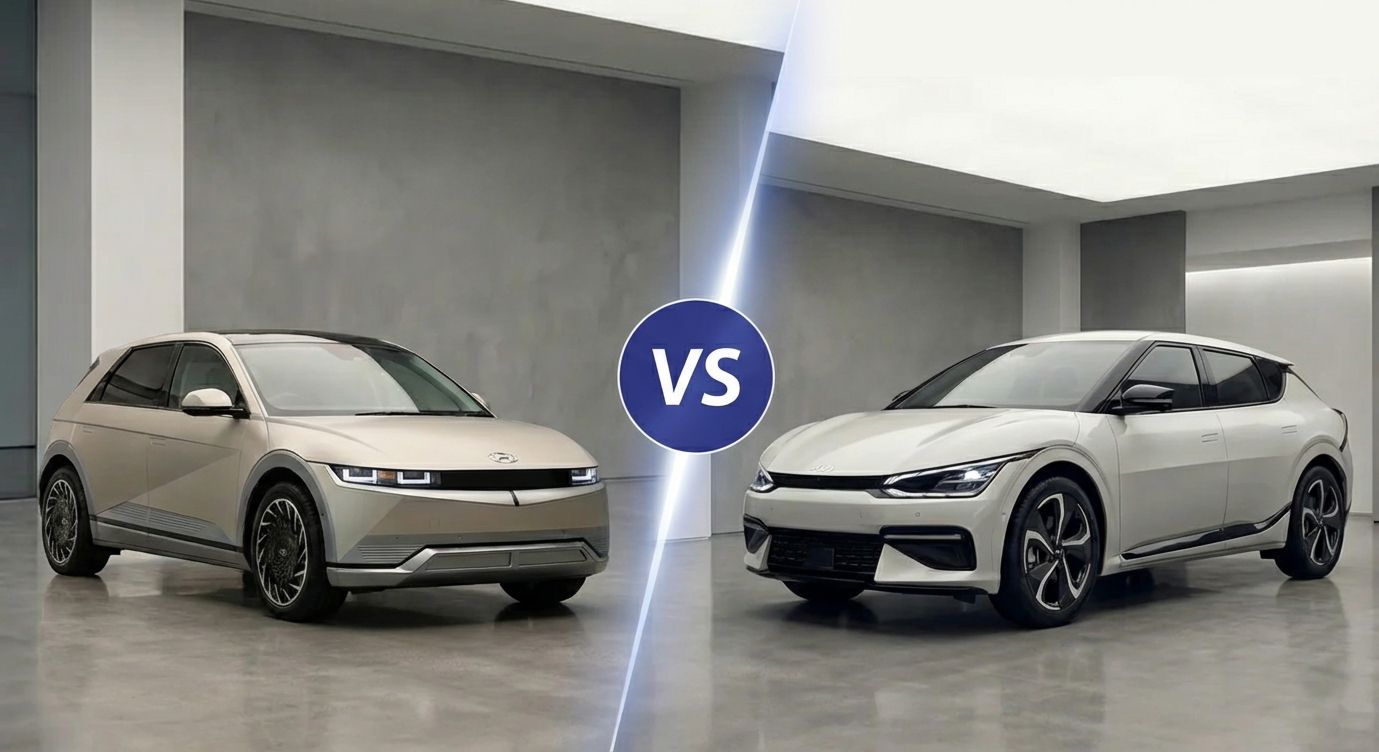
Hyundai Ioniq 5 vs. Kia EV6: Which electric car is better? A detailed comparison of range, technology, and price to help you make the right decision.
Oct 23, 2026
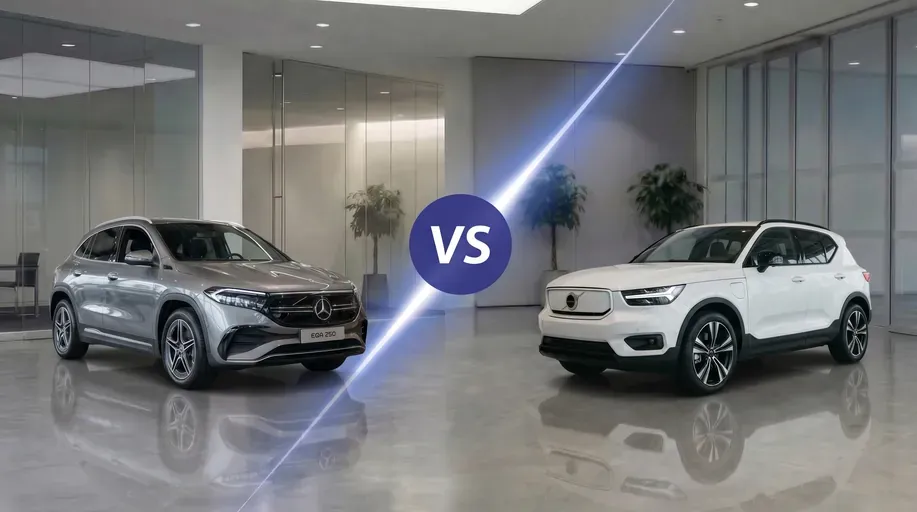
Mercedes-Benz EQA vs Volvo XC40 Recharge: A detailed comparison of electric SUVs. Find out which electric car offers better real-world range, performance, and equipment.
Apr 29, 2026