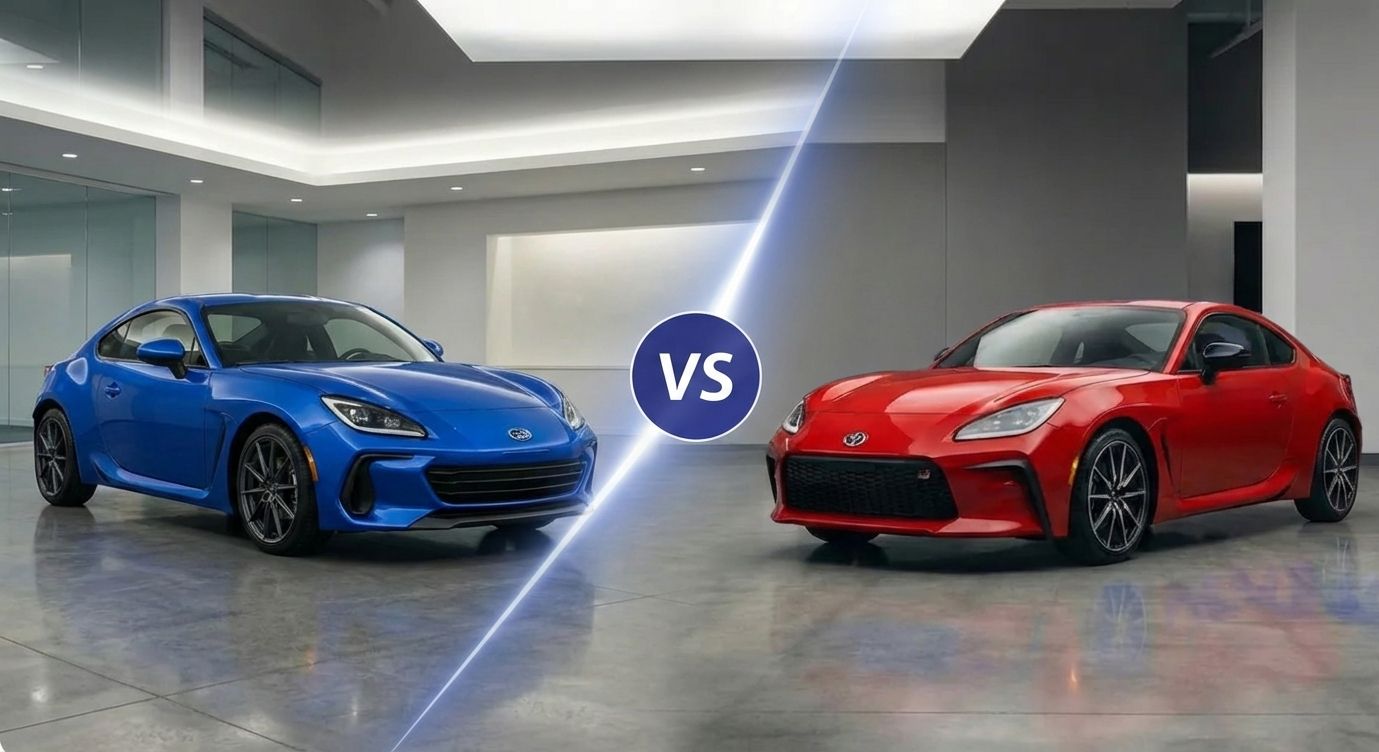
Car battle
Subaru BRZ vs. Toyota GR86: Complete comparison 2026
Subaru BRZ vs. Toyota GR86. Which of these sports twins is better? Our detailed comparison will help you choose the right coupe for you.
Nov 12, 2026
Honda Civic Type R (FL5) review: real owner experience, running costs, practicality and prices — everything you need before you buy.
November 3, 2026
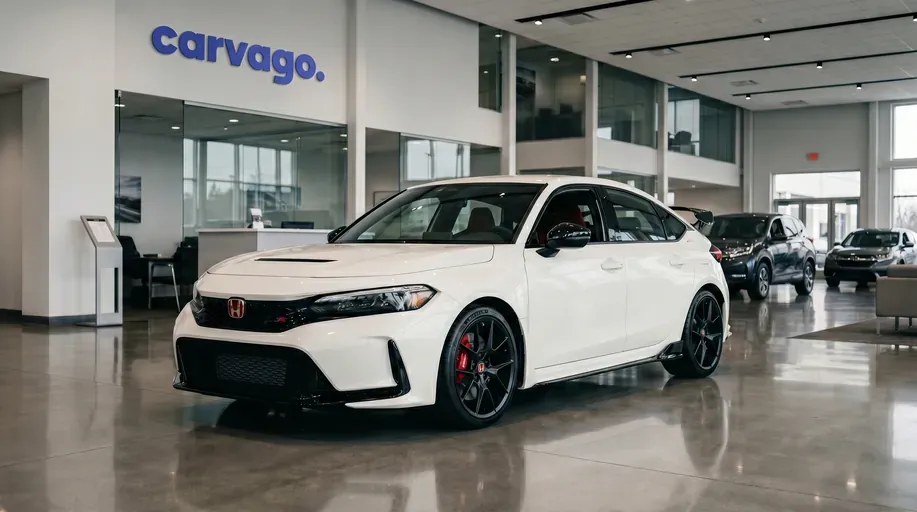
The Honda Civic Type R represents the performance apex of the compact class, competing against established front-wheel-drive hot hatchbacks and all-wheel-drive rivals. This review focuses exclusively on the sixth-generation Type R (chassis code FL5), developed on the eleventh-generation Civic architecture. Following its world premiere in July 2022, European order books opened on 30 November 2022, with initial European customer deliveries commencing in January 2023.
Sold strictly as a five-door Honda Civic hatchback featuring bespoke, widened bodywork. Production availability for the European market concluded with a 40-unit run-out edition announced in June 2025, leading to final registrations and official commercial phase-out in January 2026 ahead of the Euro 6e-bis emissions mandate. Subsequent overseas updates were not imported.
This review evaluates what ownership demands and how the generation fares on the European pre-owned market.
Long-term reliability data for this generation remains limited due to its short production run and strict production allocations. However, workshop campaigns and enthusiast tracking have already highlighted clear mechanical and assembly patterns. The sixth-generation manual Honda Civic has been subject to three official Europe-wide safety recalls. The most substantial campaign, announced in early 2025, addresses the electric power steering gearbox on Honda Civic vehicles built between 1 August 2021 and 1 August 2024. A reduction of grease in the worm wheel gear meshing area increases sliding resistance, causing fluctuating steering torque, sticking, or abnormal noise. While standard Civic models received an internal spring and fresh lubricant, official directives mandate the complete replacement of the steering gearbox assembly with an updated part on the Type R.
Two earlier recalls also apply across European deliveries. Honda Civic vehicles manufactured between 1 October 2021 and 31 August 2024 were recalled across Europe in early 2025 because engine vibration can cause internal cracks in the high-pressure fuel pump, creating a fire risk from leaking fuel; dealers inspect the unit and replace the assembly if necessary. Additionally, the earliest production batch built between 21 July 2022 and 21 October 2022 was recalled in 2023 because the driver's seat cushion frame can break under continuous stress due to faulty welding, compromising occupant restraint during an impact. Authorized workshops resolve this by fitting a correctly welded seat frame.
Beyond safety notifications, owner reports and track evaluations note specific operating quirks. Under sustained high-load circuit driving in ambient temperatures above approximately 22 °C, tests describe thermal saturation occurring as engine coolant and oil temperatures rise, prompting the engine control unit to reduce turbocharger boost and retard timing to protect the powertrain. While this thermal protection safeguards the engine, sustained track use typically requires aftermarket cooling modifications to maintain continuous maximum output.
In everyday driving, cold-start transmission resistance is a frequent discussion point among owners. Drivers report notchiness, shift balking, or occasional synchronizer resistance when hurrying the shift from first to second gear before the transmission reaches operating temperature. In isolated cases of persistent mechanical lockout or gear grinding, dealers replaced synchronizer assemblies or complete gearboxes under warranty, while other owners report improved engagement following clutch pushrod clearance adjustments and shortened fluid change intervals. Minor cabin rattles around the forward camera housing and rear-view mirror cover clips are also documented over coarse surfaces, which owners resolve by insulating the retaining clips with felt tape.
Wear items on this model warrant close inspection due to its performance focus. Tests highlight that the wide front tyres flick road grit directly against the flared rear haunches, leaving unprotected paintwork prone to heavy stone chipping. Furthermore, aggressive driving or uncooled track sessions accelerate inner-shoulder wear on the wide tyres and cause rapid disc grooving, pad taper, or heat judder on the two-piece floating front brake rotors.
In Europe, the Honda Civic Type R was delivered with a single, dedicated powertrain configuration throughout its production run. Buyers had no alternative displacements, hybrid options, or automatic gearboxes to choose from.
| Engine | Fuel | Power | Gearbox | Model years |
|---|---|---|---|---|
| 2.0 VTEC Turbo | Petrol | 242 kW (329 hp) | 6-speed manual | 2023–2026 |
For short trips in town, the manual petrol Honda Civic is poorly suited. The turbocharged petrol unit requires extended driving to reach full operating temperature, and repeated cold-start urban hops risk fuel dilution and particulate filter loading, while the mechanical clutch demands deliberate effort in stop-and-go congestion.
On mixed daily routes, the engine proves flexible thanks to substantial mid-range pulling power that allows drivers to keep pace with traffic without constantly working through the gears. The standard rev-matching system smooths downshifts during routine use, though the drivetrain mounts remain firm and purposefully communicative.
For long motorway journeys, the six-speed manual features a tall top gear that keeps engine revs subdued at steady cruising speeds. Passing manoeuvres require little downshifting, with ample overtaking performance available directly in higher gears.
Towing is completely ruled out on the Honda Civic Type R, as the car is not homologated to pull a trailer and fitting a towbar is prohibited.
For a detailed overview of mechanical durability, known faults, and verified safety recalls, consult the owner experiences section of this review.
| Dimension / Practicality | 5-door Hatchback (FL5) |
|---|---|
| Length (mm) | 4,594 |
| Width, without mirrors (mm) | 1,890 |
| Height (mm) | 1,401 |
| Wheelbase (mm) | 2,734 |
| Boot capacity, rear seats up / folded (l) | 410 / 1,212 |
Note: Dimensions and boot capacities do not apply to regular Civic hybrid variants.
Despite its aggressive, track-focused exterior stance, this generation retains the core hatchback layout of the standard donor platform. It is strictly homologated as a four-seater: the rear bench replaces the centre position with a moulded console featuring dual cupholders, ruling out carrying a fifth passenger. Knee room in both outer positions is ample for adults, aided by the long wheelbase, though the sloping roofline and high-backed front bucket seats restrict both rearward headroom and forward visibility. Out back, the luggage area provides a wide, low loading aperture through the liftback tailgate. The rear backrests fold in a standard split arrangement to expand the floor, although they leave a distinct stepped threshold rather than a completely flat extended deck. Everyday flexibility is supported by an underfloor tyre-repair kit instead of a bulky spare wheel, making the Honda Civic hatchback remarkably usable as a daily tourer when track duty ends.
Professional tests describe the petrol manual Honda Civic as an intensely focused driver's car with an uncompromising chassis. The suspension is firmly damped and tied down, maintaining composure at speed but transmitting sharp expansion joints and recessed ironwork directly into the body. Testers widely agree that setting the adaptive dampers to their softest mode is essential on uneven tarmac to prevent vertical skipping. In return, the steering delivers communicative feedback, working alongside a mechanical limited-slip differential that yields tenacious front-axle bite and neutral cornering. Refinement, however, takes a back seat: while induction and turbo sounds filter through, the exhaust note is noticeably muted by particulate filters, and coarse road surfaces generate intrusive tyre roar.
Inside, the driving environment draws high praise for its tactile controls and purposeful seating. The sculpted red front bucket seats offer secure lateral support and an authentic low hip-point, though some testers note the absence of adjustable lumbar support. The teardrop aluminium gear knob shifts with precise mechanical throws, albeit proving sensitive to ambient cabin temperatures in extreme weather. Ergonomics benefit from straightforward physical climate dials, though testers point out that hard plastics on the lower dashboard and door panels feel plain given the car's price. The infotainment displays functional if dated graphics, while the mandatory driver-assistance alerts draw criticism for requiring a multi-step menu sequence to mute on every journey.
Testers disagree mainly on everyday engagement: some argue the chassis feels overly clinical until pushed at track-level commitment, while others praise its approachable high-speed stability. No mid-cycle facelift was introduced to European showrooms.
All charts in this section are drawn from Carvago listings of the whole Honda Civic model family, including other generations represented in the data, not only the reviewed generation. Because these records encompass standard hatchbacks alongside performance derivatives, the data does not establish a separate price level for the reviewed generation. Across the advertised model years, the median asking price is €18,500 for 2019 cars, €26,500 for 2022 examples, and €36,500 for 2023 and 2025 models, while 2026 vehicles show a median asking price of €35,600.
Active Honda Civic listings shifted from 1,117 in May 2026 to 988 by October 2026, tracking monthly availability across the period.
Active listings over time
| Month | Honda Civic Type R |
|---|---|
| 2026-05 | 1 117 |
| 2026-06 | 1 094 |
| 2026-07 | 1 085 |
| 2026-08 | 1 020 |
| 2026-09 | 1 032 |
| 2026-10 | 988 |
Source Carvago
Buyers can expect a broad pool of around 1,000 vehicles to choose from, though overall inventory trimmed across the six months despite a brief rise to 1,032 listings in September.
Across the available model years, the median asking price of cars advertised today, built in 2019, is €18,500, while the median asking price of cars advertised today, built in 2023, is €36,500.
Median advertised price by year of manufacture
| Model year | Honda Civic Type R |
|---|---|
| 2019 | 18 500 |
| 2020 | 19 400 |
| 2021 | 20 000 |
| 2022 | 26 500 |
| 2023 | 36 500 |
| 2024 | 34 800 |
| 2025 | 36 500 |
| 2026 | 35 600 |
Source Carvago
Buyers focusing on 2019 to 2021 model years encounter median asking prices between €18,500 and €20,000, while 2022 models require €26,500. Asking figures do not increase continuously across the newest model years, where 2024 listings show a median of €34,800, lower than the €36,500 observed for 2023 and 2025, with 2026 cars standing at €35,600.
This depreciation curve charts how the model's residual value falls with age, showing a loss of approximately 22% of its initial value by age three. The visual below details how that value diminishes across consecutive years.
Residual value by vehicle age
| Vehicle age | Honda Civic Type R |
|---|---|
| New | 35 500 |
| 1 yr | 32 200 |
| 2 yrs | 29 500 |
| 3 yrs | 27 800 |
| 4 yrs | 22 900 |
| 5 yrs | 21 600 |
| 6 yrs | 19 700 |
| 7 yrs | 18 800 |
Source Carvago
Across the seven-year span, the model sheds 47% of its starting residual value. The sharpest drop occurs between age three and age four, after which annual value loss moderates noticeably.
Between May 2026 and October 2026, the volume of active listings was split almost entirely between petrol and hybrid options, with petrol counts moving from 592 down to 466 and hybrids shifting from 489 to 491. The chart illustrates how advertised numbers for each fuel type tracked over this period.
Supply composition by fuel type
Petrol
Diesel
Hybrid
LPG
| Month | Petrol | Diesel | Hybrid | LPG |
|---|---|---|---|---|
| 2026-05 | 592 | 36 | 489 | 0 |
| 2026-06 | 559 | 31 | 503 | 1 |
| 2026-07 | 531 | 31 | 522 | 1 |
| 2026-08 | 488 | 26 | 504 | 1 |
| 2026-09 | 506 | 26 | 498 | 1 |
| 2026-10 | 466 | 30 | 491 | 0 |
Source Carvago
By October 2026, the available selection was closely balanced between hybrid models at 491 listings and petrol at 466 listings, alongside 30 diesel vehicles. Anyone browsing the market will find their realistic choice centered almost exclusively on petrol and hybrid cars, with diesel offerings remaining rare.
The chart shows the average asking price for Honda Civic listings between May 2026 and October 2026, opening at €27,300 and reaching €27,700 in August.
Average price development over time
| Month | Honda Civic Type R |
|---|---|
| 2026-05 | 27 300 |
| 2026-06 | 27 400 |
| 2026-07 | 27 600 |
| 2026-08 | 27 700 |
| 2026-09 | 27 400 |
| 2026-10 | 27 400 |
Source Carvago
Overall movement across the period remained minimal, with the average shifting by less than 1% between the initial €27,300 and the final €27,400 in October 2026.
Communicative steering with tenacious front-axle grip and composed high-speed stability
Practical five-door hatchback body with ample rear knee room and a wide boot aperture
Highly supportive front bucket seats paired with straightforward physical climate controls
Stiffly damped ride that transmits sharp road imperfections directly into the cabin
Homologated strictly as a four-seater with no central rear seating position
Sustained high-load track driving triggers thermal saturation and reduced engine output
Long-term reliability data is limited due to the model's short production run, but European deliveries were subject to three safety recalls covering the steering gearbox, fuel pump, and driver's seat frame. Buyers should verify via VIN that an authorized dealer has completed all recall work.
Test the manual transmission from a cold start for shift balking between first and second gear, and check for heavy brake and tyre wear from track use. A thorough inspection should also verify whether protective film has shielded the flared rear arches from stone-chip damage.
While practical as a five-door liftback, the Honda Civic Type R is strictly homologated as a four-seater with no central rear seat. Its firmly damped chassis also compromises everyday family comfort.
No mid-cycle facelift was introduced in Europe, where sales concluded ahead of the Euro 6e-bis emissions mandate in January 2026. Subsequent overseas updates were not imported.
Sources: honda.co.uk, adac.de, europa.eu, autocar.co.uk, autoexpress.co.uk
This article was prepared using artificial intelligence tools. The section guarantor is Petr Dušek.
Subaru BRZ vs. Toyota GR86. Which of these sports twins is better? Our detailed comparison will help you choose the right coupe for you.
Nov 12, 2026
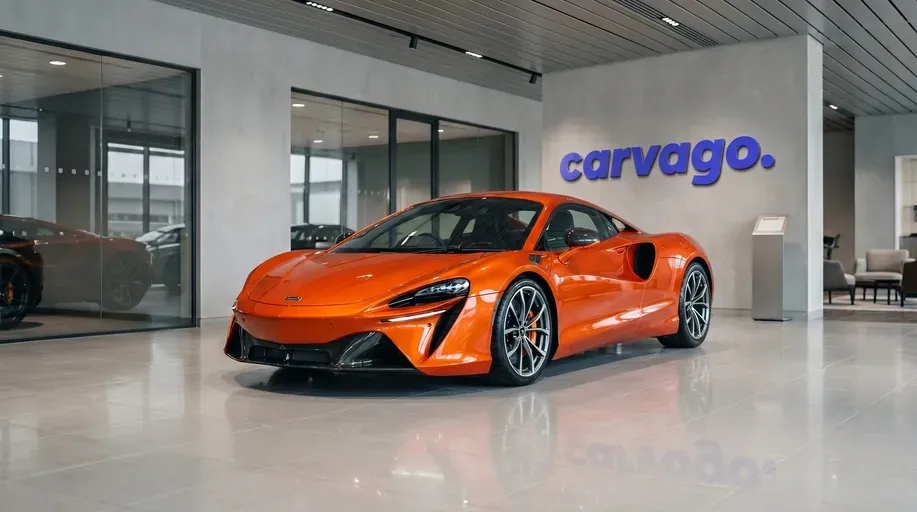
McLaren Artura review: real owner experience, hybrid V6 performance, common faults, running costs and prices — everything you need to know.
Oct 24, 2026
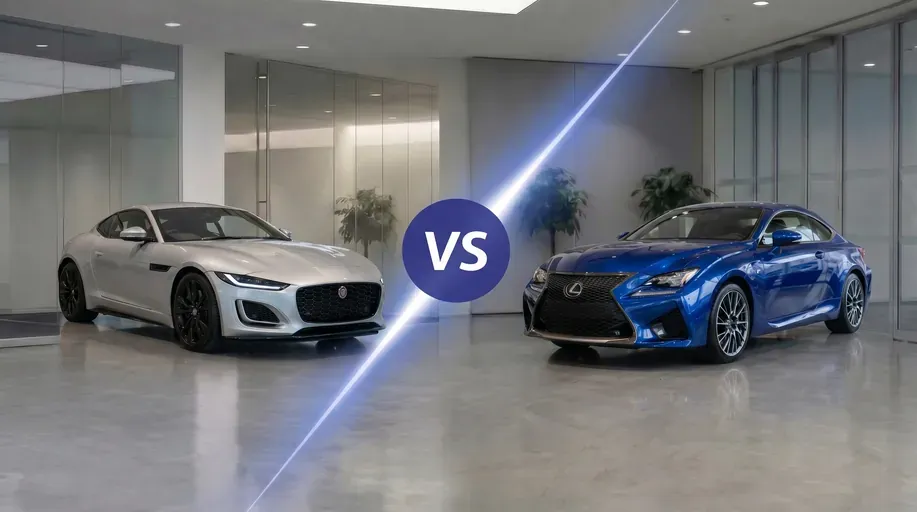
Jaguar F-Type vs. Lexus RC F: A detailed comparison of performance, driving characteristics, and reliability. Find out which used sports coupe is the better choice.
Oct 16, 2026