Review
Review BMW 2 Series Gran Tourer: What do owners and experts really say?
BMW 2 Series Gran Tourer review: real owner experience, common faults, 7-seat practicality, engine picks and used prices before you buy.
Oct 22, 2026
Ford S-Max (2015–2023) review: real owner experience, common faults, engine picks, and used prices — everything you need before you buy.
November 7, 2026
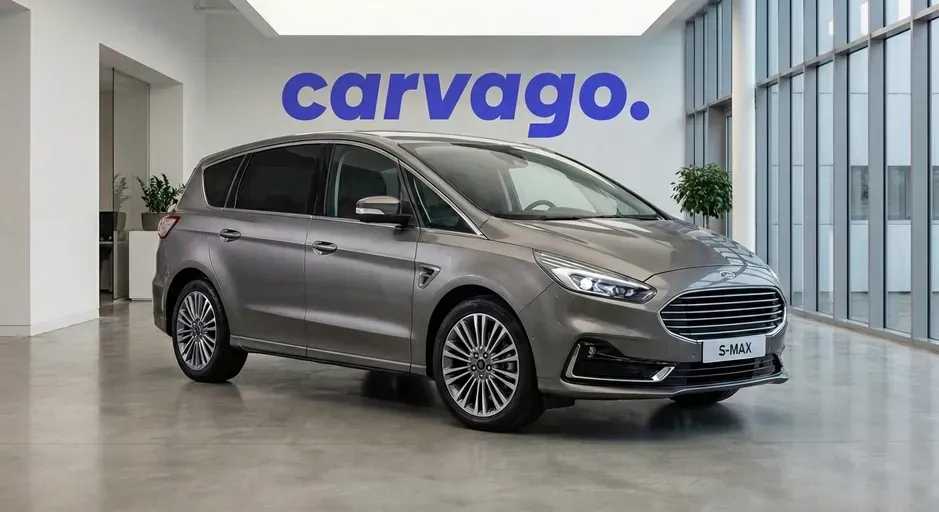
The Ford S-Max occupies a distinct position among family vehicles, bridging the space between traditional passenger estates and conventional people carriers. Sold in five-seat and seven-seat layouts, the Ford S-Max MPV appeals primarily to drivers who require flexible passenger seating and substantial cargo practicality without transitioning to a high-riding SUV or a boxier van-derived model.
This review examines the second generation, which entered series production in June 2015, followed by the first European customer deliveries in July 2015. Assembled at Ford’s Valencia plant in Spain, the vehicle remained in production until April 2023, when it was discontinued without a direct successor.
Ford updated the range in stages throughout its life cycle. A mechanical revision in September 2018 introduced a new diesel engine family alongside an eight-speed automatic transmission. A visual and equipment facelift arrived in October 2019, introducing updated front-end styling, redesigned front seating, and integrated connected services. A full hybrid petrol option joined the range in February 2021, serving as the powertrain focus through the remainder of the model's production run.
Second-generation Ford S-Max ownership records show distinct reliability patterns split between the early production years and the later revisions. For models built from June 2015 to August 2018 paired with the 2.0 TDCi diesel and six-speed dual-clutch automatic transmission, owners report frequent shuddering during pull-away in first and second gear, hesitant shifts, and dashboard warnings for limited transmission function. These symptoms point to mechatronic valve body wear and clutch pack degradation, which require specialized workshop repairs once shifting faults develop.
In late 2018, the manufacturer introduced the 2.0 EcoBlue diesel, which substituted a conventional eight-speed torque-converter automatic for the dual-clutch unit. However, tests describe a serious vulnerability in this engine’s timing system: it uses an oil-bathed timing belt design. If non-approved engine oil is used or servicing is neglected, the belt material degrades and sheds debris into the engine oil. This particulate matter accumulates in the oil pump pickup strainer, restricting oil flow and triggering oil pressure warnings at idle, which risks severe internal mechanical damage. Across all production years of the diesel Ford S-Max, tests also document electrical faults involving the rear wheel speed sensors and wiring connectors at the electric parking brake calipers, which illuminate ABS warnings and prevent the electronic handbrake from engaging or releasing.
The second-generation S-Max has been the subject of several Europe-wide safety recalls addressing mechanical and electrical components:
| Affected Models & Build Window | Identified Defect | Official Remedy |
|---|---|---|
| All models (Jan 2015 – Feb 2020) | Rear control arm bolts are prone to corrosion and may break, impairing steering control. | Dealerships inspect the rear suspension and fit redesigned bolts with upgraded corrosion protection. |
| All models (Jun 2014 – Aug 2018) | Front flexible rubber brake hoses may leak, causing fluid loss and increased stopping distances. | Dealerships inspect and replace both front brake hoses with upgraded units. |
| 2.0 EcoBlue diesel (Jan 2018 – Oct 2022) | Diesel particulate filter may crack, causing soot emissions above authorized limits. | Dealerships check the filter for substrate cracking, reprogram the engine software, and replace cracked filters. |
| 2.5 Duratec Hybrid (Dec 2021 – Jan 2022) | Risk of engine fire if software failed to install correctly during prior visits, allowing vapor leaks in case of engine failure. | Dealerships update the Powertrain Control Module software with digital installation verification. |
| All models (Jan 2021 – Mar 2023) | Telematics Control Unit software fault causes loss of automatic and manual emergency call (eCall) functionality. | Dealerships update the Telematics Control Unit software to restore emergency calling. |
For buyers evaluating the hybrid Ford S-Max, safety notices specifically advise shutting down the engine immediately if abnormal engine noise, smoke from under the bonnet, or sudden power drops occur prior to software updates.
The second-generation Ford S-Max arrived with turbocharged petrol and diesel engines, later undergoing a comprehensive powertrain overhaul that introduced newer diesels and concluded with an exclusive full hybrid setup.
| Engine | Fuel | Power | Gearbox | Drivetrain | Model years |
|---|---|---|---|---|---|
| 1.5 EcoBoost | Petrol | 118 kW (160 hp) | 6-speed manual | FWD | 2015 – 2018 |
| 1.5 EcoBoost | Petrol | 121 kW (165 hp) | 6-speed manual | FWD | 2018 – 2020 |
| 2.0 EcoBoost | Petrol | 177 kW (240 hp) | 6-speed automatic | FWD | 2015 – 2018 |
| 2.0 TDCi | Diesel | 88 kW (120 hp) | 6-speed manual | FWD | 2015 – 2018 |
| 2.0 TDCi | Diesel | 110 kW (150 hp) | 6-speed manual | FWD, AWD | 2015 – 2018 |
| 2.0 TDCi | Diesel | 110 kW (150 hp) | 6-speed automatic | FWD | 2015 – 2018 |
| 2.0 TDCi | Diesel | 132 kW (180 hp) | 6-speed manual | FWD | 2015 – 2018 |
| 2.0 TDCi | Diesel | 132 kW (180 hp) | 6-speed automatic | FWD, AWD | 2015 – 2018 |
| 2.0 TDCi Bi-Turbo | Diesel | 154 kW (210 hp) | 6-speed automatic | FWD | 2015 – 2018 |
| 2.0 EcoBlue | Diesel | 88 kW (120 hp) | 6-speed manual | FWD | 2018 – 2019 |
| 2.0 EcoBlue | Diesel | 110 kW (150 hp) | 6-speed manual | FWD, AWD | 2018 – 2021 |
| 2.0 EcoBlue | Diesel | 110 kW (150 hp) | 8-speed automatic | FWD | 2018 – 2021 |
| 2.0 EcoBlue | Diesel | 140 kW (190 hp) | 6-speed manual | FWD | 2018 – 2019 |
| 2.0 EcoBlue | Diesel | 140 kW (190 hp) | 8-speed automatic | FWD, AWD | 2018 – 2021 |
| 2.0 EcoBlue Bi-Turbo | Diesel | 177 kW (240 hp) | 8-speed automatic | FWD | 2018 – 2021 |
| 2.5 Duratec FHEV | Full Hybrid | 140 kW (190 hp) | e-CVT automatic | FWD | 2021 – 2023 |
For urban driving and regular short trips, the hybrid Ford S-Max is the most suitable option, operating smoothly in stop-and-start traffic without the particulate filter risks of a diesel. The smaller 1.5 EcoBoost petrol engines suit low-mileage suburban routines, though they require heavy throttle inputs when the vehicle carries a full passenger load. The rare 2.0 EcoBoost petrol delivers brisk acceleration, but its high fuel consumption limits its appeal for daily family errands.
For frequent motorway journeys, mixed commuting, and heavy towing duties, a diesel Ford S-Max remains the standard match for the vehicle's mass. The mid-output 2.0 TDCi and 2.0 EcoBlue units provide an effective balance of pulling power and cruising economy. Buyers who frequently pull heavy trailers or tackle unpaved surfaces benefit from the all-wheel-drive variants paired with the higher-output diesel units, whereas the twin-turbo diesels suit long-distance high-speed cruising best.
For detailed information on recurring mechanical faults, recall campaigns, and transmission wear patterns across these powertrains, refer to the owner experiences section.
| Dimension / Capacity | 5-seater | 7-seater |
|---|---|---|
| Length (mm) | 4,796 | 4,796 |
| Width without mirrors (mm) | 1,916 | 1,916 |
| Height (mm) | 1,658 | 1,655 |
| Wheelbase (mm) | 2,850 | 2,850 |
| Boot capacity – seats upright (l) | 700 | 285 |
| Boot capacity – seats folded (l) | 2,200 | 2,020 |
Note: Stated luggage volumes apply to both standard combustion and full-hybrid models alike. Dimensions do not account for the optional factory tow bar or the taller roof antenna fitted to hybrid versions.
In the Ford S-Max people-carrier, the second row features three individual, identical seats that slide, recline, and fold flat independently. Each middle-row seat accommodates an adult and includes its own Isofix anchor point, allowing three child seats to sit abreast across the cabin. Legroom and headroom in this row provide sufficient room for adults, even when seated behind tall front occupants.
On seven-seat models, two additional third-row seats fold flush into the load area floor via push buttons in the luggage compartment. Space in the rearmost row is distinctly restricted, making those positions practical primarily for children or short journeys. Lowering all rear seats creates a flat load floor, which pairs with the wide aperture and low sill of the Ford S-Max to simplify handling bulky cargo.
Professional road tests describe the Ford S-Max as an unusually agile multi-purpose vehicle with a distinct focus on chassis composure. Steering is communicative and precisely weighted, allowing the car to corner with minimal body roll and predictable front-axle grip. Suspension tuning is deliberately firm. While this eliminates wallowing and delivers planted high-speed tracking, testers note that sharp expansion joints and transverse road seams can filter into the cabin. Cruising refinement earns consistent praise, with tyre roar and wind rush effectively suppressed at motorway speeds.
Inside, testers appreciate the straightforward ergonomics. Retaining physical dials and buttons for climate and audio controls makes adjustments intuitive on the move, while deep door pockets and broad forward visibility enhance practicality. However, the dashboard architecture draws criticism for its utilitarian finish and dated styling when compared with contemporary family crossovers.
Professional verdicts align on the model's composed handling and quiet cruising manners, though testers diverge on ride comfort: some consider the firm damping well judged for body control, whereas others find it unyielding over urban ruts. The facelift introduced the hybrid Ford S-Max, which testers found remarkably muted in stop-and-go city traffic, though hard acceleration causes the transmission to hold high engine revs.
All market charts in this section draw from Carvago listings across the entire Ford S-Max model family, including other generations present in the broader data rather than isolating the reviewed generation alone. Because separate generation-specific pricing is not isolated in the data, this overview reflects general market levels across model years rather than establishing a dedicated price level for the reviewed generation. In the current snapshot of advertised vehicles, the median asking price stands at €17,900 for 2017 builds and reaches €44,000 for 2024 registrations, where late-run vehicles occupy the upper tier.
Active listings for the Ford S-Max fell from 1,197 in May 2026 to 950 in September 2026, before finishing at 957 in October 2026, as illustrated in the breakdown below.
Active listings over time
| Month | Ford S-Max |
|---|---|
| 2026-05 | 1 197 |
| 2026-06 | 1 084 |
| 2026-07 | 1 039 |
| 2026-08 | 979 |
| 2026-09 | 950 |
| 2026-10 | 957 |
Source Carvago
Buyers still have a broad selection of close to a thousand vehicles to choose from, though overall market inventory contracted over the spring and summer before leveling off in the autumn.
Among used listings advertised today, the median asking price for a Ford S-Max built in 2017 is €17,900, compared with €44,000 for an example registered in 2024. The chart below compares these median asking prices across each build year.
Median advertised price by year of manufacture
| Model year | Ford S-Max |
|---|---|
| 2017 | 17 900 |
| 2018 | 19 500 |
| 2019 | 21 600 |
| 2020 | 22 000 |
| 2021 | 24 000 |
| 2022 | 27 400 |
| 2023 | 37 900 |
| 2024 | 44 000 |
Source Carvago
Buyers focusing on 2017 to 2020 vehicles encounter median asking prices among advertised listings from €17,900 to €22,000. For those targeting 2023 or 2024 models, advertised listings reflect median asking prices of €37,900 and €44,000.
Between May and October 2026, diesel listings made up the largest share of the advertised selection, opening at 877 vehicles in May 2026 alongside 239 hybrids and 80 petrol options. The breakdown below tracks the monthly volume of advertised cars across each fuel type over this period.
Supply composition by fuel type
Petrol
Diesel
Hybrid
Electric
| Month | Petrol | Diesel | Hybrid | Electric |
|---|---|---|---|---|
| 2026-05 | 80 | 877 | 239 | 0 |
| 2026-06 | 84 | 794 | 205 | 0 |
| 2026-07 | 74 | 763 | 202 | 0 |
| 2026-08 | 70 | 741 | 168 | 0 |
| 2026-09 | 66 | 723 | 161 | 0 |
| 2026-10 | 64 | 732 | 160 | 1 |
Source Carvago
By October 2026, diesel continued to dominate the available selection with 732 listings, compared to 160 hybrids, 64 petrol models, and 1 electric vehicle. Buyers will have the widest choice when searching for diesel variants, whereas hybrid and petrol options comprise a much smaller portion of the used market.
The chart tracks the average asking price for advertised Ford S-Max models from May 2026 to October 2026, opening at €21,000.
Average price development over time
| Month | Ford S-Max |
|---|---|
| 2026-05 | 21 000 |
| 2026-06 | 20 600 |
| 2026-07 | 20 200 |
| 2026-08 | 19 900 |
| 2026-09 | 19 900 |
| 2026-10 | 19 800 |
Source Carvago
Across the six months, the average asking price drifted down by less than 6% from €21,000 to €19,800, holding flat at €19,900 between August and September.
Composed handling and communicative steering with minimal body roll
Individual sliding second-row seats with dedicated Isofix anchors across all positions
Quiet cruising refinement with well-suppressed wind and road noise
Wet timing belt on post-2018 diesels risks severe engine damage if maintenance is neglected
Shuddering and mechanical wear common on early dual-clutch automatic gearboxes
Third-row seating is distinctly restricted and practical mainly for children
The choice depends on your driving profile: the hybrid Ford S-Max suits urban stop-and-go commuting best without diesel particulate concerns, while mid-output diesels suit frequent motorway travel and heavy towing. On post-2018 EcoBlue diesels, confirm that the wet timing belt has been maintained strictly with manufacturer-approved oil.
Earlier 2.0 TDCi models paired with the six-speed dual-clutch transmission frequently suffer from mechatronic valve body wear and clutch degradation. Look for shuddering during low-speed take-offs and confirm documented fluid changes before buying.
The two third-row seats are restricted in space and best reserved for children or occasional short journeys. For adults, the middle row provides three individual, full-size seats that slide, recline, and each feature Isofix anchor points.
Check by VIN that official safety recalls—particularly for rear suspension control arm bolts and front brake hoses—have been completed by an authorized dealer. On any diesel Ford S-Max, verify the condition of the braking sensors, electric parking brake operation, and engine timing maintenance records.
Sources: ford.co.uk, adac.de, europa.eu, autocar.co.uk, autoexpress.co.uk
This article was prepared using artificial intelligence tools. The section guarantor is Petr Dušek.
BMW 2 Series Gran Tourer review: real owner experience, common faults, 7-seat practicality, engine picks and used prices before you buy.
Oct 22, 2026
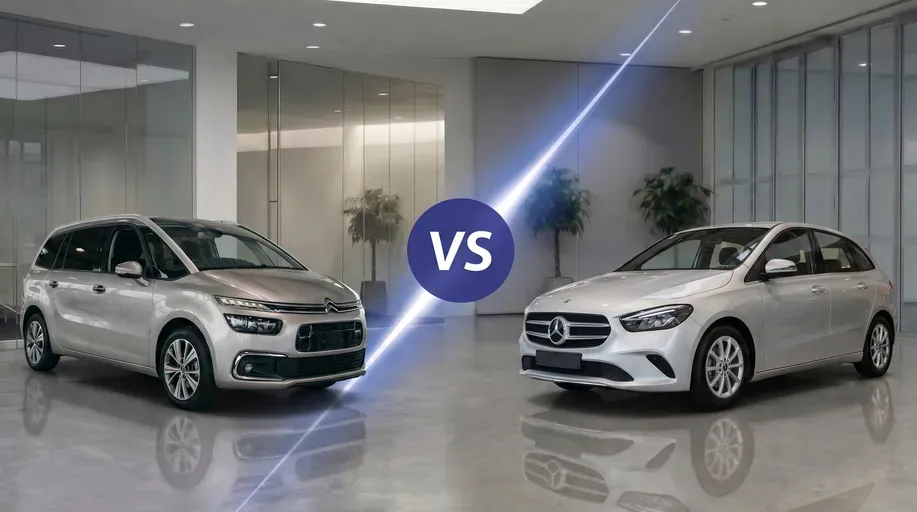
Citroën Grand C4 SpaceTourer (Picasso) or Mercedes-Benz B-Class? A detailed comparison of space, reliability, and equipment with a clear verdict for your choice.
Oct 16, 2026
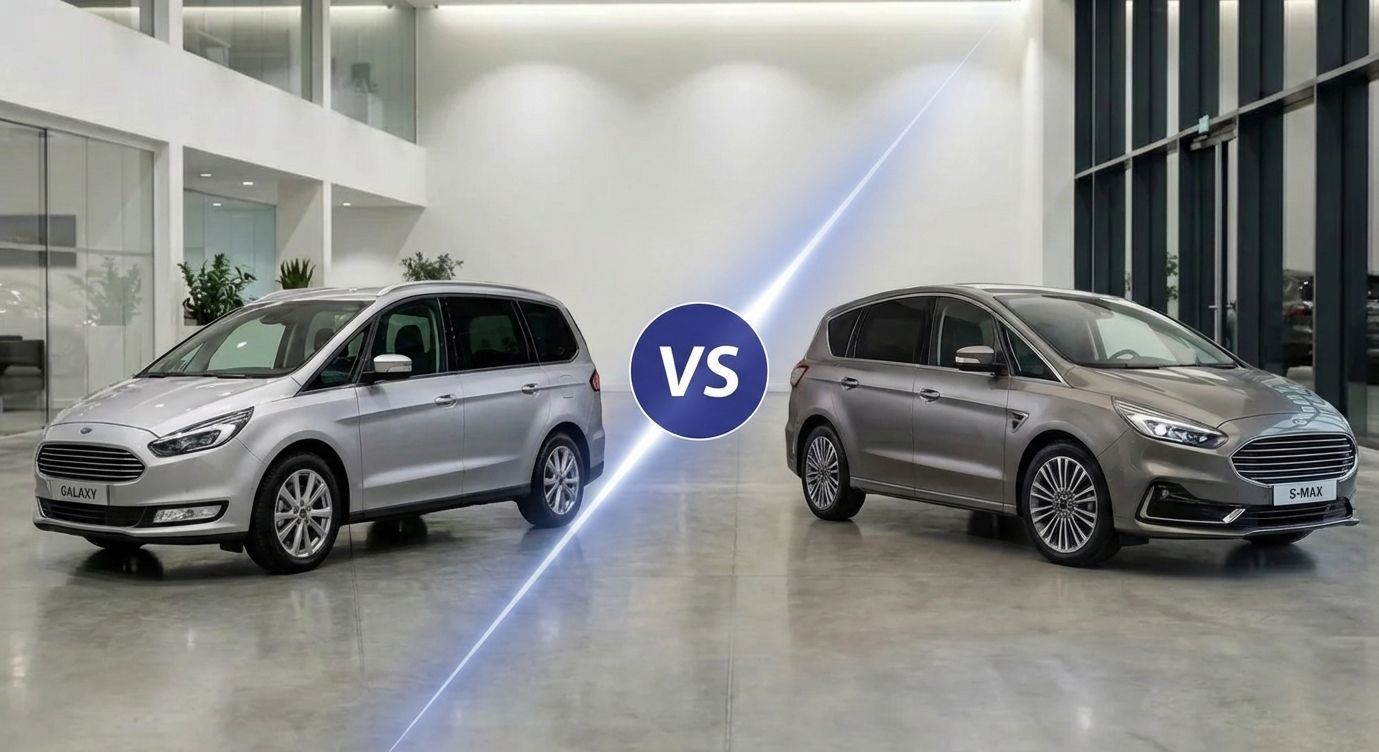
Detailed comparison of Ford Galaxy vs. Ford S-Max. Find out which used 7-seater MPV offers better space, reliability, and driving characteristics. Read our verdict!
Nov 12, 2026