Review Dacia Sandero: What do owners and experts really say?

Dacia Sandero III review: real owner experience, Bi-Fuel economy, boot space, running costs, and our verdict — everything to know before buying.

November 6, 2026

Dacia Sandero

Verdict at a Glance

  • Who it suits: Budget-focused drivers and small families seeking low running costs and straightforward utility over prestige.
  • Recommended engine: The manual TCe 90 for mixed daily use, or the bi-fuel ECO-G 100 for frequent motorway driving.
  • What to avoid: Cars without documented recall repairs—check by VIN—and the sluggish non-turbo SCe 65 for faster roads.

Introduction

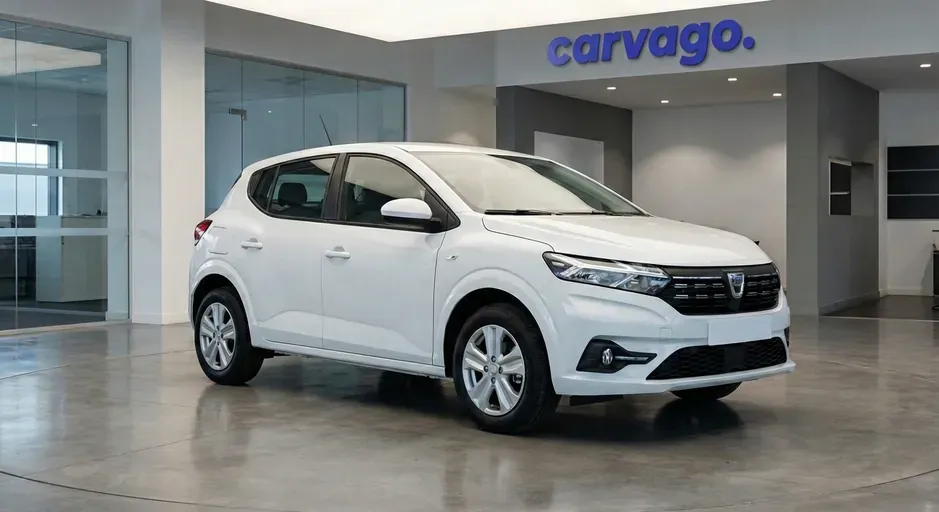
The Dacia Sandero sits in the small-car B-segment, offering functional motoring centered on budget-conscious utility. This review covers the third generation, produced from late 2020 through 2026. Following its world premiere in September 2020, initial customer deliveries across Europe began in April 2021.

Buyers can choose between two body styles: the standard Dacia Sandero hatchback and the Stepway, which incorporates raised ground clearance and protective exterior mouldings for a crossover look. In June 2022, the model received a visual refresh that introduced the "Dacia Link" grille and redesigned emblems, reaching customers in October 2022. A further revision premiered in February 2024 and opened for orders in April 2024, adding updated driver-assistance systems and interior equipment.

The third-generation Dacia Sandero typically appeals to private buyers, daily commuters, and small families who prioritize modest purchase prices and low running costs over prestige or high-performance capability.

Owner Experiences: Common Faults and Recalls

The third-generation Dacia Sandero has generally proved to be mechanically straightforward, but early production years were subject to several official safety campaigns and software calibrations. Buyers browsing the secondhand market need to differentiate between resolved teething troubles on early cars and inherent characteristics of specific drivetrains.

Official European registers recorded three verified safety recalls for this generation:

  • Bonnet Lock Striker: Announced in May 2021, this campaign affected 24,950 vehicles worldwide built between 2 September 2020 and 13 January 2021 at the Pitești plant, and between 8 October 2020 and 15 January 2021 at the Tanger plant. Cracking on the bonnet lock striker wire could allow the bonnet to open while driving. Authorised workshops inspect the striker latch bar and replace the complete bonnet assembly if cracking or deformation is detected.
  • Fuel Supply Hose Leak: Announced in October 2021, covering 20,611 vehicles worldwide across European Union and UK markets. Restricted strictly to models with the naturally aspirated petrol SCe 65 engine built between February 2020 (predating the third generation's late 2020 production start) and September 2021 across the Pitești, Tanger, and Somaca plants. A poorly fitted fuel supply hose in the engine compartment posed a risk of fuel leakage and fire. Retailers inspect and replace the fuel supply pipe and its routing.
  • LPG Tank Welding Defect: Announced in November 2023 for European Union markets, covering factory dual-fuel Dacia Sandero models manufactured between 6 February 2023 and 3 July 2023. Incorrect welding of the liquefied petroleum gas reservoir could lead to gas releasing into the passenger compartment, posing a fire risk. The remedy requires replacement of the entire LPG tank assembly.

No further safety recalls were registered for this model generation in 2025 or up to late 2026.

Beyond safety recalls, repeated mechanical patterns center on drivetrain refinement. On turbocharged petrol TCe 90 and Bi-Fuel engines, owners report an audible metallic rattling or buzzing sound from the engine compartment on throttle lift-off during deceleration between 1,500 and 2,100 rpm. In some cases, this noise stems from mechanical clearance developing in the turbocharger wastegate actuator linkage. An official manufacturer technical service bulletin provides an engine management software update that alters holding pressure to dampen the vibration, though severe mechanical play has required turbocharger replacement.

Drivability on manual Dacia Sandero models built up to February 2024 has also prompted complaints of abrupt clutch take-up, low-speed driveline judder, and flat spots during gear shifts. A manufacturer service campaign was issued to reprogram the engine control unit to smooth torque delivery during clutch release; in some cases, cars operated with severe judder prior to the software update required clutch friction assembly replacement under warranty.

Cabin electronics and convenience systems show occasional software instability rather than widespread hardware failures. Owner reports highlight that touchscreen-equipped models can suffer intermittent display freezing, black screens upon startup, or dropped wireless smartphone mirroring sessions, which were largely resolved through incremental manufacturer software updates. In addition, cars built between 2021 and 2024 occasionally display a false emergency call system warning on the instrument cluster. In some cases, this fault is caused by premature voltage drop in the telematic control module's internal backup battery, requiring replacement of the backup cell followed by a dealer-level diagnostic reset.

Models manufactured after the April 2024 regulatory revision received updated driver assistance hardware, but long-term fleet reliability for these newer camera and radar sensors remains unestablished as of late 2026 due to limited accumulated mileage.
🔍 What to check before buying

  • Check official dealer records and have a professional pre-purchase inspection (CarAudit) verify completion of the bonnet latch check, SCe fuel pipe inspection, and LPG tank replacement where applicable via the vehicle identification number (VIN).
  • Listen for metallic buzzing or rattling from the engine bay when releasing the throttle between 1,500 and 2,100 rpm on turbocharged petrol and Bi-Fuel engines.
  • Test clutch engagement from a standstill and shift smoothness at low speeds to ensure manual gear changes are progressive without driveline judder.
  • Start the car and confirm the instrument cluster is free of emergency call warning alerts and that the central touchscreen boots promptly without connection drops.
  • On Bi-Fuel variants, verify smooth switching between petrol and gas operation under load without engine stumbling.

Engines: Which One to Choose

The third-generation Dacia Sandero lineup relies entirely on petrol and factory bi-fuel powertrains, having completely dropped diesel options. All variants route drive exclusively to the front wheels through five-speed or six-speed manual gearboxes, or an optional continuously variable transmission.

EngineFuelPowerGearboxModel years
SCe 65Petrol49 kW (65 hp)5-speed manual2021–2026
TCe 90Petrol67 kW (90 hp)6-speed manual2021–2026
TCe 90 CVTPetrol67 kW (90 hp)Automatic (CVT)2021–2026
ECO-G 100 (LPG)LPG74 kW (100 hp)6-speed manual2021–2026
ECO-G 100 (Petrol)Petrol67 kW (90 hp)6-speed manual2021–2026
TCe 110Petrol81 kW (110 hp)6-speed manual2022–2026

Short trips and city driving

For local errands and strictly urban commuting, the naturally aspirated SCe 65 serves basic transport needs where mechanical simplicity is paramount, though it feels noticeably sluggish when joining faster flow. Drivers seeking convenience in heavy stop-and-go traffic will find an automatic Dacia Sandero with the TCe 90 CVT far more relaxing, as the continuously variable gearbox provides smooth, progressive crawling without manual clutch operation.

Mixed daily driving

The standard manual TCe 90 represents the balanced choice for typical daily driving. Its turbocharger delivers sufficient mid-range pulling power for confident merging and suburban overtaking, while tall cruising ratios on the six-speed gearbox keep engine speeds settled outside built-up areas.

Motorways and towing

For frequent motorway journeys and high-mileage commuting, the factory bi-fuel ECO-G 100 is the practical recommendation. Opting for an LPG Dacia Sandero yields lower operating expenses and extended combined range across its dual fuel tanks, alongside more responsive acceleration when running on gas than on petrol. For buyers choosing the Stepway body style who want brisk acceleration at higher speeds, the direct-injection TCe 110 offers the strongest high-speed passing capability.

Both the ECO-G 100 and the TCe 110 are also the practical choices for towing light trailers, where their extra mid-range pull and six-speed manual transmissions handle additional payload far more competently than the non-turbo base engine or the CVT.

Reliability notes

For an overview of mechanical dependability, service campaigns, and known running issues across these powertrains, consult the owner experiences section.

Space & Practicality

Dimension / CapacitySandero HatchbackSandero Stepway
Length (mm)4,0884,099
Width without mirrors (mm)1,8481,848
Height (mm)1,4991,535–1,587
Wheelbase (mm)2,6042,604
Boot capacity, seats up / folded (l)328 / 1,108328 / 1,108

Boot capacity is measured according to the VDA standard. Factory bi-fuel variants retain full boot floor capacity because the gas reservoir occupies the spare wheel well under the boot floor.

Inside the Dacia Sandero hatchback, passenger accommodation is well judged for a subcompact vehicle. Adults sitting in the outer rear positions find sufficient knee room and head clearance for routine travel, aided on the Dacia Sandero Stepway by its slightly higher roofline. The rear bench is fixed in place, meaning sliding adjustments are not available.

Expanding cargo flexibility depends on folding the rear backrest, which splits asymmetrically on higher trims while standard base versions rely on a single-piece folding bench. The boot opening is wide and square, allowing bulky items to slide in easily, although loading heavier luggage requires clearing a pronounced inner sill.

What the Tests Say

On broken tarmac and urban road imperfections, the Dacia Sandero provides compliant suspension comfort. Professional road tests note that the chassis cushions deep potholes and speed bumps effectively, although high-frequency ridges produce minor tremors. The steering is tuned light for easy parking, yet it lacks weighting and road feedback at higher speeds. Cornering reveals noticeable body roll—especially in the taller Stepway variant—though handling remains predictable and electronic stability control intervenes early during abrupt evasive manoeuvres. At motorway speeds, tests consistently highlight modest acoustic insulation, where tyre roar from the rear wheel arches and wind turbulence around the windscreen pillars become intrusive.

Inside, unyielding hard plastics reflect cost containment, but solid fitment prevents cabin rattles. On higher trims, textured fabric dashboard inserts and rotary climate controls improve perceived quality. Testers praise the functional ergonomics, clear physical controls, and a responsive touchscreen with smartphone mirroring integration, though the front seats provide modest lateral support. Professional verdicts agree that the Dacia Sandero hatchback delivers stable road manners and bump absorption above budget expectations, while highway noise remains its primary drawback. Opinions differ on whether the light steering feels pleasantly relaxed in town or detached on open roads. The visual identity facelift freshened styling details without altering mechanical behaviour.

Prices and Market Offer

All the charts in this section are drawn from Carvago's listings of the whole Dacia Sandero model family, including other generations represented in the data, rather than the reviewed generation alone. Because listings from overlapping production periods are pooled together, these figures do not establish a separate price level exclusively for the third generation. Across the available build years, the median asking price spans from €10,400 for 2019 models up to €19,100 for 2026 examples. Listings from 2021 sit at a median asking price of €12,900, while 2024 cars reach €18,000.

Advertised Dacia Sandero listings ranged from 8,978 in May 2026 to a peak of 9,488 in July 2026 across the six-month span shown below.

Dacia Sandero - availability over time

Active listings over time

MonthDacia Sandero
2026-058 978
2026-069 246
2026-079 488
2026-088 713
2026-098 772
2026-108 067

Source Carvago

Buyers have had a wide selection of over 8,000 cars to choose from each month, though available inventory fluctuated over the period and finished at 8,067 in October 2026.

Among used listings of this model advertised today, the median asking price of cars built in 2019 is €10,400, while the median asking price of cars advertised today built in 2026 is €19,100.

Dacia Sandero - median price by model year

Median advertised price by year of manufacture

Model yearDacia Sandero
201910 400
202011 000
202112 900
202213 500
202315 900
202418 000
202518 400
202619 100

Source Carvago

Buyers considering 2021 models face a median asking price of €12,900, while stepping up to 2024 models requires €18,000.

This depreciation curve traces how the Dacia Sandero’s residual value declines with vehicle age, shedding roughly 9% in its first year and about 24% by age three.

Dacia Sandero - value loss by age

Residual value by vehicle age

Vehicle ageDacia Sandero
New18 700
1 yr17 000
2 yrs15 600
3 yrs14 300
4 yrs13 600
5 yrs12 400
6 yrs10 000
7 yrs9 400

Source Carvago

Across the seven-year span shown, the model sheds roughly 50% of its initial residual value. The sharpest drop occurs between age five and age six, after which the rate of value loss slows markedly to 6% at age seven.

Between May and October 2026, petrol and LPG formed the bulk of active listings, with petrol offers peaking at 6,673 in July before ending at 5,584 in October. The chart below illustrates how advertised cars were distributed across fuel types over these months.

Dacia Sandero - supply by fuel over time

Supply composition by fuel type

  • Petrol

  • Diesel

  • Hybrid

  • CNG

  • LPG

  • Hydrogen

MonthPetrolDieselHybridCNGLPGHydrogen
2026-056 469239072 2332
2026-066 662253042 2982
2026-076 673276012 5120
2026-086 1162283112 3150
2026-096 1722394502 2890
2026-105 5842148022 1670

Source Carvago

In October 2026, the offer was led by 5,584 petrol and 2,167 LPG listings, compared with 214 diesel and 80 hybrid cars. Buyers will find broad availability among petrol and LPG models, whereas anyone seeking diesel or hybrid variants will encounter a far more limited selection.

Between May 2026 and October 2026, the average asking price for the Dacia Sandero started at €14,900, with monthly figures detailed in the chart below.

Dacia Sandero - price trend over time

Average price development over time

MonthDacia Sandero
2026-0514 900
2026-0614 900
2026-0714 800
2026-0814 900
2026-0914 900
2026-1015 100

Source Carvago

Across the six months, the average moved very little relative to overall vehicle prices, dipping to €14,800 in July 2026 before finishing at €15,100 in October 2026—a net rise of just over one percent.

Pros & Cons

Dacia Sandero

Pros

Factory bi-fuel option offers low running costs without compromising boot space

Compliant suspension comfortably cushions potholes and broken road surfaces

Practical cabin ergonomics with clear physical controls and durable assembly

Cons

Intrusive tyre and wind noise inside the cabin at motorway speeds

Base naturally aspirated petrol engine lacks power outside urban driving

Noticeable body roll during cornering and steering lacks feedback at speed

Frequently asked questions

Mechanically, the Dacia Sandero has proved straightforward, though early cars required official safety recalls and software calibrations. Buyers should verify via the VIN that all campaign remedies and engine calibrations were completed.

The turbocharged TCe 90 petrol serves as the balanced all-rounder for mixed driving, offering confident suburban overtaking and settled cruising. Frequent long-distance commuters benefit most from the bi-fuel Dacia Sandero for lower running costs, whereas the non-turbo base engine is best restricted strictly to urban errands.

Confirm via the VIN that all official safety recalls and software calibrations are documented. On a test drive, ensure manual versions pull away smoothly without driveline judder.

The suspension absorbs road imperfections comfortably, but modest sound insulation lets noticeable tyre and wind noise into the cabin at speed. It remains stable on the motorway, though louder than higher-priced alternatives.

Sources: dacia.com, adac.de, europa.eu, autocar.co.uk, autoexpress.co.uk

This article was prepared using artificial intelligence tools. The section guarantor is Petr Dušek.

Related articles

Car battle

Kia Picanto vs. Volkswagen up!: Complete comparison 2026

Comparison of Kia Picanto vs Volkswagen up! (VW up!). Discover real-world experiences, differences in fuel consumption and equipment, and find out which city car is the better choice.

Oct 16, 2026

Car battle

Citroën C3 vs. Škoda Fabia: Complete comparison 2026

Citroën C3 vs. Škoda Fabia: Which city hatchback to choose? Read a detailed comparison of engines, equipment, and reliability of used cars, including our verdict.

Oct 16, 2026

Car battle

Citroën C3 vs. Suzuki Swift: Complete comparison 2026

Used Car Comparison: Citroën C3 vs Suzuki Swift. Read a detailed comparison of engines, reliability, and equipment. Find out which city hatchback is the right one for you.

Apr 28, 2026

We accept online card payments as well as wire transfers.

visa payment provider logovisa-electron payment provider logomastercard payment provider logomaestro payment provider logodiners-club payment provider logodiscover payment provider logo