Citroën C3 vs. Škoda Fabia: Complete comparison 2026

Citroën C3 vs. Škoda Fabia: Which city hatchback to choose? Read a detailed comparison of engines, equipment, and reliability of used cars, including our verdict.

October 16, 2026

VS
Citroën C3

Citroën C3

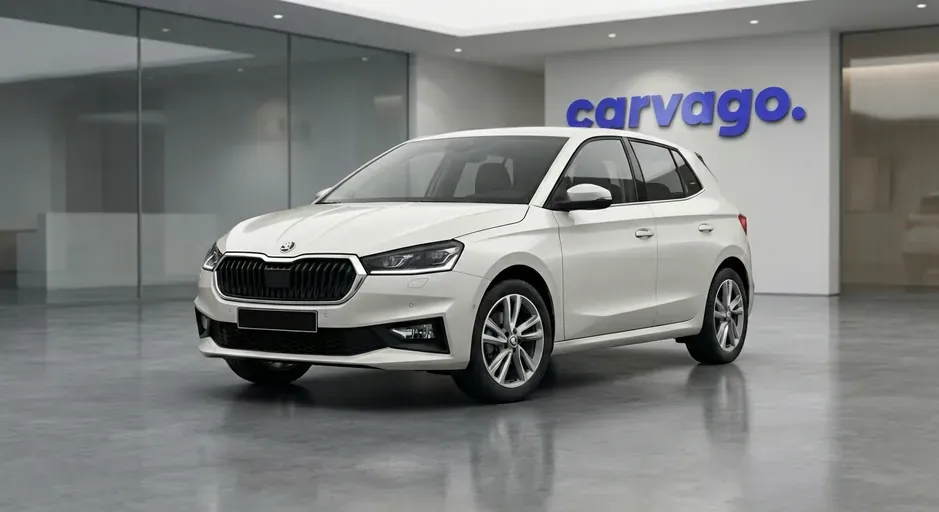
Škoda Fabia

Škoda Fabia

Introduction

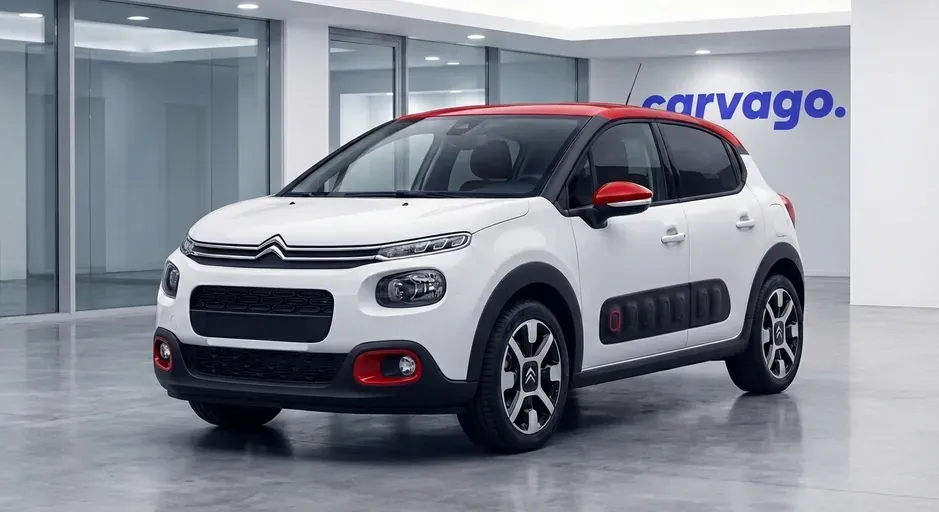
The Citroën C3, also available in a purely electric version as the ë-C3 or in a recent clearance sale under the C3 Origin designation, is an unmistakable French hatchback that wins over buyers primarily with its original design and above-average driving comfort. Its direct competitor is the traditional market leader, the Škoda Fabia, sold for example in China under the alternative name Jingrui, which has long relied on maximum practicality, generous interior space, and proven technology. In the following paragraphs, we will compare both of these popular cars in detail to help you choose the right model on the market for approximately four-year-old used cars.

Comparison of External Dimensions

Škoda Fabia and Citroën C3 may belong to the same category of small city cars (B-segment), but their exterior dimensions reveal a relatively different approach from both manufacturers. If we focus on roughly four-year-old used cars, we typically see the third generation of the Citroën C3 facing off against the incoming fourth generation of the Škoda Fabia. While the French representative maintains a more compact format with a length just under four meters (3996 mm), the newer fourth generation has grown significantly and outsized its rival by a substantial 112 to 141 millimeters. In practice, this means that the Citroën C3 will be slightly easier to park in small gaps on crowded streets, whereas the Fabia gives a much more mature impression, approaching cars from a class above.

The larger footprint of the Mladá Boleslav hatchback is also evident in its width, where the Fabia, at 1780 mm, reliably surpasses the C3 (1749 mm) by a full 31 millimeters. This value is particularly key for passenger comfort inside, as it offers more generous shoulder room. However, Citroën gains a slight advantage in overall body height (1474 mm compared to 1458–1461 mm for the Fabia), which provides slightly easier entry and a comfortable margin of headroom. The wheelbase plays an important role in both directional stability and interior longitudinal space. In this regard, the fourth-generation Fabia dominates with a value of up to 2564 mm, which brings a calmer driving experience on the highway and more knee room for rear passengers. Conversely, the Citroën, with a wheelbase of 2539 mm, benefits from excellent agility at intersections.

When choosing a nearly new used car, we must not forget that Škoda also offered the popular Combi (Estate) body variant within the third generation (which overlaps with the four-year age limit on the market), while the C3 relies strictly on the five-door hatchback shape. The Fabia Estate, with its 4262 millimeters in length, brings a huge leap in cargo capacity and can easily serve the needs of a small family. The choice between the two models therefore strongly depends on your daily territory – the Citroën C3 will be more agile and accommodating in the urban jungle, while the Škoda Fabia will provide a more robust stance, a wider interior, and, in the case of the estate version, unrivaled family utility.
ParameterCitroën C3 HatchbackŠkoda Fabia HatchbackŠkoda Fabia Estate
Length (mm)39964108–41374262
Width (mm)174917801732
Height (mm)14741458–14611482
Wheelbase (mm)25392549–25642470

Trunk Volume

When it comes to choosing a practical car, trunk capacity often plays a decisive role. Although both the Citroën C3 and the Škoda Fabia belong to the same small car category (B-segment), their approach to interior space differs significantly. For buyers of roughly four-year-old used cars, this means a choice between a stylish city car and a model that directly targets maximum family utility and versatility.

In the classic five-door hatchback category, the Citroën C3 (in its very popular 3rd generation) offers exactly 300 liters of basic capacity. This is a space that easily suffices for a larger weekend shopping trip or luggage for a couple on a shorter trip. However, the 4th generation Škoda Fabia completely pushes the boundaries of its class in this regard – its trunk swallows an impressive 380 liters. This noticeable difference of 80 liters represents space for several extra suitcases in practice. The Fabia's maximum capacity after folding the rear seats reaches a great 1,190 liters.

A crucial trump card for the Czech automaker is also the availability of a practical estate body version in the 3rd generation, which is still very widely represented on the four-year-old used car market. The Škoda Fabia Estate (known as Combi on the Czech market) has a huge basic capacity of 530 liters, which increases to 1,395 liters after folding the backrests. Such space is absolutely sufficient for weekend shopping as well as a longer vacation with a pile of equipment or a stroller. Since the Citroën C3 does not have a traditional estate variant in its range at all, the Fabia becomes the clear favorite for families and drivers requiring maximum transport capacity.

ParameterCitroën C3 HatchbackŠkoda Fabia HatchbackŠkoda Fabia Estate
Basic capacity (liters)300380530
Maximum capacity with seats folded (liters)Not specified1,1901,395

Clear victory for luggage 🧳

The Škoda Fabia wins hands down thanks to a larger trunk in the classic hatchback and the option to choose the extremely practical Estate version, while the Citroën C3's space is primarily sufficient for everyday city duties.

Trailer Weights

When choosing a roughly four-year-old hatchback on the used car market, the trailer weight is an often overlooked but absolutely key parameter that defines the true versatility of both cars. The differences in towing capacity between these two models are quite fundamental. The fourth-generation Škoda Fabia offers significantly higher values, where the standard braked trailer weight starts at 800 kg for the base 1.0 MPI engine. However, the maximum towing capacity for the more powerful 1.5 TSI version reaches a respectable 1200 kg. In contrast, the third-generation Citroën C3 is designed purely for the city today, and its towing capabilities are considerably limited. The standard braked trailer weight is around just 450 kg for PureTech petrol engines, with the maximum being only 600 kg for the BlueHDi diesel version. An interesting paradox is that while much older generations of the C3 model commonly towed over 1100 kg, modern versions and especially the newer hybrid or fully electric e-C3 variants are characterized by significantly reduced capacity, which does not exceed a maximum of 550 to 600 kg.

From the perspective of everyday use, these technical differences clearly determine what the vehicle will actually serve for. With the Citroën C3, you can hitch at most a light trailer, which you might use for hauling away small garden waste, but it's not enough for heavy work. The Škoda Fabia, on the other hand, can easily haul heavier construction materials or even a small caravan. Furthermore, a more robust towing capacity means you can safely carry a massive bike rack on the tow bar or add a storage box to the tow ball. The Fabia thus easily creates a huge space for several extra suitcases, making it an exceptionally practical car, perfectly sufficient for weekend shopping as well as longer holidays. In conclusion, it can be stated that if the tow bar plays even the slightest role in your choice, the Škoda Fabia is the clear favorite. The Citroën C3 very quickly hits its structural limits in this purely practical discipline.

Model and engineBraked trailer weight (kg)Unbraked trailer weight (kg)
Škoda Fabia 1.0 MPI (59 kW)800550
Škoda Fabia 1.0 TSI (70–81 kW)1000–1100590–600
Škoda Fabia 1.5 TSI (110 kW)1200600
Citroën C3 PureTech 83 (61 kW)450450
Citroën C3 PureTech 110 (81 kW)450–600450
Citroën C3 BlueHDi 100 (75 kW)600450

Overview of Most Common Motorizations

When choosing a used car around four years old, you will encounter a different approach to engine options with these two competitors, which can play a key role. While the fourth-generation Škoda Fabia relies exclusively on petrol engines, peaking with the brisk 1.5 TSI petrol four-cylinder, the third-generation Citroën C3 has kept an exceptionally economical diesel engine in its lineup alongside the popular petrols, which will please drivers with high annual mileage. The base for both cars consists of naturally aspirated three-cylinder engines (1.0 MPI for the Fabia and 1.2 PureTech 83 for the C3) built for city driving, but the greatest interest on the secondary market is naturally drawn to the turbocharged units. The Fabia benefits from efficient 1.0 TSI engines paired with a lightning-fast seven-speed dual-clutch DSG transmission, while the C3 scores with the slightly larger 1.2 PureTech 110 engine, which can be combined with a smooth and low-maintenance six-speed EAT6 torque converter automatic.

Citroën C3: A bet on comfort and an economical diesel

Under the hood of the third-generation Citroën C3 from around 2020 to 2024, three-cylinder petrol units dominate the used car market. The basic naturally aspirated 1.2 PureTech 83 version with 61 kW is a very good, low-maintenance choice for shorter trips within the city and adjacent districts. If you plan on more frequent and longer journeys, it is wiser to reach for the turbocharged 1.2 PureTech 110 variant. Its 81 kW output gives the car convincing dynamics, and original owners had the choice of a classic manual gearbox or a six-speed automatic. Although diesel engines have generally gone extinct in small hatchbacks, Citroën stuck with the popular 1.5 BlueHDi 100 engine. With 75 kW and a massive 250 Nm of torque, it is a literal highway mile-muncher. It should be noted that with older third-generation used cars (pre-2020), you may also come across previously sold units that are no longer offered today, such as the weaker 1.2 PureTech 68 and 82, or the 1.6 BlueHDi diesel.

Engine TypeFuelPower (kW)Torque (Nm)Gearbox
1.2 PureTech 83Petrol611185MT
1.2 PureTech 110Petrol812056MT / 6EAT
1.5 BlueHDi 100Diesel752506MT

Škoda Fabia: A purely petrol offensive with a top-tier four-cylinder

The Škoda Fabia in its modern fourth generation, appearing as popular four-year-old used cars since 2021, bets exclusively on advanced petrol units. The automaker made a clean break and removed all diesel versions from the lineup for this model without replacement – economical staples like the 1.4 TDI or the earlier 1.6 TDI are thus reserved only for older third- and second-generation used cars. The entry-level model is represented by the naturally aspirated 1.0 MPI three-cylinder available with 48 or 59 kW, which meets the parameters of an affordable and simple engine primarily for undemanding users. However, the vast majority of buyers seek out the turbocharged 1.0 TSI, produced in variants with 70 and 81 kW (replaced by an 85 kW version in the latest production months). For the more powerful TSI specification, a fast DSG automatic transmission can be purchased in addition to the six-speed manual. The absolute top of the price list is the 1.5 TSI four-cylinder with an impressive 110 kW and cylinder deactivation technology to reduce consumption, supplied exclusively with a 7-speed DSG.

Engine TypeFuelPower (kW)Torque (Nm)Gearbox
1.0 MPIPetrol48 / 59935MT
1.0 TSIPetrol70 / 81*175 / 2005MT / 6MT / 7DSG
1.5 TSIPetrol1102507DSG

\ In newer model years, you will find an uprated version of the one-liter engine with 85 kW (115 hp).*

Recommendations based on driving profiles

  • Drivers focused on price and city driving: The naturally aspirated power units of both models work excellently and do not suffer from complexity. However, the larger displacement and higher torque of the base 1.2 PureTech in the Citroën feels more mature at low speeds compared to the smaller 1.0 MPI.
  • The sensible choice for most situations: If you are looking for the optimal balance between reliability and performance even for family trips, bet on the turbocharged 1.0 TSI or 1.2 PureTech 110 models. Both engines accelerate confidently.
  • Highway drivers: Here, the Citroën plays in a league of its own. If you are looking for a small car to drive dozens of kilometers to work daily with minimal costs, the 1.5 BlueHDi diesel unit in the French manufacturer's car is a perfect bullseye.
  • Drivers looking for fun and agility: The Fabia scores with the fantastic 1.5 TSI powertrain. Thanks to the combination of the refined operation of the four-cylinder and the immediate reactions of the DSG gearbox, the Škoda can drive with the dynamics of much more mature lower-middle-class cars.

Petrol sovereign vs. comfortable classic 🏁

While the Škoda Fabia will satisfy drivers craving petrol dynamics with its great 1.5 TSI four-cylinder, the Citroën C3 brings a total rarity and offers the possibility of acquiring a reliable, economical diesel even in this class of vehicles.

Choosing the right engine is absolutely crucial for long-term satisfaction with a used car, and our recommendations are based on a combination of real-world performance parameters, practical fuel consumption, user satisfaction, and mechanical reliability. While both the Škoda Fabia and Citroën C3 in their newer generations (typically four-year-old used cars from 2021–2022) rely predominantly on turbocharged three-cylinder petrol engines, their technological and historical development differs. Historically, the C3 model was famous for its extremely economical HDi diesel engines; however, for today's suburban traffic, a petrol unit makes the most sense on the young used car market. Conversely, the Škoda Fabia has completely abandoned diesel engines in its current 4th generation, and its current TSI petrol units from the EA211 family represent an exceptionally refined powertrain that has successfully made people forget the complaints associated with the older, now-discontinued 1.2 TSI engines.

For the Citroën C3, we recommend: 1.2 PureTech 110 (81 kW)

The 110 hp turbocharged three-cylinder is the most practical choice for the 3rd generation Citroën C3 (available with this engine until roughly 2024) in terms of usability.

  • Why it's the best choice in the range: Compared to the weaker naturally aspirated version (PureTech 83), the turbocharged variant offers significantly better dynamics and immense versatility. The car handles highway speeds, safe overtaking, and a full load of luggage with ease, while maintaining the smooth comfort typical of French cars.
  • Technical advantages: The engine scores with great flexibility thanks to 205 Nm of torque, which kicks in massively from low RPMs. Real-world fuel consumption in normal driving stays between a very favorable 5.5 to 6.0 l/100 km.
  • Risks and how to prevent them: This is an engine with a timing belt immersed in oil (a so-called wet-belt). In neglected cars, there is a risk of gradual degradation and crumbling of the belt material into the lubrication system, which can clog the oil pump pickup screen and cause a serious failure. How to prevent it: For a used car, unconditionally insist on a documented service history and a check of the belt's condition – an experienced mechanic can easily assess it visually through the oil filler neck. It is critical to shorten the oil change interval to a maximum of 10,000 to 15,000 km (or 1 year) and strictly use oil approved by the manufacturer.
  • Who it's best for: Ideal for drivers with combined usage (city, country roads, occasional highway) who appreciate smooth pull, don't mind the slightly coarser sound of a three-cylinder, and are responsible about regular maintenance.

For the Škoda Fabia, we recommend: 1.0 TSI (81 kW)

In the 4th generation Škoda Fabia (available since 2021), the 110 hp (81 kW) turbocharged one-liter three-cylinder TSI is a real bullseye.

  • Why it's the best choice in the range: It is a perfectly balanced unit that turns a small city hatchback into a full-fledged car for surprisingly long journeys. Unlike the weaker version (70 kW), this more powerful stage is paired as standard with a precise six-speed manual gearbox, which significantly reduces RPMs and noise at highway speeds.
  • Technical advantages: The engine from the EA211 evo evolutionary family is refined and excellently soundproofed in the cabin. A flat torque curve (200 Nm from 2000 rpm) ensures great dynamics without running out of breath. Furthermore, the unit is exceptionally efficient – in the real world, you can commonly coast along at around 4.5 l/100 km outside the city, while the combined average very rarely exceeds 5.5 liters.
  • Risks and how to prevent them: This unit is now considered one of the most reliable small engines ever and does not suffer from any fatal design flaws. However, due to the direct injection principle, carbon buildup on the intake valves can occur in cars operated exclusively in the city. How to prevent it: Don't let the engine struggle at unnaturally low RPMs, occasionally give the Fabia a "workout" at a brisker pace outside the city, and consider adding fuel additives. Just like with the C3, we highly recommend setting a fixed oil change interval of 15,000 km instead of the often factory-set extended intervals.
  • Who it's best for: It's a total all-rounder. It will serve economical drivers on daily commutes from the outskirts just as well as active individuals or families for whom the Fabia is the main means of transport even for summer holidays.

Real Fuel Consumption

Official fuel consumption figures provided by manufacturers often differ significantly from everyday reality. Laboratory tests can hardly simulate cold winter mornings, crawling in city traffic jams, or a heavy foot when overtaking on the highway. To get a perfectly accurate picture of how much these roughly four-year-old used cars – specifically the third generation of the Citroën C3 and the fourth generation of the Škoda Fabia – actually consume, we rely on data from the independent community portal Spritmonitor.de. Here, thousands of ordinary motorists from all over Europe record their real-world refueling logs over the long term.

The following table clearly summarizes the average real-world consumption for the most common engine versions of both models that you will typically encounter on the used car market from 2021 and 2022. For better orientation, the data is sorted by engine type and design:

Model and engineEngine typeAverage consumption (l/100 km)Source
Citroën C3 1.5 BlueHDi 100 (75 kW)Diesel (turbo)4.6Spritmonitor.de
Škoda Fabia 1.0 MPI (59 kW)Petrol (naturally aspirated)5.6Spritmonitor.de
Citroën C3 1.2 PureTech 83 (61 kW)Petrol (naturally aspirated)6.0Spritmonitor.de
Škoda Fabia 1.0 TSI (70/81 kW)Petrol (turbo)5.8Spritmonitor.de
Citroën C3 1.2 PureTech 110 (81 kW)Petrol (turbo)6.2Spritmonitor.de
Škoda Fabia 1.5 TSI (110 kW)Petrol (turbo)6.3Spritmonitor.de

Several interesting trends can be clearly identified from this collected data. Logically, the 1.5 BlueHDi diesel engine in the Citroën consumes the least fuel, staying well below the five-liter mark with ease and confirming once again that for long highway journeys, diesel remains absolutely unsurpassed in terms of economy. However, the comparison of petrol units is very interesting and surprising for many buyers. It clearly shows that small base engines without a turbo (such as the PureTech 83 or 1.0 MPI) do not bring such a significant fuel saving in everyday life as you might hope. The reason is simple: they lack sufficient torque at low revs, so drivers have to rev them more often to maintain dynamics. Their real-world consumption then equals or even approaches that of much more efficient turbocharged engines. A shining example of this fact is the top-of-the-line 1.5 TSI four-cylinder under the hood of the Fabia, which, despite its high output of 110 kW, consumes only slightly over six liters of fuel.

For a typical used car buyer, there is a clear conclusion. If you drive exclusively in city traffic, drive rather defensively, and care about the simplest possible maintenance, the naturally aspirated petrol engines of both brands will serve you well. However, as soon as you regularly commute longer distances, drive on highways, or often carry a full car, turbocharged units (especially the excellently tuned 1.0 TSI in the Fabia) make much more sense. They offer more confident overtaking, higher comfort, and certainly won't ruin you in terms of fuel costs. Extremely thrifty drivers with high mileage will, of course, appreciate the Citroën's diesel unit.

In summary, average fuel consumption should not be the main deciding factor when making the final choice between these two cars. Whether you ultimately choose the softly tuned French hatchback or go for the certainty of the "winged arrow" brand, in the corresponding power classes, the appetite of the petrol versions of both cars differs only by a few tenths of a liter, which will not dramatically affect your monthly costs.

Current offers Škoda Fabia

View full offer

Price Range and Used Car Offerings

When looking at the market for used cars around four years old (model years 2021 and 2022), you will encounter an interesting contrast. While the Citroën C3 offers its third generation after a significant facelift, the Škoda Fabia was undergoing a generational change during this period. As a result, you can choose from both the proven third generation and the more modern and spacious fourth generation on the market. Both cars target the same small city car segment, but their price tags on the secondary market differ quite significantly.

Citroën C3: French Affordability

From the perspective of acquisition costs, the Citroën C3 is a very attractive choice on the used car market. French cars generally lose value a bit faster, which is a huge advantage from the position of a used car buyer.

  • Price range: Typically ranges from €8,200 to €10,700 for very well-maintained units with low mileage.
  • What you get for your money: You will most often come across the naturally aspirated 1.2 PureTech three-cylinder (61 kW), or its more dynamic turbocharged version (81 kW). Most cars from 2021–2022 offer generous equipment (often in Feel or Shine trim levels) and a stylish, fresh interior.

Škoda Fabia: The Czech Value Retainer

The Škoda Fabia is an absolute phenomenon on its home market. This results in its excellent residual value and huge demand, but logically also higher used car prices. You simply pay extra for peace of mind and easy service availability.

  • Price range: Prices start at approximately €10,300 for base models; however, popular engines and better trim levels (Ambition, Style) easily push the price between €12,300 and €14,400. Top-of-the-line and attractive Monte Carlo versions can even approach the mark exceeding €16,400.
  • What you get for your money: The basis of the offers is often the reliable but weaker 1.0 MPI engine (59 kW). However, the turbocharged 1.0 TSI (70 kW or 81 kW) is much more sought after. Buying a four-year-old Fabia means you can choose between the cheaper third generation and the more modern fourth generation, which went on sale during that period.

Market Comparison Overview (2021–2022 vehicles)

FeatureCitroën C3Škoda Fabia
Represented generation3rd generation (facelifted)3rd and 4th generation
Typical used car price€8,200 – €10,700€10,300 – €14,400
Depreciation curveSteeper (advantageous when buying)Gradual (advantageous when reselling)
Most common engines1.2 PureTech (Petrol)1.0 MPI / 1.0 TSI (Petrol)

Price Verdict 💰

The Citroën C3 is the clear choice for bargain hunters, offering more style and equipment for less money, while the Škoda Fabia requires a higher initial investment but rewards you with peace of mind and minimal value loss during future resale.

Safety and Euro NCAP Rating

When comparing the safety of both vehicles, the difference in Euro NCAP ratings is immediately apparent – while the Škoda Fabia achieved a full five stars, the Citroën C3 earned a solid four stars at the time of its testing. For used cars, however, it is essential to consider the context and the specific year of testing. Methodology and testing protocols are constantly evolving and becoming more stringent. Percentage results from different years cannot be directly compared because modern tests place much greater emphasis on advanced scenarios, such as frontal collisions with a mobile progressive barrier, cyclist detection, or emergency braking at intersections.

Citroën C3 (third generation) underwent crash tests in 2017. The results showed that passive occupant protection itself is at a very good level, as evidenced by respectable percentages for adult and child protection. However, given the older testing standards, the vehicle offers primarily basic active safety systems. This was reflected at the time in lower ratings for electronic assistants and the protection of vulnerable road users. Furthermore, the validity of this safety certificate has now formally expired due to the obsolescence of the original methodology.

Škoda Fabia (fourth generation) passed through a much more demanding and modern Euro NCAP testing process in 2021. That year, it was even named the safest car in its class ("Best in Class") by the organization. The Fabia benefits from a modern platform that allowed for the integration of advanced assistance systems typically found in higher classes. It succeeded not only in more demanding physical crash tests but also recorded a very high score for active accident prevention and the protection of pedestrians and cyclists using an advanced emergency braking system.

Comparison of Euro NCAP Results

The table below summarizes the ratings from official tests. Please note that due to the different methodologies in 2017 and 2021, the percentages for the Škoda Fabia carry significantly "more weight" due to far stricter testing criteria.

ParameterCitroën C3Škoda Fabia
Year of testing20172021
Adult occupant protection88%85%
Child occupant protection83%81%
Protection of vulnerable road users59%70%
Safety assistance systems58%71%

While the Citroën C3 provides solid basic passive protection meeting the standards of its time, the Škoda Fabia represents a clear generational leap in terms of overall safety. From the perspective of current requirements for active accident prevention, the Czech hatchback offers an incomparably more comprehensive and modern safety package.

Clear winner in safety 🛡️

The Škoda Fabia offers significantly more modern and comprehensive occupant protection backed by the latest Euro NCAP testing standards, while the older safety certification for the Citroën C3 has already expired for current requirements and shows its limits.

Comparison of Interesting Equipment Features

In addition to standard equipment, each of the models offers several unique features that can be decisive for the customer. Both cars prove that even in the small car segment, great added value can be found, although each manufacturer goes about it in its own, very different way.

Citroën C3: Extravagant design and living-room comfort

For the French representative, driving comfort, bold style, and the effort to stand out from the common grey of traffic play the main role.

  • Comfort and chassis: In newer model years of the third generation, Citroën offers Advanced Comfort seats. These feature specific high-density foam and wider seat cushions that resemble comfortable home armchairs rather than classic car seats. Together with a very softly tuned chassis, it is one of the most comfortable cars in its class.
  • Smart body protection: An iconic feature of the model is the so-called Airbumps. These air-filled plastic capsules on the side doors are not just a design fad, but a very practical solution protecting the car from scratches in tight parking lots.
  • Technological gadgets: A specialty offered by the C3 is the integrated ConnectedCAM dashcam. It is located behind the interior rearview mirror and allows not only taking photos or videos of trips directly to a phone but also automatically saves a recording of the situation before an impact in the event of an accident.
  • Wide personalization: The C3 targets drivers who want to stand out. It offers up to 97 different exterior color combinations, the option of a differently painted roof, various color packages for mirrors and fog light surrounds, and decorative decals.

Škoda Fabia: Simply Clever solutions and modern technology

The fourth generation of the Czech staple stands on a modern platform and focuses on top-tier aerodynamics, digitalization, and the legendary practical solutions that make everyday life easier.

  • Smart details for daily use: The Fabia is literally packed with Simply Clever features. You'll find an umbrella compartment in the driver's door (including the umbrella itself), an ice scraper in the fuel filler flap (now with a tire tread depth gauge), or a very practical USB-C connector by the interior rearview mirror, which serves for elegant dashcam power without the need to pull cables across the dashboard.
  • Infotainment and electronics: While earlier generations relied on analog instruments, the fourth-generation Fabia can be equipped with a fully digital 10.25" Virtual Cockpit with customizable displays. The central infotainment display can have a diagonal of up to 9.2 inches and supports wireless smartphone mirroring and over-the-air (OTA) software updates.
  • Advanced assistance systems: Thanks to technology sharing within the group, the Fabia can be equipped with the Travel Assist system, which combines adaptive cruise control with lane keeping, offering partially autonomous driving that previously belonged only to cars in much higher classes.
  • Sporting spirit: For those interested in a more dynamic look, the traditional and highly sought-after Monte Carlo trim level is available. This brings sports seats with integrated headrests, black exterior accessories, a sports steering wheel, and specific interior elements imitating carbon fiber.

Key Advantages and Disadvantages

Citroën C3

Pros

Excellent ride comfort thanks to a softer suspension and special Advanced Comfort seats

Original design with personalization options and useful Airbump protective elements

More favorable purchase price on the used car market

Light and supple steering, which significantly facilitates city parking

Option of an economical BlueHDi diesel engine, which is increasingly rare in this class

Cons

Limited legroom and headroom in the rear seats

Control of air conditioning and other functions exclusively via a slower-responding touchscreen

More pronounced body roll and overall uncertain behavior during more dynamic driving

Smaller luggage compartment volume (300 liters) compared to class leaders

The Citroën C3 is an ideal choice for drivers looking for a stylish, maximally comfortable, and affordable car primarily for urban and suburban traffic. Its specific character and emphasis on onboard comfort will especially appeal to users who prefer a relaxed ride over sporty performance.

Škoda Fabia

Pros

Top-of-the-class luggage compartment volume (380 liters)

Great interior ergonomics with the retention of physical buttons for air conditioning control

Balanced and confident driving characteristics that give the car a mature character even on the highway

A wide range of reliable, economical, and dynamic TSI engines

High residual value and completely trouble-free availability of service and spare parts

A number of practical “Simply Clever” solutions (ice scraper, umbrella in the door)

Cons

Higher purchase price of used cars compared to French competitors

Some plastic parts in the interior feel hard and cheaper to the touch

Complete absence of diesel or full hybrid powertrains in the range

Overall more conservative design that doesn't stand out much on the road

The fourth-generation Škoda Fabia excels with its immense practicality, spaciousness, and mature driving behavior, which in many ways substitutes for cars a class larger. It represents a great and rational investment for buyers who require a reliable car for everyday use with excellent resale value.

Common Problems and Owner Complaints

Based on data from our service reports, long-term owner feedback, and records provided by our comprehensive car inspection, we have prepared a detailed overview of the most common problems you should focus on when buying these four-year-old used cars.

Citroën C3

The third-generation facelifted Citroën C3 is generally a popular and stylish car for daily driving, but with four-year-old used cars, it is necessary to watch out for several typical and recurring ailments.

  • Engine (1.2 PureTech): The most significant problem is the timing belt immersed in engine oil (wet belt). If strict and timely oil change intervals are not followed (or if the wrong specification is used), the belt begins to degrade and crumble. Its particles then clog the oil pump pickup screen, which can lead to engine destruction. When buying, a detailed inspection of the belt's condition through the oil filler neck is necessary.
  • Electronics and Infotainment: Users quite often report the central system's touchscreen freezing. This also includes slow responses at startup, occasional drops in Apple CarPlay or Android Auto pairing, and the parking camera image freezing. A software update usually helps.
  • Chassis and Steering: On poorer roads, front axle components wear out faster. In particular, stabilizer links and tie rod ends tend to have a shorter lifespan, which manifests as audible knocking or creaking when driving over bumps.
  • Air Conditioning: In this model, leaks appear in the air conditioning circuit, most often in the condenser area, which is vulnerable to flying stones. The result is refrigerant leakage and loss of cooling performance.

Citroën C3: Increased attention to engines

The main weakness of the Citroën C3 is the timing belt on the popular 1.2 PureTech petrol engines, where a flawless service history is absolutely crucial. Otherwise, it is a car suffering mainly from minor electronic glitches and faster front axle wear.

Škoda Fabia

The fourth-generation Škoda Fabia (as well as the end of the previous generation) is considered a very robust car, yet it does not escape some technical difficulties, especially in the area of modern technologies.

  • Infotainment and Software: Early production models of the fourth generation equipped with MIB3 systems are often plagued by software bugs. Owners report screen freezing, spontaneous system restarts while driving, sound dropouts, or problems with wireless phone mirroring. The factory tries to solve these issues via over-the-air (OTA) updates or software updates at the service center.
  • Assistance Systems: The Front Assist radar sensor located in the front grille is very sensitive to dirt (snow, mud) or minor impacts. This can lead to false alarms, unexpected braking, or error messages popping up on the instrument cluster.
  • Transmissions (DSG): In cars with the seven-speed dual-clutch automatic transmission with dry clutches (DQ200), frequent driving in city traffic jams leads to faster wear of the clutch linings. Wear is manifested by jerking and stuttering starts in first and second gear.
  • Engine (1.0 TSI): The mechanical base of the 1.0 TSI units is very durable; however, coolant leaks around the water pump occasionally appear in four-year-old used cars. Sometimes, a rattling of the turbocharger wastegate actuator rod may also occur, which is usually only an acoustic, not a functional problem.

Škoda Fabia: Reliable mechanics, stubborn software

The mechanical base of the Fabia is above-average durable, and potential risks are primarily concentrated on the wear of automatic transmission clutches. The most common source of real owner complaints in roughly four-year-old used cars thus remains troublesome infotainment software and more sensitive sensors.

Tips for Buying a Used Car

When buying a used car, a thorough inspection is key. Although both models are considered very popular choices, they have their specifics that are worth focusing on when looking for an approximately four-year-old car. Here are a few specific points to help you uncover hidden flaws before signing the contract.

When choosing a Citroën C3:

  • 1.2 PureTech engine and timing belt: This is the most critical point to check on petrol versions. This engine uses a belt that runs in oil. Especially during frequent short cold trips, unburnt fuel gets into the oil, which degrades the belt's structure. It then crumbles, clogs the oil pickup, and can lead to fatal engine failure. The condition of the belt and the oil change history should therefore always be confirmed by a comprehensive car inspection.
  • Electronics and false warnings: During the test drive, monitor the behavior of the infotainment and the instrument cluster. The electronic architecture of the C3 is very susceptible to voltage drops. It often happens that even a slightly weak car battery can trigger a cascade of false warnings at startup (ABS, airbag, or power steering errors), which disappear for no reason after restarting.
  • Front axle and chassis: Take the car on a rough road or over speed bumps. The C3 should smooth out bumps exceptionally comfortably and quietly. If you hear creaking, squeaking, or noticeable knocking from the front wheels, it is most likely prematurely worn stabilizer links or top strut mounts. A detailed technical inspection of the car on a lift can reassure you about the condition of the chassis.
  • Air conditioning system: Test whether the system cools smoothly and without delays. In roughly four-year-old used cars, unexpected refrigerant leaks can appear, caused by microscopic cracks in the aluminum lines that occur due to engine vibrations.

When choosing a Škoda Fabia:

  • DSG gearbox behavior: If you are considering an automatic, focus carefully on smoothness when starting and shifting at city speeds. Noticeable jerking, unreasonable hesitation at intersections, or jerky reactions usually mean worn dry clutches or a problem with the mechatronics unit, which represents a relatively expensive service intervention.
  • Infotainment and Front Assist system: For the fourth generation (from 2021), check the speed and smoothness of the main display, which can suffer from software freezes and requires an update. During the drive, also monitor the Front Assist – many owners point out occasional false alarms and even groundless panic braking on an empty road.
  • 1.0 TSI engine behavior during cold start: Start the car completely cold. If the engine's RPMs fluctuate immediately after starting, it sounds rough, or it doesn't respond smoothly to the accelerator, it could indicate the beginning of carbon buildup on the intake valves or a sensor failure. A professional CarAudit service, which provides an impartial and detailed inspection of a used car including diagnostics, can best help uncover historical error records in the control unit.
  • Moisture and leaks into the interior: A known weakness that unfortunately does not avoid even younger Fabia models. Thoroughly feel the carpets in the rear footwells. Worn or poorly fitting rear door seals can let water into the cabin. A warning sign is not only a wet floor but also a musty smell inside the car and excessively fogging windows.

FAQ: Most Frequently Asked Questions

Škoda Fabia offers a significantly larger luggage compartment, especially in its fourth generation, where it holds up to 380 liters. Citroën C3 on the other hand offers a trunk volume of only 300 liters, which is a rather below-average value in this class. For family shopping or weekend trips, the Czech representative is thus much more practical.

If you are looking for maximum comfort, the Citroën C3 is the clear choice thanks to its very soft suspension and special Advanced Comfort foam seats. The Škoda, on the other hand, is tuned significantly firmer, which means less comfort on bumps, but in turn offers more confident and stable driving characteristics.

In terms of power units, the Fabia is the more reliable choice with its proven and robust 1.0 TSI engines. With the French competitor and its popular 1.2 PureTech engines, you have to be very careful about the condition of the timing belt, which is immersed in oil and can crumble if maintenance is neglected. Regular and timely servicing is therefore absolutely crucial for this car.

Service costs and the availability of spare parts play into the hands of the Czech car, which benefits from a huge local service network and mass-shared technology of the VW Group. Maintenance of the C3 model is not explicitly expensive, but some specific body parts, such as the Airbump protective panels, can make repairs after minor city accidents slightly more expensive.

The Škoda is better prepared for longer highway trips thanks to more precise aerodynamics, better cabin soundproofing, and higher directional stability at high speeds. The French car is designed primarily for the city and country roads, so its very soft chassis and light steering can feel a bit uncertain at highway speeds or in crosswinds.

Conclusion: Which Model to Choose?

Sources: ADAC, lidovky.cz, idnes.cz, auto-mania.cz, elektromobil.cz, autowork.cz

This article was prepared using artificial intelligence tools. The section guarantor is Petr Dušek.

Related articles

Car battle

Kia Picanto vs. Volkswagen up!: Complete comparison 2026

Comparison of Kia Picanto vs Volkswagen up! (VW up!). Discover real-world experiences, differences in fuel consumption and equipment, and find out which city car is the better choice.

Oct 16, 2026

Car battle

Citroën C3 vs. Suzuki Swift: Complete comparison 2026

Used Car Comparison: Citroën C3 vs Suzuki Swift. Read a detailed comparison of engines, reliability, and equipment. Find out which city hatchback is the right one for you.

Apr 28, 2026

Car battle

Peugeot 208 vs. Toyota Yaris: Complete comparison 2026

Detailed comparison: Peugeot 208 vs. Toyota Yaris. Looking for a reliable used city car? We reveal real-world fuel consumption, equipment, and deliver a clear verdict.

Oct 16, 2026

We accept online card payments as well as wire transfers.

visa payment provider logovisa-electron payment provider logomastercard payment provider logomaestro payment provider logodiners-club payment provider logodiscover payment provider logo