Car battle
Opel Corsa vs. Škoda Fabia: Complete comparison 2026
Detailed comparison: Opel Corsa vs. Škoda Fabia. Discover the differences in equipment, engines, and reliability. Real-world experiences to help you choose your used car.
Apr 24, 2026
Articles
Car battle
Detailed comparison: Peugeot 208 vs. Toyota Yaris. Looking for a reliable used city car? We reveal real-world fuel consumption, equipment, and deliver a clear verdict.
May 4, 2026
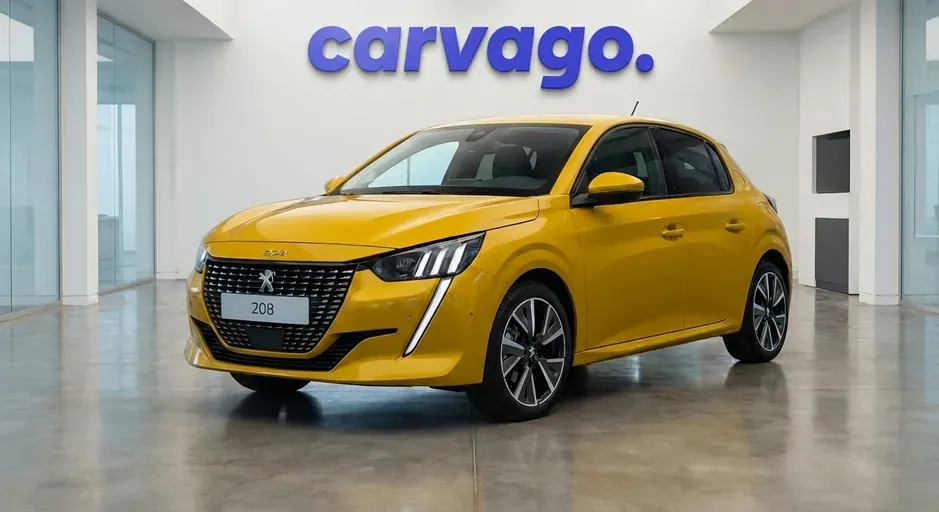
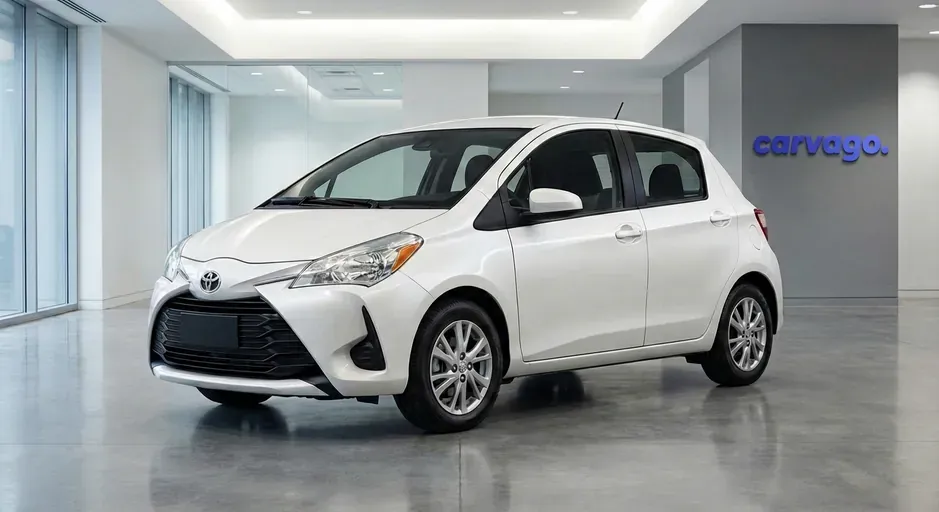
The Peugeot 208 represents the embodiment of French charm, bringing bold design and modern technology to the small city hatchback segment. Standing against it is the proven Toyota Yaris – a globally popular car historically known in some markets as the Toyota Vitz and, in its current generation, also sold in Europe under the sister name Mazda 2 Hybrid – which scores primarily with exceptional reliability and an advanced, economical powertrain. Let's take a detailed look at which of these roughly four-year-old models offers a better balance of price, everyday usability, and overall driving pleasure from a used car buyer's perspective.
When choosing the ideal city car on the used car market, typically cars around four years old, external dimensions play an absolutely crucial role. The second-generation Peugeot 208 and the Toyota Yaris designated XP21 represent two different philosophies of how to build a compact and agile hatchback. While the French representative bets on more dynamic proportions and a more elongated silhouette, the Japanese competitor takes the path of maximum space efficiency and the pursuit of the best possible maneuverability.
Looking at the overall length, the Peugeot 208, with its 4,055 mm, clearly has the upper hand – in standard versions, it is exactly 115 mm longer than the standard Toyota Yaris (3,940 mm). This difference gives the Peugeot a more mature look, but on the other hand, it means slightly less space when parallel parking in narrow streets. As for the width of the standard models, both cars are perfectly equal, sharing a value of 1,745 mm. Parking between other cars at a shopping center will thus be very similar with both hatchbacks. With the Toyota, you will encounter different dimensions only in the GR Yaris sports special, which is 60 mm wider and slightly longer thanks to its massive fenders.
An interesting situation arises when comparing height and wheelbase. The standard Toyota Yaris, at 1,500 mm, is a significant 70 mm taller than the Peugeot 208 (1,430 mm). The Toyota's taller body structure brings an indisputable advantage in easier entry and better visibility, which you will undoubtedly appreciate in daily traffic. Conversely, the Peugeot's low roof benefits aerodynamics and enhances its visually crouched stance. However, the absolutely key figure is the wheelbase. Although the Yaris is shorter on the outside, its wheels are pushed to the very corners of the body, giving it a wheelbase of 2,560 mm – 20 mm more than the Peugeot (2,540 mm). The Japanese model thus uses its footprint much more efficiently. From the perspective of daily urban mobility, the Toyota is the more agile choice, benefiting from shorter overhangs, while the Peugeot 208 targets drivers who prefer a distinctive, elongated design and a driving feel closer to higher-class vehicles.
| Parameter | Peugeot 208 Hatchback | Toyota Yaris Hatchback |
|---|---|---|
| Width (mm) | 1745 | 1745 - 1805 |
| Length (mm) | 4055 | 3940 - 3995 |
| Height (mm) | 1430 | 1455 - 1500 |
| Wheelbase (mm) | 2540 | 2560 |
When choosing a city hatchback, trunk capacity plays a surprisingly important role. Although these are compact cars primarily intended for city traffic, many buyers expect them to easily handle a larger weekend shopping trip or luggage transport for a long weekend. Space for a few extra suitcases or an easily foldable stroller can often be a deciding factor. Both the Peugeot 208 and Toyota Yaris approach interior space with a slightly different philosophy, which is reflected not only in absolute numbers but also in daily practical usability.
The French representative, the Peugeot 208 (in its 2nd generation, which is an ideal target for those interested in a roughly four-year-old used car), offers a solid trunk capacity of 309 liters in versions with a classic internal combustion engine. After fully folding down the rear seats, this space increases to an impressive 1004 liters, which is fully sufficient for weekend shopping or a longer holiday for two. However, it is necessary to mention the specifics of the fully electric version (e-208), where the installation of large batteries reduces the basic trunk capacity to 265 liters and the maximum volume to 960 liters. Despite a slightly higher loading sill, which is the price for the dynamic exterior design, the trunk of the combustion versions pleases with its relatively regular shape.
The Japanese Toyota Yaris (XP21 generation) maintains a consistent trunk capacity of 286 liters across standard engine options. Its main technological advantage is that even in the highly popular full-hybrid version, there is no loss of capacity – the batteries are cleverly placed under the rear seats so that users do not lose precious space. Compared to the combustion version of the Peugeot 208, the standard Yaris loses exactly 23 liters in its base configuration. After folding down the rear bench, the Japanese hatchback offers a maximum space of 935 liters. Although the Yaris is slightly smaller on paper, it makes up for it with excellent accessibility and smart interior layout. An interesting point for motorsport fans is the extreme sports version, the GR Yaris, where the trunk capacity has shrunk to just 141 liters due to the implementation of a sophisticated all-wheel-drive system.
| Parameter | Peugeot 208 Hatchback | Toyota Yaris Hatchback |
|---|---|---|
| Base volume (liters) | 265 - 309 | 141 - 286 |
| Max volume with seats folded down (liters) | 960 - 1004 | 935 |
While the Peugeot 208 with an internal combustion engine offers a slightly larger trunk in its base configuration, the Toyota Yaris scores points because its advanced hybrid technology does not cut into the interior space.
Trailer weight, or towing capacity, represents one of the key figures for drivers who plan to transport a utility trailer, bike rack, or even a smaller caravan behind their car. When comparing approximately four-year-old used cars – namely the second-generation Peugeot 208 and the Toyota Yaris XP21 generation – we find quite significant differences in this discipline, which can fundamentally influence your purchasing decision.
The Peugeot 208 is noticeably more capable in the area of towing. Most of its engines, including the popular 1.2 PureTech three-cylinder petrol engines (from 74 kW upwards), mild-hybrids, and the economical 1.5 BlueHDi diesel version, can tow a braked trailer with a maximum weight of up to 1,200 kg. A standard unbraked trailer for these more powerful versions reaches a typical capacity of around 580 kg. The only exception is the basic naturally aspirated 1.2 PureTech 75 engine, which is structurally limited to 500 kg for both types of trailers.
Conversely, the Toyota Yaris is designed more as a strictly city car with much more modest capabilities. Its absolute maximum is 850 kg for a braked trailer and 550 kg for an unbraked one, and that is only for the standard 1.5 Dynamic Force (92 kW) petrol version. The basic one-liter engine can tow a maximum of 750 kg. The most significant limitation is suffered by the very popular hybrid variants (1.5 Hybrid 116 and 130), which are widely represented on the used car market. Due to the specifics of the electrified powertrain, these have their towing capacity reduced across the board to just 450 kg, for both braked and unbraked trailers.
In practice, these differences mean that while the Peugeot 208 can easily haul a fully loaded trailer with firewood or construction materials or serve to tow a smaller caravan for a summer holiday, the hybrid Yaris offers a capacity limited to the lightest transport tasks. With it, you can count on at most space for a few extra suitcases in a light utility trailer, which is sufficient for weekend shopping or spring removal of garden waste. Thus, a tow bar is often installed on it primarily for the purpose of a bike rack. However, if the ability to tow medium-heavy loads is a priority for you, the Peugeot 208 is clearly the more practical and versatile choice of the two.
| Model and engine | Braked trailer (kg) | Unbraked trailer (kg) |
|---|---|---|
| Peugeot 208 1.2 PureTech 75 (55 kW) | 500 | 500 |
| Peugeot 208 1.2 PureTech / Hybrid (74–100 kW) | 1200 | 580 |
| Peugeot 208 1.5 BlueHDi 100 (75 kW) | 1200 | 580 |
| Toyota Yaris 1.0 (53 kW) | 750 | 550 |
| Toyota Yaris 1.5 (92 kW) | 850 | 550 |
| Toyota Yaris 1.5 Hybrid (68 kW) | 450 | 450 |
When choosing a roughly four-year-old used B-segment car, the Peugeot 208 (2nd generation) and Toyota Yaris (4th generation) represent two completely different approaches to propulsion, which has a fundamental impact on fuel consumption, purchase price, and typical use. While the French carmaker relies primarily on turbocharged three-cylinder petrol engines for the Peugeot 208 and also offers a fully electric variant, the Japanese Toyota Yaris is the uncrowned king of efficient full-hybrid technologies. The Peugeot's strength is its overall variety – it offers a quiet and affordable naturally aspirated base, more dynamic turbo engines, and even an economical diesel for long-distance drivers, making it a great all-rounder. However, its weakness can be slightly higher fuel consumption in conventional versions in heavy city traffic compared to the Japanese hybrid. Conversely, the Yaris, with its hybrid powertrain, crushes the competition with unattainable efficiency in the city, but motorway travelers will not find a classic diesel engine in its lineup. A peculiarity of both model ranges is the niche but technologically top-tier offering at the edges of the spectrum: the GR Yaris track special with all-wheel drive on one side, and the quiet, zero-emission Peugeot e-208 on the other.
The engine range for the second-generation Peugeot 208 (produced since 2019) relies primarily on 1.2 PureTech three-cylinder petrol engines. The standard is a naturally aspirated version with 55 kW, which is more suited to a calmer pace in the city. The turbocharged variants with 74 kW and 96 kW bring much more convincing dynamics to the lightweight car, and with the more powerful version, the option of pairing it with a comfortable eight-speed automatic (EAT8). A major advantage on the used car market from 2020 to 2022 is the presence of the 1.5 BlueHDi diesel engine with 74 kW. According to used car market data, however, its production was significantly scaled back and ended after 2023, making used examples highly sought-after items for people commuting long motorway distances. An alternative with no direct local emissions is the e-208 version featuring a 100kW electric motor, which provides the car with excellent linear pull.
| Engine type | Fuel | Power (kW) | Torque (Nm) | Transmission |
|---|---|---|---|---|
| 1.2 PureTech 75 | Petrol | 55 | 118 | 5MT |
| 1.2 PureTech 100 | Petrol | 74 | 205 | 6MT / 8AT |
| 1.2 PureTech 130 | Petrol | 96 | 230 | 8AT |
| 1.5 BlueHDi 100 | Diesel | 74 | 250 | 6MT |
| e-208 136 | Electric | 100 | 260 | 1AT |
Under the hood of the fourth-generation Toyota Yaris (offered since 2020), the engine portfolio is strictly subordinated to maximum operational efficiency. The absolute bestseller and cornerstone of the used car market is the 1.5 Hybrid 116 powertrain with a combined output of 85 kW, which utilizes a three-cylinder petrol engine, an electric motor, and an e-CVT planetary gearbox. For conservative drivers, Toyota also offered non-electrified variants in the early years of the generation – a 1.0-liter three-cylinder with 53 kW and a full-blooded 1.5 VVT-i with a very respectable 92 kW. However, these pure internal combustion units officially left the price lists for many European markets around 2023, so the market for roughly four-year-old used cars represents an ideal opportunity to acquire them. At the absolute top of the range sits the GR Yaris – a purist, radical "hot hatch" that extracts 192 kW from its turbocharged 1.6-liter engine and transfers it to the road via a six-speed manual and the advanced GR-FOUR all-wheel-drive system.
| Engine type | Fuel | Power (kW) | Torque (Nm) | Transmission |
|---|---|---|---|---|
| 1.0 VVT-i | Petrol | 53 | 93 | 5MT |
| 1.5 VVT-i | Petrol | 92 | 153 | 6MT / CVT |
| 1.5 Hybrid 116 | Hybrid | 85 | 120 | e-CVT |
| 1.6 Turbo (GR Yaris) | Petrol | 192 | 360 | 6MT |
If you are looking for a car primarily for the city and care about unbeatable fuel consumption and driving smoothness, the Toyota Yaris with its proven hybrid will be the clear choice, while the Peugeot 208 will better suit those seeking a more diverse range of powerful turbo engines and an economical diesel for motorway versatility.
Choosing the right engine is absolutely crucial for your long-term satisfaction. While the second-generation Peugeot 208 relies primarily on turbocharged three-cylinder engines with high torque and engaging dynamics, the Toyota Yaris is the uncrowned king of full-hybrid powertrains, offering unbeatable fuel economy, especially in city traffic. Both manufacturers approach efficiency differently – the French through downsizing and turbocharging, the Japanese through an exceptionally efficient naturally aspirated engine paired with an electric motor. Our recommendations for roughly four-year-old used cars are based on real-world experience, service reliability, and actual fuel consumption.
From the second-generation engine lineup (available since late 2019), the 100-horsepower 1.2 PureTech turbocharged three-cylinder is the best and most balanced choice. Compared to the weaker 75-hp naturally aspirated version, which is truly only suitable for the city, it offers significantly better dynamics thanks to the turbocharger and a decent 205 Nm of torque. In real-world driving, this engine maintains very favorable fuel consumption of around 5.5 to 6 liters per 100 km. It is perfect for versatile drivers – it handles city stop-and-go traffic with ease but isn't afraid of highway journeys either, especially if you find a unit paired with the very successful EAT8 eight-speed automatic transmission. The biggest known risk of this engine is the timing belt, which is "bathed" in oil. If proper maintenance is not followed or when driving very short distances where fuel dilutes the oil, the belt can begin to crumble. These particles then clog the oil pump's pickup screen, which can lead to fatal engine seizure. To minimize this risk, we strongly advise shortening the oil change interval to a maximum of 10,000 to 15,000 km (or 1 year) and using only the prescribed oil. When buying a used car, always insist that a mechanic checks the condition of the timing belt surface – fortunately, this can be checked relatively easily visually through the engine oil filler neck.
With the fourth-generation Yaris (XP21 generation, on sale since 2020), there is little point in experimenting too much with conventional internal combustion engines. The clear and by far the best choice is the legendary full-hybrid powertrain. The system, combining an efficient naturally aspirated three-cylinder with an electric motor and an electronically controlled transmission (e-CVT), is almost bulletproof in terms of reliability. This car absolutely excels in the city and on suburban routes, where real-world fuel consumption typically ranges between 3.5 and 4.5 liters per 100 km without any effort. It is an ideal car for daily commuting, for calmer drivers, and for those looking for maximum mechanical durability and minimum operating costs. Main risks and weaknesses for this powertrain practically do not exist in terms of expensive failures (the car has no clutch, starter, alternator, or complex transmission system). However, two things deserve your attention during selection and subsequent operation. First, when buying a used car, carefully check the rear brake discs. Because the hybrid brakes mostly through recuperation (the electric motor), the mechanical brakes are used sparingly and are very prone to rusting, which can cost an unwary buyer money for their premature replacement. Second, watch out for the standard 12V battery. If you only drive the hybrid Yaris on extremely short trips or if the car sits for a long time, it can discharge. The solution is to drive the car regularly or occasionally recharge the battery with an external charger.
Official fuel consumption figures, measured in ideal laboratory conditions, rarely match the reality of morning stop-and-go traffic or high-speed motorway journeys. To get the most accurate picture of operating costs, we rely on long-term user data from the independent community portal Spritmonitor.de. We focused on roughly four-year-old used cars, which means our search caught the current fourth-generation Toyota Yaris (XP21) and the second-generation Peugeot 208.
| Model and Engine | Average Consumption (l/100 km) |
|---|---|
| Toyota Yaris 1.5 Hybrid 116 | 3.8 |
| Peugeot 208 1.5 BlueHDi 100 | 4.1 |
| Toyota Yaris 1.5 Dynamic Force | 5.2 |
| Peugeot 208 1.2 PureTech 100 | 5.3 |
| Peugeot 208 1.2 PureTech 75 | 5.4 |
| Toyota Yaris 1.0 VVT-i | 5.6 |
Looking at the hard data, the absolute triumph of Japanese hybrid technology is immediately apparent. The Toyota Yaris with its 116 hp 1.5 full-hybrid powertrain is the uncrowned king of efficiency, reliably maintaining values around 3.8 litres per hundred kilometres in real-world traffic. On the side of the French lion, the biggest saver is the proven 1.5 BlueHDi 100 diesel engine, which is the only one capable of keeping up with the hybrid, albeit at the cost of the typically higher complexity of a diesel system and its emission components.
An interesting, yet technically understandable finding is the real-world behavior of the entry-level petrol engines. Small naturally aspirated three-cylinder engines (like the Yaris 1.0 VVT-i) or weaker non-turbocharged versions (Peugeot 208 1.2 PureTech 75) don't actually save much fuel in the real world. Drivers have to rev them significantly higher on hills and motorway slip roads to achieve acceptable dynamics. This explains why the turbocharged 1.2 PureTech 100 in the Peugeot, with a value of 5.3 l/100 km, is ultimately a tenth of a litre more efficient than its weaker, non-turbocharged sibling.
Is operational efficiency the main factor in choosing in this comparison? It certainly can be. If you are buying a car primarily for the urban jungle and shorter suburban routes, the financial savings and comfort of the Toyota Yaris Hybrid (around 3.8 l/100 km) represent a heavy-hitting argument. The petrol combustion variants of both cars otherwise differ in consumption only by negligible tenths of a litre. Your final choice should therefore be guided by your specific driving profile: the Yaris excels as an economical city companion, while the Peugeot 208, thanks to its reliable diesel, also performs excellently in the role of a car for long intercity journeys.
When choosing an approximately four-year-old used car (2021 and 2022 model years), we are talking about the current generations for both models – the P21 generation for Peugeot, while for Toyota, it's the generation designated XP210. Although they are direct competitors in the small city car segment, their price tags on the used car market clearly reflect different depreciation trends and demand for specific technologies.
The French hatchback is a very tempting choice for buyers on the secondary market. Peugeot experiences a slightly faster price drop in the first few years than its Japanese competition, making it a more affordable car.
The Toyota Yaris is an absolute phenomenon in used car dealerships in terms of "price resilience." Especially its famous hybrid versions maintain their residual value uncompromisingly high thanks to an excellent reputation for reliability.
| Engine / Drivetrain | Peugeot 208 | Toyota Yaris |
|---|---|---|
| Base petrol (manual) | €11,000 – €13,000 | €12,000 – €14,000 |
| More powerful petrol / automatic | €14,000 – €16,000 | €14,000 – €16,000 |
| Alternative drivetrain | €15,000 – €17,000 (e-208) | €15,000 – €17,000 (1.5 Hybrid) |
Market assessment:
For bargain hunters and those interested in a classic petrol engine, the Peugeot 208 represents an exceptionally smart buy. For an overall lower purchase price, you get an avant-garde design and often very generous equipment. Conversely, the Toyota Yaris will hurt a bit more at purchase (especially in the hybrid version), but in the long run, this disadvantage is 100% offset by very low depreciation. Once you want to pass it on after a few more years, you will get your invested funds back with much higher certainty.
If your priority is to get the best-equipped and cheapest car possible and you don't worry too much about selling it in the distant future, an approximately four-year-old Peugeot 208 represents great value for money. The Toyota Yaris, especially the hybrid one, requires a significantly higher initial investment, but it will reward you with minimal depreciation and unrivaled reliability.
Both cars have earned five-star Euro NCAP ratings in their history; however, it is crucial to emphasize the context and the specific year of testing for the generations currently being compared. The methodology of independent tests by the Euro NCAP association is constantly evolving and becoming more stringent. Therefore, percentage results or the number of stars from different years cannot be directly and simply compared. A vehicle that excelled under older rules would have to face much more demanding crash simulations and stricter requirements for active assistants in newer and more rigorous tests.
The current generation of the Peugeot 208, corresponding to roughly four-year-old used cars, underwent crash tests in 2019, where it received an overall four-star rating in its standard equipment. The reason it did not achieve the full five stars (which was the standard for the previous generation) was the stricter requirements for electronic safety assistants in the base trim. The standard Autonomous Emergency Braking (AEB) system relied solely on a camera and could not adequately react to faster-moving cyclists. However, the protection of the occupants themselves was rated at a very high level. Regarding the validity of the rating, it is important to mention that Euro NCAP certification typically expires after six years, and the 2019 Peugeot result thus officially lost its formal validity in 2025.
The Toyota Yaris underwent testing in 2020 and became the first car on the market to be evaluated according to the new, radically stricter protocols for that year. Under these tough conditions, it earned the full five stars. The Yaris was the first in its segment to undergo a new type of frontal impact with a moving deformable barrier and introduced an innovative center airbag, which protects the heads of front passengers from colliding with each other during a side impact. It also excelled with its advanced systems – the Toyota Safety Sense assistant was already able to reliably react to potential collisions at intersections. Given the current year 2026, Toyota's 2020 certification is reaching the end of its standard six-year cycle.
At a quick glance at the table, it might seem that the Peugeot 208 provides better adult protection at 91% than the Toyota Yaris at 86%. This is precisely where the treachery of comparing across different years fully manifests. Toyota's 86% score was achieved under substantially tougher conditions that simulated a collision with an oncoming vehicle in detail. Furthermore, the Yaris significantly pulls ahead in the protection of vulnerable road users and in the level of assistance systems. From the overall perspective of today's standards, the Toyota Yaris offers a clearly more modern and comprehensive safety package, both in terms of active and passive safety.
| Parameter | Peugeot 208 | Toyota Yaris |
|---|---|---|
| Year of testing | 2019 | 2020 |
| Adult occupant protection | 91 % | 86 % |
| Child occupant protection | 86 % | 81 % |
| Vulnerable road user protection | 56 % | 78 % |
| Safety assist systems | 71 % | 85 % |
Thanks to successfully passing significantly stricter tests in 2020 and the presence of a center airbag, the Toyota Yaris represents a more comprehensive and modern choice in terms of overall safety.
In addition to standard equipment, each of the models offers several unique features that can be decisive for the customer and bring unexpected added value to the small car segment.
With this model, Peugeot focused on a premium interior feel, technological innovation, and a style that is hard to match in the city car class.
With the fourth-generation Yaris, Toyota bet on maximum efficiency in city traffic, top-tier chassis rigidity, and safety equipment from cars two classes larger.
Attractive and distinctive exterior design that stands out in its class
High-quality materials in the cabin creating a more upscale to premium feel
Comfortably tuned chassis that filters out city bumps well
Wide range of powertrains including fuel-efficient diesels and the fully electric e-208 version
Larger luggage capacity (311 liters) compared to the Yaris
Specific ergonomics of the i-Cockpit layout (small steering wheel below the instruments) may not suit every driver
Cramped rear seat space and poorer access through narrower rear doors
More outdated infotainment with slower responses and more complex climate control via the display
Higher fuel consumption for gasoline engines in city traffic compared to hybrid competitors
The Peugeot 208 is an ideal choice for drivers looking for a stylish and comfortable city car with a touch of luxury. Thanks to its wide range of engines, it will satisfy both fans of classic internal combustion engines and those interested in switching to pure electromobility.
Top-tier long-term reliability and durability of the proven hybrid system
Extremely low fuel consumption, especially in heavy city traffic
Advanced safety equipment (Toyota Safety Sense package) as standard and a five-star Euro NCAP rating
Great handling and agile driving characteristics thanks to a very rigid body
Very good value retention and high residual value on the used car market
Smaller luggage compartment (286 liters) with a narrower opening
More pronounced noise from the three-cylinder engine and continuously variable transmission (e-CVT) during sharp acceleration
Predominantly hard plastics and overall more ordinary interior finish compared to French competitors
Higher purchase price on the used car market due to huge demand for hybrid versions
The Toyota Yaris will primarily appeal to rational buyers who demand maximum reliability, low operating costs, and top-tier safety. Its exceptionally efficient hybrid drive makes it an unbeatable city companion that also holds its value excellently.
Based on long-term tests, our own CarAudit inspections, ADAC breakdown statistics, and service reports, we have compiled an overview of the most common problems you should watch out for in both models at around four years of age.
The second-generation Peugeot 208 is a stylish and modern car, but its reliability depends heavily on the chosen engine and careful maintenance.
While Peugeot excels in terms of design, the popular 1.2 PureTech petrol engine requires meticulous care and shortened oil change intervals to prevent very expensive timing belt failures.
The fourth generation of the Toyota Yaris (since 2020) is considered the absolute benchmark for reliability in the small car segment, yet it has one very specific and frequently discussed weak point.
The powertrain as a whole is exemplarily reliable and maintenance-free, but hybrid owners must learn to live with the risk of a chronically discharging 12V battery during very short city trips.
When buying a used car, a thorough inspection is key. Although these are modern cars, here are several specific points you should focus on to avoid expensive service repairs.
The Peugeot 208 offers a slightly larger luggage compartment with a base volume of 309 liters. The Toyota Yaris, on the other hand, has a smaller trunk with a volume of 286 liters. While the difference isn't huge, it can play an important role when frequently transporting large grocery hauls or baby equipment.
The Toyota Yaris has long topped reliability rankings, primarily thanks to its sophisticated hybrid technology and durable naturally aspirated engines. The Peugeot 208 is generally solidly built; however, some PureTech gasoline engines require more careful maintenance and timing belt checks. For maximum peace of mind and trouble-free servicing, the Japanese model is therefore a slightly safer choice.
If you choose the hybrid version, the Toyota Yaris achieves a real-world city consumption of around 3.5 to 4 liters per 100 kilometers, which is hard to beat. The Peugeot 208 with conventional gasoline engines averages 5.5 liters, but as an alternative, it offers the fully electric e-208 variant for emission-free driving. For economical city commuting without the need for plug-in charging, the hybrid Yaris is the clear winner.
The Peugeot 208 provides slightly more legroom and shoulder room, and the cabin feels overall cozier. The Toyota Yaris has more cramped access to the rear, noticeably less headroom, and shorter seat cushions, which may not suit taller passengers.
Both manufacturers place great emphasis on passenger protection; however, the Japanese representative is a step ahead in passive safety. The fourth-generation Toyota Yaris earned a full five stars in the rigorous Euro NCAP tests and was the first car in its class to offer a center airbag. The Peugeot 208 achieved a very good four stars in its base trim, earning five stars only with the optional safety pack.
Sources: ADAC, aktualne.cz, idnes.cz, techfocus.cz, automagazin.cz, youngtimer.cz
This article was prepared using artificial intelligence tools. The section guarantor is Petr Dušek.
Detailed comparison: Opel Corsa vs. Škoda Fabia. Discover the differences in equipment, engines, and reliability. Real-world experiences to help you choose your used car.
Apr 24, 2026
Detailed comparison of the Hyundai i20 vs Renault Clio. Find out from real data which city hatchback offers better equipment and fuel economy. Read our verdict.
May 3, 2026
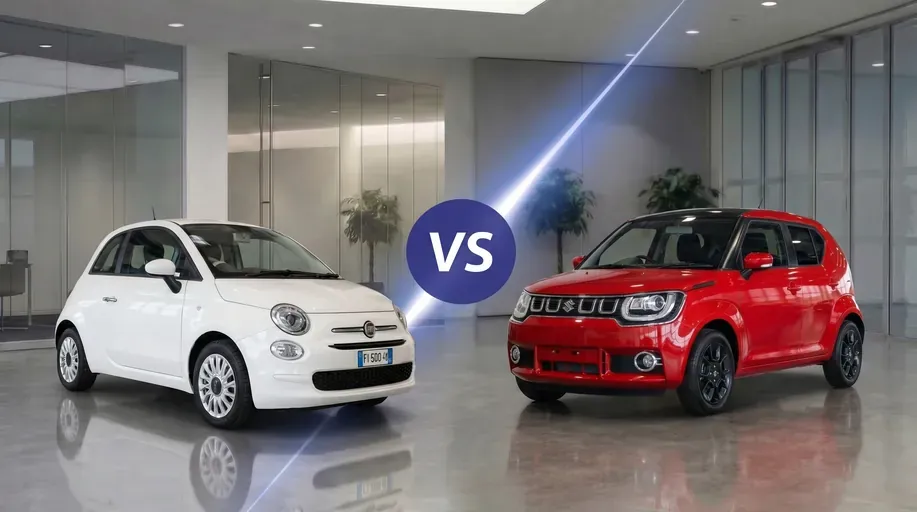
Detailed comparison: Fiat 500 vs Suzuki Ignis. We compared the Italian icon with the Japanese mini SUV. Discover the differences, fuel consumption, and verdict before buying a used car.
Apr 23, 2026