Review BMW řady 5: What do owners and experts really say?
BMW 5 Series (G60/G61) review: real owner experiences, practicality, running costs, and our expert verdict on the Saloon and Touring.
October 29, 2026
Verdict at a Glance
Who it suits: Long-distance business drivers and commuters seeking quiet, refined motorway cruising and passenger comfort.
Recommended engine: The 520d diesel for cost-effective highway travel, or the 530e plug-in hybrid for urban commuting with regular charging.
What to avoid: Any vehicle without documented recall repairs — verify brake module and wiring harness campaigns by VIN.
Introduction
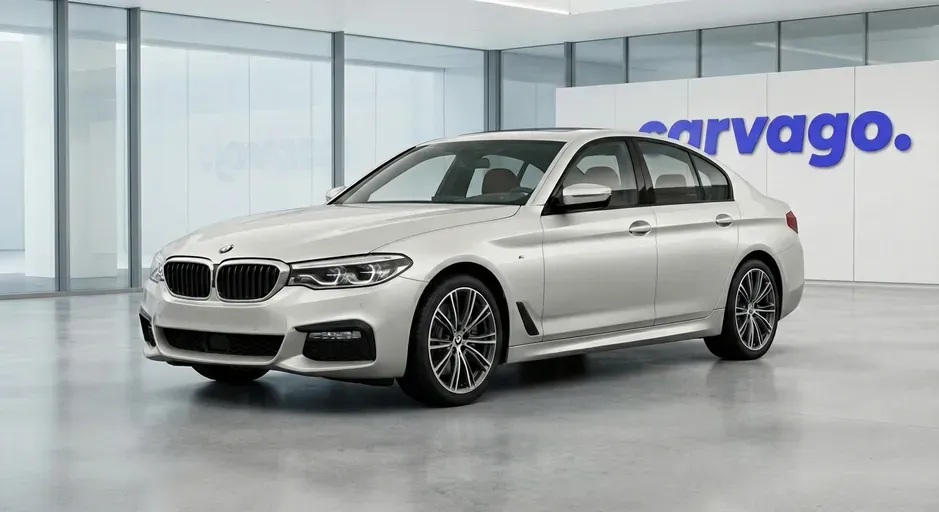
The BMW 5 Series sits at the core of the premium executive segment, aimed primarily at long-distance business drivers, corporate fleets, and families seeking high-mileage travel comfort. This review covers the eighth generation, manufactured at BMW's Dingolfing plant and sold across Europe in two body styles: the four-door BMW 5 Series Saloon (code G60) and the five-door BMW 5 Series Touring estate (code G61).
Sedan production began in July 2023, with first European customer deliveries taking place in October 2023. Plug-in hybrid options joined the saloon range in November 2023. The Touring opened for orders in February 2024 and reached European showrooms in May 2024, followed by additional diesel and hybrid variants in July 2024.
As of late 2026, the eighth generation has received no mid-cycle facelift. BMW has instead maintained the lineup through rolling model-year updates, most notably a package of interior equipment revisions and electric powertrain efficiency upgrades implemented in March 2025. Available with mild-hybrid petrol and diesel engines, plug-in hybrids, and all-electric variants, the model competes directly against long-standing German executive rivals.
Owner Experiences: Common Faults and Recalls
With customer deliveries commencing in late 2023 for the Saloon and spring 2024 for the Touring estate, long-term reliability for the eighth-generation BMW 5 Series is not yet established. Early ownership data centers primarily on factory remedial campaigns and teething issues within the onboard electronics.
Several significant European safety recalls affect vehicles produced across the first two production years:
Recall Campaign
Affected Production Window
Scope
Workshop Remedy
Integrated Brake System (IBS)
June 2022 to August 2024
Worldwide (approx. 1.5 million vehicles across models)
Diagnostic software update; replacement of hydraulic-electronic brake control module if flagged
Steering Spindle Universal Joint
June 2024 to September 2024
Worldwide (21,955 vehicles)
Inspection and replacement of the double universal joint assembly
Inspection and tightening or replacement of the positive starter-generator connection
Cockpit Wiring Harness Routing
June 2022 to December 2025
Worldwide (337,374 vehicles across models)
Inspection of wiring near cabin microfilter; fitment of protective edge clip or harness repair
The most widespread campaign involves the Continental integrated brake-by-wire module. Signal disruptions caused by internal board soldering anomalies can disable power brake assistance, anti-lock brakes, and stability control. Mechanical braking remains intact, but pedal effort and travel increase substantially, requiring immediate driver caution.
A later recall announced in early 2026 addresses potential wiring chafe behind the dashboard near the interior microfilter housing. Chafing caused during filter replacements can trigger an electrical short circuit and fire hazard. For cars that have already undergone a microfilter service, official guidance advises against running unattended remote cabin pre-conditioning via the smartphone app until inspected. Meanwhile, the mild-hybrid recall specifically addresses the diesel BMW 5 Series and petrol models, where a loose terminal connection on the 48-volt starter-generator can cause an abrupt engine stall while driving.
Beyond formal safety notices, tests describe and owners report intermittent stability issues with BMW Operating System 8.5. The curved display can occasionally freeze or reboot upon start-up, temporarily disabling access to the touchscreen-integrated climate controls and causing drops in wireless smartphone mirroring. Dealer software reprogramming from late 2024 onward resolved most occurrences, though isolated cases required replacement of the central head unit.
On the plug-in hybrid BMW 5 Series and electric variants, owners frequently report sticking motorized charging flaps and fuel filler doors. A faulty locking solenoid fails to release when unlocking the car, requiring manual intervention via the emergency release cord inside the luggage compartment; replacing the actuator motor typically resolves the issue.
🔍 What to check before buying
Verify Open Recall Status by VIN: Contact an authorized dealer or verify via national registers whether the brake control module, steering universal joint, and cockpit wiring harness campaigns have been completed on the specific car.
Test Central Display and Climate Access: Power up the infotainment from a cold start to ensure the curved touchscreen operates without lag, reboots, or connectivity dropouts when adjusting ventilation controls.
Inspect Remote Connectivity and Telematics: Check that remote services sync with the vehicle and ensure emergency call functions show no instrument cluster warnings.
Check Flap Release Mechanisms: On plug-in hybrid and electric versions, cycle the vehicle locks several times to confirm the motorized charging flap and fuel door release smoothly without sticking.
Examine Suspension Leveling on Hybrids: For plug-in models, verify that the rear self-leveling air bellows maintain height evenly and do not sag after sitting parked. Independent verification of technical condition can also be arranged through CarAudit.
Engines: Which One to Choose
The eighth-generation BMW 5 Series features an extensively electrified powertrain lineup across saloon and estate body styles, encompassing 48-volt mild-hybrid combustion engines, plug-in hybrids, and fully electric drive units. All internal combustion and hybrid variants come paired with an eight-speed automatic transmission as standard.
Engine
Fuel
Power
Transmission
Drivetrain
Model years
520i
Petrol Mild Hybrid
153 kW (208 hp)
8-speed automatic
RWD
2024–present
520d
Diesel Mild Hybrid
145 kW (197 hp)
8-speed automatic
RWD
2024–present
520d xDrive
Diesel Mild Hybrid
145 kW (197 hp)
8-speed automatic
AWD
2024–present
540d xDrive
Diesel Mild Hybrid
223 kW (303 hp)
8-speed automatic
AWD
2025–present
530e
Petrol Plug-in Hybrid
220 kW (299 hp)
8-speed automatic
RWD
2024–present
530e xDrive
Petrol Plug-in Hybrid
220 kW (299 hp)
8-speed automatic
AWD
2025–present
550e xDrive
Petrol Plug-in Hybrid
360 kW (489 hp)
8-speed automatic
AWD
2024–present
M5
Petrol Plug-in Hybrid
535 kW (727 hp)
8-speed automatic
AWD
2025–present
i5 eDrive40
Electric
250 kW (340 hp)
Single-speed automatic
RWD
2024–present
i5 xDrive40
Electric
290 kW (394 hp)
Single-speed automatic
AWD
2024–present
i5 M60 xDrive
Electric
442 kW (601 hp)
Single-speed automatic
AWD
2024–present
Which Engine to Choose
For frequent short trips and urban commuting, the electric BMW 5 Series models or the four-cylinder hybrid BMW 5 Series 530e represent the most logical choices. Drivers with access to regular home or workplace charging can complete daily local journeys purely on electric power, sparing combustion hardware the thermal stress of short-distance operation.
For mixed driving without dedicated charging facilities, the mild-hybrid petrol 520i offers quiet operation and predictable running costs. Its integrated starter-generator provides smooth low-speed pull away from stops, though high-speed motorway overtakes require the transmission to downshift multiple ratios to access upper engine speeds.
For regular long-distance motorway travel, the diesel BMW 5 Series variants deliver the greatest cruising autonomy. The four-cylinder 520d combines strong low-rpm tractability with low open-road fuel burn, making it the most cost-effective option for high-mileage business use. Drivers seeking higher overtaking reserves and six-cylinder mechanical refinement will find the 540d xDrive better suited to sustained autobahn cruising. The six-cylinder 550e xDrive plug-in hybrid also delivers substantial performance on fast routes, provided the battery is recharged between trips.
For towing duties, the all-wheel-drive diesels are the primary recommendation. Both the 520d xDrive and six-cylinder 540d xDrive provide the steady low-end pulling power and all-weather traction best suited to pulling heavy trailers or horseboxes without straining the driveline.
For reported component issues, software behaviour, and verified safety campaigns across these powertrains, refer to the owner experiences section.
Space & Practicality
Parameter
Saloon
Touring
Length (mm)
5,060
5,060
Width (mm)
1,900
1,900
Height (mm)
1,515
1,515
Wheelbase (mm)
2,995
2,995
Boot volume (l)
520 (electric: 490)
570
Maximum boot volume (l)
—
1,700
Exterior dimensions do not apply to dedicated high-performance M5 variants.
The outer rear seats in the BMW 5 Series provide ample knee room and thigh support for tall adults. However, a wide central floor tunnel restricts foot placement for a middle passenger, and floor-level battery packaging in all-electric models limits toe space beneath the front seat frames. Both body styles feature a fixed rear bench without fore-and-aft sliding adjustment, though a 40:20:40 split-folding backrest allows long items to pass through between seated passengers. For cargo versatility, the BMW 5 Series Touring adds luggage-compartment release levers to fold the rear backrests flat, alongside dedicated underfloor recesses designed to stow the cargo blind and partition net. The estate tailgate operates solely as a single lifting unit without independent rear window access. In the BMW 5 Series Saloon, underfloor battery packaging preserves a level luggage floor, ensuring plug-in hybrid variants match the cargo capacity of purely combustion-powered versions.
What the Tests Say
Professional road tests characterize the BMW 5 Series as a relaxed, long-distance cruiser that prioritises high-speed isolation over traditional driver involvement. On open motorways, the chassis settles into a calm, composed rhythm with well-contained body roll. Low-speed urban manners, however, divide reviewers: both the standard passive suspension and the firmer optional sports setup struggle to filter out sharp road imperfections, feeling restless over potholes and transverse expansion joints. Steering response is prompt, yet testers consistently note that the wheel feels artificial, light, and devoid of road texture. Acoustic suppression earns widespread praise, keeping wind roar, tyre rumble, and engine vibration thoroughly isolated from the cabin.
Inside, the curved display creates a distinctive environment, but the shift to touch-focused controls receives widespread criticism. Relocating climate functions into nested infotainment menus and touch-sensitive sliders makes simple cabin adjustments awkward on the move. Testers also highlight noticeable material cost-cutting relative to earlier generations, drawing attention to plain hard plastics on lower door panels, unlined sun visors, and unadorned window switches.
Professional verdicts agree strongly on the quietness of the passenger cell and the detached nature of the steering. They differ mainly on ride quality, where relaxed cruising composure stands in contrast to a firm, fidgety secondary ride over broken city asphalt.
Prices and Market Offer
All market charts in this section reflect advertised listings across the wider BMW 5 Series model family, including multiple generations represented in the data rather than exclusively the newest generation. Because these figures span overlapping production cycles, this dataset does not establish a separate price level for the reviewed generation alone. Across the active catalogue, the median asking price ranges from €30,000 for 2019 models to €73,000 for 2026 models, with 2023 cars standing at a median of €45,500. Individual listings vary according to powertrain choice, equipment, and verified maintenance history.
The chart traces the number of active BMW 5 Series listings advertised each month from April to September 2026, starting at 7,058 and decreasing to 6,121.
BMW řady 5 - availability over time
Active listings over time
Month
BMW řady 5
2026-04
7 058
2026-05
6 777
2026-06
6 678
2026-07
6 631
2026-08
6 171
2026-09
6 121
Source Carvago
Advertised supply decreased consistently over these six months, but with 6,121 cars on offer at the end of the span, buyers still have an extensive selection to choose from.
The median asking price of cars advertised today is €30,000 for models built in 2019, compared to €73,000 for models built in 2026.
BMW řady 5 - median price by model year
Median advertised price by year of manufacture
Model year
BMW řady 5
2019
30 000
2020
34 000
2021
37 000
2022
38 500
2023
45 500
2024
56 900
2025
60 500
2026
73 000
Source Carvago
Buyers considering 2020 models see a median asking price of €34,000, whereas 2022 models are listed at a median asking price of €38,500, and 2024 models stand at €56,900.
This depreciation curve illustrates how the model's residual value falls with vehicle age, shedding nearly 23 % in the first year alone. By year three, cumulative value loss reaches 48 % of the initial level.
BMW řady 5 - value loss by age
Residual value by vehicle age
Vehicle age
BMW řady 5
New
83 000
1 yr
64 300
2 yrs
55 800
3 yrs
43 000
4 yrs
38 500
5 yrs
35 000
6 yrs
31 100
7 yrs
27 300
Source Carvago
Over seven years, the model sheds approximately 67 % of its starting value. The steepest declines occur during the first three years, after which year-over-year value loss moderates to between 9 % and 12 % annually.
The count of advertised cars shows how available inventory is divided among powertrains, opening in April 2026 with 2,635 petrol and 2,629 hybrid vehicles. The chart below tracks how each fuel type progressed across the six-month period.
BMW řady 5 - supply by fuel over time
Supply composition by fuel type
Petrol
Diesel
Hybrid
Month
Petrol
Diesel
Hybrid
2026-04
2 635
1 787
2 629
2026-05
2 289
1 886
2 590
2026-06
2 262
1 940
2 468
2026-07
2 341
1 890
2 391
2026-08
2 174
1 631
2 357
2026-09
2 099
1 621
2 392
Source Carvago
In September 2026, hybrids made up the largest group of available cars with 2,392 listings, followed by 2,099 petrol and 1,621 diesel options. Buyers will find ample choice across all three powertrains on the market, whereas electric models recorded 0 listings throughout.
The chart tracks the average asking price from April 2026 to September 2026, opening at €36,400 and edging to €36,900 in May 2026.
BMW řady 5 - price trend over time
Average price development over time
Month
BMW řady 5
2026-04
36 400
2026-05
36 900
2026-06
36 500
2026-07
36 400
2026-08
37 700
2026-09
37 800
Source Carvago
The average dipped back to €36,400 in July 2026 before rising to finish at €37,800 in September 2026, representing an overall change of less than four percent across the six months.
Composed high-speed cruising with thorough cabin acoustic suppression
Diverse powertrain range, including frugal long-distance diesels and capable plug-in hybrids
Ample rear-seat legroom and full luggage capacity preserved on hybrid saloons
Cons
Fidgety low-speed secondary ride over potholes and sharp road imperfections
Climate functions relocated into touchscreen menus alongside occasional infotainment reboots
Significant early factory recalls covering braking, steering, and electrical wiring (check by VIN)
Frequently asked questions
Is the eighth-generation 5 Series reliable?
Long-term reliability for the eighth-generation BMW 5 Series is not yet established due to its recent introduction, though early builds require verifying recall completion by VIN. Minor touchscreen software freezing can also occur on vehicles that have not received recent dealer updates.
Which engine is best for long-distance travel?
For high-mileage motorway cruising, the diesel BMW 5 Series variants offer the greatest range and lowest fuel burn, led by the four-cylinder 520d. Urban commuters should instead consider a plug-in hybrid or electric version to minimise short-trip wear on combustion components.
Does the Touring estate feature an independently opening rear window?
No, the BMW 5 Series Touring omits this traditional feature in favour of a conventional single-piece lifting tailgate. All cargo loading requires opening the complete tailgate assembly.
What should you check before buying a used model?
Verify through an authorized dealer by VIN that all recall campaigns have been fully completed on the vehicle. Additionally, test the central display from a cold start to ensure climate menus operate smoothly without freezing.