Review
Review Porsche 911: What do owners and experts really say?
Porsche 911 (992) review: real owner experience, 992.1 vs 992.2 changes, running costs, reliability and prices — everything before you buy.
Oct 25, 2026
Audi R8 (Type 4S) review: real owner experience, V10 running costs, common faults and used prices — everything you need before you buy.
November 5, 2026
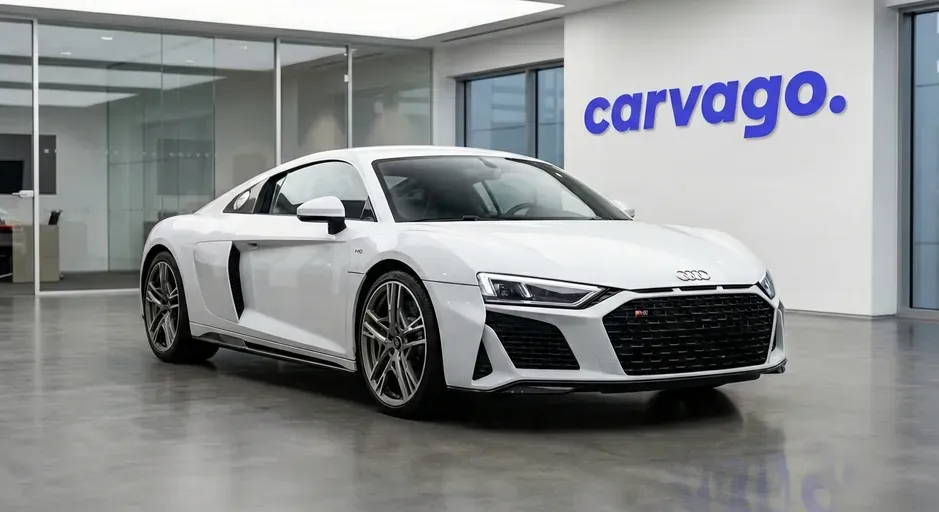
The Audi R8 represents the pinnacle of the brand's road-going performance, competing directly in the mid-engine supercar segment against established rivals. This review focuses exclusively on the second generation (Type 4S). European customer deliveries of the Audi R8 Coupé commenced in late 2015, followed by the open-top Audi R8 Spyder in late 2016. Production at the Böllinger Höfe facility ran until 22 March 2024, when the model was retired with no subsequent generation delivered.
Audi unveiled a mid-cycle facelift on 24 October 2018, with European customer deliveries getting underway in early 2019. The update introduced sharpened front and rear styling, suspension and steering adjustments, and particulate filters to meet stricter emissions standards, followed later by the addition of series-production rear-wheel-drive variants.
Offered strictly as a two-seater Coupé or fabric-roofed Spyder, the second-generation R8 attracts buyers looking for the distinctive character of a naturally aspirated mid-mounted engine combined with all-weather traction and functional daily road manners.
The second-generation Audi R8 established a notably stronger reliability record than its predecessor. Its naturally aspirated V10 combines high-pressure direct fuel injection with port injection, which washes the intake runners and prevents the severe carbon build-up on intake valves seen on older designs. However, owner reports and specialist workshop findings highlight several recurring mechanical and electronic issues across both the Audi R8 Coupé and the open-top Audi R8 Spyder.
Active suspension dampers represent one of the most frequent owner complaints. Owners report fluid weeping past the shaft seals on models fitted with the optional or standard Audi Magnetic Ride system. Thermal cycling and road impacts cause hydraulic misting or fluid pooling on the shock bodies, leading to degraded damping consistency, harsh secondary ride compliance, and suspension warning messages. As a result, some owners permanently resolve the issue by installing aftermarket passive coilover kits. Versions built with standard steel suspension or rear-wheel drive do not have this system and remain unaffected.
Exhaust system hardware also experiences recurring problems. On cars equipped with the factory sports exhaust, owners report that the butterfly valve spindles in the rear silencer boxes tend to bind or seize due to road grime and intense heat. This causes mechanical rattling, failure of the valves to respond to console commands, and stored electronic fault codes. The issue became more prominent following an authority-mandated engine control software update that keeps the flaps closed across wider speed ranges, allowing soot to accumulate on inactive spindles. While cleaning the pivots provides temporary relief, seized internal bushings or stripped actuators require replacing the actuator or the entire rear exhaust assembly.
The drivetrain requires strict adherence to servicing schedules. Owners report low-speed clutch shudder or hesitation when crawling in traffic if dual-clutch transmission fluid changes are postponed, or if the car has undergone repeated launch-control starts. On all-wheel-drive variants, degraded lubricant in the electro-hydraulically controlled front axle clutch causes noticeable binding or tyre scrubbing when turning at full steering lock during parking manoeuvres. In most cases, replacing the gearbox and differential fluids alongside an electronic clutch adaptation reset cures the shudder. To verify maintenance records and confirm running-gear condition, prospective buyers can arrange an independent physical inspection via CarAudit.
Safety campaigns monitored by European authorities have addressed specific fire risks, noise regulations, and safety equipment:
| Announcement | Affected Production Window | European Scope & Stated Defect | Workshop Remedy |
|---|---|---|---|
| September 2018 | June 2015 – October 2017 | Transmission fluid leakage from the gearbox breather hose during high speeds, creating a fire risk (UK: 968 vehicles; Germany: 1,925 vehicles) | Replace single breather hose with an updated double ventilation assembly |
| April 2022 | 2020 – 2021 | Insufficient factory transmission fluid causing drive power loss and potential fire risk (Germany: 7 vehicles; worldwide restricted batch) | Inspect and top up dual-clutch transmission fluid volume to factory specification |
| May 2023 | 2015 – 2018 | Impermissible noise generation under official pass-by noise regulations (Germany: 1,956 vehicles; worldwide: 5,021 vehicles) | Reprogram engine control units to adjust exhaust flap control logic |
| February 2026 | 2013 – 2017 | Driver airbag propellant degradation risking metal fragment detachment upon deployment (UK: 676 vehicles; Germany/worldwide campaign) | Replace driver frontal airbag module with an updated unit |
The second-generation Audi R8 was delivered exclusively with a mid-mounted, naturally aspirated 5.2 FSI V10 petrol engine paired with a dual-clutch automatic transmission. Across its production run, buyers could select between all-wheel drive and rear-wheel drive configurations in both Coupé and open-top Spyder form.
| Engine | Fuel | Power | Drivetrain | Gearbox | Model years |
|---|---|---|---|---|---|
| 5.2 FSI V10 quattro | Petrol | 397 kW (540 hp) | All-wheel drive | 7-speed automatic | 2015–2018 |
| 5.2 FSI V10 plus quattro | Petrol | 449 kW (610 hp) | All-wheel drive | 7-speed automatic | 2015–2018 |
| 5.2 FSI V10 quattro | Petrol | 419 kW (570 hp) | All-wheel drive | 7-speed automatic | 2019–2021 |
| 5.2 FSI V10 performance quattro | Petrol | 456 kW (620 hp) | All-wheel drive | 7-speed automatic | 2019–2024 |
| 5.2 FSI V10 RWD | Petrol | 397 kW (540 hp) | Rear-wheel drive | 7-speed automatic | 2020–2021 |
| 5.2 FSI V10 performance RWD | Petrol | 419 kW (570 hp) | Rear-wheel drive | 7-speed automatic | 2021–2024 |
As a used car, each powertrain variant serves distinct driving requirements:
For detailed information on component wear, factory service campaigns, and known mechanical vulnerabilities affecting the powertrain, refer to the owner experiences section.
| Dimension | Coupé | Spyder |
|---|---|---|
| Length (mm) | 4,426–4,429 | 4,426–4,429 |
| Width excluding mirrors (mm) | 1,940 | 1,940 |
| Height (mm) | 1,236–1,240 | 1,240–1,244 |
| Wheelbase (mm) | 2,650 | 2,650 |
| Front boot volume (l) | 112 | 112 |
| Rear luggage shelf volume (l) | 226 | 0 |
Note: Exterior dimensions exclude the limited-run GT variant, which features extended aerodynamic bodywork.
As a mid-engine sports car, the second-generation Audi R8 Coupé features a strict two-seat cockpit with a fixed rear bulkhead separating the seats from the engine bay, leaving no accommodation for rear passengers or through-loading. Cabin space offers sufficient legroom and headroom for tall adults, ensuring a comfortable seating position on longer journeys.
Practicality centers on two distinct storage areas. The deep front luggage compartment accommodates a standard flight-size trolley case or soft weekend bags. Inside the coupé, an elevated rear luggage shelf positioned directly behind the seats provides room for coats, briefcases, or additional soft bags. Choosing the Audi R8 Spyder sacrifices this internal parcel shelf to house the folding soft-top mechanism, leaving the front compartment as the car's sole dedicated luggage space.
Professional evaluations consistently highlight the split personality of the second-generation Audi R8. On passive dampers and standard wheels, the chassis demonstrates unexpected compliance over uneven asphalt, whereas track-biased setups with stiffer springs produce a fidgety, unyielding low-speed ride. While all-wheel-drive versions deliver strong grip and all-weather composure, early tests found the optional dynamic steering artificial and erratic off-centre; the standard electromechanical rack proved far more progressive and predictable. Powertrain acoustics earn uniform praise, although tyre roar permeates the cabin over coarse surfaces.
The mid-cycle update resolved several chassis criticisms. Recalibrated adaptive damping broadened the gap between comfort and performance settings, while revised steering software restored on-centre stability and linearity.
Inside, assembly quality and the tactile simplicity of the rotary climate controls integrated into the air vents draw approval. Where testers disagree with the layout is the complete omission of a central infotainment display: channelling media and navigation exclusively into the digital instrument cluster clutters the driver's display and excludes the passenger. Seating choice also dictates usability, as track-focused fixed-back buckets cause lumbar fatigue on long journeys compared to the standard sport seats, while plastic steering-wheel paddles feel out of place in an exotic cockpit.
All the charts in this section are drawn from Carvago's listings of the whole Audi R8 model family, including other generations represented in the data, not only the reviewed generation. Consequently, this dataset does not establish a separate price level solely for the reviewed generation. The median asking price stands at €124,000 for 2018 models and €139,000 for 2020 cars, reaching €180,000 for vehicles registered in 2025 where final production runs and higher-output powertrains shape the advertised offer.
Between May and October 2026, active Audi R8 listings fluctuated within a moderate range, starting at 337 and peaking at 354 in July. The chart below details how the monthly count developed across this period.
Active listings over time
| Month | Audi R8 |
|---|---|
| 2026-05 | 337 |
| 2026-06 | 351 |
| 2026-07 | 354 |
| 2026-08 | 331 |
| 2026-09 | 335 |
| 2026-10 | 303 |
Source Carvago
Buyers generally have access to around 300 to 350 vehicles on the market at a time, though total choice contracted to a low of 303 listings by October 2026.
Among used listings advertised today, the median asking price for cars built in 2018 is €124,000, while the median asking price of cars advertised today registered in 2025 is €180,000.
Median advertised price by year of manufacture
| Model year | Audi R8 |
|---|---|
| 2018 | 124 000 |
| 2019 | 138 000 |
| 2020 | 139 000 |
| 2021 | 139 000 |
| 2022 | 151 000 |
| 2023 | 175 000 |
| 2024 | 179 800 |
| 2025 | 180 000 |
Source Carvago
Buyers targeting 2020 and 2021 model years see an identical median asking price of €139,000. For newer examples, median asking prices reach €175,000 for 2023 models and €179,800 for 2024 models.
Between May 2026 and October 2026, advertised listings were dominated by petrol cars, moving from 337 in May to 302 in October. The monthly counts across each powertrain are detailed in the chart below.
Supply composition by fuel type
Petrol
Diesel
| Month | Petrol | Diesel |
|---|---|---|
| 2026-05 | 337 | 0 |
| 2026-06 | 351 | 0 |
| 2026-07 | 354 | 0 |
| 2026-08 | 330 | 1 |
| 2026-09 | 334 | 1 |
| 2026-10 | 302 | 1 |
Source Carvago
In October 2026, the selection stood at 302 petrol listings alongside 1 diesel listing, with no other fuel types represented. Anyone searching for this model will realistically be choosing almost exclusively from petrol-powered options.
The chart tracks the average asking price for the model family between May 2026 and October 2026, starting at €136,800 and reaching €137,900 the following month.
Average price development over time
| Month | Audi R8 |
|---|---|
| 2026-05 | 136 800 |
| 2026-06 | 137 900 |
| 2026-07 | 134 700 |
| 2026-08 | 135 700 |
| 2026-09 | 135 600 |
| 2026-10 | 136 300 |
Source Carvago
Prices fluctuated within a narrow band across the period, dipping to €134,700 in July 2026 before finishing at €136,300, representing a net shift of less than 1%.
Characterful, high-revving naturally aspirated V10 powertrain
Dependable all-weather traction and composure from all-wheel-drive versions
Comfortable cabin ergonomics and straightforward rotary climate controls
Fluid leaks on optional adaptive magnetic dampers requiring expensive replacement
Limited luggage space, further restricted on Spyder models lacking the rear shelf
Absence of a central dashboard screen clutters the driver display and excludes the passenger
The naturally aspirated V10 demonstrates strong mechanical durability because its dual-injection system prevents intake valve carbon build-up. However, models fitted with optional or standard adaptive dampers frequently suffer hydraulic fluid leaks over time.
The all-wheel-drive Audi R8 provides dependable traction in wet or cold conditions, making it the most composed setup for everyday touring. Rear-wheel-drive versions deliver sharper steering response on dry roads, though they require greater throttle caution in poor weather.
Confirm through an authorized dealer that all safety recalls have been completed by VIN. Buyers should also inspect the adaptive dampers for fluid leaks and verify smooth low-speed transmission engagement during test drives.
Both body styles provide a front luggage compartment sized for a cabin suitcase, with the Audi R8 Coupé adding an internal parcel shelf behind the seats for extra bags. The Spyder loses that interior shelf entirely to house its folding soft top.
Sources: press.audi.co.uk, audi.com, kba.de, check-vehicle-recalls.service.gov.uk, autocar.co.uk
This article was prepared using artificial intelligence tools. The section guarantor is Petr Dušek.
Porsche 911 (992) review: real owner experience, 992.1 vs 992.2 changes, running costs, reliability and prices — everything before you buy.
Oct 25, 2026
A major comparison of the Mercedes-AMG C 63 Coupé and the Porsche 718 Cayman. We reveal the differences in performance, driving characteristics, and equipment. Which sports coupé to choose?
Oct 16, 2026

Mazda MX-5 ND review: real owner experience, engine picks, reliability, running costs and used prices. Get the full verdict before you buy.
Oct 18, 2026