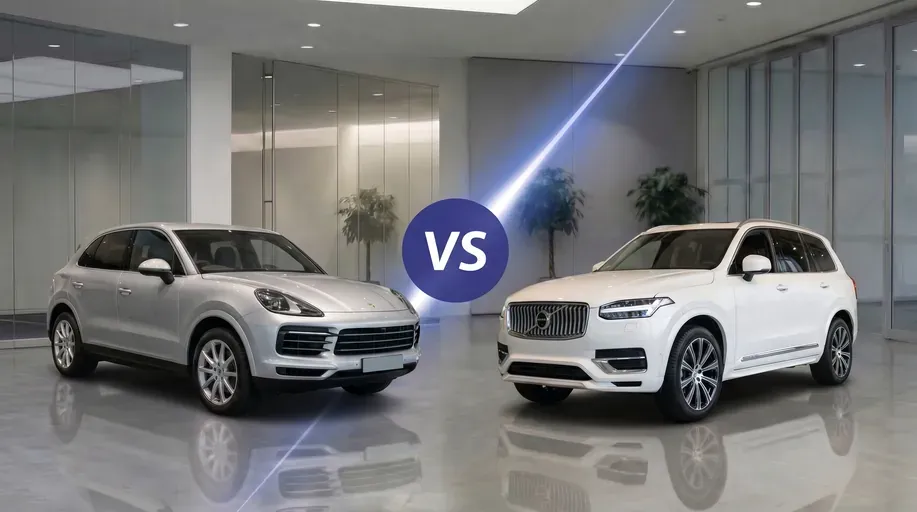
Car battle
Porsche Cayenne vs. Volvo XC90: Complete comparison 2026
Detailed comparison of Porsche Cayenne vs Volvo XC90. Find out which of these premium SUVs offers better performance, comfort, and operating costs as a used car.
Apr 22, 2026
Audi Q8 review: real owner experience, engine picks, practicality, running costs and used prices — everything you need before you buy.
October 22, 2026
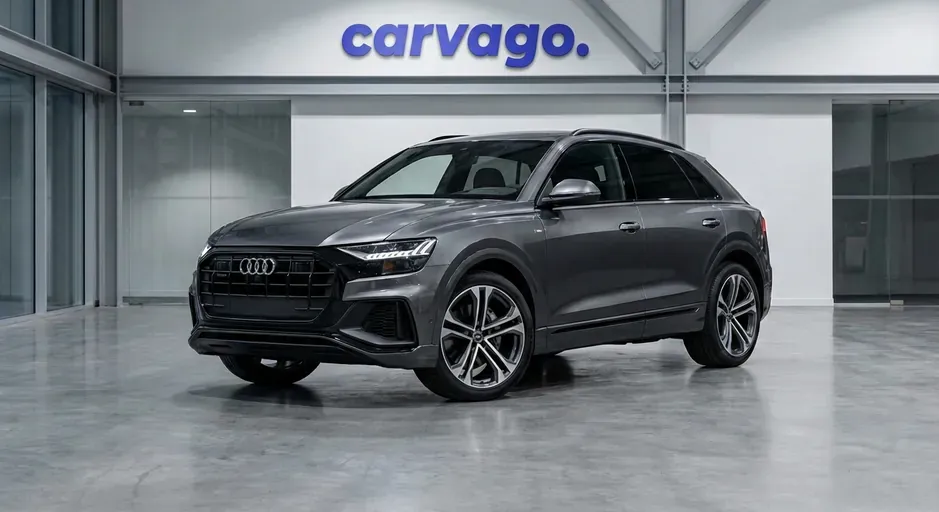
The Audi Q8 sits at the top of the brand's sport utility line-up as a design-led coupé-SUV, featuring a lower roofline and frameless door glass compared to the upright Q7. This review focuses on the first-generation model (internal code Typ 4M / 4MN), built in Bratislava, Slovakia, from June 2018 to the present day. It covers the combustion and plug-in hybrid variants, which remain mechanically distinct from the separate battery-electric Q8 e-tron line.
European customer deliveries commenced in August 2018, with additional petrol and diesel six-cylinder options arriving in February 2019 and plug-in hybrids joining the European order books in October 2020. Upgraded plug-in hybrid variants arrived in April 2024, followed by refreshed high-performance models in June 2024.
The Audi Q8 SUV primarily targets long-distance commuters and family buyers who require high towing limits, standard all-wheel drive, and an elevated seating position, but prefer a tapered silhouette over the boxy proportions and three-row layout of a conventional utility vehicle.
Real-world ownership of the first-generation Audi Q8 reveals a vehicle with substantial mechanical refinement, alongside a few documented electrical and calibration quirks. Because it shares Volkswagen Group MLB Evo underpinnings with other full-size luxury SUVs, the mechanical chassis hardware is durable. However, complex 48-volt mild-hybrid systems and strict initial emission calibrations on early production years have generated repeated discussions across owner forums and specialist workshops.
On mild-hybrid variants—which include both petrol Audi Q8 and diesel Audi Q8 V6 and V8 engines—owners frequently report electrical failure of the liquid-cooled 48-volt belt alternator-starter. An internal failure in its power electronics triggers an instrument cluster warning alerting the driver to an electrical system malfunction. Once the starter-alternator ceases power generation, the direct-current converter stops recharging the 12-volt onboard network, depleting the auxiliary battery shortly thereafter. In some cases, this causes engine shutdown, loss of power steering assistance, and prevents restarting. Workshops address this by installing an updated factory alternator-starter hardware revision alongside control software adaptation. This issue does not affect the plug-in hybrid variants, which do not utilize this 48-volt belt alternator-starter.
Professional tests and owners of early 2018 to 2020 V6 diesel models describe a pronounced hesitation when accelerating from a rolling stop, such as entering roundabouts or yielding at junctions. The delay stems from the interplay between coasting engine-off start-stop programming and transmission downshift logic configured for emission compliance. Manufacturers released control unit software updates that noticeably reduce low-speed hesitation. Nevertheless, tests note that a slight delay remains an inherent calibration characteristic in standard driving mode, which drivers can suppress by shifting the automatic transmission into its sport setting.
Routine wear on any used Audi Q8 is dominated by running gear. Given the vehicle's substantial kerb weight, inner shoulder tyre wear is common on models fitted with large 20- to 22-inch wheels. Heavy vehicle mass also accelerates brake disc lipping. In addition, owners report occasional wind rustle at motorway speeds if the frameless side window seals or door glass indexing mechanisms fall out of alignment.
Official safety authorities across the European Union have issued several recall campaigns for the first-generation Audi Q8.
| Production Window | Reach | Affected Component & Defect | Remedy |
|---|---|---|---|
| 07 Nov 2019 – 16 Apr 2021 | Worldwide (approx. 41,000 vehicles) | Rear axle trailing arm lock nuts may fail due to stress corrosion cracking, causing suspension play and altering rear wheel alignment. | Workshop replaces lock nuts and bolts with optimized parts, inspects alignment, and replaces unevenly worn rear tyres. |
| July 2020 – September 2020 | European Union | Faulty front door crash sensors may impair the deployment of side airbags, curtain airbags, or seat belt tensioners. | Workshop inspects and replaces the crash sensors in both front doors. |
| 11 Aug 2023 – 19 Dec 2023 | Worldwide (3,598 vehicles) | Front left side airbag is insufficiently secured to the seat frame, which may prevent correct deployment in an accident. | Workshop inspects and correctly fastens the airbag module to the seat frame. |
| 22 Aug 2019 – 31 Jul 2024 | Worldwide (18,652 plug-in hybrids) | Cell modules of the high-voltage battery on plug-in hybrid Audi Q8 models could overheat during charging, presenting a fire hazard. | Workshop installs a battery management software update for enhanced temperature monitoring; damaged cell modules are replaced. |
| Late 2024 – 2025 | European Union / Worldwide | High-pressure fuel pump on the V8 petrol RS Q8 may not be correctly affixed to the cylinder head, creating a fuel leak and fire risk. | Workshop tightens mounting bolts to specification and replaces fuel line seals where required. |
| 17 Mar 2025 – 30 Jul 2025 | Worldwide (1,539 vehicles) | Missing fastening element between front seat belt buckle and strap may reduce occupant restraint in heavy braking or a crash. | Workshop replaces both front seat belt buckles. |
When shopping on the secondary market, verifying whether recall work has been documented in official service logs is critical. If you are assessing a prospective vehicle from a distance, having the car thoroughly inspected before delivery through a professional service like CarAudit ensures all hardware modifications, control unit updates, and chassis components are vetted.
The first-generation Audi Q8 features an all-wheel-drive powertrain line-up comprising six- and eight-cylinder engines paired exclusively with an automatic transmission. The selection spans mild-hybrid diesels, turbocharged petrol units, plug-in hybrids, and high-output performance V8 configurations.
| Engine | Fuel | Power | Gearbox | Model years |
|---|---|---|---|---|
| 45 TDI quattro | Diesel | 170 kW (231 hp) | 8-speed automatic | 2019–present |
| 50 TDI quattro | Diesel | 210 kW (286 hp) | 8-speed automatic | 2018–present |
| 55 TFSI quattro | Petrol | 250 kW (340 hp) | 8-speed automatic | 2019–present |
| SQ8 TDI quattro | Diesel | 320 kW (435 hp) | 8-speed automatic | 2019–2020 |
| SQ8 TFSI quattro | Petrol | 373 kW (507 hp) | 8-speed automatic | 2020–present |
| 55 TFSI e quattro | Petrol plug-in hybrid | 280 kW (381 hp) | 8-speed automatic | 2020–2024 |
| 55 TFSI e quattro | Petrol plug-in hybrid | 290 kW (394 hp) | 8-speed automatic | 2024–present |
| 60 TFSI e quattro | Petrol plug-in hybrid | 340 kW (462 hp) | 8-speed automatic | 2020–2024 |
| 60 TFSI e quattro | Petrol plug-in hybrid | 360 kW (490 hp) | 8-speed automatic | 2024–present |
| RS Q8 quattro | Petrol | 441 kW (600 hp) | 8-speed automatic | 2019–present |
| RS Q8 performance quattro | Petrol | 471 kW (640 hp) | 8-speed automatic | 2024–present |
For long-distance motorway travel and heavy trailer towing, the diesel Audi Q8 options remain the most suitable match. The 50 TDI provides substantial pulling strength for sustained cruising under load, while the 45 TDI serves as an adequate entry point. Buyers considering the early V8 SQ8 TDI as a used car gain immense low-end pulling power, though its European availability ended in autumn 2020.
For mixed driving and suburban commuting, the six-cylinder petrol Audi Q8 55 TFSI delivers smooth revving and more immediate off-the-line throttle response than the early diesels. However, spirited driving or heavier loads will cause fuel consumption to rise noticeably faster than in a TDI.
Drivers who primarily cover short urban trips and have regular access to charging infrastructure will find the hybrid Audi Q8 plug-in variants (55 TFSI e and 60 TFSI e) well aligned with local running.
The petrol V8 models—consisting of the SQ8 TFSI, RS Q8, and RS Q8 performance—target buyers seeking sports-car acceleration and an assertive exhaust note, accepting high fuel demand as the trade-off.
For an assessment of known mechanical issues, 48-volt mild-hybrid component longevity, and official safety recalls, refer to the owner experiences section.
| Version | Length (mm) | Width (mm) | Height (mm) | Wheelbase (mm) | Boot volume upright / folded (l) |
|---|---|---|---|---|---|
| Audi Q8 (ICE) | 4,986–4,992 | 1,995 | 1,697–1,705 | 2,995–2,998 | 605 / 1,755 |
| Audi Q8 TFSI e (PHEV) | 4,986–4,992 | 1,995 | 1,697–1,705 | 2,995–2,998 | 439–505 / 1,589–1,625 |
Note: Dimensions reflect standard bodywork across pre-facelift and facelift versions; performance-oriented variants measure slightly longer and wider due to dedicated bumpers and wheel arches. Plug-in hybrid luggage capacity is reduced by the high-voltage battery.
Despite its rakish roofline, the Audi Q8 SUV provides ample headroom and legroom in the rear, easily accommodating tall adults on the outer seats without the feeling of confinement typical of coupé crossovers. Practicality is aided by split-folding rear backrests that drop forward to create a flat loading surface. Vehicles specified with the optional sliding rear bench allow passengers to move the seat sections forward to prioritize cargo capacity or recline the backrests for extra relaxation on longer journeys. In daily use, the Audi Q8 offers a wide luggage compartment with practical tethering points, though the high loading lip demands an awkward lift when stowing heavier cargo, and choosing a plug-in hybrid reduces cargo volume and forfeits underfloor storage entirely.
On open motorways, the Audi Q8 delivers steady cruising comfort when equipped with adaptive air suspension—which is optional on base versions and standard on higher-performance models—backed by hushed suppression of wind and road noise. At lower urban speeds, however, testers note a firmer edge, with broken tarmac causing noticeable jitter when fitted with larger optional wheels. Handling remains secure with restrained body lean in corners. While the steering provides accurate placement, it communicates little road texture, leaving the car feeling detached rather than engaging. Optional all-wheel steering and active roll stabilization noticeably improve low-speed manoeuvrability and mid-corner poise.
Inside, testers commend the tight panel fit and high-grade cabin materials. The interior remains quiet on long trips, though the dual-touchscreen infotainment architecture receives criticism for demanding visual attention away from the road, compounded by lower touch controls that lack the positive tactile feel of physical switches. The extensive gloss-black surfaces also collect dust and fingerprints. Professional reviews agree on the cabin refinement and structural integrity, but divide on dynamic character; some view the chassis as clinical and uninvolving, whereas others appreciate its predictable stability. The mid-cycle facelift brought revised lighting and subtle digital updates, leaving the established ride balance, chassis traits, and screen-heavy ergonomics unchanged.
All market charts in this section are drawn from listings of the entire Audi Q8 model family represented on Carvago, rather than solely the reviewed generation, and this data does not establish a separate price level for the reviewed generation alone. Across the advertised model years, the median asking price stands at €56,000 for 2019 cars and €99,800 for 2026 cars. Listings for 2023 cars show a median asking price of €68,100, while 2024 examples sit at €83,900, where differences reflect lower accumulated mileage, exterior revisions, and varied optional packages.
Active listings for the Audi Q8 stood at 5,721 in April 2026 and reached 5,967 by September 2026. The monthly figures below show how the volume of advertised vehicles fluctuated across these six months.
Active listings over time
| Month | Audi Q8 |
|---|---|
| 2026-04 | 5 721 |
| 2026-05 | 5 872 |
| 2026-06 | 5 723 |
| 2026-07 | 5 674 |
| 2026-08 | 5 515 |
| 2026-09 | 5 967 |
Source Carvago
With inventory remaining between 5,515 and 5,967 vehicles each month, buyers have had a broad and relatively steady selection of cars to browse across the entire period.
Across current listings, the median asking price of cars advertised today spans from €56,000 for vehicles built in 2019 to €99,800 for those built in 2026. The price differences remain relatively modest between early production years before stepping up more sharply between 2023 and 2024 models, as shown in the breakdown below.
Median advertised price by year of manufacture
| Model year | Audi Q8 |
|---|---|
| 2019 | 56 000 |
| 2020 | 58 000 |
| 2021 | 60 000 |
| 2022 | 63 000 |
| 2023 | 68 100 |
| 2024 | 83 900 |
| 2025 | 92 000 |
| 2026 | 99 800 |
Source Carvago
Buyers focusing on 2019 to 2021 models see median asking prices between €56,000 and €60,000, whereas 2024 to 2026 models command median prices from €83,900 to €99,800.
This depreciation curve illustrates how the Audi Q8 loses value with vehicle age. The sharpest drop occurs over the first two years, with the model shedding 18% of its residual value by age one and 39% by age two.
Residual value by vehicle age
| Vehicle age | Audi Q8 |
|---|---|
| New | 102 500 |
| 1 yr | 83 700 |
| 2 yrs | 62 300 |
| 3 yrs | 57 100 |
| 4 yrs | 56 900 |
| 5 yrs | 53 500 |
| 6 yrs | 49 100 |
| 7 yrs | 49 100 |
Source Carvago
Across the seven years shown, the model sheds 52% of its residual value overall, with the pace of depreciation slowing considerably after the steep initial two-year decline. The curve flattens out entirely between age six and age seven, where values remain unchanged.
Between April 2026 and September 2026, advertised listings showed distinct volume differences across powertrains, opening with 2,971 diesel and 480 petrol vehicles in April 2026. The chart illustrates how advertised numbers for each fuel type shifted across this period.
Supply composition by fuel type
Petrol
Diesel
Hybrid
Electric
| Month | Petrol | Diesel | Hybrid | Electric |
|---|---|---|---|---|
| 2026-04 | 480 | 2 971 | 1 113 | 1 148 |
| 2026-05 | 436 | 3 089 | 1 200 | 1 144 |
| 2026-06 | 448 | 3 003 | 1 133 | 1 138 |
| 2026-07 | 476 | 2 828 | 1 120 | 1 249 |
| 2026-08 | 457 | 2 630 | 1 069 | 1 357 |
| 2026-09 | 472 | 2 826 | 1 129 | 1 538 |
Source Carvago
In September 2026, diesel was the most abundant powertrain on offer with 2,826 listings, followed by 1,538 electric and 1,129 hybrid models. Buyers will find by far the widest selection among diesel variants, whereas petrol models, with 472 listings, offer the narrowest pool of choice.
Between April 2026 and September 2026, the average asking price for the Audi Q8 opened at €69,800 before reaching €70,100 in May, as tracked in the chart below.
Average price development over time
| Month | Audi Q8 |
|---|---|
| 2026-04 | 69 800 |
| 2026-05 | 70 100 |
| 2026-06 | 69 200 |
| 2026-07 | 68 000 |
| 2026-08 | 67 000 |
| 2026-09 | 66 700 |
Source Carvago
Values then softened over each of the following months to finish at €66,700 in September 2026, reflecting an overall decline of roughly 4% across the period.
Ample rear headroom and legroom for tall adults despite the coupé roofline
Steady motorway cruising comfort and quiet cabin when equipped with adaptive air suspension
High-grade interior materials with robust structural fit and finish
Known electrical failures of the 48-volt starter-alternator on mild-hybrid engines
Pronounced acceleration hesitation from rolling stops on early V6 diesel models
Distracting dual-touchscreen layout that lacks physical tactile feedback
The Audi Q8 features durable chassis underpinnings, but mild-hybrid petrol and diesel models frequently suffer from 48-volt belt alternator-starter failure, which leads to total electrical shutdown. Plug-in hybrids avoid this specific component, though buyers of any variant should confirm that factory recall campaigns have been completed.
The diesel Audi Q8 50 TDI offers the best blend of long-distance cruising comfort and towing strength, provided early 2018–2020 cars have received transmission software updates to reduce throttle hesitation. For suburban use, the petrol 55 TFSI delivers smoother low-speed response, though fuel consumption rises noticeably under load.
Verify official service records by VIN to ensure all safety recalls have been completed, or have the vehicle independently inspected through CarAudit. In addition, inspect tyres and brake discs for accelerated wear, and verify that the air suspension holds its height evenly overnight.
The Audi Q8 SUV provides ample headroom and legroom for adults on the rear seats, aided by an available sliding rear bench. However, the high loading lip makes lifting heavy luggage awkward, and plug-in hybrid variants forfeit underfloor storage while reducing boot capacity.
Sources: audi.com, adac.de, ec.europa.eu, autocar.co.uk, autoexpress.co.uk
This article was prepared using artificial intelligence tools. The section guarantor is Petr Dušek.
Detailed comparison of Porsche Cayenne vs Volvo XC90. Find out which of these premium SUVs offers better performance, comfort, and operating costs as a used car.
Apr 22, 2026
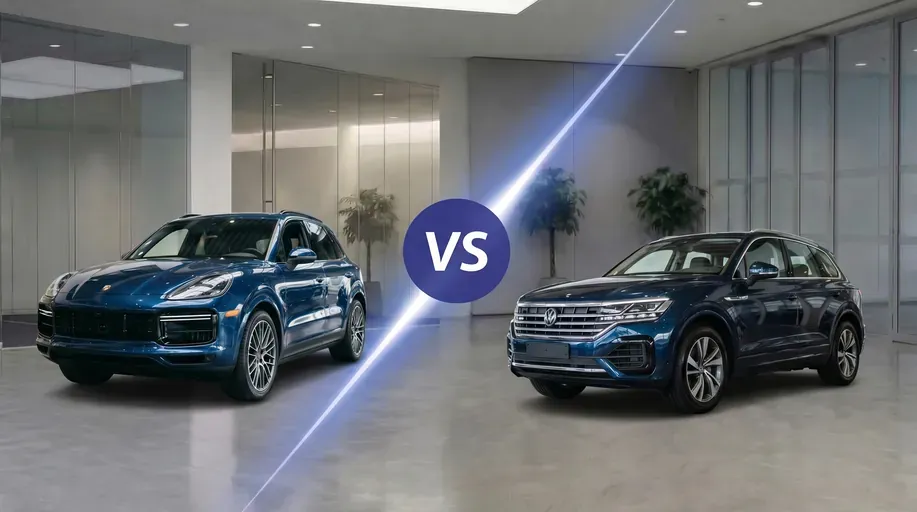
Comparison of premium SUVs: Porsche Cayenne vs. Volkswagen Touareg. A detailed look at performance, reliability, features, and real-world experience. Choose the right one for you!
Apr 27, 2026
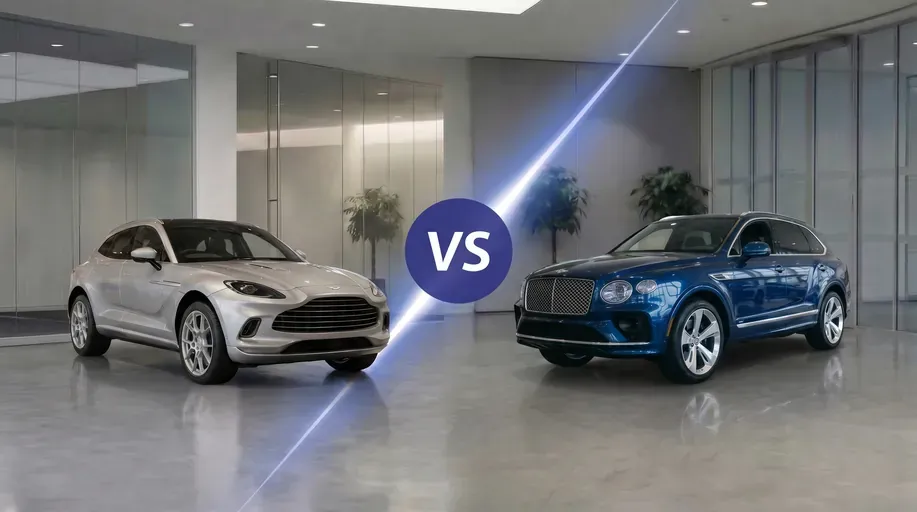
Detailed comparison of Aston Martin DBX vs Bentley Bentayga. Discover the differences in performance or luxury and read our verdict for choosing the best SUV.
Oct 16, 2026