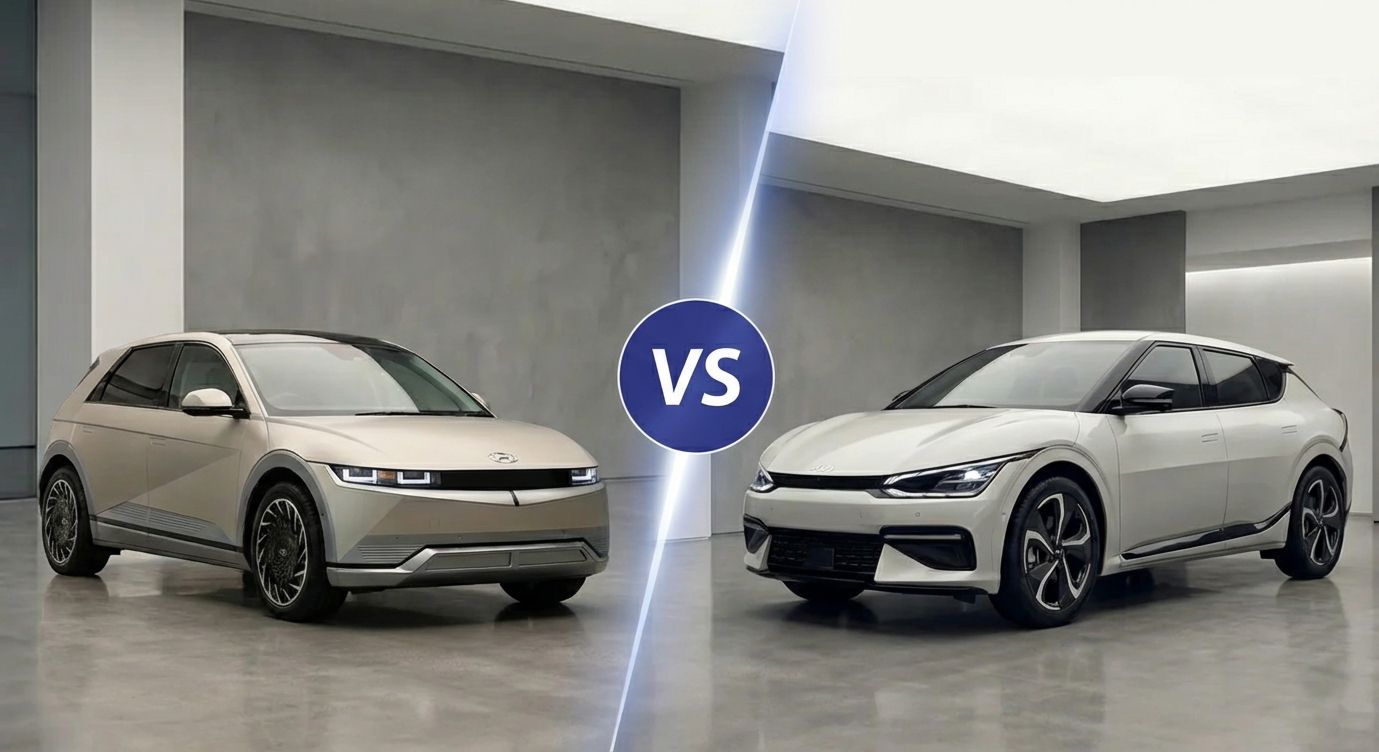
Car battle
Hyundai Ioniq 5 vs. Kia EV6: Complete Comparison 2026
Hyundai Ioniq 5 vs. Kia EV6: Which electric car is better? A detailed comparison of range, technology, and price to help you make the right decision.
Oct 23, 2026
Articles
Review
Audi Q4 e-tron review: real owner insights, battery range, common faults, running costs and used prices — key advice before you buy.
October 21, 2026
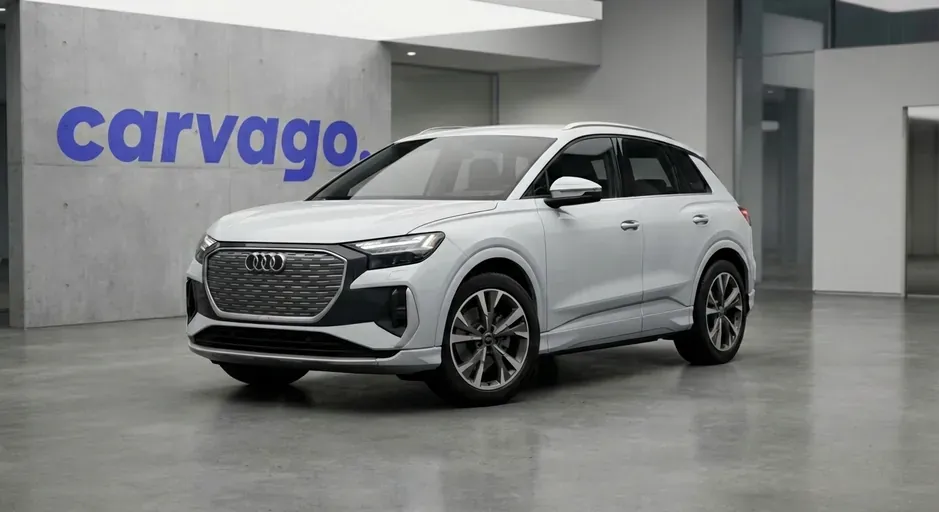
The Audi Q4 e-tron represents the manufacturer's entry into the premium compact electric crossover segment, developed on the Volkswagen Group MEB architecture. Series production began on 23 March 2021 in Zwickau, Germany, with European customer deliveries commencing in June 2021 for the standard Audi Q4 e-tron SUV and in October 2021 for the sloping-roofline Sportback. This review covers the first generation (Type F4), which remains in series production for Model Year 2026.
Instead of an external styling redesign, Audi introduced a major technical revision unveiled in September 2023 for Model Year 2024. This brought a more efficient rear electric motor, optimized battery thermal management, and revised suspension tuning, while renaming the core offerings to the rear-wheel-drive 45 e-tron and all-wheel-drive 55 e-tron quattro. A further revision in July 2024 reintroduced the entry-level 35 e-tron alongside an updated infotainment system.
Available in both practical SUV and aerodynamically focused Sportback body styles, the Q4 e-tron targets private family buyers and company-car drivers seeking zero-emission daily transport with manageable exterior dimensions suited to urban commuting.
Real-world ownership of the Audi Q4 e-tron shows a vehicle that is mechanically robust in its core electric propulsion, but early production years required repeated visits to workshops to resolve software glitches, auxiliary electrical bugs, and component-level assembly faults.
On cars manufactured from 2021 through 2023, owners report recurring issues with the central touchscreen. Symptoms include display freezes, reboot loops, black screens on start-up, and delayed initialization of the reversing camera. While holding down the volume control can force a temporary restart, resolving the freezing permanently requires dealer-installed software updates or, in stubborn cases, physical replacement of the central infotainment control unit.
Another frequent complaint documented by owners and tests involves the charging port door. The motorized flap actuator can stick or refuse to unlatch, preventing access to the charging sockets, or fail to release the charging cable after a session. Pulling the manual emergency release cord located inside the luggage compartment has caused the plastic cord to snap in some instances. In some cases, resolving this fault requires replacing the motorized latch actuator assembly.
Tests also describe sensitivity faults in the capacitive steering wheel rim. Drivers report false visual and acoustic warnings demanding hands on the wheel despite maintaining a firm grip, which causes the travel assist and adaptive cruise control systems to disengage. Owners report that rectifying this issue requires replacing the entire steering wheel rim containing the sensor mat. Furthermore, some owners describe unexpected discharge of the 12-volt auxiliary battery while parked. Because a flat 12-volt battery prevents the high-voltage contactors from closing, the vehicle can become unresponsive until jumped or towed, a problem resolved through revised power-management software and replacement auxiliary batteries.
Several safety recalls have been issued across European markets for the Audi Q4:
Before committing to a specific used car, having its maintenance history and prior repairs verified by a professional service like CarAudit provides clarity on whether all factory campaigns were completed.
Built on Volkswagen Group's MEB platform, the Audi Q4 e-tron is offered exclusively with battery-electric powertrains paired with a single-speed automatic transmission. The line-up includes single-motor rear-wheel-drive variants alongside dual-motor all-wheel-drive configurations, receiving an updated motor and thermal management package in September 2023.
| Engine | Fuel | Power | Drivetrain | Gearbox | Model years |
|---|---|---|---|---|---|
| Q4 35 e-tron | Electric | 125 kW (170 hp) | Rear-wheel drive | Single-speed automatic | 2021–2022, 2024–present |
| Q4 40 e-tron | Electric | 150 kW (204 hp) | Rear-wheel drive | Single-speed automatic | 2021–2023 |
| Q4 40 e-tron | Electric | 150 kW (204 hp) | Rear-wheel drive | Single-speed automatic | 2025–present |
| Q4 45 e-tron quattro | Electric | 195 kW (265 hp) | All-wheel drive | Single-speed automatic | 2021–2023 |
| Q4 45 e-tron | Electric | 210 kW (286 hp) | Rear-wheel drive | Single-speed automatic | 2023–present |
| Q4 45 e-tron quattro | Electric | 210 kW (286 hp) | All-wheel drive | Single-speed automatic | 2023–present |
| Q4 50 e-tron quattro | Electric | 220 kW (299 hp) | All-wheel drive | Single-speed automatic | 2021–2023 |
| Q4 55 e-tron quattro | Electric | 250 kW (340 hp) | All-wheel drive | Single-speed automatic | 2023–present |
For drivers seeking an urban runabout for short commutes and errands, the entry-level Q4 35 e-tron is sensible as a used car purchase, though tests note its smaller battery pack and modest power leave it breathless during fast open-road overtaking.
For mixed commuting and routine long-distance travel, the pre-facelift rear-wheel-drive Q4 40 e-tron represents a balanced choice on the secondary market. However, for newer production years, the single-motor Q4 45 e-tron introduced in September 2023 is the primary recommendation. Its revised rear electric motor resolves the mid-range lethargy of older rear-drive variants, delivering brisk roll-on passing power without carrying the weight and consumption penalty of a front electric drive unit.
Drivers operating regularly in winter climates or requiring extra towing capability should look at the all-wheel-drive Audi Q4 e-tron quattro options, which provide higher towing capacities and reliable traction on slippery gradients. The earlier dual-motor Q4 45 e-tron quattro and Q4 50 e-tron quattro carry extra weight over single-motor variants, while the current Q4 55 e-tron quattro delivers rapid straight-line acceleration that exceeds the practical requirements of most family crossovers.
For recurring electrical defects, low-voltage battery faults, and European safety recalls affecting these powertrains, consult the owner experiences section.
Owners report that colder seasonal temperatures have a pronounced effect on operational range, with winter highway driving increasing consumption and reducing distance between charges by roughly a third compared to warm-weather use. Early models built between 2021 and September 2023 lacked route-linked and manual battery preconditioning, which owners note leads to throttled DC fast-charging speeds when arriving at rapid chargers in low ambient temperatures. Models produced following the September 2023 update resolved this bottleneck by incorporating automated and manual battery pre-warming.
| Dimension / Capacity | Q4 e-tron (SUV) | Q4 Sportback e-tron |
|---|---|---|
| Length (mm) | 4,588 | 4,588 |
| Width excl. mirrors (mm) | 1,865 | 1,865 |
| Height (mm) | 1,632 | 1,614 |
| Wheelbase (mm) | 2,764 | 2,764 |
| Boot volume – upright seats (l) | 520 | 535 |
| Boot volume – folded seats (l) | 1,490 | 1,460 |
Figures apply to standard suspension; models with sports suspension sit lower, while the optional sound system with a subwoofer reduces underfloor storage.
Thanks to its dedicated electric architecture, the Audi Q4 e-tron packages cabin space effectively within a compact footprint. Without a central transmission tunnel, the rear floor is completely flat, providing adult passengers with ample foot and knee clearance across the rear bench. The rear seat itself is fixed rather than sliding, though the split backrests fold down to create a virtually flat load surface for larger cargo.
While the standard Audi Q4 e-tron SUV provides ample rear headroom, the sleeker sloping roofline of the Sportback marginally reduces headroom for taller rear occupants. Neither variant offers an under-bonnet front trunk, which means charging cables must reside in the rear cargo area or beneath the variable luggage floor. Practical touches include deep door bins with integrated bottle holders, though the absence of dedicated cable storage up front remains an everyday compromise when travelling with a fully packed boot.
Road tests show that ride quality in the Audi Q4 e-tron depends heavily on chassis choice. On standard suspension or optional adaptive dampers, the car absorbs road imperfections smoothly and settles into a composed cruise. In contrast, optional sports suspension paired with larger wheels introduces low-speed fidget over broken surfaces. Steering is light and accurate with a tight turning circle, delivering predictable roadholding rather than driver involvement. Cabin acoustic isolation is strong, with wind and motor noise well suppressed, though coarse asphalt causes tyre drumming on larger wheels.
Interior ergonomics draw contrasting reactions. Testers consistently praise the physical climate buttons over the touch sliders found in platform siblings. The digital displays are clear, but capacitive touch-sensitive pads on the steering wheel prove prone to accidental activation. While upper cabin surfaces feel sturdy, scratchy plastics on the lower dashboard and door trims draw criticism.
Testers agree that the Audi Q4 e-tron SUV is an easy-going long-distance cruiser, but disagree on whether cabin finishes justify its price premium over mainstream stablemates. Early models also showed chassis instability during severe evasive manoeuvres. The subsequent update resolved this with revised steering calibration and retuned damping, providing secure emergency stability, sharper directional control, and reduced electric motor whine under load.
All market charts in this section are drawn from Carvago listings across the entire Audi Q4 model family, so they do not establish a separate price level exclusively for the reviewed generation. On the secondary market today, early examples show a median asking price of €31,900 for 2021 cars and €30,700 for 2022 models. Asking figures step up on later builds, recording a median of €47,800 for 2024 and reaching €58,100 for 2026 vehicles. Across these model years, buyers frequently place the highest value on rear-wheel-drive specifications fitted with the larger battery and the optional heat pump.
Between April and September 2026, active listings for the Audi Q4 e-tron ranged from a high of 6,802 in the first month to 6,152 in the last, as illustrated in the tracking below.
Active listings over time
| Month | Audi Q4 e-tron |
|---|---|
| 2026-04 | 6 802 |
| 2026-05 | 5 581 |
| 2026-06 | 5 642 |
| 2026-07 | 6 128 |
| 2026-08 | 6 075 |
| 2026-09 | 6 152 |
Source Carvago
Following a dip to 5,581 listings in May 2026, volume rebounded and settled above 6,000 cars on offer, giving prospective buyers a broad selection across the market.
The median asking price of cars advertised today built in 2021 is €31,900, while the median asking price of cars advertised today built in 2026 is €58,100. Across the available model years, newer builds are not uniformly more expensive than older ones, as shown in the chart below.
Median advertised price by year of manufacture
| Model year | Audi Q4 e-tron |
|---|---|
| 2021 | 31 900 |
| 2022 | 30 700 |
| 2023 | 35 900 |
| 2024 | 47 800 |
| 2025 | 47 700 |
| 2026 | 58 100 |
Source Carvago
Buyers evaluating earlier options see a median asking price of €31,900 for 2021 models and €30,700 for 2022 models. Those seeking more recent builds need larger allocations, with median asking prices reaching €47,800 for 2024 models and €58,100 for 2026 models.
This depreciation curve illustrates how the model's residual value declines with vehicle age, losing roughly 21 % of its value in the first year and about 37 % by age three. The chart below traces this trajectory across seven years.
Residual value by vehicle age
| Vehicle age | Audi Q4 e-tron |
|---|---|
| New | 59 400 |
| 1 yr | 46 700 |
| 2 yrs | 41 100 |
| 3 yrs | 37 500 |
| 4 yrs | 34 000 |
| 5 yrs | 30 900 |
| 6 yrs | 28 400 |
| 7 yrs | 27 200 |
Source Carvago
Across seven years, the model sheds approximately 54 % of its initial value, with the steepest drop occurring in the first year before annual losses settle into a more moderate pace.
Between April and September 2026, the advertised selection was entirely electric, starting at 6802 listings in April and ending at 6152 in September. The chart below illustrates how active listing numbers developed across each fuel category over this period.
Supply composition by fuel type
| Month | Electric |
|---|---|
| 2026-04 | 6 802 |
| 2026-05 | 5 581 |
| 2026-06 | 5 642 |
| 2026-07 | 6 128 |
| 2026-08 | 6 075 |
| 2026-09 | 6 152 |
Source Carvago
With 6152 electric vehicles advertised in September 2026 and 0 listings for petrol, diesel, or hybrid options across all six months, buyers will encounter an exclusively all-electric market.
Between April 2026 and September 2026, listings for the Audi Q4 e-tron began with an average asking price of €36,800. The chart below tracks how advertised prices evolved over these six months.
Average price development over time
| Month | Audi Q4 e-tron |
|---|---|
| 2026-04 | 36 800 |
| 2026-05 | 37 700 |
| 2026-06 | 37 700 |
| 2026-07 | 39 400 |
| 2026-08 | 39 800 |
| 2026-09 | 40 300 |
Source Carvago
Over the full period, the average asking price rose from €36,800 to €40,300, an overall increase of roughly 10 percent, with values holding flat at €37,700 between May and June.
Ample rear passenger legroom with a completely flat cabin floor
Dedicated physical climate buttons rather than fiddly digital sliders
Composed cruising refinement with well-suppressed wind and motor noise
No front trunk, forcing charging cables into the main luggage area
Capacitive steering wheel controls prone to accidental inputs and false grip warnings
Early builds prone to touchscreen freezes, sticking charging flaps, and slow cold-weather DC charging
Mechanically, the Audi Q4 e-tron is dependable, but models built from 2021 through 2023 suffered from frequent software glitches and auxiliary electrical faults. Buyers should verify that all dealer software updates and factory safety recalls have been completed.
The single-motor rear-wheel-drive 45 e-tron introduced in September 2023 is the recommended choice, delivering responsive passing power and automated battery preconditioning without the consumption penalty of dual-motor configurations. Drivers facing slippery winter roads or requiring heavier towing capability should select the all-wheel-drive quattro versions instead.
Check the vehicle identification number with an authorised dealer to confirm that all safety recalls and software updates have been completed. During inspection, verify that the motorized charging flap operates smoothly and inspect the front brake discs for surface corrosion.
The standard Audi Q4 e-tron SUV is more practical for families, providing slightly greater rear passenger headroom than the sloping-roofline Sportback. Both variants share a flat rear floor and an identical exterior footprint, though neither body style offers an under-bonnet front trunk for charging cables.
Sources: audi.com, adac.de, autocar.co.uk, whatcar.com, autoexpress.co.uk
This article was prepared using artificial intelligence tools. The section guarantor is Petr Dušek.
Hyundai Ioniq 5 vs. Kia EV6: Which electric car is better? A detailed comparison of range, technology, and price to help you make the right decision.
Oct 23, 2026
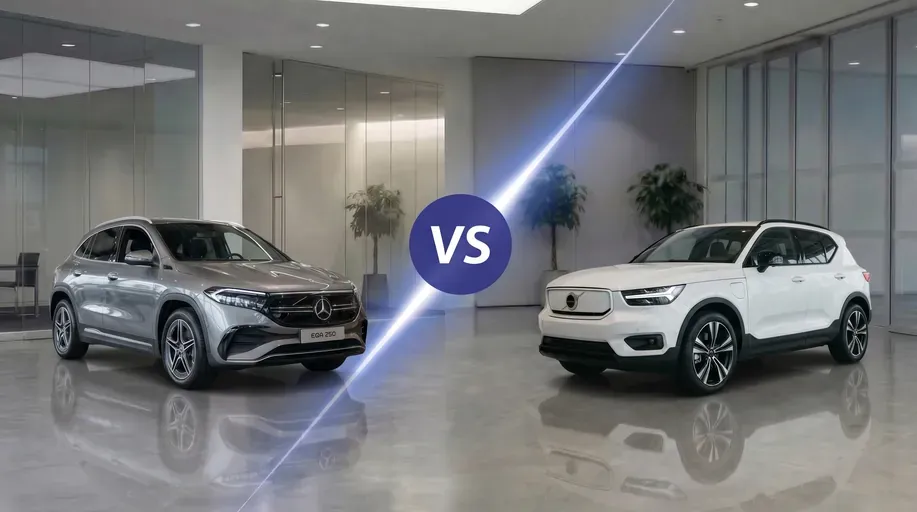
Mercedes-Benz EQA vs Volvo XC40 Recharge: A detailed comparison of electric SUVs. Find out which electric car offers better real-world range, performance, and equipment.
Apr 29, 2026
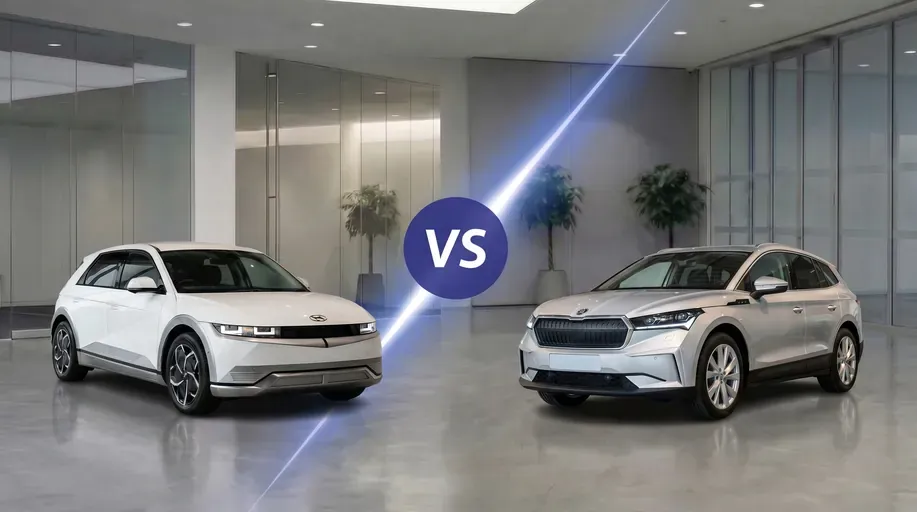
Detailed comparison of Hyundai Ioniq 5 vs Škoda Enyaq iV. Discover the differences in range and equipment thanks to real-world data and our verdict. Which EV SUV to choose?
Apr 27, 2026