Review Audi A3: What do owners and experts really say?
Audi A3 review: real owner experience, common faults, engine picks, and running costs — everything you need to know before buying.
October 29, 2026
Verdict at a Glance
Who it suits: Urban professionals, corporate drivers, and small families seeking a refined, easy-to-drive premium compact car.
Recommended engine: The 35 TFSI petrol for balanced all-round driving, or the 35 TDI for regular long-distance motorway travel.
What to avoid: Models with unresolved infotainment glitches, and any car without documented safety recall repairs checked by VIN.
Introduction
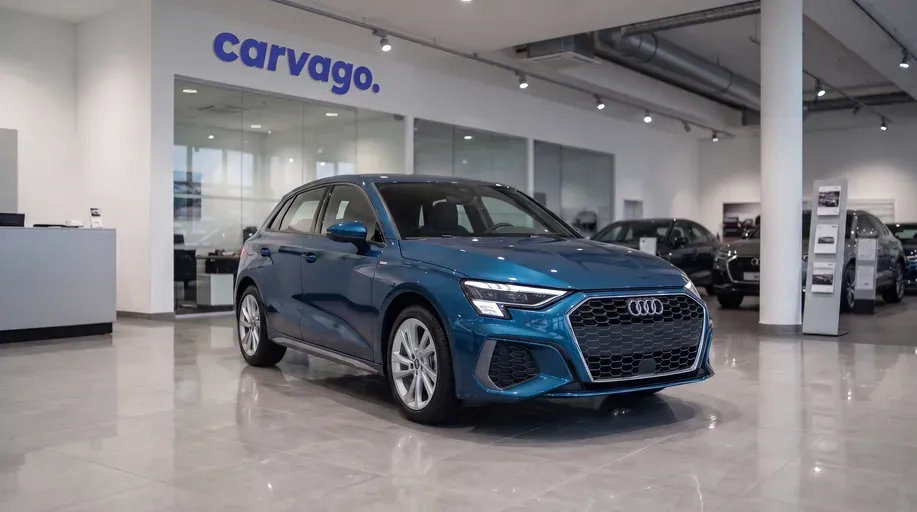
The fourth-generation Audi A3 (Typ 8Y) represents the brand in the competitive premium compact segment. Following its world premiere on 3 March 2020, European customer deliveries of the five-door Audi A3 Sportback commenced in May 2020, with the four-door Audi A3 Sedan reaching buyers in the summer of 2020. The plug-in hybrid Sportback arrived shortly after in December 2020. This review examines the entire 8Y production run from 2020 to the present.
On 12 March 2024, Audi premiered a mid-cycle product update, with European order books opening in mid-April 2024 and customer deliveries starting in May 2024. The facelift refreshed the exterior lighting and cabin details, while expanding the line-up with the A3 allstreet, a crossover variant featuring raised ground clearance. Updated plug-in hybrid models followed with their European unveiling on 15 October 2024.
Aimed primarily at urban professionals, corporate drivers, and small families wanting premium build in compact dimensions, the Audi A3 balances everyday usability with refined road manners.
Owner Experiences: Common Faults and Recalls
Field reports for the fourth-generation Audi A3 (Typ 8Y) indicate that while the core mechanical hardware is durable, cars built during the initial production run between 2020 and 2023 suffered from notable infotainment software glitches and several factory safety recalls. For facelifted models delivered from May 2024 onward, long-term reliability is not yet established due to low field age, though official registry records have remained clean of safety campaigns.
Owners report frequent software instability on early production cars from 2020 to 2023. Central touchscreens were prone to freezing on startup, being trapped in loading loops, or going entirely black while driving, alongside occasional loss of reversing camera feeds. In most cases, authorised workshop software updates successfully rectified the issues, though isolated early models required replacement of the central infotainment computer unit. In addition, an official service bulletin addresses a defect where 2020 to 2022 models display a persistent emergency call malfunction warning on the instrument cluster accompanied by a warning light on the roof console. While software recoding resolved false flags, internal component failure in the telematics control module required replacing the physical unit and its backup battery.
Safety recalls registered with European authorities reflect several manufacturing and assembly defects on pre-facelift cars. An alert announced in September 2021 covering vehicles manufactured between 24 August 2020 and 5 May 2021 addressed a loose bolted connection on the pull rod between the brake pedal and electromechanical brake booster, which could result in a complete loss of foot-operated service braking ability; workshops inspect and retorque the retaining bolt. For plug-in hybrid Audi A3 variants built between 1 October 2020 and 22 February 2022, an April 2022 campaign warned that an insufficient quantity of extinguishing sand inside the high-voltage battery fuse could cause the fuse to rupture during a short circuit, creating an arc or fire risk; dealers replace the fuse element.
Restraint systems were also subject to campaigns announced in autumn 2022. One European-wide notice covering production from 2018 to 2022 involved front seat belt reels that might not achieve full restraint capability during an impact due to manufacturing deviations, requiring replacement of the retractor assemblies. A separate campaign covering 2021 to 2022 vehicles addressed incorrectly folded front passenger airbag cushions that could tear upon deployment, solved by replacing the passenger airbag module. In August 2023, a worldwide recall covering right-hand-drive cars built between 11 March 2020 and 27 May 2023 resolved an incorrectly seated interior wiring connector at the fuse carrier, which could work loose and cause an unexpected engine shut-off or failure of exterior lighting and instrument displays.
On automatic Audi A3 variants, owners report low-speed shuddering or delayed engagement during shifts between first and second gear on dry dual-clutch transmissions when subjected to heavy urban stop-and-go driving. Furthermore, used buyers should note that supply-chain constraints led to factory omissions of certain comfort equipment (such as wireless phone charging pads or blind-spot monitoring) on specific vehicles produced between late 2020 and 2022, making it worthwhile to physically verify equipment against the original build record.
🔍 What to check before buying
Verify the vehicle identification number (VIN) and service history with an authorised dealer or through CarAudit to confirm all official safety recall remedies—including the brake booster pull rod, seat belt retractor reels, and the plug-in hybrid high-voltage fuse—have been documented as completed.
Test the central touchscreen thoroughly from a cold start, cycling through navigation, smartphone mirroring, and the reversing camera to confirm there are no screen blackouts or reboot loops.
Check the overhead roof console and digital instrument cluster to ensure the emergency call (SOS) system is operational and free of yellow or red warning indicators.
On automatic models, test low-speed crawling and drive engagement on an incline to check for clutch shudder or rough shifting between low gears.
On plug-in hybrid models, inspect the charging port flap for smooth latching and verify that high-voltage battery servicing has been maintained.
Engines: Which One to Choose
The fourth-generation Audi A3 offers a broad spectrum of powertrains, spanning mild-hybrid petrols, torquey diesels, plug-in hybrids, and high-output all-wheel-drive performance variants. A mid-cycle update in 2024 revised the engine portfolio, introducing updated four-cylinder petrol engines and increased battery capacity for the plug-in hybrids.
Engine
Fuel
Power
Gearbox
Drivetrain
Model years
30 TFSI
Petrol
81 kW (110 hp)
6-speed manual / 7-speed automatic
Front-wheel drive
2020–2024
30 TFSI
Petrol
85 kW (116 hp)
6-speed manual / 7-speed automatic
Front-wheel drive
2024–present
35 TFSI
Petrol
110 kW (150 hp)
6-speed manual / 7-speed automatic
Front-wheel drive
2020–present
40 TFSI quattro
Petrol
140 kW (190 hp)
7-speed automatic
All-wheel drive
2021–2024
S3 TFSI quattro
Petrol
228 kW (310 hp)
7-speed automatic
All-wheel drive
2020–2024
S3 TFSI quattro
Petrol
245 kW (333 hp)
7-speed automatic
All-wheel drive
2024–present
RS 3 TFSI quattro
Petrol
294 kW (400 hp)
7-speed automatic
All-wheel drive
2021–present
30 g-tron
CNG / Petrol
96 kW (131 hp)
7-speed automatic
Front-wheel drive
2020–2023
30 TDI
Diesel
85 kW (116 hp)
6-speed manual / 7-speed automatic
Front-wheel drive
2020–present
35 TDI
Diesel
110 kW (150 hp)
6-speed manual / 7-speed automatic
Front-wheel drive
2020–2024
35 TDI
Diesel
110 kW (150 hp)
7-speed automatic
Front-wheel drive
2024–present
40 TDI quattro
Diesel
147 kW (200 hp)
7-speed automatic
All-wheel drive
2020–2024
40 TFSI e
Plug-in hybrid
150 kW (204 hp)
6-speed automatic
Front-wheel drive
2020–present
45 TFSI e
Plug-in hybrid
180 kW (245 hp)
6-speed automatic
Front-wheel drive
2020–2024
45 TFSI e
Plug-in hybrid
200 kW (272 hp)
6-speed automatic
Front-wheel drive
2024–present
Which engine to choose
For routine city driving and shorter commutes, the entry-level petrol Audi A3 badged as the 30 TFSI is well suited to urban traffic, whether bought as an early three-cylinder on the used market or as the updated four-cylinder variant. Drivers with accessible home or workplace charging can benefit from the plug-in hybrid Audi A3 40 TFSI e, which covers typical daily commutes purely on electric power while keeping fuel costs low.
For mixed everyday driving, the 35 TFSI is widely considered the most balanced all-rounder. It delivers responsive acceleration for overtaking without excessive fuel demand. Buyers who prefer shifting gears themselves can choose the manual gearbox here, whereas the automatic configuration includes mild-hybrid hardware that decouples the engine to coast when off the throttle.
For high annual mileage and long motorway journeys, a diesel Audi A3 remains the logical choice. The front-wheel-drive 35 TDI provides strong mid-range pulling power and sustained long-distance economy. As a used car, the discontinued 40 TDI quattro adds all-weather traction for fast cross-country driving.
For towing duties or driving in regions with harsh winters, an all-wheel-drive Audi A3 is recommended. On the second-hand market, the discontinued 40 TFSI quattro serves as a capable tow vehicle, while performance buyers can look to the S3 and RS 3 for substantial all-weather speed and agile handling.
Mechanical reliability across the engine range is dependable when serviced regularly, though automatic transmissions require careful verification.
Space & Practicality
The Audi A3 accommodates four adults comfortably, though carrying a fifth occupant on the rear middle seat is constrained by a prominent central floor tunnel. Legroom in the back is adequate for average-height adults sitting behind taller front passengers, while headroom is noticeably more forgiving in the hatchback Audi A3 than beneath the tapering roofline of the Audi A3 Sedan. The rear bench is fixed in place without sliding adjustment. It folds in a standard two-way split, while a three-way split with a central load-through hatch was available as an option. Everyday boot usability in combustion hatchbacks benefits from a dual-position floor that flushes out the loading lip in its higher setting. Opting for the plug-in hybrid eliminates this underfloor recess entirely to house the traction battery, leaving a shallower cargo area with dedicated space only for charging cables.
Body Style / Variant
Dimensions L × W × H (mm)
Wheelbase (mm)
Luggage Capacity: Upright / Folded (l)
Sportback (Hatchback)
4,343 × 1,816 × 1,449
2,636
380 / 1,200
Sportback TFSI e (Plug-in hybrid)
4,343 × 1,816 × 1,441–1,450
2,630–2,635
280 / 1,100
Sedan / Saloon
4,495 × 1,816 × 1,425
2,636
425 / —
allstreet
4,353 × 1,816 × 1,470
2,630
380 / 1,200
Figures do not apply to all-wheel-drive variants or models fitted with an optional premium audio subwoofer, both of which reduce underfloor boot space. Cargo capacity for the saloon with rear seats folded is not officially verified under ISO/VDA standards.
What the Tests Say
On the road, the Audi A3 behaves with predictable composure and secure straight-line stability. Chassis response is neutral, though professional testers note the steering delivers minimal road feel, prioritising light effort over driver engagement. Ride quality depends heavily on the chosen chassis setup: models fitted with optional adaptive dampers absorb broken tarmac calmly, whereas passive sport suspension on higher specifications feels noticeably firm over uneven surfaces before smoothing out on motorways. Plug-in hybrid variants exhibit more unsettled vertical body motions over undulations due to their battery mass. Wind and tyre noise remain well suppressed at cruising speeds, though testers note the diesel Audi A3 lets through noticeable clatter and vibration under acceleration, trailing the quieter petrol versions in cabin refinement.
Inside, testers praise the retention of physical toggles for climate controls, which prove far simpler to operate on the move than all-touch slider arrangements. Fit and finish are neat, yet interior materials draw mixed verdicts. While upper surfaces look substantial, testers regularly highlight the prevalence of hard plastics across the lower dashboard, centre console, and rear passenger compartment.
Test verdicts broadly agree that the car delivers refined motorway cruising and undemanding road manners, while disagreeing on whether its driving dynamics offer enough distinct character to justify its premium cost over platform siblings. The mid-cycle product update improved cabin ambiance with textured trim inserts, revised air vents, and refreshed ambient lighting, although the glossy console trim still gathers dust and scratches easily.
Prices and Market Offer
All the charts in this section are drawn from Carvago’s listings of the whole Audi A3 model family, including other generations represented in the data, not only the reviewed generation. Because listings are indexed by build year, this dataset does not establish a separate price level for the reviewed generation alone. Currently, the median asking price ranges from €19,800 for 2019 cars to €24,900 for 2021 models, €34,900 for 2024 examples, and €37,400 for 2026 vehicles.
Audi A3 listings across the market rose from 22,979 in April 2026 to a peak of 25,726 in June 2026 before ending at 24,655 in September 2026. The chart below details the monthly count of advertised cars over this six-month span.
Audi A3 - availability over time
Active listings over time
Month
Audi A3
2026-04
22 979
2026-05
24 583
2026-06
25 726
2026-07
25 326
2026-08
23 811
2026-09
24 655
Source Carvago
Buyers can expect an extensive selection of vehicles on the market, with overall availability fluctuating between 22,979 and 25,726 listings across the period rather than following a continuous upward or downward trend.
Across used listings advertised today, the median asking price of an Audi A3 built in 2019 is €19,800, while cars built in 2026 have a median asking price of €37,400. The chart below outlines these figures across each available build year.
Audi A3 - median price by model year
Median advertised price by year of manufacture
Model year
Audi A3
2019
19 800
2020
22 900
2021
24 900
2022
25 600
2023
30 400
2024
34 900
2025
34 800
2026
37 400
Source Carvago
Buyers considering 2020 to 2022 build years face median asking prices between €22,900 and €25,600, whereas 2023 models stand at €30,400. The differences across consecutive build years are not strictly monotonic, as 2025 models show a median of €34,800 compared to €34,900 for 2024, while 2026 models are at €37,400.
This depreciation curve illustrates how the Audi A3 sheds value as it ages, losing 15% of its initial residual value in the first year and 30% by age three. The steepest annual drop occurs right at the start before the rate of decline begins to ease.
Audi A3 - value loss by age
Residual value by vehicle age
Vehicle age
Audi A3
New
38 200
1 yr
32 600
2 yrs
29 900
3 yrs
26 800
4 yrs
24 800
5 yrs
23 200
6 yrs
20 000
7 yrs
18 700
Source Carvago
Across the seven-year span shown, the model sheds 51% of its starting residual value. The annual decline moderates notably between ages three and five, where year-over-year losses hold between 6% and 7% before a secondary drop at age six.
The monthly breakdown shows the number of active Audi A3 advertisements across each fuel type from April to September 2026, beginning at 11,404 petrol and 7,094 diesel listings in the first month. The data reflects how available inventory was distributed among conventional and alternative powertrains over this timeframe.
Audi A3 - supply by fuel over time
Supply composition by fuel type
Petrol
Diesel
Hybrid
Electric
CNG
LPG
Month
Petrol
Diesel
Hybrid
Electric
CNG
LPG
2026-04
11 404
7 094
4 329
1
105
2
2026-05
12 037
7 870
4 525
0
106
1
2026-06
12 550
8 109
4 921
0
105
1
2026-07
11 909
7 805
5 465
1
102
1
2026-08
11 450
7 111
5 119
2
89
0
2026-09
12 098
7 243
5 183
7
85
0
Source Carvago
In September 2026, petrol models led the market with 12,098 advertised cars, alongside 7,243 diesels and 5,183 hybrids. With only 85 compressed natural gas and 7 electric listings recorded that month, buyers will find their realistic choices concentrated almost entirely among petrol, diesel, and hybrid options.
The chart displays the monthly average asking price for the Audi A3 between April 2026 and September 2026, starting at €28,000.
Audi A3 - price trend over time
Average price development over time
Month
Audi A3
2026-04
28 000
2026-05
27 900
2026-06
28 000
2026-07
27 800
2026-08
27 700
2026-09
27 900
Source Carvago
Across the period, the average asking price barely shifted, moving from €28,000 in April 2026 to €27,900 in September 2026 with a brief low of €27,700 in August. This minimal change represents less than a one percent shift overall rather than any distinct upward or downward trend.
Secure straight-line stability with low wind and tyre noise at cruising speeds
Physical toggles for climate controls that are simple to operate while driving
Broad powertrain range spanning mild-hybrid petrols, diesels, and plug-in hybrids
Cons
Infotainment software crashes and frozen touchscreens on early model years
Noticeable hard plastics across lower dashboard surfaces and the centre console
Firm ride over broken tarmac on versions with passive sport suspension
Frequently asked questions
Is the fourth-generation Audi A3 reliable?
The Audi A3 is mechanically durable, though early 2020–2023 cars suffered from software glitches and factory safety recalls. Facelifted models delivered from May 2024 show clean registry records, but their long-term reliability is not yet established due to low field age.
Which engine is best for everyday driving?
The 35 TFSI petrol represents the most balanced all-rounder, offering responsive acceleration without excessive fuel consumption. Motorway drivers covering high annual mileage should choose the 35 TDI diesel for its superior long-distance economy.
What should you check before buying a used model?
Check the vehicle identification number with an authorised dealer or CarAudit to confirm all official safety recalls have been documented as completed. During the test drive, ensure the touchscreen operates smoothly from a cold start without freezing.
Which body style offers the most practical boot?
The five-door Sportback provides the most versatile cargo layout thanks to its dual-position boot floor and generous rear headroom. However, choosing a plug-in hybrid eliminates the underfloor storage compartment entirely to house the traction battery.