
Car battle
Audi Q8 vs. Mercedes-Benz GLS: Complete comparison 2026
Audi Q8 vs Mercedes-Benz GLS: Which premium SUV to choose? Read a detailed comparison of performance, comfort, and reliability to help you choose the right used car.
May 7, 2026
Articles
Review
Aston Martin DBX in-depth review: real owner experience, performance, reliability, running costs, and expert verdict on the luxury British SUV.
October 20, 2026
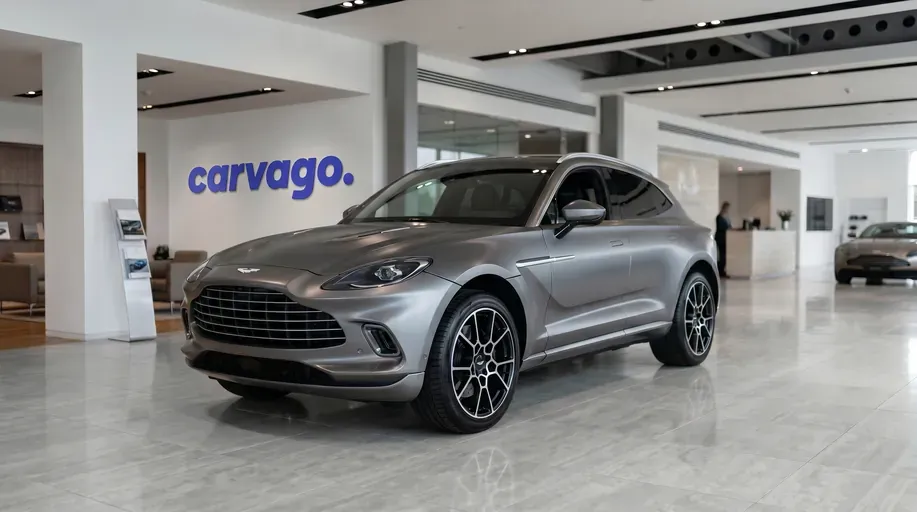
The Aston Martin DBX SUV marked the British sports car manufacturer’s entry into the ultra-luxury performance crossover sector. Produced at the St Athan plant in Wales, first-generation deliveries to European customers commenced in July 2020 following its world premiere in November 2019. Built exclusively as a five-door SUV with a five-seat cabin layout, the Aston Martin DBX contends directly with high-performance entries from Bentley, Porsche, and Lamborghini.
The model lineup evolved throughout its production run. The performance-focused DBX707 arrived with European deliveries starting in May 2022 after its February 2022 debut. On 22 April 2024, a major revision was announced that introduced a completely reworked interior architecture and proprietary infotainment system, with European customer deliveries commencing in the second quarter of 2024. That update also ended production of the original base V8 model. The range subsequently broadened with the DBX S announced on 30 April 2025 and the DBX GT luxury variant introduced on 1 October 2026.
Aimed at buyers seeking grand-touring usability, distinct sports-car styling cues, and year-round practicality, this guide examines used examples across the first generation produced between 2020 and October 2026.
Owner reports and specialist workshop findings for the Aston Martin DBX show a vehicle that is mechanically robust in its primary structural castings and core Mercedes-AMG-sourced V8 powertrain, but one that demands vigilance regarding low-voltage electrical systems and early software integration. Because series production only began in July 2020, long-term high-mileage reliability data remains limited across European markets.
The most frequent complaint among owners of 2020 to 2024 pre-facelift models concerns quiescent 12-volt battery drain. If the vehicle is parked without an active trickle charger for more than one to two weeks, the battery can discharge sufficiently to trigger false warning cascades upon startup. Drivers report spurious alerts regarding the power steering, active anti-roll chassis systems, or transmission hesitation, alongside occasional central screen blackout. While dealer software calibrations have reduced sleep-mode power draw, regular use of an external battery conditioner during extended parking remains the manufacturer-prescribed mitigation.
Tests and owner forums also describe recurring software gremlins on pre-facelift cars built between 2020 and early 2024, which utilize an older, non-touchscreen infotainment architecture. Common issues include navigation freezes, intermittent failure of smartphone projection, and blue or blank displays when engaging reverse for the 360-degree camera. Updating head-unit control module software resolves most crashes, though the physical interface was replaced entirely with an in-house touchscreen architecture introduced during the April 2024 revision.
Several official safety recalls have been gazetted in Europe through official safety registers, covering the worldwide production run of the Aston Martin DBX.
| Recall Subject | Affected Build Window | Defect & Stated Safety Risk | Workshop Remedy |
|---|---|---|---|
| Rear Lower Suspension Arm Bolt | 27 February 2020 – 5 November 2025 | A bolt with a reduced shank diameter could allow the torque pin to slide out of the rear lower suspension arm, potentially causing arm failure, damage to rear brakes, and risk of an accident. | Inspection of lower wishbones for stress cracks or deformation (replacement if damaged) and installation of revised bolts with an enlarged shank diameter. |
| Engine Oil Cooler Hoses (High-Output V8) | 30 September 2022 – 9 July 2024 | Extrusion irregularities during manufacture can cause hose walls to crack or burst under pressure fluctuations, causing sudden oil loss, engine stalling or seizure, and risk of fire. | Replacement of both the oil cooler inlet and outlet hose assemblies with verified production-specification parts. |
| 12V Fuse Box Cable Fixings | 7 May 2020 – 30 September 2023 | Incorrectly torqued cable nuts on the rear power supply fuse box can loosen, risking sudden electrical power loss (loss of steering assist, lighting, or engine stalling) or heat damage and fire in the boot. | Inspection of the 12V battery fuse box, tightening of all cable fixings to factory torque specification, and replacement of any heat-damaged components. |
An earlier campaign for oil cooler hose failures was initiated in April 2024 for high-output V8 variants built between 28 September 2022 and 19 July 2023, but was subsequently superseded by the broader September 2024 action to ensure all vehicles received permanently revised hose assemblies.
Before committing to a used vehicle, buyers can verify documented recall completion and physical condition through CarAudit.
The Aston Martin DBX is powered exclusively by a twin-turbocharged petrol eight-cylinder engine paired with an active all-wheel-drive system. Across the production run, the powertrain evolved from an initial grand-touring setup into significantly more aggressive, track-oriented iterations with upgraded turbocharging and a multi-plate wet-clutch transmission.
| Engine | Fuel | Power | Gearbox | Model years |
|---|---|---|---|---|
| 4.0 V8 | Petrol | 405 kW (550 hp) | 9-speed automatic | 2020–2024 |
| DBX707 | Petrol | 520 kW (707 hp) | 9-speed automatic | 2022–present |
| DBX S | Petrol | 535 kW (727 hp) | 9-speed automatic | 2025–present |
Daily commuting and urban driving:As a used car, the original 4.0 V8 is the most practical option for regular urban use. Its conventional torque-converter automatic transmission provides gentle step-off from rest and predictable low-speed creeping, avoiding the abrupt clutch engagement during tight parking manoeuvres that can occur with the multi-plate clutch fitted to newer variants.
Motorway cruising and long-distance touring:For high-speed touring and sustained cross-country travel, the DBX707 is the most capable choice. Its ball-bearing turbochargers eliminate the lower-rev hesitation present in the base engine, while a shorter final drive ratio delivers immediate throttle response at highway speeds. Cylinder deactivation remains active during steady cruising to moderate fuel burn.
Dynamic driving and performance:The DBX S caters to buyers seeking maximum mechanical responsiveness. Utilizing advanced turbocharger hardware, it maintains pulling power higher into the engine's rev range and pairs with aggressive transmission software that delivers rapid downshifts in its performance settings. However, the firmer low-speed calibration and vocal exhaust require compromises in day-to-day refinement.
Towing and utility:Every petrol Aston Martin DBX features standard four-wheel drive and strong pulling capability. For drivers who regularly hitch trailers or back down steep inclines, the earlier torque-converter model is easier to modulate smoothly at crawling speeds than the wet-clutch variants.
Mechanically, the twin-turbocharged V8 has proven durable in its core internal components across the model range.
| Dimension / Capacity | Value |
|---|---|
| Length | 5,039 mm |
| Width (excluding mirrors) | 1,998 mm |
| Height | 1,680 mm |
| Wheelbase | 3,060 mm |
| Boot capacity (seats upright, under parcel shelf) | 491 l |
| Boot capacity (seats folded) | 1,530 l |
Standard cargo capacity measured to the roof line varies between early production models and later performance versions due to revised underfloor storage compartments.
The Aston Martin DBX SUV provides a fixed five-seat cabin layout without a sliding rear bench. The second row accommodates two tall adults with sufficient knee clearance and headroom beneath the standard panoramic glass roof, though the elevated central transmission tunnel restricts foot space for a middle passenger. Everyday practicality is aided by a 40:20:40 split-folding rear backrest with a central ski hatch and remote release switches positioned directly in the luggage area. The load compartment offers a flat floor with integrated tie-down points, while the factory air suspension allows the rear loading sill to be lowered via cargo-bay buttons to ease the handling of heavy items. Covered underfloor storage compartments provide dedicated space for smaller travel items and tyre repair kits.
On urban tarmac, the Aston Martin DBX SUV rides firmly, transmitting noticeable fidgeting over transverse ridges and potholes. Once pace increases, the air suspension settles into a composed, flowing gait over undulating surfaces. Active anti-roll stabilization counters body lean in corners, complemented by steering that tests praise for its linear response and natural weighting. The primary refinement compromise across all versions is tyre roar: wide tyres generate pronounced road noise over coarse asphalt, contrasting with a hushed powertrain at motorway cruise.
Inside, the cabin features leather and Alcantara upholstery, paired with a lower driving position than typical luxury high-riders. Earlier models faced consistent criticism for an obsolete, non-touch infotainment interface operated via an awkward trackpad, alongside fiddly dash-mounted gear selector buttons. The comprehensive interior overhaul rolled out from April 2024 addressed this deficit, introducing an in-house touchscreen system with modern phone mirroring alongside tactile knurled aluminium rollers for temperature and audio volume.
Professional road testers uniformly agree on the dynamic agility, natural front-end bite, and sports-car-like poise of the Aston Martin DBX. Where evaluations divide is on chassis specifications: testers warn that optional larger wheel combinations add harshness over sharp road imperfections, while several tests note that the absence of rear-wheel steering hampers low-speed manoeuvrability in tight spaces.
All charts in this section are drawn from Carvago listings for the entire Aston Martin DBX model family, including other generations represented in the data, rather than exclusively the reviewed generation. Because the dataset aggregates all available listings without generation filtering, these figures do not establish a separate price level for the reviewed generation. Across the sampled model years, the median asking price stands at €134,300 for 2021 cars and reaches €263,400 for 2026 examples. Differences across model years reflect the varying equipment packages and powertrains present in current listings.
Between April 2026 and September 2026, the volume of advertised Aston Martin DBX vehicles opened at 288 and finished at 295 listings. The chart below traces the month-by-month count of active listings across this period.
Active listings over time
| Month | Aston Martin DBX |
|---|---|
| 2026-04 | 288 |
| 2026-05 | 311 |
| 2026-06 | 294 |
| 2026-07 | 284 |
| 2026-08 | 316 |
| 2026-09 | 295 |
Source Carvago
Across these six months, inventory fluctuated within a moderate range from a low of 284 listings in July to a peak of 316 in August. Buyers have a broad selection to compare, with the period closing out at 295 cars on offer.
Among used vehicles advertised today, the median asking price stands at €144,900 for 2020 models and is lower at €134,300 for 2021 models, before rising across subsequent build years to reach €263,400 for 2026 editions. The chart below tracks how these median asking prices compare across model years.
Median advertised price by year of manufacture
| Model year | Aston Martin DBX |
|---|---|
| 2020 | 144 900 |
| 2021 | 134 300 |
| 2022 | 175 900 |
| 2023 | 199 000 |
| 2024 | 207 000 |
| 2025 | 249 900 |
| 2026 | 263 400 |
Source Carvago
A buyer exploring earlier model years will encounter median asking prices of €134,300 for 2021 and €144,900 for 2020, whereas the newest 2025 and 2026 options call for median asking prices of €249,900 and €263,400.
Between April and September 2026, advertised listings for the model family were exclusively petrol-powered, fluctuating between 284 cars in July and 316 in August.
Supply composition by fuel type
| Month | Petrol |
|---|---|
| 2026-04 | 288 |
| 2026-05 | 311 |
| 2026-06 | 294 |
| 2026-07 | 284 |
| 2026-08 | 316 |
| 2026-09 | 295 |
Source Carvago
In September 2026, all 295 active listings were petrol models, meaning buyers in the second-hand market will find only petrol options.
Between April 2026 and September 2026, the average asking price for the Aston Martin DBX began at €184,000 and reached €187,000 the following month. The chart below illustrates how these listing averages shifted across the six-month period.
Average price development over time
| Month | Aston Martin DBX |
|---|---|
| 2026-04 | 184 000 |
| 2026-05 | 187 000 |
| 2026-06 | 182 600 |
| 2026-07 | 175 100 |
| 2026-08 | 177 600 |
| 2026-09 | 176 600 |
Source Carvago
Across the full span, the average asking price moved from €184,000 to €176,600, representing an overall drop of about 4%. These minor monthly rises and falls were small relative to the overall price level of the cars.
Dynamic agility with natural steering weighting and effective body-roll control
High-grade cabin craftsmanship featuring leather and Alcantara upholstery
Versatile luggage area with lowering suspension sill and split-folding seats
Outdated, non-touch infotainment system and software glitches on early models
Quiescent battery drain during parking, requiring an external charger
Pronounced tyre roar at higher speeds and a firm low-speed urban ride
The Aston Martin DBX is mechanically robust in its core powertrain, though early pre-facelift models are susceptible to 12-volt battery drain when parked. Long-term reliability data also remains limited due to its relatively recent 2020 production start.
Examples built from the second quarter of 2024 onward are the best choice because they introduce a modern touchscreen architecture that replaces the dated non-touch setup. However, well-maintained earlier cars offer substantially lower entry prices.
The original 4.0 V8 is the most practical choice for routine driving, as its torque-converter automatic ensures smooth low-speed creeping in traffic. By comparison, higher-output variants use a multi-plate clutch that can engage abruptly when parking.
Verify through official dealer records by VIN that all safety recall campaigns have been completed. Buyers should also verify 12-volt battery health and ensure an operational battery conditioner is supplied with the vehicle.
Sources: astonmartin.com, adac.de, autocar.co.uk, autoexpress.co.uk, evo.co.uk
This article was prepared using artificial intelligence tools. The section guarantor is Petr Dušek.
Audi Q8 vs Mercedes-Benz GLS: Which premium SUV to choose? Read a detailed comparison of performance, comfort, and reliability to help you choose the right used car.
May 7, 2026

Comparison of premium SUVs: Porsche Cayenne vs. Volkswagen Touareg. A detailed look at performance, reliability, features, and real-world experience. Choose the right one for you!
Apr 27, 2026
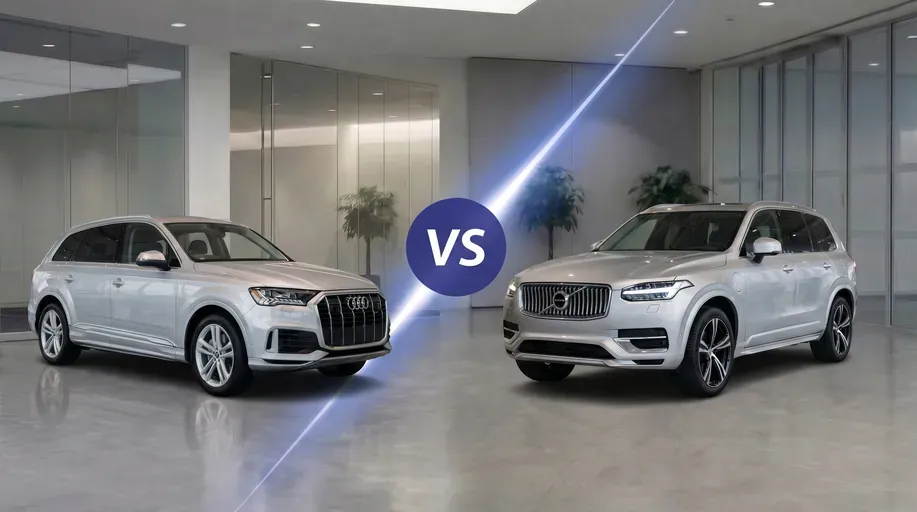
Detailed comparison of the Audi Q7 and Volvo XC90. Discover the differences in equipment, fuel consumption, and reliability of used cars. Which luxury SUV is the better choice? Read our verdict.
Apr 17, 2026