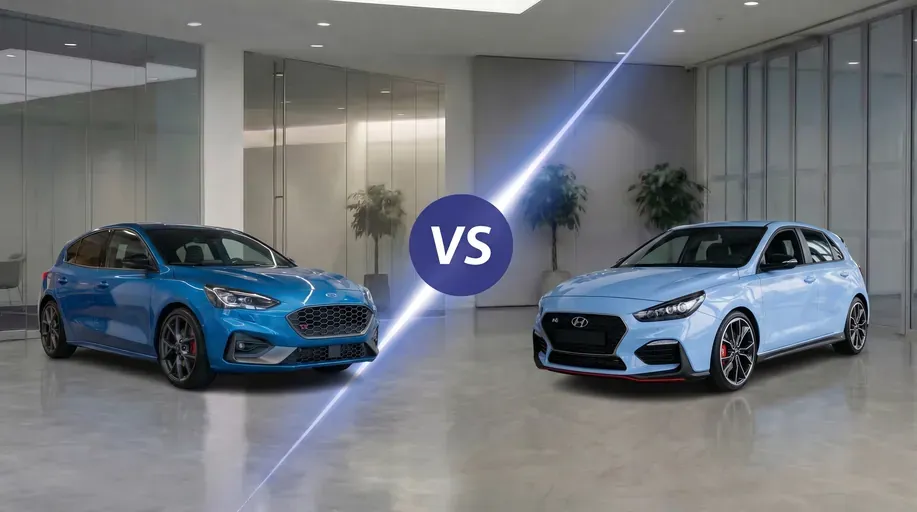
Ford Focus ST vs. Hyundai i30 N: Complete comparison 2026
Detailed comparison of Ford Focus ST vs Hyundai i30 N. Discover the real differences in driving characteristics, performance, and equipment. Which hot hatch should you choose?
May 13, 2026
Articles
Review
Alpine A110 review: real owner experience, common faults, running costs and trim picks — our definitive buyer's guide to the lightweight coupe.
October 25, 2026

The revived second-generation Alpine A110 coupé occupies a distinct niche in the sports car category, prioritizing compact dimensions and minimal mass over excessive power. Built at the Dieppe plant in France, European customer deliveries commenced in March 2018. The production run officially concluded on 1 July 2026 following the closure of European order books at the end of March 2026, making this generation an exclusively used-market proposition today.
Offered strictly as a two-seater, fixed-roof mid-engine coupé, the model received a comprehensive mid-cycle refresh announced on 24 November 2021. That revision brought overhauled infotainment hardware, recalibrated engine management, and updated aerodynamic packages, followed by additional track-oriented derivatives announced between late 2022 and late 2024.
The Alpine A110 appeals primarily to driving enthusiasts who value agility, low running inertia, and chassis feedback above luggage capacity, passenger versatility, or long-distance grand-touring amenities. This guide examines the modern second-generation car across its complete European lifespan to establish what prospective owners need to inspect and anticipate when shopping on the secondary market.
On European roads, the revived second-generation Alpine A110 has established a solid mechanical record, though early production years required several targeted factory updates. The most prominent mechanical vulnerability involves the low-pressure in-tank fuel pump on cars built between September 2017 and April 2022. Internal friction from the impeller can reduce or completely cut the fuel supply to the engine, resulting in a sudden drop in torque, non-starting, or stalling while driving. The factory remedy requires workshops to replace the fuel pump gauge module inside the tank and reprogram the injection computer software.
Cosmetic integrity represents another frequent talking point among owners. Tests describe localised paint bubbling and filiform blistering on the aluminium body panels, most frequently visible along the inner lips of the wheel arches and around the bonnet hinge areas. On the wheel arches, this blistering stems from a galvanic reaction where steel mounting clips make contact with bare aluminium. Owners report that remedying the issue involves careful repainting and replacing the factory clips with coated or non-reactive plastic hardware, alongside protective edge film to isolate the metals permanently.
Dual-clutch transmission hardware and factory engine internals have proven mechanically robust when kept in unmodified form. While isolated forum reports discuss clutch slip on cars modified beyond standard factory output, unmodified road vehicles show no systemic transmission failures. Electronic glitches are usually limited to low battery voltage causing transient gear selector confusion.
Safety regulators across Europe have coordinated several recalls over the model's production run to address assembly and manufacturing defects. In July 2019, European authorities published actions for cars built from inception through late 2018 or early 2019. One concerned the front luggage compartment lock, where insufficient bolt torque could allow the bonnet to open in motion. Another covered vehicles equipped with the active sports exhaust built up to 9 November 2018, where an inappropriately routed wiring harness could touch hot exhaust tubing, melt, and cause a short circuit or fire risk. In August 2019, a campaign for the 1.8-litre engine addressed metallic particles that could block the oil pressure control solenoid valve in the high-pressure position.
Later production also saw isolated safety interventions. A targeted European recall in April 2023 addressed cars built between 6 January 2023 and 11 January 2023 due to a manufacturing defect where the chassis could deform, risking a loss of vehicle control. In late 2024 and early 2025, authorities notified 176 vehicles worldwide built between 3 April 2024 and 6 September 2024 of an incorrect rear rim width engraving. While the fitted rims and tyres were correct from the factory, the erroneous engraving created the risk of a technician fitting an undersized replacement tyre, which could compromise high-speed stability.
| Recall Subject | Affected Build Window | Scope & Affected Markets | Stated Defect & Remedy |
|---|---|---|---|
| Front Bonnet Lock | Launch to 27 February 2019 | Pan-European | Insufficiently torqued lock bolts could allow bonnet to open while driving. Retailers inspect and retorque retaining bolts. |
| Exhaust Wiring Harness | Launch to 9 November 2018 | Pan-European | Wiring harness can contact exhaust pipe and melt. Retailers inspect routing and fit protective heat shielding. |
| Oil Control Solenoid | 1 September 2018 to 5 July 2019 | Pan-European (1.8-litre engines) | Metallic particles can jam solenoid valve in high-pressure position. Retailers replace solenoid valve and sleeve. |
| Fuel Pump Impeller | 18 September 2017 to 19 April 2022 | Pan-European | Impeller friction restricts fuel supply, causing power loss or stalling. Retailers replace pump module and update software. |
| Chassis Production | 6 January 2023 to 11 January 2023 | Pan-European | Chassis may deform due to production errors. Workshops inspect alignment and replace affected sub-assemblies. |
| Rear Rim Engraving | 3 April 2024 to 6 September 2024 | Pan-European (176 vehicles worldwide) | Incorrect rim width stamped on rear wheels risks mismatched tyre fitting. Workshops verify and correct rim markings. |
Every version of the modern Alpine A110 features a mid-mounted, turbocharged four-cylinder petrol engine paired with a dual-clutch transmission driving the rear wheels. Across its production cycle from late 2017 until manufacturing ended on 1 July 2026, Alpine offered three distinct power steps in regular series production.
| Engine | Fuel | Power | Gearbox | Model years |
|---|---|---|---|---|
| 1.8 TCe | Petrol | 185 kW (252 hp) | 7-speed automatic | 2017–2026 |
| 1.8 TCe | Petrol | 215 kW (292 hp) | 7-speed automatic | 2019–2021 |
| 1.8 TCe | Petrol | 221 kW (300 hp) | 7-speed automatic | 2021–2026 |
| 1.8 TCe | Petrol | 254 kW (345 hp) | 6-speed automatic | 2025–2026 |
For mixed driving and weekend road use, the standard 1.8 TCe is widely regarded as the dynamic sweet spot of the lineup. Thanks to the car's low kerb weight, the entry-level engine delivers immediate low-end response and energetic acceleration without requiring high revs, making the petrol Alpine A110 balanced on country roads while remaining manageable in routine driving.
The intermediate 1.8 TCe, offered between late 2019 and late 2021, provides stronger top-end pull when extended. However, because its maximum torque output remained identical to the entry model, roll-on acceleration in typical mid-range driving feels virtually indistinguishable.
For buyers seeking a noticeable step up in performance, the post-facelift uprated 1.8 TCe introduced in late 2021 is the more convincing upgrade. Its additional torque provides stronger punch out of slower corners and more authoritative passing power on long motorway journeys. At sustained cruising speeds, the automatic Alpine A110 keeps engine speeds relaxed in top gear.
In town, the dual-clutch gearbox operates smoothly at low speeds, though low ground clearance and restricted rear visibility mean the car is far less suited to short urban errands than a conventional hatchback. Towing is completely unsupported, as the vehicle has no approved towing capacity and factory tow bars do not exist.
For detailed findings on mechanical durability, recurring faults, and manufacturer recall campaigns, see the dedicated owner experiences section.
| Dimension / Capacity | Coupé |
|---|---|
| Length | 4,180 mm |
| Width | 1,798 mm (1,980 mm with mirrors) |
| Height | 1,252 mm |
| Wheelbase | 2,419 mm |
| Boot volume (seats up) | 196 l (96 l front + 100 l rear) |
| Boot volume (seats folded) | — |
Figures apply to the standard coupé; aerodynamic body packages slightly extend overall length, while stiffened sport and track suspension packages lower overall height.
The Alpine A110 coupé is configured strictly as a two-seater with a mid-mounted engine positioned directly behind the passenger bulkhead, eliminating any space for rear seating or behind-seat cabin storage. Interior practicality remains minimal, as the sculpted doors do not feature storage pockets and the dashboard omits a traditional glovebox, leaving occupants to rely on an open lower console tray and a central pouch between the seats. Cargo space is divided between two separate compartments: a front well beneath the bonnet and a secondary enclosure situated behind the engine. The front space accommodates two cabin-sized trolley cases, while the rear compartment holds soft overnight bags, though heat transfer from the adjacent mechanicals warms items stored there over longer drives. Seat adjustability depends on the installed specification: standard lightweight shells feature fore-and-aft rails but require manual unbolting with workshop tools for height adjustment, whereas optional comfort seats provide backrest recline and lever-based height movement. Track-focused versions employ fixed composite buckets and racing harnesses, prioritising cornering support over daily accessibility.
Road tests consistently highlight the delicate balance and organic steering feedback of the Alpine A110. In its standard suspension setup, the chassis delivers surprising compliance over broken asphalt and cobblestones, allowing deliberate body roll that progressively signals grip limits rather than snapping into abrupt breakaways. At motorway speeds, however, tyre rumble and wind roar become intrusive, trailing conventional sports coupés in cruising refinement. The stiffer sport version trades this fluid road manners for sharper track stability, which testers noted introduces a busy, brittle ride over scarred surfaces, while the track-focused variant adds noticeable acoustic booming from composite panels.
Inside, assembly quality is solid, yet ergonomic compromises are evident. While standard lightweight bucket seats provide supportive lateral hold, their fixed height setting compromises everyday convenience. Early cars also received criticism for an outdated, sluggish touchscreen, which was addressed during the mid-cycle update with a more responsive interface and smartphone integration. Standardised safety evaluations also marked the car down for its minimal airbag count and absence of active driver-assistance systems.
While reviewers disagree on whether the firmer sport suspension compromises the car's compliant character on secondary roads, they universally agree that the standard setup offers steering feedback and agility rarely found in modern performance cars.
All charts in this section are drawn from Carvago listings of the whole Alpine A110 model family across all represented production periods, rather than isolating the reviewed generation alone. The median asking price begins at €59,000 for 2019 and 2020 vehicles, reaching €69,500 for 2022 cars and peaking at €93,800 for 2026 models. Earlier production years maintain steady interest among buyers seeking accessible entry pricing, whereas later model years reflect higher median prices driven by factory revisions, updated multimedia hardware, and specialized low-volume variants.
Active Alpine A110 listings fell from 305 in April 2026 to 216 in September 2026 across the six-month period shown below.
Active listings over time
| Month | Alpine A110 |
|---|---|
| 2026-04 | 305 |
| 2026-05 | 270 |
| 2026-06 | 257 |
| 2026-07 | 227 |
| 2026-08 | 215 |
| 2026-09 | 216 |
Source Carvago
Buyers can still browse more than 200 advertised cars across the model family, with stock levels stabilizing between 215 listings in August and 216 in September following earlier contractions.
The overview below presents asking levels across model years, where the median asking price of cars advertised today built in 2019 is €59,000, while the median asking price of cars advertised today built in 2026 is €93,800.
Median advertised price by year of manufacture
| Model year | Alpine A110 |
|---|---|
| 2019 | 59 000 |
| 2020 | 59 000 |
| 2021 | 63 900 |
| 2022 | 69 500 |
| 2023 | 69 900 |
| 2024 | 73 300 |
| 2025 | 80 000 |
| 2026 | 93 800 |
Source Carvago
Buyers considering earlier production will find that the median asking price of cars advertised today built in 2019 is €59,000. For those looking at more recent examples, the median asking price of cars advertised today built in 2024 is €73,300, while the median asking price of cars advertised today built in 2026 is €93,800.
This depreciation curve illustrates how the model's residual value falls as it ages, showing its steepest decline in the earliest years. Over the first three years, the car loses roughly 25% of its initial value, shedding nearly 12% in the first year alone.
Residual value by vehicle age
| Vehicle age | Alpine A110 |
|---|---|
| New | 82 500 |
| 1 yr | 72 900 |
| 2 yrs | 66 100 |
| 3 yrs | 61 800 |
| 4 yrs | 59 000 |
| 5 yrs | 54 600 |
| 6 yrs | 52 600 |
| 7 yrs | 51 400 |
Source Carvago
Across the full seven-year span shown, the model loses about 38% of its starting residual value, retaining over 62%. The pace of annual value loss moderates considerably past the third year, with subsequent yearly drops staying below 8%.
Advertised listings with a specified fuel type for the model family consisted solely of petrol options between April 2026 and September 2026, with counts moving from 304 cars down to 214. The chart below tracks active listing volumes for each fuel type across this six-month span.
Supply composition by fuel type
| Month | Petrol |
|---|---|
| 2026-04 | 304 |
| 2026-05 | 268 |
| 2026-06 | 256 |
| 2026-07 | 226 |
| 2026-08 | 214 |
| 2026-09 | 214 |
Source Carvago
In September 2026, all 214 active listings were petrol, while diesel, hybrid, and electric options recorded zero cars throughout the entire period. Anyone searching the market will realistically find only petrol-powered models on offer.
Across the months from April 2026 to September 2026, the average asking price for the Alpine A110 ranged between €79,700 and €82,500. The chart below illustrates how these monthly advertised averages developed over that period.
Average price development over time
| Month | Alpine A110 |
|---|---|
| 2026-04 | 79 700 |
| 2026-05 | 80 100 |
| 2026-06 | 82 300 |
| 2026-07 | 82 500 |
| 2026-08 | 81 700 |
| 2026-09 | 82 000 |
Source Carvago
After climbing from €79,700 in April to €82,500 in July, the average dipped to €81,700 in August before finishing at €82,000 in September 2026. Across the entire span, overall movement remained modest, shifting by less than three percent from beginning to end.
Agile handling with progressive chassis feedback and communicative steering
Compliant ride over broken surfaces on the standard suspension setup
Durable engine and transmission hardware when maintained in unmodified form
Minimal cabin storage with no door pockets or conventional glovebox
Intrusive road roar and wind noise at sustained motorway cruising speeds
Sluggish infotainment on early cars and absence of active driver-assistance systems
Factory engine internals and dual-clutch transmission hardware show solid durability on unmodified Alpine A110 models, but vehicles built before mid-2022 suffered from in-tank fuel pump impeller failures that could cause sudden stalling. Always verify via the car's identification number that all manufacturer recall campaigns have been fully completed.
The entry-level engine represents the sweet spot for road use because the low kerb weight delivers energetic response without requiring extra power. The uprated post-facelift engine provides noticeably stronger passing punch out of slow corners, whereas the earlier intermediate variant offers no perceptible mid-range acceleration gain over the standard model.
Inspect the aluminium wheel arches and bonnet returns for paint bubbling caused by galvanic contact with steel fasteners, and ensure all fuel pump and latch recalls are signed off. Also check brake discs and tyres for heavy track wear.
The Alpine A110 coupé handles routine road trips thanks to compliant standard suspension and smooth transmission manners at low speeds, but practicality is limited. Cabin storage is minimal, rear visibility is restricted, and engine heat warms the rear luggage space over longer drives.
Sources: media.alpinecars.com, adac.de, autocar.co.uk, autoexpress.co.uk, topgear.com
This article was prepared using artificial intelligence tools. The section guarantor is Petr Dušek.

Detailed comparison of Ford Focus ST vs Hyundai i30 N. Discover the real differences in driving characteristics, performance, and equipment. Which hot hatch should you choose?
May 13, 2026

Detailed comparison of the Audi R8 and Porsche 911. We reveal the real differences in performance, reliability, and equipment. Find out which sports car is the best used buy.
Oct 16, 2026

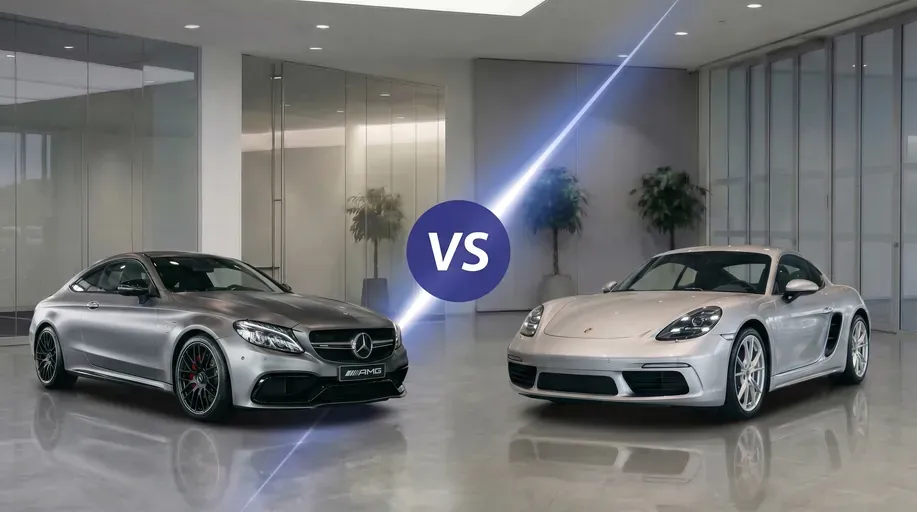
A major comparison of the Mercedes-AMG C 63 Coupé and the Porsche 718 Cayman. We reveal the differences in performance, driving characteristics, and equipment. Which sports coupé to choose?
Oct 16, 2026