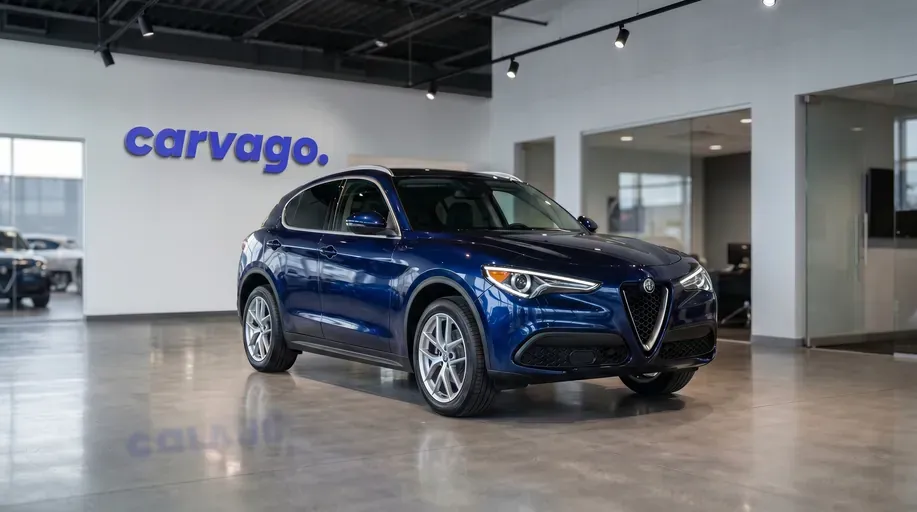
Review Alfa Romeo Stelvio: What do owners and experts really say?
Alfa Romeo Stelvio review: real owner experience, common faults, engine picks, running costs and used prices — our definitive verdict.
November 1, 2026
Introduction
The Alfa Romeo Stelvio represents the Italian marque's entry into the premium mid-size SUV segment. Built exclusively as a five-door SUV on the rear-wheel-drive Giorgio architecture, this review focuses on the first generation (Type 949). First European customer deliveries commenced on 16 March 2017 following the start of regular production in late 2016, with manufacturing slated to continue through 2027.
The model received two notable updates during its lifecycle. A technology revision unveiled in November 2019, which reached European customers in the first quarter of 2020, reworked the cabin with upgraded driver assistance systems, revised centre console materials, and updated infotainment. A subsequent facelift premiered on 27 October 2022, with deliveries beginning in the first quarter of 2023, bringing adaptive matrix LED headlights and a digital instrument cluster.
On the used market, the Alfa Romeo Stelvio SUV primarily appeals to drivers seeking distinctive design and dynamic handling characteristics as an alternative to the segment's established German competitors.
Owner Experiences: Common Faults and Recalls
In real-world ownership, the Alfa Romeo Stelvio demonstrates dependable mechanical durability, though its electrical architecture demands close attention. Tests and owners describe an acute sensitivity to 12-volt battery charge. When the factory battery drops below optimal voltage, the central network registers false instrument cluster alerts—such as disabled electronic stability control, braking warnings, or deactivated drive modes—even though the mechanical components are intact. In most cases, installing a fresh, high-capacity battery followed by a battery sensor recalibration resolves these phantom warnings. Owners also report starter relay failures on earlier build years. The micro-relays behind the front right wheel-arch liner are exposed to road spray and moisture, causing terminal corrosion that results in the vehicle powering on without cranking the engine. In many cases, fitting sealed replacement relays and applying water-resistant protection resolves the issue.
Powertrain components generally hold up well over higher distances, but specific mechanical wear patterns have emerged. On the diesel Alfa Romeo Stelvio, owners report that as vehicles approach or exceed 100,000 to 120,000 kilometres, the elastomeric seal between the oil pick-up pipe and the oil pump can harden and shrink. This allows air into the system during cold starts, triggering momentary low oil pressure warnings on the cluster until circulation builds; replacing the seal requires dropping the lower oil sump. For the petrol Alfa Romeo Stelvio, tests describe coolant hose degradation and slow radiator seepage over time, making routine checks of engine bay fluid levels advisable. Before committing to a specific vehicle, verifying recorded maintenance and having its structural and electronic health assessed via CarAudit provides added peace of mind.
Several official safety recalls have been issued across European markets:
Braking System Module casing: Announced in February 2025 for model years 2019 to 2020 across 6,355 vehicles worldwide. An incorrectly fitted brake casing can cause a faulty connection between the brake pedal and the brake booster, meaning the vehicle can only be stopped using emergency braking. Authorised workshops inspect and correct or replace the connection assembly.
Adaptive Cruise Control logic: Announced in March 2019 for vehicles built between 31 March 2016 and 10 June 2019 across worldwide markets. Software errors could cause the vehicle to maintain speed or accelerate even when the driver taps the brakes, switching off only under prolonged, heavy braking. Workshops reprogrammed the engine and brake control software; the manufacturer advised against using adaptive cruise control until modified.
Carbon-ceramic brake discs: Announced in July 2023 for 2016 to 2021 build dates on vehicles fitted with optional carbon-ceramic brakes. Excessive clamping force from the parking brake could cause the brake disc to break. Workshops updated the brake system module software.
Adaptive LED headlight alignment: Announced in May 2024 for 2023 to 2024 production years worldwide. An excessively high high-beam setting created a dark band between dipped and high beams, requiring workshop recalibration of the headlight control units.
Engine wiring and coolant connections: An early campaign on diesel models built between 18 January 2017 and 18 September 2018 addressed an alternator cable that could contact the exhaust gas recirculation pipe, posing a short-circuit and fire risk remedied by a revised spacer. On 2016 to 2018 petrol models, loose turbocharger coolant lines were secured with revised hose clamps. A later campaign in 2025 for vehicles built between January 2024 and July 2025 addressed a software defect in the instrument cluster affecting Lane Keep Assist warnings, requiring reprogramming.
🔍 What to check before buying
Request an authorised workshop lookup using the car's VIN to confirm that all official safety campaigns—including the brake pedal connection, cruise control software, and wiring updates—have been completed.
Check the 12-volt battery's age and health, observing whether any false warning lights appear on the instrument cluster after starting from cold.
On 2.2-litre diesel models, verify documented timing belt replacement and watch for momentary low oil pressure alerts on cold start-up.
Inspect the engine bay coolant hoses and lower radiator seams for crusting, dried residue, or fluid drops.
Examine diamond-cut alloy wheels for signs of lacquer peel and white-spider corrosion, and inspect the lower underbody trays for ground scrapes.
Engines: Which One to Choose
Every version of the Alfa Romeo Stelvio pairs an all-aluminium turbocharged engine with an eight-speed torque-converter automatic transmission. Depending on the model year and specification, power is delivered either exclusively to the rear wheels or through an all-wheel-drive system.
Engine
Fuel
Power
Gearbox
Drivetrain
Model years
2.0 Turbo 16V
Petrol
147 kW (200 hp)
8-speed automatic
All-wheel drive
2017–2023
2.0 Turbo 16V
Petrol
206 kW (280 hp)
8-speed automatic
All-wheel drive
2017–2023
2.0 Turbo 16V
Petrol
206 kW (280 hp)
8-speed automatic
All-wheel drive
2023–2025
Quadrifoglio
Petrol
375 kW (510 hp)
8-speed automatic
All-wheel drive
2017–2023
Quadrifoglio
Petrol
382 kW (520 hp)
8-speed automatic
All-wheel drive
2023–present
2.2 Diesel
Diesel
110 kW (150 hp)
8-speed automatic
Rear-wheel drive
2017–2018
2.2 Diesel
Diesel
118 kW (160 hp)
8-speed automatic
Rear-wheel drive
2018–2020
2.2 Diesel
Diesel
132 kW (180 hp)
8-speed automatic
Rear-wheel drive
2017–2018
2.2 Diesel
Diesel
132 kW (180 hp)
8-speed automatic
All-wheel drive
2017–2018
2.2 Diesel
Diesel
140 kW (190 hp)
8-speed automatic
Rear-wheel drive
2018–2020
2.2 Diesel
Diesel
140 kW (190 hp)
8-speed automatic
All-wheel drive
2018–2023
2.2 Diesel
Diesel
154 kW (210 hp)
8-speed automatic
All-wheel drive
2017–2023
2.2 Diesel
Diesel
154 kW (210 hp)
8-speed automatic
All-wheel drive
2023–present
Which engine to choose
For short journeys and urban commuting, the petrol Alfa Romeo Stelvio is the logical choice. The base petrol unit reaches operating temperature quickly and avoids the diesel particulate filter saturation and oil dilution common to short-trip diesel driving.
For mixed everyday driving, the stronger petrol is the most well-rounded option as a used buy. It responds eagerly to throttle input and pulls strongly through the mid-range without overburdening the front axle with unnecessary weight.
Drivers who routinely cover long motorway distances should opt for the diesel Alfa Romeo Stelvio. The diesel engine delivers relaxed cruising and substantial pulling power on open roads. For towing duties, the all-wheel-drive Alfa Romeo Stelvio with the flagship diesel is a strong choice, sharing the maximum 2,300 kg braked trailer capacity with the 280 hp petrol and other all-wheel-drive variants.
The twin-turbo V6 Quadrifoglio operates in a different league, delivering sports-car acceleration and sharp cornering agility, though it requires strict maintenance schedules and is not rated for trailer towing.
For recurring mechanical faults, component wear, and maintenance requirements across both petrol and diesel engines, refer to the dedicated owner experiences section.
Space & Practicality
Dimension / Capacity
Value
Length
4,687 mm
Width (excluding mirrors)
1,903 mm
Height
1,648–1,693 mm
Wheelbase
2,818 mm
Boot volume (standard / with spare wheel)
525 / 499 l
Maximum luggage volume (seats folded)
1,600 l
Exterior length and width figures listed above do not apply to the Quadrifoglio performance variant.
The Alfa Romeo Stelvio provides adequate legroom and headroom in the outer rear positions for tall adults, though carrying three passengers across the rear bench is constrained by seat width and the central floor tunnel. The rear seat does not slide fore and aft, but a three-way split-folding backrest comes standard on European models, allowing long objects to pass through the middle while retaining two passenger seats. Folding the rear bench down yields an almost level cargo surface, which makes loading bulky items and luggage practical.
What the Tests Say
Professional testers consistently describe the Alfa Romeo Stelvio as one of the most agile SUVs available, behaving more like a sports saloon on winding roads. The unusually quick steering rack gives immediate front-end bite, though several evaluations note it can feel twitchy off-centre and demands initial acclimatisation. Body roll is tightly suppressed and high-speed stability is reassuring, but low-speed ride comfort divides opinion. The firm suspension feels restless over sharp urban ruts, sunken drain covers, and transverse expansion joints, transmitting noticeable thumps into the cabin on larger alloy wheels. Refinement is compromised by tyre rumble on coarse motorway surfaces, while the diesel produces noticeable clatter under load and four-cylinder petrol units sound strained when pushed.
The driving environment earns praise for its supportive seating position, intuitive primary controls, and distinctive aluminium shift paddles mounted on the steering column (standard on higher trims or optional depending on the market and year). However, reviewers widely agree that cabin plastics lower down the dashboard, around the centre console, and inside the door pockets feel hollow and trail premium rivals in tactile solidity.
Updates to Cabin Tech
Infotainment usability remains a recurring critique. Early production years drew penalties for sluggish menu transitions and navigation latency. Revisions in later model years brought sharper graphics, a customisable digital instrument display, and improved touchscreen responses, though testers maintain that the overall interface still lacks the fluidity and intuitive menu structure offered by competitor systems.
Prices and Market Offer
All the charts in this section are drawn from Carvago listings of the whole Alfa Romeo Stelvio model family, including other generations represented in the data, not only the reviewed generation, and this data does not establish a separate price level for the reviewed generation. Today's median asking price stands at €25,000 for 2019 vehicles and reaches €29,500 for 2022 models. A higher pricing bracket appears from 2023 at €39,900, extending up to €57,000 for 2026 examples.
Active Alfa Romeo Stelvio listings on the market stood at 4,421 in April 2026, peaked at 4,508 in May, and reached 4,416 by September 2026. The chart below tracks how the volume of advertised vehicles developed across these six months.
Alfa Romeo Stelvio - availability over time
Active listings over time
Month
Alfa Romeo Stelvio
2026-04
4 421
2026-05
4 508
2026-06
4 379
2026-07
4 353
2026-08
4 037
2026-09
4 416
Source Carvago
Buyers can expect a wide selection, as active listings remained above 4,000 throughout the recorded period. Although availability fluctuated and dipped to a low of 4,037 in August 2026, advertised stock rebounded to 4,416 the following month.
The chart outlines price differences by build year, where the median asking price of cars advertised today, built in 2019, is €25,000, while the median asking price of cars advertised today, built in 2026, is €57,000.
Alfa Romeo Stelvio - median price by model year
Median advertised price by year of manufacture
Model year
Alfa Romeo Stelvio
2019
25 000
2020
27 500
2021
29 000
2022
29 500
2023
39 900
2024
44 100
2025
54 800
2026
57 000
Source Carvago
Buyers focusing on build years from 2019 to 2022 see median asking prices from €25,000 to €29,500. Those looking at more recent build years face median asking prices from €39,900 for 2023 models to €57,000 for 2026 models.
This depreciation curve tracks how the Alfa Romeo Stelvio loses value as it ages, shedding roughly 20% of its initial residual value in the first year alone and 41% by age three. The figures below illustrate how the pace of value loss develops across each subsequent year.
Alfa Romeo Stelvio - value loss by age
Residual value by vehicle age
Vehicle age
Alfa Romeo Stelvio
New
56 700
1 yr
45 500
2 yrs
39 200
3 yrs
33 200
4 yrs
27 500
5 yrs
25 400
6 yrs
24 300
7 yrs
21 900
Source Carvago
Over the seven years recorded, the model loses approximately 61% of its value overall. The decline is steepest through age four, after which annual value loss slows down considerably.
Diesel represented the largest share of listings in every recorded month, ending the period in September 2026 with 3362 advertised cars compared to 1041 petrol vehicles. The chart below shows how advertised inventory split across each fuel type over time.
Alfa Romeo Stelvio - supply by fuel over time
Supply composition by fuel type
Petrol
Diesel
CNG
LPG
Month
Petrol
Diesel
CNG
LPG
2026-04
1 138
3 275
0
1
2026-05
1 118
3 382
0
0
2026-06
1 048
3 320
0
0
2026-07
1 033
3 308
1
0
2026-08
985
3 038
1
0
2026-09
1 041
3 362
1
0
Source Carvago
Diesel dominates the current offer over petrol, while alternative fuels provide no meaningful variety with 1 CNG car and 0 hybrid or electric listings in September 2026. Buyers will therefore find their realistic choices confined almost entirely to standard diesel and petrol engines.
The chart below tracks the average asking price for the Alfa Romeo Stelvio between April 2026 and September 2026, beginning at €33,300.
Alfa Romeo Stelvio - price trend over time
Average price development over time
Month
Alfa Romeo Stelvio
2026-04
33 300
2026-05
33 000
2026-06
32 200
2026-07
31 700
2026-08
31 900
2026-09
31 500
Source Carvago
Across this period, the average moved from €33,300 to €31,500, a modest decline of roughly 5% that was briefly interrupted by an uptick to €31,900 in August 2026.
Agile handling with immediate steering response and tightly suppressed body roll
Supportive driving position with available column-mounted aluminium shift paddles
Practical luggage loading aided by a standard three-way split-folding rear bench
Cons
Sensitive electrical system prone to triggering false dashboard alerts when battery charge drops
Firm low-speed ride that transmits noticeable thumps over sharp road imperfections
Lower interior plastics and infotainment usability trail premium competitors
Frequently asked questions
Is the Alfa Romeo Stelvio reliable?
The Alfa Romeo Stelvio is mechanically durable over higher distances, though its electrical system is sensitive to low battery voltage. In some cases, early production models can also suffer from corroded starter relays.
Which engine is the best choice?
The more powerful 2.0 Turbo petrol Alfa Romeo Stelvio is the most balanced option for everyday driving. Long-distance drivers should consider the diesel Alfa Romeo Stelvio, provided they can accept noticeable vibration at idle.
Which model year is the best to buy?
Models produced from 2020 onward are the sensible choice due to improved cabin materials and infotainment. Cars from the 2023 facelift add digital instruments and matrix LED lights, though at a significantly higher price.
What should you check before buying a used Stelvio?
Verify that all safety recalls have been completed by VIN through an authorised workshop, especially the brake module and cruise control campaigns. In addition, check 12-volt battery health to prevent false dashboard warnings.