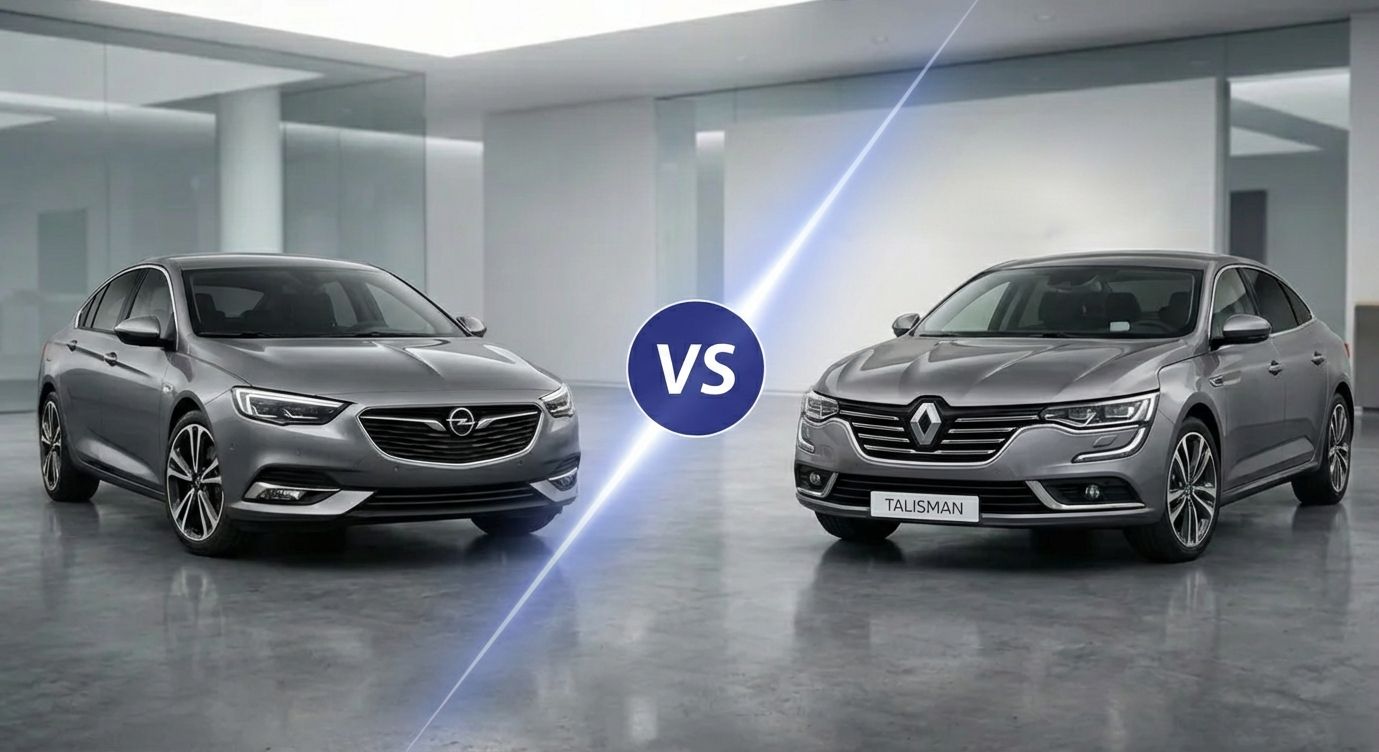
Car battle
Opel Insignia vs. Renault Talisman: Complete comparison 2026
Opel Insignia vs Renault Talisman: A Detailed Comparison. Find out which executive sedan is the better choice. Real data, features, and verdict.
Apr 14, 2026
Articles
Car battle
Detailed comparison of Renault Talisman vs. Škoda Superb. Read our used car reviews, comparison of spaciousness, engines, and our final verdict before buying.
April 30, 2026
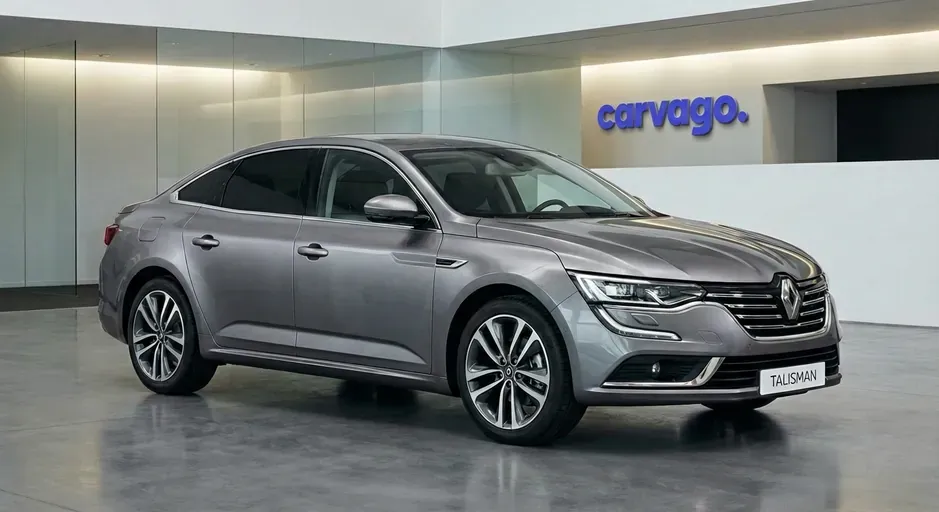
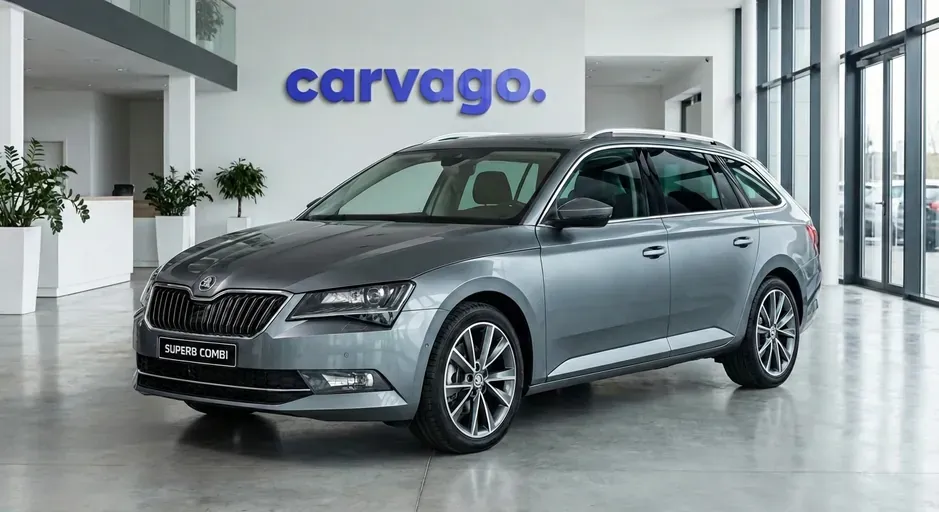
Renault Talisman, also known as the Renault Samsung SM6 in some overseas markets, brings unmistakable French charm to the mid-size segment, combined with innovative technologies and an emphasis on maximum passenger comfort. Standing against it is the Škoda Superb, a long-time ruler of spatial disciplines and a popular benchmark for practicality, which perfectly combines a representative appearance with unrivaled interior space in its category. Let's take a detailed look at which of these two popular executive and family cars represents a better choice on the used car market and will better suit your daily needs.
When choosing a used mid-size car around four years old, the Renault Talisman (1st generation after facelift) and the Škoda Superb (3rd generation after facelift) represent two majestic contenders that command respect on the road. In terms of overall exterior dimensions, both cars are very similar and rank among the largest in their segment. While the Superb relies on sharper lines that visually elongate its body, the Talisman feels slightly more muscular thanks to its marginally wider stance.
Looking at the specific figures, the differences are in millimeters, yet they have a noticeable impact on proportions. The Škoda Superb in its liftback version measures an impressive 4869 mm in length, surpassing its French sedan rival by 20 mm. Interestingly, however, for the more practical estate body styles, the tables turn – the Renault Talisman Grandtour is, at 4865 mm, a hair longer than the Škoda Superb Combi (4862 mm). The French model also scores with its greater width (1868 mm vs. 1864 mm for the Škoda), which gives it a more stable stance, but also means slightly higher demands when maneuvering in narrow underground garages.
The most important parameter for interior space, however, is the wheelbase, and in this discipline, the representative from Mladá Boleslav clearly has the upper hand. The Superb has a wheelbase of 2841 mm, which is a full 32 mm more than the Talisman (2809 mm). This seemingly small difference is the main reason why the Škoda Superb offers literally regal and unsurpassed legroom in its class in the rear seats. Furthermore, the Superb is slightly taller, adding valuable millimeters of headroom for passengers. The Talisman will thus appeal more to drivers looking for a lower, sportier silhouette, while the Superb is the ultimate champion for maximum cabin airiness.
| Parameter | Renault Talisman Sedan | Škoda Superb Liftback | Renault Talisman Grandtour (Estate) | Škoda Superb Combi |
|---|---|---|---|---|
| Width (mm) | 1868 | 1864 | 1868 | 1864 |
| Length (mm) | 4849 | 4861 - 4869 | 4865 | 4856 - 4862 |
| Height (mm) | 1456 - 1463 | 1468 - 1476 | 1456 - 1465 | 1453 - 1477 |
| Wheelbase (mm) | 2808 - 2809 | 2839 - 2841 | 2808 - 2809 | 2841 |
When comparing luggage space, we come to one of the most important disciplines for most people interested in a practical family or executive car. Trunk volume and its overall usability play a crucial role in everyday life, whether you're dealing with moving house, weekend shopping, or packing for a family holiday. Although both models fall into the same automotive class, their concept and structural design of the rear differ significantly. While the Škoda Superb has long reigned over the market as the uncompromising king of spaciousness, the Renault Talisman focuses more on sleek design and a premium appearance.
The basic figures speak quite clearly in favor of the Czech car. The third-generation Škoda Superb offers a giant 625-liter trunk in its default liftback body style, which provides absolutely perfect access thanks to the fully opening tailgate including the window. In contrast, the Renault Talisman opts for a more traditional four-door sedan format; its stated 608 liters is an excellent value within the class, but given the structurally limited opening, loading larger items is noticeably more difficult. Practical station wagons are even more sought after on the market for roughly four-year-old used cars. Here, the Mladá Boleslav model offers a vast 660 liters compared to 572 liters for its French competitor. In real-world use, this paper difference literally represents space for several extra suitcases. It is a size that will be generously sufficient for the vast majority of families for weekend shopping and longer holidays. However, prospective buyers should watch out for modern plug-in hybrid powertrains. In the case of the popular Škoda Superb iV, the batteries encroach on the trunk and reduce its basic volume to 485 liters for the liftback and 510 liters for the estate version. The Talisman was not offered with a plug-in hybrid powertrain in this generation, so you don't have to deal with a similar reduction.
When there is a need to move truly bulky cargo and after fully folding down the rear backrests, the differences between the two cars deepen even further. The Škoda Superb Estate suddenly becomes a small van with a maximum loading volume of 1,950 liters, making it hard to beat in its class. The Renault estate offers a solid 1,681 liters in the same situation. A very similar gap also exists for the basic sloping-rear versions – you can load up to 1,760 liters into the Superb liftback with the seats folded, while the traditionally styled Talisman sedan provides a maximum capacity of only around 1,022 liters for transporting longer cargo.
| Parameter | Renault Talisman Sedan | Škoda Superb Liftback | Renault Talisman Estate | Škoda Superb Estate |
|---|---|---|---|---|
| Base volume (liters) | 608 | 625 | 572 | 660 |
| Max volume with seats folded down (liters) | 1022 | 1760 | 1681 | 1950 |
If maximum interior space and absolute versatility when loading are your priorities, the Škoda Superb is the clear choice on the used car market. While the Renault Talisman scores with charm, it narrowly loses to its Czech competitor in terms of practicality and variability.
A car's ability to tow a trailer plays a pivotal role when choosing a family or company vehicle. It fundamentally determines the overall practicality of the car – whether you need to reliably transport bulky construction materials or are looking for the ideal towing vehicle for a caravan. When comparing the 3rd generation Škoda Superb and the 1st generation Renault Talisman on the market for approximately four-year-old used cars, we encounter quite significant differences that can easily decide the winner.
Base vs. Maximum Towing Capacity
The base engines of both vehicles offer almost identical starting values. The standard braked trailer weight starts at 1500 kg for the Renault Talisman (represented, for example, by the TCe 160 petrol engine). Similarly, the Škoda Superb with the base 1.5 TSI (110 kW) engine can tow a trailer weighing 1600 kg.
However, a major turning point comes with the maximum permitted weights. The most powerful versions of the Renault Talisman, represented by Blue dCi diesel engines (e.g., with 147 kW), can handle a maximum of 1850 kg on the tow bar. In contrast, the Škoda Superb is a renowned workhorse in its class and, with powerful two-liter engines (2.0 TDI and 2.0 TSI), it reliably tows a braked trailer weighing up to 2200 kg.
Watch Out for Hybrid Models
When choosing, it is very important to monitor the specifications of individual versions, where capacities vary significantly. If you choose, for example, the popular Škoda Superb 1.4 TSI iV plug-in hybrid version, you must expect a noticeable reduction. Due to the additional weight of the traction battery and different construction, the maximum towing capacity here drops to 1600 kg.
Practical Impacts in Real Life
In practice, every kilogram plays a big role in what you can hitch to the car. The 2200 kg limit of the diesel Škoda Superb easily covers the safe towing of heavy double-axle horse trailers or the transport of large boats. More common values around 1800 kg provide plenty of options for safely hitching a large caravan, which is, without exaggeration, sufficient for a weekend trip or a longer family holiday. The Renault Talisman, on the other hand, with its absolute limit of 1850 kg, will primarily suit those who use the tow bar for medium-heavy loads.
Final Evaluation
From the perspective of towing capabilities, the Renault Talisman clearly comes up short and is suitable mainly for drivers with standard recreational requirements. However, if you need a car with huge utility value and your plans regularly include towing heavy caravans, the third-generation Škoda Superb is a much more confident and versatile choice.
| Model and motorization | Braked weight of trailer (kg) | Unbraked weight of trailer (kg) |
|---|---|---|
| Renault Talisman 1.3 TCe 160 (117 kW) | 1500 - 1800 | 750 |
| Renault Talisman 2.0 Blue dCi 200 (147 kW) | 1800 - 1850 | 750 |
| Škoda Superb 1.5 TSI (110 kW) | 1600 | 750 |
| Škoda Superb 1.4 TSI iV (115 kW) | 1600 | 750 |
| Škoda Superb 2.0 TDI (110 kW - 147 kW) | 2000 - 2200 | 750 |
| Škoda Superb 2.0 TSI (140 kW - 206 kW) | 1800 - 2200 | 750 |
When comparing the engines of four-year-old used cars (approximately from 2019 to 2022), a clear difference in the philosophy of the two brands emerges, which can be of fundamental importance for potential buyers at a used car dealership. While the 3rd generation Skoda Superb after its facelift relies on an extremely wide range of proven VW Group TSI and TDI engines, including powerful petrol versions with all-wheel drive (4x4) and a rechargeable plug-in hybrid, the 1st generation Renault Talisman after its modernization offers exclusively front-wheel drive and a more traditional approach. On the other hand, it scores points with its economical Blue dCi diesels and very interesting petrol engines, the development of which involved Mercedes-Benz (the compact 1.3 TCe) or the Alpine sports division (the powerful 1.8 TCe). For the buyer, this means a clear choice: if you are looking for a reliable 4x4, a modern hybrid for the city, or a "highway rocket" with power approaching 300 hp, the Superb is the only option. However, if you want a highly comfortable highway cruiser with an economical diesel engine at an often more favorable purchase price, the Talisman represents a surprisingly tempting alternative.
As part of the 2020 modernization, Renault phased out the older 1.5 dCi and 1.6 dCi units (which accompanied the model in its early years) and replaced them with cleaner and mechanically more robust units found in used cars around 4 years old. The 1.7 Blue dCi engine (in 88 or 110 kW versions) became the basis of the diesel range for a short time, being the only one paired with a manual transmission, but its production ended shortly after 2020. The real gem for highway mile-munchers, however, is the updated 2.0 Blue dCi. This was offered in power levels of 118 kW (160 hp), 138 kW (190 hp), and 147 kW (200 hp). This engine excels with excellent low-end pull (up to 400 Nm) and real-world highway consumption safely under 6 liters. The petrol portfolio is represented by the modern 1.3 TCe four-cylinder (designated as TCe 160 GPF) with 117 kW. For such a large car, it is surprisingly refined, dynamic, and economical. The pinnacle is the dynamic 1.8 TCe 225 GPF petrol engine with 165 kW, whose hardware base comes directly from the Alpine A110 sports model and the Mégane R.S. hot hatch. In the vast majority of four-year-old vehicles from this generation, you will be shifting via a reliable EDC dual-clutch automatic transmission.
| Engine | Fuel | Power (kW) | Torque (Nm) | Transmission |
|---|---|---|---|---|
| 1.3 TCe 160 GPF | Petrol | 117 | 270 | 7-speed EDC |
| 1.8 TCe 225 GPF | Petrol | 165 | 300 | 7-speed EDC |
| 1.7 Blue dCi 120 / 150 | Diesel | 88 / 110 | 300 / 340 | 6-speed manual |
| 2.0 Blue dCi 160 | Diesel | 118 | 360 | 6-speed EDC |
| 2.0 Blue dCi 190 / 200 | Diesel | 138 / 147 | 400 | 6-speed EDC |
The third generation of the Skoda Superb (in its facelifted form from 2019 to 2023) offers a technically much more diverse engine range that will satisfy almost every driver. The base of the petrol range is the 1.5 TSI four-cylinder with cylinder deactivation technology (ACT) and 110 kW, which is extremely popular on the used car market for its smooth operation and low consumption. Higher highway dynamics are provided by the 2.0 TSI with 140 kW, and for demanding drivers, there is the top-tier 2.0 TSI version (tuned to 200 or 206 kW depending on the year of manufacture), which is standardly paired with 4x4 drive and makes the Superb an unexpectedly fast car (a "sleeper"). The Superb also scored points with corporate customers as a plug-in hybrid labeled 1.4 TSI iV, which combines a petrol engine with an electric motor for a total system output of 160 kW and allows for electric driving in the city. As for diesel, the small 1.6 TDI (88 kW) unit quietly disappeared from the range in 2020, leaving the market for newer used cars entirely to the legendary 2.0 TDI units. These are available with the proven 110 kW output or in a stronger, improved "Evo" version with 140 kW or 147 kW. Both diesels and the more powerful petrol engines could be quite commonly configured with all-wheel drive.
| Engine | Fuel | Power (kW) | Torque (Nm) | Transmission |
|---|---|---|---|---|
| 1.4 TSI iV (PHEV) | Plug-in Hybrid | 160 (syst.) | 400 (syst.) | 6-speed DSG |
| 1.5 TSI (ACT) | Petrol | 110 | 250 | 6-speed manual / 7-speed DSG |
| 2.0 TSI | Petrol | 140 | 320 | 7-speed DSG |
| 2.0 TSI 4x4 | Petrol | 200 / 206 | 400 | 7-speed DSG |
| 1.6 TDI (until 2020) | Diesel | 88 | 250 | 7-speed DSG |
| 2.0 TDI | Diesel | 110 | 340 - 360 | 6-speed manual / 7-speed DSG |
| 2.0 TDI 4x4 | Diesel | 110 / 140 / 147 | 360 - 400 | 7-speed DSG |
The greatest strength of the Skoda Superb is its versatility. Thanks to the availability of the 4x4 version, the economical plug-in hybrid, and the dynamically potent two-liter petrol engines (2.0 TSI), an enthusiastic driver, a manager, and a resident of mountainous areas will all find something to suit them. A weakness may be the slightly more expensive service for more complex versions (PHEV and Haldex for 4x4) or the noisier performance of the diesel four-cylinders when cold compared to some competitors. The Renault Talisman, on the other hand, loses points because it noticeably lacks all-wheel drive for its top models and fell behind in integrating hybrid technologies. Nevertheless, it can offer used car buyers an excellently tuned and superbly sound-insulated 2.0 Blue dCi diesel engine, which, with its mechanical durability and ability to cover long distances very economically, represents the top of its segment. The 1.3 TCe petrol base is also interesting, as its parameters far exceed paper expectations. If you require versatility, driving in challenging climatic conditions, or uncompromising acceleration, the Superb with 4x4 drive will be an absolutely sovereign choice. But if your driving takes place mostly on long and straight highways, and your goal is maximum operating economy in an attractive French package, the Renault Talisman with a two-liter diesel will serve you exceptionally well.
If you require all-wheel drive, a hybrid, or a high-performance family racer in a used car, the Skoda Superb has no competition; however, if front-wheel drive is enough for you, the two-liter diesel in the Renault Talisman represents a highway cruiser with better sound insulation and a more favorable purchase price.
Choosing the right engine is absolutely crucial for large executive and family cars for long-term satisfaction, reliability, and reasonable operating costs. When comparing these two models, we encounter an interesting engineering battle. While the Škoda Superb relies on the constantly improved and legendary group platform EA288 Evo (equipped with Twin Dosing technology for significant emission reduction), the Renault Talisman, after initial experiments with smaller units, deployed a robust two-liter M9R block with roots in the Nissan alliance. Both cars are primarily highway cruisers for covering long distances, but their power units require a slightly different approach to maintenance and inspection when buying on the used car market.
This engine, which is widely available in the 1st generation Talisman for vehicles from 2018 to 2022 (making it an ideal target for a roughly four-year-old used car), represents the absolute pinnacle of what you can have under the hood of this car. It replaced the older and mechanically more vulnerable 1.6 dCi units in the lineup and returned the necessary reliability to the French sedan or estate.
If you are choosing a roughly four-year-old used car (i.e., the facelifted 3rd generation available between 2020 and 2023), the two-liter diesel in the improved Evo generation is clearly the most sensible and natural choice for the Superb.
Every experienced motorist knows that official fuel consumption figures given by manufacturers in promotional materials often differ in daily reality. Paper data usually originates in specific laboratory conditions that hardly simulate a fully loaded car, long highway climbs, or daily crawling in a congested city. To get a truly objective picture of the operating costs of roughly four-year-old used cars, we rely on real data from drivers themselves. We draw information from the popular independent community portal Spritmonitor.de and long-term tests of the magazine , where thousands of owners carefully record every refueling. We focused exclusively on generations and engines that are currently most in demand on the used car market (for the Škoda Superb, this is the 3rd generation after the facelift; for the Renault Talisman, the refreshed models from 2020–2022).
The following table provides an overview of the real average consumption of the most common engine versions of both models. For better clarity, the data is sorted by fuel type, from economical diesel engines to more powerful gasoline units:
| Model and engine | Average consumption (l/100 km) |
|---|---|
| Škoda Superb 2.0 TDI SCR | 5.5 |
| Renault Talisman BLUE dCi 160 | 5.8 |
| Renault Talisman BLUE dCi 190 | 6.3 |
| Renault Talisman TCe 160 GPF | 6.5 |
| Škoda Superb 1.5 TSI | 6.6 |
| Škoda Superb 2.0 TSI | 7.6 |
| Renault Talisman TCe 225 GPF | 8.5 |
Looking at the real numbers, several clear trends emerge. The king of efficiency on long routes undoubtedly remains diesel power. The Škoda Superb, with its proven 2.0 TDI SCR two-liter engine, achieves an excellent average of 5.5 l/100 km, slightly beating the competing Renault Talisman with the popular BLUE dCi 160 engine. Despite a slightly higher consumption of around 5.8 l/100 km, it still represents an absolutely great choice for highway mile-eaters.
However, a completely different situation occurs with gasoline engines. The concept of downsizing in smaller turbocharged units does not mean an automatic win in heavy mid-size cars, and the real savings are not as large as official tables promise. Both the French TCe 160 GPF engine (with a 1.3-liter displacement) and the Czech 1.5 TSI ask for an average of 6.5 to 6.6 liters of fuel in the real world. A well-known fact is shown here – small turbos can be very efficient during defensive driving outside the city, but under greater load (for example, on the highway or with a full trunk), their consumption rises steeply. Furthermore, if you reach for the top gasoline versions with higher displacement (such as the powerful TCe 225 GPF or the popular two-liter 2.0 TSI), you must expect consumption approaching the eight-liter mark and beyond.
For the average user, fairly clear recommendations follow from this data. If you spend most of your time on highways or commute long distances daily, the diesel variants of both cars will save you significant money and, thanks to large tanks, guarantee a huge range. Conversely, for drivers with lower annual mileage or those who move primarily in the city and suburban areas, modern gasoline engines like the 1.5 TSI and TCe 160 are a highly sensible alternative. With them, you avoid potential service costs associated with the more complex emission systems of diesels.
In the end, however, consumption will most likely not be the main deciding factor between these two rivals. Both models offer very similar operating costs in their core engines and can be exemplarily efficient. The final choice will thus depend more on personal sympathy for a specific brand, individual requirements for interior space, and preferences in terms of driving comfort.
When looking at the used car market, specifically focusing on roughly four-year-old vehicles (2021 to 2022 models), we encounter completely different market behaviors for these two mid-size representatives. While the Renault Talisman was nearing the end of its production cycle during this time and represents a typical French executive car with faster depreciation, the third-generation Škoda Superb (post-facelift) is a massive phenomenon on the market, holding its price with surprising tenacity.
If you have a strictly defined budget, the French representative will be a much more tempting choice for you. Accelerated depreciation means that for the same money, you get an objectively younger car from Renault, or a much richer equipment level with a more attractive engine.
| Model (2021–2022 models) | Approximate starting price | Price for a well-equipped unit (lower mileage) |
|---|---|---|
| Renault Talisman | approx. €16,000 | approx. €23,000 |
| Škoda Superb | approx. €21,000 | €31,000 and more |
The prices listed are approximate and always depend on the specific engine, trim level, and overall condition of the vehicle.
With a four-year-old Renault Talisman, you often come across excellently equipped versions for very reasonable money. Top-tier Initiale Paris trims are not uncommon, offering massage seats, adaptive suspension, 4Control rear-wheel steering, and modernized diesel (2.0 dCi) or petrol (1.3 TCe) engines.
From a residual value perspective, the Superb is an absolute certainty. Four-year-old cars with the popular 2.0 TDI diesel (110 kW or 147 kW) in attractive trims like Sportline or L&K easily keep their price well above the €25,000 mark, while low-mileage units can effortlessly reach up to €33,000.
While the purchase price clearly favors the Talisman, with the Superb, you can rely on an extremely extensive network of both independent and authorized service centers and excellent availability of affordable aftermarket spare parts. Operating costs can thus partially compensate for the higher purchase price of the Škoda over a longer period. However, the reliability of the four-year-old vehicles themselves is good for both brands, and with regular maintenance, they will serve reliably for many years.
While the Renault Talisman is a fantastic choice for buyers looking for maximum luxury and comfort at a fraction of the original price, the Škoda Superb requires a significantly higher initial investment, which, however, it fully compensates for in the future with much easier resale.
Both compared vehicles received the maximum five-star rating in crash tests by the independent organization Euro NCAP. However, for those interested in a roughly four-year-old used car, it is important to put this result into the correct context. Euro NCAP methodology and its safety standards are constantly evolving and becoming stricter. Percentage scores from previous years cannot be directly compared with the results of the latest models, which are tested today according to much more demanding protocols involving complex intersection scenarios and advanced detection of cyclists or pedestrians when reversing.
Renault Talisman underwent Euro NCAP barrier tests in 2015, earning five stars. Its strength was excellent adult occupant protection, for which the car received a great rating of 86%. Child protection reached a very solid 84%, and the safety assistance systems of the time were rated at 76%. A minor weakness of the car was the protection of vulnerable road users, primarily pedestrians, where the Talisman scored an average of 68%. Although the car received partial updates to its electronic assistants during its life cycle, its official safety certification from 2015 has already formally expired, as is common with older tests.
The third-generation Škoda Superb underwent identical crash tests also in 2015, and it too took home the full five stars. Adult protection was exactly the same as its French competitor (86%), and the assistance systems also achieved the same percentage score (76%). However, the Czech representative, built on the highly rigid MQB platform, outperformed its rival in other disciplines – child passenger protection was rated slightly better (86%), and the Superb was also significantly friendlier in the event of a potential collision with a pedestrian (71%). In this case as well, however, the validity of the original certificate from the time of the model's introduction has already lapsed.
| Parameter | Renault Talisman | Škoda Superb |
|---|---|---|
| Year of testing | 2015 | 2015 |
| Adult occupant protection | 86 % | 86 % |
| Child occupant protection | 84 % | 86 % |
| Vulnerable road user protection | 68 % | 71 % |
| Safety assistance systems | 76 % | 76 % |
In terms of current and state-of-the-art standards, both cars come from the same engineering era and logically lag behind today's absolute top tier with the latest generation of radars. However, in the market for nearly new used cars, they continue to represent exceptionally solid and safe choices equipped with reliable assistants that prevent common types of collisions (such as autonomous emergency braking). If we were to determine an overall winner in terms of passive and active safety, the Škoda Superb offers a slightly more complete and versatile safety package, primarily thanks to the demonstrably higher level of protection for children in the rear seats and a gentler approach to vulnerable road users.
Although the ratings for both models date back to 2015, they represent an above-standard safe choice, with the Škoda Superb offering slightly more balanced protection for children and pedestrians.
In addition to standard equipment, each model offers several unique features that can be decisive for the customer and bring specific added value for everyday life with the car.
The Talisman focuses primarily on an extraordinary driving experience, technological elegance, and maximum acoustic and seating comfort.
The Czech representative scores with uncompromising practicality, an unrivaled amount of space, and details that make everyday use easier.
| Key feature | Renault Talisman | Škoda Superb |
|---|---|---|
| Rear-axle steering | Yes (4CONTROL) | No |
| Adaptive chassis | Yes | Yes (DCC) |
| Integrated umbrellas in doors | No | Yes |
| All-wheel drive (4x4) | No | Yes |
| Plug-in hybrid version | No | Yes (Superb iV) |
| Matrix-LED headlights | Yes (LED Matrix Vision) | Yes (Crystal Lighting) |
Attractive and elegant French design that doesn't get lost in the crowd
4Control system (four-wheel steering) ensuring exceptional agility in the city and stability in corners
Above-standard comfortable seats, with massage function in higher trim levels
Significantly lower purchase price on the used car market for comparable equipment
Very good cabin soundproofing and a smooth chassis for long journeys
Slow and less intuitive infotainment system (R-Link 2) in pre-facelift models
Less headroom and legroom in the rear seats compared to its Czech rival
Faster depreciation of residual value upon resale
Narrower range of engine options and poorer availability of used cars on the market
The Renault Talisman represents an excellent choice for drivers looking for an original look, maximum highway comfort, and rich equipment at a more affordable price. Thanks to the unique 4Control chassis and great seats, it is an exceptionally comfortable touring car, provided you can accept an average multimedia system and a steeper drop in value.
Unbeatable interior space, especially in front of the rear passengers' knees
Huge and maximally usable luggage compartment with cleverly designed Simply Clever details
Fast, modern, and very user-intuitive infotainment
Wide selection of proven and dynamic engines (especially the reliable 2.0 TDI and 2.0 TSI units)
Great residual value retention and a huge service network with good parts availability
Significantly higher purchase price on the used car market
More conservative and mass-market look that doesn't stand out as much on the road
Stiffer and noisier standard suspension tuning on versions without DCC adaptive dampers
Potentially more expensive service for DSG dual-clutch transmissions if maintenance was neglected by the previous owner
The Škoda Superb is the rational benchmark of its class, perfectly serving families and demanding managers who require gigantic space and trouble-free operation. Although you will pay extra for it on the used market, the investment will return in the form of top-tier utility value, easy servicing, and slow loss of value.
Based on our own data from the CarAudit service, fault statistics, long-term user feedback, and service reports, we have compiled an overview of the most common problems that used car buyers should watch out for. Although cars approximately four years old have usually had their initial "teething problems" resolved, an independent technical inspection of the car is always essential before purchase.
Although the Renault Talisman significantly improved its reliability and build quality after the 2020 facelift, you can still encounter several typical ailments in used examples that are worth focusing on.
The French sedan offers great comfort and modern engines, but before buying, pay maximum attention to the smoothness of the EDC gearbox shifting and test the functionality of all onboard electronics.
The third-generation Škoda Superb (including the facelift from 2019) is considered a benchmark among used mid-size cars. Although it shares proven technology with other Volkswagen Group models, it has its own specific weaknesses.
The Superb is considered a reliable workhorse, but the key to satisfaction is a traceable service history, especially regarding timely oil changes in the DSG gearboxes and the condition of the TDI engines' cooling system.
When buying a used car, a thorough inspection is key, and a professional independent technical inspection of the car should be an absolute foundation before signing the purchase agreement. Both cars have their specifics, and here are several points to focus on during the test drive and inspection.
The Škoda Superb clearly dominates in terms of luggage space, with the estate version offering a massive 660 litres compared to 572 litres for the Talisman Grandtour. Furthermore, the Czech representative scores points with its unrivalled legroom for rear-seat passengers. The Talisman is slightly narrower inside, but still provides families with well above-average comfort.
The Renault Talisman often uses the 4Control four-wheel steering system, which significantly improves agility in the city and overall stability in corners. On the other hand, the Škoda Superb with the optional DCC adaptive chassis is tuned more for wafting comfort and is ideally suited for long motorway journeys. In terms of overall ride smoothness and damping of bumps, the Czech car is slightly more comfortable.
The third-generation Škoda Superb is considered a very reliable car with proven technology, although used cars require strictly regular servicing of the DSG automatic transmission and the all-wheel drive system. After its facelift (from 2020), the Renault Talisman resolved most of its earlier teething problems, and its engines are mechanically very robust. However, minor software glitches and wear on suspension components may occur slightly more frequently in the French car.
Škoda offers the legendary 2.0 TDI units in several power versions, which excel in great fuel economy and immense durability during motorway use. Renault counters capably with quiet and economical 2.0 Blue dCi engines, which are also very refined and reliable. However, the selection of engines and potential spare parts for the Superb is significantly wider and more accessible on the used car market.
The Škoda Superb relies on traditional, very clear ergonomics with plenty of physical buttons and a responsive infotainment system that is intuitive to operate. The Talisman features a dominant vertical touchscreen, which works briskly after the facelift, but navigating its menus while driving requires more practice. In terms of overall build quality and the resistance of materials to wear, the Superb's interior feels slightly more robust.
Sources: ADAC, aktualne.cz, forbes.cz, dopravniinfo.cz, autoweb.cz, autosvet.cz
This article was prepared using artificial intelligence tools. The section guarantor is Petr Dušek.
Opel Insignia vs Renault Talisman: A Detailed Comparison. Find out which executive sedan is the better choice. Real data, features, and verdict.
Apr 14, 2026
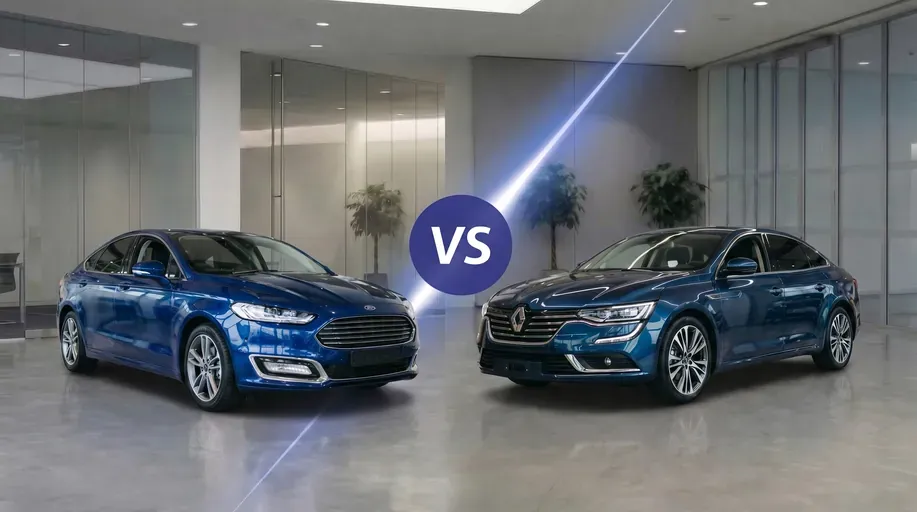
Detailed comparison of Ford Mondeo vs. Renault Talisman. Discover the differences in equipment, engines, and reliability, and read our verdict to make the right choice.
Apr 28, 2026
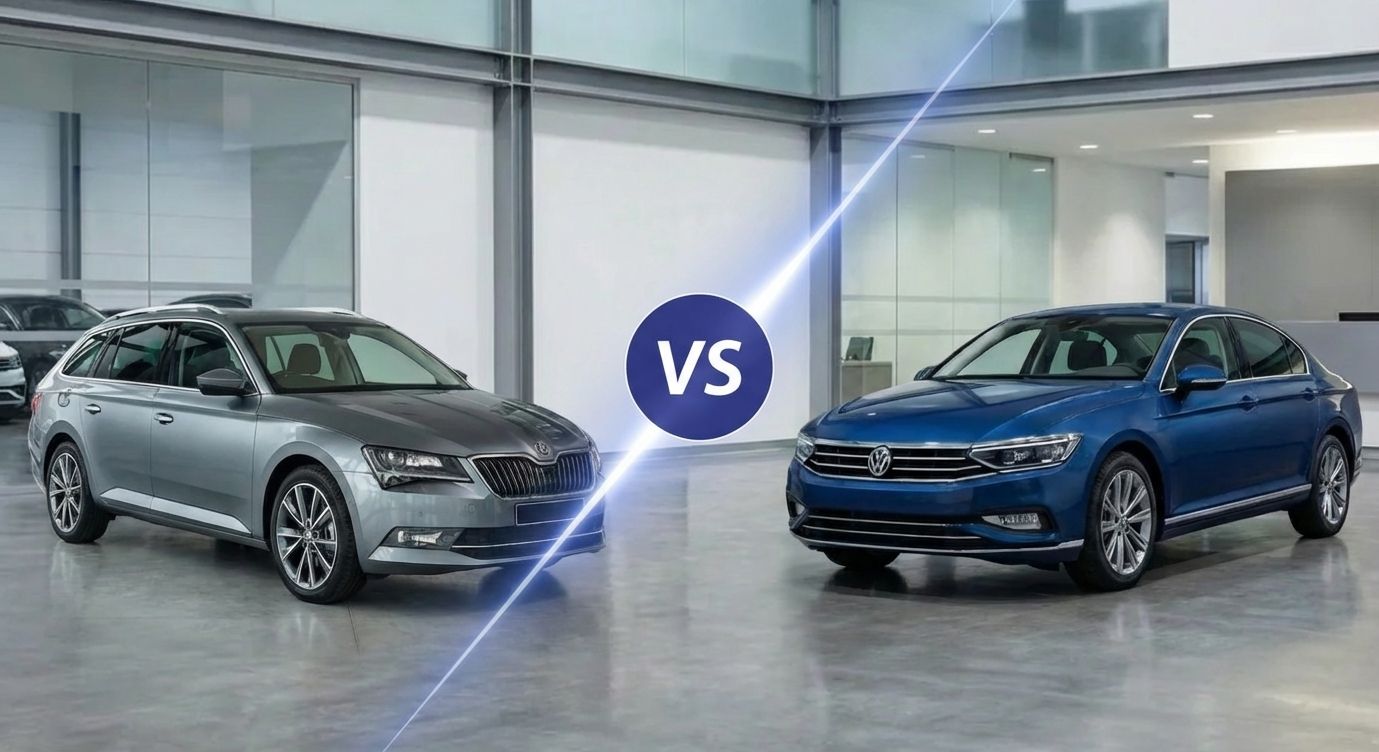
Škoda Superb vs. VW Passat: A detailed comparison, real-world experience, and a verdict to help you choose the right car for 2024.
Apr 13, 2026