
Car battle
Kia Rio vs. Seat Ibiza: Complete comparison 2026
Detailed comparison: Kia Rio vs Seat Ibiza. Discover the differences in driving characteristics, reliability, and space. Read the verdict before choosing a used car!
Apr 15, 2026
Articles
Car battle
Detailed comparison: Renault Clio vs. Toyota Yaris. Which city hatchback should you choose? We evaluated fuel consumption, features, and reliability. Discover our verdict!
May 2, 2026
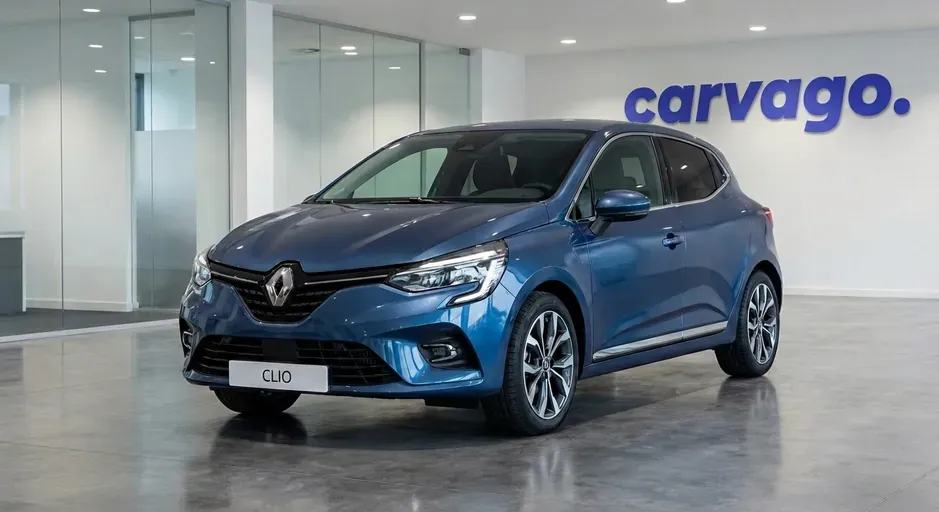

Renault Clio, which is still known as the Renault Lutecia in some markets due to trademarks, represents a traditional French city hatchback that has long won the hearts of European drivers with its elegant design and above-average comfort. Its direct competitor, the Toyota Yaris, previously sold worldwide under the names Toyota Vitz or Echo and today closely linked in Europe to the identical sister model Mazda2 Hybrid, instead builds on legendary Japanese reliability and pioneering fuel-saving technologies. The following comparison will detail the strengths and weaknesses of these popular, roughly four-year-old used cars and help you find out which of the vehicles represents a smarter choice for your daily commutes.
The fifth-generation Renault Clio and the XP21 generation Toyota Yaris represent the core of the European small car segment, but they approach exterior dimensions quite differently. While the Clio confidently crosses the four-meter mark and moves dimensionally to the border of the lower-middle class, the Yaris remains exceptionally compact and true to its urban roots. This fundamental difference directly determines their ideal use – it makes the French model a more versatile car for daily commuting even outside the city, while the Japanese representative excels as an agile specialist for narrow streets and heavy traffic.
Looking at the specific numbers, the standard Renault Clio measures 4050 mm in length, which means it is a substantial 110 mm longer than the standard Toyota Yaris (3940 mm). The French hatchback is also noticeably wider in its standard versions (1798 mm compared to 1745 mm for the standard Toyota). In practice, this means the Clio offers the crew a more airy interior with more shoulder room and feels more mature and settled on the road. Conversely, thanks to its more modest footprint, the Yaris provides the driver with unbeatable maneuverability and parks without problems even in gaps that a Clio driver would have to pass with a sigh.
The tables turn when comparing height, where the standard Yaris, at 1500 mm, exceeds the low-slung Clio (1440 mm) by 60 mm. The Japanese model thus brings passengers slightly better headroom and a slightly more upright driving position, which makes getting in easier. However, Renault dominates again in the key parameter of wheelbase. Its value of 2583 mm exceeds the 2560 mm of the Toyota by 23 mm. The longer wheelbase gives the Clio greater directional stability at highway speeds and noticeably more legroom for rear passengers, making it a more comfortable choice for longer trips or transporting adult passengers.
Note: The values in the table reflect models available on the used car market approximately 4 years old (Generation V for Renault and XP21 for Toyota). Higher values in the range for the Toyota Yaris represent the specific GR Yaris sports version.
| Parameter | Renault Clio Hatchback | Toyota Yaris Hatchback |
|---|---|---|
| Width (mm) | 1798 | 1745 - 1805 |
| Length (mm) | 4050 - 4053 | 3940 - 3995 |
| Height (mm) | 1440 | 1455 - 1500 |
| Wheelbase (mm) | 2583 | 2560 |
When choosing a compact city car, trunk capacity often plays a surprisingly important role. Although these models do not primarily serve as family haulers, for many buyers they represent the main and only vehicle in the household. The practicality and overall usability of the car for a family thus depend on how easily you can fit a stroller, sports bags, or bulkier cargo for a weekend at the cottage into the trunk.
If we compare roughly four-year-old used cars on the current market – namely the fifth-generation Renault Clio and the Toyota Yaris XP21 generation – we encounter quite significant differences. The Renault Clio in its standard combustion version scores with a base capacity of 340 litres, ranking it among the absolute leaders in its segment. In contrast, the Toyota Yaris is designed more as a pure city car with a maximum emphasis on compact dimensions, and its trunk thus holds a more modest 286 litres. This noticeable difference provides the French car with exactly that extra space for a few more suitcases, which you will certainly appreciate during any major packing. Furthermore, in this target age category of used cars, neither manufacturer still offers the popular estate body style (as was previously the case with the Grandtour or Verso versions), so buyers choose exclusively from five-door hatchback variants.
When the rear seats are folded down, the gap between the two models widens even further. The Clio provides a total transport volume of up to 1,069 litres, while the Yaris stops at 935 litres. Although the space in the Toyota is fully sufficient for weekend shopping or a longer holiday for two people, the Renault offers significantly more freedom for transporting larger items. Pay attention to the chosen engine. While the hybrid Yaris maintains its 286 litres thanks to clever battery placement, the base trunk capacity of the full-hybrid Clio E-Tech shrinks to roughly 254 litres. On the other hand, a specialty is the factory LPG version of the Clio (Eco-G), which in newer model years can offer a capacity increased to an impressive 391 litres.
| Parameter | Renault Clio Hatchback | Toyota Yaris Hatchback |
|---|---|---|
| Base capacity (l) | 340 l | 286 l |
| Maximum capacity with seats folded (l) | 1069 l | 935 l |
When looking for a more versatile car for a family, the Renault Clio comes out on top, with its huge trunk being among the best in its class. The Toyota Yaris is more modest in terms of space, but it scores by the fact that its efficient hybrid doesn't take away a single extra litre of trunk capacity.
The ability to tow a trailer is not usually the most important discipline for small city hatchbacks, yet it can be decisive for overall weekend practicality. When comparing approximately four-year-old used cars, namely the fifth generation of the Renault Clio (from 2019) and the XP21 generation of the Toyota Yaris (from 2020), we encounter quite fundamental differences in this regard.
Renault Clio pleases with its consistency across the range of powertrains. Whether you go for the popular TCe three-cylinder petrol, the dCi diesel, or the more complex E-Tech full hybrid version, the car can tow a braked trailer with a maximum weight of 900 kg on the tow bar. The weight of an unbraked trailer then ranges around 550 to 580 kg, depending on the specific equipment and engine.
The Toyota Yaris, on the other hand, requires more attention when choosing a used car. While with the classic 1.5-litre petrol engine it can tow a braked trailer weighing 850 kg, and 750 kg with the basic 1.0-litre engine, its market-dominant and logically most sought-after 1.5 Hybrid variant is strictly limited to a maximum weight of just 450 kg. This value for the hybrid applies equally to both braked and unbraked trailers.
In practice, these technical differences have very noticeable impacts. While the Clio offers a reliable reserve for transporting heavier building materials, or even tows a smaller light caravan, the hybrid Yaris will significantly limit you. Its 450 kg is sufficient for a weekend shopping trip to a DIY store with a small trailer or taking fallen leaves to a recycling centre, but with any heavier load, you will immediately hit legislative and technical limits. Therefore, if you plan to use a tow bar more regularly and for various activities on a used car, the Renault Clio represents a significantly more capable and versatile workhorse.
| Model and engine | Braked trailer weight (kg) | Unbraked trailer weight (kg) |
|---|---|---|
| Renault Clio V 1.0 TCe (67 kW) | 900 | 550 - 580 |
| Renault Clio V E-Tech Hybrid (67 kW) | 900 | 550 - 580 |
| Toyota Yaris XP21 1.0 (53 kW) | 750 | 450 |
| Toyota Yaris XP21 1.5 (92 kW) | 850 | 450 |
| Toyota Yaris XP21 1.5 Hybrid (68 kW) | 450 | 450 |
When choosing a roughly four-year-old city hatchback, the fifth-generation Renault Clio and the Toyota Yaris XP21 generation represent two completely different powertrain philosophies. The differences in engines are crucial for buyers, as they directly affect long-term reliability, fuel consumption, and overall operating costs. While the Renault Clio pleases with its vast variability, including classic turbocharged petrol engines (like the popular 1.0 TCe), an exceptionally economical factory LPG version, and even a 1.5 Blue dCi diesel engine, the Toyota Yaris relies primarily on its market dominance in hybrid technology. Its renowned 1.5 Hybrid system with 85 kW represents the ultimate choice for city traffic, where it excels with bulletproof reliability and real-world consumption well below four liters. For drivers on a tight budget, both cars offer basic naturally aspirated one-liter engines; however, if you desire a cheap highway cruiser, the Clio with its diesel and gas variants is the better choice. Conversely, for maximum daily efficiency and low service costs in and around the city, the hybrid Yaris is king.
The range of powertrains for the fifth-generation Renault Clio from 2019–2023 covers almost all the needs of an average driver. The base is the naturally aspirated 1.0 SCe three-cylinder, which, with its modest power, is more suitable for undemanding city trips. The golden middle ground and by far the most popular used car choice is the turbocharged 1.0 TCe, offering solid dynamics and favorable consumption. A major benefit for budget-conscious drivers is the 1.0 TCe 100 LPG version, designed with a factory gas drive, which radically reduces costs per kilometer. For highway commuters, Renault supplied the 1.5 Blue dCi four-cylinder diesel; however, as market data shows, this rare diesel engine (alongside the more powerful 1.3 TCe petrol four-cylinder) is no longer available – both engines were phased out around 2021 and 2022 due to increasingly strict emission standards. The role of the economical and dynamic flagship was subsequently taken over by the sophisticated E-Tech 140 full-hybrid system, which uses a unique multi-mode automatic transmission without a classic clutch.
| Engine Type | Fuel | Power (kW) | Torque (Nm) | Transmission |
|---|---|---|---|---|
| 1.0 SCe 65 | Petrol | 48 | 95 | 5MT |
| 1.0 TCe 90 | Petrol | 66 | 160 / 142 | 6MT / X-Tronic (CVT) |
| 1.0 TCe 100 LPG | Petrol / LPG | 74 | 170 | 6MT |
| 1.3 TCe 140 | Petrol | 103 | 260 | 6MT / 7EDC |
| 1.5 Blue dCi 85 / 115 | Diesel | 63 / 85 | 220 / 260 | 6MT |
| E-Tech Hybrid 140 | Hybrid | 103 | 144 + 205 (electric) | Multi-mode automatic |
The engine lineup in the fourth-generation Toyota Yaris (since 2020) is much more straightforward and entirely dedicated to perfect operational efficiency. The main star and the unquestionable reason why the vast majority of people buy a used Yaris is the 1.5 Hybrid 116 system. The combination of a naturally aspirated three-cylinder operating in the economical Atkinson cycle, a powerful electric motor, and a reliable e-CVT planetary gearbox is the embodiment of smoothness and economy in congested streets. If you prefer purely conventional drive, the basic choice is the naturally aspirated 1.0 VVT-i, suitable for truly calm drivers. However, a very interesting alternative is the classic 1.5 VVT-i Dynamic Force petrol engine with 92 kW. This non-electrified unit surprises with its rev-happy character, punchy dynamics, and brings a bit of sporty driving to a car the size of the Yaris. The pinnacle of the entire range, which stands essentially as a separate entity from the world of WRC, is the legendary GR Yaris track special with a monstrous turbocharged 1.6-liter, all-wheel-drive system, and manual transmission.
| Engine Type | Fuel | Power (kW) | Torque (Nm) | Transmission |
|---|---|---|---|---|
| 1.0 VVT-i | Petrol | 53 | 93 | 5MT |
| 1.5 VVT-i | Petrol | 92 | 153 | 6MT / CVT |
| 1.5 Hybrid 116 | Hybrid | 85 | 120 + 141 (electric) | e-CVT |
| 1.6 Turbo (GR Yaris) | Petrol | 192 | 360 | 6MT / 8AT |
While the Renault Clio attracts with unprecedented flexibility including economical LPG and diesel for long-distance trips, the Toyota Yaris counters with an absolutely superior and reliable hybrid system that simply has no competition for city and suburban driving.
Choosing the right engine is absolutely crucial for long-term satisfaction with the car. While Renault bets on lightweight construction and proven small-displacement turbo engines for the Clio, Toyota has perfected its hybrid technology, which makes up the vast majority of the market for modern used cars. Interestingly, the naturally aspirated M15A three-cylinder in the hybrid Yaris achieves an incredible thermodynamic efficiency of 40%, a value historically reserved more for diesel units. Conversely, the one-liter engine in the Clio scores with its indirect fuel injection concept, thanks to which it does not face the risk of intake valve carbonization even during constant stop-and-go driving in a congested city. Our recommendations are based on real-world fuel consumption, mechanical reliability, and feedback from owners of roughly four-year-old used cars.
This turbocharged one-liter three-cylinder is the most sensible and reliable choice for the fifth-generation Clio (from 2020–2025). It offers a great balance between dynamics and operating costs, with 160 Nm of torque providing the car with sufficient flexibility even outside the city. Its greatest technical advantage is the aforementioned indirect fuel injection. Thanks to this, the engine does not dilute the oil with gasoline during cold starts and does not get clogged with carbon, making it an ideal companion even for drivers who mostly drive short routes around town. Long-term real-world consumption with a manual transmission stays around 5.5 liters per 100 km. In terms of risks, it is a very robust unit; however, during a test drive of a used car, focus on the smoothness of the pull when cold. If you feel significant jerking during acceleration or hear a metallic rattling from the turbocharger area after releasing the gas, it may be a worn wastegate actuator rod. This fault is primarily acoustic and does not lead to engine failure, but it is a good argument for a discount. If you desire the absolute lowest costs, look for the factory 1.0 TCe 100 LPG version on the used car market, which is mechanically identical but offers significantly cheaper operation.
If you are choosing a roughly four-year-old Yaris of the XP21 generation (sold since 2020), the full-hybrid powertrain is clearly the main reason to buy this model. This is the fourth generation of Toyota's hybrid drive, which is a masterpiece in smoothness and efficiency. In urban and suburban traffic, the car can drive a large part of the time purely on electricity, which brings real-world consumption down to commonly below 4 liters per 100 km without any effort. From a mechanical standpoint, this system is almost bulletproof – by design, it lacks delicate parts that commonly fail in used cars, such as a conventional clutch, starter, alternator, or turbocharger. Power delivery is handled by the completely reliable e-CVT electronic transmission. Problems generally avoid this car, but as a used car buyer, you must check one key thing: the traction battery cooling filter. It is located at the bottom of the rear seats. If the previous owner did not clean the filter and it is clogged with dust or pet hair, the battery cools less effectively and degrades faster. A clogged filter is easily visible to the naked eye; checking it will tell you a lot about the care of the previous service. This engine is absolutely ideal for defensive and calm drivers, families with children looking for a safe and cheap second car for the family, and for anyone who spends most of their time in city traffic jams.
The official fuel consumption figures provided by car manufacturers under laboratory conditions often differ significantly from the reality of everyday driving. For the most accurate comparison possible, we have focused on real-world data obtained directly from drivers on the independent community portal Spritmonitor.de. Considering the target group of customers looking for a used car, we selected models approximately four years old, which corresponds to the fifth-generation Renault Clio (produced since 2019) and the fourth-generation Toyota Yaris (codenamed XP21, since 2020). User data clearly shows how both cars perform in real-world combined driving conditions.
Data source:
| Model and Engine | Average Consumption (l/100 km) |
|---|---|
| Toyota Yaris 1.5 Hybrid 116 | 3.8 |
| Renault Clio BLUE dCi 100 | 3.9 |
| Renault Clio E-Tech Hybrid 140 | 4.0 |
| Renault Clio SCe 65 | 4.9 |
| Toyota Yaris 1.5 Dynamic Force | 5.0 |
| Renault Clio TCe 90 | 5.2 |
| Renault Clio TCe 100 LPG | 5.7 |
| Toyota Yaris 1.0 VVT-i | 5.9 |
Looking at the real-world data, the interpretation of trends is very clear. The absolute king of efficiency is the Toyota Yaris with the 1.5 Hybrid 116 engine, which averages a fantastic 3.8 l/100 km in real-world driving and can be even more efficient in the city. Renault counters effectively with its E-Tech full-hybrid system (4.0 l/100 km) and the still-popular BLUE dCi 100 diesel engine, which is exceptionally efficient for longer trips with an average of 3.9 liters. A completely surprising finding, on the other hand, is the paradox among the weakest base engines. The 1.0-liter three-cylinder in the Toyota Yaris (1.0 VVT-i) shows a consumption of 5.9 l/100 km, which is paradoxically more than the much larger and more powerful 1.5-liter engine requires (5.0 l/100 km). This is because the weaker engine struggles much more in normal traffic, and the driver has to push it into high revs. The Clio is very similar, where the turbocharged TCe 90 three-cylinder requires only three-tenths of a liter more than the weak naturally aspirated SCe 65 base, but in return provides vastly superior driving dynamics.
For typical drivers moving mainly in congested city and suburban traffic, the Japanese hybrid Yaris or the electrified Clio clearly make the most sense, as the benefits of energy recuperation are fully realized. However, if you are looking for a more affordable option and prefer classic technology on a tighter budget, the traditional naturally aspirated Toyota Yaris 1.5 or the turbocharged Renault Clio 1.0 TCe represent an ideal middle ground without the threat of high fuel bills. For long-distance highway commuters, the aforementioned diesel Renault still defends its position excellently as one of the "last of the Mohicans" in this category. A specific case is the Clio version with factory LPG, where the higher physical fuel consumption in liters (around 5.7 l/100 km) is more than compensated for in the family budget by the roughly half-price cost of gas at filling stations.
In conclusion, fuel consumption and the range of powertrains will likely play a major role when deciding between these two cars. While Toyota absolutely dominates the city in practice thanks to its top-tier and bulletproof reliable hybrid technology, Renault maintains the advantage of a much more versatile range. With the Clio, buyers can choose from a highway diesel to a well-engineered turbo petrol or factory-integrated LPG. This appeals to a wider, more practically and traditionally oriented spectrum of buyers in the used car market.
When looking for a reliable city car around four years old (typically model years 2021 and 2022), the fifth-generation Renault Clio and the fourth-generation Toyota Yaris represent two completely different price categories. The choice between these models on the secondary market will primarily depend on whether you prefer the lowest possible initial investment or are looking for a car with minimal depreciation and a reputation for reliability.
The Renault Clio can be purchased on the used car market for very attractive amounts. Four-year-old examples typically range from €10,000 to €13,000. In terms of market dynamics, the Clio experiences a steeper drop in value in the first three to four years than its Japanese or German competitors, making it an ideal target for bargain hunters. For a price under €12,000, you get a modern car, very often with a solid and economical 1.0 TCe engine, a high-quality interior, and one of the largest luggage compartments in its class.
For a Toyota Yaris, you need to prepare a significantly higher budget for a used purchase. Models of the same age are offered in a price range of roughly €13,000 to €18,000. The higher price tag is driven up mainly by versions with a full hybrid powertrain (1.5 Hybrid), which are in huge demand due to their extremely low fuel consumption in city traffic and durable technology. The Yaris holds its value excellently – benefiting not only from a long-term reputation for reliability but also from the factory extended warranty program (Toyota Relax), which covers many used cars and thus gives buyers great peace of mind.
Brief comparison of the used car market:
As a four-year-old used car, the Renault Clio is a perfect choice for those who want a modern and spacious car for as little money as possible, while the more expensive Toyota Yaris makes sense as a safe bet that holds its value excellently and rewards with unbeatable fuel consumption in the city.
Both cars earned the maximum five-star rating from the prestigious independent Euro NCAP tests, but when comparing the safety of used cars, it is crucial to view these results in a broader context. The year of testing plays a vital role because Euro NCAP's methodology and protocols are constantly evolving and becoming stricter. Percentage scores from different years cannot be simply and directly compared – what was enough for an excellent result under an older protocol might not suffice to achieve the same numbers under newer and much tougher conditions.
The fifth-generation Renault Clio underwent crash tests in 2019 and achieved exceptionally convincing results. Under the methodology of that time, it dominated particularly in adult occupant protection, where it earned a great 96%, and it also performed very well in child protection (89%). A rigid platform and solid standard equipment, including lane-keeping assist and an automatic emergency braking system, contributed to these excellent figures. However, in the areas of vulnerable road user protection and advanced assistance systems, its results lag slightly behind the absolute top of newer standards.
Toyota Yaris entered testing in 2020 and became the first car ever to be evaluated according to a completely redesigned and significantly stricter methodology. This newly included a more demanding frontal impact simulation with a moving deformable barrier and introduced harsher penalties for poor side-impact protection. The Yaris excelled here primarily thanks to the inclusion of a center airbag, which effectively prevents the heads of the driver and front passenger from colliding. Furthermore, the Japanese model recorded a very high rating (85%) in the safety assist category, where assessors praised the advanced detection of pedestrians and cyclists as well as the automatic braking function when turning at intersections.
| Parameter | Renault Clio | Toyota Yaris |
|---|---|---|
| Year of testing | 2019 | 2020 |
| Adult occupant protection | 96 % | 86 % |
| Child occupant protection | 89 % | 81 % |
| Vulnerable road user protection | 72 % | 78 % |
| Safety assist systems | 75 % | 85 % |
A detailed look at these values clearly shows a generational and methodological shift. Although the Renault Clio shows higher percentages for passive occupant protection on paper, the Toyota Yaris had to defend its qualities against significantly tougher criteria. Its high rating for assistance systems and better pedestrian protection reflect the fact that it features more modern active safety elements. For those interested in a car roughly four years old, both models represent the absolute top of their segment; however, overall, the Yaris provides a more modern and comprehensive safety shield meeting the stricter demands of today.
Although both cars are five-star rated and provide excellent passive safety, the Toyota Yaris offers a more comprehensive package for everyday driving thanks to testing under stricter conditions and more advanced assistants.
In addition to standard equipment, each of the models offers several unique features and technological solutions that can be decisive for a customer when choosing a used car and bring significant added value to everyday use.
One of the largest luggage compartments in its class (up to 391 liters for standard internal combustion versions)
Significant improvement in build quality and the use of soft-touch materials in the interior
Excellent price-to-value ratio on the used car market
Very good cabin soundproofing and a comfort-oriented chassis for longer journeys
Top-tier safety backed by five stars in Euro NCAP tests
More limited legroom and headroom for taller passengers in the rear seats
Significantly smaller trunk volume for the E-Tech hybrid version (reduced to 301 liters)
Poorer rear-diagonal visibility due to massive C-pillars and small glass area
Occasional slow responses and freezing of the Easy Link multimedia system
The fifth-generation Renault Clio is an excellent choice for those looking for a stylish and comfortable small car with a high-quality interior and a trunk that is huge for its class. From behind the wheel, it feels like a much more mature car, making it an ideal companion not only for daily city driving but also for regular highway commutes.
Unbeatable real-world fuel consumption for the hybrid version (often well below 4 l/100 km)
Renowned mechanical reliability and long-term high residual value
Fun and agile driving characteristics thanks to the stiff and modern TNGA platform
Very generous standard equipment of advanced safety assistants (Toyota Safety Sense)
Perfect maneuverability and compact exterior dimensions ideal for heavy city traffic
Below-average luggage compartment volume (only 286 liters) compared to the competition
Cramped space in the rear seats and harder access to the rear row due to narrow doors
More outdated graphics and overall less intuitive control of the onboard infotainment
A higher proportion of hard plastics in the interior, which makes the cabin feel less premium
The fourth-generation Toyota Yaris will perfectly suit drivers who spend the vast majority of their time in city traffic and whose absolute priority is maximum reliability combined with extremely low operating costs. Although the Yaris loses some points in overall interior spaciousness, it more than makes up for this shortcoming with agile driving characteristics and worry-free ownership.
Based on our own data provided by the Independent Car Audit, long-term user feedback, and service reports, we have compiled an overview of the most common problems that used car buyers should watch out for.
The fifth generation of the Renault Clio (produced since 2019) is a mechanically quite reliable car, but on the used car market, it mainly struggles with teething problems in the area of electronics and software.
The fifth-generation Clio is a mechanically robust car whose greatest weaknesses are infotainment software bugs and occasional strikes by assistance systems. However, the engines and chassis themselves show excellent durability.
The fourth generation of the Toyota Yaris (produced since 2020) is considered a benchmark for reliability in its class, yet specific defects occur, mainly related to the characteristics of the hybrid drive and the quality of surface materials.
The fourth-generation Toyota Yaris excels in powertrain reliability, but owners must get used to more sensitive paint, the risk of rear brake corrosion, and the need for more regular driving due to the sensitive 12V battery.
When buying a used car, a thorough inspection is key. Here are some specific points to focus on for these two models, whether during a test drive or when a physical inspection of the used car is taking place.
Renault Clio offers a significantly larger luggage compartment, with a volume of up to 391 liters for standard internal combustion versions. The Toyota Yaris has a smaller trunk with a volume of 286 liters, which is the price for its overall smaller exterior dimensions. So, if you often transport bulkier shopping or a stroller, the Clio provides noticeably more practicality.
Thanks to its length of 3.94 meters, the Toyota Yaris is about 11 centimeters shorter than the Clio, making it an ideal companion for tight spaces. A very small turning radius and excellent all-around visibility also contribute to the feeling of superb agility. With its dimensions, the Clio sits at the very top of the small car class, which makes parking slightly more difficult, but in return, it offers more mature driving characteristics on the highway.
Both cars can be purchased with excellent full hybrid powertrains, which allow for city driving with consumption below the 4 l/100 km mark. However, the 1.5 Hybrid system in the Toyota Yaris has been fine-tuned over a long period and tends to be slightly more economical and smoother in real-world driving than Renault's E-Tech system. If we compare the basic gasoline engines without hybrid assistance, the consumption of both cars levels out at around 5 to 6 liters.
The fourth-generation Toyota Yaris is generally considered the absolute benchmark for reliability, primarily due to its very durable and mechanically proven hybrid drivetrain. The fifth-generation Renault Clio has made a huge leap forward in overall build quality, and its TCe gasoline engines are considered above-average in terms of durability. In the long run and in reliability rankings, however, Toyota usually maintains its lead and also holds its residual value slightly better on the used car market.
Both cars boast a maximum five-star rating in independent Euro NCAP crash tests and offer a top-tier level of protection for both adults and children. The Toyota Yaris was one of the first cars in its class to introduce a revolutionary center airbag between the front seats, protecting the occupants in a side impact. The Renault Clio confidently counters this with a highly robust cabin structure and an exceptionally rich range of assistance systems even in the basic trim levels.
Sources: ADAC, forbes.cz, denik.cz, automagazin.cz, autoexpress.cz, autobox.cz
This article was prepared using artificial intelligence tools. The section guarantor is Petr Dušek.
Detailed comparison: Kia Rio vs Seat Ibiza. Discover the differences in driving characteristics, reliability, and space. Read the verdict before choosing a used car!
Apr 15, 2026
Toyota Aygo X vs Volkswagen up! (VW Up): Detailed comparison of city cars. Discover the differences in space, fuel consumption and equipment, and read our verdict.
Apr 13, 2026

Detailed comparison of Seat Ibiza vs. Škoda Fabia. Discover real-world experiences, equipment comparisons, fuel consumption, and the final verdict to help you with your choice.
Apr 22, 2026