Articles

Car battle

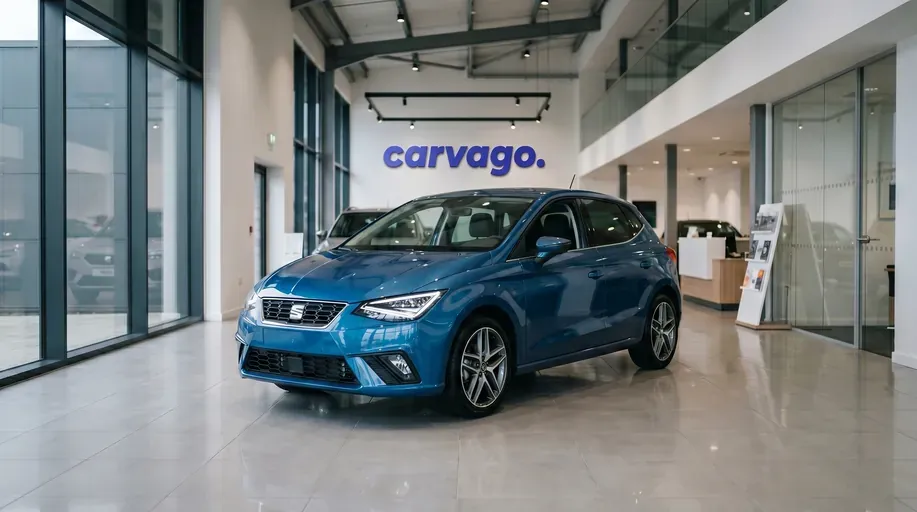
Kia Rio vs. Seat Ibiza: Complete comparison 2026

Detailed comparison: Kia Rio vs Seat Ibiza. Discover the differences in driving characteristics, reliability, and space. Read the verdict before choosing a used car!

April 15, 2026

VS
Kia Rio

Kia Rio

Seat Ibiza

Seat Ibiza

Introduction

Kia Rio, also sold under the Kia K2 name in some global markets, is a practical and reliable hatchback that wins drivers over primarily with its surprisingly spacious interior, low operating costs, and famously long warranty. Standing against it is the Seat Ibiza, an attractive and sportily tuned representative from the Volkswagen Group stable, which instead bets on a more dynamic design, modern on-board technologies, and noticeably more confident driving characteristics. Let's take a detailed look at which of these two popular city cars offers a better price-to-utility ratio on the nearly-new used car market and which of them will become the ideal choice for your daily travel.

Comparison of External Dimensions

Kia Rio and Seat Ibiza are classic representatives of the small car segment (B-segment). Looking at the generations relevant to the current used car market (roughly four-year-old cars, i.e., the YB generation for the Rio and KJ for the Ibiza), their exterior dimensions seem similar at first glance, but closer inspection reveals important differences. The Kia Rio is a slight 11 mm longer, measuring up to 4070 mm compared to the Seat Ibiza, which has a length of 4059 mm. The Spanish model, however, clearly dominates in width. At 1780 mm, it is a significant 55 mm wider than the Rio (1725 mm). This noticeable difference means that the Ibiza offers a visually more stable and sportier stance on the road, and above all, provides the occupants with substantially more shoulder room, which is especially appreciated on longer journeys.

As for the overall height of the cars, both models are almost identical. With a height of 1450 mm, the Kia Rio is only negligibly taller than the Ibiza, which ranges between 1444 and 1447 mm. However, the wheelbase tells a much more interesting story, as it is a key parameter for the cabin's longitudinal spaciousness. The Kia Rio boasts a wheelbase of 2580 mm, which is 16 mm more than the Seat Ibiza (2564 mm). This extended wheelbase gives the Korean representative a tangible advantage in rear legroom. From the perspective of everyday usability, the Rio cleverly masks its narrower build through efficient use of longitudinal space.

Overall, the choice between the two models based on exterior dimensions should depend on your spatial priorities. The Seat Ibiza is the ideal choice if you are looking for a car that feels closer to a higher class in terms of width and you value airiness and freedom in the front seats. On the other hand, the Kia Rio will better serve those who frequently carry passengers in the second row and appreciate more generous knee room. At the same time, its narrower body is an undeniable advantage and saves nerves when parking in crowded city streets and narrow garages.

ParameterKia Rio HatchbackSeat Ibiza Hatchback
Width (mm)17251780
Length (mm)4065 - 40704059
Height (mm)14501444 - 1447
Wheelbase (mm)25802564

Trunk Volume

When choosing a practical five-door hatchback, trunk capacity often plays a key role, especially if the car is to serve as the family's only vehicle or for regular weekend trips. Although both cars are very similar in their external dimensions, a look into the trunk reveals that one of them has a clear advantage. The fifth-generation Seat Ibiza (KJ) has long been known for its excellent spaciousness, and it is precisely the interior utility space that makes it an excellent companion even for more demanding buyers. Conversely, the Kia Rio (YB) bets more on a reasonable compromise that still easily meets most daily needs and certainly does not disappoint.

In terms of specific numbers, the Seat Ibiza offers an excellent 355 liters in its standard configuration, making it one of the leaders in its class. The Kia Rio, on the other hand, provides exactly 325 liters. In practice, this 30-liter difference means additional space for one small backpack or several shopping bags, which you will appreciate especially when packing for a longer summer vacation. Both models please with great usability thanks to the possibility of folding the rear backrests. After folding them, the cargo capacity of the Kia Rio grows to 1,103 liters, while the Seat Ibiza reaches an impressive 1,165 liters. The trunk spaces of both competitors feature useful bag hooks and can have a double floor, which creates an almost flat loading surface after folding the seats for easier handling of heavy loads.

When buying a used car, however, it is essential to watch out for specific engine versions where the base trunk capacity differs significantly. For example, the Seat Ibiza in the compressed natural gas version (1.0 TGI) pays the price for the installation of pressure tanks under the floor, which noticeably shrinks its volume to just 262 liters. The Kia Rio is in a similar situation in its mild-hybrid variant (1.0 T-GDI 48V), which largely preserves the main loading space, but the additional underfloor compartment is sacrificed to house the battery and components of the 48V onboard network. However, if you choose standard internal combustion versions, both models offer very good spaciousness, which is fully sufficient for weekend shopping and longer trips across the country.

ParameterKia Rio HatchbackSeat Ibiza Hatchback
Base capacity (liters)325355
Maximum capacity with seats folded (liters)1,1031,165

The Spanish trunk holds more luggage 🧳

Thanks to its more generous 355-liter trunk, the Seat Ibiza is a step ahead for family use, but the Kia Rio with 325 liters still offers very good and fully sufficient utility value for everyday driving.

Trailer Weights

Towing capacity is rarely the number one parameter for small city hatchbacks, but for many buyers, it plays a crucial role in the car's overall practicality. Whether it's transporting materials to a cottage or hitching a small caravan for a summer holiday, differences in towing capacity can determine which car will serve you better.

Looking at roughly four-year-old used cars from both camps, the Seat Ibiza (KJ generation) offers overall higher and more flexible values. Standard versions of the Ibiza with the popular 1.0 TSI engine (70–85 kW) can easily handle a braked trailer weighing 1,000 to 1,200 kg. For the top-of-the-line 1.5 TSI petrol engine (110 kW), the value is set at a maximum of 1,200 kg. Conversely, if you opt for the basic naturally aspirated 1.0 MPI engine, you have to settle for a reduced capacity of just 800 kg.

The South Korean Kia Rio (YB generation) is slightly more limited in this regard. While older models with the 1.0 T-GDI engine from 2017–2019 could tow a respectable 1,110 kg, for most used cars manufactured after 2020, the maximum weight of a braked trailer was reduced across the board to 900 kg. The exact same 900 kg limit applies to modern versions with a 48V mild-hybrid system, where towing capacity is a compromise due to the additional weight of the battery and the overall powertrain setup. The basic naturally aspirated 1.2 DPI four-cylinder can tow a very similar 910 kg. There is also a noticeable difference in unbraked trailers – across all versions, the Rio is typically homologated for only 450 kg, while the Ibiza with turbocharged engines safely handles between 560 and 580 kg.

  • Practical impact: In real life, these seemingly small differences literally mean room for several extra heavy suitcases or bags of cement. The higher capacity of the Seat Ibiza is perfectly sufficient for a weekend purchase of building materials or a longer holiday with a light caravan, while the Rio will safely and legally handle smaller trailers with garden waste.

Conclusion: If you know in advance that you will regularly use your city car as a tow vehicle, the Spanish representative emerges as the winner of this duel. Thanks to a stronger engine range and overall more robust weight limits, the Seat Ibiza is a significantly more versatile choice as a workhorse for towing trailers.

Model and motorizationBraked weight of trailer (kg)Unbraked weight of trailer (kg)
Kia Rio 1.2 DPI (62 kW)910450
Kia Rio 1.0 T-GDI / MHEV (74–88 kW)900–1110450
Seat Ibiza 1.0 MPI (59 kW)800500–540
Seat Ibiza 1.0 TSI (70–85 kW)1000–1200560–580
Seat Ibiza 1.5 TSI (110 kW)1200580–600

Overview of Most Common Motorizations

Choosing an engine is a key decision for an approximately four-year-old city hatchback, fundamentally affecting total costs, reliability, and driving pleasure. In a comparison of the generations most commonly found in used car dealerships today (the Kia Rio with the code name YB and the fifth-generation Seat Ibiza KJ), there is a noticeable decline in diesel engines in favor of innovative petrol units. While the Kia Rio attracts with sophisticated technology and uses modern 48V mild-hybrid systems in its more powerful versions to reduce city fuel consumption, the Seat Ibiza benefits from shared Volkswagen Group technology. Thanks to this, it offers a significantly more diverse range that, alongside traditional units, also covers alternative CNG propulsion and satisfies more dynamically oriented drivers with a top-tier, powerful four-cylinder engine.

Engine options for the Kia Rio (YB generation)

The fourth-generation Kia Rio underwent a significant facelift in 2020, which completely overhauled the engine lineup. Therefore, with roughly four-year-old used cars, you will encounter a very narrowed but functional range. The foundation and an absolute workhorse for calm city driving is the naturally aspirated 1.2 DPI four-cylinder with indirect injection, where you don't have to worry about expensive service costs. For drivers who frequently travel outside the city, there is a turbocharged alternative in the form of the 1.0 T-GDI three-cylinder. In models from 2020 to 2023, the more powerful variant of this three-cylinder is standardly enhanced with an intelligent 48V mild-hybrid system (MHEV), which helps smooth out the start-stop system's reactions and provides slight electrical assistance during acceleration. The 1.4 CRDi diesel units completely disappeared from the range around 2018, so they do not appear at all in newer vehicles on the used market. Engines in the Rio are standardly paired with five-speed or six-speed manuals; however, a very smooth seven-speed dual-clutch automatic (7DCT) can also be found with the 1.0 T-GDI engine.

Engine typeFuelPower (kW)Torque (Nm)Transmission
1.2 DPIPetrol621185MT
1.0 T-GDIPetrol741725MT / 6MT / 7DCT
1.0 T-GDI MHEVPetrol / Mild-hybrid882006MT / 7DCT

Engine options for the Seat Ibiza (KJ generation)

As a member of the Volkswagen Group, the fifth-generation Seat Ibiza has a significantly wider range of options and places greater emphasis on the variety of turbo engines. The absolute base for undemanding users is the naturally aspirated 1.0 MPI three-cylinder, but the most sought-after classic in used car lots is undoubtedly the turbocharged 1.0 TSI, which is sold in two power versions. For more spirited drivers, the 1.5 TSI engine is a delight—a proper turbocharged four-cylinder featuring ACT technology (automatic deactivation of two cylinders under low load to reduce consumption). There is also a relatively rare but extremely cost-effective 1.0 TGI version, which primarily runs on compressed natural gas (CNG). It is important to note that while 1.6 TDI diesel engines existed in pre-facelift KJ versions, they definitively ended after 2020 due to emission standards and will not be encountered in the targeted category of 4-year-old used cars. The Ibiza can be equipped with manual transmissions or the lightning-fast DSG automatic.

Engine typeFuelPower (kW)Torque (Nm)Transmission
1.0 MPIPetrol59935MT
1.0 TSIPetrol70 / 81175 / 2005MT / 6MT / 7DSG
1.5 TSIPetrol1102507DSG
1.0 TGIPetrol / CNG661606MT

Buyer's recommendation: If you are primarily looking for the certainty of low service costs, drive short distances around town, and are budget-conscious, the naturally aspirated 1.2 DPI engine in the Kia Rio is a practically bulletproof choice. Drivers covering longer distances on motorways and regional roads will appreciate the agility and pull of the VW Group's 1.0 TSI engines in the Seat Ibiza. If performance and pure driving joy are your alpha and omega, the Ibiza offers the uncrowned king of its class in the form of the powerful 1.5 TSI four-cylinder, for which Kia, unfortunately, has no adequate answer in its recent European history. Conversely, for hunters of technological innovation and reduced city consumption without compromise, we recommend the Rio with the sophisticated 1.0 T-GDI with mild-hybrid.

Proven reliability versus German dynamics ⚡

While the Kia Rio dominates the market with its excellent and honest 1.2 DPI naturally aspirated base suitable for the city, the Seat Ibiza pleases especially with its versatile TSI engines and a top-tier four-cylinder for more dynamic driving.

Choosing the right engine is a key step for long-term satisfaction with a car, which is why our recommendations are based on real-world experience, fuel consumption in normal traffic, owner feedback, and mechanical reliability. While the engine range for the Seat Ibiza KJ generation (from 2017 to present) relies on the exceptionally efficient and structurally refined turbocharged units of the VW Group, the Kia Rio YB generation (which ended production in 2023) counters with an interesting combination of modern turbo engines and classic, mechanically very durable naturally aspirated units. In the context of the market for roughly four-year-old used cars, both manufacturers offer very advanced technologies but require different approaches to maintenance.

For the Kia Rio, we recommend: 1.0 T-GDI (74 kW / 100 hp)

This one-liter turbocharged three-cylinder represents the best compromise between agility and reasonable running costs in the Rio model range (YB generation, which should be noted is no longer sold as new since 2023).

  • Why it's the best choice: Compared to the breathless naturally aspirated 1.2 DPI base engine, the 1.0 T-GDI offers significantly better dynamics, mainly thanks to its generous torque. You will appreciate the pull not only when overtaking but also when the car is more heavily loaded. Furthermore, the 74 kW (100 hp) variant is often paired with simpler and more reliable technology without the complex 48V mild-hybrid system found in the more powerful 120 hp versions.
  • Technical advantages: The engine scores points with decent torque from low RPMs. Long-term real-world consumption with a light foot easily stays around 5.5 liters per 100 km. The refinement of the unit is at a very high level for its class, and three-cylinder vibrations are effectively suppressed.
  • Risks and what to watch out for: This is a direct-injection engine. Frequent, very short, and cold city trips carry the risk of oil dilution by gasoline and gradual carbon buildup on the intake valves. How to prevent problems: For a used car, we recommend using high-quality additivated gasoline from the start, shortening oil change intervals ideally to 10,000–15,000 km, and taking the car for a proper long drive at least twice a month. Also, pay attention to the timely regeneration of the particulate filter (OPF), which does not suit city stop-and-go traffic.
  • Who it's ideal for: A great and versatile choice for drivers who alternate between suburban traffic, weekend trips, and occasional highway journeys. However, for a purely "taxi-style" regime with short city routes, you're better off with the naturally aspirated 1.2, which is mechanically bulletproof for this type of load.

For the Seat Ibiza, we recommend: 1.0 TSI (70 kW / 95 hp or 81 kW / 110 hp)

In the case of the Seat Ibiza KJ generation, you can confidently rely on the extremely popular VW Group 1.0 TSI engine from the reliable EA211 family, which is among the best small turbo engines you can find on the used car market.

  • Why it's the best choice: This engine perfectly balances mature dynamics and favorable service costs. The basic naturally aspirated 1.0 MPI versions are far too weak for driving outside the city, while the excellent four-cylinder 1.5 TSI is rare and unnecessarily expensive on the four-year-old used car market. The one-liter TSI thus represents a safe bet and a logical choice.
  • Technical advantages: Linear torque delivery and excellent soundproofing make the Ibiza feel like a car from a class above. In combination with a manual transmission, it also achieves fantastic efficiency – on country roads, consumption below 5 liters per 100 km can be commonly achieved with calm driving, while highway and combined traffic are handled at around 5.5 liters.
  • Risks and what to watch out for: The EA211 family engines have long since moved past their "teething troubles" and are extremely durable mechanically. What to focus on when buying: Check the cooling system of a used car; very slight coolant leaks around the water pump occasionally occur. Be cautious with versions paired with the seven-speed dual-clutch DSG automatic (DQ200 dry clutches), especially if the car has higher mileage. Test the smoothness of pulling away without jerking; repairing these transmissions can be expensive. In terms of overall reliability and maintenance costs for a used car, the classic manual leads the way.
  • Who it's ideal for: This unit will fully satisfy the widest range of users. It is ideal for daily commuting, easily handles highway speeds, and holds its own even when occasionally used as a family car for longer vacations.

Real Fuel Consumption

Official fuel consumption figures often differ significantly from reality because, in the real world, they are fundamentally influenced not only by a specific driving style but also by traffic flow or vehicle load. To determine the actual appetite of both cars as accurately as possible, we base our findings on data from independent crowdsourcing portals such as the German Spritmonitor.de, where owners themselves enter their regular refueling records. We primarily focused on models roughly four years old – specifically the fourth-generation Kia Rio (code YB, post-facelift) and the fifth-generation Seat Ibiza (code KJ), which are most relevant for today's buyers of affordable used cars.

Model and engineAverage consumption (l/100 km)
Seat Ibiza 1.0 MPI (naturally aspirated three-cylinder)5.3
Kia Rio 1.2 DPI (naturally aspirated four-cylinder)5.7
Seat Ibiza 1.0 TSI (turbocharged three-cylinder)5.3
Kia Rio 1.0 T-GDI (turbocharged three-cylinder)5.5
Kia Rio 1.0 T-GDI 48V (mild-hybrid three-cylinder)5.4
Seat Ibiza 1.5 TSI (turbocharged four-cylinder)5.8
Seat Ibiza 1.6 TDI (diesel four-cylinder)4.5

When analyzing this data, several trends are immediately apparent and might surprise many motorists. Traditional naturally aspirated engines (the 1.2 in the Kia and the 1.0 MPI in the Seat) do not bring significant fuel savings in the real world compared to more powerful turbo engines. This is because the driver has to rev weaker non-turbo units more during acceleration, highway climbs, or overtaking. Conversely, turbocharged one-liter three-cylinders prove to be the most ideal in terms of efficiency. Especially in the Seat Ibiza, the 1.0 TSI unit from the Volkswagen Group family performs excellently. Kia, in its modernized cars, tries to counter this by deploying a 48V mild-hybrid system in the more powerful version of the 1.0 T-GDI engine, which can push the average down to a pleasant 5.4 liters during stop-and-go city traffic. While the diesel Ibiza with the economical 1.6 TDI is the clear paper champion for long-distance drivers, it is now only sought after quite marginally in this car class among four-year-old and newer vehicles.

For the average driver who needs a car for regular commuting, city driving, and weekend travel, turbocharged gasoline engines represent the ideal compromise. They ensure trouble-free dynamics for the vehicle while keeping the fuel bill in check. Those who prefer a calmer pace mostly off the highways won't go wrong with the reliable naturally aspirated variants either, while more demanding drivers will be well-served by the powerful 1.5 TSI four-cylinder in the Seat. Despite an output exceeding 100 kW, its consumption remains excellent and rarely averages near the six-liter mark.

If you are wondering whether consumption should act as the final deciding factor, the answer is rather negative. Although Volkswagen Group engines under the hood of the Seat Ibiza come out a few tenths of a liter more economical in long-term measurements than the engines in the Kia Rio, the resulting financial difference in fuel costs will be completely negligible for most drivers annually. A much more fundamental factor when buying should be the objective technical condition of the specific vehicle, a clearly documented service history, and whether the Asian or Spanish approach is more appealing to you in terms of overall driving characteristics.

Price Range and Used Car Offerings

When choosing a used car approximately 4 years old (manufactured around 2021 and 2022), both models meet in a very similar price range on the used car market. For cars of this age, we are already talking about the updated versions (facelifts) of the 4th generation Kia Rio and the 5th generation Seat Ibiza, which brought better technological equipment and more efficient engines to both cars.

Price differences are mainly evident when comparing specific engines and trim levels.

Kia Rio (4th generation facelift)

Prices for a four-year-old Kia Rio on the Czech market most often range around €10,300 to €11,500, making it a very affordable choice with an often exemplary service history (supported by the original seven-year manufacturer's warranty).

  • Base version: More affordable models with the naturally aspirated 1.2 DPi four-cylinder engine and basic Comfort trim can be purchased today starting from approximately €9,500. These cars are popular for their mechanical simplicity and reliability.
  • Higher trims: If you are looking for the more dynamic turbocharged 1.0 T-GDi engine (often paired with mild-hybrid technology) or the sporty GT Line version, expect a price tag between €12,300 and €14,400.

Seat Ibiza (5th generation facelift)

A used Seat Ibiza from the same period can be found on average for amounts from €9,900 to €13,200. Seat traditionally holds a slightly higher value thanks to its more emotional design and popularity among younger drivers.

  • Base version: The cheapest units, usually powered by the 1.0 MPI engine or the weaker 1.0 TSI (70 kW) version in Reference or Style trim, start just above the €9,700 mark.
  • Higher trims: The sporty FR (Formula Racing) version is highly sought after on the used car market. Models with this package, more powerful engines (e.g., 1.0 TSI with 81 kW or the top-of-the-line 1.5 TSI), and a DSG automatic transmission commonly sell for €13,200 to €15,600.

Indicative price overview (~4-year-old cars)

Model (production years 2021–2022)Starting price (base models)Average market priceTop trims (GT Line / FR)
Kia Riofrom €9,500~ €10,900€12,300 – €14,400
Seat Ibizafrom €9,700~ €11,500€13,200 – €15,600

A balanced battle of wallets 💰

While the Kia Rio is an attractive choice for drivers looking for an excellent price-to-value ratio with the bonus of a remaining factory warranty, the Seat Ibiza maintains a slightly higher price thanks to its more distinct image and desirable FR sports versions.

Safety and Euro NCAP Rating

Although both of these models can be found on the used car market with a maximum five-star rating from the independent Euro NCAP organization, it is crucial to put these results into the correct context. Methodology and testing protocols are constantly evolving and becoming stricter over the years. Percentage results from different years cannot be directly compared, as a car tested a longer time ago would face much greater challenges in today's tests.

Kia Rio underwent crash tests in 2017. It is important to mention that it received a five-star score only in the version with the optional safety pack, which included, for example, advanced autonomous braking systems. The base version of the car without this pack earned only three stars in the tests. Furthermore, given the age of the original test, the Euro NCAP safety certification for this model has already formally expired, and from the perspective of today's standards, the results are based on older and significantly more lenient rules.

Conversely, the Seat Ibiza underwent a very demanding re-evaluation and updated crash tests in the autumn of 2022. Even according to these modern and most restrictive criteria, the car confidently defended its full five stars. The new protocols include, for example, a rigorous simulation of a frontal impact into a mobile barrier or an investigation of protection during a side impact on the opposite side of the vehicle (so-called far-side impact), focused on the risk of collision between the driver's and passenger's heads. Although the Ibiza's percentage gains in some areas may seem slightly lower at first glance, they realistically reflect a much more modern construction and a higher level of passive and active safety.

ParameterKia RioSeat Ibiza
Year of testing20172022
Adult occupant protection93 %83 %
Child occupant protection84 %82 %
Vulnerable road user protection71 %66 %
Safety assist systems59 %70 %

Note: Values for the Kia Rio model take into account the test results of the version equipped with the optional safety pack.

While the Kia Rio offers a decent safety foundation of an older date, for which it is necessary to look for a used car with premium optional equipment for the best protection, the Seat Ibiza benefits from its continuous technological modernization. The Ibiza reliably meets the requirements of current and very strict safety standards regardless of the specific trim level. As a result, the Spanish representative represents an overall more advanced solution for occupant protection.

🛡️ Seat Ibiza offers more modern protection

Thanks to successfully defending its maximum rating in significantly stricter tests from 2022, the Seat Ibiza represents a more comprehensive and safer choice, while the five-star result of the 2017 Kia Rio is now methodologically outdated.

Comparison of Interesting Equipment Features

In addition to standard equipment, each of the models offers several unique features that can be decisive for the customer and demonstrate their different approach to added value.

Kia Rio: Innovative mild-hybrid and smart transmission

The South Korean representative in the B-segment has focused in recent generations on maximum efficiency and the implementation of modern assistance and telematics services, which were previously the privilege of much larger and more expensive cars.

  • Powertrain and innovation (EcoDynamics+): Newer model years introduced a mild-hybrid system with 48V architecture combined with a turbocharged 1.0 T-GDi three-cylinder engine. This system recuperates energy during braking and assists the internal combustion engine during acceleration, significantly reducing real-world fuel consumption.
  • Intelligent Manual Transmission (iMT): An absolute technological rarity is the so-called intelligent manual transmission with an electronic clutch ("clutch-by-wire"). The system allows for so-called sailing with the engine completely switched off even when a gear is engaged. As soon as the driver presses the accelerator or clutch, the engine starts instantly and imperceptibly.
  • Connectivity and infotainment (UVO Connect): The upgraded 8-inch display offers advanced telematics, including real-time traffic information, weather, or fuel prices. Through a mobile app, you can remotely check the vehicle status, the location of the parked car, or send a route directly to the navigation system.
  • GT-Line sports package: For drivers who want a more dynamic look without needing a powerful engine, Kia offers the visually attractive GT-Line version. It includes a distinctive rear diffuser, carbon-look interior trim, a flat-bottomed sports steering wheel, and Kia's signature "ice-cube" LED front fog lights.
  • Electronics and safety: The Rio offers the ADAS assistance package, which includes autonomous emergency braking with precise pedestrian and cyclist detection and lane-keeping assist, making it an exceptionally safe car for its age, even in heavy city traffic.

SEAT Ibiza: A concert on wheels and a top-tier chassis

The Spanish automaker has infused the Ibiza with strong Group technology and a traditional emotional charge. The result is a model that benefits from an excellent foundation and attracts drivers with above-standard personalization options and cutting-edge technology.

  • Chassis and platform (MQB A0): The Volkswagen Group's structural foundation gives the Ibiza a fundamental advantage. The body has excellent rigidity, which translates into exceptionally stable and mature driving characteristics; furthermore, the platform allows for generous interior space comparable to lower-middle-class cars of older generations.
  • Sporty DNA in the FR (Formula Racing) version: The top-tier FR trim offers drivers a sports suspension that can be equipped with a Dual Mode damping system, the SEAT Drive Profile for selecting driving modes, sharper-shaped bumpers, dual exhaust tips, and red interior stitching.
  • Technology and Digital Cockpit: The interior can be equipped with a fully digital 10.25-inch instrument cluster, where displayed data, including the navigation map, can be configured. A large floating central infotainment display with a diagonal of up to 9.2 inches and wireless Full Link (Apple CarPlay / Android Auto) connectivity is also available.
  • Smart design details: Following the update, the Ibiza received soft-touch plastics on the dashboard and, most notably, effectively color-backlit air vents (different colors for different trim levels), which gives the cabin a premium feel and a cozier atmosphere at night.
  • Premium BeatsAudio: For music enthusiasts, a major draw is the optional audio system developed in collaboration with the Beats by Dr. Dre brand. It offers 300 W of power, a twelve-channel amplifier, and a subwoofer elegantly hidden under the trunk floor.
  • Alternative powertrains (TGI): An interesting feature on the used car market is the 1.0 TGI version, which is factory-adapted to run on compressed natural gas (CNG). This variant represents an excellent and exceptionally economical alternative for drivers who cover many kilometers and want to keep operating costs to a minimum.

Key Advantages and Disadvantages

Kia Rio

Pros

Long seven-year factory warranty, which is still transferable to the next owner for roughly four-year-old used cars

Great control ergonomics with the retention of traditional physical buttons for air conditioning and radio

Solid interior spaciousness, especially in the headroom area for rear-seat passengers

Availability of fuel-efficient mild-hybrid engines (1.0 T-GDi MHEV), which help reduce fuel consumption in the city

Above-average standard and safety equipment in most sold vehicles

Cons

Firmer chassis tuning, which transmits shocks into the cabin on broken roads

The interior uses mostly hard plastics, which gives a cheaper impression compared to European competitors

Smaller basic luggage compartment volume (325 liters)

The seven-speed dual-clutch DCT transmission can jerk slightly when crawling in traffic jams

The Kia Rio is a highly rational choice for used car buyers looking for maximum peace of mind thanks to a long warranty and proven technology. It scores points primarily with intuitive controls without unnecessary digitalization and is ideal for more conservative drivers looking for a reliable car for daily commuting.

Seat Ibiza

Pros

Excellent driving characteristics and a confident chassis thanks to the group's MQB-A0 platform

Top-tier luggage compartment volume in the small car class (355 liters)

Significantly better interior craftsmanship with soft-touch materials (on post-2021 facelift models)

Very refined, flexible, and reliable gasoline engines from the TSI family

Attractive and dynamic design that ages more slowly than many competitors

Cons

Shorter factory warranty, which means that for four-year-old used cars, you will mostly have to rely on your own wallet

The very stiff chassis of the popular sportier FR trim can be uncomfortable on bumpy country roads

Excessive focus on touch-based infotainment controls can distract from driving

Complete absence of hybrid or electrified engines in the range

The Seat Ibiza is perfect for drivers who want to enjoy agile handling behind the wheel and appreciate mature, confident driving characteristics. At the same time, it makes no compromises in practicality, as it offers above-standard luggage space and a modern, high-quality interior.

Common Problems and Owner Complaints

Based on long-term user experience, service reports, recall data, and detailed inspections, such as our independent car technical condition check CarAudit, we have compiled an overview of the most common problems that buyers of these used cars should watch out for.

The fourth-generation Kia Rio (YB) is considered a very reliable car overall; however, specific ailments may appear in used cars around four years old depending on the chosen engine and maintenance style.

  • Engines: With the popular turbocharged three-cylinder 1.0 T-GDi with direct injection, there is a risk of carbon buildup on the intake valves during frequent short trips and lugging (driving at too low RPMs). Conversely, the naturally aspirated 1.2 DPi engines with indirect injection are exceptionally durable and almost trouble-free.
  • Transmissions: The seven-speed dual-clutch automatic transmission (DCT) can suffer from faster wear of the dry clutches in heavy city traffic, which often manifests as uncomfortable jerking and stuttering when starting off.
  • Chassis and brakes: Owners quite often complain about faster wear of brake pads and discs. When driving on poor-quality roads, play in the front axle stabilizer links may also appear earlier.
  • Electronics and interior: In cars with higher trim levels and a larger touchscreen, the multimedia system occasionally freezes. Harder plastics in the interior can creak unpleasantly at lower temperatures or on uneven surfaces.

Kia Rio: Solid mechanics with an emphasis on the right engine choice

Thanks to its robust construction and great naturally aspirated engines, the Rio is among the most reliable cars in its class. The main risks are neglected maintenance on turbocharged versions and wear of automatic dual-clutch transmissions from city driving.

The fifth-generation Seat Ibiza (6F) benefits from shared Volkswagen Group technology (MQB A0 platform), but used cars often show typical ailments associated with shared electronic and mechanical components.

  • Electronics and infotainment: Especially facelifted models (from 2021) equipped with the MIB3 system suffer from unrefined software. Unexpected restarts, screen freezes, and dropouts of wireless phone mirroring (Apple CarPlay / Android Auto) often occur.
  • Engines: The very common 1.0 TSI engines often exhibit a metallic rattling from the turbocharger wastegate actuator rod. Although this is often just an acoustic defect, it can be a precursor to a problem in older units. It is also worth monitoring the coolant level, as water pumps in TSI engines tend to be more prone to leaks.
  • Transmissions: The seven-speed DSG transmission (DQ200 with dry clutches) always represents an increased risk in a used car. In frequent stop-and-go traffic, it is prone to rapid wear of the friction plates and occasional expensive mechatronics failure.
  • Chassis and interior: A common chassis ailment is creaking of the front shock absorber top mounts and front arm bushings. In the interior, resonances and noises may appear from the front door panels and dashboard plastics.

Seat Ibiza: Excellent driving characteristics with the quirks of Group electronics

While the mechanical basis of the Ibiza is proven and TSI engines excel in efficiency, the biggest weakness of used cars remains the troublesome infotainment and the delicate DSG automatic transmission, which does not get along well with city traffic jams.

Tips for Buying a Used Car

When buying a used car, a thorough inspection is key, and every comprehensive car audit should take into account the fact that both compared models have their specific weak points that need careful attention.

When choosing a Kia Rio:

  • Knocking from the front axle: During the test drive, specifically drive over speed bumps or rougher pavement and listen for any sounds from the front wheels. On the Rio model, the front stabilizer links can wear out a bit earlier, which manifests as a dull thumping. The axle should always behave quietly and firmly.
  • Clutch operation and shifting smoothness: For manual transmissions, carefully test how smoothly the gears engage, especially first gear and reverse. The clutch on some units may have a slightly sharper or higher bite point – while this is a design characteristic, the take-off itself must not be accompanied by any jerking or vibration at all.
  • Cold starts of the 1.0 T-GDi engine: Always insist that the engine is not warmed up before the test drive. Listen carefully during a cold start – if you hear a significant rattling of the timing chain that doesn't disappear after a few seconds, it could indicate neglected oil service and the risk of a more expensive repair.
  • Infotainment system freezing: Test all infotainment functions. Older software versions from these years can occasionally freeze or restart spontaneously. Try pairing a phone via Bluetooth and try switching menus to check if the touchscreen responds briskly and without hanging.
  • Condition of the front paint and bodywork: The paint on cars of this brand tends to be a bit thinner and more prone to stone chips. Inspect the hood and front bumper – neglected chips can lead to surface corrosion over time. A physical inspection of the used car combined with paint thickness measurement will reliably reveal whether any major repaired damage is hidden under the paint.

When choosing a Seat Ibiza:

  • Jerking of the DSG automatic transmission: If you choose a version with the 7-speed DSG automatic (with dry clutches), focus maximum attention on the smoothness of take-offs. Any jerking, hesitation when downshifting, or metallic clicking when driving slowly in traffic indicates excessively worn clutches or mechatronics, which means a very costly repair.
  • Coolant leaks in 1.0 TSI engines: Open the hood and check the coolant level in the reservoir. Look for dried pinkish traces on the engine block – water pumps and thermostat housings on these popular three-cylinder engines can start to leak as the mileage increases. Accurate detection of leaks usually requires a technical inspection of the car directly on a lift.
  • Corrosion of rear brake discs: Light models like the Ibiza don't put much pressure on the rear brakes. Furthermore, if they often drive unladen or sit for long periods, they tend to rust quickly. Visually check the rear discs through the wheel spokes – if they have deep grooves or an obvious layer of corrosion, they will soon be due for replacement.
  • Infotainment response and crashes: VW Group infotainment systems from 2020 to 2022 often suffered from software teething troubles. Test the system's startup speed immediately after turning on the ignition and ensure that phone mirroring via Apple CarPlay or Android Auto works without unexpected dropouts or system crashes.
  • Squeaking and resonance in the interior: Seat uses attractive but sometimes harder plastics in the Ibiza. During a test drive on rough asphalt or cobblestones, turn down the radio and listen for any unwanted noises from the dashboard or door panels. Resonance in the panels is also common in models with the optional Beats audio at higher volumes.

FAQ: Most Frequently Asked Questions

The Seat Ibiza offers a more spacious luggage compartment with a capacity of 355 liters, which is an above-average value in the small car class. The Kia Rio has a trunk with a volume of 325 liters, which, although smaller, pleases with its regular shape and double floor. For larger shopping trips and weekend outings, the Spanish model is therefore slightly more practical.

A major advantage of the Kia Rio is its seven-year factory warranty (or up to 150,000 km), which is fully transferable to the next owner. For roughly four-year-old used cars, you can still benefit from valuable coverage in case of unexpected defects with the Korean vehicle. While the Seat Ibiza standardly offers a shorter warranty, it benefits in the long term from proven Group technology and excellent availability of spare parts.

The Seat Ibiza has long been considered one of the best-driving cars in its segment, offering very precise steering and an agile, confident chassis. In contrast, the Kia Rio is tuned more for a calmer and softer ride, which you will appreciate when navigating city bumps. If you are looking for a more dynamic performance and a sportier driving position, the Ibiza is clearly the better choice.

The Kia Rio will appeal more to conservative drivers, as it retains a large number of physical buttons for easy control of the air conditioning and audio system without the need to take your eyes off the road. The Seat Ibiza, on the other hand, bets on a more modern infotainment system with a larger and sharper touchscreen. In any case, both cars reliably support smartphone mirroring via Apple CarPlay and Android Auto.

For both cars, the golden mean is represented by the one-liter turbocharged three-cylinder engines (1.0 TSI for the Seat and 1.0 T-GDi for the Kia), which provide enough power even for highway travel while maintaining low fuel consumption. If you plan to drive exclusively in the city on short routes, Kia offers a very reliable naturally aspirated 1.2 DPi four-cylinder engine, which does not mind short cold trips. Seat has the 1.0 MPI engine for similar purposes, but it is significantly weaker in terms of dynamics.

Conclusion: Which Model to Choose?

Sources: ADAC, aktualne.cz, denik.cz, smartmania.cz, auto-mania.cz, carsandcoffee.cz

This article was prepared using artificial intelligence tools. The section guarantor is Petr Dušek.

Related articles

Car battle

Kia Picanto vs. Volkswagen up!: Complete comparison 2026

Comparison of Kia Picanto vs Volkswagen up! (VW up!). Discover real-world experiences, differences in fuel consumption and equipment, and find out which city car is the better choice.

Apr 15, 2026

Car battle

Renault Clio vs. Suzuki Swift: Complete comparison 2026

Big Comparison: Renault Clio vs. Suzuki Swift: Which used hatchback to choose? We reveal the differences in fuel consumption, equipment, and reliability. Read our verdict!

Apr 13, 2026

Car battle

Škoda Fabia vs. Toyota Yaris: Complete Comparison 2025

Škoda Fabia vs. Toyota Yaris. A detailed comparison of engines, features, and prices. Find out which of these popular small cars is the right one for you.

Apr 13, 2026

We accept online card payments as well as wire transfers.

visa payment provider logovisa-electron payment provider logomastercard payment provider logomaestro payment provider logodiners-club payment provider logodiscover payment provider logo