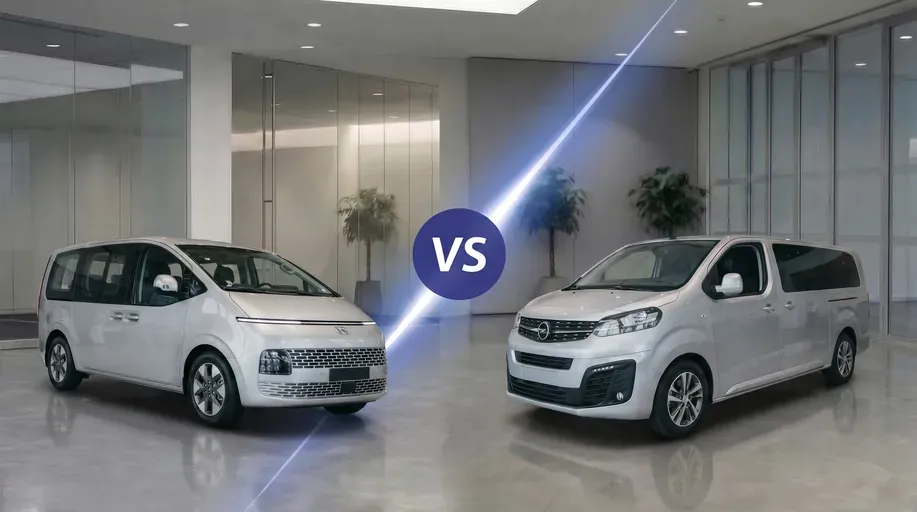
Opel Zafira Life vs. Volkswagen Multivan: Complete comparison 2026

Detailed comparison of the Opel Zafira Life vs Volkswagen (VW) Multivan. Which van offers better space, equipment, and driving characteristics? Read our verdict.

May 1, 2026

VS
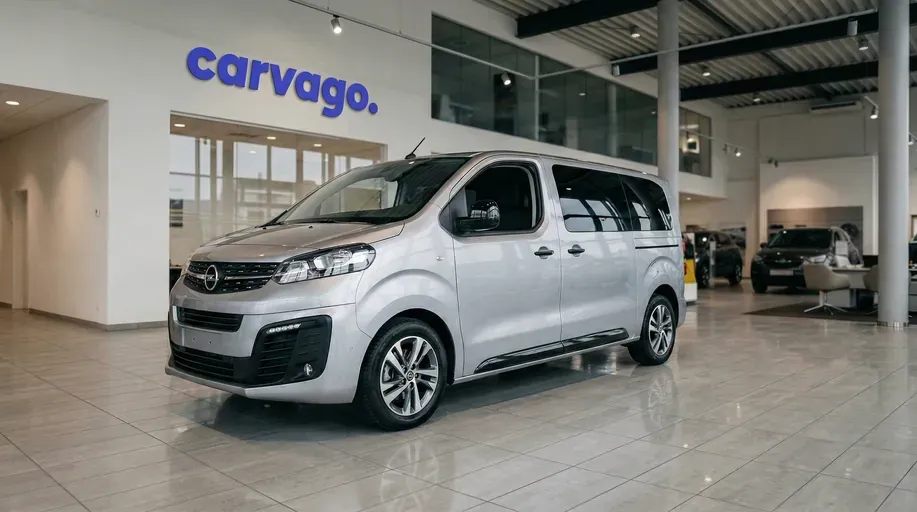
Opel Zafira Life

Opel Zafira Life

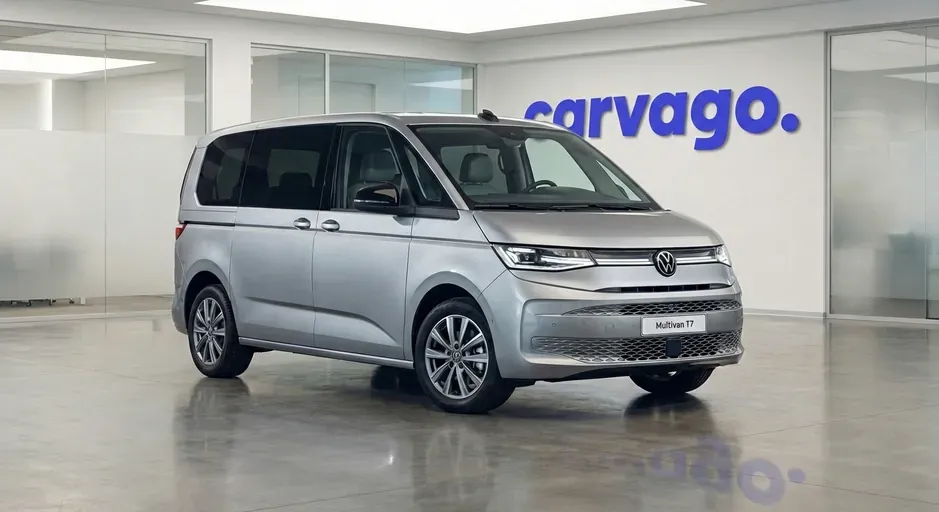
Volkswagen Multivan

Volkswagen Multivan

Introduction

Opel Zafira Life, also sold in some markets as the Vauxhall Vivaro Life, is an exceptionally practical vehicle that has successfully transformed the name of the original family MPV into a versatile and extremely spacious passenger van. Standing against it is the Volkswagen Multivan, a premium passenger variant from the legendary Transporter family (often known by the generation codes T6.1 and T7, or by the popular nickname Bulli), which has long been considered the gold standard in the segment of large-capacity family and business vehicles. In the following comparison, we will focus in detail on the strengths and weaknesses of both models to find out which of these popular rivals offers you a better combination of driving comfort, modern technology, and everyday usability.

Comparison of External Dimensions

Both vehicles represent the pinnacle of modern family and VIP transport, where classic commercial vans transform into full-fledged large-capacity passenger vehicles. Focusing on roughly four-year-old used cars, the ideal representatives of this category are the Opel Zafira Life (produced since 2019) and the Volkswagen Multivan T7 generation (introduced in 2021). These models are deceptive; a first glance at their exterior dimensions makes it clear that their size precisely targets different buyer needs – from families operating in tight city centers to active adventurers needing maximum space.

Volkswagen Multivan T7, which was the first to switch to the purely passenger MQB Evo platform, measures 4,973 mm in length in the standard version and 5,173 mm in the extended variant. In contrast, the Opel Zafira Life offers an even greater level of variability thanks to three available body lengths. It starts at a very compact 4,606 mm, continues through a medium version with a length of 4,956 mm, up to a giant variant measuring 5,306 mm. The longest Zafira Life is thus a massive 133 mm longer than the extended Multivan. For the buyer, this means a clear choice for the Opel when the priority is maintaining unrivaled luggage space even with all three rows of seats fully occupied.

While the Volkswagen is more than two centimeters wider (1,941 mm vs. 1,920 mm for the Opel), both vehicles carefully monitor their overall height. Depending on equipment and suspension, this stays below the safe threshold of 1.91 meters for both models. However, there is a difference in the chassis: the Multivan makes do with a uniform wheelbase of 3,124 mm for both its lengths and works its magic only with the rear overhang, while the Opel offers a shorter wheelbase of 2,925 mm for the smallest version and an impressive 3,275 mm for the longer models. When choosing, this means that while the Multivan provides a perceptibly wider and more stable passenger platform for every situation, the height of both cars guarantees stress-free parking in the vast majority of underground garages.

In the final decision-making on the used car market, these millimeters and centimeters will represent the proverbial tipping point. If you need maximum maneuverability in narrow streets, the shortest Opel Zafira Life is a surprisingly agile car that fits into gaps intended for standard station wagons. However, if you are looking for a golden middle ground with perfect driving characteristics and a width evoking a large SUV, the Multivan's proportions work perfectly. But for those who need to load a large adult crew including a pile of sports equipment on the weekend, the largest version of the Zafira Life remains the unbeatable champion thanks to its extreme wheelbase and length.

Table of Exterior Dimensions

ParameterOpel Zafira LifeVolkswagen Multivan
Length (mm)4606 - 53064973 - 5173
Width (mm)19201941
Height (mm)1880 - 19051887 - 1907
Wheelbase (mm)2925 - 32753124

Trunk Volume

In the category of large family vehicles (MPVs), luggage capacity is often the absolutely key parameter that decides a purchase. Whether you are planning a long family holiday, a weekend cycling trip, or need to transport bulky sports equipment, both the Opel Zafira Life and the Volkswagen Multivan offer an immense level of practicality. Although both vehicles primarily target large families and corporate fleets, their approach to interior space and overall philosophy differs slightly, which is clearly reflected in the luggage capacity figures themselves.

When comparing roughly four-year-old used cars, which corresponds to the modern T7 generation for Volkswagen and the current generation of the Opel Zafira Life, we find models on the market mainly in two main body lengths. The Volkswagen Multivan offers a basic boot volume of 469 litres behind the third row of seats in the standard short version, while the extended version (Long) has a capacity of 763 litres. After completely removing the rear seats, this space increases to 3672 litres and 4053 litres respectively. The Opel Zafira Life is significantly better in terms of raw transport volume. In the medium length (M), it provides 640 litres as standard, while the extended version (L) offers an impressive 1060 litres. If you remove the seats completely, the Zafira Life turns into a genuine van with a maximum volume of 3600 litres for the M version and a gigantic 4900 litres for the longest variant. An important and positive finding for those interested in greener driving is the fact that alternative powertrains do not take up luggage space – the fully electric Zafira-e Life versions and the plug-in hybrid Multivan eHybrid have batteries cleverly integrated into the floor, so their huge internal capacity is not reduced compared to purely combustion versions.

In practice, these values mean that even with a full load of seven to eight passengers, you will still have room for several extra suitcases in both cars, which you will appreciate especially on winter trips to the mountains or airport transfers. After removing one row of seats, you get more than enough space in both cases for a large weekend shop or a longer holiday, even without the need for complex disassembly of bicycles. Thanks to its platform, which is closer to commercial vehicles, the Opel Zafira Life scores with its absolute volume and raw space, making it an ideal workhorse for those who need to transport truly bulky items. While the Volkswagen Multivan lags slightly behind the Opel in absolute litres, it elegantly compensates for this fact with a more sophisticated rail system that allows for lightning-fast and maximum flexible seat manipulation exactly according to current needs.

ParameterOpel Zafira LifeVolkswagen Multivan
Basic volume (l)640 - 1060469 - 763
Max. volume after removing seats (l)3600 - 49003672 - 4053

📦 Battle of Litres and Flexibility

While the Opel Zafira Life impresses with a pure volume of up to 4900 litres for the most demanding transport tasks, the Volkswagen Multivan scores with smarter interior flexibility that perfectly balances the slightly smaller paper boot.

Trailer Weights

When choosing a large family car or a passenger van, the trailer weight often plays a key role, whether you plan to tow a heavy caravan for a summer holiday or need to transport bulkier cargo. If we focus on roughly four-year-old used examples of both models, both vehicles offer very decent values, albeit with important differences. The Opel Zafira Life equipped with a powerful 2.0 Diesel engine can, depending on the body length and specification, tow a braked trailer with a standard weight of 1,900 kg, with the maximum value reaching a respectable 2,300 kg. The competing Volkswagen Multivan T7 generation, which has been on the market since 2021, offers a unified and standard towing capacity of 2,000 kg for its conventional internal combustion engines (petrol TSI and diesel TDI).

However, significant differences and limitations arise with alternative powertrains. While for the plug-in hybrid Multivan 1.5 eHybrid, the maximum braked trailer weight drops to 1,600 kg, the fully electric Zafira-e Life variant can only tow 1,000 kg to protect the traction battery and electric motor. For unbraked trailers, both cars naturally adhere to the standard legislative maximum of 750 kg. In practice, these values mean that the conventional diesel and petrol versions of both cars can easily handle towing a large twin-axle caravan or a loaded horse trailer, providing families with maximum freedom for any length of holiday. Electrified versions, on the other hand, will serve more for lighter weekend tasks, such as transporting a small trailer with garden waste or safely mounting a large bike rack on the tow bar.

In conclusion, if towing heavy trailers is an absolute and daily priority for you, the classic diesel Opel Zafira Life with a limit of up to 2,300 kg will be a slightly better and more versatile workhorse, while the Volkswagen Multivan represents an exceptionally balanced standard for the vast majority of common situations.

Model and EngineBraked trailer (kg)Unbraked trailer (kg)
Opel Zafira Life 2.0 Diesel1900 - 2300750
Opel Zafira-e Life (EV)1000750
Volkswagen Multivan T7 1.5/2.0 TSI & 2.0 TDI2000750
Volkswagen Multivan T7 1.5 eHybrid1600750

Overview of Most Common Motorizations

When comparing the engine options of the Opel Zafira Life and Volkswagen Multivan, we encounter two different approaches to powering large-capacity family and business vehicles, which is a key factor for those interested in a roughly four-year-old used car. While the Opel Zafira Life (on the market since 2019) relies almost exclusively on economical French diesel engines from the PSA family and the fully electric Zafira-e variant, Volkswagen has completely changed the rules of the game with the latest generation Multivan T7 (available since 2021) thanks to the transition to the MQB passenger car platform. In addition to the traditional economical 2.0 TDI diesel, the Multivan also offers powerful petrol units and, above all, the highly sought-after 1.4 eHybrid plug-in hybrid, which Opel does not have in its range at all. The difference in transmission technology is also fundamental – Opel uses a very smooth eight-speed automatic with a hydrodynamic torque converter from Aisin, while Volkswagen relies fully on its lightning-fast seven-speed (six-speed for PHEV) DSG dual-clutch gearboxes.

Opel Zafira Life

The range of engines for the Opel Zafira Life (generation produced since 2019) fully corresponds to its utility genes with a huge emphasis on towing power and low fuel consumption. The base engine is the economical 1.5 Diesel four-cylinder, which, with its parameters, is more suitable for calmer journeys and lighter loads. Conversely, the most desirable and, in terms of performance, most sensible choice for a fully occupied vehicle is the 2.0 Diesel unit, supplied in powerful versions with 110 kW (150 hp) and 130 kW (177 hp). The top diesel engine boasts a massive torque of 400 Nm and is paired as standard with the aforementioned highly reliable eight-speed automatic. If we look into the historical database of the previous generation under the name Opel Zafira (produced until 2019), we also find smaller and now outdated engines such as the 1.4 Turbo, 1.8 16V, or the economical 1.6 CNG ecoFlex. However, these variants are no longer available on the market for roughly four-year-old nearly new used cars, as the Zafira Life model itself switched to a completely different platform requiring newer units. A modern and completely emission-free newcomer on the secondary market is the electric e-Life version, which serves excellently for shorter urban transfers.

Engine typeFuelPower (kW)Torque (Nm)Transmission
1.5 DieselDiesel75 / 88270 / 3006MT
2.0 DieselDiesel106 / 1103706MT / 8AT
2.0 DieselDiesel1304008AT
e-LifeElectricity1002601AT

Volkswagen Multivan

The Volkswagen Multivan underwent a radical revolution with the arrival of the T7 generation, which today forms the mainstream of attractive nearly new used cars. Thanks to its passenger car genes, the vehicle brings a completely new variety of units and, moreover, has completely removed manual transmissions from the range. The entry point is the 1.5 TSI petrol four-cylinder with 100 kW, but for family highway trips, the more powerful 2.0 TSI (150 kW) or the absolute classic in the form of the economical 2.0 TDI turbodiesel (110 kW and 360 Nm) is significantly more attractive. The technological gem for the Multivan T7 is the 1.4 eHybrid plug-in hybrid variant combining a petrol and electric motor with a total system output of 160 kW (218 hp). This electrified powertrain features a 10.4 kWh battery, which theoretically allows a purely electric range of almost 50 kilometers, making the bulky family car a surprisingly economical companion for city driving.

Engine typeFuelPower (kW)Torque (Nm)Transmission
1.5 TSIPetrol1002207DSG
2.0 TSIPetrol1503207DSG
2.0 TDIDiesel1103607DSG
1.4 eHybridPHEV1603506DSG

Recommendations for different types of drivers

The choice of the ideal powertrain for both vehicles will primarily depend on your route profile and annual mileage:

  • For regular long-distance travel and towing loads: Here, the Opel Zafira Life with the top two-liter diesel (130 kW) makes the most sense. The massive 400 Nm of torque and the precisely shifting eight-speed automatic will not be put to shame even by a fully loaded interior or a heavy caravan attached.
  • For an efficient urban and suburban mix: Modern active families who use the car from Monday to Friday for driving to extracurricular activities will be completely captivated by the Volkswagen Multivan 1.4 eHybrid. It's not just about relief from the vibrations of a diesel engine, but also about a quiet and purely electric ride supported by the possibility of longer weekend trips without the need for complex planning of charging stops.
  • For petrol fans and a comfortable ride: If you avoid concerns about diesel engine servicing but at the same time don't want to deal with daily plugging in, the powerful Multivan 2.0 TSI petrol engine will bring generous flexibility, great refinement, and confident passenger-car-like behavior that you won't find in the Zafira.

Diesel vs. Smart Hybrid 🔌

While the Opel Zafira Life holds the flag for traditional and indestructible diesel workhorses with a great classic automatic, the Volkswagen Multivan scores with advanced passenger car refinement and a perfectly functioning plug-in hybrid for short distances.

Choosing the right engine is absolutely essential for large passenger vehicles to ensure long-term satisfaction, realistic fuel consumption, and overall mechanical reliability on the used car market. When comparing these two models, focusing on vehicles approximately four years old, we encounter an interesting generational shift. By that time, the compact MPV Opel Zafira had been fully replaced by the more spacious, van-based Zafira Life model, which shares technology with the Stellantis Group. Meanwhile, the Volkswagen Multivan was transitioning from the legendary T6.1 commercial platform to the entirely new T7 passenger generation. On today's used market, both cars rely primarily on powerful 2.0-litre diesel engines. Our recommendations therefore reflect real-world practice, service experience, and actual fuel consumption from these newer platforms.

For the Opel Zafira Life, we recommend: 2.0 CDTI, 130 kW

This 2.0-litre diesel (originally from the French PSA group, often also referred to as BlueHDi) is an absolutely ideal choice for the heavy Zafira Life because, unlike the weaker base 1.5-litre engine, it doesn't struggle as much with a fully loaded vehicle. Its greatest technical advantage is a confident 400 Nm of torque, which manifests as an exceptionally flexible pull and is perfectly paired with the very reliable eight-speed Aisin automatic transmission. In real-world driving, fuel consumption hovers around a pleasant 7.5 to 8.5 l/100 km, which is a great result for a massive family van weighing nearly two tonnes.

The weak point of this engine is the sensitivity of the AdBlue emission system and the risk of Diesel Particulate Filter (DPF) clogging during frequent short trips. During a test drive of a four-year-old used car, watch the dashboard carefully. If an emission system warning is lit, or if the car has an unusually noisy and irregular idle after warming up, it may signal a malfunctioning urea injection system or a clogged DPF from constantly interrupted regenerations. In the long run, these problems can be effectively avoided through prevention – by refuelling with premium diesel containing additives and consistently using the vehicle for the purposes it was built for. In terms of its purpose, it is a perfect and immensely comfortable highway cruiser for families and companies that won't be troubled by long-distance travel.

For the Volkswagen Multivan, we recommend: 2.0 TDI, 110 kW

Whether you are choosing from the outgoing but still exceptionally popular T6.1 generation or early units of the completely new T7 generation on the used market, the 2.0 TDI version with 110 kW (150 hp) represents the most rational compromise between smooth dynamics, economy, and mechanical durability. From a second-hand purchase perspective, it is safer to avoid the significantly more powerful BiTDI variant with two turbochargers, as it historically carries a higher risk of expensive turbo repairs and increased oil consumption. Our recommended version, with a generous 340 Nm of torque, handles a fully occupied vehicle with great ease, and impresses with its very refined operation and real-world fuel consumption balancing around 8 litres per 100 km.

On the other hand, the risks associated with EGR valve clogging and excessive wear of the DSG dual-clutch automatic transmission are worth mentioning. The risk increases rapidly for vehicles that were previously used for towing heavy trailers or for endless driving from traffic light to traffic light. How can you detect a potential problem in time? During the test drive, focus strongly on pulling away – the DSG transmission must not react to the throttle with a harsh jerk, and gear changes must be completely smooth; otherwise, an expensive mechatronics repair is imminent. Sudden power losses accompanied by an error message usually reveal the aforementioned failing EGR valve. For every used unit, insist on a verifiable history and shorten the original 30,000 km oil intervals, ideally to 15,000 km. This engine will perfectly suit active drivers who require top-tier functionality and reliability over hundreds of kilometres a day.
Real Fuel Consumption

While the official figures provided by manufacturers often look tempting, the reality for large and heavy passenger vans is usually different. Given the unforgiving aerodynamics and weight approaching two tons, we turned to data from drivers themselves for a real-world comparison. We used the popular community portal Spritmonitor.de, which has long been collecting real-world statistics from daily driving. For the comparison, we logically selected engines and generations typical for the market of roughly four-year-old used cars, namely vehicles from the Opel Zafira Life family and the well-established Volkswagen Multivan (on the cusp between the outgoing T6.1 generation and the more modern T7).

Model and engineAverage fuel consumption (l/100 km)
Opel Zafira Life 1.5 Diesel (88 kW)6.5
Opel Zafira Life 2.0 Diesel (110 kW)7.1
Opel Zafira Life 2.0 Diesel (130 kW)7.4
Volkswagen Multivan 1.4 eHybrid (160 kW)5.5
Volkswagen Multivan 2.0 TDI (110 kW)7.5
Volkswagen Multivan 1.5 TSI (100 kW)8.2

A look at the collected data clearly shows how different powertrain concepts deal with the bulk of family "haulers." There is complete agreement regarding traditional diesel units – both two-litre diesels represent the ideal, and in the real world, they consume between 7.1 and 7.5 litres per hundred kilometres. While Opel's entry-level 1.5 Diesel can save precious tenths and be kind to your wallet with an average of 6.5 l/100 km, its efficiency quickly vanishes under full load. A major warning is the entry-level turbocharged 1.5 TSI petrol four-cylinder in the Volkswagen. Here, the downsizing trend hits hard physical limits, and the small petrol engine simply struggles with the heavy car, resulting in consumption safely exceeding the eight-litre mark. At the opposite end of the spectrum, however, is the Multivan with 1.4 eHybrid plug-in hybrid technology, which can bring the average down to five and a half litres – though this primarily applies if the battery is regularly charged.

For the average user, this means only one thing: for frequent motorway journeys, full occupancy, and long family holidays, the more powerful two-litre diesel remains the uncrowned king, whether you choose Opel or Volkswagen. However, if you are looking for a spacious car mainly for suburban school runs or daily commutes and have the option of home charging, the Multivan 1.4 eHybrid becomes an unbeatably efficient companion, allowing you to save significant amounts on fuel.

In conclusion, if we compare purely conventional diesel versions, fuel consumption will not be the main deciding factor. Both models are remarkably evenly matched in their diesel variants, so your choice should probably depend more on your preference for the interior layout or overall ergonomics and handling. The only thing that could tip the scales in terms of fuel savings is a specific requirement for frequent city driving, where Volkswagen's hybrid technology makes the most sense.

Current offers Volkswagen Multivan

View full offer

Price Range and Used Car Offerings

Used Car Price Comparison: Opel Zafira Life vs. Volkswagen Multivan

When looking at the market for used passenger vans around four years old (2021 and 2022 models), we encounter two completely different approaches to pricing and value retention. While the Opel Zafira Life represents a rational and affordable choice, the Volkswagen Multivan is considered a premium icon that holds its value confidently high.

Opel Zafira Life: Pragmatism for the Family Budget

The Opel Zafira Life (from the generation produced since 2019 on the shared Stellantis platform) is attractive on the used market primarily due to its steeper initial depreciation. For families or tradespeople looking for a reliable large-capacity vehicle, it is an exceptionally good buy.

  • Price Floor: Used models from 2021–2022 in basic trims (possibly with the smaller 1.5 CDTi diesel engine and higher mileage) start in used car dealerships at around €25,000.
  • The Sweet Spot: The most common and sought-after units with the more powerful 2.0 CDTi diesel engine and a reliable automatic transmission typically range between €29,000 and €31,000.
  • Premium Versions: The most expensive variants in top Elegance trim, with a seven-seat layout featuring VIP leather seats and low mileage, can be purchased for around €35,000.

Volkswagen Multivan: Investing in a Legend

With four-year-old used Volkswagens, you encounter an interesting transition – late versions of the iconic T6.1 generation meet the more modern T7 generation models, which arrived in late 2021. Both versions share one thing: the Multivan is a phenomenon on the used market, with minimal loss of value.

  • Entry Point: Finding a well-maintained Multivan from 2021 or 2022 below the €40,000 mark is very difficult. Realistic prices on the used market start at €45,000 to €47,000.
  • Most Desired Specifications: Vehicles from the popular T6.1 series with the 2.0 TDI engine, DSG automatic transmission, and 4Motion all-wheel-drive system disappear from listings immediately. Prices for these sought-after configurations commonly reach €51,000 to €57,000.
  • Modern T7 and Top Trims: If you are aiming for the newer T7 generation (built on the MQB platform, often with a 2.0 TSI engine or 1.4 TSI eHybrid plug-in hybrid powertrain) in luxury editions like Style or PanAmericana, be prepared for an investment exceeding €60,000.

Indicative Price Comparison (approx. 4-year-old vehicles)

Parameter on the Used MarketOpel Zafira Life (2021–2022 models)Volkswagen Multivan (T6.1 and early T7)
Starting market pricefrom approx. €25,000from approx. €45,000
Price for a well-equipped unit€29,000 – €31,000€51,000 – €57,000
Depreciation rateHigher (a big advantage for used buyers)Significantly low (the vehicle acts almost like an investment)
Availability of 4x4 in listingsRare (only specialized Dangel conversions)Common and highly sought-after (factory 4Motion system)

Reason vs. Heart 🚐

While the Opel Zafira Life represents an absolutely unbeatable choice for the family wallet thanks to its rapid depreciation, the Volkswagen Multivan is a premium icon for which you will pay significantly more, but its huge advantage will be an easy and financially painless resale in the future.

Safety and Euro NCAP Rating

Although promotional materials often state that both vehicles benefited from the prestigious five-star Euro NCAP rating at some stage of their existence, it is crucial for those interested in a used family car to understand the context and the exact year of testing. The methodology of independent safety tests is constantly evolving and becoming radically stricter. Percentage scores from different time periods can therefore in no way be directly compared. Modern tests represent an incomparably greater burden, require more demanding simulations of frontal impacts into a mobile barrier, and place enormous emphasis on active accident prevention, such as advanced detection of cyclists and pedestrians at intersections.

Opel Zafira Life has a very specific and slightly controversial reputation on the used car market from a safety perspective. In 2019, the Euro NCAP organization surprisingly halted official testing of this newly introduced model entirely. The reason was the finding that, from a technical standpoint, it is merely a rebadged platform of PSA Group vans (it is a sister model to the Peugeot Traveller or Citroën SpaceTourer). These vehicles successfully passed certification as early as 2015, i.e., according to significantly more lenient and now outdated criteria. Due to this procedure by the commissioners, there are no official valid data from modern tests for the Opel Zafira Life model itself. For this reason, we intentionally do not list any percentage values for it in our comparison table.

Conversely, the Volkswagen Multivan (in the modern T7 generation), which as a roughly four-year-old used car represents a highly sought-after and logical choice for families, underwent the strictest Euro NCAP tests in 2022. According to the new and significantly more complex standards, it received the full five stars. Detailed results show that thanks to the advanced MQB architecture, it offers exemplary and highly above-average protection for adult passengers (90%) and child passengers in car seats (89%). A particularly strong point of the new Multivan is the wide range of reliably functioning safety assistants, including high-quality emergency braking and lane-keeping assist.

Overall, Volkswagen emerges as the clear winner of this safety duel. It guarantees used car buyers a disproportionately more modern and robust safety package as well as a top-tier level of active safety. In contrast, Opel relies on technological and structural foundations that were designed and certified nearly a decade ago.

ParameterOpel Zafira LifeVolkswagen Multivan
Year of testingOfficial data missing2022
Adult occupant protection-90 %
Child occupant protection-89 %
Vulnerable road user protection-69 %
Safety assist systems-87 %

A modern platform brings peace of mind 🛡️

While the Volkswagen Multivan benefits from a high level of current passive and active safety, with the Opel Zafira Life you must account for the technological limits of an older shared design with roots in 2015. For everyday family travel, a four-year-old Multivan is therefore a demonstrably more certain and safer choice.

Comparison of Interesting Equipment Features

In addition to the standard equipment, each of the models offers several unique features that can be decisive for the customer during the final selection. While both vehicles excel in the role of spacious transporters, each approaches added value, innovation, and user comfort in its own unmistakable way.

Opel Zafira Life: VIP comfort and smart solutions for every day

With its Zafira Life model, Opel has bet on a combination of French elegance (thanks to the shared Stellantis platform) and a maximum focus on passenger comfort. Interesting features primarily target families and corporate transport:

  • Hands-free sliding door opening: A major advantage in daily use. The side doors can be opened with a simple "kick" under the rear bumper, which you will appreciate whenever your hands are full of bags or you are carrying children.
  • VIP Lounge configuration: A variable rail system allows the second-row seats to be turned to face the rear in higher trim levels. Combined with a central folding table, this creates a full-fledged and cozy living space or mobile office in the rear of the vehicle.
  • Aviation-style panoramic roof: The large two-part sunroof is divided in the middle by a longitudinal panel that houses air conditioning vents for rear passengers and stylish ambient lighting. Both design and functionality are reminiscent of an airliner cabin.
  • IntelliGrip system: Instead of traditional and heavy all-wheel drive, Opel offers advanced electronic traction control. The system allows the driver to select the surface (snow, mud, sand), and the electronics take care of the ideal power distribution to the front wheels without the need for complex mechanics.
  • Head-up display: A technology that is still not a common standard in passenger vans. A pop-up display projects speed and navigation instructions directly into the driver's field of vision.
  • Massaging front seats: In the highest trim levels, the Zafira Life offers front seats with a massage function, which significantly reduces fatigue during long journeys across Europe.

Volkswagen Multivan: Legendary practicality and technological lead

The Volkswagen Multivan (whether in the popular T6.1 generation or the more modern T7) is considered the benchmark of its class. Its uniqueness lies in the combination of a layout refined over decades and cutting-edge passenger car technologies:

  • Iconic rail system with multifunctional table: An absolute Volkswagen design classic. Both the seats and the central table move on rails along the entire length of the vehicle. In the latest generation (T7), the central table can be smoothly moved from the rear passengers all the way between the driver and front passenger.
  • DCC adaptive chassis: Volkswagen allows the Multivan to be equipped with electronically adjustable dampers. The driver can choose from a soft and pliant "Comfort" mode for broken backroads to a stiffer "Sport" mode for a more stable highway drive.
  • Specialized driving assistants: The Multivan features systems tailored for large vehicles. Examples include Crosswind Assist, which can stabilize the car during a sudden gust, or Trailer Assist, which makes reversing with a trailer a breeze – you steer the car using only the side mirror joystick.
  • 4Motion all-wheel drive: Unlike most competitors, the older generation of the Multivan (T6.1) offers full mechanical all-wheel drive, making it a fearless companion for trips to the mountains and ski resorts.
  • Digital Cockpit and connectivity: The Multivan brings high-resolution digital instruments on board and extensive online services with the possibility of remote access to the vehicle via a mobile app (unlocking, range check, or auxiliary heating planning).
  • Bulli Edition and two-tone paintwork: The Multivan is excellent at working with a retro mood. Optional two-tone body paint and specific design elements refer to the original iconic Transporter, which gives the vehicle immense style and at the same time very positively influences its future residual value on the used car market.

Key Advantages and Disadvantages

Opel Zafira Life

Pros

Significantly better value for money compared to premium competitors

Three available body lengths covering various space requirements

Comfortably tuned chassis that filters out bumps excellently

Economical and mechanically durable diesel engines

Practical and very spacious interior with capacity for up to 9 passengers

Cons

Harder and cheaper-looking plastics in the interior

Noticeably more outdated and slower multimedia system

Driving position and overall feel behind the wheel are more reminiscent of a commercial van

Faster depreciation when reselling

The Opel Zafira Life represents a highly pragmatic choice for large families or transport service providers who need vast interior space at a reasonable price. Any compromises in material quality or modern technology are well compensated for by its reliability, comfortable ride, and overall economic efficiency.

Volkswagen Multivan

Pros

Top-tier interior variability thanks to a sophisticated rail system

Premium materials and overall build quality on par with passenger cars

Excellent driving characteristics comparable to large family SUVs (especially in the T7 generation)

Availability of advanced assistance systems and plug-in hybrid powertrains

Excellent residual value even after years of operation

Cons

Significantly higher purchase price on the used car market

Higher service costs and expensive optional equipment

Slightly smaller total volume and interior height compared to classic van platforms

The Volkswagen Multivan targets more demanding customers who refuse to compromise between van-like space and passenger car comfort. Although it requires a significantly higher initial investment, it rewards with unrivaled variability, great price retention, and a representative appearance.

Common Problems and Owner Complaints

Based on long-term user experience, service reports, and detailed results of independent inspections through comprehensive car checks, we have compiled an overview of the most common problems that buyers of used cars around four years old should watch out for.

Opel Zafira Life

The Zafira Life uses the Stellantis group platform, which makes it an extremely practical vehicle, but it can trouble a new owner with several typical quirks of its French siblings.

  • Engine and exhaust system: By far the most common and well-known bogeyman of the two-litre diesel engines (2.0 CDTI / BlueHDi) is the urea injection system (AdBlue). Very often, the pump itself fails or there are defects in the urea injectors. This is manifested by a warning on the instrument cluster and the start of an uncompromising mileage countdown until the engine start is blocked. The solution is often an expensive replacement of the entire module. Care should also be taken regarding a clogged diesel particulate filter (DPF), especially if the previous owner used the van mainly for short city trips.
  • Electronics and infotainment: Drivers commonly complain about slower response of the on-board system, occasional freezing of the touchscreen, and Bluetooth connection drops. However, the quirks of the optional power-operated sliding doors can be much more troublesome. Anti-pinch sensors are often oversensitive, or the entire mechanism malfunctions due to accumulated dirt in the guide rails.
  • Chassis and steering: Due to the high kerb weight of a loaded vehicle, components on the front axle wear out relatively quickly. You will commonly encounter developing play in the ball joints, stabilizer links, and control arm bushings. These faults reliably make themselves known with dull thuds and knocking when driving over bumps.
  • Transmission: If you choose the popular eight-speed automatic (a torque converter from the Japanese company Aisin), chronic mechanical problems will likely pass you by. The automatic is renowned for its robustness, but only on the condition that the transmission oil was changed at least every 60 to 80 thousand kilometres. If maintenance was neglected, the gearbox may start to jerk noticeably and unpleasantly when shifting.

Opel Zafira Life: The AdBlue system is the bogeyman

The biggest risk of an older Zafira Life is the unpredictable quirks of the emission system, but otherwise, it is a reliable and mechanically durable vehicle that is only occasionally betrayed by minor electronics.

Volkswagen Multivan

Whether your choice falls on the popular and widely represented T6.1 generation or the newer T7 model, the Multivan is always considered a more complex and technologically advanced vehicle, for which a detailed physical car inspection before the purchase itself is an absolute necessity.

  • Infotainment and software: For both the T6.1 generation and the early T7 production (MIB3 system), this is clearly the most frequently mentioned problem by owners themselves. The on-board system often freezes, restarts spontaneously while driving, and the wireless Apple CarPlay or Android Auto connection very often drops. Most of these ailments are solved by software updates via OTA (Over-The-Air) or directly at an authorised service centre, yet complete system stability is rarely achieved.
  • Engine and cooling (2.0 TDI): A weak point of the two-litre diesel engines is the exhaust gas recirculation (EGR) system. Faults such as the valve becoming clogged with soot or coolant leaks directly through the EGR cooler commonly appear. It is also necessary to watch out for premature water pump failures. For the popular and powerful twin-turbocharged versions (BiTDI), buyers should strictly insist on shortened engine oil change intervals; otherwise, the risk of excessive oil consumption and turbocharger wear increases.
  • Transmission (DSG): The seven-speed dual-clutch DSG transmission (most commonly the DQ500 series) handles the high load of the heavy Volkswagen with ease, but it is absolutely uncompromising towards neglected maintenance. If the original owner ignored the need to change the transmission oil exactly every 60,000 km, the risk of destroying the expensive mechatronics and excessive wear of the clutch set increases dramatically. A symptom of such damage is usually rough jerking and delays when pulling away.
  • Chassis and bodywork: The heavy front end of the Multivan puts a lot of strain on brake components and the top mounts of the front shock absorbers. On used cars around the 100,000-kilometre mark, worn wheel bearings are commonly heard. Owners also struggle with the sliding side doors sticking, where tension cables occasionally snap or the soft-close mechanism malfunctions.

Volkswagen Multivan: Expensive servicing does not forgive mistakes

While it hardly finds a match in terms of comfort and residual value, the Multivan requires absolutely precise maintenance from the owner; the slightest service neglect of the DSG or TDI engine will prove cruelly expensive.

Tips for Buying a Used Car

When buying a used car, a thorough inspection is key. Here are some specific points to focus on for these two models to avoid unpleasant surprises after purchase.

When choosing an Opel Zafira Life:

  • AdBlue system and emission sensors in diesel engines: The Zafira Life shares its technology with the PSA Group. The 1.5 and 2.0 (BlueHDi) diesel engines can suffer from SCR system issues over time (AdBlue crystallization in the tank or NOx sensor failure). If the engine warning light or an emissions warning is on during the test drive, it's a warning sign requiring deeper diagnostics.
  • Electric sliding door functionality: If the car is equipped with electric side doors, test them thoroughly in every possible way (key fob, cabin button, pulling the handle). Motors and safety sensors can fail on four-year-old used cars, and their repair is quite costly.
  • Chassis wear and steering play: The Zafira Life is a heavy car, especially if frequently fully loaded. During the test drive, listen for any knocking from the front axle over bumps, which often indicates worn shock absorber mounts, stabilizer links, or ball joints. In this case, a detailed physical inspection of the used car on a lift from below is always worth it.
  • Software and reversing camera: The on-board system can sometimes be slow and prone to minor glitches. Check if the infotainment freezes when connecting a phone and if the rear parking camera works correctly – it sometimes suffers from moisture ingress or sudden image dropouts.

When choosing a Volkswagen Multivan:

  • DSG dual-clutch transmission behavior: DSG automatic transmissions require a careful test. When starting from a standstill, crawling in traffic, or shifting between the first gears, the car must not jerk or shudder. For popular diesel engines, listen at idle for any metallic clicking or rattling, which unmistakably reveals a worn dual-mass flywheel.
  • Infotainment stability (MIB3 / MIB4): Generations produced around 2021 (facelifted T6.1 and newer T7) were quite often plagued by software bugs in the on-board system. Check if the display comes on quickly after starting, doesn't restart spontaneously, and if the sound and wireless smartphone connectivity work without issues.
  • Battery health and range for the plug-in hybrid (eHybrid): If you are looking at the newer T7 generation in the PHEV version, pay attention to the health of the high-voltage battery. Check the estimated electric range at full charge directly in the trip computer and the smoothness of the transition between the electric and combustion engine while driving.
  • Oil leaks and chassis condition: The Multivan often serves as a "mileage eater" for large families. 2.0 TDI engines, especially the more powerful versions, can show minor oil leaks around the valve cover or turbo after years. Due to the vehicle's high weight, shock absorbers and bushings also take a beating. An independent technical inspection by an experienced mechanic to reveal any leaks and the condition of the chassis parts should be a matter of course for such a complex and expensive vehicle.

FAQ: Most Frequently Asked Questions

The Opel Zafira Life is sold in three body lengths (S, M, L), giving families more flexibility when choosing the exact size. The Volkswagen Multivan is standardly offered in two lengths on the market, but it can utilize its interior space very efficiently. Overall, the Zafira is more spacious in its longest version, while the Multivan focuses more on a more luxurious and airy cabin feel.

The Volkswagen Multivan traditionally dominates in terms of driving comfort and top-tier sound insulation, making it feel more like a luxury passenger car. The Opel Zafira Life has a soft suspension and is very comfortable, but at higher speeds, slightly more aerodynamic noise enters the cabin. Additionally, the Multivan offers a more modern and sophisticated range of assistance systems for highway driving.

For newer passenger versions from recent years, the Zafira Life has primarily switched to pure electric drive in Europe, although older vehicles have very reliable 2.0 CDTi diesels. The Volkswagen Multivan (especially the newer T7 generation) introduced a popular plug-in hybrid version complemented by traditional fuel-efficient petrol and diesel engines. If you are looking for a hybrid that can handle local emission-free driving as well as long distances, the Multivan is the clear choice.

The Multivan has long excelled with its innovative rail system and lighter individual seats, which can be very easily slid, rotated to face each other, or completely removed. The Zafira Life also has a rail system in higher trim levels, but its seats and rear benches are quite heavy for manual handling. Therefore, in daily flexibility and for quick interior adaptation, Volkswagen has a noticeable edge.

The Opel Zafira Life is usually a significantly more affordable option on the used car market, offering a great price-to-utility ratio for large families. The Volkswagen Multivan maintains an extremely high residual value over the long term, so the initial investment in a used car is higher. If you have a tighter budget, the Zafira will provide comparable service for much less money, while the Multivan is more of an investment with a smaller drop in value over time.

Conclusion: Which Model to Choose?

Sources: ADAC, garaz.cz, auto.cz, autosalon.tv, autotechnik.cz, mesec.cz

This article was prepared using artificial intelligence tools. The section guarantor is Petr Dušek.

Related articles

Car battle

Mercedes-Benz Vito Tourer vs. Volkswagen Caravelle: Complete comparison 2026

Mercedes-Benz Vito Tourer vs Volkswagen Caravelle comparison. Discover the differences in space, equipment, and reliability and read our clear final verdict!

Oct 16, 2026

Car battle

Hyundai Staria vs. Opel Zafira Life: Complete comparison 2026

Detailed comparison of Hyundai Staria vs Opel Zafira Life. Discover real-world experiences, a detailed analysis of space and engines, and a clear verdict for choosing the ideal MPV.

Oct 16, 2026

Car battle

Hyundai Staria vs Volkswagen Multivan: Complete Comparison 2026

Hyundai Staria vs. Volkswagen Multivan. Detailed comparison of design, practicality and price. Find out which large MPV is the better choice for you.

Oct 23, 2026

We accept online card payments as well as wire transfers.

visa payment provider logovisa-electron payment provider logomastercard payment provider logomaestro payment provider logodiners-club payment provider logodiscover payment provider logo