Car battle
Ford Puma vs. Citroën C3 Aircross: Complete comparison 2026
Ford Puma vs. Citroën C3 Aircross: A detailed comparison of used crossovers. Compare real-world fuel consumption, interior space, reliability, and our final verdict.
Apr 30, 2026
Articles
Car battle
Nissan Juke vs. Volkswagen T-Cross: Which urban SUV is better? Find out in our detailed comparison of fuel consumption, equipment, space, and reliability of used cars.
May 8, 2026
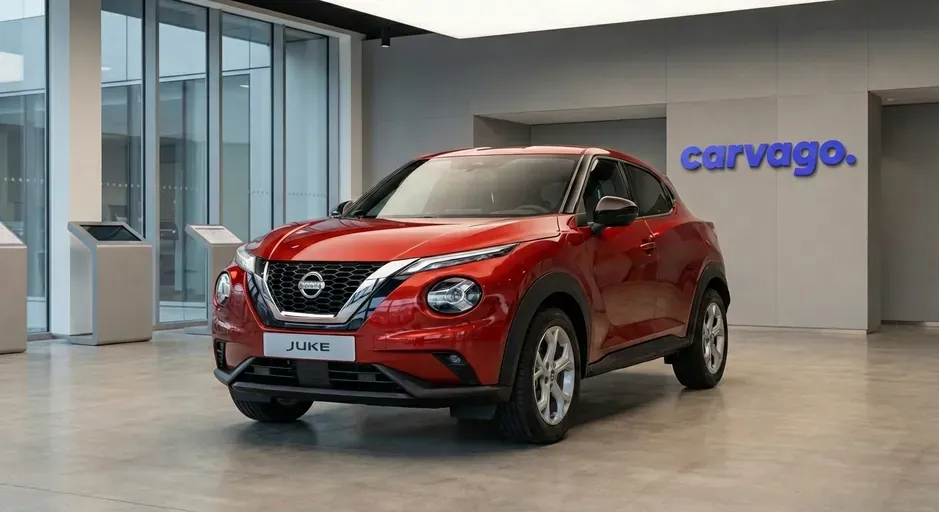
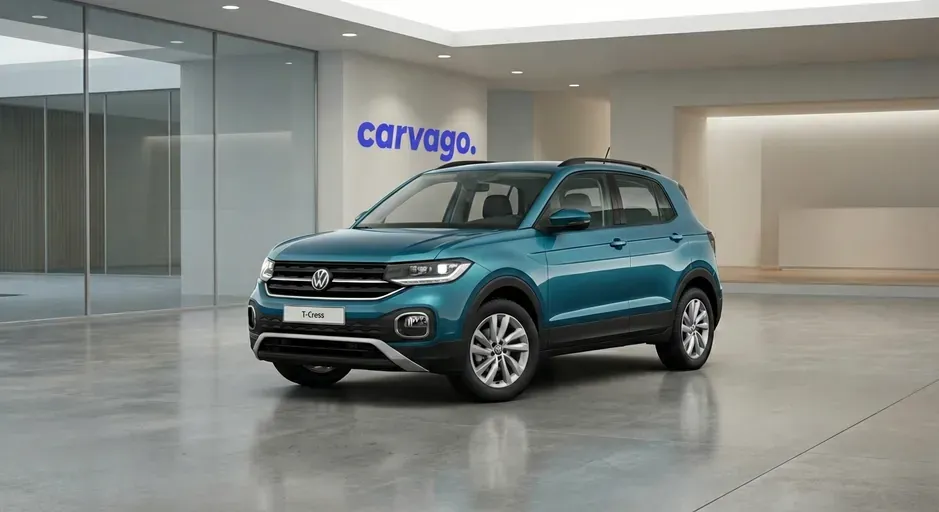
The Nissan Juke is a boldly styled compact SUV that has earned a solid place on the European market thanks to its unmistakable design and agile driving characteristics. On the other side stands the Volkswagen T-Cross, also known in some global markets as the Volkswagen Taigun or Tacqua, which bets on proven German practicality, maximization of interior space, and a more conservative yet very timeless look. In the following comparison, we will take a detailed look at which of these two popular four-year-old city crossovers offers better value for money and better meets your daily needs.
Both models fall into the highly competitive segment of compact city crossovers (B-SUV), but their approach to exterior proportions is diametrically different. While Volkswagen sticks to a traditional, rather boxy concept with the T-Cross model, emphasizing maximum use of enclosed space, the second-generation Nissan Juke (F16) bets on an emotional, athletically poised stance. If we look at the most sought-after used cars around four years old (2021 and 2022 models), the differences in size are immediately apparent.
Looking closely at the numbers, the Nissan Juke is a larger car in all directions. With a length of 4210 mm, it surpasses the Volkswagen T-Cross (4108 mm) by a significant 102 mm. This difference gives the Nissan a more mature look on the road; however, for drivers who fight for every centimeter when parking in narrow city streets every day, the shorter body of the German competitor can be a significant advantage. The Juke is also 18 mm wider and slightly taller, which gives it a sportier and more stable visual character.
A key parameter for internal layout and driving characteristics is the wheelbase. Here, Nissan offers a value of 2636 mm, which is a non-negligible 85 mm more than in the case of the Volkswagen (2551 mm). A longer wheelbase theoretically promises better directional stability on the highway and more legroom in the rear seats. However, the T-Cross cleverly compensates for this handicap with its more conservative body shape and more vertical rear, allowing it to offer a surprisingly airy and practically usable interior even on a smaller footprint.
| Parameter | Nissan Juke SUV | Volkswagen T-Cross SUV |
|---|---|---|
| Width (mm) | 1800 | 1782 |
| Length (mm) | 4210 | 4108 |
| Height (mm) | 1593–1595 | 1584 |
| Wheelbase (mm) | 2636 | 2551 |
When choosing a compact city crossover, trunk space often plays a decisive role. For families and active couples choosing between approximately four-year-old used cars, the size of the trunk can mean the difference between hassle-free packing for a vacation and frustration. Although the Nissan Juke and Volkswagen T-Cross fall into the same category, their approach to interior space utilization and overall cargo capacity differs slightly.
The first-generation Volkswagen T-Cross is considered a benchmark of practicality in this class. Thanks to its boxier body, it can offer a respectable 455 liters in its basic configuration. If you fold down the rear seats, you get a total volume of 1,281 liters, which is perfectly sufficient for a bulky weekend shopping trip or a longer vacation for two. Furthermore, the shape of the trunk is very regular and the opening is wide, which significantly facilitates loading larger items.
The Nissan Juke F16 generation (available since 2020) has taken a huge step forward compared to its predecessor, offering a solid 422 liters in its basic state. However, if you fold down the rear backrests, the Juke even slightly surpasses its German rival, offering a maximum value of 1,305 liters. However, those interested in a more economical engine should take note: the 1.6 Hybrid version has its trunk reduced to 354 liters (or 1,237 liters with the seats folded) due to the installation of the traction battery. In practice, this difference represents a noticeable reduction, meaning you lose valuable space for several extra suitcases.
From the perspective of everyday family use, the Volkswagen T-Cross scores with better basic volume and variability, while the Nissan Juke offers slightly more total cargo space after folding the seats – provided you don't choose the space-limited hybrid variant.
| Parameter | Nissan Juke SUV | Volkswagen T-Cross SUV | Nissan Juke SUV (Hybrid) |
|---|---|---|---|
| Basic volume (liters) | 422 | 455 | 354 |
| Max. volume with seats folded (liters) | 1305 | 1281 | 1237 |
Thanks to its larger basic trunk, the Volkswagen T-Cross offers slightly more everyday utility, while the Nissan Juke excels in total volume after folding the seats, provided you avoid the hybrid version.
Trailer weight, or total towing capacity, plays a key role for drivers who want to fully utilize their vehicle's transport potential. Although the Nissan Juke and Volkswagen T-Cross are compact city SUVs, their capabilities in this area can significantly influence the final decision of those interested in a used car around four years old. Whether you plan to tow a small caravan, transport construction materials, or just need to reliably mount a robust rack for several e-bikes, the differences between these models are surprisingly noticeable.
Standard petrol versions of the Volkswagen T-Cross (1st generation) allow for towing a braked trailer with a standard weight of 1000 kg for the base 1.0 TSI (70 kW) engine, while the maximum value reaches up to 1200 kg for the more powerful 1.0 TSI (85 kW) and 1.5 TSI (110 kW) versions. The Nissan Juke (F16 generation) leads slightly in this regard, as its most common petrol version, the 1.0 DIG-T (84 kW), can handle a braked trailer weighing up to 1250 kg. In the case of unbraked trailers, we are talking about very similar figures for both rivals, ranging from 630 to 660 kg depending on the equipment.
However, a major turning point occurs when choosing hybrid powertrains. While the Volkswagen T-Cross relies purely on conventional non-electrified powertrains on the used car market, the Nissan Juke also offers a 1.6 Hybrid variant. For this version, however, due to the installation of heavy traction batteries and a more complex electrical system, the towing capacity is radically limited – the permitted maximum here drops to just 750 kg for a braked trailer and 500 kg for an unbraked one.
In practice, these figures mean that the standard petrol variants of both cars can easily handle a small caravan or a fully loaded trailer. This suddenly creates space for several extra suitcases behind the car, a solution that is perfectly sufficient for weekend shopping or a longer family holiday.
In conclusion, if towing a trailer is a high priority for you, the petrol-powered Nissan Juke represents a slightly stronger choice with the absolute highest capacity in this comparison. The Volkswagen T-Cross, on the other hand, scores with a stable and flexible capacity across its entire engine range. However, those interested in the hybrid version of the Nissan Juke will have to accept significant compromises when planning more demanding transport tasks.
| Model and engine | Braked trailer weight (kg) | Unbraked trailer weight (kg) |
|---|---|---|
| Nissan Juke 1.0 DIG-T (84 kW) | 1250 | 631 - 648 |
| Nissan Juke 1.6 Hybrid (69 kW) | 750 | 500 |
| Volkswagen T-Cross 1.0 TSI (70 kW) | 1000 | 630 |
| Volkswagen T-Cross 1.0 TSI (81/85 kW) | 1100 - 1200 | 640 - 650 |
| Volkswagen T-Cross 1.5 TSI (110 kW) | 1200 | 660 |
| Volkswagen T-Cross 1.6 TDI (70 kW) | 1100 | 640 |
When choosing a used city crossover roughly four years old, the engine choice plays a key role, especially regarding fuel consumption, reliability, and daily dynamics. The offerings of the Nissan Juke and Volkswagen T-Cross represent different approaches that will appeal to different types of drivers. While the Nissan Juke relies on a simplified range dominated by the reliable 1.0 DIG-T turbocharged three-cylinder and the exceptionally efficient 1.6 Hybrid, the Volkswagen T-Cross offers a wider selection from the group's portfolio. With the Volkswagen, you can choose from the economical 1.0 TSI three-cylinder engines to the dynamic 1.5 TSI four-cylinder with 110 kW. If you are looking for maximum savings in heavy city traffic, the hybrid Nissan Juke will be the perfect choice for you. Conversely, for drivers who more frequently travel on the motorway or with a fully loaded car, the Volkswagen T-Cross with the 1.5 TSI engine will offer significantly more confidence and a more mature driving experience. It is important to mention that neither of these models in their current generation offers all-wheel drive, which clearly confirms their focus on paved roads.
In its current generation (F16, produced since 2019), the Nissan Juke has completely bid farewell to diesel engines and opted for an efficient and straightforward petrol range. In used car dealerships, for vehicles roughly four years old, you will most often come across the 1.0 DIG-T turbocharged three-cylinder with an output of 84 kW or 86 kW (marked as versions 114 and 117). This engine is fully sufficient for city and suburban traffic and can be purchased with either a precise six-speed manual or a seven-speed dual-clutch automatic transmission (DCT). A significant technological highlight is the 1.6 Hybrid powertrain, which combines a naturally aspirated four-cylinder with an electric motor for a total system output of 105 kW. This electrified variant features a unique multi-mode automatic transmission and excels primarily with exceptionally low fuel consumption in city traffic jams.
| Engine Type | Fuel | Power (kW) | Torque (Nm) | Transmission |
|---|---|---|---|---|
| 1.0 DIG-T 114 | Petrol | 84 | 200 | 6MT / 7DCT |
| 1.0 DIG-T 117 | Petrol | 86 | 200 | 6MT / 7DCT |
| 1.6 Hybrid | Hybrid (Petrol) | 105 | 148 + 205 (electric) | Multi-mode auto. |
The Volkswagen T-Cross offering draws from the proven MQB A0 modular platform and provides slightly more variability on the used car market. The core of the range consists of the very popular 1.0 TSI three-cylinder engines, which can be found in tunes of 70 kW, 81 kW, or 85 kW. Especially the more powerful versions are an absolutely ideal compromise between fuel consumption and willingness to accelerate for a car of this size. The pinnacle of the entire model range is the aforementioned 1.5 TSI four-cylinder with Active Cylinder Technology (ACT) and 110 kW, which is supplied exclusively with a seven-speed dual-clutch DSG automatic. In the table and occasionally on the used car market, you will also come across the 1.6 TDI diesel unit with 70 kW. However, it must be noted that this economical diesel was only available at the very beginning of production in 2019 and 2020. Subsequently, it completely disappeared from the Volkswagen T-Cross range, which is why you will only encounter it exceptionally in the category of four-year-old used cars.
| Engine Type | Fuel | Power (kW) | Torque (Nm) | Transmission |
|---|---|---|---|---|
| 1.0 TSI OPF | Petrol | 70 / 81 / 85 | 175 / 200 | 5MT / 6MT / 7DSG |
| 1.5 TSI ACT OPF | Petrol | 110 | 250 | 7DSG |
| 1.6 TDI SCR | Diesel | 70 | 250 | 5MT / 7DSG |
If you are looking for a reliable car primarily for the city, the hybrid or one-litre Juke will do a great job, but for more frequent motorway trips, the T-Cross with the confident 1.5 TSI engine is an unbeatable choice.
Choosing the right engine is crucial for long-term satisfaction, reliability, and low operating costs. While Nissan relies primarily on a carefully tuned three-cylinder petrol engine from the Renault alliance for roughly four-year-old used Juke models, Volkswagen offers a proven and slightly broader range of group TSI engines for its T-Cross. Our recommendations are based on reliability analysis, real-world fuel consumption, and feedback from owners and service technicians. For both models in this age category, modern turbocharged one-liter units make the most sense. Interestingly, the once-popular diesel engines are essentially no longer available for these cars on the nearly-new used market – the 1.6 TDI in the T-Cross was discontinued in 2020, and for Nissan, the legendary 1.5 dCi only applies to the significantly older previous generation (F15).
For the second-generation Nissan Juke (F16), which makes up the market for younger used cars, the 1.0 DIG-T turbocharged three-cylinder with 114 hp (84 kW) clearly makes the most sense. This engine (offered since late 2020 as a replacement for the older 117 hp version) is the ideal compromise in the current lineup.
In the case of the first-generation Volkswagen T-Cross (produced since 2019), the absolute favorite is the more powerful variant of the one-liter three-cylinder 1.0 TSI OPF tuned to 81 kW (110 hp), or its slightly more powerful update (85 kW / 115 hp).
Official fuel consumption figures provided by manufacturers often differ significantly from reality in real-world driving. Laboratory tests and paper values simply cannot always reliably account for actual vehicle load, aerodynamic conditions, or different driving styles. For the most accurate comparison of fuel costs for used cars approximately four years old, we analyzed real data from users of the Spritmonitor.de community portal. This gave us a much more faithful picture of how fuel-efficient the generations relevant to the current used car market (Nissan Juke F16 and Volkswagen T-Cross 1st generation) actually are in daily operation.
| Model and engine | Average consumption (l/100 km) | Source |
|---|---|---|
| Nissan Juke 1.6 Hybrid | 5.0 | Spritmonitor.de |
| Volkswagen T-Cross 1.6 TDI | 5.3 | Spritmonitor.de |
| Nissan Juke 1.0 DIG-T 114 | 5.9 | Spritmonitor.de |
| Volkswagen T-Cross 1.0 TSI | 5.9 | Spritmonitor.de |
| Volkswagen T-Cross 1.5 TSI | 5.9 | Spritmonitor.de |
The interpretation of real data reveals several interesting trends. From the perspective of maximum savings, both models offer their specific solutions. For Nissan, the 1.6 Hybrid full-hybrid powertrain takes the lead, being the most economical of all compared options and averaging around the five-liter mark. Volkswagen, on the other hand, scored in the early years of production with the economical 1.6 TDI diesel engine, which is an ideal choice for highway regulars. When comparing classic petrol engines, we encounter a rare consensus – the basic one-liter three-cylinder engines of both brands show essentially identical consumption of around 5.9 l/100 km in real conditions. A real surprise is the behavior of the more powerful 1.5 TSI four-cylinder in the Volkswagen. Thanks to advanced Active Cylinder Technology (ACT), this larger and significantly more powerful engine brings almost no penalty in fuel consumption, while offering diametrically better dynamics and refinement.
Clear recommendations for typical customers in the used car market follow from these figures. Drivers with a high proportion of city driving and traffic jams will undoubtedly find the hybrid Juke most suitable. Ordinary customers with a tighter budget will be reliably served by standard petrol three-cylinder engines, which represent an excellent middle ground. Experienced travelers who cover longer distances should definitely look for the more powerful 1.5 TSI engine in the Volkswagen. The larger unit handles high speeds with great ease and does not force the engine to work under heavy load, which makes traveling significantly more pleasant.
In the final analysis, fuel consumption will not be the main deciding factor for the most sought-after petrol engines, as it remains at a more or less identical level for both rivals. The final choice of vehicle will therefore depend much more on whether you appreciate advanced electrification designed for the city in your used car, or whether you prefer to bet on honest four-cylinder pull suitable for highways.
For the purposes of this comparison, we are focusing on roughly 4-year-old used cars (model years 2021–2022). From a used car purchase perspective, this is the ideal age – the cars have already undergone their largest initial depreciation, but still feature modern assistance systems, technology, and very often a carefully maintained service history. In this case, the current second-generation Nissan Juke (F16) faces off against the first-generation Volkswagen T-Cross (C11).
The second generation of the Nissan Juke appears most frequently on the used car market with the reliable turbocharged 1.0 DIG-T three-cylinder engine. Unlike its extravagant predecessor, it has matured towards greater practicality, which helps stabilize its residual value.
The compact Volkswagen benefits from its reputation as a highly rational and exceptionally cleverly designed SUV in terms of space. The 1.0 TSI engine (often in 70 kW or 81 kW versions) dominates among used cars. Higher interest in used VW Group vehicles slightly pushes the prices of better-equipped models upwards.
| Used Car Category | Nissan Juke (F16) | Volkswagen T-Cross (C11) |
|---|---|---|
| Cheapest units (higher mileage) | from €14,000 | from €14,000 |
| Average market mid-range (ideal condition) | €16,000 – €18,000 | €16,000 – €19,000 |
| Near-new condition / premium equipment | €19,000 – €20,000 | €20,000 – €21,400 |
Note: The amounts represent average advertised prices for 2021 and 2022 models on the Central European used car market and may vary depending on the exact technical condition of the vehicle.
Cars in the city crossover segment generally hold their value better than average. The Volkswagen T-Cross has a slightly better position for resale on our market due to its more conservative approach and the popularity of the VW brand, especially in variants with the seven-speed DSG automatic. The Nissan Juke may lose value slightly faster in the first few years; however, at four years of age, the price curves of both rivals stabilize and intersect. Ultimately, with both cars, you get a very comparable piece of modern machinery for your money.
Both models can be purchased as four-year-old used cars for very similar amounts, with the Volkswagen T-Cross holding its value better in higher trim levels with an automatic, while the Nissan Juke represents a more affordable path to a distinctive and original design.
Both cars originally received a maximum five-star Euro NCAP rating at their launch, but it is extremely important to put these results into context and look primarily at the year of testing. Euro NCAP methodology and test protocols evolve constantly and become significantly stricter over time. A five-star result from 2019 cannot be directly compared with today's tests. Newer protocols place much higher demands on active safety, introducing more advanced frontal impact simulations and entirely new scenarios for detecting cyclists, pedestrians, and intersection safety assistants. Percentage scores from different years thus do not reflect the same level of difficulty.
Nissan Juke underwent crash tests in 2019 with an excellent overall result of five stars. The car demonstrated an exceptionally strong and rigid body, reflected in a top score of 94% for adult occupant protection. Child protection reached a respectable 85%, and protection for vulnerable road users a solid 81%. Safety assistance systems were rated at 73%, thanks to the Nissan Intelligent Mobility safety package, which already included autonomous emergency braking with pedestrian and cyclist detection. However, it must be taken into account that these excellent results reflect the older 2019 methodology, and the car's systems did not face the toughest modern requirements.
Volkswagen T-Cross was also awarded five stars at the time of its premiere in 2019. However, in 2025, the independent organization Euro NCAP subjected it to thorough re-testing according to new, significantly stricter criteria. In this updated test, the T-Cross dropped to an overall three-star rating. Although the car's basic passive safety and structural strength remain very good, the percentage score for adult protection was adjusted to 74% and for children to 81% according to the new standards. The biggest drop occurred in safety assistance systems, where it scored only 57%, and in the protection of vulnerable road users with a result of 60%. These values primarily reflect the fact that the older generation of its assistance sensors could not always respond adequately to the complex crisis situations required in 2025.
In an overall comparison, it is clear that both cars offer an excellent level of passive safety, which reliably protects the occupants from the consequences of an impact – which is key for peaceful family travel. While the 2025 three-star rating for the T-Cross may sound concerning at first glance, it is primarily a real demonstration of how relentlessly active assistant technology ages. Although the Nissan Juke boasts its original five stars from 2019, it is likely that if it were re-tested today, it would face a similar reduction in score as the Volkswagen when meeting today's strict regulations. For those interested in a nearly new car, the finding remains that both models are structurally strong and safe; only their electronic accident prevention no longer reaches the maximum quality of brand-new vehicles.
| Parameter | Nissan Juke | Volkswagen T-Cross |
|---|---|---|
| Year of testing | 2019 | 2025 |
| Adult occupant protection | 94 % | 74 % |
| Child occupant protection | 85 % | 81 % |
| Vulnerable road users protection | 81 % | 60 % |
| Safety assist systems | 73 % | 57 % |
Although both cars maintain a highly durable body structure, the recent re-testing of the VW T-Cross clearly shows that several-year-old assistance systems simply no longer suffice for today's strictest standards. In terms of classic passive safety, however, both cars remain an excellent and reliable choice.
Beyond standard equipment, each model offers much more than just basic functions, with both cars taking a completely different approach to delivering value to customers.
Distinctive and original design that immediately stands out in the flood of small SUVs
Sportier-tuned chassis and precise steering that brings driving pleasure
Significant intergenerational leap in build quality and materials used in the interior
Very generous safety and comfort equipment even in base trim levels
Excellent driving position with the option of an additional Bose audio system built into the headrests
Limited headroom in the rear seats due to the sloping roofline
Poorer rear-quarter visibility caused by massive C-pillars and a small rear window
Stiffer and less comfortable ride if you choose the attractive 19-inch alloy wheels
Significantly limited range of engines, consisting mainly of the 1.0 DIG-T three-cylinder
The second-generation Nissan Juke is ideal for drivers looking for a stylish and emotive city crossover with a sportier character. It will primarily appeal to individuals or couples for whom distinctive looks, agility, and driving pleasure play a major role, while maximum passenger space in the back is not an absolute priority.
Extraordinary interior versatility thanks to the standard sliding rear bench with a 14 cm range
Great use of interior space with plenty of head and legroom in all seats
Clear, fast, and intuitive infotainment with exemplary control ergonomics
Mature and comfortably tuned chassis that handles city bumps excellently
Wider range of proven and refined engines, including the more powerful 1.5 TSI four-cylinder
More conservative body and dashboard design without significant emotion
Extensive use of hard and cheap-feeling plastics throughout the interior
Noticeably higher purchase price on the used car market compared to most direct competitors
Typical hesitation and occasional jerking of the DSG automatic transmission when starting off and crawling in traffic jams
The Volkswagen T-Cross represents a rational and highly practical choice that manages to extract maximum space from a small footprint. It is a perfect car for small families and pragmatically-minded buyers who appreciate the thoughtful trunk versatility, mature ride comfort, and user-friendly environment.
Based on long-term user experience, breakdown statistics, and our own inspections, which include a comprehensive car inspection, we have compiled an overview of the most common problems that buyers of these approximately four-year-old used cars should watch out for.
The second generation of the Nissan Juke (produced since 2019) brought overall mechanical and quality improvements, yet several typical weaknesses appear in used cars that must be checked before purchase.
Most problems with the turbocharged engine can be avoided with careful servicing. Therefore, thoroughly check the service book and focus on the smoothness of the dual-clutch transmission during the test drive.
Volkswagen T-Cross is considered a robust city crossover; however, given the group technology used, it shares some typical teething troubles of small TSI engines and DSG dual-clutch transmissions.
From a long-term perspective, the version with a manual transmission appears to be the safest choice, where it is enough to monitor the coolant level and not torment the engine exclusively with short city trips.
When buying a used car, a thorough inspection is key, and even crossovers that are approximately four years old can hide expensive defects. A thorough comprehensive car audit for these models should therefore always focus on several specific points that reveal the vehicle's true condition.
Volkswagen T-Cross offers a more flexible luggage space thanks to its sliding rear bench, which can vary the boot volume from 385 to 455 liters. While the Nissan Juke has an excellent fixed basic volume of 422 liters, this space drops to 354 liters in its hybrid version. Due to the overall variability of the interior layout, the Volkswagen is more practical for carrying cargo.
The Volkswagen T-Cross clearly dominates in terms of rear cabin spaciousness, aided by its boxier body shape which ensures plenty of headroom. The Nissan Juke, on the other hand, is hampered by its sportier design with a sloping roofline and narrow windows, which can create a feeling of crampedness for adult passengers. If you plan to regularly carry older children or adults in the back, the T-Cross is a much more comfortable choice.
For Volkswagen, the 1.0 TSI three-cylinder petrol engine is a long-proven and reliable choice, combining decent dynamics with low fuel consumption. On the used car market, the Nissan Juke mostly offers the 1.0 DIG-T engine, which is mechanically very durable, although minor software glitches can occasionally occur. For both models, versions with a manual transmission promise lower long-term service costs than dual-clutch automatics.
In terms of city driving, both cars have compact dimensions, but the T-Cross offers significantly better visibility thanks to its higher seating position and large glass areas. The Juke has somewhat poorer rear-quarter visibility through the massive C-pillar, which can make parking slightly more difficult. However, Nissan compensates the driver with a stiffer chassis and more agile steering, which feels more fun to drive.
In real-world driving, the fuel consumption of the basic one-liter engines in both cars is at a very similar level, usually around 6 to 6.5 l/100 km. A significant difference occurs if you come across the Nissan Juke Hybrid, which can reduce consumption to around 5 liters in pure city traffic. Therefore, if you spend most of your time in heavy city traffic, the hybrid Juke will be the more economical option.
Sources: ADAC, forbes.cz, novinky.cz, hybrid.cz, automagazin.cz, csas.cz
This article was prepared using artificial intelligence tools. The section guarantor is Petr Dušek.
Ford Puma vs. Citroën C3 Aircross: A detailed comparison of used crossovers. Compare real-world fuel consumption, interior space, reliability, and our final verdict.
Apr 30, 2026
A major comparison of the Peugeot 2008 and Suzuki Vitara. Discover the differences in equipment, reliability, and fuel consumption of used cars. Read our verdict and make the right choice.
May 7, 2026
Audi Q3 vs BMW X1: Detailed comparison of design, performance, and practicality. Find out which premium SUV is the right choice for you in our verdict.
Apr 14, 2026