Ford Mondeo vs. Renault Talisman: Complete comparison 2026
Detailed comparison of Ford Mondeo vs. Renault Talisman. Discover the differences in equipment, engines, and reliability, and read our verdict to make the right choice.
Oct 16, 2026
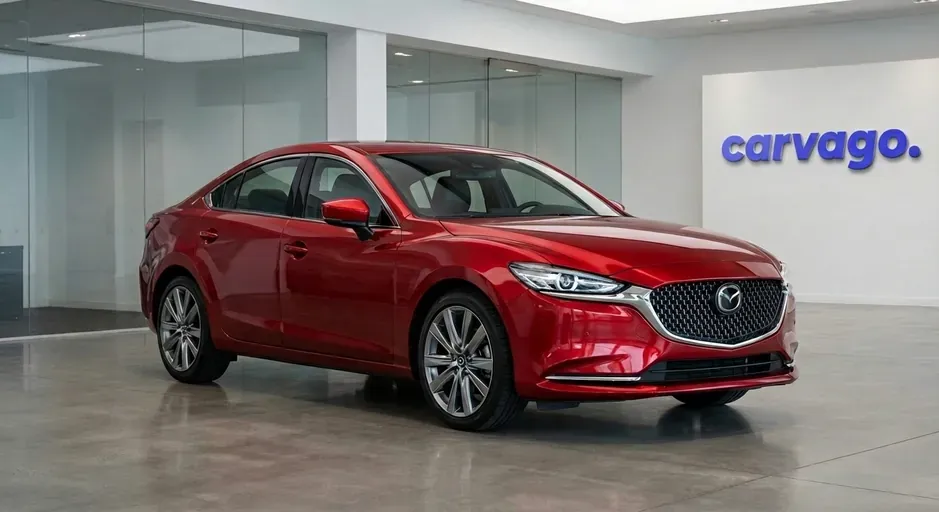
Detailed comparison of used Mazda 6 (Mazda6) vs Renault Talisman. Discover the key differences in engines, reliability, and read our clear final verdict.
May 15, 2026


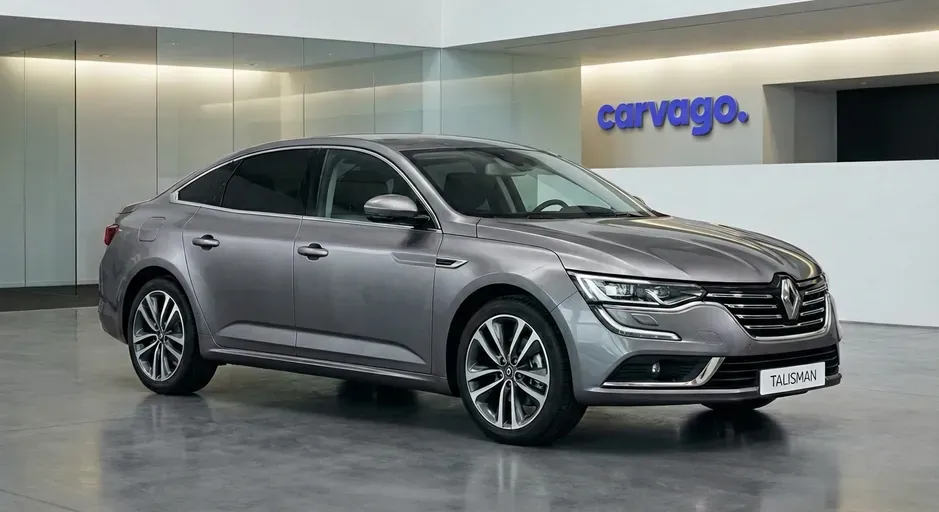
The Japanese Mazda 6, also known as the Mazda Atenza in some Asian markets, has long attracted driving enthusiasts with its precise handling and dynamic design. Its stylish challenger is the French Renault Talisman, which is sold in South Korea as the Renault Samsung SM6, and instead bets primarily on a majestic appearance, generous spaciousness, and a high level of overall comfort. Let's take a detailed look at how these two attractive mid-size representatives, most commonly found on the used car market at around four years of age, fare in a head-to-head comparison and which one represents the better choice.
When looking at the exterior dimensions of both mid-size representatives, we encounter interesting differences that clearly define their everyday usability. In the traditional sedan body style, the Mazda 6 is, at 4,870 mm, a slight 21 mm longer than the Renault Talisman (4,849 mm). However, the situation surprisingly reverses with the estate versions, which are much more popular on the used car market. While the Talisman in the Grandtour version has grown slightly in length to 4,865 mm, the Mazda 6 in the more practical Wagon version has shortened by a significant 65 mm compared to the sedan, measuring only 4,805 mm. Furthermore, with a width of 1,868 mm, the Renault has a slight edge over its narrower Japanese competitor, which measures 1,840 mm in width. The wider and overall more robust build of the French car thus provides the occupants with slightly more generous shoulder room and a feeling of greater airiness in the cabin, while the more compact exterior dimensions of the Japanese estate will be appreciated as a huge advantage during daily maneuvering in narrow city streets and underground garages.
Both manufacturers chose an even more specific technical approach for the wheelbase, which is a key parameter for the longitudinal space for rear-seat passengers. The Renault Talisman bets on versatility and maintains the same wheelbase of 2,809 mm for both the sedan and the more spacious estate. Mazda, however, took a very unconventional path. Its sedan boasts an above-average wheelbase of 2,830 mm, but the estate version sits on a shortened platform with a wheelbase of only 2,750 mm (a staggering difference of 80 mm). In terms of height, both models maintain an elegant, rather sporty low profile ranging from 1,450 to 1,480 mm. While the shorter wheelbase of the Mazda estate objectively takes away valuable centimeters of knee room for rear passengers, on the other hand, it gives it significantly more agile and sportier driving characteristics. The Talisman, by contrast, primarily relies on a long wheelbase for both versions, ensuring maximum travel comfort, smooth directional stability on the highway, and the certainty that adult passengers will not suffer from a lack of space regardless of which body style you choose.
| Parameter | Mazda 6 Sedan | Renault Talisman Sedan | Mazda 6 Estate | Renault Talisman Estate |
|---|---|---|---|---|
| Width (mm) | 1840 | 1868 | 1840 | 1868 |
| Length (mm) | 4870 | 4849 | 4805 | 4865 |
| Height (mm) | 1450 | 1456 | 1480 | 1456 |
| Wheelbase (mm) | 2830 | 2809 | 2750 | 2809 |
When choosing a used mid-size car, trunk capacity often plays a crucial role, especially if you are looking for a practical and comfortable family car. Whether you need to transport a bulky stroller, sports equipment, or are heading out for a big shopping trip, every extra liter is undoubtedly noticeable in daily use. While the Japanese Mazda 6 bets more on sporty elegance and graceful curves, the French Renault Talisman benefits from its bulkier proportions and offers significantly more flexibility and interior space in this regard.
If we focus on the elegant sedan variants, which are roughly three to four years old on the used car market, the difference in transport capacity is very significant. The Mazda 6 (GJ generation) has a trunk with a base volume of 480 liters, which is more than enough for everyday needs, but in the class of mid-size executive cars, this figure does not stand out. The competing Renault Talisman offers a confident base capacity of 600 to 608 liters in the sedan version, depending on the engine. In practice, this generous difference means space for several extra travel bags or bulky suitcases, providing much more peace of mind and reserve for long journeys.
A very similar situation exists for the highly sought-after wagon body variants. The more practical Mazda 6 Wagon provides the crew with a base transport volume of 522 liters, which increases to an impressive 1,664 liters after folding the rear backrests. However, the Renault Talisman Grandtour counters with larger initial values of 564 to 572 liters and a maximum space after folding the seats of 1,673 to 1,681 liters. For active drivers with families, the French wagon is thus a slightly more generous companion, whose volume will be more than sufficient for weekend shopping as well as luggage for a two-week summer holiday by the sea.
| Parameter | Mazda 6 Sedan | Renault Talisman Sedan | Mazda 6 Wagon | Renault Talisman Grandtour |
|---|---|---|---|---|
| Base volume (liters) | 480 l | 600 - 608 l | 522 l | 564 - 572 l |
| Maximum volume with seats folded (liters) | Not specified | Not specified | 1,664 l | 1,673 - 1,681 l |
If maximum trunk size and practicality are your priorities, the Renault Talisman reliably outperforms the Japanese Mazda in terms of transport liters, making it a somewhat more rational choice for demanding family moves.
When choosing a practical car, the trailer weight can play a key role, especially if you plan to tow a caravan, transport construction materials, or go on holiday. In this discipline, there is a fairly fundamental difference between the two models, with the French representative being considered a much more capable workhorse. The first-generation Renault Talisman offers a maximum braked trailer weight of 1,800 kg for its more powerful BLUE dCi diesel engines, while the Grandtour estate version can even handle 1,850 kg in selected variants. The TCe petrol versions then standardly tow 1,500 to 1,800 kg. Conversely, a typical four-year-old used Mazda 6 (from the GJ generation) shows significantly more modest values. Its most popular 2.0 and 2.5 SKYACTIV-G petrol versions have a capacity for a braked trailer of only 1,500 kg (some weaker or older variants from this generation even have a limit of just 1,300 kg). If you go for the 2.2 SKYACTIV-D diesel engine, the maximum moves to 1,600 kg. Although we won't find outright stripped-down plug-in hybrid versions with reduced towing capacity among these used cars, the differences due to construction and choice of power units are clearly evident.
In terms of unbraked trailers, both cars stay within the usual limits of their class. The Mazda 6 can handle a load of 680 to 730 kg depending on the chosen engine, while the Talisman provides a maximum of 735 to 750 kg. In practice, this means that with both, you get additional space for a few extra suitcases in a smaller trailer, making it a fully sufficient value for weekend shopping or a longer family holiday. In conclusion, it can be summarized that for occasional driving with a light load from a DIY store, both cars will perform a perfectly reliable service. However, if you are primarily looking for a robust towing car for heavy caravans or boat trailers, the Renault Talisman represents a much more confident and technically capable choice for these tasks.
| Model and engine | Braked trailer weight (kg) | Unbraked trailer weight (kg) |
|---|---|---|
| Mazda 6 2.0 SKYACTIV-G | 1300 - 1500 | 680 |
| Mazda 6 2.5 SKYACTIV-G | 1500 | 680 |
| Mazda 6 2.2 SKYACTIV-D | 1600 | 730 |
| Renault Talisman TCe / ENERGY TCe | 1500 - 1800 | 735 - 750 |
| Renault Talisman BLUE dCi / ENERGY dCi | 1600 - 1850 | 750 |
Comparing the engine options of the Mazda 6 and Renault Talisman represents a classic clash of two different engineering philosophies, which is crucial to consider when choosing a used car. While Mazda follows the path of honest, larger-displacement naturally aspirated engines (so-called "rightsizing") with a strong emphasis on long-term reliability and linear pull, Renault relies on modern downsizing with turbocharging and dual-clutch transmissions. In terms of long-term and worry-free operation, Mazda's purist petrol engines often come out on top. Conversely, the Talisman offers more economical turbodiesels and more powerful turbocharged petrol units that benefit from significantly higher torque at lower revs. Both brands cover a different spectrum in the market for roughly four-year-old used cars – while the Japanese sedan is ideal for drivers looking for traditional technology, the French car with modern diesels will particularly satisfy "highway cruisers."
The GJ generation Mazda 6 maintained a now-unique offering of naturally aspirated petrol four-cylinders without complex turbochargers even in its final years (around 2021 and 2022). The foundation is the exceptionally reliable 2.0 SKYACTIV-G in 107 kW and 121 kW versions. The pinnacle, and a highly sought-after used car, is the smooth 2.5 SKYACTIV-G with 143 kW, which is always paired with the silky-shifting six-speed SKYACTIV-Drive torque converter automatic. Although the 2.2 SKYACTIV-D diesel engines (110 kW and 135 kW) offered excellent dynamics and, in the estate (Kombi) body style, the option of reliable all-wheel drive (AWD), they are almost non-existent in the market for the youngest used cars from 2021 onwards, as Mazda gradually phased them out. For those seeking peace of mind without expensive repairs, Mazda's naturally aspirated petrol engines represent one of the best solutions on the market.
| Engine type | Fuel | Power (kW) | Torque (Nm) | Transmission |
|---|---|---|---|---|
| 2.0 SKYACTIV-G | Petrol | 107 / 121 | 213 | 6MT / 6AT |
| 2.5 SKYACTIV-G | Petrol | 143 | 258 | 6AT |
| 2.2 SKYACTIV-D | Diesel | 110 / 135 | 380 / 445 | 6MT / 6AT |
The facelifted Renault Talisman, which was available as new until production ended in early 2022, brought a significantly modernized range of powertrains. The entry-level petrol choice became the refined and very efficient 1.3 TCe 160 GPF turbo engine with 118 kW. For dynamically minded drivers, Renault prepared a real treat in the form of the 1.8 TCe 225 GPF (165 kW) unit, whose technical basis comes from the Alpine A110 and Mégane R.S. sports models. High-mileage highway travelers, on the other hand, will appreciate the 2.0 Blue dCi diesel engines, which fully replaced the previous 1.6-liter units and offered much more confident dynamics. They were sold in versions with 118 kW and top-tier 140 kW or 147 kW. A key characteristic of the Talisman from these years is that the vast majority of cars use exclusively EDC dual-clutch automatic transmissions (seven-speed for petrol, six-speed for diesel). Renault did not offer classic all-wheel drive for this model, but compensated for road agility with the 4Control all-wheel steering system.
| Engine type | Fuel | Power (kW) | Torque (Nm) | Transmission |
|---|---|---|---|---|
| 1.3 TCe 160 GPF | Petrol | 118 | 270 | 7EDC |
| 1.8 TCe 225 GPF | Petrol | 165 | 300 | 7EDC |
| 2.0 Blue dCi 160 | Diesel | 118 | 360 | 6EDC |
| 2.0 Blue dCi 190 / 200 | Diesel | 140 / 147 | 400 | 6EDC |
If you are looking for long-term durability and classic technology, Mazda's naturally aspirated petrol engines are unrivaled, while the Talisman will appeal to lovers of powerful turbodiesels and dynamic turbocharging for fast highway journeys.
Choosing the right engine is absolutely crucial for long-term satisfaction with a used mid-size car. The following recommendations are based on real-world experience, actual fuel consumption, owner feedback, and mechanical reliability for cars approximately four years old. The approach of both manufacturers to propulsion is fascinatingly different – while Mazda stubbornly and successfully follows the path of large-displacement naturally aspirated petrol engines with a high compression ratio, Renault works best in its comfortable cruiser with proven and robust diesel technology, which is perfectly suited for long highway journeys.
The four-cylinder naturally aspirated petrol engine 2.5 SKYACTIV-G 194 (offered across the GJ generation until 2024) is the absolute best choice for the Mazda 6. It offers an ideal balance between refinement, sufficient power reserve, and surprising efficiency.
For the majestic Renault Talisman, which works best as a long-distance highway cruiser, the BLUE dCi 160 diesel engine (available from roughly 2018/2019 until the end of production in 2022) is by far the most sensible engine choice.
Every experienced motorist knows that official fuel consumption figures provided by manufacturers in promotional materials often differ significantly from daily reality. To get an objective picture of the operating costs of roughly four-year-old used cars, we focused on real data from drivers themselves in normal traffic. For this comparison, we drew from the popular independent portal Spritmonitor.de, which collects long-term statistics from tens of thousands of users. We monitored the versions that are currently most in demand on the used car market – namely the GJ generation of the Mazda 6 and the facelifted first generation of the Renault Talisman.
| Model and engine | Average consumption (l/100 km) |
|---|---|
| Renault Talisman 1.3 TCe 117 kW | 6.5 |
| Mazda 6 2.0 SKYACTIV-G 121 kW | 6.8 |
| Mazda 6 2.5 SKYACTIV-G 143 kW | 7.5 |
| Renault Talisman 1.8 TCe 165 kW | 8.5 |
| Mazda 6 2.2 SKYACTIV-D 110 kW | 5.8 |
| Renault Talisman 2.0 Blue dCi 118 kW | 5.8 |
| Renault Talisman 2.0 Blue dCi 147 kW | 6.6 |
Looking at the real numbers, several interesting trends emerge. The king of efficiency on long routes remains diesel power, where both models with their mid-range diesels remarkably agree on an excellent average of 5.8 l/100 km. By far the most interesting, however, is the comparison of petrol engines, which represent two completely different technical worlds. While Renault bet on modern downsizing and turbocharging, Mazda stubbornly sticks to naturally aspirated engines with larger displacement. The result? The small-displacement 1.3 TCe four-cylinder in the Talisman can drive for an excellent 6.5 liters, but Mazda's naturally aspirated 2.0 SKYACTIV-G lags behind by only 0.3 liters, while offering a linear power delivery that many find more pleasant. Conversely, the powerful turbocharged 1.8 TCe engine in the Renault pays for its great dynamics with a relatively high consumption of 8.5 l/100 km, while the large naturally aspirated 2.5 SKYACTIV-G engine in the Mazda with the same focus manages to keep its real appetite at a very solid 7.5 l/100 km.
For the typical user, this means clear recommendations depending on how the car is used. If you spend most of your time on motorways and cover hundreds of kilometers a week, the diesel variants of both brands will save you considerable money and guarantee a huge range on a single tank. Conversely, for drivers who often commute in suburban settings or take shorter trips, petrol versions make sense. Here, the basic petrol engines of both cars appear to be an excellent choice for the family budget. Mazda's top-of-the-line 2.5 SKYACTIV-G engine then represents a great compromise between high performance and acceptable operating costs.
In conclusion, while overall fuel consumption plays an important role in choosing a used car, it probably won't be the most important factor in deciding between the Mazda 6 and the Renault Talisman. For diesel and basic petrol versions, the differences are so negligible that the technical condition of the specific unit, maintenance history, or your personal preferences will have a much greater impact on your wallet. You will de facto feel a more significant difference in consumption only if you desire the most powerful petrol specification, where the Japanese naturally aspirated philosophy proves to be noticeably more fuel-efficient than the French turbocharger.
When choosing a roughly four-year-old used car (model years 2021–2022), the biggest difference between the Japanese and French approaches to the used car market becomes apparent. Both cars belonged to the same class in their time, but their value depreciates at completely different rates.
The Mazda 6 has long maintained an excellent reputation on the used car market, which is directly reflected in its higher residual value. Used models from 2021 and 2022 currently range in price from €21,000 to €29,000, depending on the specific engine, mileage, and trim level.
Production of the Renault Talisman finally ended in early 2022, meaning that 2021 and 2022 models represent some of the last and technically most refined post-facelift units. The French elegant, on the other hand, traditionally suffers from a steeper drop in value, which is typical for non-premium mid-size sedans. The price for an approximately four-year-old car on the secondary market most often ranges between €16,000 and €21,000.
| Criterion | Mazda 6 | Renault Talisman |
|---|---|---|
| Estimated used car price | €21,000 – €29,000 | €16,000 – €21,000 |
| Rate of value loss | Low | High |
| Most common available fuel | Petrol | Diesel |
| Price / equipment ratio | Average | Excellent |
While the Mazda 6 makes the most sense for buyers looking for mechanical certainty and who don't want to worry about another rapid drop in resale price, the Renault Talisman is a secret tip on the used car market for those who want maximum comfort and premium equipment for a fraction of the original purchase price.
The Mazda 6 is a safe bet with excellent value retention, while the steeper drop in value makes the Renault Talisman a fantastic buy for lovers of luxury equipment at an exceptionally reasonable price.
Both compared vehicles boast a maximum five-star rating in independent Euro NCAP crash tests. However, it is crucial to put these results into the correct temporal context. Test methodology and requirements are constantly becoming more stringent over the years, meaning that percentage ratings from different years cannot be directly and equally compared.
Mazda 6 underwent testing as part of its update in 2018. At that time, significantly stricter rules were already in place, placing greater emphasis on frontal impact protection and advanced assistance systems. The car achieved an excellent result of 95% for adult protection and 91% for child protection. Vulnerable road user protection was rated at 66%, and safety assistance systems received 73%. These values prove that the Japanese model's body structure is very robust and the car possessed reliable active safety features at the time of testing.
Renault Talisman underwent crash tests earlier, specifically at its market launch in 2015. It earned an overall five-star rating with a result of 86% for adult protection, 84% for child protection, 68% for pedestrian protection, and 76% in the safety assist category. Although the Talisman offers a very rigid body typical of this French brand's vehicles, the 2015 tests did not require such advanced autonomous emergency braking or cyclist detection systems as newer methodologies. From the perspective of today's strict rules and the passage of time, the official validity of the certification from that time has already expired.
In conclusion, although both cars are very safe for their occupants, the Mazda 6 offers an overall more modern safety package. Thanks to the 2018 rating and top-tier protection for adults and children, it stands up better even when compared to the stricter demands of the present day.
| Parameter | Mazda 6 | Renault Talisman |
|---|---|---|
| Year of testing | 2018 | 2015 |
| Adult occupant protection | 95 % | 86 % |
| Child protection | 91 % | 84 % |
| Vulnerable road user protection | 66 % | 68 % |
| Safety assistance systems | 73 % | 76 % |
Both cars provide excellent occupant protection, but the Mazda 6 offers a more modern level of safety thanks to more recent testing and a significantly higher score for passenger protection.
In addition to standard equipment, each model offers several unique features that provide specific added value and could be absolutely crucial for your final decision.
Excellent driving characteristics, agile chassis, and very precise steering
Reliable naturally aspirated Skyactiv-G petrol engines with linear power delivery
Premium interior craftsmanship using high-quality materials
Reliable and smooth-shifting classic automatic transmission with a torque converter
Attractive and timeless exterior design (Kodo) that doesn't age
Smaller luggage compartment volume compared to main competitors
Outdated and graphically weaker infotainment system with slower response
More limited legroom for rear-seat passengers
Higher level of aerodynamic noise in the cabin at highway speeds
The Mazda 6 is built for enthusiastic drivers who appreciate top-notch driving characteristics, a sportier seating position, and exceptionally reliable mechanics without complex turbochargers. It is an ideal choice for those who don't mind a slight compromise in overall spaciousness in exchange for a premium driving feel and excellent ergonomics.
High travel comfort and excellent damping of bumps on long journeys
Unique 4Control all-wheel steering system ensuring great agility and stability
Generous interior space and a voluminous trunk, especially in the Grandtour estate version
Exceptionally comfortable and wide front seats, with a massage function in higher trim levels
Excellent price-to-equipment ratio on the used car market
Occasional jerking and less smooth reactions of the EDC dual-clutch automatic transmission when crawling in traffic
Inconsistent interior build quality, where the premium impression is occasionally spoiled by cheaper plastics
Faster depreciation of the car's residual value on the secondary market
Slow responses and occasional software bugs in the onboard system (especially the older R-Link 2)
The Renault Talisman primarily targets buyers looking for maximum driving comfort, elegant French design, and generous space for the whole family at a very favorable price. Thanks to the unique 4Control system and a softer chassis, it excels as a quiet highway cruiser that is surprisingly easy to maneuver even in tight city streets.
Based on long-term user feedback, service statistics, and our own data provided by every comprehensive car audit, we have compiled an overview of the most common problems you should watch out for in both models at around four years of age.
The Mazda 6 from the last years of production is considered an above-average reliable car; however, even it has its specific weak points, especially regarding external wear and earlier diesel engines.
Petrol versions of the Mazda 6 are among the most reliable mid-size cars. Watch out especially for cosmetic defects stemming from thin paint and potential diesel engine ailments from previous owners who drove mainly in the city.
The Renault Talisman offers a very luxurious ride, but its technical complexity and minor manufacturing flaws may require a more cautious and careful selection for used cars.
The Talisman attracts with a high level of comfort and rich equipment, however, it requires a thorough check of the service history. Attention should be focused on software quirks, potential play in the chassis, and the condition of the dual-clutch transmission.
When buying a used car, a thorough inspection is crucial, and there are specific points to watch out for, especially with these two popular executive models. For absolute peace of mind, it is always worth opting for a used car inspection before purchasing; however, you can already detect a number of potential issues during the inspection and test drive itself.
Renault Talisman offers a more voluminous luggage compartment, both in the sedan version (608 liters compared to 480 liters for the Mazda) and the more practical estate (572 liters compared to 522 liters). The Mazda 6 pays a slight price for its dynamic and sporty design, which takes away valuable liters in the cargo area. If maximum transport capacity for family luggage is your priority, the French representative will serve you a bit better.
The Mazda 6 has long been considered one of the best-driving cars in its class, primarily thanks to its excellent chassis tuning and precise steering. While the Renault Talisman can be equipped with the 4Control four-wheel steering system for excellent maneuverability, its overall focus favors smooth comfort. For a sportier ride and an intense connection with the car, the Japanese sedan or estate is the clear winner.
In terms of long-term reliability, the Mazda 6 enjoys a better reputation, with its naturally aspirated Skyactiv-G gasoline engines known for their above-average mechanical durability. The Renault Talisman from the early years of production suffered more frequently from infotainment software bugs and minor build quality issues, although facelifted models (from 2020 onwards) are significantly better in terms of quality. When choosing a roughly four-year-old used car, the Mazda represents a slightly safer bet with a lower risk of expensive faults.
The Renault Talisman excels in highway comfort thanks to its excellently soundproofed cabin, softer adaptive chassis, and exceptionally comfortable seats, which often feature a massage function. The Mazda 6 is also very pleasant on long journeys; however, its stiffer suspension and slightly higher road noise mean a slight disadvantage. For frequently swallowing hundreds of highway kilometers in complete peace, the Renault is overall a more pleasant companion.
In the used car market, the Renault Talisman impresses primarily with its wide range of economical and powerful diesel engines (such as the popular 2.0 Blue dCi), which ideally complement its long-distance character. In contrast, the Mazda 6 goes against the grain with excellent large-displacement naturally aspirated gasoline engines (2.0 and 2.5 liters) that do without a turbocharger and offer very linear power delivery. Your choice thus narrows down to a decision between a reliable Japanese "atmo" and an efficient French diesel.
Sources: ADAC, novinky.cz, garaz.cz, fdrive.cz, mobilmania.cz, automotodrom.cz
This article was prepared using artificial intelligence tools. The section guarantor is Petr Dušek.

Detailed comparison of Ford Mondeo vs. Renault Talisman. Discover the differences in equipment, engines, and reliability, and read our verdict to make the right choice.
Oct 16, 2026

Detailed comparison of the BMW 3 Series and Mercedes-Benz C-Class. Discover real-world experiences, differences in equipment, and read the verdict to help you choose the right car.
Oct 22, 2026

Lexus IS vs Volvo S60: A detailed comparison of premium sedans. Discover the key differences in driving characteristics, equipment, and reliability before your purchase.
Oct 16, 2026