Articles

Car battle

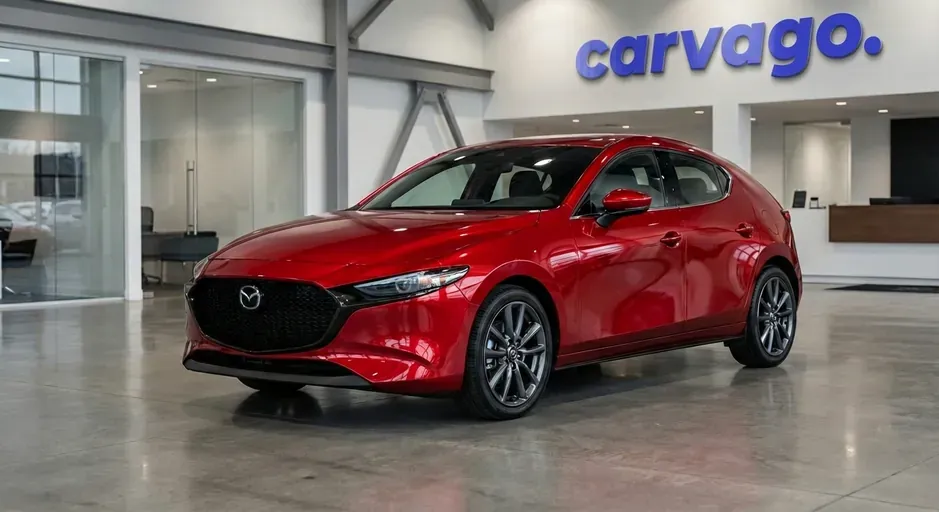
Mazda 3 vs. Renault Mégane: Complete comparison 2026

Detailed comparison: Mazda 3 vs. Renault Mégane. We reveal real-world experiences, differences in equipment, and reliability. Find out which hatchback is the better choice!

May 3, 2026

VS
Mazda 3

Mazda 3

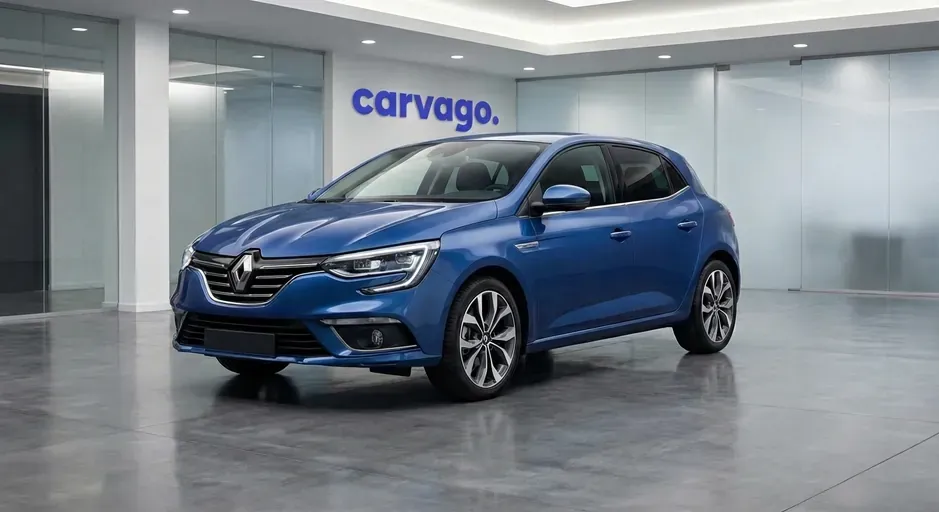
Renault Mégane

Renault Mégane

Introduction

Mazda 3 brings a premium touch to the compact car segment thanks to its unmistakable elegant design and excellent driving characteristics, which are strictly focused on an immersive driver experience. In contrast, the Renault Mégane represents the embodiment of the traditional French approach, scoring points primarily for its emphasis on maximum daily comfort, rich technological equipment, and a wide range of fuel-efficient powertrains. In the following comparison, we will take a detailed look at the strengths and weaknesses of both these representatives of the compact class and find out which of them represents a better choice for your specific needs on the used car market.

Comparison of External Dimensions

When choosing a four-year-old used car in the compact class, you will encounter the most advanced generations of both models – for the Mazda 3, it is the BP generation (since 2019), while for the Renault Mégane, it is the popular fourth generation (referred to as IV). In terms of external dimensions, both cars have taken slightly different paths. The Mazda 3 hatchback, with its length of 4460 mm, is a noticeable 101 mm longer than the standard five-door Renault Mégane (4359 mm). This gives it a more elegant, elongated hood silhouette, while the Mégane bets on a slightly wider stance. With a width of 1814 mm, the French representative surpasses the Mazda by 19 mm, which is positively reflected in the shoulder room inside the cabin.

A fundamental difference can be found in the wheelbase, which is key not only for longitudinal space for rear passengers but also for the car's directional stability. The Mazda 3 boasts a wheelbase of 2725 mm, surpassing the Renault Mégane (2669 mm) by 56 mm. The result is a smoother and more stable ride on the highway. On the other hand, thanks to its greater width and overall shorter body, the Mégane feels slightly more agile in city streets and is noticeably easier to parallel park. In terms of height, both models are almost identical, sticking to sporty lines just below the 1440 mm mark, which gives both a dynamic appearance.

The choice of body style can also have a major influence on the final decision. If you are looking for maximum transport capacity, Renault has a spacious estate (Grandtour) up its sleeve, which measures 4626 mm in length and, thanks to an extended wheelbase (up to 2712 mm in newer model years), offers excellent practicality for families. Mazda, on the other hand, does not offer a traditional estate in this generation and instead scores with a very attractive Fastback (sedan) version, which reaches 4660 mm in length. In the final tally, the Mazda 3 will appeal to drivers desiring elegant and low proportions with a long wheelbase, while the Mégane will be appreciated by those looking for a more compact urban footprint or, conversely, requiring a purely family-oriented and practical estate.
ParameterMazda 3 HatchbackRenault Mégane HatchbackMazda 3 SedanRenault Mégane Estate
Length (mm)44604359 - 436446604626
Width (mm)17951814 - 187517951814
Height (mm)14351428 - 143814401449
Wheelbase (mm)27252669 - 267027252669 - 2712

Trunk Volume

When it comes to everyday practicality and family use, trunk capacity plays a key role for many used car buyers. Whether you need to transport weekend groceries, sports equipment, or pack the family for a longer holiday, the differences between these two models are quite significant. While the Japanese automaker focuses primarily on emotional design and a dynamic silhouette with the Mazda 3, the Renault Mégane, on the other hand, paves the way for maximum utility, which is also reflected in the overall trunk space.

When comparing the five-door hatchback versions, the generation of Mazda 3 from roughly four-year-old used cars (designated as BP) tends to come up short. Its trunk offers a basic volume of 351 liters, which increases to a maximum of 1,026 liters after fully folding the rear backrests. This is sufficient for weekend shopping or the luggage of two people, but it falls short of the class leaders. In contrast, the competing fourth-generation Renault Mégane offers significantly more generous space in the hatchback version. Standard internal combustion engines boast a capacity of 402 to 473 liters (depending on the year and floor shaping), which can be expanded up to 1,367 liters. In practice, for the average user, this means space for several extra suitcases. Keep in mind, however, that if you opt for the E-Tech plug-in hybrid version, the battery reduces the basic volume to a more modest 308 liters.

However, the biggest difference in transport capabilities occurs with other body variants. The Mazda 3 will please those looking for elegance with the sedan version (also called Fastback), which offers a decent 450 liters but lacks the more practical access of a fifth door. More importantly, Mazda completely lacks a family estate (wagon) body style. Renault, on the other hand, excels with the very popular Grandtour (estate) variant of the Mégane. This provides an excellent 507 to 563 liters in the basic configuration and offers a volume generously exceeding 1,500 liters after folding the seats. In terms of overall practicality and the ability to accommodate bulky items, the French representative clearly leads.

ParameterMazda 3 HatchbackRenault Mégane HatchbackMazda 3 SedanRenault Mégane Grandtour (Estate)
Basic volume (liters)351402 - 473450507 - 563
Max. volume after folding seats (liters)1022 - 10261247 - 1367-1504 - 1543

Practicality vs. Style 🎒

If you are looking for a car capable of covering all family needs, the Renault Mégane, especially in the Grandtour version, offers much more space and flexibility. The Mazda 3, on the other hand, targets individuals or couples for whom the more compact trunk is more than compensated for by its design.

Trailer Weights

The ability to tow a trailer can vary significantly among modern compact cars and represents a key factor for many buyers. Whether you hitch up just a small trailer with leaves or a heavy caravan depends precisely on the maximum permitted trailer weight, which directly determines the overall practicality and versatility of the car.

Looking at cars available on the four-year-old used car market (current generation), the Mazda 3 (BP generation) offers very consistent values. Both the standard and maximum braked trailer weight for this Japanese model is set at exactly 1300 kg. This value applies universally regardless of the chosen body style (hatchback or Fastback) or engine. Furthermore, the e-SKYACTIV mild-hybrid variants maintain their towing capacity without any compromises.

The competing Renault Mégane approaches this discipline quite differently and offers disproportionately greater variability. Standard internal combustion versions of the fourth generation (Mégane IV) typically handle a very respectable 1650 kg to 1700 kg for the more practical Grandtour version. The maximum braked trailer weight for powerful diesel engines, such as the ENERGY dCi 130 or 165, climbs to an excellent 1850 kg. However, the situation changes radically for electrified versions with reduced capacity. The popular plug-in hybrid Mégane (E-Tech Plug-in 160) can only tow 750 kg. For the fully electric fifth generation (Mégane E-Tech Electric), the capacity drops to just 500 kg for base versions, while more powerful specifications offer a maximum of 900 kg.

This difference in towing power has clear practical implications. While a powerful diesel Renault Mégane will easily tow a family caravan or a larger boat, the Mazda 3 with its average value of 1300 kg offers more room for a few extra suitcases in the form of a smaller luggage trailer. However, its capacity is still perfectly sufficient for weekend shopping or a longer holiday with a lighter trailer. It is important to mention that in the available data from manufacturers for these models, records for the maximum unbraked trailer weight are missing, so these values are not numerically expressed in our comparison.

In conclusion, in terms of overall towing capacity, the Renault Mégane in its purely internal combustion versions is the clear favorite for those who require the transport of heavier loads. However, the Mazda 3 excels with its predictability and stable performance across the entire model range, which will be especially appreciated by drivers who do not want to make compromises when choosing mild-hybrid technology.

Model and motorizationBraked weight of trailer (kg)Unbraked weight of trailer (kg)
Mazda 3 (BP generation, all engines)1300Not available
Renault Mégane IV TCe 115/140 (hatchback and Grandtour)1650 - 1700Not available
Renault Mégane IV ENERGY dCi 130/1651850Not available
Renault Mégane IV E-Tech Plug-in 160750Not available
Renault Mégane V E-Tech Electric500 - 900Not available

Overview of Most Common Motorizations

When comparing the engine options of the Mazda 3 and Renault Mégane, we encounter completely different engineering philosophies, which is crucial for those interested in an approximately four-year-old used car and defines future operating costs and driving experiences. While Mazda stubbornly (and successfully) stands by higher-displacement naturally aspirated petrol engines and relies on the subtle help of mild-hybrid technology to achieve excellent efficiency, Renault has chosen the classic European recipe. In the French hatchback, you can expect smaller turbocharged engines with strong low-end torque, a very reliable diesel, and a modern plug-in hybrid. The most important difference, however, is that around 2022, the Mégane underwent a historic transformation, and the fifth generation (E-Tech Electric) switched exclusively to pure battery-electric drive, while the Mazda 3 continues to cherish classic internal combustion engines.

Mazda 3: Naturally Aspirated, Innovation, and Electrification

Under the hood of a roughly four-year-old Mazda 3 (BP generation), you will find only petrol four-cylinders, with the exception of a rare diesel, and moreover without a turbocharger. Most of the range consists of advanced two-litre units with a 24V mild-hybrid system (e-SKYACTIV-G). The base versions offer 90 kW (122 hp) and 110 kW (150 hp) – for more spirited overtaking, it is necessary to rev them a bit more, but they reward you with a beautifully linear pull and long-term mechanical durability. A true technological gem is the unique 2.0 e-SKYACTIV-X 186 engine with an output of 137 kW. It revolutionarily combines the principles of spark-ignition and compression-ignition engines, achieving the operation of a classic petrol engine while maintaining diesel-like fuel consumption. Furthermore, Mazda offered this engine as one of the few in the segment with all-wheel drive (AWD).

From the perspective of availability on the used car market, it must be emphasized that the economical 1.8 SKYACTIV-D (85 kW) diesel engine ceased production as early as 2021. It is therefore relatively rare in the current offering of approximately four-year-old vehicles. Conversely, the latest cars from 2024 have replaced the original two-litre engines with a brand-new, powerful 2.5 e-SKYACTIV-G 140 engine.

Engine typeFuelPower (kW)Torque (Nm)Transmission
2.0 e-SKYACTIV-G 122Petrol (Mild-hybrid)902136MT / 6AT
2.0 e-SKYACTIV-G 150Petrol (Mild-hybrid)1102136MT / 6AT
2.0 e-SKYACTIV-X 186Petrol (Mild-hybrid)1372406MT / 6AT
2.5 e-SKYACTIV-G 140Petrol (Mild-hybrid)1032386MT / 6AT
1.8 SKYACTIV-DDiesel852706MT / 6AT

Renault Mégane: From Turbo to Plug-in to Pure Electric

In the used car market for Renault Méganes around four years old, you will encounter a very specific situation, as the classic fourth generation (after facelift) and the brand-new fifth generation (E-Tech Electric) overlap during this period. Conventional models rely on excellent turbocharged four-cylinders developed in cooperation with Mercedes. Most often, you will come across the 1.3 TCe engine (labeled as TCe 140 or TCe 160), which offers strong pull from low revs and is often paired with the seven-speed dual-clutch EDC automatic. A very strong argument for thrifty drivers with high mileage remains the proven 1.5 Blue dCi 115 diesel.

While sports purists will appreciate the presence of the top-of-the-line R.S. models with up to 221 kW (300 hp), the E-Tech Plug-in 160 model, whose sales ended during 2023, was interesting for city driving. A complete turning point then came in 2022 with the Generation V model, which brought the fully electric EV40 and more powerful EV60 versions with a range of around 450 km to the used car market. So, if you are looking for an electrified future, you will find a clear answer with the Mégane.

Engine typeFuelPower (kW)Torque (Nm)Transmission
TCe 115 GPFPetrol852206MT
TCe 140 GPFPetrol1032406MT / 7EDC
TCe 160 GPFPetrol1182607EDC
Blue dCi 115Diesel852706MT / 7EDC
E-Tech Plug-in 160Plug-in hybrid118349Multi-Mode automatic
R.S. TCe 300 GPFPetrol221400 - 4206MT / 6EDC
EV40 / EV60 130hpElectric96250Automatic (1-speed)
EV60 220hpElectric160300Automatic (1-speed)

Classic vs. Modern ⚡

While the Mazda 3 charms drivers who love high-revving naturally aspirated engines and precise mechanics, the Renault Mégane scores with a wide range from spirited turbo engines and economical diesels to a purely electric path.

While the Mazda 3 stubbornly and very successfully sticks to larger-displacement naturally aspirated four-cylinder engines, the Renault Mégane relies on the efficiency of modern smaller-displacement turbocharged engines. Choosing the right engine is absolutely critical for your long-term satisfaction with the car. The following recommendations for roughly four-year-old used cars are based on real-world driving dynamics, actual fuel consumption, owner feedback, and documented mechanical reliability.

For Mazda 3, we recommend: 2.0 e-SKYACTIV-G (150 hp / 110 kW)

This naturally aspirated two-liter engine (available in the BP generation from 2020 to 2024) is by far the most well-balanced choice in the range. Although a weaker 122-hp version is also on the market, the 150-hp variant offers noticeably better dynamics and an eagerness to rev without demanding more fuel in return.

  • Why it's the best choice: It combines a linear and natural power delivery with exemplary mechanical reliability. The absence of a turbocharger means fewer potential service headaches in the future, making this engine a great candidate for long-term ownership.
  • Technical advantages: The engine uses a cylinder deactivation system and a clever mild-hybrid system that smooths out starting and assists during pull-away. Thanks to these technologies, real-world combined fuel consumption easily stays around an excellent 6 to 6.5 l/100 km.
  • Known risks and weaknesses: Since it is a direct-injection unit, carbon buildup can occur on the intake valves during frequent and short city trips. How to identify and solve it: During a test drive, focus on the idle and the smoothness of acceleration – slight fluctuations in RPM or hesitations may indicate early carbonization. Prevention involves regular refueling with high-octane fuel (or adding cleaning additives) and occasionally taking the car for a longer run at higher RPMs to "burn off" the deposits.
  • Who it's best for: For drivers with a calmer, smooth driving style who appreciate long-term reliability and don't mind downshifting occasionally for power. It is ideal for both daily commuting and longer trips.

For Renault Mégane, we recommend: 1.3 TCe 140 GPF (140 hp / 103 kW)

This turbocharged four-cylinder, developed in cooperation with Mercedes-Benz, represents a huge leap forward in the fourth-generation Mégane and clearly overshadows older gasoline and diesel engines.

  • Why it's the best choice: It eliminated almost all the shortcomings of older engines (e.g., the problematic 1.2 TCe). It is quiet, exceptionally reliable, does not suffer from excessive oil consumption, and offers a great compromise between lively performance and reasonable maintenance costs.
  • Technical advantages: The turbocharger ensures strong pull from low RPMs (240 Nm of torque), so the car feels very light and dynamic. In real-world driving, it pleases with a very solid consumption of around 6.5 l/100 km.
  • Known risks and weaknesses: During short city trips with a cold engine, there is a risk of engine oil dilution with gasoline and issues with burning off the gasoline particulate filter (GPF). How to identify and solve it: Before buying, check the oil dipstick. If the level is suspiciously high above the maximum mark and the oil smells strongly of gasoline, the car has been subjected to short "around town" trips and the lubricant is degraded. To keep the engine in perfect condition, completely ignore the factory oil change interval of 30,000 km and shorten it to a maximum of 15,000 km or 1 year.
  • Who it's best for: For drivers who require flexibility and quick engine response, often overtake on country roads, or regularly travel with family and a fully loaded car, where the higher torque is invaluable.

Real Fuel Consumption

When choosing a used car, it is important not to rely solely on official laboratory fuel consumption figures, which are often overly optimistic. Long-term user data offers a much more accurate picture of everyday running costs. For this overview, we have taken into account real records from the community platform Spritmonitor.de, where hundreds of thousands of drivers from all over Europe regularly record their actual refueling. To ensure the highest possible accuracy, the selection of engines focuses strictly on models that currently dominate the market for roughly four-year-old used cars – namely the popular fourth-generation Renault Mégane and the agile Japanese representative, the Mazda 3 (BP generation).

Model and motorizationAverage consumption (l/100 km)
Renault Mégane 1.5 Blue dCi 1154.7
Mazda 3 1.8 SKYACTIV-D 1165.3
Renault Mégane 1.3 TCe 1155.8
Mazda 3 2.0 e-SKYACTIV-X 1805.9
Mazda 3 2.0 e-SKYACTIV-G 1226.1
Renault Mégane 1.3 TCe 1406.2

Looking at the real data, the diametrically different technological approaches of the two carmakers to fuel saving are clear. While Renault opted for popular downsizing and turbocharged units with smaller displacement (1.3 TCe) for its petrol engines, Mazda stubbornly sticks to naturally aspirated 2.0-liter engines enhanced with mild-hybrid systems even in its modern generation. A surprising finding is the fact that Renault's small turbochargers do not bring any radical petrol savings in real combined operation compared to the large Japanese displacement. However, Mazda's innovative e-SKYACTIV-X engine deserves huge praise. Thanks to sophisticated Spark Controlled Compression Ignition technology, it can achieve lower consumption than the basic petrol 2.0-liter, even with 180 hp. As for diesel engines, the domino effect is entirely on the side of the French brand. The iconic 1.5 Blue dCi engine confirms its reputation as an absolute fuel-sipper and easily beats Mazda's otherwise relatively economical 1.8-liter diesel.

From these operating results, clear recommendations can be drawn for specific driving profiles:

  • Drivers mainly in city and suburban traffic: Mazda's naturally aspirated petrol engine with linear power delivery will not suffer from short trips and carbon buildup as much as more sensitive diesels. However, Renault's competing 1.3 TCe offers a very pleasant punch thanks to the turbo, with a comparably reasonable appetite.
  • Travelers and highway "mileage munchers": From the perspective of absolute numbers and cost savings, the choice is clear. The Renault Mégane with a proven diesel 1.5 Blue dCi can reduce highway fuel bills to a minimum that the Mazda simply cannot match.
  • Performance seekers without compromises at the pump: The breakthrough Mazda 3 e-SKYACTIV-X will especially appeal to more demanding drivers who appreciate higher dynamics but refuse to pay the price in the form of a whirlpool in the tank every time they step on the gas a little harder.

In conclusion, fuel consumption will be a strong argument in the final decision, primarily considering annual mileage and the nature of the routes. The Renault Mégane is a slightly more favorable and rational choice for those who look strictly at the family budget and seek the bulletproof economy of a diesel engine. On the other hand, the Mazda 3 serves as very successful proof that a modern larger-displacement petrol engine combined with top-tier technology can run on figures that make diesel stop making financial sense for many drivers.

Current offers Renault Mégane

View full offer

Price Range and Used Car Offerings

When focusing on the used car market for vehicles around four years old (approximately 2021–2023 models), we encounter two completely different worlds with these two representatives of the lower-middle class. While the Mazda 3 holds its value very well in the long term, the Renault Mégane will please buyers with a more limited budget due to its faster depreciation, making it an attractive second-hand purchase.

Mazda 3: Premium Price for Japanese Reliability

The fourth generation of the Mazda 3 (code-named BP) was already one of the more expensive and premium hatchbacks on the market when new. This is clearly reflected in the used car market as well. 2022 models typically range in price from €18,000 to €23,000.

  • Base engine: Models with the naturally aspirated 2.0 e-Skyactiv G engine represent a more affordable entry point to the brand, often starting slightly above €16,000.
  • Top versions: If you opt for the innovative e-Skyactiv X engine (with compression ignition) or for vehicles in the highest trim levels with an automatic transmission, the price can easily exceed the €21,000 mark.
  • Depreciation: Very low. Mazda is sought after for its reliability and timeless design, which keeps used car prices unusually high.

Renault Mégane: A More Affordable Alternative with Rapid Depreciation

The fourth generation of the Mégane after its facelift (sold until roughly 2024) is significantly more affordable in terms of used car purchase costs. Classic internal combustion variants from 2022 with the proven 1.3 TCe petrol four-cylinder can be purchased for prices between €13,000 and €16,000.

  • Internal combustion versions: The traditional hatchback and the popular estate (Grandtour) are among the most affordable compact cars in their class. For the price of a base Mazda 3, you can often get a Mégane with significantly lower mileage or in the top-tier R.S. Line trim.
  • Electric alternative (E-Tech): The fully electric Mégane E-Tech has also been appearing on the used market since the 2022 model year. Although it shares the name, it is a technologically completely different car, and its used prices are much higher, usually between €23,000 and €27,000.
  • Depreciation: Higher in the first years after purchase. This plays into the hands of used car buyers, who get a modern and safe car for relatively little money.

Price Overview and Value Retention (2021–2023 models)

ModelApproximate price (2022 model)DepreciationRecommended choice (price/performance ratio)
Mazda 3 (BP)€18,000 – €23,000Low2.0 e-Skyactiv G (122 hp)
Renault Mégane (IV facelift)€13,000 – €16,000Higher1.3 TCe (140 hp)

💰 Verdict: Reason vs. Emotion

If you are looking for the most affordable and practical second-hand car, a used internal combustion Renault Mégane will save your budget, while the Mazda 3 requires a higher initial investment, which it will return in the form of more premium craftsmanship and better residual value retention.

Safety and Euro NCAP Rating

Both cars, the Mazda 3 and the Renault Mégane, boast a maximum five-star rating in Euro NCAP safety tests. When choosing a used car, however, it is crucial to consider the context and the specific year these tests were conducted, as five stars from one year do not mean the same as five stars from later years.

The methodology and testing protocols of the independent Euro NCAP association are constantly evolving and becoming stricter. Every few years, more demanding frontal impact simulations, more advanced pedestrian and cyclist detection tests, or emergency scenarios at intersections are added. For this reason, percentage scores from different years cannot be simply and directly compared – older tests represent a much lower bar than recent ones.

Mazda 3 (fourth generation) underwent testing in 2019 according to stricter methodologies. It stood out then, particularly with an almost perfect and at the time record-breaking score of 98% for adult occupant protection. Its active safety package already had to face more modern scenarios, including autonomous emergency braking with pedestrian and cyclist detection in low-light conditions, which was reflected in a very confident overall result.

The fourth generation of the Renault Mégane underwent crash tests in 2015. At that time, it achieved excellent results for its class; however, the testing standards then were significantly more lenient. For example, advanced autonomous braking functions at intersections or sophisticated cyclist detection were not evaluated at all. Furthermore, it is important to mention that the five-star certification for this model from Euro NCAP officially expired in January 2022 due to the age of the protocol, and by today's tough standards, the car would no longer achieve this rating with the same equipment.

ParameterMazda 3Renault Mégane
Year of testing20192015
Adult occupant protection98 %88 %
Child occupant protection87 %87 %
Vulnerable road users protection81 %71 %
Safety assist systems73 %71 %

From a passive safety perspective, both models offer a rigid body that reliably protects the occupants. However, an analysis of the results clearly shows a difference in the technological maturity of the active systems. While the Renault Mégane relies on an older generation of assistance features, the Mazda 3 boasts much more modern and sensitive sensors tested under more demanding conditions. In conclusion, it can be stated that thanks to its newer design and stricter evaluation, the Mazda 3 represents a significantly more modern and comprehensive safety choice that better meets current traffic standards.

Mazda 3 wins thanks to more modern protection 🛡️

Although both cars protect their occupants excellently, newer testing protocols and more advanced assistance systems make the Mazda 3 an objectively safer choice for modern traffic.

Comparison of Interesting Equipment Features

In addition to standard equipment, each of the models offers several unique features that perfectly reflect their different approaches to added value and everyday use.

Mazda 3: Perfect ergonomics and innovative technology under the hood

  • Infotainment and ergonomics: With this generation, Mazda has completely abandoned touchscreen control while driving. Everything is intuitively operated via the precise Commander Control rotary knob on the center console, which radically reduces driver distraction. A high-quality head-up display projected directly onto the windshield, which is often already part of the standard equipment, also contributes to perfect concentration.
  • Revolutionary engines: The Japanese automaker follows its own path. Under the hood, you can find the unique e-Skyactiv X engine, which is the only mass-produced power unit in the world to combine the principles of gasoline and diesel engines (Spark Controlled Compression Ignition). The result is the refined operation and torque of a gasoline engine with fuel consumption approaching that of economical diesels.
  • Chassis and electronics: The G-Vectoring Control Plus (GVC+) system constantly and subtly adjusts engine torque and applies braking to individual wheels depending on steering wheel movements. This makes cornering much smoother and suppresses unpleasant forces acting on passengers.
  • Premium details and acoustics: Collaboration with the Bose brand on the premium audio system brought an innovative solution – the woofers are built directly into the rigid structure of the body, not into the plastic door panels. This eliminates unwanted resonance and complements the already exceptionally good acoustic insulation of the cabin.

Renault Mégane: Digital connectivity and French versatility

  • Infotainment and onboard technology: The Easy Link multimedia system with a vertically oriented touchscreen up to 9.3 inches in size evokes the user interface of a standard tablet. It supports OTA (Over-The-Air) wireless updates and, through the Multi-Sense interface, gives the driver the ability to set the car's character in detail – from engine response and steering weight to the color of the ambient lighting.
  • Electrified powertrains: In its refreshed fourth generation, the Mégane brings the advanced E-Tech Plug-in Hybrid system. For smooth shifting, it uses a specific multi-mode automatic transmission without a traditional clutch, whose technological principle is derived directly from the brand's experience in motorsport and Formula 1.
  • Smart comfort and safety: In everyday use and on longer journeys, drivers will appreciate comfort features taken from higher classes, such as the driver's seat with an integrated massage function. A significant safety benefit is the smart LED Matrix Vision adaptive headlights, which can automatically turn off individual LED segments to permanently illuminate the roadside without dazzling oncoming vehicles.
  • Sporting genes and chassis: For those interested in a more dynamic look, the attractive R.S. Line package is available. However, if you look at the high-performance R.S. versions, you will encounter the iconic 4Control system (four-wheel steering). At city speeds, it turns the rear wheels in the opposite direction to the front ones, dramatically reducing the turning radius, while at high speeds, it turns them in the same direction for maximum stability in corners.

Key Advantages and Disadvantages

Mazda 3

Pros

Premium interior craftsmanship with attention to detail and high-quality materials

Excellent driving dynamics with precise and communicative steering

Reliable and innovative naturally aspirated engines (Skyactiv-G and e-Skyactiv X) with linear power delivery

Great control ergonomics thanks to the intuitive physical infotainment controller on the center console

Attractive and timeless exterior design

Cons

Noticeably limited legroom and headroom for rear-seat passengers

Below-average luggage capacity (358 liters for the hatchback body style)

Poorer rear-quarter visibility due to massive rear C-pillars

Naturally aspirated engines require higher revs for more dynamic acceleration

Mazda 3 is an ideal choice for drivers who want to enjoy driving to the fullest and appreciate a premium cabin feel at the expense of absolute practicality. In terms of long-term ownership, it is perfectly suited for individuals or couples for whom rear-seat space and trunk size are not top priorities, but who value reliable technology and top-tier design.

Renault Mégane

Pros

Very comfortable suspension setup that filters out bumps excellently on longer journeys

Availability of a practical estate version (Grandtour) with a spacious trunk

Lively and fuel-efficient turbocharged gasoline engines (especially the reliable 1.3 TCe unit)

Option of an efficient plug-in hybrid powertrain (E-Tech)

Excellent price-to-value ratio on the used car market

Cons

More basic interior finish with a higher proportion of hard plastics

The infotainment system (Easy Link) has slower response times and a less intuitive user interface

More detached steering and an overall less engaging driving experience

Faster depreciation compared to Japanese competitors

Renault Mégane will primarily appeal to rational buyers and families looking for a comfortable, practical, and affordable car for everyday use. Especially in the estate version, it offers excellent utility for family trips and devouring highway miles, where its softer French comfort truly shines.

Common Problems and Owner Complaints

Based on long-term user experience, service bulletins, and real data from our physical inspection of used cars, we have compiled an objective overview of the most common problems you should focus on for approximately four-year-old vehicles.

The Japanese Mazda 3 (BP generation) is considered a highly reliable car mechanically, yet it has several typical ailments, mainly concerning cosmetics and electronics.

  • Bodywork and paint: By far the most common complaint is the very thin layer of paint (especially with the optional Soul Red Crystal shade). The paint is prone to stone chips and faster wear, often leading to the need for local repairs.
  • Interior: Many owners complain about creaking and resonance of harder plastics, most often in the dashboard area, B-pillars, or head-up display. The interior glossy "piano" lacquer on the center console is also extremely easy to scratch.
  • Infotainment: The multimedia system occasionally suffers from screen freezing, spontaneous restarts, or issues with stable pairing of wireless Apple CarPlay/Android Auto. In the vast majority of cases, this problem is permanently solved by a software update at an authorized service center.
  • Engine and drivetrain: The mechanics of the engines themselves are above-average durable. However, the innovative Skyactiv-X units suffered from slight cold-start jerking or irregular running in the first years of production – here too, a software reflash of the control unit usually sufficed. Increased attention is required for the state of the 12V battery of the mild-hybrid system, which tends to be undercharged during frequent short trips.

Mazda 3: Minor hesitations in the shadow of mechanical durability

Mazda 3 maintains a reputation as an exceptionally reliable car, but buyers must accept the more sensitive body paint and occasional minor noises in the cabin.

The fourth-generation Renault Mégane (in its facelifted form) managed to eliminate many earlier teething troubles, yet specific weak points remain in terms of onboard systems and suspension.

  • Electronics and infotainment: Frequent complaints are directed at the Easy Link system, which struggles with long response times, occasional screen freezing, or Bluetooth connection drops. There are also isolated issues with the keyless entry system (hands-free card) or error messages from tire pressure sensors.
  • Engines: The popular 1.3 TCe petrol four-cylinder (developed jointly with Mercedes) is mechanically reliable, but suffers from carbon buildup if oil change intervals are neglected or extended. In contrast, for the 1.5 Blue dCi diesel units, failing AdBlue injection system pumps and NOx sensor failures are relatively common issues.
  • Transmission: EDC dual-clutch automatics can exhibit rougher shifting and jerking during frequent stop-and-go traffic. With mileages over 100,000 km, gradual wear of clutch sets must be expected, the replacement of which represents a significant service expense.
  • Chassis: When operated on broken roads, the front axle shows faster wear. Play appears most often on stabilizer links and bushings, manifesting as a dull knocking. To ensure these defects don't surprise you after purchasing the car, we recommend a thorough independent inspection of the car's technical condition.

Renault Mégane: Watch out for electronics and chassis parts

The modernized Mégane offers advanced and economical engines, but when buying a used car, it is critically important to carefully check the functionality of the onboard systems and the flawless operation of the dual-clutch transmission.

Tips for Buying a Used Car

When buying a used car, a thorough inspection is key. Here are some specific points to focus on for these two models to avoid expensive surprises after purchase. Whether you choose Japanese precision or French comfort, a detailed Independent car technical inspection is always worth it before the purchase itself.

When choosing a Mazda 3:

  • Engine operation and cold starts (Skyactiv-X): With this innovative engine, focus on the smoothness of power delivery, especially when the engine is cold. Stuttering or jerking at lower RPMs can mean an outdated version of the control unit software or clogged sensors. A software update usually helps, but it's good to know in advance.
  • Paint condition and early corrosion: Mazda uses eco-friendly but very thin paints – especially with the popular Soul Red Crystal. Inspect the hood, bumper, and wheel arches in detail. Paint chipping from stones is an aesthetic problem that can lead to premature body corrosion if not treated in time.
  • Clutch and manual gearbox linkage: Mazda's manual gearboxes are among the best on the market. During the test drive, try faster shifting and listen. If shifting is stiff, synchros are noisy, or the clutch engages at the very end of the pedal travel, the car may have experienced rough handling and will require expensive repair.
  • Suspension and steering noises: When driving on uneven surfaces (cobblestones, speed bumps), roll down the windows and mute the radio. Clicking or metallic sounds transmitted to the steering wheel can indicate worn shock absorber mounts or play in the steering column.
  • Electronics and folding mirrors: Try repeatedly folding and unfolding the exterior mirrors. The mechanism motors are among the weak points of this generation and often get stuck. Repair requires replacing the entire mechanism.

When choosing a Renault Mégane:

  • Dual-clutch transmission (EDC) behavior: With the automatic transmission, focus on slow crawling in traffic and hill starts. If the gearbox jerks significantly when starting, hesitates to downshift, or makes banging noises, the friction clutches are likely on their way out or the expensive mechatronics is acting up.
  • Infotainment and onboard system: Models from this era use Easy Link or the older R-Link 2 systems. Test the response speed, phone pairing, and the functionality of the parking camera. Frequent freezing or black screens can mean the need for a software reflash at a service center, or in the worst case, module replacement.
  • Timing on petrol and operation of diesel engines: With the very popular 1.3 TCe petrol engine, listen to the engine immediately after a cold start – a rattling sound can reveal a tired timing chain tensioner. For diesels (1.5 dCi), monitor the stability of the idle RPM; fluctuations often indicate a problem with the injectors.
  • Front axle wear: The Mégane is tuned for comfort, but the front axle suffers on broken roads. Test the car's suspension over speed bumps. Dull thuds from the front wheels typically mean worn stabilizer links or ball joints, which are fortunately relatively cheap items.
  • Battery and E-Tech (PHEV) transmission: If you are buying a plug-in hybrid, ask for the current battery capacity (SOH – State of Health) from diagnostics to have an idea of the real electric range. During the drive, also monitor the specific clutchless "dog-box" transmission – switching between the electric and combustion engine must be smooth, not accompanied by strong jerks.

FAQ: Most Frequently Asked Questions

The Renault Mégane in the hatchback version offers a trunk capacity of 384 liters, which is slightly more than the 358 liters of the Mazda. Furthermore, if you are looking for a family car, the French Grandtour estate with 521 liters provides significantly more space than any body style of its Japanese competitor.

Mazda traditionally tops reliability rankings, primarily thanks to its robust Skyactiv gasoline engines and precise craftsmanship. While Renault has significantly improved its reputation in recent years, minor infotainment software glitches can occasionally occur. In terms of long-term trouble-free operation, the Japanese car is considered a safer bet.

In terms of driving pleasure, the Japanese representative clearly stands out thanks to its very precise steering, great driving position, and communicative chassis. The Mégane, on the other hand, is tuned primarily for a comfortable and smooth ride, unless we consider its top-tier R.S. sports version. For daily dynamic driving on backroads, the Mazda is a much more fun choice.

Both brands approach efficiency differently, with the Asian automaker betting on sophisticated e-Skyactiv mild-hybrid gasoline engines with very good real-world fuel consumption. Renault, on the other hand, scores with proven economical diesels and, above all, the advanced E-Tech plug-in hybrid, which allows for daily driving purely on electricity. The fuel consumption of both cars thus depends mainly on whether you prefer long highway trips or city commuting with the possibility of charging.

Both cars represent a very safe choice and have earned a full five-star rating in Euro NCAP crash tests in their respective generations. However, the Mazda 3 scores by offering richer and more advanced assistance equipment even in the base trim levels, including a standard head-up display. With its French competitor, reaching a comparable level of assistance often requires opting for more expensive optional packages.

Conclusion: Which Model to Choose?

Sources: ADAC, aktualne.cz, garaz.cz, elektromobil.cz, smartmania.cz, motorsportrevue.cz

This article was prepared using artificial intelligence tools. The section guarantor is Petr Dušek.

Related articles

Car battle

Citroën C4 vs. Škoda Octavia: Complete comparison 2026

Detailed comparison of the Citroën C4 vs Škoda Octavia. We compare the driving characteristics, space, and equipment of these used cars. Find out from our verdict which car to choose.

Apr 18, 2026

Car battle

Citroën C4 vs. Seat Leon: Complete comparison 2026

Citroën C4 vs SEAT Leon Comparison: Which used car makes more sense? A detailed comparison of equipment, driving characteristics, and a verdict that will make your choice easier.

Apr 24, 2026

Car battle

Kia Ceed vs. Renault Mégane: Complete comparison 2026

Used car comparison: Kia Ceed vs Renault Mégane. Which hatchback or estate to choose? We compared engines, equipment, and reliability. Read our verdict!

Oct 16, 2026

We accept online card payments as well as wire transfers.

visa payment provider logovisa-electron payment provider logomastercard payment provider logomaestro payment provider logodiners-club payment provider logodiscover payment provider logo