Articles

Car battle

Kia Stonic vs. Suzuki Vitara: Complete comparison 2026

Kia Stonic vs Suzuki Vitara: A detailed comparison of popular crossovers. Discover real-world experiences, differences in fuel consumption, and a verdict that will make your choice easier.

May 6, 2026

VS
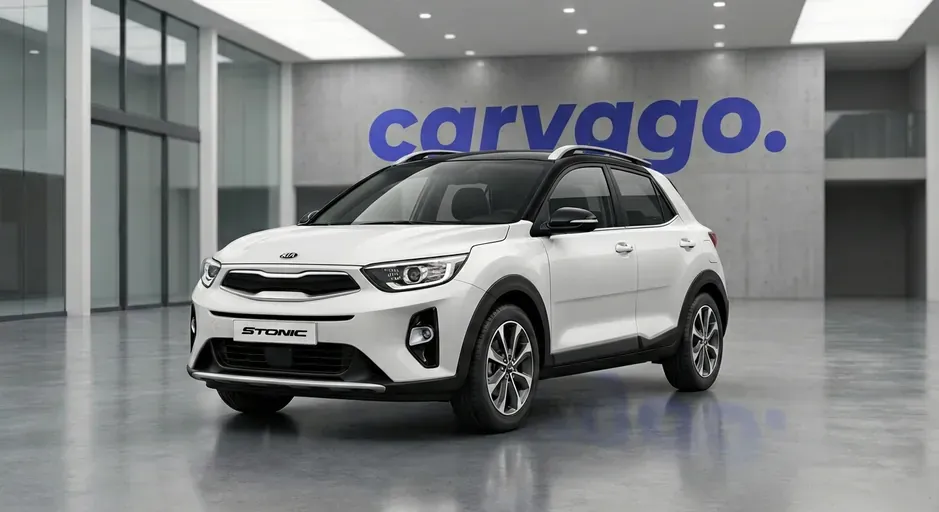
Kia Stonic

Kia Stonic

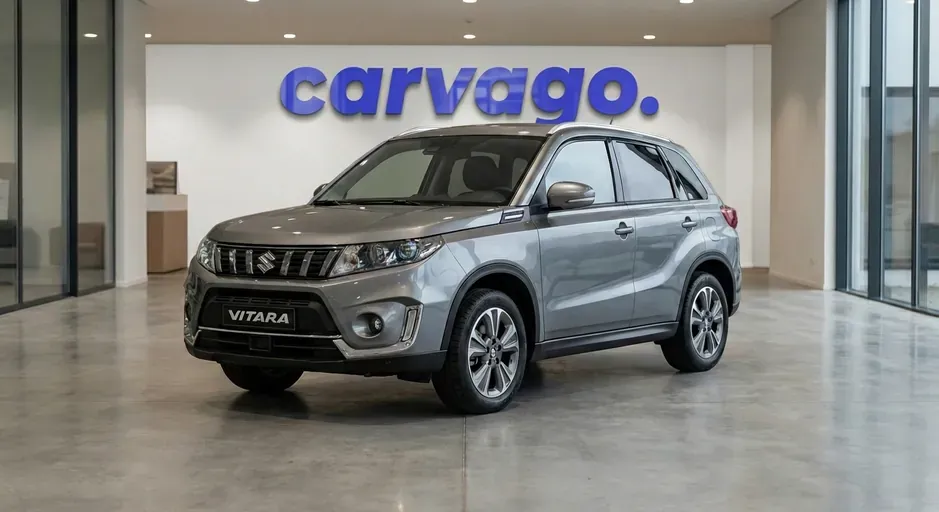
Suzuki Vitara

Suzuki Vitara

Introduction

Kia Stonic, also sold under the Kia KX1 name in selected markets, is a stylish compact crossover that attracts primarily with its dynamic design and agile maneuverability in city traffic. Standing against it is the popular Suzuki Vitara, which is offered under the name Suzuki Escudo in Japan and other countries and has long been building a reputation in the small SUV segment as a practical vehicle with proven reliability and optional all-wheel drive. Let's take a detailed look at how these two models fare in a direct comparison and which of them represents the best possible choice on the market for roughly four-year-old used cars.

Comparison of External Dimensions

When choosing a compact city crossover on the used car market, exterior dimensions play a key role. Both the Kia Stonic (YB generation) and the Suzuki Vitara (2nd generation) belong to the popular B-SUV segment and, as roughly four-year-old used cars, are among the most sought-after models. Although they may look similar at first glance, their proportions reveal a different approach to design by both manufacturers, which has a direct impact on interior space and driving character.

The Suzuki Vitara with a length ranging from 4170 to 4175 mm slightly exceeds the Kia Stonic, which measures 4140 mm. The difference of about 30 millimetres in length and 15 millimetres in width (1775 mm for the Vitara versus 1760 mm for the Stonic) is almost unnoticeable in daily traffic. You can easily park both cars even in the tightest city streets. However, a fundamental difference can be found in the height of both vehicles. With nearly 1600 mm, the Vitara is almost 10 centimetres taller than the Stonic (1505 mm). Suzuki thus offers a more traditional, boxier shape typical of classic SUVs, which provides a higher driving position and better outward visibility. The Kia Stonic, on the other hand, sits closer to the ground and feels more like a slightly raised hatchback, which will be appreciated by drivers who prefer a sportier and more planted seating position.

An interesting situation arises when looking at the wheelbase. Although the Kia Stonic is a shorter car overall, its wheelbase is 2580 mm, which is a full 80 mm more than the Suzuki Vitara (2500 mm). This technical detail is a major advantage for the South Korean model – in practice, the longer distance between the axles translates into more generous legroom for rear-seat passengers and also gives the car better directional stability at highway speeds.

If you expect a classic robust look, higher and more comfortable entry, and a slightly airier feel overhead from your car, a slightly used Vitara will be a better choice for you. But if you are aiming for an agile car with a greater emphasis on rear passenger space and don't mind a driving feel closer to a classic passenger car, the Kia Stonic will better meet your expectations.

Overview table of exterior dimensions

ParameterKia Stonic SUVSuzuki Vitara SUV
Width (mm)17601775
Length (mm)41404170-4175
Height (mm)15051595-1610
Wheelbase (mm)25802500

Trunk Volume

When choosing a compact crossover on the used car market, luggage compartment volume is often one of the deciding factors. Although these are smaller cars, many drivers use them as their primary family vehicles. Sufficient trunk space can mean the difference between packing everything for a weekend shopping trip or a longer vacation without compromise, or having to limit yourself. Although both cars target a similar clientele, their approach to interior space differs slightly.

Kia Stonic offers a consistent luggage capacity of 352 liters across all its engine options, including the popular mild-hybrid versions from around 2020 to 2022. However, if you fold down the rear seats, you get up to 1,155 liters of space. In contrast, the second-generation Suzuki Vitara is slightly more generous in its basic configuration, offering 375 liters. After folding the seats, however, its maximum capacity stops at a slightly smaller 1,120 liters. A fundamental difference with the Vitara is brought by the full-hybrid powertrain (1.5 Dualjet Hybrid offered after 2022), where the traction battery takes up valuable space and reduces the standard trunk to a below-average 289 liters (with a maximum of 1,046 liters).

In practice, this means that the standard version of the Suzuki Vitara provides space for several bags or an extra bulky piece of luggage in the trunk, which noticeably eases daily life. The Kia Stonic, on the other hand, loses slightly in the base configuration, but thanks to its larger maximum volume, it is slightly better suited for transporting larger loads after folding the seats. With the full-hybrid Vitara, expect a significant limitation that reduces family practicality. However, in their standard versions, both cars are fully sufficient for daily tasks and represent a fair compromise between compact exterior dimensions and reasonable interior spaciousness.

ParameterKia Stonic SUVSuzuki Vitara SUVSuzuki Vitara SUV (1.5 Dualjet Hybrid)
Basic volume (liters)352375289
Maximum volume with seats folded (liters)115511201046

Details and drive type decide 🧳

While the Suzuki Vitara wins in basic trunk volume, the Kia Stonic scores with better space utilization after folding the seats. However, if you opt for the full-hybrid Vitara, you must be prepared for a significant reduction in space for your luggage.

Trailer Weights

Clear Dominance for Suzuki

Trailer weight, or towing capacity, plays a key role for many drivers, whether it's for installing a bike rack, hauling garden waste, or towing a small caravan. When comparing used cars from 2020 to 2024, there is a vast difference in this discipline between the Kia Stonic and Suzuki Vitara models. While Kia targets light and undemanding tasks, Suzuki offers robust parameters comparable to much larger SUVs.

In the context of the used car market from recent years, the Kia Stonic is significantly limited in terms of towing. Models with the popular turbocharged 1.0 T-GDI engine (with 74 or 88 kW) and the naturally aspirated 1.2 version can tow a braked trailer with a maximum weight of only 900 to 910 kg. The standard unbraked capacity in these cases is 450 kg. In practice, this means the car's capacity is fully sufficient for a weekend trip to a DIY store or a small trailer for the cottage, but this Korean crossover is not very suitable for more demanding use.

The Suzuki Vitara is diametrically different and much better suited to the needs of more demanding drivers. The most common used variant from this period, the 1.4 Boosterjet Hybrid (95 kW), can handle a braked trailer weighing an impressive 1,500 kg. If you opt for the full hybrid 1.5 Dualjet Hybrid version with lower power (75 kW), expect a slightly reduced capacity of 1,200 kg. The unbraked weight for used Vitara models ranges between 400 and 600 kg.

In real life, these numbers represent a significant advantage for the Japanese model. While with the Kia you have to carefully count every loaded kilogram, the Vitara easily handles towing a small caravan or a bulkier load. The higher capacity of the Japanese model easily offers additional space for a few extra suitcases in a large trailer and is easily sufficient for both weekend shopping and longer holidays with the whole family.

Final Verdict: If a tow bar is important to you and you plan to tow something more than just a light trailer with branches or a bike rack, the choice is absolutely clear. In this regard, the Suzuki Vitara completely outclasses its Korean competitor and represents a significantly more useful and versatile car.
Model and EngineBraked Trailer Weight (kg)Unbraked Trailer Weight (kg)
Kia Stonic 1.0 T-GDI (74 / 88 kW)900450
Kia Stonic 1.2 (62 kW)910450
Suzuki Vitara 1.4 Boosterjet Hybrid (95 kW)1,500400 - 600
Suzuki Vitara 1.5 Dualjet Hybrid (75 kW)1,200400 - 600

Overview of Most Common Motorizations

The approach to powertrains in the Kia Stonic and Suzuki Vitara models differs quite fundamentally, which is a key decision factor for used car buyers. This difference is most significantly reflected in driving dynamics, fuel consumption, and the ability to handle poor grip conditions. The Kia Stonic relies exclusively on front-wheel drive and a range of smaller engines that primarily appeal to drivers operating in urban and suburban areas. It focuses on everyday agility and lightness, even for tighter budgets. In contrast, the Suzuki Vitara clearly shows its more robust roots in the generations suitable for roughly four-year-old used cars. It offers sophisticated hybrid four-cylinder engines with more pull and, above all, the optional but extremely popular AllGrip all-wheel-drive system. The Japanese model is thus an ideal candidate for those who require more confident traction and don't mind a slightly higher price tag, while the Korean competitor scores with its complete lack of pretension and agility on paved roads.

Kia Stonic

In the range of used Kia Stonic models (roughly from 2020, under the current YB generation), economical and reliable petrol engines take center stage. The absolute base is the traditional naturally aspirated 1.2 DPI four-cylinder with 62 kW. Although its dynamics are better suited for more defensive driving, it scores full points for its exemplary durability without unnecessarily complex technologies, making it an ideal choice for calm drivers and short trips. If you are looking for significantly better acceleration and relaxed overtaking, the turbocharged one-liter three-cylinder 1.0 T-GDI engines with 74 kW or a very solid 88 kW are meant for you. In more modern versions, these engines are often paired with a 48V mild-hybrid system, which helps smooth out so-called turbo lag and favorably reduces fuel consumption in the city. They can be combined with either a smooth manual or an exceptionally comfortable seven-speed dual-clutch DCT transmission. It is essential to mention an important fact – the once-popular simpler 1.4 MPI petrol engine and the robust 1.6 CRDi diesel disappeared from the price lists between 2019 and 2020. For four-year-old cars on the used market, they have effectively vanished, and it is necessary to choose from the modern petrol lineup.

Engine typeFuelPower (kW)Torque (Nm)Transmission
1.2 DPIPetrol621185MT
1.0 T-GDIPetrol741726MT / 7DCT
1.0 T-GDI 48VPetrol (Mild-hybrid)88172 / 2006MT / 7DCT
1.4 MPI (until 2019)Petrol731336MT / 6AT
1.6 CRDi (until 2020)Diesel81 / 85260 / 2806MT / 7DCT

Suzuki Vitara

The second generation of the Suzuki Vitara has undergone a major modernization towards electrification in recent years. Typical cars around four years old therefore offer only sophisticated hybrid powertrains. The backbone of the range on the used market is the absolutely excellent 1.4 Boosterjet Hybrid four-cylinder with 95 kW. Supported by 48V mild-hybrid assistance, it can deliver highly above-average low-end pull – torque here reaches a massive 235 Nm. In addition to all this, it maintains low fuel consumption and very good reliability, and can be paired with either a manual or a smooth six-speed torque converter automatic. In 2022, the range was expanded by an advanced full-hybrid 1.5 Dualjet Hybrid variant, featuring a system output of 85 kW, which allows for driving on pure electricity under suitable conditions. However, it carries a minor disadvantage in the form of the AGS automated manual transmission, which has a specific and sometimes somewhat slower operation. A huge and indisputable plus of both modern hybrids is the option to choose the reliable AllGrip permanent 4x4 drive. As with the rival Stonic, the Japanese automaker has also heavily streamlined its offering: the purely internal combustion 1.4 Boosterjet (103 kW), the smaller 1.0 Boosterjet, and the tenacious 1.6 DDiS diesel were phased out between 2018 and 2020, so you will find them strictly only in older model years from the beginning of this generation's era.

Engine typeFuelPower (kW)Torque (Nm)Transmission
1.4 Boosterjet HybridPetrol (Mild-hybrid)952356MT / 6AT
1.5 Dualjet HybridPetrol (Full-hybrid)85138 (+60 el.)6AGS
1.4 Boosterjet (until 2020)Petrol1032206MT / 6AT
1.0 Boosterjet (until 2019)Petrol821705MT / 6AT
1.6 DDiS (until 2018)Diesel883206MT / 6TCSS

Vitara rules in traction, Stonic bets on simplicity ⚡

While the Kia Stonic scores with simple and very affordable engines for urban traffic, the Suzuki Vitara impresses with much greater versatility thanks to advanced hybrid four-cylinders and the excellent AllGrip all-wheel drive.

Choosing the right engine is crucial for long-term satisfaction, reliability, and low operating costs. While the Kia Stonic and Suzuki Vitara represent the popular small SUV segment, they take different approaches under the hood, which you should pay close attention to when looking at roughly four-year-old used cars. Kia relies primarily on turbocharged downsized three-cylinder engines, which excel in city agility and decent fuel economy. Suzuki, on the other hand, maintains its reputation as a manufacturer of one of the best gasoline four-cylinder engines in its class, with a time-tested design. Furthermore, around 2020, both manufacturers made a massive transition to mild-hybrid technology (in the used car market, these are primarily models from 2020–2024), which replaced earlier engines without electrical assistance.

For Kia Stonic, we recommend: 1.0 T-GDI (74 kW / 100 hp)

  • Why it's the best choice: The selection of used Kia Stonics often includes the basic 1.2 naturally aspirated engine, which is, however, very weak for modern highway traffic. From the available years (especially the 2020–2024 generation), the 100 hp 1.0 T-GDI turbocharged three-cylinder is the ideal compromise. It provides much better dynamics than the base units while not being as technically complex as its more powerful 120 hp mild-hybrid variant. The older, popular 1.4 four-cylinder version ceased production back in 2019, so you won't encounter it at all among roughly four-year-old used cars.
  • Technical advantages: The turbocharger ensures the car has a very pleasant pull even at lower RPMs, giving the vehicle a sense of liveliness and agility. The engine is equipped with a durable timing chain and, with a normal driving style, rewards the owner with a solid real-world fuel consumption between 5.5 and 6.5 l/100 km.
  • Risks and how to prevent them: This is a direct fuel injection (GDI) unit. If the car is driven exclusively on short city trips without warming up, there is a high risk of carbon deposits forming on the intake valves and oil dilution with gasoline. What to check: During the test drive, listen carefully to the engine when cold – excessive metallic rattling can indicate a stretched timing chain. We recommend shortening oil change intervals to a maximum of 10,000 to 15,000 km. To prevent clogging the gasoline particulate filter (GPF) and the formation of dangerous carbon, regularly "stretch the car's legs" at a brisker pace on the highway so the system has time to regenerate properly.
  • Who it's for: This engine is perfect for drivers who commute daily to work, occasionally go on longer trips, and appreciate brisker overtaking dynamics in suburban traffic.

For Suzuki Vitara, we recommend: 1.4 Boosterjet Hybrid (95 kW / 129 hp)

  • Why it's the best choice: From the current selection of roughly four-year-old used cars (production years 2020–2024), this turbocharged gasoline four-cylinder is the clear king of the model. In 2022, Suzuki also began offering a so-called full-hybrid 1.5 Dualjet version, but it relies on a specific automated manual transmission (AGS), which jerks noticeably during shifts and significantly reduces the car's dynamics. In contrast, the mild-hybrid 1.4 Boosterjet is extremely pleasant to drive and has long been considered one of the most reliable power units on the entire market.
  • Technical advantages: The powertrain includes a 48V mild-hybrid system that effectively fills the so-called turbo lag before the turbocharger pressure builds up, providing the car with instant thrust. The well-tuned engine combined with the Vitara's low curb weight means that real-world fuel consumption easily stays below 6 l/100 km. Furthermore, it maintains excellent efficiency even in the practical ALLGRIP all-wheel-drive versions.
  • Risks and how to prevent them: The engine's mechanics are extremely durable, but due to the turbocharger and direct injection, you must not neglect the service routine. What to check: During the test drive, pay close attention to whether the start-stop system functions smoothly and does not throw dashboard error messages, which could indicate an expensive fault with the 48V battery or associated modules. For the highly sought-after 4WD versions, don't forget to visually inspect the underbody – make sure the previous owner didn't abuse the Vitara in disproportionately heavy terrain and damage the suspension. The key to the engine's survival is high-quality oil changed every year or every 15,000 km.
  • Who it's for: Combined with all-wheel drive, this is an absolutely perfect and reliable choice for families, mountain lovers, cabin owners, or simply those who require broad versatility and low operating expenses throughout their ownership.

Real Fuel Consumption

Paper fuel consumption figures provided by manufacturers often differ significantly from the reality of everyday operation. Although the modern WLTP measurement methodology has brought more accurate numbers, the actual appetite of individual engines is best revealed by the long-term experience of drivers themselves. For the most objective comparison of both models in the category of approximately four-year-old used cars (i.e., generations from 2020 to 2022, or slightly older), we analyzed real-world data from the user portal Spritmonitor.de. We focused on the versions you will encounter most frequently in used car dealerships.

Model and engineAverage consumption (l/100 km)
Kia Stonic 1.6 CRDi4.1
Suzuki Vitara 1.6 DDiS4.4
Suzuki Vitara 1.5 Dualjet Hybrid5.5
Suzuki Vitara 1.4 Boosterjet Hybrid5.6
Kia Stonic 1.0 T-GDI 120 48V-Mild-Hybrid5.7
Kia Stonic 1.0 T-GDI 1005.8
Suzuki Vitara 1.4 Boosterjet5.9
Kia Stonic 1.26.1

Several very clear trends can be read from the collected data, especially when broken down by fuel type and drivetrain. Although diesel engines (Kia 1.6 CRDi and Suzuki 1.6 DDiS) lead unrivaled in terms of maximum efficiency with an average just slightly over four liters, you will practically no longer find these engines on the market for roughly four-year-old used cars. When comparing more current petrol units, it turns out that Suzuki's bet on electrification is paying off. Both the mild-hybrid 1.4 Boosterjet and the full-hybrid 1.5 Dualjet can bring real-world consumption down to the 5.5-liter mark, narrowly beating even the theoretically efficient three-cylinders from Kia. An interesting finding is that the basic naturally aspirated 1.2 four-cylinder in the Stonic shows the highest average consumption (6.1 l/100 km) despite having the lowest power, as drivers have to rev it more during acceleration. While the small turbocharged 1.0 T-GDI three-cylinder can save fuel, it doesn't quite match the more sophisticated hybrids from Suzuki.

For a typical buyer, this results in a fairly clear division of roles. If you drive mainly in city and suburban traffic, the hybrid Vitara (especially in the 1.5 Dualjet version) handles frequent starts in traffic jams much more efficiently and will significantly relieve your wallet. In contrast, the naturally aspirated Kia Stonic 1.2 makes more sense for calm and short trips, where you will appreciate its mechanical simplicity and long-term reliability even at the cost of slightly higher consumption. For longer journeys and motorway commuting, the turbocharged petrol units (1.0 T-GDI for Kia and 1.4 Boosterjet for Suzuki) are the ideal compromise for both cars, offering sufficient power reserves while maintaining very reasonable fuel costs.

It can therefore be said that although neither car is an excessive consumer, the Suzuki Vitara comes out of this battle slightly better thanks to the very effective deployment of hybrid technologies. If fuel consumption is your absolute priority, the Japanese representative offers a more modern and efficient solution. However, differences on the order of tenths of a liter for most petrol versions will likely not be the only or main deciding factor that should play a role when choosing your next used car.

Current offers Suzuki Vitara

View full offer

Price Range and Used Car Offerings

Used Car Prices: How Do They Stand on the Market?

Looking at the market for roughly four-year-old used cars (2021 to 2022 models), we find that both cars target slightly different purchasing power. The differences in purchase price and how both models hold their value are quite noticeable. Both cars are in high demand on the used car market, but each attracts a slightly different group of drivers.

Model (2021–2022 models)Typical starting pricePrice of better-equipped versions / 4x4
Kia Stonicfrom €11,900€14,800 – €16,400
Suzuki Vitarafrom €15,200€17,600 – €19,700

Suzuki Vitara (2021–2022)

The Vitara is a staple in used car dealerships. Its robust nature and reputation as a reliable workhorse mean it holds its value better than average. While this is an advantage for future resale, you will have to dig deeper into your pocket when buying.

  • Base models: Prices for well-maintained units with front-wheel drive and the reliable 1.4 BoosterJet engine (often already supplemented with mild-hybrid technology) start at approximately €15,200.
  • All-wheel drive (AllGrip): If you are looking for the version with the legendary 4x4 drive, expect amounts between €17,600 and €19,700. For very well-maintained units with low mileage, prices easily climb to €20,500.

Kia Stonic (2021–2022)

The Kia Stonic is significantly more affordable even as a new car. It targets drivers looking for a stylish city crossover with front-wheel drive only. As a result, the entry ticket to the Stonic owners' club is noticeably cheaper on the used market.

  • Affordable base: Units equipped with the reliable naturally aspirated 1.2 DPI four-cylinder, which are ideal for quiet suburban driving, can be found in the range of €11,900 to €13,100.
  • More powerful engines and automatic: If you require the more powerful turbocharged 1.0 T-GDI three-cylinder, better equipment, or even the DCT dual-clutch automatic transmission, prepare roughly €14,800 to €16,400.

What do you get for your money?

While the Kia Stonic offers a more attractive purchase price and is simply an excellent economical choice for the city, the Suzuki Vitara can easily justify its significant surcharge. It offers a slightly more spacious cabin, a more robust build, and above all – a genuine all-wheel drive, which is very rare in this category today. If you don't leave the city limits, the cheaper Stonic will make you very happy. However, if you live in the mountains or enjoy winter trips, the Vitara will reward your higher investment with great off-road capabilities.

A clear equation for your wallet 💰

While the Kia Stonic attacks with an exceptionally friendly price tag that urban drivers will especially appreciate, the Suzuki Vitara firmly holds its value even as a used car, balancing this with excellent 4x4 drive and an overall more robust character.

Safety and Euro NCAP Rating

Although both the Kia Stonic and Suzuki Vitara models boast a maximum five-star rating in Euro NCAP safety tests, it is absolutely crucial to view these results in the context of their time when comparing them. The Euro NCAP testing methodology is constantly evolving and becomes significantly stricter practically every year. This means that percentage scores from different years cannot be directly compared. Today's latest protocols include demanding frontal collision simulations, advanced cyclist detection, and complex intersection scenarios that older models did not undergo at all. Furthermore, Euro NCAP certifications have a limited validity period, which has already expired for both mentioned cars due to their age.

The Kia Stonic underwent a series of crash tests in 2017. When buying a used car, one specific detail is crucial for this model: it achieved the maximum five-star rating only in the version equipped with the optional Advanced Driving Assistance Pack. If the car does not have this package, its safety level corresponds to only three stars. With the safety package, however, the Stonic demonstrated excellent passive protection, receiving 93% for adult protection and 84% for child protection. The autonomous emergency braking system helped the car avoid collisions at city speeds; however, the 59% result in the safety assist category clearly shows that from the perspective of today's strict standards, the electronic equipment would appear rather average.

The Suzuki Vitara model was tested by Euro NCAP in 2015, where it also comfortably earned five stars. Based on that year's methodology, the car offered excellent protection for adult passengers with a score of 89% and 85% for child protection. Furthermore, the Vitara scored significantly well for its time in the safety assist category (75%), primarily due to the introduction of the autonomous emergency braking (AEB) system in some European specifications. However, the 2015 test did not include such rigorous active safety tests or such complex pedestrian collision scenarios as tests from later years, which contributes to the car's technology feeling somewhat older today.

In overall comparison, both vehicles provide a very good foundation of passive safety, protected by advanced high-strength steel structures. However, if you are looking for more modern safety standards, the Kia Stonic equipped with the optional assistance package offers more advanced sensors and more sophisticated electronic assistance that better meets today's demands. With the Suzuki Vitara, you can rely on consistent protection regardless of the equipment level, but you must take into account that both the construction and the assistance systems were tuned to the much more lenient 2015 testing methodology.

ParameterKia StonicSuzuki Vitara
Year of testing2017 (with safety package)2015
Adult occupant protection93%89%
Child occupant protection84%85%
Vulnerable road users protection71%76%
Safety assist systems59%75%

🛡️ Safety to watch out for

Both vehicles provide solid passive safety from the time of their creation, but when buying a used Kia Stonic, thoroughly check for the presence of the optional safety package, without which the safety assist result would correspond to a significantly weaker three stars.

Comparison of Interesting Equipment Features

In addition to standard equipment, each model offers several unique features and technological solutions that clearly define their different approaches to value and everyday use.

Kia Stonic: Smart Connectivity and Agile Urban Style

The Kia Stonic focuses primarily on advanced technology, personalization, and a sporty character tailored to the fast pace of the city.

  • Engines and Transmission: A key innovation in the mild-hybrid powertrains (EcoDynamics+) is the iMT intelligent manual transmission. It uses an electronically controlled "clutch-by-wire" system, which allows for coasting with the engine off, effectively reducing real-world fuel consumption and emissions.
  • Infotainment and Telematics: The UVO Connect onboard system provides advanced online navigation that calculates routes based on cloud data and real-time traffic. Another useful feature is the ability to pair two phones simultaneously via Bluetooth and remote access to the vehicle through a mobile app.
  • Design and Personalization: The Stonic is one of the most distinctive cars in its class thanks to its wide range of individualization options. Customers very often opt for two-tone paint with a contrasting roof, giving the car a unique and modern look.
  • Sport Edition: The GT-Line trim level further enhances the model's appeal. It features sharper bumpers, unique alloy wheels, a sports steering wheel, and carbon-look interior trim.
  • Driving Assistance: Assistance systems include Lane Following Assist (LFA), which naturally centers the vehicle, and a smart Leading Vehicle Departure Alert, which is an ideal helper in heavy city traffic.

Suzuki Vitara: Off-road Capabilities and Honest Mechanics

Unlike the urban Kia, the Suzuki Vitara is a more thoroughbred SUV that combines robust construction, advanced traction, and a practical approach.

  • All-Wheel Drive: The Vitara's biggest trump card in the small crossover segment is the AllGrip Select intelligent 4x4 drive. The driver has four specific modes (Auto, Sport, Snow, Lock) at their disposal, allowing the car to confidently handle poor grip conditions, mud, snow, and light off-road terrain.
  • Engines and Electrification: Suzuki relies on proven 48V mild-hybrid technology paired with the 1.4 BoosterJet engine, which provides strong torque from low revs. For urban users, a full hybrid system (Strong Hybrid) with an AGS automated transmission is also available for quiet and economical driving.
  • Iconic Interior Design: Between the central air vents on the dashboard, higher trim levels feature a classic analog clock. This elegant and traditional element references the model's long history and breaks up the austerity of modern plastics.
  • Safety Electronics: The advanced Dual Sensor Brake Support (DSBS) system uses a combination of a monocular camera and laser radar for excellent risk prediction in all weather conditions. Practical features include standard adaptive cruise control or Hill Descent Control (on 4x4 versions).
  • Smart Ergonomics and Space: The Vitara's boxier body with a flatter roofline doesn't just strike a tougher note; it brings a significant benefit to the occupants. It offers superior headroom, better all-around visibility, and a typically higher seating position, which makes entry and maneuvering easier.

Key Advantages and Disadvantages

Kia Stonic

Pros

Agile driving characteristics and handling reminiscent of a classic hatchback

Seven-year factory warranty, which is a major advantage when buying a used car

Intuitive and fast-responding infotainment system with smartphone mirroring support

Attractive design with the popular option of two-tone body paint

Low operating costs and favorable fuel consumption for the 1.0 T-GDi turbocharged engines

Cons

Smaller luggage compartment volume (352 liters) compared to direct competitors

Complete absence of all-wheel drive in the engine lineup

Stiffer suspension setup, which reduces comfort on broken city roads

More cramped legroom and headroom for adult passengers in the rear seats

The Kia Stonic is a great choice for individuals and couples looking for a stylish city crossover with confident driving characteristics. Thanks to the long factory warranty, which often transfers to the next owner, and its user-friendliness, it represents a very rational and safe purchase on the used car market.

Suzuki Vitara

Pros

Availability of the very capable AllGrip all-wheel drive, which is a rarity in this class

Higher ground clearance and surprisingly good off-road capability in light terrain

Proven and fuel-efficient hybrid powertrains (both mild-hybrid and full-hybrid variants)

Excellent visibility from the cabin and easy entry thanks to the higher driving position

Traditional Japanese reliability and durable chassis construction

Cons

More dated interior design with a higher proportion of hard and more scratch-prone plastics

Slower and graphically less attractive infotainment system

Poorer aerodynamic soundproofing of the cabin at highway speeds

Significantly reduced luggage space in full-hybrid versions due to the battery

The Suzuki Vitara will primarily appeal to practical-minded buyers, cottage owners, and residents of mountainous areas who will fully utilize its robustness and 4x4 drive. It is an honest car that, while not offering the most modern premium interior, will reliably get you there in any weather and road conditions.

Common Problems and Owner Complaints

Based on our own statistics, reports from physical inspections of used cars carried out by the CarAudit service, and the long-term experience of owners, we have compiled an overview of the most common problems you should watch out for in roughly four-year-old vehicles.

Despite an overall solid reputation and the fact that the Kia Stonic is covered by a long seven-year factory warranty, specific faults do occur. These are primarily related to the sensitivity of modern technology to short city trips.

  • Engine and emissions: With the popular three-cylinder 1.0 T-GDi, there is a risk of carbon deposits forming on the intake valves and the gasoline particulate filter (GPF) becoming clogged during frequent short journeys. Occasional complaints arise regarding fluctuating RPMs or rougher running and vibrations when cold.
  • Transmission: The seven-speed dual-clutch transmission (7DCT) can jerk unpleasantly when crawling in traffic jams. In versions with a manual transmission, many owners report faster clutch wear.
  • Chassis and interior: Knocking from the front axle is quite common over larger bumps, typically indicating play in the stabilizer bushings. In the cabin, the biggest downside is the susceptibility of the hard plastics on the dashboard and door panels to scratching.
  • Electronics: Common user issues include infotainment freezing, Bluetooth connection drops, or unexpected system restarts. It is also worth mentioning faster battery drainage if the car is driven exclusively for short distances.

Kia Stonic: Minor city-related bugs

The Kia Stonic is mechanically reliable but sensitive to handling and driving style. Its dual-clutch automatic and direct-injection turbo engine require proper servicing and occasional "stretching" outside the city; otherwise, there is a risk of carbon buildup.

The fourth generation of the Suzuki Vitara after the facelift is considered a very durable, functional, and simple vehicle. However, even it has its typical weak points after several years of operation that are worth focusing on when choosing.

  • Engine and drivetrain: The turbocharged 1.4 BoosterJet engine is highly reliable; however, as a direct-injection unit, it can suffer from carbon deposits if the owner constantly luggs the engine (drives at too low RPMs). In newer mild-hybrid versions, software errors or error messages related to battery management sensors occasionally occur.
  • Bodywork and paint: Probably the Vitara's biggest weakness is the very thin and soft layer of paint. The bodywork, especially at the front, is prone to chips and damage from flying stones. Relatively early surface corrosion on exhaust system parts is also common.
  • Transmission: With manual transmissions, drivers complain about occasional grinding and stiff shifting into first and second gear, especially when the gearbox is still cold.
  • Interior and comfort: Similar to the Kia, hard plastics are widely used in the cabin, which often creak or resonate over bumps. Vitara owners also point out slower response times of the infotainment touchscreen and occasional issues with the air conditioning, which loses cooling performance early in some units and requires a system check.

Suzuki Vitara: Robust technology with a thin shell

The Suzuki Vitara is a sturdy car with excellent and exceptionally reliable BoosterJet engines, but its reputation is slightly marred by vulnerable paint and cheaper-feeling interior materials. Technically, however, it will rarely let you down.

Tips for Buying a Used Car

When buying a used car, a thorough inspection is key. Here are some specific points to focus on for these two models. Although both cars are considered relatively reliable, each has its weak points, and a detailed physical car inspection performed by an expert will help reveal hidden defects that you might not notice during a standard test drive.

When choosing a Kia Stonic:

  • Dual-clutch transmission (DCT) behavior: In automatic versions, focus on starting off and shifting at low speeds during the test drive. If the car jerks, hesitates, or shifts with a jolt when crawling or overtaking, it could mean worn clutches or the need for a software update, which often leads to more expensive service interventions.
  • 1.0 T-GDI engine refinement and vibrations: This three-cylinder engine naturally has a rougher operation, but excessive vibrations transmitted to the steering wheel at idle usually point to worn engine mounts (bushings). While driving, also watch for engine jerking at low RPMs – in direct-injection units, this is often a sign of carbon buildup in the intake.
  • Clutch in manual transmissions: Try a slow start in first gear without unnecessary throttle. If the car jumps nervously when releasing the clutch pedal, it's often an unevenly worn disc. In cars driven primarily in city traffic jams, the clutch in the Stonic is often at the end of its life.
  • Functioning of the mild-hybrid system (MHEV): In newer models (from 2020), carefully test the start-stop system. The engine should shut down smoothly after stopping and restart immediately and quietly when the clutch is pressed. Failures can indicate software issues or a degrading 48V battery.
  • Chassis noises: Listen for metallic clicking or squeaking from the front axle when driving over bumps or braking. It could be loose suspension components. Only an independent technical inspection on a lift will give you certainty here.

When choosing a Suzuki Vitara:

  • Chassis condition and corrosion after off-road trips: The Vitara with AllGrip all-wheel drive often tempts owners to drive in light terrain. Check the sills, bumpers, and protective plastics. A scraped underbody, worn shock absorbers, or loose joints can mean the car was pushed hard off-paved roads. A comprehensive car check is an absolute necessity for vehicles tested by terrain.
  • Smoothness of the Japanese Aisin automatic: The six-speed automatic transmission in the Vitara is mechanically very durable but sensitive to timely oil changes. During the test drive, it must shift perfectly smoothly and without delays. Any "kicking" or jolting when changing gears indicates neglected service and the threat of an expensive breakdown.
  • Manual clutch in combination with the 1.4 BoosterJet engine: This successful engine has great pull, but the manual transmission has relatively long gears. Because of this, drivers often overload and burn the clutch when starting on hills or towing a trailer. Try accelerating sharply in a higher gear at speed to ensure the clutch isn't slipping.
  • Seized brake calipers: If the Vitara has been sitting in a used car lot for a long time or the previous owner only used it occasionally, the brake calipers are very prone to sticking. Try braking more firmly on a safe stretch – the car must not pull to the side, and there should be no squealing or smell of burning brakes from the wheels after stopping.
  • Infotainment response and electronics: While mechanically the Vitara is an above-average reliable workhorse, the multimedia system in older models sometimes has a life of its own. Try clicking through the system while driving. Slow responses, difficult phone pairing, or screen freezing are unfortunately known weaknesses.

FAQ: Most Frequently Asked Questions

Suzuki Vitara offers a slightly larger trunk with a total volume of 375 liters. Kia Stonic lags only slightly behind in this regard, providing 352 liters in its basic configuration. For transporting bulkier luggage, the Vitara is thus a slightly more practical and spacious choice.

The Suzuki Vitara is one of the few small SUVs in its class to offer optional AllGrip all-wheel drive, making it a very capable car even off the asphalt. The Kia Stonic, on the other hand, is available exclusively with front-wheel drive, as its chassis platform is based on the Rio city model.

The Suzuki Vitara has a ground clearance of 185 mm, which makes it suitable for trouble-free trips into light terrain or onto unpaved roads. The Kia Stonic has a ground clearance ranging from 165 to 183 mm depending on the chosen wheel size, making it more suitable for dirt roads or overcoming city curbs.

The current generation Vitara relies primarily on the proven 1.4 BoosterJet four-cylinder with mild-hybrid technology, or a full-hybrid system with a 1.5 engine. The Stonic, by contrast, uses dynamic turbocharged 1.0 T-GDi three-cylinders and is one of the few cars on the market to also offer a highly reliable naturally aspirated 1.2 DPI four-cylinder.

The Kia Stonic offers more agile and sportier driving characteristics, as its lower build and chassis tuning make it feel more like a classic hatchback. The Vitara, on the other hand, scores with its typical SUV character and higher seating position, which provides excellent visibility and easier entry. However, both cars are very easy to drive and park in the city thanks to their compact dimensions.

Conclusion: Which Model to Choose?

Sources: ADAC, garaz.cz, forbes.cz, elektromobil.cz, smartmania.cz, automotorista.cz

This article was prepared using artificial intelligence tools. The section guarantor is Petr Dušek.

Related articles

Car battle

Kia Sportage vs. Škoda Karoq: Complete comparison 2026

Detailed comparison of Kia Sportage vs. Škoda Karoq. Discover the differences in engines, equipment, and real-world fuel consumption. Our verdict will make it easier for you to choose the ideal used SUV.

Oct 16, 2026

Car battle

Ford Kuga vs. Škoda Karoq: Complete comparison 2026

Ford Kuga vs. Škoda Karoq: Which SUV is better? A detailed comparison, tests, and a clear verdict will help you choose the right car for you.

Apr 13, 2026

Car battle

Hyundai Kona vs. Peugeot 2008: Complete comparison 2026

Complete comparison: Hyundai Kona vs Peugeot 2008. Find out which city SUV is better! Equipment details, real-world engine experiences, and a clear final verdict.

Apr 30, 2026

We accept online card payments as well as wire transfers.

visa payment provider logovisa-electron payment provider logomastercard payment provider logomaestro payment provider logodiners-club payment provider logodiscover payment provider logo