Car battle
Audi Q3 vs. DS 7: Complete comparison 2026
Detailed comparison of the Audi Q3 and DS 7 (Crossback). We evaluated real-world driving characteristics, spaciousness, and engines. Find out in our verdict which SUV to choose.
Apr 25, 2026
Articles
Car battle
Ford Puma vs. Toyota Yaris Cross: Which urban SUV to choose? Read a detailed comparison of fuel consumption, equipment, and driving characteristics, including the final verdict.
May 6, 2026
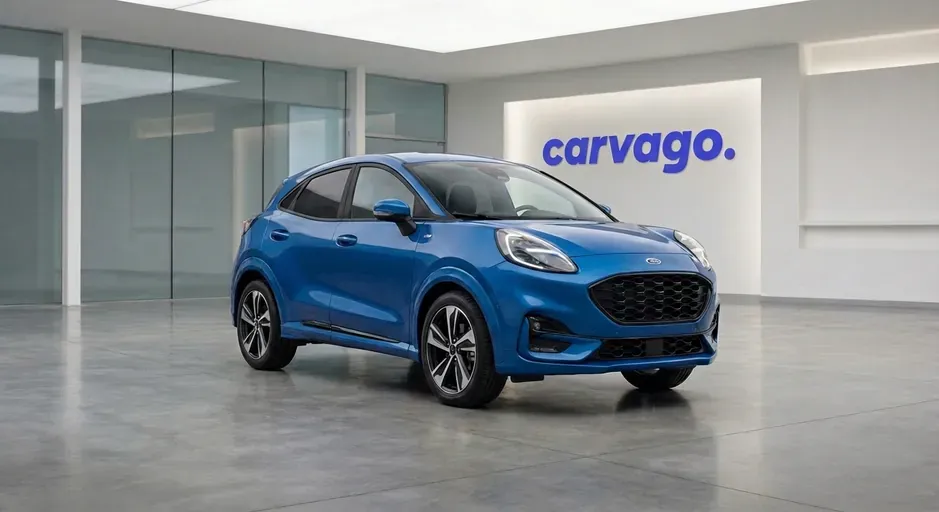
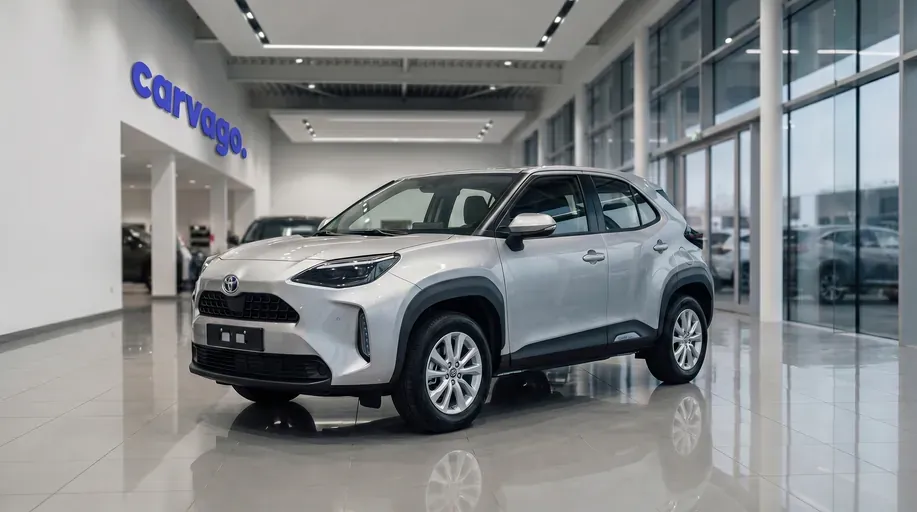
Ford Puma, a dynamic city crossover based on the popular Fiesta, revives the famous sports name from the late nineties and brings agile handling to the used car market, complemented by a surprisingly practical luggage compartment with the innovative washable MegaBox floor. Facing it is the Toyota Yaris Cross, a more robustly styled and exceptionally efficient model that brings renowned reliable hybrid technology and the rather rare option of all-wheel drive for its class to the subcompact SUV segment. The following comparison of these two popular, approximately four-year-old models will reveal in detail which one represents the smarter choice for your daily lifestyle and driving preferences.
Ford Puma and Toyota Yaris Cross compete in the closely watched segment of small city crossovers and SUVs. Although they are direct competitors on the used car market with similar ages, their exterior dimensions clearly reveal the different approach of both manufacturers. The Ford Puma bets on more dynamic proportions with a longer wheelbase and significantly greater width, while the Toyota Yaris Cross offers a more traditional, taller, and boxier body shape. This different design philosophy plays a key role in how both cars feel on the road, how easy they are to maneuver, and what overall spatial comfort they provide to the occupants.
Looking closely at the numbers, we find that the standard Ford Puma is practically the same length at 4186 mm (up to 4266 mm for the ST sports version), or only slightly longer than the Toyota Yaris Cross, which measures exactly 4180 mm. However, the fundamental difference is the body width. At 1805 mm, the Puma is a significant 40 mm wider than its Japanese competitor (1765 mm). In practice, this means not only a more aggressive look from the outside but, above all, more generous shoulder room for the crew in the front and back. The wider track and more pronounced overall width of the Ford will appeal primarily to drivers looking for better directional stability in corners and an overall sportier driving feel, even though it may mean slightly tighter maneuvering in underground garages in crowded cities.
Conversely, the Toyota Yaris Cross clearly dominates in the height discipline, where it towers at 1595 mm. That is a full 40 to 75 mm more than the dynamically styled Puma (height 1520–1555 mm depending on the chosen equipment or sports suspension). Users will appreciate this significant height difference especially when getting in and out every day, which is incomparably easier and more comfortable in the Toyota, and also thanks to the higher seating position, which results in a better overview of the traffic in front of the car. Ford, however, responds with a longer wheelbase, which is 2588 mm compared to 2560 mm for the Toyota. This 28 mm difference in favor of the Ford ensures a calmer crossing of transverse bumps on long journeys and slightly better longitudinal space in the interior. While the more upright and narrower Yaris Cross thus represents an absolutely ideal and practical city companion for easy parking and trouble-free weaving through narrow streets, the lower and wider Ford Puma will serve as a more mature and stable choice for those who like to enjoy faster cross-country trips.
| Parameter | Ford Puma SUV | Toyota Yaris Cross SUV |
|---|---|---|
| Width (mm) | 1805 | 1765 |
| Length (mm) | 4186–4266 | 4180 |
| Height (mm) | 1520–1555 | 1595 |
| Wheelbase (mm) | 2588 | 2560 |
When choosing a compact city crossover, which often serves as the primary family car or a companion for active couples in the nearly-new used car market (around four years old), luggage space is one of the most important parameters. Differences in this class can be surprisingly large and directly determine whether you can comfortably fit a stroller or if you will have to make compromises when packing for a longer vacation. Although both compared vehicles belong to the same segment, their approach to interior layout and space efficiency differs significantly.
The second-generation Ford Puma (on the market since 2020) is considered the uncrowned king of its class in terms of practicality. In the standard five-seat configuration, it offers an excellent basic volume of 456 liters, regardless of whether you choose the pure gasoline or mild-hybrid variant. A major draw of the Puma is the so-called "MegaBox" – a deep and washable compartment under the double floor with its own drain plug. It provides ideal space for transporting muddy shoes, wet sports equipment, or tall houseplants. After folding the rear seats, the trunk capacity climbs to an above-standard 1,216 liters.
The Toyota Yaris Cross (XPB1F generation available since 2021) offers slightly more modest, yet still sufficient values for many users. The standard front-wheel-drive version has a trunk with a volume of 397 liters, which is easily enough for a large weekend shopping trip or a regular vacation for two. However, if you are considering the version with smart all-wheel drive (AWD-i), you must expect a significant reduction in space to 320 liters. The reason is the installation of an additional electric motor on the rear axle. After folding the seats, the Yaris Cross offers a maximum space of 1,097 liters. In practice, this means that the Ford Puma provides space for several extra suitcases, which represents a key advantage for families with children.
| Parameter | Ford Puma SUV | Toyota Yaris Cross SUV |
|---|---|---|
| Basic volume (liters) | 456 | 320 - 397 |
| Maximum volume with seats folded (liters) | 1216 | 1097 |
While the Toyota Yaris Cross is sufficient in volume for daily needs and trips for two, the Ford Puma offers incomparably better usability for families thanks to its significantly larger trunk with the clever MegaBox compartment.
When choosing a small city crossover, you are usually not looking for a workhorse for heavy construction equipment, but the ability to attach a trailer with garden waste or a smaller caravan often plays a key role in everyday practicality. The trailer weight determines the car's overall flexibility, and it is in this discipline that significant differences appear between the Ford Puma and Toyota Yaris Cross models.
The Ford Puma in its current second generation (since 2020), which forms the core of today's offering of roughly four-year-old used cars, offers very decent towing power. The standard weight for a braked trailer for the popular 1.0 EcoBoost engines (including mild-hybrid versions) ranges from 900 kg and reaches a maximum of up to 1100 kg, depending on the specific specification. Common 1.5 EcoBlue diesel versions, which were available in the first years of production, can even handle a steady 1100 kg on the tow bar. Only the performance Puma ST version with the 1.5 EcoBoost engine slightly deviates from this rule, where the maximum capacity for a braked trailer is reduced to 750 kg due to a different suspension setup. An unbraked trailer can weigh roughly 665 kg for most standard models.
In contrast, the Toyota Yaris Cross, whose current generation entered the market in 2021 and thus fits perfectly into the market for slightly used cars, relies primarily on full hybrid powertrains. Due to the protection of the sophisticated 1.5 Hybrid powertrain (in versions with 116 and 130 hp), the limits are noticeably stricter. The braked trailer capacity is unified at a maximum of 750 kg across the board for all model years. For an unbraked trailer, the value stops at a more modest 550 kg.
In practice, these values mean a different approach to both cars. Toyota's capacities are perfectly sufficient for a weekend trip to a DIY store, taking leaves to a recycling center, or mounting a bike rack. In contrast, the Ford Puma offers comfortable capacity for heavier loads; it can easily handle a fully loaded trailer with building materials or a smaller caravan for a summer holiday. The conclusion is therefore clear – if a tow bar is a key accessory for you for more frequent and heavier transport, the Ford Puma emerges as the clear winner from this duel. The Toyota Yaris Cross will suit more undemanding, purely recreational use.
| Model and engine | Braked trailer weight (kg) | Unbraked trailer weight (kg) |
|---|---|---|
| Ford Puma 1.0 EcoBoost / Hybrid (2nd gen) | 900 - 1100 | 665 |
| Ford Puma 1.5 EcoBlue (2nd gen) | 1100 | 665 |
| Ford Puma 1.5 EcoBoost ST (2nd gen) | 750 | 665 |
| Toyota Yaris Cross 1.5 Hybrid 116 | 750 | 550 |
| Toyota Yaris Cross 1.5 Hybrid 130 | 750 | 550 |
The approach to powertrains reveals two completely different worlds between these two vehicles, which is crucial for used car buyers. The Ford Puma targets drivers who enjoy dynamic driving and a sportier character. It relies almost exclusively on turbocharged petrol three-cylinder engines supported by mild-hybrid technology, complemented by the option of smooth manual shifting or a dual-clutch automatic. Conversely, the Toyota Yaris Cross excels in maximum fuel economy and smoothness in heavy city traffic. It utilizes a time-tested full-hybrid system paired with an e-CVT continuously variable transmission. A fundamental difference for used car buyers is also the fact that while the Puma is strictly front-wheel drive, the Yaris Cross offers intelligent all-wheel drive (AWD-i) for selected engines.
The backbone of the Ford Puma range is the award-winning 1.0 EcoBoost petrol three-cylinder, which you will most often find on the nearly new used car market (around 4 years old) with efficient mild-hybrid technology. The standard version offers 92 kW (125 hp), while the more powerful variant brings 114 kW (155 hp). The advantage of the mild-hybrid is the support of a small electric motor, which smooths out turbo lag and adds torque at low revs. For sports enthusiasts, the top-of-the-line ST version was available with a full-blooded 1.5 EcoBoost engine producing 147 kW (200 hp). As production history data shows, this uncompromising engine was only offered until March 2023, after which it was replaced in the ST version by a weaker one-litre mild-hybrid (125 kW) paired with a PowerShift automatic transmission. If you are looking for a diesel for long motorway journeys, you must choose carefully – the 1.5 EcoBlue diesel engine (88 kW) was withdrawn from the range as early as the end of 2021 and represents only a very small fraction of the used car market.
| Engine Type | Fuel | Power (kW) | Torque (Nm) | Transmission |
|---|---|---|---|---|
| 1.0 EcoBoost | Petrol | 92 | 170 | 6MT / 7DSG |
| 1.0 EcoBoost Hybrid | Petrol (Mild-hybrid) | 92 / 114 | 210 / 240 | 6MT / 7DSG |
| 1.5 EcoBlue | Diesel | 88 | 285 | 6MT |
| 1.5 EcoBoost ST | Petrol | 147 | 320 | 6MT |
| 1.0 EcoBoost Hybrid ST | Petrol (Mild-hybrid) | 125 | 248 | 7DSG |
The Toyota Yaris Cross takes a completely different approach, betting on its legendary hybrid efficiency, making it an ideal choice for drivers with a high proportion of urban and suburban kilometres. Customers on the four-year-old used car market are almost exclusively offered the proven 1.5 Hybrid 116 system with a combined output of 85 kW (116 hp). This full-hybrid naturally aspirated three-cylinder can drive a large part of the time in the city purely on electricity, pushing consumption well below five litres per hundred kilometres. A major triumph for Toyota, which beats the Puma in this class, is the availability of the AWD-i variant. This adds a second, smaller electric motor to the rear axle and improves traction on slippery or unpaved surfaces. It wasn't until 2024 that the manufacturer expanded the portfolio with the more powerful 1.5 Hybrid 130 variant with 96 kW (130 hp), but this is still a rarity among older used cars on the market. A weakness of the otherwise very reliable e-CVT transmission is higher noise levels and engine revving during sharp motorway acceleration.
| Engine Type | Fuel | Power (kW) | Torque (Nm) | Transmission |
|---|---|---|---|---|
| 1.5 Hybrid 116 | Petrol (Full-hybrid) | 85 | 120 | e-CVT |
| 1.5 Hybrid 116 AWD-i | Petrol (Full-hybrid) | 85 | 120 | e-CVT |
| 1.5 Hybrid 130 | Petrol (Full-hybrid) | 96 | 120 | e-CVT |
| 1.5 Hybrid 130 AWD-i | Petrol (Full-hybrid) | 96 | 120 | e-CVT |
Choosing the right engine is crucial for long-term satisfaction, with both manufacturers approaching this task differently, reflecting their technical development. While Ford phased out purely petrol versions of the Puma shortly after its launch (the 1.5 EcoBlue diesel also ended around the turn of 2021 and 2022) and bet fully on turbocharged three-cylinders with mild-hybrid technology, the Toyota Yaris Cross relies on a long-proven full hybrid powertrain. Our following recommendations focus on models that are typically around four years old (i.e., from 2021 and 2022) and are based on real-world experience, fuel consumption, user feedback, and long-term mechanical reliability.
This mild-hybrid one-liter three-cylinder is by far the most common on the used car market and represents the most sensible choice, combining sufficient power with daily practicality. Thanks to the 48V starter-generator (BISG), the engine offers smoother starts and stronger pull from low revs, successfully masking turbo lag and providing a very flexible drive in real-world traffic. Furthermore, actual fuel consumption with a normal driving style hovers around a very respectable 5.5 to 6 liters per 100 km. A huge technical positive of the mild-hybrid generation is the transition to a more durable timing chain, which replaced the dreaded main belt running in oil ("wet belt") – which caused many problems in older engines in the past. However, there is one important catch – the oil pump is still driven by a small belt running in an oil bath. To prevent its degradation, crumbling, and subsequent fatal clogging of the oil pickup screen, it is absolutely critical to thoroughly check the maintenance history. As a preventive measure, we recommend shortening the oil change interval to a maximum of 10 to 15 thousand kilometers after purchase and strictly adhering to the lubricant specification prescribed by the manufacturer. This engine is ideal for drivers with a slightly more dynamic style who often combine city driving with country roads and want to enjoy the renowned agile chassis.
When looking for a used Yaris Cross, you will almost certainly come across this version in roughly four-year-old cars, as the more powerful and updated 130-hp variant did not arrive in the lineup until during 2024. And that's a good thing, because mechanically, this 116-hp unit is an absolute benchmark for worry-free operation. The naturally aspirated petrol three-cylinder is paired here with electric motors via an ingenious planetary gearbox (e-CVT). From a technical standpoint, this completely eliminates complex and potentially failure-prone parts such as the friction clutch, conventional starter, alternator, or turbocharger. The strongest point of this powertrain is efficiency – in the city, average consumption commonly falls below the 4 liters per 100 km mark, making it an unbeatable city champion. In terms of risks, the hybrid is susceptible perhaps only to extremely long periods of standing (e.g., several months in a used car lot without being started), which is not good for the 12V battery or the traction battery itself. Therefore, before buying, it is worth having the hybrid system's condition checked at an authorized service center, which can also provide an extended battery warranty. We recommend the engine primarily to calmer drivers looking for uncompromising reliability who do most of their annual mileage in the city and its immediate surroundings (on the highway, the engine is more audible and consumption logically rises). A big bonus is the fact that, unlike the Puma, this hybrid was one of the few on the market available with the optional AWD-i intelligent all-wheel drive, which will be appreciated by cabin owners or people living in more hilly terrain.
Official fuel consumption figures provided by manufacturers often paint an overly optimistic picture that is difficult to achieve in real-world driving. Especially with modern turbocharged engines and hybrid systems, the difference between laboratory measurements and everyday reality can be very noticeable. To get an objective idea of how these popular crossovers, roughly four years old, perform on the road, we rely on hard data from the crowdsourcing platform Spritmonitor.de. There, owners themselves record their actual refuelling over the long term, providing the most accurate picture of real-world consumption.
| Model and Engine | Average Consumption (l/100 km) |
|---|---|
| Toyota Yaris Cross 1.5 Hybrid 116 FWD | 4.6 |
| Toyota Yaris Cross 1.5 Hybrid 116 AWD-i | 5.0 |
| Ford Puma 1.5 EcoBlue 120 hp | 5.2 |
| Ford Puma 1.0 EcoBoost mHEV 125 hp / 155 hp | 6.0 |
| Ford Puma 1.0 EcoBoost 125 hp | 6.3 |
| Ford Puma 1.5 EcoBoost ST 200 hp | 7.6 |
Looking at the real-world figures, the Toyota Yaris Cross is the clear king of efficiency. Its full-hybrid powertrain simply works brilliantly, with the front-wheel-drive version averaging 4.6 l/100 km in real conditions. The AWD-i all-wheel-drive version consumes about 0.4 litres more due to higher weight and mechanical losses. In the rival Ford Puma (second generation, produced since 2020), we find an interesting surprise in the form of the 1.5 EcoBlue diesel four-cylinder. Although diesel is not typical for this segment, it achieves a very respectable 5.2 l/100 km. Conversely, Ford's dominant EcoBoost petrol three-cylinders show the classic ailment of small turbo engines – as soon as you fully load them or push them to motorway speeds, consumption rises rapidly. While the mild-hybrid (mHEV) versions save about 0.3 litres per 100 km compared to standard petrol variants, figures around the 6-litre mark are no miracle compared to the Japanese competition. The high-performance ST version with its powerful 1.5 EcoBoost three-cylinder logically demands the most, averaging 7.6 l/100 km.
These data lead to fairly clear recommendations for specific types of drivers. For users who spend the vast majority of their time in city traffic jams and on suburban routes, the Toyota Yaris Cross, with its efficient self-charging hybrid, is clearly the best choice, significantly saving a tight budget. The Ford Puma, with its turbocharged engines, makes more sense for drivers who appreciate typically Ford-like, more fun dynamics on country roads and don't worry about every drop of fuel burned. However, if you are looking for a roughly four-year-old used car for long motorway commutes, the diesel Ford Puma 1.5 EcoBlue represents an absolutely great and economical alternative, although it is relatively rare on the secondary market.
Overall, fuel consumption will play a crucial role when choosing between these two crossovers. If your absolute priority is the lowest possible running costs and maximum efficiency in the city, the Toyota Yaris Cross emerges as the clear winner of this comparison. While the Ford Puma cannot quite compete with the Japanese hybrid magic in tight urban environments, it makes up for it with a wider and more interesting range of engines.
When looking for roughly four-year-old models (2021 and 2022 model years), you will quickly find that although both cars belong to the same popular urban B-SUV segment, their pricing policies and rates of depreciation differ significantly.
The Ford Puma is available in large numbers on the used car market, giving buyers an excellent selection. The depreciation curve for this model is completely standard, making it an attractive choice in terms of total acquisition costs.
The Toyota Yaris Cross arrived on the market a bit later. The car maintains an above-average value on the used car market. This is primarily because Toyota's full hybrid powertrains (HEV) have a reputation among drivers for being "indestructible" and very fuel-efficient, leading to enormous interest in used car dealerships.
| Model | Starting price (from) | Most common selling prices | Cars with premium equipment |
|---|---|---|---|
| Ford Puma | ~ €14,000 | €16,000 – €18,000 | €20,000 and more |
| Toyota Yaris Cross | ~ €17,000 | €20,000 – €23,000 | €25,000 and more |
Note: The prices above are based on the average of listings on the European market for models approximately four years old with proportional mileage.
While the Ford Puma attracts with a very appealing purchase price and excellent price/performance ratio, the Toyota Yaris Cross requires a higher initial investment, which, however, is partially compensated in the future by a slow decline in residual value.
Both models, the Ford Puma and the Toyota Yaris Cross, received the maximum five-star rating in independent Euro NCAP safety tests at the time. However, when buying a roughly four-year-old used car, it is extremely important to perceive these results in the context of the year the cars were actually tested. Euro NCAP crash test methodology and protocols are constantly evolving and becoming significantly stricter every year. For this reason, percentage ratings from different years cannot be directly compared – what was easily enough for an above-average rating a few years ago could mean a loss of stars today due to the absence of the latest assistants.
The Ford Puma underwent safety tests in 2019. At that time, it excelled primarily in passive safety and adult occupant protection, for which it earned an impressive 94%. Although the 2019 tests already included evaluations of advanced assistance systems and pedestrian or cyclist detection, they did not yet account for the strictest scenarios, such as collisions at blind intersections or modernized tests with a new mobile deformable barrier. From today's perspective, the original certification of older vehicles gradually expires, and for example, in 2022 and later, a model with original equipment would no longer achieve the full number of stars according to the new standards. Child protection was rated at a solid 84% and assistance systems received 74%.
The Toyota Yaris Cross passed Euro NCAP tests in 2021, i.e., according to significantly stricter protocols introduced a year earlier. These new standards carefully examine, for example, the ability of autonomous braking when turning at intersections and introduce a more detailed evaluation of the protection of vulnerable road users. Despite these much more demanding conditions, the Yaris Cross earned 86% for adult protection and 84% for child protection. Truly impressive, however, is its score of 81% for safety assistance systems. This points to the high level of the standard Toyota Safety Sense active safety package, which can prevent accidents very effectively.
If we translate these results into practice, it means that while the Ford Puma offers an extremely strong and reliable body (as evidenced by the top-tier 2019 score), the Toyota Yaris Cross has a noticeable edge in active prevention. Toyota's technologies are simply tested according to stricter criteria and are better prepared for the modern hazards of dense urban traffic and the detection of cyclists or pedestrians.
Overall, it can be stated that although both cars represent a very safe choice for the used car market, the Toyota Yaris Cross, thanks to its success in stricter tests and more advanced standard equipment, offers a more modern and comprehensive safety package corresponding to current standards.
| Parameter | Ford Puma | Toyota Yaris Cross |
|---|---|---|
| Year of testing | 2019 | 2021 |
| Adult occupant protection | 94 % | 86 % |
| Child occupant protection | 84 % | 84 % |
| Vulnerable road user protection | 77 % | 78 % |
| Safety assistance systems | 74 % | 81 % |
Although both cars protect the occupants excellently, the Toyota Yaris Cross offers more advanced active assistants tested according to stricter modern standards.
In addition to standard equipment, each model offers several unique features and technologies that can be crucial for the customer's final decision and clearly demonstrate the different approaches of both automakers to added value.
Great driving characteristics and the most fun driving experience in its class
Innovative washable MegaBox storage space under the trunk floor (80 extra liters)
Economical yet dynamic EcoBoost mild-hybrid engines
Attractive and sporty exterior design
Rich equipment and good interior materials in higher trims
More cramped legroom and headroom for rear-seat passengers
Stiffer suspension tuning, which reduces comfort on broken roads (especially in ST-Line versions)
Outdated graphics and slower response of the older Sync 3 infotainment
Complete absence of all-wheel drive in the engine lineup
The Ford Puma is ideal for drivers looking for a practical compact city SUV who don't want to give up driving pleasure. It impresses primarily with its clever trunk solution featuring the MegaBox and an agile chassis, although the price for this sportier character is a slightly harsher ride and limited space in the back.
Top-tier fuel consumption thanks to an exceptionally efficient full-hybrid powertrain
Availability of intelligent all-wheel drive (AWD-i), which is a rarity in this segment
Excellent residual value on the used car market and the brand's renowned reliability
Extensive Toyota Safety Sense driver assistance package included as standard
Higher driving position ensuring a perfect view and easy maneuvering
Significant engine noise (the so-called "vacuum cleaner effect") during sharp acceleration due to the e-CVT continuously variable transmission
Narrower rear doors and very limited space for passengers in the second row
Purely functional driving characteristics without much emotion for the driver
Cheaper-looking hard plastics in the interior of lower trim levels
The Toyota Yaris Cross will primarily appeal to rational buyers who want a maximally economical, safe, and reliable car primarily for suburban driving. It is a perfect choice for those who appreciate unrivaled low operating costs and the option of all-wheel drive, while not requiring sporty behavior from the vehicle.
Based on a detailed physical inspection of a used car carried out as part of an independent technical check, long-term user experience, and recall statistics, we have compiled an overview of the most common problems for both roughly four-year-old models.
The Ford Puma with the 1.0 EcoBoost mild-hybrid engine is an overall solidly built crossover, yet it suffers from several specific ailments that need careful attention when buying a used one.
A crucial point when buying a used Puma is verifying a meticulous service history due to the oil pump belt. If you avoid neglected examples and ideally opt for a manual transmission, you will get a very capable and reliable car.
The Toyota Yaris Cross confirms its brand's good reputation and is mechanically among the most reliable cars in its class, but it does have one very common, though relatively easily solvable, problem.
Aside from the weaker 12V battery, which struggles with long periods of standing and very short trips, the Yaris Cross is a mechanically exceptionally durable car. It represents an excellent choice with minimal risk of expensive repairs.
When buying a used car, a thorough inspection is key. Although both of these city SUVs are popular and reliable choices, both have their specifics and typical weak points. A professional independent technical inspection of the car can reveal potential hidden defects, but you should also focus on several key details yourself during a test drive.
Ford Puma overall offers a larger luggage space with a volume of up to 456 liters and additionally scores with the innovative, deep, and washable MegaBox storage space under the floor. Toyota Yaris Cross provides 397 liters as standard, while in the all-wheel-drive version, the capacity drops to 320 liters. In terms of total luggage space and clever solutions, Ford therefore has a slight edge.
In real-world driving and especially in city traffic, the Toyota Yaris Cross clearly wins thanks to its highly efficient full hybrid system, with which you can drive at around 4 to 4.5 l/100 km. Ford Puma uses mild-hybrid technology in more modern engines, which helps reduce emissions, but real combined fuel consumption is more like 5.5 to 6 l/100 km.
Thanks to its precise steering and perfectly tuned chassis, the Ford Puma has long been considered one of the most fun and best-handling cars in its class. The Yaris Cross, on the other hand, is tuned more for a comfortable, calm, and smooth ride, which perfectly complements its quiet hybrid drive in the city. If you are looking for a sportier ride and driving pleasure, Ford is the better choice.
All-wheel drive, specifically the intelligent AWD-i system, is offered exclusively by the Toyota Yaris Cross in this comparison. This system significantly helps when starting on slippery surfaces or driving in poor weather conditions. Ford Puma is only available with front-wheel drive; a 4x4 version is not produced for this model at all.
Toyota is world-renowned for its excellent reliability, especially thanks to its years-proven full hybrid drive, which does not require complex maintenance and is almost trouble-free in the long run. Ford Puma is a very solidly built car and the EcoBoost engines are reliable, but few competitors can match the reputation and worry-free nature of Toyota hybrids.
Sources: ADAC, garaz.cz, denik.cz, autotechnik.cz, autoexpress.cz, powerfan.cz
This article was prepared using artificial intelligence tools. The section guarantor is Petr Dušek.
Detailed comparison of the Audi Q3 and DS 7 (Crossback). We evaluated real-world driving characteristics, spaciousness, and engines. Find out in our verdict which SUV to choose.
Apr 25, 2026
Detailed comparison of Mazda CX-5 vs Volkswagen Tiguan. Find out which used SUV has better engines, equipment, and driving characteristics. Read our clear verdict!
Apr 2, 2026
Detailed comparison of Audi Q3 vs Volkswagen (VW) T-Roc. Discover the differences in space, equipment, and real-world reliability. Read our clear verdict before you buy.
Apr 23, 2026