Articles

Car battle

BMW X3 vs. Mercedes-Benz GLC: Complete comparison 2026

Are you choosing a premium SUV? Read our comparison of the BMW X3 vs Mercedes-Benz GLC. We evaluate used car reliability, real-world fuel consumption, equipment, and provide a clear verdict.

May 21, 2026

VS
BMW X3

BMW X3

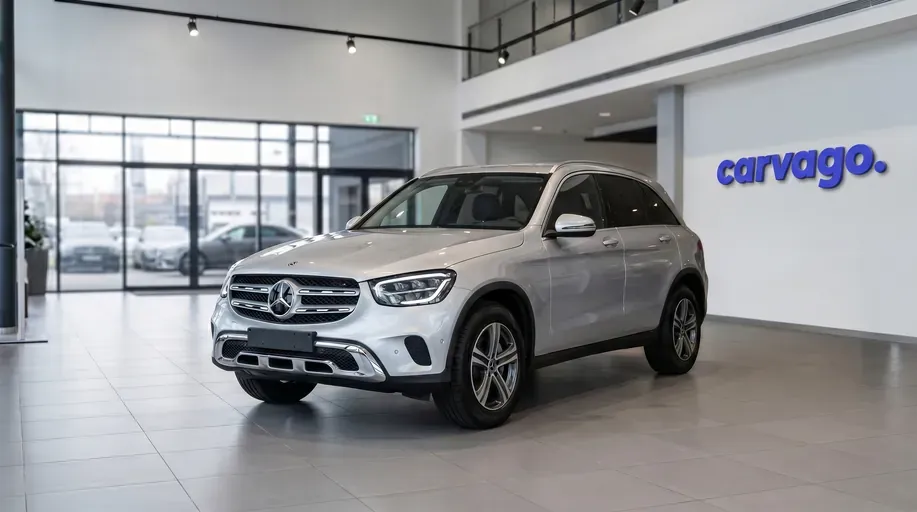
Mercedes-Benz GLC

Mercedes-Benz GLC

Introduction

BMW X3 is a popular premium SUV that has long maintained a reputation on the market for offering excellent driving dynamics, a sporty character, and top-tier handling. Its direct competitor, the Mercedes-Benz GLC, which replaced the earlier and more angular GLK model in the brand's lineup, focuses instead primarily on maximum driving comfort, a smooth ride, and a highly luxurious interior finish. Let's take a detailed look at a direct comparison of these two long-standing German rivals and find out which of these exceptional cars will better suit your lifestyle and needs.

Comparison of External Dimensions

Exterior Dimensions: Bavarian Robustness vs. Stuttgart Efficiency

Looking at cars approximately four years old (the G01 generation for BMW and the 253 series for Mercedes), we find that both brands took a different approach to building their premium mid-size SUVs. The BMW X3 is, with a length of 4708 to 4716 mm, roughly 50 to 60 mm longer than the Mercedes-Benz GLC, which measures 4655 to 4656 mm in length. The Bavarian is also a significant 37 mm taller (1676 mm vs. 1639 mm), giving it more traditional and muscular proportions. For the driver, this means the BMW offers a more majestic feel behind the wheel and better overall visibility, while the shorter and overall lower GLC will be slightly easier to maneuver in narrow streets or underground garages.

An interesting situation arises when comparing the wheelbase and width. Although the Mercedes-Benz is a shorter car overall, its wheelbase reaches 2873 mm, which is 9 millimeters more than the BMW (2864 mm). Engineers in Stuttgart managed to push the wheels further into the corners of the bodywork. In terms of width, both cars are very similar – the GLC measures a steady 1890 mm, while the X3 ranges from 1891 to 1897 mm depending on sport accessories. From this perspective, Mercedes-Benz proves it can more effectively extract internal longitudinal space for the crew from a smaller overall footprint, while both cars provide practically identical shoulder comfort.

In terms of daily use, these dimensional nuances bring specific practical impacts. The taller and longer body of the BMW X3 is positively reflected in more generous headroom for passengers and a more robust trunk, while the Mercedes-Benz GLC, with its lower build and more aerodynamic profile, resembles a raised station wagon. The choice between the two models in terms of physical dimensions thus directly depends on whether you prefer a dominant "off-road" stance and absolute maximization of size (BMW X3), or if you prioritize an optically sleeker car that cleverly extracts the maximum for its passengers from more compact exterior proportions (Mercedes-Benz GLC).

ParameterBMW X3 SUVMercedes-Benz GLC SUV
Width (mm)1891 - 18971890
Length (mm)4708 - 47164655 - 4656
Height (mm)16761639
Wheelbase (mm)28642873

Trunk Volume

Trunk space is one of the main decision-making factors for many buyers of premium mid-size SUVs. Whether you plan on daily transport of family luggage, sports equipment, or are heading out on longer trips, the volume and shape of the trunk play a key role. BMW X3 and Mercedes-Benz GLC are among the most sought-after family cars on the used car market, which is why their practicality is under close scrutiny. Since we focus primarily on roughly four-year-old vehicles when selecting nearly-new used cars (BMW X3 G01 generation and the facelifted Mercedes-Benz GLC X253 series), we can expect generous and proportionally very similar space in both models.

Looking at the technical specifications, we find that the conventional versions of both rivals have absolutely nothing to envy each other for. Both the BMW X3 and Mercedes-Benz GLC with internal combustion engines offer a base trunk volume of 550 liters, a value that is easily sufficient for weekend shopping or a longer vacation. There is also agreement after folding down the rear seatbacks – in both cases, you get a maximum capacity of exactly 1600 liters. This creates a highly accessible space in the rear of the car for several extra suitcases or transporting bulkier cargo, supported in both cases by regular shapes and exemplary variability.

However, significant differences in liters appear when choosing the now very popular plug-in hybrid powertrains, where concessions must be made in used cars due to the placement of the traction battery. In the BMW X3 (e.g., the xDrive30e version), the base trunk capacity is reduced to 450 liters and to 1500 liters when folded. The four-year-old Mercedes-Benz GLC (X253 generation) fares significantly worse in its plug-in hybrid variant, as the battery creates a noticeable step in the floor and the base volume drops to a more modest 395 liters. If every liter is crucial for you in a Mercedes and your budget allows it, it makes sense to look for its newer X254 generation (from 2022), which increased the base volume of standard versions to a top-tier 620 liters and the volume when folded to 1680 liters.

ParameterBMW X3 SUVMercedes-Benz GLC SUV
Base volume (liters)550550
Max. volume with seats folded (liters)16001600

📦 A Balanced Duel with a Hybrid Catch

While the classic internal combustion versions of both models offer an identical and highly practical trunk, be prepared for a noticeable loss of space in plug-in hybrid used cars, which is somewhat more painful in the older generation Mercedes due to the awkwardly shaped floor.

Discover the true condition of the car thanks to an independent inspection

Order CarAudit™

Trailer Weights

The ability to tow a heavy trailer is often a key factor for premium mid-size SUVs, whether it's towing a caravan for a family holiday or transporting boats and horses. When comparing approximately four-year-old models on the used car market – specifically the BMW X3 (G01) generation and the Mercedes-Benz GLC (generation 253) – we find that both cars offer excellent towing power. However, they differ slightly in absolute numbers across engine variants.

Most conventional engine versions of the BMW X3 (e.g., xDrive20d, xDrive30d, or M40i) can handle a braked trailer with a total weight of up to 2,400 kg. However, those interested in the xDrive30e plug-in hybrid version should be careful. For this variant, the maximum towing capacity is reduced to 2,000 kg due to the integration of heavy batteries and electrical components.

Conversely, the Mercedes-Benz GLC, represented here by the highly sought-after GLC 220 d diesel engine, pushes the limit even higher. Versions with this engine (in both the previous 253 generation and the current 254) can handle towing a braked trailer weighing up to 2,500 kg. For both brands, an unbraked trailer is legally and technically limited to the standard 750 kg for this class of vehicle.

Practical use:

  • Common family needs: Both the 2,000 kg for the hybrid BMW and the 2,400–2,500 kg for the standard versions of both brands will safely handle weekend trips with extra cargo, room for several additional suitcases, and an average-sized caravan for a long holiday.
  • Heavy loads: The 100 kg difference in favor of the GLC model (2,500 kg vs. 2,400 kg for the BMW X3) can play a role for specific needs, such as towing very heavy twin-axle flatbed trailers with construction machinery or large horse trailers.

So, if you plan to tow the heaviest possible loads at the edge of the permitted limits, the Mercedes-Benz GLC offers a slight paper and practical advantage in the form of a slightly higher maximum permitted weight. However, the BMW X3 with internal combustion engines offers a very similar service, and its capacity will be more than sufficient for the vast majority of European drivers. Only the hybrid versions represent a compromise.

Model and engine versionBraked trailer weight (kg)Unbraked trailer weight (kg)
BMW X3 xDrive20d / xDrive30d (G01)2400750
BMW X3 M40i / M40d (G01)2400750
BMW X3 xDrive30e (G01)2000750
Mercedes-Benz GLC 220 d (253)2500750
Mercedes-Benz GLC 220 d (254)2500750

Overview of Most Common Motorizations

The engine range of these two mid-size luxury SUVs demonstrates the different approaches of both automakers to building the perfect driving experience and efficiency. While both brands provide a wide spectrum from economical four-cylinders to powerful top-tier engines, BMW has long focused on top-tier dynamics and the unbeatable smoothness of its straight-six engines. Mercedes-Benz, on the other hand, relies more on electrification across its entire portfolio, from advanced mild-hybrids to diesel plug-in hybrids, giving it an edge particularly in efficiency for urban and suburban traffic. For buyers looking for roughly four-year-old vehicles, this means a choice between the absolute refinement of Munich's power units (e.g., the popular xDrive20d or the more powerful 30d) and the top-tier versatility of Stuttgart's hybrid powertrains supported by modern automatic transmissions (9G-TRONIC).

The BMW X3, within the relevant G01 generation (available roughly from 2017 until 2024), offers a sophisticated and highly reliable range of engines. Let's start from the fact that earlier variants from older generations E83 and F25 (such as the sDrive18d or versions with earlier designations like 2.0d, 3.0sd, and xDrive28i produced before 2017) are logically no longer found in the segment of approximately 4-year-old modern used cars. The basis of the current used car offering is therefore the economical xDrive20d diesel four-cylinder and the xDrive20i petrol. For more demanding drivers, BMW has prepared its famous straight-six engines, such as the refined xDrive30d, or the extremely powerful top versions M40i and M40d from the M Performance division. For environmentally conscious drivers, the plug-in hybrid xDrive30e is available. Almost all available versions of the modern X3 come standard with xDrive intelligent all-wheel drive and a perfectly tuned eight-speed Steptronic automatic transmission.

Engine typeFuel typePower (kW)Torque (Nm)Transmission
xDrive20dDiesel1404008-speed Steptronic
xDrive30dDiesel2106508-speed Steptronic
xDrive20i / xDrive30iPetrol135 / 185300 / 3508-speed Steptronic
M40i / M40dPetrol / Diesel265 / 250500 / 7008-speed Steptronic
xDrive30ePHEV Petrol2154208-speed Steptronic

For the Mercedes-Benz GLC, electrification plays a primary role across both generations relevant to the four-year-old market – both the facelifted version of the X253 series (sought-after production until 2022) and the succeeding X254 generation. In contrast, early pre-facelift versions from 2015 to 2018 (for example, the first GLC 220 d variants without later innovations) are no longer found on the market among such young cars today. Most conventional units in modern models, such as the popular GLC 220 d and 300 d diesel versions or the GLC 200 and 300 petrol variants, rely on clever EQ Boost mild-hybrid technology for a noticeably smoother power delivery. A unique weapon of the Stuttgart brand is the unique combination of a plug-in hybrid and a diesel engine in the GLC 300 de model, which is a true highway king in terms of consumption, although a more traditional petrol PHEV GLC 300 e is also available. All engines work with the smooth-shifting nine-speed 9G-TRONIC automatic transmission and feature 4MATIC all-wheel drive.

Engine typeFuel typePower (kW)Torque (Nm)Transmission
GLC 200 / 300 4MATICPetrol (MHEV)145 / 190320 / 4009G-TRONIC
GLC 220 d / 300 d 4MATICDiesel (MHEV)143 / 198400 / 5509G-TRONIC
GLC 300 e 4MATICPHEV Petrol230 - 235550 - 7009G-TRONIC
GLC 300 de 4MATICPHEV Diesel225 - 245700 - 7509G-TRONIC
AMG GLC 43 4MATICPetrol2875209G-TRONIC

When making your final decision, consider which routes you will spend the most time on. For those who devour highway kilometers and love dynamic driving, the classic straight-six in the BMW X3 xDrive30d is a fantastic choice, providing pull without a single flaw and not fading even under load. Extreme highway efficiency is then covered by the aforementioned Mercedes GLC 300 de diesel hybrid, which unusually combines a diesel unit with external charging for great savings both in traffic jams and outside them. However, for budget-oriented families, the basic four-cylinder diesels xDrive20d and GLC 220 d will serve perfectly; in both cases, they offer plenty of zest and help keep long-term service and fuel costs at a very bearable level.

Heart or fuel economy? ⛽

If you prefer the unrivaled acoustics of a diesel six-cylinder and a more aggressive throttle response, go for the BMW; for lovers of technologically refined plug-in hybrids and maximum travel comfort, Mercedes-Benz is the more suitable choice.

Choosing the right powertrain is absolutely crucial for long-term satisfaction with a premium SUV. Both the BMW X3 and the Mercedes-Benz GLC offer a relatively wide range of diesel, petrol, and plug-in hybrid engines. However, for the nearly-new used car market (around four years old), the tried-and-tested 2.0-litre four-cylinder diesels historically and statistically emerge as the best choice for both vehicles. While the Bavarian representative traditionally relies on a sportier character and more agile throttle response, its Stuttgart rival focuses on extreme smoothness and acoustic comfort. Furthermore, in both brands, these modern diesel units achieve impressive efficiency, capable of powering these heavy bodies on longer journeys with fuel consumption well below seven litres per 100 kilometres.

For the BMW X3, we recommend: xDrive20d (140 kW / 190 hp)

This 2.0-litre four-cylinder diesel (engine code B47) is a bullseye for the G01 generation from 2021–2024. With an output of 140 kW (190 hp) and 400 Nm of torque, it offers confident dynamics, while its harmonious pairing with the brilliant ZF eight-speed automatic transmission makes it one of the most pleasant powertrains in its class.

  • Why it is the best choice in the range: The engine has plenty of power for safe overtaking and fully loaded motorway trips. Furthermore, the four-cylinder does not weigh down the front axle as much as the heavier six-cylinder diesels, giving the car much better agility and more engaging handling in corners.
  • Technical advantages: The B47 unit is very refined once warmed up, and the cabin insulation in the facelifted G01 generation is top-notch. The torque delivery is perfectly linear, and real-world combined fuel consumption stays between 6 and 7 litres per 100 km.
  • Known risks and how to prevent them: The engine itself is exceptionally reliable and does not suffer from fatal defects. However, when inspecting a car, check the recall history – earlier model years occasionally experienced coolant leaks through the EGR valve cooler (monitor the level in the expansion tank). At the same time, avoid units that were used primarily for short city trips, as they risk rapid clogging of the diesel particulate filter (DPF).
  • Who it suits best: An ideal compromise for drivers who combine family suburban driving with regular longer trips or business travel and require robust, reliable mechanics with low operating costs.

For the Mercedes-Benz GLC, we recommend: 220 d 4MATIC (143 kW / 194 hp)

In the case of the Mercedes from 2020–2022 (facelift of the X253 generation), the gold standard is the four-cylinder diesel from the OM654 family. In the 220 d version, it provides a generous 143 kW (194 hp), which, thanks to the top-tier 9G-TRONIC nine-speed automatic transmission, elevates the drive to realms of absolute smoothness and effortless performance. (In the slightly newer X254 generation from late 2022, you will find an improved mild-hybrid version of this engine).

  • Why it is the best choice in the range: Compared to less powerful versions, it has a sufficient power reserve for confident motorway travel, while avoiding the potentially higher service costs associated with the powerful six-cylinders. In the four-year-old used car market, it is by far the most well-balanced engine.
  • Technical advantages: The innovative combination of an aluminium block and steel pistons ensures excellent thermodynamic efficiency. Furthermore, the 9G-TRONIC transmission keeps engine speeds extremely low on the motorway, resulting not only in fantastic acoustic comfort in the interior but also real-world fuel consumption that can be pushed below 6 litres per 100 km during smooth driving.
  • Known risks and how to prevent them: During the test drive, focus on whether the 9G-TRONIC transmission shifts smoothly even when cold. Any jerking may indicate neglected maintenance (it is recommended to change the automatic transmission fluid). The engine itself is more prone to clogging of the complex emission system (EGR valve and DPF) if used exclusively for stop-and-go city traffic. Occasional longer drives and using high-quality additivated diesel to protect the sensitive injectors are essential here.
  • Who it suits best: This powertrain will delight composed drivers who prefer a quiet, smooth cruise, long motorway range, and maximum relaxation behind the wheel of their premium family SUV over aggressive cornering.

Real Fuel Consumption

While official laboratory measurements from car manufacturers like to paint average fuel consumption in somewhat unrealistically optimistic colors, the daily operation of premium SUVs brings completely different, significantly more sober figures. For the most accurate comparison of the operating costs of four-year-old used cars, we have therefore used real user data aggregated from the popular community platform Spritmonitor.de. Here, thousands of owners regularly record their actual refueling, which gives us an exact idea of the appetite of both representatives you must actually count on.

In the table below, you will find a comparison of popular engines of the currently sought-after generations (BMW X3 designated G01 and Mercedes-Benz GLC X253 series), which are sorted across both models according to the drive principle.

Model and engineAverage consumption (l/100 km)
BMW X3 xDrive30e (Plug-in hybrid)2.1
Mercedes-Benz GLC 300 e (Plug-in hybrid)2.3
Mercedes-Benz GLC 300 de (Diesel plug-in)2.7
BMW X3 xDrive20d (Diesel)5.8
BMW X3 xDrive30d (Diesel)6.2
Mercedes-Benz GLC 220 d (Diesel)6.2
BMW X3 xDrive20i (Petrol)7.6
BMW X3 M40i (Petrol)8.8
Mercedes-Benz GLC 200 (Petrol)9.1
Mercedes-Benz GLC 300 (Petrol)9.2

Trends and surprising revelations from practice

The analysis of real-world data reveals several interesting trends:

  • Diesel dominance in heavy SUVs: The popular BMW xDrive20d four-cylinder diesel shows extraordinary efficiency (5.8 l/100 km) and slightly beats even the competing Mercedes-Benz GLC 220 d (6.2 l/100 km).
  • Six-cylinder with four-cylinder consumption: It is absolutely fascinating to find that the refined three-liter diesel six-cylinder from Munich (BMW X3 xDrive30d) consumes the same amount of fuel as the four-cylinder Mercedes, while offering incomparable dynamics and torque.
  • Thirstier Stuttgart petrol: For petrol units, it is clearly proven that smaller displacement does not automatically save your wallet. The four-cylinder versions of the GLC 200 and 300 stay above the nine-liter mark on average. In contrast, the BMW X3 xDrive20i moves within much more moderate limits around 7.6 liters, and even the sporty three-liter M40i turns out to be more economical in reality than the two-liter GLC 300.
  • PHEVs require discipline: Values from two to three liters for plug-in hybrids look like a fairy tale on paper, but to achieve them, regular daily charging and shorter travel distances are necessary.

What does this mean for buyers?

For the typical driver who covers tens of thousands of kilometers a year, mainly on expressways and motorways, the classic diesel remains a safe bet – in this scenario, both diesel versions of the BMW X3 are more economical and versatile. If you are looking for a car for the city and have the option of a home wallbox, PHEV versions make great sense for both manufacturers, with Mercedes scoring with a rare combination of a diesel engine and an electric motor (GLC 300 de), which remains relatively economical even with an empty battery on the highway. Those interested in classic petrol versions who are watching a tighter operating budget should carefully weigh the choice of Mercedes, which will please gas station owners much more often.

In conclusion, it can be confirmed with certainty that fuel efficiency should be a significant factor in the final decision. Real-world values clearly show that the engines under the hood of the BMW X3 offer substantially better overall efficiency. Especially on uncompromising motorways, the Munich-based carmaker proves its excellent skill in optimizing the airflow around a heavy body, thanks to which it remains a lasting benchmark of efficiency in this class.

Price Range and Used Car Offerings

Price range on the used car market

When choosing a roughly four-year-old premium SUV (2021–2022 models), you will encounter a very balanced market. Both the BMW X3 (G01 generation) and the Mercedes-Benz GLC (X253 generation after facelift) hold their value exceptionally well. Price differences between the two models are determined not so much by the brand as by the specific engine, equipment level, and documented mileage.

Basic models and popular diesels

The most common choice on the used car market is traditionally the economical two-liter diesel engines. The BMW X3 xDrive20d and Mercedes-Benz GLC 220 d 4MATIC models dominate the listings.

  • Starting line: The cheapest fully functional units with mileage around or slightly above 100,000 km start at approximately €27,000 to €31,000 for both manufacturers.
  • The sweet spot: Vehicles with lower mileage (around 50,000 km) and sought-after sport packages (M Sport for BMW or AMG Line for Mercedes) most often sell in the range of €35,000 to €41,000.

More powerful versions and plug-in hybrids

If you expect a more dynamic drive from your family SUV with six-cylinder diesels (e.g., X3 xDrive30d, GLC 400 d) or if you are looking for modern plug-in hybrid powertrains for daily emission-free commuting (e.g., X3 xDrive30e, GLC 300 de), prepare for a higher budget.

Here, prices for roughly four-year-old used cars typically range from €39,000 to €51,000. Mercedes-Benz tends to be slightly more represented in the plug-in hybrid market, thanks to the highly popular and rare diesel-electric combination for which original owners were happy to pay extra.

Sporty flagships and exclusive models

For automotive enthusiasts looking for a ticket to the world of high performance, such as the BMW X3 M40i / M40d or Mercedes-AMG GLC 43 with a 2021–2022 production date, prices commonly range from €45,000 upwards. If you aim for full-fledged high-performance variants like the X3 M Competition or AMG 63, you must expect a price easily exceeding €62,000, even for a four-year-old car.

Quick price comparison (used cars approx. 4 years old)

Car CategoryBMW X3 (G01)Mercedes-Benz GLC (X253)
Basic equipment (higher mileage)from €27,000from €27,000
Sweet spot (lower mileage, sport package)€35,000 – €41,000€35,000 – €43,000
Powerful six-cylinders and PHEV€39,000 – €49,000€41,000 – €51,000
Sport models (M Performance / AMG)€45,000+€47,000+

Both vehicles represent a very rational investment in the premium mid-size SUV class. The depreciation in the first four years of operation is among the most favorable on the market in both cases. While this means a slightly higher purchase price for a used car, it also promises very good resale value and return on investment in the future.

Condition decides, not price 💰

The prices of four-year-old used BMW X3 and Mercedes-Benz GLC are completely comparable, so your main decision factor should be the verifiable condition of the specific car and its documented service history, rather than the price tag itself.

Safety and Euro NCAP Rating

Both models, the BMW X3 and the Mercedes-Benz GLC, boast a maximum five-star rating in Euro NCAP safety tests. However, when choosing a used car, it is crucial to consider the context and the year in which these tests were conducted. This is because Euro NCAP's methodology and testing protocols are constantly evolving and becoming stricter. While older tests focused primarily on passive safety and the structural integrity of the body during an impact, newer years place a huge emphasis on active assistance systems, the protection of vulnerable road users (cyclists and pedestrians), and the overall ability to prevent accidents. For this reason, percentage results obtained in different years cannot be directly compared.

The BMW X3 (G01) generation, which is widely represented on the four-year-old used car market, underwent Euro NCAP crash tests in 2017. At that time, the car offered excellent adult occupant protection with a score of 93% and a solid 84% for child protection. A weaker point was the protection of vulnerable road users (70%) and, above all, the rating of safety assistance systems, where the BMW X3 achieved only 58%. This seemingly low result for assistants is due to the standards of the time and the fact that many advanced active safety features were unavailable as standard equipment in 2017 or lacked integration of advanced scenarios. Furthermore, it should be noted that the official validity of a Euro NCAP rating is six years, so the certification for this BMW X3 model year has formally expired from today's perspective.

The rival Mercedes-Benz GLC in its more modern generation (X254), which began entering the market in 2022, underwent Euro NCAP tests in that very year and thus had to comply with the latest, significantly stricter protocols (including, for example, detailed cyclist detection, preventing door opening into the path of a cyclist, and complex intersection scenarios). It received 92% for adult protection and an excellent 90% for child passenger protection. A huge methodological and technological shift was reflected in the safety assist category, where the GLC earned a respectable 84%. The result reflects the car's advanced architecture, which integrates advanced autonomous emergency braking and sensitive driver attention monitoring systems as standard.

In terms of passive safety, both cars offer an exceptionally rigid body and excellent occupant protection in a physical impact. However, given the more recent testing date, the inclusion of state-of-the-art technologies, and better results in active accident prevention, the Mercedes-Benz GLC represents a significantly more modern and comprehensive safety package that meets today's strict standards.
ParameterBMW X3Mercedes-Benz GLC
Year of testing20172022
Adult occupant protection93 %92 %
Child occupant protection84 %90 %
Vulnerable road user protection70 %74 %
Safety assist systems58 %84 %

🛡️ More modern assistants work in favor of Mercedes

Even though both SUVs protect the occupants excellently during the impact itself, the Mercedes-Benz GLC, thanks to its more modern architecture and success in the stricter 2022 tests, offers significantly more advanced systems for active accident prevention on the used car market.

Comparison of Interesting Equipment Features

In addition to standard equipment, each model offers more than just basic comfort and utility; both bring a very specific approach to technological innovation and practical features that can be decisive for the customer during the final selection.

BMW X3: Intuitive Technology and Driving Pleasure

The Munich-based SUV has long positioned itself as a driver-oriented vehicle, which is reflected not only in its driving characteristics but also in the layout of controls and assistance systems.

  • Infotainment and Ergonomics: The iDrive multimedia system (often in the excellent version 7.0) is among the best-rated on the market. It combines a fast touchscreen with a physical rotary controller on the center console, allowing for safe operation even while driving. Higher trim levels also offer gesture control, which allows you to adjust the volume or answer a call with a simple hand movement in the air.
  • Assistance Systems: A huge advantage for everyday use is the Reversing Assistant. The system automatically remembers the last 50 meters driven at speeds up to 36 km/h. If you get stuck in a dead-end street or a narrow garage, the car can reverse back along the exact same path completely automatically, while you only monitor the surroundings.
  • Chassis and Drivetrain: The xDrive intelligent all-wheel-drive system is set up with a rear-axle bias, giving the car the typical BMW sporty character. Popular M Sport packages then bring not only a more aggressive look but often also an adaptive M suspension, stronger brakes, and sharper sports steering.
  • Smart Details and Connectivity: Smartphone connectivity works flawlessly via wireless Apple CarPlay and Android Auto. An interesting feature is the support for the BMW Digital Key, which allows you to unlock and start the car simply by holding a compatible smartphone near it.

Mercedes-Benz GLC: First-Class Luxury and Technological Dominance

Mercedes-Benz prioritizes maximum passenger comfort, premium materials, and avant-garde technology, turning the vehicle into a mobile luxury zone.

  • Infotainment and Telematics: At the heart of the car is the MBUX (Mercedes-Benz User Experience) system, which excels with an advanced voice assistant that responds to the greeting "Hey Mercedes". However, the real highlight is the navigation with Augmented Reality. The system uses the front camera and projects graphic navigation arrows directly onto the live image of the intersection on the central display, practically eliminating the possibility of a wrong turn.
  • Comfort and Relaxation: The unique Energizing Comfort system cleverly links the air conditioning, ambient lighting, audio system, and seat massage or ventilation functions. With the press of a button, the car activates comprehensive programs (e.g., Vitality, Refresh, or Relaxation) that help the driver stay focused on long journeys.
  • Chassis and Electronics: A major advantage of the GLC model (and a differentiator from most competitors in this class) is the optional Air Body Control air suspension. This provides the car with almost perfect filtering of road imperfections. Furthermore, newer generations from this period offer rear-axle steering, which significantly reduces the turning radius and makes maneuvering in tight urban spaces easier.
  • Advanced Off-road Features: Although it is a luxury SUV, with the optional off-road package, the car can handle more demanding conditions. An interesting feature in newer models from this period is the "transparent hood" assistant, which uses camera systems to display the terrain directly under the front wheels on the screen, making it easier to avoid rocks and deep potholes.

Key Advantages and Disadvantages

BMW X3

Pros

Excellent driving characteristics and agility with an emphasis on a sportier feel and rear-axle preference

Extremely intuitive iDrive infotainment with a reliable physical rotary controller

Highly efficient and reliable diesel engines (especially the popular xDrive20d and xDrive30d versions)

Great ergonomics and spaciousness for passengers in the second row of seats

Exemplary build quality and fit and finish in the interior

Cons

Stiffer chassis tuning, which can be less comfortable on broken roads with the M Sport package and run-flat tires

Significantly reduced luggage compartment volume in the plug-in hybrid version (xDrive30e)

More conservative evolution of the exterior design compared to more striking competitors

BMW X3 is an ideal choice for drivers who expect top-notch handling, dynamics, and flawless ergonomics behind the wheel from a premium SUV. It serves families and active individuals looking for a practical yet engaging car for long journeys perfectly.

Mercedes-Benz GLC

Pros

First-class driving comfort, which is unsurpassed in its class with the optional air suspension

Significantly more luxurious and visually striking interior design

Top-tier cabin soundproofing from aerodynamic noise and the chassis

Very sophisticated assistance systems and smart voice control of the MBUX system

Greater usable pure electric range for plug-in hybrid powertrains

Cons

More complex control of onboard functions mainly via the touchscreen, which distracts from driving

The nine-speed automatic transmission can occasionally jerk slightly during slow city crawling

A significant "step" and less usable luggage space in older plug-in hybrids (X253 generation) due to the batteries

Generally higher average purchase prices for used cars and more expensive service operations

The Mercedes-Benz GLC will appeal to customers who prioritize maximum comfort, absolute cabin silence, and prestigious design. It is a perfect mile-muncher for calmer drivers desiring premium materials and a relaxed atmosphere on board.

Common Problems and Owner Complaints

Based on our own used car inspections through the CarAudit service, long-term service statistics, and owner experiences, we have compiled an overview of the most common problems for approximately four-year-old used cars from both representatives of the mid-size premium SUV class.

BMW X3 (G01): Most Common Problems and Defects

The G01 generation (2017–2024) is among the most reliable BMW models of the last decade, yet it still has a few weak points that require attention when buying a used car.

  • Engine and Cooling: Coolant leaks are relatively common in popular petrol and diesel engines, typically in the area of the upper radiator hose. A frequent cause of the check engine light is also a failure of the active radiator dynamic flaps.
  • All-Wheel Drive (xDrive) and Transmission: Some vehicles experience issues with the xDrive system's transfer case. The mechanical problem manifests as rough and jerky shifting between first, second, and third gears. During any independent technical inspection, it is essential to thoroughly check for a smooth start and consistent power delivery during the test drive.
  • Chassis: A common complaint from owners is noise and squeaking from the front axle when turning at low speeds or reversing. This is usually caused by premature wear of the hydraulic bushings (silentblocks) of the front control arms.
  • Interior: The interior craftsmanship is of a high standard, but rattles and noises can appear in used units. Most often, the dried-out rails of the panoramic sunroof and the plastic mountings of the front seats squeak.

BMW X3: Well-above-average reliability with occasional quirks

The BMW X3 G01 generation is a robust and mechanically durable SUV. When buying a used one, pay the most attention to the smoothness of the xDrive system, the tightness of the cooling circuit, and listen carefully to the front axle during maneuvering.

Mercedes-Benz GLC (X253): Most Common Problems and Defects

The Mercedes-Benz GLC after its facelift (2019–2022) impresses with top-tier comfort, but as a technologically complex car, it carries a higher risk of expensive defects, especially if the previous owner neglected prescribed servicing.

  • Chassis and Air Suspension: The optional Air Body Control air suspension provides unrivaled comfort on the market, but in cars with mileage approaching the 100,000 km mark, the risk of air leaks, compressor failure, or wear of the air bellows themselves increases significantly. Repairs to this system are very financially demanding. On the standard steel suspension, play in the ball joints and control arms can appear relatively early, causing slight instability and squeaking.
  • Engines (Petrol): Petrol four-cylinder engines occasionally have issues with the crankcase ventilation system (PCV valve), which often leads to minor oil leaks or fluctuating idle speeds.
  • Engines (Diesel and Emissions): The popular diesel engines are mechanically very reliable, but if the car was driven mainly on short trips in the city, problems with clogged diesel particulate filters (DPF), failing NOx sensors, and AdBlue injection system malfunctions appear in roughly four-year-old used cars.
  • Electronics and Brakes: Some owners complain about the MBUX infotainment system freezing, which often requires a software update, or occasional false warnings from parking sensors and assistance systems. Another very common complaint is faster wear of brake components and unpleasant brake squealing when coming to a stop at intersections.

Mercedes-Benz GLC: Comfort at the risk of expensive repairs

The GLC is a luxury cruiser, but great caution is advised for units equipped with air suspension. Prefer carefully serviced cars with a clear history, and for diesel versions, focus primarily on the condition of the emission systems.

Tips for Buying a Used Car

When buying a used car, a thorough inspection is key. Here are some specific points to focus on for these two premium models around four years old. For absolute peace of mind before purchasing, a comprehensive car audit is always worthwhile, as it can reveal even hidden defects.

When choosing a BMW X3:

  • Condition of the xDrive transfer case: BMW's all-wheel-drive system is extremely sensitive to differences in tire tread or incorrect tire sizes. During the test drive, try sharp turns at low speeds (e.g., when parking or turning around). If you feel jerking, noise, or vibration from the chassis, it may indicate an excessively worn and expensive transfer case.
  • Exhaust Gas Recirculation (EGR) cooler: Especially in diesel engines (20d, 30d), leaks from the EGR cooler were common problems, and the manufacturer issued recalls for them. Check the service history to see if the part has already been replaced. When starting a cold engine, watch for fluctuating RPMs or the check engine light.
  • Coolant level: In the popular petrol and diesel engines of the G01 generation, minor coolant leaks occasionally occur around the water pump or expansion tank. Check that the level is at the maximum and that there are no visible dried white traces in the engine compartment.
  • Condition of the iDrive infotainment: Check the responsiveness and functionality of the entire onboard system. Older software versions can cause the display to freeze or occasional failures of the parking cameras. Click through all menus, pair a phone via Bluetooth, and test if the system restarts for no reason.
  • Brake wear and chassis condition: Due to the vehicle's higher weight, brake components wear out faster. When driving over uneven surfaces (cobblestones, speed bumps), listen for any knocking from the front axle and check if the car pulls to one side during hard braking.

When choosing a Mercedes-Benz GLC:

  • Air Body Control air suspension: If the chosen vehicle is equipped with the optional air suspension, test the change in ride height using the button. The car must rise smoothly, and the compressor must not run constantly or make loud noises. If the car is leaning to one side after sitting overnight, the air bellows are leaking, and an expensive repair will be necessary.
  • Smoothness of the 9G-Tronic automatic transmission: The nine-speed gearbox can suffer from rough downshifting or jerky starts in some used cars, especially when the oil is cold. During the test drive, simulate stop-and-go traffic and monitor the smoothness of transitions between the first three gears.
  • NOx sensors and AdBlue system: Emission systems in diesel versions of the GLC are prone to failure. Watch for engine diagnostic warning lights or low AdBlue level messages despite being topped up. Faults in nitrogen oxide (NOx) sensors are a common and more expensive service item for these vehicles.
  • Creaking of interior plastics: The fit and finish of some parts of the dashboard in a Mercedes can produce unwanted noises on uneven surfaces. The center console area (especially in the optional black piano lacquer finish) is particularly prone to creaking. Turn off the audio system while driving on a poor road and assess the acoustic comfort inside the car.
  • Battery condition in plug-in hybrids (300 e / 300 de): In the case of electrified versions, check the estimated pure electric range on the display when fully charged. Degradation of the traction battery can reduce the usable battery capacity after several years. A professional physical inspection of the used car, including deep diagnostics of the State of Health (SoH) of the cells, is appropriate here.

FAQ: Most Frequently Asked Questions

Both models offer a luggage compartment with an identical volume of 550 litres in the standard configuration with internal combustion engines. Differences arise with plug-in hybrid powertrains, where the BMW X3 provides 450 litres, while the Mercedes-Benz GLC offers only 395 litres due to battery placement (in the older X253 generation). In terms of practicality and overall usability of the boot, BMW has a slight edge.

Both vehicles enjoy above-average reliability; however, a BMW X3 around four years old shows fewer problems in independent statistics, mainly thanks to its very durable engines. With the Mercedes, minor software glitches or issues with the optional air suspension on high-mileage cars can occasionally occur. Maintenance and spare parts are more financially demanding for both cars, which is typical for the premium segment.

The BMW X3 has long been considered the more driver-focused SUV, offering a sportier suspension setup, sharper steering, and more precise handling in corners. The Mercedes-Benz GLC, on the other hand, places its main emphasis on maximum driving comfort, refinement, and perfectly smoothing out road imperfections. The choice therefore depends entirely on whether you prefer dynamic experiences behind the wheel or a calm and smooth ride.

The Mercedes-Benz GLC impresses with a more luxurious cabin design, striking ambient lighting, and the advanced MBUX system with sophisticated voice control. The BMW X3, by contrast, bets on a more conservative design with flawless ergonomics and the iDrive system, whose physical rotary controller is more intuitive to use while driving. The workmanship and quality of materials used are at the absolute top for both German competitors.

For family use, both cars are a very balanced choice thanks to their spacious cabins and high levels of passive and active safety. The Mercedes-Benz GLC provides slightly more acoustic comfort and convenience for rear-seat passengers during long motorway journeys. The BMW X3, on the other hand, is slightly more practical for daily handling of strollers thanks to a wider and better-shaped boot opening.

Conclusion: Which Model to Choose?

Our Verdict

Choosing between approximately four-year-old used BMW X3 and Mercedes-Benz GLC is not so much about finding an objectively better car, but rather about carefully considering your personal driving priorities. The Bavarian X3 represents the ideal choice for active drivers who demand top-tier handling, intuitive ergonomics, and sportier driving dynamics supported by highly efficient engines. Conversely, the Stuttgart-based GLC perfectly suits those customers who expect uncompromising travel comfort, superb cabin soundproofing, and a luxurious interior packed with the latest technologies from a family premium SUV. Whether you ultimately decide on Munich's joy of driving or Stuttgart's relaxed ride, in both cases you will get an exceptionally safe, reliable, and practical car that deservedly dominates sales in its class.

Find your ideal car

Sources: ADAC, denik.cz, e15.cz, autoexpress.cz, autohome.cz, retroauta.cz

This article was prepared using artificial intelligence tools. The section guarantor is Petr Dušek.

Related articles

Car battle

Peugeot 5008 vs. Volkswagen Tiguan Allspace: Complete comparison 2026

Peugeot 5008 vs. Volkswagen Tiguan Allspace comparison. Find out which 7-seater SUV offers better space, equipment, and our final verdict for the right choice.

May 13, 2026

Car battle

Lexus NX vs. Volvo XC60: Complete comparison 2026

Are you torn between the Lexus NX and Volvo XC60? Read our detailed comparison of reliability, comfort, and features. Discover our final verdict and choose the right SUV for you.

May 1, 2026

Car battle

Hyundai Santa Fe vs. Kia Sorento: Complete comparison 2026

Detailed comparison of Hyundai Santa Fe vs. Kia Sorento. Discover real-world experiences, differences in equipment and engines, and read our verdict. Which SUV to choose?

Apr 29, 2026

We accept online card payments as well as wire transfers.

visa payment provider logovisa-electron payment provider logomastercard payment provider logomaestro payment provider logodiners-club payment provider logodiscover payment provider logo