Audi A4 vs. Jaguar XE: Complete comparison 2026

Detailed comparison of the Audi A4 and Jaguar XE. Discover real-world experiences, differences in equipment, driving characteristics, and the final verdict. Which used sedan should you choose?

May 12, 2026

VS
Audi A4

Audi A4

Jaguar XE

Jaguar XE

Introduction

Audi A4 represents a proven staple of the premium mid-size class, which has long scored points with its precise craftsmanship, advanced technologies, and a wide range of efficient engines. Standing against it is the British aristocrat Jaguar XE, which stands out on the market with its aggressive sporty design, exceptional chassis agility, and a confident desire to step out of the shadow of traditional German competition. Let's take a detailed look at which of these two premium sedans can better defend its position and offer you the ideal balance of comfort, driving experience, and overall utility value.

Comparison of External Dimensions

When comparing the exterior dimensions of these two premium mid-size representatives, we encounter interesting differences that clearly define their character. If we focus on models relevant to the used car market around four years old (production years around 2022), the Audi A4 B9 generation measures 4726 to 4762 mm in length in the sedan version, while the British Jaguar XE X760 generation is significantly more compact at 4678 mm. The width of the cars is remarkable, however – while the Audi sticks to more traditional values in the range of 1842 to 1847 mm, the Jaguar's technical specifications show a generous 1967 mm. This difference in proportions means that the Audi A4 will be slightly easier to maneuver in narrow city streets, while the Jaguar's very wide stance gives it a much more dynamic visual presence, but at the same time may require increased attention in cramped parking spaces.

A key parameter for interior passenger space and driving stability is the wheelbase. Here, the Jaguar XE offers a paper advantage with its 2835 mm compared to 2820 mm for the Audi A4. This slightly longer wheelbase combined with a very low body construction (the height of the British sedan is 1410 to 1425 mm compared to 1427 to 1428 mm for the A4 sedan) helps the car achieve better weight distribution and an overall sportier center of gravity. Conversely, the Audi A4 bets on a slightly taller and more conservative silhouette. While the slight advantage in wheelbase gives the Jaguar excellent prerequisites for a smoother ride and stability in corners, in practice, this concept benefits the driver looking for a sporty experience rather than passengers desiring an abundance of knee room.

Ultimately, the range of body styles will play a crucial role in choosing the right car, where the paths of the two competitors diverge. While the Jaguar XE is available exclusively as a classic three-box sedan, the Audi A4 scores with great variability. In addition to the sedan, the German automaker also offers the extremely popular station wagon variant (Avant) and its raised Allroad version, which reaches a height of up to 1493 mm for easier passage through light terrain. If your primary requirement is sporty design and an emotive, wide-stanced posture, the Jaguar XE represents an excellent choice, but if you need more versatile family use and luggage space flexibility, the Audi station wagon body makes incomparably more sense.

ParameterAudi A4 SedanJaguar XE SedanAudi A4 Station WagonJaguar XE Station Wagon
Length (mm)4726 - 476246784725 - 4762-
Width (mm)1842 - 184719671842 - 1847-
Height (mm)1427 - 14281410 - 14251434 - 1493-
Wheelbase (mm)282028352818 - 2820-

Trunk Volume

When choosing a used mid-size car, trunk capacity often plays a decisive role, especially if you are looking for a car for everyday family use or frequent travel. The practicality of a trunk is determined not only by its total volume but also by its internal shape, accessibility, and the possibility of expansion after folding the rear backrests. While some drivers prefer elegant exterior lines at the expense of internal liters, for others, every extra centimeter is key for the trouble-free transport of strollers, sports equipment, or larger luggage for vacation.

Audi A4 has long been considered one of the most practical vehicles in its segment, especially if you opt for the popular Avant (estate) body style. In the case of roughly four-year-old used cars of the B9 generation (after the 2020–2024 facelift), the classic sedan offers a solid 460 liters, which is a capacity perfectly sufficient for weekend shopping and longer vacations. The estate version then adds much better accessibility and a basic volume of 495 liters, which can be increased to an excellent 1495 liters after folding the rear seats. However, it is good to keep in mind that some alternative powertrains, such as the compressed natural gas (g-tron) version, slightly reduce the trunk capacity to 415 liters.

The British Jaguar XE, on the other hand, clearly makes it known that its territory is more about backroads and sporty experiences than moving oversized cargo. For roughly four-year-old pieces of the X760 generation, the basic trunk volume of the sedan ranges from a more modest 356 liters for diesel mild-hybrids (D200) to 394 liters for gasoline engines. Compared to its competitor, this means in practice that with the Audi, you get space for several extra suitcases. Furthermore, Jaguar does not offer its XE model as an estate at all, which naturally narrows the overall family usability of this car. In terms of volume and practicality, the Audi A4 thus represents a much more versatile choice.

ParameterAudi A4 SedanJaguar XE SedanAudi A4 EstateJaguar XE Estate
Basic volume (liters)460356 - 394495N/A
Max. volume with seats folded (liters)N/AN/A1495N/A

The king of space is clearly the Audi 📦

If you are looking for uncompromising practicality and versatility for the family, the Audi A4 easily beats the British Jaguar XE thanks to its more spacious trunk and available estate version.

Trailer Weights

Trailer weight and total towing capacity are key parameters for many buyers, especially if they are considering towing a caravan or a bulkier cargo trailer. When comparing approximately four-year-old cars from the Audi A4 (B9) and Jaguar XE (X760) generations, one can notice the different approaches of both carmakers to this issue. The Audi A4 offers a much wider range of values, which strongly depends on the chosen engine. While the standard towing capacity for petrol versions like the 35 TFSI ranges between 1,400 and 1,500 kg, the maximum braked trailer weight for powerful diesel six-cylinders (e.g., the 50 TDI version) reaches a very impressive 1,900 kg. In contrast, the Jaguar XE is significantly more unified in its specifications. Most of its modern variants for the used car market, such as the D200 diesel or the P250 and P300 petrol models, offer both standard and maximum towing capacity set at exactly 1,800 kg. However, with both brands, we encounter versions with reduced capacity – whether it's the ecologically oriented Audi A4 40 g-tron powered by compressed natural gas with a limit of 1,500 kg, or the older fuel-efficient Jaguar XE E-Performance variants, where the maximum value dropped to 1,600 kg. In practice, these figures mean that both cars can handle heavier work without problems, which is perfectly sufficient for weekend shopping or longer family holidays when you hook up a light trailer and suddenly gain space for several extra suitcases. In conclusion, if you are looking for a reliable workhorse for common or medium-heavy trailers, the Jaguar XE provides a generous standard across most engines. However, if you need a car with maximum potential for towing the heaviest caravans, the top diesel versions of the Audi A4 will be a slightly more capable choice for you.

Model and engineBraked trailer weight (kg)Unbraked trailer weight (kg)
Audi A4 35 TFSI (110 kW)1400 - 1500750
Audi A4 40 TDI (150 kW)1700 - 1800750
Audi A4 40 g-tron (125 kW)1500750
Audi A4 50 TDI (210 kW)1900750
Jaguar XE D200 (150 kW)1800750
Jaguar XE P250 (184 kW)1800750
Jaguar XE P300 (221 kW)1800750

Overview of Most Common Motorizations

While the Audi A4 (in its updated B9 generation) relies on a wide range of petrol and diesel engines with mild-hybrid (MHEV) technology, offering a choice of front-wheel drive or the reliable quattro system, the Jaguar XE (X760 generation) has significantly simplified its offering following a recent facelift. The British brand focuses exclusively on more powerful two-litre four-cylinder engines from the Ingenium family, always paired with a top-tier eight-speed ZF automatic and a primary orientation towards rear-wheel drive. For the budget-conscious driver looking for low running costs, Audi has the advantage with its less powerful but more economical variants. In contrast, the Jaguar will appeal to more dynamically minded used car buyers who demand higher standard performance and the sportier driving characteristics of a rear-wheel-drive layout.

Audi A4: Endless Variability Under the Hood

The engine range for a roughly four-year-old Audi A4 is extraordinarily diverse, taking full advantage of the advanced group platform. Petrol engines are represented by the turbocharged 2.0 TFSI, available in three power levels – the economical base 35 TFSI (110 kW), the punchier 40 TFSI (150 kW), and the top-tier 45 TFSI (195 kW). For drivers covering long highway distances, the 2.0 TDI diesel four-cylinder makes the most sense, available as the 30 TDI (100 kW), the popular 35 TDI (120 kW), and the powerful 40 TDI (150 kW). The vast majority of petrol and diesel engines after the facelift are equipped with a 12V mild-hybrid system, which smoothens the start-stop system and helps reduce real-world fuel consumption. Power delivery is standardly handled by a quick seven-speed S tronic dual-clutch transmission; on some older, less powerful versions, a manual could also be found. For more demanding buyers, there is also the silky-smooth 50 TDI diesel V6 with a hefty dose of torque and a more robust eight-speed Tiptronic automatic.

Engine TypeFuelPower (kW)Torque (Nm)Transmission
35 TFSI (2.0)Petrol1102706-speed manual / 7-speed S tronic
40 TFSI (2.0)Petrol1503207-speed S tronic
45 TFSI (2.0)Petrol1953707-speed S tronic
30 TDI (2.0)Diesel1003207-speed S tronic
35 TDI (2.0)Diesel1203807-speed S tronic
40 TDI (2.0)Diesel1504007-speed S tronic
50 TDI (3.0 V6)Diesel2106208-speed Tiptronic

Jaguar XE: A Larger Serving of British Power as Standard

Looking at the tables of available models (2019 and newer), the Jaguar XE underwent a reduction in powertrains, with the manufacturer phasing out the former six-cylinder engines and retaining only the sophisticated all-aluminum two-litre four-cylinder Ingenium units. The petrol portfolio is represented by the brisk P250 (184 kW) and the even more powerful P300 (221 kW) variant, which comes standard with all-wheel drive (AWD). Proponents of high torque will be drawn to the D180 diesel version (132 kW), which, according to available used market data, was gradually replaced around 2021 by a technically more modern mild-hybrid (MHEV) unit designated D200, with power boosted to a solid 150 kW. A huge advantage over its German competition is that every newer Jaguar XE, regardless of the chosen engine, comes with the legendary and exceptionally intuitive eight-speed automatic transmission from ZF, which is hard to beat for shifting smoothness.

Engine TypeFuelPower (kW)Torque (Nm)Transmission
P250 (2.0)Petrol1843658-speed automatic
P300 (2.0)Petrol2214008-speed automatic
D180 (2.0)Diesel1324308-speed automatic
D200 MHEV (2.0)Diesel1504308-speed automatic

For long-distance highway cruisers or drivers focused on the family operating budget, a used Audi A4 in 35 TDI or 40 TDI versions will clearly be more advantageous. Its engines are remarkably efficient in real-world driving and offer an extremely wide selection on the used market. However, if you enjoy driving on backroads, relish the purist feel of the rear axle pushing you into corners, and prefer an exceptionally well-tuned torque converter transmission as standard, a used Jaguar XE with the P250 petrol model will provide a much more engaging driving experience, even at the cost of slightly higher fuel consumption.

Range of Choice vs. Sporty Foundation 🏁

While the Audi A4 pleases with its immense variability of efficient and powerful engines for every conceivable situation, the Jaguar XE appeals to drivers who demand attractive dynamics and a precise eight-speed automatic as standard.

Choosing the right engine is crucial for long-term satisfaction with a car. Our recommendations are based on real-world experience, mechanical reliability, actual fuel consumption, and overall feedback from owners of roughly four-year-old used cars. While the Audi A4 relies on exceptionally efficient and proven Group technology dominated by economical diesels, the Jaguar XE has undergone a more complex development with its own Ingenium engine family over the years, making the petrol route more sensible for newer post-facelift models.

For the Audi A4, we recommend: 40 TDI (2.0 TDI, 150 kW / 204 hp)

This engine represents the absolute ideal choice in the used car market. In four-year-old vehicles (model years 2019 to 2024) under the 40 TDI designation, you will find the latest evolution of the popular two-liter engine, which benefits from modern mild-hybrid technology (MHEV).

  • Why it's the best choice: It is a perfect compromise between long-term reliability, confident performance, and favorable operating costs. The MHEV system here smoothes out the start-stop system and effectively helps reduce consumption. In conjunction with the seven-speed S tronic automatic transmission, the powertrain operates incredibly smoothly and harmoniously.
  • Technical advantages: The EA288 Evo series engine offers a generous 400 Nm of torque available from low RPMs, making it a superb highway cruiser. Real-world consumption easily stays between 5.5 and 6.5 liters per 100 km.
  • Known risks and weaknesses: The main risk for this diesel is long-term operation primarily on short city routes where the engine does not reach operating temperature. This leads to rapid clogging of the diesel particulate filter (DPF) and excessive strain on the EGR valve. A clogged DPF manifests as frequent fan operation after the engine is turned off, slightly worse throttle response, and a warning light. For cars with over 100,000 km, it is necessary to check the AdBlue system – if the expensive NOx sensors start to fail, the car will warn you with a relentless countdown of kilometers until the start is blocked. This can be avoided by buying a car with a documented highway history and regular "burning off" of soot on longer trips.
  • Who it's for: A perfect choice for business travelers, managers, and families who cover large distances annually and will fully utilize the highway comfort, pull, and unrivaled efficiency.

For the Jaguar XE, we recommend: P250 (2.0 petrol, 184 kW / 250 hp)

Although you will come across many older diesel versions in advertisements (especially the 20d units, which gradually disappeared from the range around 2019), for a used Jaguar XE roughly 4 years old, the Ingenium P250 four-cylinder petrol engine makes the most sense in terms of mechanical peace of mind and the car's character.

  • Why it's the best choice: By choosing the petrol version, you avoid the risk of expensive service traps that plagued earlier pre-facelift diesel variants (especially prematurely stretched timing chains and problems with oil dilution by diesel). The P250 petrol unit offers British refinement and exactly the level of prestige you expect from a sedan of this cut.
  • Technical advantages: Great dynamics with acceleration from 0 to 100 km/h in under 7 seconds and a smooth pull across the rev range perfectly match the cleverly calibrated eight-speed ZF automatic. In real-world combined operation, expect consumption of around 8 liters, which is a perfectly adequate result for 250 hp of power.
  • Known risks and weaknesses: As with most modern direct-injection petrol engines, carbon deposits can build up on the intake valves if the engine is frequently lugged or driven in stop-and-go city traffic. Initial carbonization is signaled by a slightly irregular idle immediately after a cold start, minor jerking during sharp acceleration, or a slower response to pressing the accelerator. It is crucial not to underestimate these symptoms. These ailments can be effectively prevented by refueling with high-quality premium petrol with cleaning additives and occasionally warming up the engine with more dynamic driving at higher RPMs.
  • Who it's for: A great car for drivers who love agile sporty driving, prefer a driver-oriented rear-wheel-drive sedan, and whose daily mileage or routes would unnecessarily strain a modern diesel engine.

Real Fuel Consumption

When choosing a used car, it's always good to remember that official fuel consumption values provided by the manufacturer in catalogs almost always differ from real-world figures in everyday traffic. To get the most accurate picture of how much fuel these roughly four-year-old cars actually require, we used data from the independent community portal Spritmonitor.de. Here, thousands of motorists record every refueling over the long term, giving us a very realistic view of the consumption of current generations of the Audi A4 (B9) and Jaguar XE (X760), most commonly from the years 2020 to 2022.

Data source: Spritmonitor.de

Model and engineAverage consumption (l/100 km)
Audi A4 35 TDI (120 kW)5.6
Jaguar XE D200 (150 kW)6.0
Audi A4 40 TDI (150 kW)6.1
Audi A4 35 TFSI (110 kW)6.9
Audi A4 40 TFSI (150 kW)7.3
Jaguar XE P250 (184 kW)8.6

Diesel rules efficiency, petrol in the British beast surprises

Looking at the table of real-world data, fairly clear trends are evident. Diesel engines from both brands maintain excellent efficiency and compete very closely. Diesel units, such as the popular Jaguar XE D200 or Audi A4 40 TDI (both having the same output of around 150 kW), manage to drive in the real world with an average just around the six-liter mark. This is an excellent result for very well-equipped and relatively heavy mid-size sedans.

However, a slight surprise comes with the petrol engines. While modern turbocharged TFSI four-cylinders from Audi (35 TFSI and 40 TFSI versions) can stay at relatively solid values around seven liters in real traffic, British technology in the form of the P250 petrol two-liter in the Jaguar proves to be significantly thirstier in practice. An average of around 8.6 liters per 100 km clearly proves that powerful small-displacement turbo engines do not always save fuel as one might theoretically expect.

What this means for the typical user

For typical users, these figures lead to fairly clear recommendations:

  • Highway drivers and business travelers: If you are clocking up thousands of kilometers on long routes, diesel variants are a clear and uncompromising budget saver. Here, both brands offer a premium and very economical solution that doesn't require frequent stops at gas stations.
  • Suburban traffic and shorter routes: Here, on the contrary, it makes sense to opt for a petrol engine. Customers strictly looking at their budget will find a significantly more economical alternative in the petrol Audi A4. Jaguar owners choosing the petrol version must appreciate the higher performance and accept the slightly higher operating costs.

Will consumption decide?

In conclusion, if your primary criterion is consumption and you are looking for a reliable diesel for longer routes, you won't go wrong with either car, and fuel appetite will not be the main decision factor here. However, if you are considering buying a petrol engine and are more sensitive to daily fuel costs, the Audi A4, with its significantly more economical TFSI family engines, proves to be a more rational and advantageous choice.

Current offers Jaguar XE

View full offer

Price Range and Used Car Offerings

When looking for a premium mid-size sedan on the nearly-new used car market, both cars fall into very similar price ranges, but the actual supply and the dynamics of value depreciation differ diametrically. We are comparing models manufactured between 2021 and 2022, which for both cars means the current and design-refreshed generations after modernization – specifically the Audi A4 (B9 facelift) and the Jaguar XE (X760 facelift).

Audi A4: Price stability and a huge selection

The Audi A4 has long benefited from its popularity in both the Czech and European markets. Given that it is an extremely popular company and fleet car, the supply of four-year-old used cars is absolutely enormous. This puts buyers in a great negotiating position and allows them to choose from a wide range of equipment and colors.

Prices for 2021 to 2022 models most often range from €23,000 to €35,000 depending on the engine (the 2.0 TDI diesel version clearly dominates), optional equipment, and mileage. The loss of value for a used Audi A4 is smooth and highly predictable, which is a strong argument for a trouble-free future resale of the vehicle.

Jaguar XE: Exclusivity with a better price-to-equipment ratio

The Jaguar XE is a much rarer sight on the used car market compared to its German competitors. Low sales of new cars mean that when looking for a specific specification, you will likely have to look abroad as well.

On the other hand, Jaguar models suffer from a slightly steeper decline in original value in the first years of operation. Thus, a four-year-old Jaguar XE is priced roughly from €22,000 to €36,000. This more drastic drop makes the XE a hidden gem on the secondary market – for the same amount as in the case of the Audi, you can very often get a more powerful petrol engine or significantly more luxurious equipment (for example, the R-Dynamic version). However, you must accept more specific maintenance requirements and narrower market liquidity when you want to sell it on.

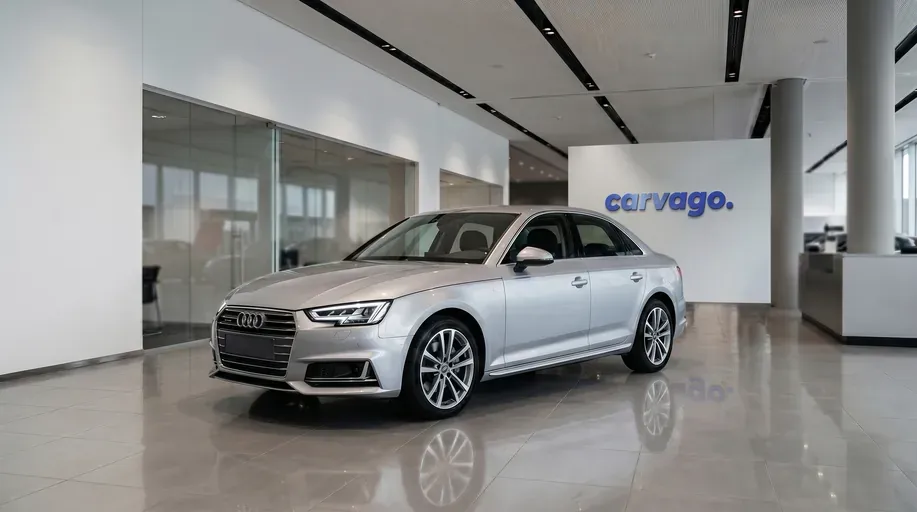
Overview of approximate used car prices (2021–2022 models)
ModelCurrent generation for used carsApproximate priceMarket supply
Audi A4B9 (facelift)€23,000 – €35,000Very high
Jaguar XEX760 (facelift)€22,000 – €36,000Low

Price verdict: Certainty vs. Exclusivity ⚖️

While the Audi A4 represents a conservative choice with a wide selection and stable value retention, a used Jaguar XE compensates for the limited supply with a more attractive drop in original price, allowing you to reach for more generous equipment.

Safety and Euro NCAP Rating

Both models earned a full five-star rating from the independent Euro NCAP testing organization. However, when evaluating the safety of used cars, it is necessary to consider the context and the year in which the tests took place. Euro NCAP protocols are constantly evolving and becoming stricter over the years, so percentage results from different years are not directly comparable. For roughly four-year-old used examples of these models, we rely on the last tests conducted, which relate to the launch date of the given generation. While these tests did not yet include the latest testing standards – such as advanced cyclist detection or junction emergency situations – they represent a solid benchmark for comparing safety within their class and year.

Audi A4 (B9 generation) was last tested by Euro NCAP in 2015 and received a maximum five-star rating, benefiting from a highly rigid body. Tests according to the protocols of the time (which for the first time included a full-width frontal impact) showed an excellent level of child protection with a rating of 87%, making it an ideal choice for families. In the category of assistance systems and protection of vulnerable road users, the Audi in its basic equipment scored an identical 75%. Since the validity of these certifications expired after approximately seven years, currently sold used models would likely no longer reach five stars on paper today without additional retesting with modern systems; nevertheless, in terms of passive safety, they remain among the best.

Jaguar XE (X760 generation) underwent Euro NCAP tests in the same year, 2015, and also secured five stars. The British sedan shone primarily with exemplary adult occupant protection, where it achieved an excellent 92%. It also significantly outperformed the Audi in the areas of vulnerable road user protection (81%) and safety assistance systems (82%). This is because Jaguar offered an active bonnet as standard from the start to mitigate the consequences of a collision with a pedestrian, along with a very well-functioning Autonomous Emergency Braking (AEB) system. In this case too, the original 2015 certification has already officially expired, but the robust aluminium architecture and a generous package of active safety features make it a very well-protected car.

ParameterAudi A4Jaguar XE
Year of testing20152015
Adult occupant protection89 %92 %
Child occupant protection87 %82 %
Vulnerable road user protection75 %81 %
Safety assist systems75 %82 %

The overall safety comparison shows that although both premium cars provide a very solid level of protection, the Jaguar XE offers a slightly more comprehensive package. Thanks to significantly higher values for safety assistants and better care for adult occupants and pedestrians, it emerges as the winner on paper from the measurements of that time. However, the Audi A4 is not to be outdone and counters with slightly higher confidence when travelling with children in child seats in the rear.

Jaguar leads thanks to assistants 🛡️

Although both cars share the same testing year and a full star rating from the certification of the time, the Jaguar XE offers a slightly more comprehensive active safety equipment and better adult occupant protection.

Comparison of Interesting Equipment Features

In addition to standard equipment, each of the models offers several unique features that can be decisive for the customer and go beyond the basic price list. Both automakers approach added value differently – while the German representative bets on absolute digitalization and technological precision, the British challenger counters with advanced materials and innovations focused primarily on the driver.

Audi A4: Technological Precision and Digital Dominance

The German automaker has long scored points with cool but perfectly flawless ergonomics and the use of cutting-edge technologies that make everyday life on board easier.

  • Infotainment and digitalization: Since the facelift, the A4 has relied on the MMI system with a large 10.1-inch touchscreen that offers acoustic feedback and excellent voice control. A crucial element is the fully digital instrument cluster Audi virtual cockpit plus with a 12.3-inch diagonal, which allows for a high degree of personalization, including full-screen map display.
  • Lighting technology: The iconic Matrix LED headlights can intelligently mask out oncoming vehicles so you can keep your high beams on at all times. In addition to excellent luminosity, they also feature animated dynamic indicators, which are a signature design element for Audi.
  • Powertrain and efficiency: Virtually all internal combustion engines use mild-hybrid technology (MHEV). This subtly helps reduce fuel consumption by allowing the car to "coast" with the engine off and ensures lightning-fast and imperceptible start-stop system operation. The intelligent quattro with ultra technology all-wheel drive disconnects the rear axle when not needed, saving fuel, but reconnects it in a fraction of a second if traction is lost.
  • Assistance systems: The advanced predictive efficiency assistant uses navigation data and traffic sign recognition to advise the driver when to take their foot off the accelerator (for example, before a town or a sharp turn), thus optimizing driving smoothness.
  • Sport packages: The S line version is among the most sought-after on the used car market. It gives the car a more aggressive exterior look, a lowered sports suspension, and specific interior details (e.g., sports seats and steering wheel), significantly livening up the otherwise very conservative shapes.

Jaguar XE: Aluminum Lightness and British Charm

Jaguar takes a different approach. Its compact sedan is built with maximum driving experience and a sense of exclusivity in mind, which is reflected in the materials used and specific equipment features.

  • Construction and chassis: A hidden but absolutely key benefit is the body, which is 75% aluminum. This significantly reduces weight and improves its distribution (approaching the ideal 50:50). The double-wishbone front suspension is directly inspired by the F-Type sports model, ensuring phenomenal handling and steering precision.
  • Unique rear view: A great technological trick is the ClearSight feature. At the touch of a button, it transforms the interior rearview mirror into a high-resolution display. The image is transmitted from a wide-angle camera integrated into the roof antenna. This gives you a perfect overview of what's happening behind the car, even when the trunk is loaded to the roof or tall passengers are sitting in the back.
  • Infotainment and interaction: Depending on the year of manufacture, the XE offers the attractive Touch Pro Duo system (or the newer and much faster Pivi Pro), which can use two stacked displays on the center console. It also features beautiful rotary climate controls with their own integrated displays, combining a modern look with classic mechanical feedback.
  • Driving dynamics: The Configurable Dynamics system allows the driver to individually "tailor" the driving mode – adjusting engine response, steering weight, gearbox behavior, and adaptive dampers exactly to their taste. Additionally, the SportShift automatic transmission selector replaced the previous rotary dial in newer models for a better shifting feel.
  • Sport variants: The R-Dynamic trim level gives the car more athletic proportions. It brings sharper bumper styling, specific alloy wheels, sports-shaped seats, and interior details that perfectly underline the fierce character of the British cat.

Key Advantages and Disadvantages

Audi A4

Pros

First-class build quality and top-tier interior materials

Intuitive and fast MMI infotainment system with a precise virtual cockpit

Better rear-seat spaciousness and a larger trunk compared to competitors

Wide range of efficient engines (TDI and TFSI) and excellent quattro all-wheel drive

Very good value retention and high liquidity on the used car market

Cons

Conservative exterior design that easily blends into the crowd

More sterile driving characteristics and less steering feedback compared to RWD competitors

Post-facelift models lack a physical rotary controller for the infotainment, making it harder to operate while driving

Audi A4 represents a rational choice for those looking for a perfectly crafted, comfortable, and reliable car for daily commuting or swallowing highway miles. It is ideal for drivers who appreciate modern technology and excellent ergonomics and don't mind a less emotional driving experience.

Jaguar XE

Pros

Top-tier driving characteristics and excellent agility thanks to the rear-wheel-drive platform

Very attractive, sporty, and fresh exterior design

Great balance between handling and suspension comfort even on poor roads

Significantly higher quality interior and better technology (Pivi Pro system) in post-2019 facelift models

Cons

Very cramped rear-seat space for adult passengers

Below-average trunk volume and accessibility

Limited engine range and complete absence of a practical station wagon body style

Historically weaker reputation for reliability and faster depreciation of residual value

The Jaguar XE is a premium sedan created for driving enthusiasts who want to stand out from the German mainstream and emphasize style and handling. Although it objectively loses points in daily practicality and interior space, it fully makes up for it with its character and brilliant behavior on winding backroads.

Common Problems and Owner Complaints

Based on data from our own independent CarAudit inspections, reliability statistics, and long-term workshop experience, we have compiled an overview of the most common problems that potential buyers of these roughly four-year-old used cars should watch out for.

Audi A4 (B9 generation post-facelift)

The updated Audi A4 (often referred to as B9.5) is generally among the above-average reliable cars in its class, yet it has typical weak points that require increased attention when choosing a used car.

  • 2.0 TDI diesel engines: These power units are mechanically very robust, but in predominantly city traffic on short routes, they suffer from rapid DPF clogging and EGR valve fouling. Very common problems also include AdBlue system faults, especially NOx sensor failures or a cracked heating element in the tank, which eventually results in the engine being blocked from starting. The solution is usually the replacement of the expensive module or sensors.
  • 2.0 TFSI petrol engines: Here, the most well-known chronic weakness is a leaking water pump and plastic thermostat module. The fault manifests as a gradual loss of coolant and requires replacement of the entire housing. Increased oil consumption, which plagued older generations, is fortunately rare in these newer units.
  • S tronic transmissions: The seven-speed dual-clutch transmissions (DQ381) have been refined over the years and are reliable, but strictly require regular oil changes (ideally every 60,000 km). If maintenance is neglected, there is a risk of mechatronics issues, which initially signal themselves with unpleasant jerking during slow crawling in traffic jams.
  • Chassis and electronics: Regarding the chassis, heavier diesel versions with higher mileage may develop play in the front axle silentblocks. Owners occasionally deal with minor MMI infotainment glitches (screen freezing) or parking assistant sensor failures. Before buying, a careful physical inspection of the car should always take place, during which a technician checks the functionality of all onboard electronics.

Audi A4: A reliable cruiser with minor quirks

The Audi A4 is an excellent motorway car with stable technology. Most risks and more expensive service interventions are limited to the emission systems of diesel engines, which are primarily troubled by harsh city operation.

Jaguar XE (X760 post-facelift)

The British cat attracts with its beautiful design and great steering, but in terms of long-term reliability, it pays the price for the extremely delicate Ingenium family power units and more frequent electronic quirks.

  • 2.0d diesel engines (Ingenium): By far the biggest bogeyman for Jaguar is premature timing chain stretching, which can occur even before the 100,000 km mark. The main cause is oil degradation diluted by diesel during incomplete DPF regenerations and unnecessarily long service intervals. The fault manifests as a metallic rattling during a cold start, and ignoring the symptoms ends in chain breakage and total engine destruction.
  • 2.0 petrol engines (P250/P300): Even here, the timing is not entirely trouble-free. The plastic chain guide rails used from the factory degrade due to high temperatures, crack, and crumble into the oil pan. Problems with variable valve timing and coolant leaks also appear.
  • Electronics and infotainment: Although the updated versions with the Pivi Pro system work much better than earlier years, the Jaguar XE is still occasionally plagued by "electronic gremlins." User complaints about keyless entry failures, false error messages on the instrument cluster, or central display freezing are common.
  • Chassis and fluid leaks: The Jaguar's precise handling comes at the cost of faster wear on the rear trailing arms and their silentblocks. Every comprehensive pre-purchase car inspection for a Jaguar must also include a detailed check of the underbody due to more frequent oil leaks from the differential and leaks on the bottom of the engine.

Jaguar XE: Emotion redeemed by service risk

The Jaguar XE is an immensely captivating car to drive, but to preserve its delicate technology, it requires half-length oil change intervals and highly pedantic care. Buying a used one blindly definitely does not pay off here.

Tips for Buying a Used Car

When buying a used car, a thorough inspection is key. Both compared models have their specifics and typical weaknesses that you should focus on before signing the purchase agreement. For this reason, the best step is always a comprehensive car inspection performed by an experienced professional.

When choosing an Audi A4:

  • S tronic gearbox behavior: With the seven-speed dual-clutch automatic transmission, focus on pulling away and slow driving in traffic during the test drive. Jerking, hesitation when accelerating, or jerky downshifts can indicate worn clutches or an expensive mechatronics fault.
  • Coolant leaks: In the popular 2.0 TFSI and 2.0 TDI engines of this generation, problems with a leaking water pump or a cracking thermostat housing occur. Check the coolant level and, after the engine has warmed up, look for traces of pink fluid (or a sweet smell) in the engine compartment.
  • Front axle and steering condition: During the test drive, drive over speed bumps or uneven surfaces with the radio off. Knocking, banging, or squeaking from the front wheels often signals worn bushings on the aluminum suspension arms. This fault impairs steering precision, and any hidden play in the chassis will only be reliably revealed by a detailed physical inspection of the car.
  • MMI infotainment stability: Test the response speed of the central display and pair your phone. System freezes, spontaneous restarts, or a non-functional parking camera image often require a software update, or in the worse and much more expensive case, replacement of the control module.
  • Mild-hybrid system (MHEV) functionality: Most four-cylinder engines in newer A4 models use mild-hybrid technology. If the start-stop system does not operate smoothly, or the car does not automatically shut off the engine and "coast" when the accelerator pedal is released, it may be an indication of a degrading secondary battery.

When choosing a Jaguar XE:

  • Timing chains and DPF in Ingenium diesel engines: If you are choosing a two-liter diesel (2.0d), listen for rattling sounds during a cold start, which indicate a stretched timing chain. These engines are also prone to oil dilution with diesel due to incomplete particulate filter (DPF) regenerations. A thorough check of the service history and shorter oil change intervals is absolutely essential.
  • ZF automatic transmission behavior: The eight-speed automatic is hardware-wise very reliable, but shifting must be perfectly smooth. If you feel a jolt when shifting from "P" to "D" or "R" during the test drive, or if the transmission hesitates to downshift during acceleration, it indicates the need for a flush and replacement of worn transmission oil, or possibly a software update.
  • Suspension and irregular tire wear: Carefully check the inner edges of the rear tires. Irregular wear on the XE often indicates misaligned geometry or worn components of the sophisticated Integral Link rear suspension. This can make the car feel nervous on the highway. These chassis defects should always be verified by an independent technical inspection of the car.
  • On-board system response and electronics: Older Touch Pro on-board systems can be slow and prone to freezing (newer Pivi Pro systems from late 2020 are much better). During the drive, check the functionality of all displays, electric seat memories, and assistance systems. Jaguars occasionally suffer from intermittent failures caused by faulty sensors.
  • Fit and finish quality and interior noises: Despite its premium focus, the cabin of the Jaguar XE can make unwanted noises on rough roads. When driving on coarse asphalt, listen carefully for squeaking plastics in the area of the center console, dashboard, or door panels, which can be an annoying and difficult-to-fix blemish.

FAQ: Most Frequently Asked Questions

The Audi A4 is significantly more spacious, especially in the rear seats, where its British competitor suffers from a lack of legroom and headroom. The trunk space in the sedan version of the Audi offers a volume of 460 liters, while the Jaguar has 410 liters on paper with a less accessible loading opening. Additionally, the Audi is available as a practical station wagon (Avant), which was never produced for the XE model.

From the perspective of dynamic driving characteristics, the clear favorite is the Jaguar XE thanks to its primary rear-wheel drive and perfectly tuned sports chassis. It provides excellent steering feedback and very agile cornering, bringing it close to the top of its class. While the Audi A4 drives very confidently and comfortably, it feels colder behind the wheel and involves the driver less in the action.

Audi has long been considered the benchmark of the mid-size class, offering top-notch fit and finish, premium materials, and the excellently functioning Virtual Cockpit digital instrument cluster. After its 2019 facelift, the Jaguar XE vastly improved its interior and added the modern Pivi Pro infotainment system, which is fast and clear. However, in terms of overall robustness and precision of small details in the cabin, the German car still has a slight edge.

Regular service and maintenance for the Audi A4 will generally be cheaper due to the vast network of independent workshops and the easy availability of group spare parts. The Jaguar XE requires more specialized care, original parts are more expensive, and the overall reliability reputation of the British brand lags slightly behind the German one. With a used Jaguar, you must pay particularly close attention to the service history of the Ingenium diesel engines, which experienced timing chain issues in the early production years.

Both vehicles function as great and quiet highway cruisers, but the Audi A4 excels with slightly better aerodynamic soundproofing and more advanced assistants for semi-autonomous driving. The German car is also available with the excellent quattro all-wheel drive, which adds confidence in the winter months. On the other hand, the Jaguar will please individuals who prefer a lower, sportier driving position and a more intimate interior feel on long journeys.

Conclusion: Which Model to Choose?

Sources: ADAC, lidovky.cz, e15.cz, chytreauto.cz, automix.cz, ceskyautoblog.cz

This article was prepared using artificial intelligence tools. The section guarantor is Petr Dušek.

Related articles

Car battle

Peugeot 508 vs. Volkswagen Passat: Complete comparison 2026

Detailed comparison of Peugeot 508 vs Volkswagen Passat. Discover the differences in engines, equipment, and driving characteristics. Read the verdict and make the right choice.

May 6, 2026

Car battle

Toyota Camry vs. Honda Accord: A Complete 2026 Comparison

Toyota Camry vs. Honda Accord: Which sedan to choose? Our detailed comparison helps you find the right car based on key differences and our verdict.

Oct 23, 2026

Car battle

Audi A4 vs. BMW 3 Series: Complete comparison 2026

Detailed comparison of the Audi A4 vs BMW 3 Series. Discover details about engines, equipment, and used car reliability. Our verdict will help you choose the right premium car.

Oct 22, 2026

We accept online card payments as well as wire transfers.

visa payment provider logovisa-electron payment provider logomastercard payment provider logomaestro payment provider logodiners-club payment provider logodiscover payment provider logo