Review Volkswagen Golf: What do owners and experts really say?
Volkswagen Golf Mk8 review: real owner experiences, common faults, engine picks, running costs and prices — what to know before you buy.
October 20, 2026
Verdict at a Glance
Who it suits: Buyers seeking a composed compact hatchback or practical estate for daily commuting and long-distance travel.
Recommended engine: The versatile 1.5 TSI or mild-hybrid 1.5 eTSI for mixed driving, or the 2.0 TDI for motorway cruising.
What to avoid: Early 2020–2022 models with unresolved digital glitches, or any car without documented safety recall repairs verified by VIN.
Introduction
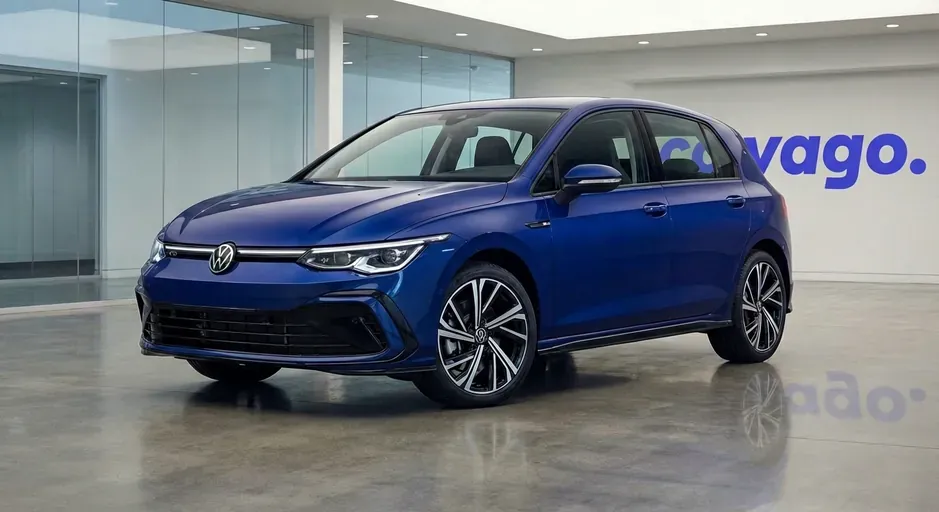
The eighth-generation Volkswagen Golf sits squarely at the centre of the European compact segment, serving as a family car and fleet staple. Following its world premiere on 24 October 2019, European customer deliveries commenced in January 2020, and the car remains in active series production through October 2026. It targets private and corporate buyers looking for an all-round compact vehicle for daily commuting and long-distance travel.
The range encompasses two body styles: the five-door Volkswagen Golf hatchback and the longer Volkswagen Golf Estate, which premiered on 9 September 2020 to cater to buyers needing added cargo versatility.
A mid-cycle facelift premiered on 24 January 2024, with European order books opening on 15 February 2024 and series production starting in May 2024. The update brought subtle exterior styling adjustments, an overhauled infotainment display and menu layout, and revised onboard controls. This review evaluates the eighth generation across both its original and facelifted versions on the European used market.
Owner Experiences: Common Faults and Recalls
Early production years of the eighth-generation Volkswagen Golf were defined by digital teething troubles. On cars built between 2020 and 2022, owners frequently report central display freezes, sluggish boot sequences, and spontaneous system reboots that disabled climate adjustments and the reversing camera. Manufacturer software updates deployed through workshop service actions restored stability for most vehicles, while models produced from May 2024 onward received overhauled infotainment hardware with illuminated control sliders.
Beyond infotainment, hardware-related electronic glitches appear in owner reports on cars built between 2020 and 2023. Drivers note repetitive acoustic and visual warning chimes indicating that Travel Assist or Emergency Assist is unavailable. In these cases, internal sensor breakdown within the capacitive steering wheel rim is the primary cause, and owners report that permanent resolution required replacing the entire steering wheel assembly rather than reprogramming software. Mechanical wear items also demand attention: periodic technical inspection data reveals above-average rejection rates for rear brake discs due to surface corrosion and scoring. Tests describe this issue as especially pronounced on the hybrid Volkswagen Golf and mild-hybrid petrol models, where regenerative deceleration leaves the mechanical friction brakes underworked during routine driving.
A number of official European safety recalls affect both the Volkswagen Golf hatchback and the Volkswagen Golf Estate. The most extensive campaign, announced in September 2026 for left-hand-drive vehicles built between 24 September 2013 and 1 July 2024, addresses moisture-induced corrosion on the right-side steering gear mounting bolt; if broken, the steering gear can break loose, risking complete loss of steering control. Before committing to a purchase, buyers can verify that all campaign work has been completed by arranging an inspection through CarAudit.
Verified Safety Recalls
Announcement Date
Affected Build Window
Scope
Defect & Workshop Remedy
September 2026
24 September 2013 – 1 July 2024
Left-hand-drive European models
Moisture in salt-heavy environments corrodes the steering gear mounting bolt, risking complete steering loss. Workshops replace the bolt with a corrosion-resistant specification.
July 2025
9 February 2024 – 24 May 2024
Hatchback and Estate
Front passenger seat belt was improperly secured to the B-pillar anchor, impairing restraint. Workshops inspect the anchor and replace hardware if necessary.
January 2024
2019 – 2023
European Union and UK models
Incorrectly fitted heat shield mat allows the clutch connection port on the brake fluid reservoir to melt near exhaust components, causing fluid leakage and fire risk. Workshops reinstall proper heat insulation.
March 2022
2019 – 2022
Plug-in hybrid variants
High-voltage battery fuse specification can lead to arcing and rupture during an electrical short circuit. Workshops install an insulating mat over the switching box.
March 2022
28 February 2020 – 10 March 2022
2.0 TSI performance variants
Inadequate fastening allows the engine design cover to contact hot components, risking fire. Workshops removed the loose cover and later fitted a modified replacement.
December 2020
Summer 2020 production
Left-hand-drive automatic models
Defective welding can cause the brake pedal plate to detach from the pedal arm. Workshops inspect and replace the pedal assembly if flawed.
June 2020
Late 2019 – early June 2020
European Union models
Communication software fault in the connectivity unit disables automated emergency call transmission. Workshops apply updated control unit firmware.
🔍 What to check before buying
Check the official service record against the vehicle's VIN to verify that all safety recalls—especially the steering gear bolt, brake reservoir heat shield, and hybrid battery fuse insulation—were formally carried out.
Engage Travel Assist and lane guidance during a test drive to ensure the capacitive steering wheel rim does not trigger repeated disconnection chimes.
Operate the central infotainment screen thoroughly from a cold start to confirm smooth menu responsiveness, functional climate sliders, and the absence of spontaneous reboots.
Inspect the rear brake discs through the wheel spokes for severe corrosion ridges or grooving, particularly on mild-hybrid and plug-in hybrid cars.
On four-wheel-drive Golf R models, confirm through service documentation that the dedicated torque-vectoring rear axle differential fluid was replaced at around 60 000 km, ensuring it was not skipped during transmission maintenance.
Engines: Which One to Choose
The eighth-generation Volkswagen Golf offers an extensive powertrain catalogue comprising petrol, mild-hybrid, diesel, compressed natural gas, and plug-in hybrid configurations across front-wheel and all-wheel-drive layouts.
Engine
Fuel
Power
Drivetrain
Gearbox
Model years
1.0 TSI
Petrol
66 kW (90 hp)
Front-wheel drive
Manual
2020–2023
1.0 TSI
Petrol
81 kW (110 hp)
Front-wheel drive
Manual
2020–2024
1.0 eTSI
Mild-hybrid petrol
81 kW (110 hp)
Front-wheel drive
Automatic
2020–2024
1.5 TSI
Petrol
85 kW (115 hp)
Front-wheel drive
Manual
2024–present
1.5 eTSI
Mild-hybrid petrol
85 kW (115 hp)
Front-wheel drive
Automatic
2024–present
1.5 TSI
Petrol
96 kW (130 hp)
Front-wheel drive
Manual
2020–2024
1.5 eTSI
Mild-hybrid petrol
96 kW (130 hp)
Front-wheel drive
Automatic
2020–2024
1.5 TSI
Petrol
110 kW (150 hp)
Front-wheel drive
Manual
2020–present
1.5 eTSI
Mild-hybrid petrol
110 kW (150 hp)
Front-wheel drive
Automatic
2020–present
2.0 TSI 4MOTION
Petrol
140 kW (190 hp)
All-wheel drive
Automatic
2021–2024
2.0 TSI 4MOTION
Petrol
150 kW (204 hp)
All-wheel drive
Automatic
2025–present
Golf GTI
Petrol
180 kW (245 hp)
Front-wheel drive
Manual / Automatic
2020–2024
Golf GTI
Petrol
195 kW (265 hp)
Front-wheel drive
Automatic
2024–present
Golf GTI Clubsport
Petrol
221 kW (300 hp)
Front-wheel drive
Automatic
2020–present
Golf R
Petrol
235 kW (320 hp)
All-wheel drive
Automatic
2020–2024
Golf R
Petrol
245 kW (333 hp)
All-wheel drive
Automatic
2024–present
1.5 TGI
CNG
96 kW (130 hp)
Front-wheel drive
Automatic
2020–2022
2.0 TDI
Diesel
85 kW (115 hp)
Front-wheel drive
Manual
2020–present
2.0 TDI
Diesel
85 kW (115 hp)
Front-wheel drive
Automatic
2020–2024
2.0 TDI
Diesel
110 kW (150 hp)
Front-wheel drive
Manual
2020–2024
2.0 TDI
Diesel
110 kW (150 hp)
Front-wheel drive
Automatic
2020–present
Golf GTD
Diesel
147 kW (200 hp)
Front-wheel drive
Automatic
2020–2024
Golf Alltrack 2.0 TDI
Diesel
147 kW (200 hp)
All-wheel drive
Automatic
2020–2023
1.4 eHybrid
Plug-in hybrid
150 kW (204 hp)
Front-wheel drive
Automatic
2020–2024
Golf GTE
Plug-in hybrid
180 kW (245 hp)
Front-wheel drive
Automatic
2020–2024
1.5 eHybrid
Plug-in hybrid
150 kW (204 hp)
Front-wheel drive
Automatic
2024–present
Golf GTE
Plug-in hybrid
200 kW (272 hp)
Front-wheel drive
Automatic
2024–present
Which engine fits your driving profile?
For short urban commutes, the entry-level three-cylinder 1.0 TSI or 1.0 eTSI on used models warms up quickly and keeps running costs down. In newer cars, the entry-level four-cylinder 1.5 TSI and mild-hybrid 1.5 eTSI take over that urban role with noticeably smoother operation. Drivers with access to regular home charging should consider the hybrid Volkswagen Golf in eHybrid guise, especially the post-facelift edition, which covers everyday commuting in electric mode.
For mixed everyday driving, the stronger 1.5 TSI manual or the mild-hybrid 1.5 eTSI paired with an automatic Volkswagen Golf represents a balanced compromise in the petrol Volkswagen Golf lineup. Its cylinder deactivation system balances efficiency with dependable overtaking reserves on rural roads.
For high-mileage motorway cruising, the diesel Volkswagen Golf remains difficult to match. The higher-output 2.0 TDI delivers muscular mid-range pulling power and sustained long-distance frugality. Drivers looking for extra pace can seek out the GTD as a used car.
When towing trailers or carrying heavy gear in a Volkswagen Golf Estate, the stronger 2.0 TDI is the most capable choice. For regular towing in adverse conditions, an all-wheel-drive Volkswagen Golf such as the Alltrack on the second-hand market provides superior axle traction.
For recurring mechanical faults, transmission quirks, and sensor issues across the powertrain range, refer to the detailed owner experiences section.
Space & Practicality
Body Style
Length × Width × Height (mm)
Wheelbase (mm)
Boot Capacity (upright / folded, l)
Standard Hatchback
4,282–4,284 × 1,789 × 1,483–1,491
2,619–2,620
381 / 1,237
Estate
4,631–4,633 × 1,789 × 1,487–1,498
2,669
611 / 1,642
Plug-in Hybrid (Hatchback)
4,282–4,289 × 1,789 × 1,476–1,484
2,619–2,630
273 / 1,129
Width excludes door mirrors. Sports editions and all-wheel-drive variants have slightly lower upright cargo volumes due to mechanical packaging and suspension hardware.
The eighth-generation Volkswagen Golf provides balanced cabin packaging, accommodating adults in the rear seats with adequate headroom and kneeroom. While the outer seating positions are supportive, a middle rear passenger must straddle a noticeable floor tunnel. The rear bench does not slide, but a split-folding backrest is standard across all versions, with a load-through ski hatch offered through the folding centre armrest on higher trims. For drivers who frequently haul luggage or bulky gear, the Volkswagen Golf estate provides a longer body, an extended wheelbase, and a substantially deeper boot featuring an adjustable floor and a low load sill. Choosing the hybrid Volkswagen Golf compromises boot practicality, as the traction battery beneath the floor completely removes the underfloor compartment and reduces vertical cargo depth compared to standard petrol or diesel versions of the Volkswagen Golf hatchback.
What the Tests Say
Road tests consistently praise the composed road manners of the Volkswagen Golf. Fitted with standard passive suspension, the chassis absorbs undulating surfaces smoothly without excess body rebound, though sharp transverse joints, cobblestones, and urban potholes produce audible thuds. Cars equipped with optional adaptive dampers gain noticeable compliance, isolating the passenger cell over uneven road surfaces. Handling remains neutral and predictable, featuring direct, progressive steering weighting and dependable front-axle grip, even if testers note that the chassis prioritises stability over driver engagement. Cabin refinement is thoroughly isolated: wind buffeting is muted at touring speeds, and both petrol and diesel engines remain quiet under load.
Cabin assembly is robust and free of rattles, yet reviewers repeatedly point out visible cost-cutting. While the upper dashboard and front door panels feature pliable materials, hard, scratch-prone plastic dominates the lower consoles and the entire rear door cards.
Facelift changes and test consensus
Testers agree on the model's high-speed composure, but opinions diverge on low-speed compliance: buyers seeking a supple ride over scarred secondary roads clearly benefit from the optional adaptive dampers over the standard steel springs. The May 2024 update successfully resolved the interior's most contentious complaints. The arrival of illuminated climate sliders, faster display responsiveness, and the welcome return of physical steering-wheel buttons significantly improved day-to-day usability compared to the frustrating touch-sensitive controls of earlier production years.
Prices and Market Offer
All charts in this section reflect Carvago listings across the entire Volkswagen Golf model family, including earlier generations represented in the data, rather than the reviewed generation alone. Across the available production years, asking figures show steady progression without establishing a separate price level for the eighth generation specifically. Current offerings start at a median asking price of €17,700 for 2019 models, climbing past €22,100 for 2021 examples and €27,000 for 2023 cars. The most recent model years command higher sums, reaching €29,000 for 2024 and culminating at €34,500 for 2026 listings.
Advertised Volkswagen Golf listings increased from 55,971 in April 2026 to a peak of 60,684 in June 2026 before declining through the remainder of the period. The chart below tracks active listings across these six consecutive months.
Volkswagen Golf - availability over time
Active listings over time
Month
Volkswagen Golf
2026-04
55 971
2026-05
58 541
2026-06
60 684
2026-07
59 894
2026-08
56 224
2026-09
55 561
Source Carvago
Buyers benefit from extensive overall choice, as the count of available vehicles stayed between 55,561 and 60,684 across the entire span despite seasonal fluctuation.
The median asking price of cars advertised today ranges from €17,700 for models built in 2019 to €34,500 for those built in 2026. The chart below shows how these median asking prices compare across build years currently on the market.
Volkswagen Golf - median price by model year
Median advertised price by year of manufacture
Model year
Volkswagen Golf
2019
17 700
2020
19 400
2021
22 100
2022
24 000
2023
27 000
2024
29 000
2025
30 000
2026
34 500
Source Carvago
Buyers considering a 2020 model see a median asking price of €19,400, whereas moving to a 2024 model brings the median asking price to €29,000.
This depreciation curve shows how the Volkswagen Golf loses value with age, shedding nearly 18% of its initial residual value in the first year and roughly 33% by age three. The data below illustrates this decline across the model's first seven years.
Volkswagen Golf - value loss by age
Residual value by vehicle age
Vehicle age
Volkswagen Golf
New
35 300
1 yr
29 000
2 yrs
25 800
3 yrs
23 700
4 yrs
22 000
5 yrs
20 400
6 yrs
17 900
7 yrs
16 800
Source Carvago
Across the full seven-year span shown, the car sheds approximately 52% of its initial value. The steepest drop occurs in the first three years.
Between April and September 2026, petrol models accounted for the highest volume of listings, opening at 35,347 advertised cars in April and peaking at 39,057 in June. The breakdown below details the monthly counts across each fuel type over this six-month period.
Volkswagen Golf - supply by fuel over time
Supply composition by fuel type
Petrol
Diesel
Hybrid
Electric
CNG
LPG
Month
Petrol
Diesel
Hybrid
Electric
CNG
LPG
2026-04
35 347
15 781
4 444
135
214
5
2026-05
37 363
16 255
4 556
72
243
4
2026-06
39 057
16 654
4 636
52
234
5
2026-07
38 764
16 203
4 635
38
200
4
2026-08
36 805
14 921
4 253
22
168
4
2026-09
36 485
14 697
4 152
18
155
3
Source Carvago
In September 2026, choice remained heavily concentrated in traditional fuels, with 36,485 petrol listings, 14,697 diesel listings, and 4,152 hybrids available. Buyers will have an easy time finding petrol and diesel variants, whereas fully electric cars represent a tiny fraction of the market with just 18 adverts.
The following chart outlines the average asking price for the Volkswagen Golf from April 2026 to September 2026, beginning at €25,600.
Volkswagen Golf - price trend over time
Average price development over time
Month
Volkswagen Golf
2026-04
25 600
2026-05
25 400
2026-06
25 100
2026-07
25 300
2026-08
25 100
2026-09
25 200
Source Carvago
Across the period, the average asking price fluctuated slightly between €25,100 and €25,600 before ending at €25,200, representing a net shift of less than two percent.
Composed high-speed road manners paired with quiet cabin refinement
Broad powertrain selection spanning petrol, diesel, and hybrid configurations
Versatile estate variant offering significantly deeper cargo space
Cons
Software freezes and unintuitive touch controls on early production years
Visible cabin cost-cutting with hard plastics on lower panels and rear doors
Reduced cargo capacity in plug-in hybrid models due to battery placement
Frequently asked questions
Which model year is the best choice to buy?
Facelifted models built from May 2024 onward are the preferred choice due to overhauled infotainment hardware and more intuitive controls. When considering 2020–2022 examples of the Volkswagen Golf, ensure workshop software updates have been completed to address central screen freezing.
Which engine is best for long-distance driving?
The higher-output 2.0 TDI in the diesel Volkswagen Golf is the most suitable choice for regular motorway driving, offering strong mid-range pull and low fuel consumption. Drivers focusing mainly on mixed commuting are better served by the mild-hybrid 1.5 eTSI petrol.
What should you check before buying a used model?
Always check official service records against the VIN to verify safety recall completion, and test the steering wheel assist systems for warning chimes. Also inspect the rear brake discs for corrosion ridges, particularly on the hybrid Volkswagen Golf.
Is the hatchback practical enough for a family?
The Volkswagen Golf hatchback accommodates adult passengers comfortably in the outer rear seats, though buyers needing maximum cargo capacity should opt for the Volkswagen Golf Estate. Note that plug-in hybrid variants sacrifice underfloor storage space.