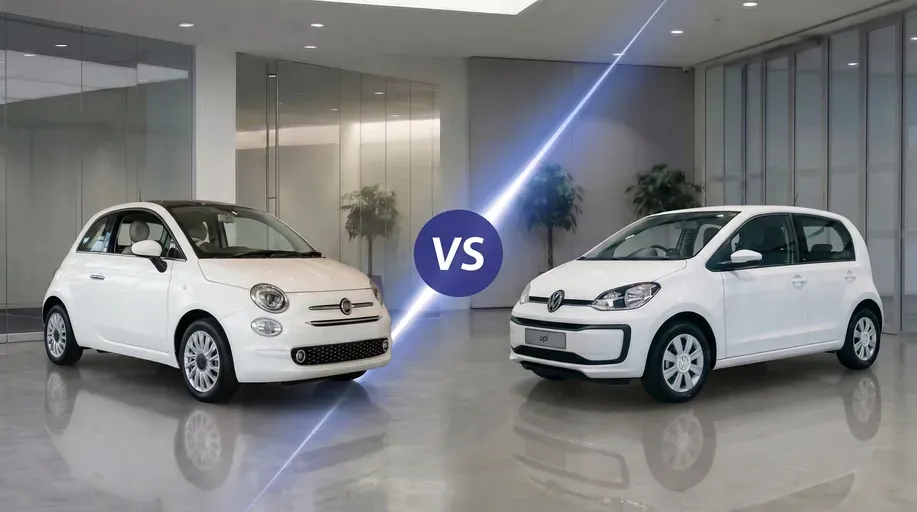
Car battle
Fiat 500 vs. Volkswagen up!: Complete comparison 2026
Fiat 500 vs Volkswagen up! (VW up!) Comparison: Which used city car to choose? Find out details about fuel consumption, reliability, and equipment. Read our verdict!
May 16, 2026
Toyota Yaris review: real owner experience, hybrid efficiency, common faults and prices — everything you need to know before you buy.
October 26, 2026
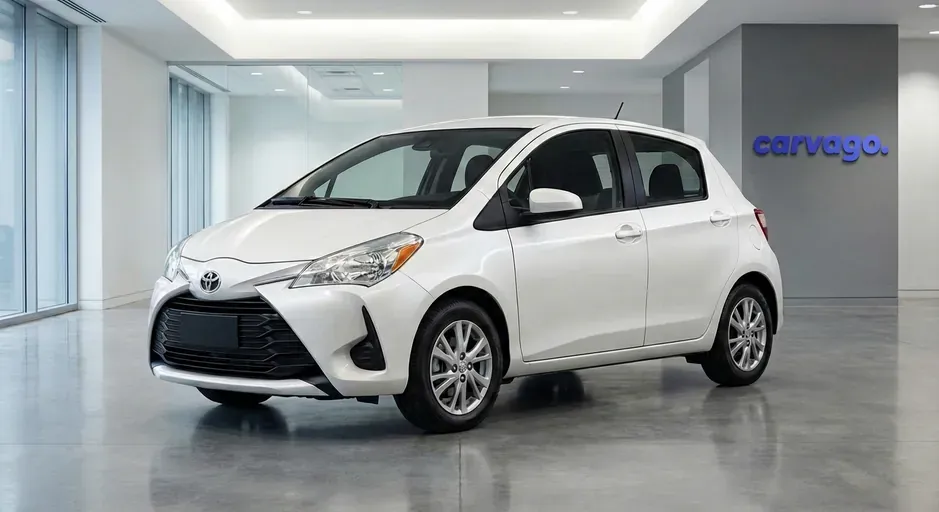
The fourth-generation Toyota Yaris competes in the European supermini class, designed primarily for urban driving and everyday commuting. Built in France, the standard five-door Toyota Yaris hatchback began production in July 2020, with the first customer deliveries reaching European roads in August 2020. This review covers this fourth generation exclusively.
A mid-cycle technical revision was announced in May 2023, with European customer deliveries commencing in February 2024. The update refreshed the digital instrumentation and multimedia displays while adding a second, more powerful hybrid option alongside the established hybrid powertrain. Further specification updates were announced in November 2024 and January 2026.
Sold across Europe in a five-door hatchback body style, the Toyota Yaris caters to private buyers, small households, and commuters seeking compact exterior dimensions for town use. Distinct spin-offs—namely the high-riding crossover and the three-door performance model—are built on separate configurations and remain outside the scope of this review.
However, owner reports and breakdown logs highlight a recurring vulnerability in the auxiliary electrical setup of the hybrid Toyota Yaris. Early production runs between 2020 and 2024 featured an undersized 12-volt auxiliary starter battery located beneath the rear seat. Continuous power consumption from keyless polling and telematics systems drains this battery when cars sit parked for several days or run only short city trips. Because the hybrid system requires sufficient low-voltage current to initialise the computers and engage the high-voltage contactors, a depleted 12-volt battery leaves the car unable to switch into ready mode. Factory production resolved this from November 2024 onward with higher-capacity batteries and revised control software, while earlier cars require updated firmware and an upgraded replacement battery.
Another frequent finding across periodic roadworthiness inspections concerns the rear brakes on hybrid models. Because regenerative braking handles most light deceleration through the electric motors, the mechanical friction brakes see very light use. Over two to four years of regular driving—especially in wet or salted winter conditions—this under-utilisation allows surface corrosion, scoring, and pad glazing to develop on the rear brake discs. Owners frequently report squealing or rubbing sounds at low speeds. Caliper guide pin lubrication and disc cleaning during routine maintenance manage the issue, though heavily pitted discs require replacement to pass inspection.
European safety authorities have recorded several recalls for this generation, predominantly involving software calibrations and electronic modules:
| Production Build Window | Fault Description | Affected Components & Scope | Workshop Remedy |
|---|---|---|---|
| July 2020 – October 2020 | Sharp anchor bracket edge could damage the seat belt webbing during severe rear impact | Rear centre seat belt anchor (Europe) | Inspect anchor bracket; apply protective edge trim or replace bracket |
| July 2020 – April 2021 | Defective skid control ECU software can disable the electronic parking brake | Brake actuator / skid control ECU (Worldwide) | Reflash skid control ECU software |
| July 2020 – June 2021 | Improperly initialised millimetre-wave radar leaves pre-collision assistance inoperative without a warning lamp | Pre-collision system radar sensor (Worldwide) | Check and recalibrate radar sensor |
| July 2020 – November 2020 | ECU fails to enter failsafe mode if input damper slips during sudden acceleration, causing powertrain shutdown | Hybrid transmission control ECU (Worldwide) | Update hybrid vehicle control ECU software |
| June 2021 – August 2023 | Software update error prevents the data communication module from restarting, disabling emergency calling | Data communication module / eCall (Worldwide) | Update data communication module software |
| October 2021 – October 2022 | Faulty battery terminal connection risks loss of power steering assistance or overheating at low speeds | Auxiliary 12-volt battery terminal (Worldwide) | Inspect terminal connector; tighten or replace harness |
| February 2022 – May 2025 | Software memory degradation can cause the screen to stay completely blank at vehicle startup | Combination meter digital instrument cluster (Worldwide) | Reprogram cluster ECU software; replace instrument cluster if update fails |
| March 2021 – September 2025 | Programming error in the parking assist unit can freeze the camera feed or prevent it from displaying | Parking assist control unit / reversing camera (Worldwide) | Reprogram parking assist control unit software |
| June 2023 (narrow 4-day window) | Wheel fastenings on the right-hand side of the vehicle were not tightened to specification at the factory | Right-hand side wheel nuts (Worldwide, 320 units) | Inspect and re-torque right-side wheel nuts to factory specification |
The vast majority of these official campaigns require only diagnostic programming updates. Potential buyers can verify that all campaign work has been completed before purchase through CarAudit or an authorised dealer network.
Under the bonnet, the fourth-generation Toyota Yaris hatchback relies almost entirely on three-cylinder engines, with full-hybrid options serving as the backbone of European deliveries. Pure petrol variants were offered in select European markets during the earlier production years before the line-up transitioned exclusively to petrol-electric power in July 2024.
| Engine | Fuel | Power | Gearbox | Model years |
|---|---|---|---|---|
| 1.0 VVT-i | Petrol | 53 kW | 5-speed manual | 2020–2024 |
| 1.5 Dynamic Force | Petrol | 92 kW | 6-speed manual | 2020–2024 |
| 1.5 Dynamic Force | Petrol | 92 kW | Automatic | 2020–2024 |
| 1.5 Hybrid 115 | Full Hybrid | 85 kW | Automatic (e-CVT) | 2020–present |
| 1.5 Hybrid 130 | Full Hybrid | 96 kW | Automatic (e-CVT) | 2024–present |
For city driving and short daily commutes, the entry-level 1.0-litre petrol works strictly as an unpretentious budget runabout, though its modest output makes it sluggish once you leave town. Buyers wanting an uncomplicated mechanical setup for mixed rural and urban driving without battery components can seek out the naturally aspirated 1.5-litre petrol on the used market. Paired with a precise six-speed manual gearbox, it feels eager when revved, though keeping up with motorway traffic demands frequent downshifts and yields higher consumption than its electrified counterparts.
For the vast majority of buyers, the hybrid Toyota Yaris represents the most suitable all-round choice. The standard hybrid powertrain delivers seamless transitions between electric and combustion power at urban speeds, making stop-and-go commuting relaxed while maintaining low fuel burn.
Those who frequently travel on motorways, carry heavier loads, or make quick overtaking manoeuvres will benefit from the uprated hybrid introduced with the 2024 revision. Thanks to a higher-output electric motor, the more powerful hybrid provides a sharper initial response off the line and requires lower combustion engine revs to sustain highway cruising speeds. However, neither hybrid variant is built for heavy hauling, as towing capacities for both braked and unbraked trailers are strictly limited.
The mechanical components of the powertrain and planetary e-CVT gearset demonstrate proven long-term durability.
| Parameter | Hatchback |
|---|---|
| Length (mm) | 3,940 |
| Width (mm) | 1,745 |
| Height (mm) | 1,500 |
| Wheelbase (mm) | 2,560 |
| Boot capacity, rear seats up (l) | 286 |
| Boot capacity, rear seats folded (l) | 935 |
The dimensions and luggage volumes above do not apply to the separate three-door performance version.
The fourth-generation Toyota Yaris hatchback adopts a compact footprint optimised for city driving, which inevitably compromises rear accommodation. Rear passenger legroom and headroom are noticeably restricted, making the back bench cramped for tall adults on longer journeys, while thick rear pillars restrict outward visibility. Practicality is kept simple: the rear seat splits 60:40 to expand luggage capacity, though a sliding rear bench is not offered on this platform. The cargo area has basic plastic sidewalls rather than full carpet lining, but the hybrid traction battery is neatly tucked beneath the rear passenger bench, leaving the main luggage floor flat and unobstructed for daily shopping tasks.
Professional evaluations paint a consistent picture of the Toyota Yaris as an agile, tautly sprung supermini best suited to urban driving and flowing country roads. Testers widely praise its responsive steering and secure road-holding during sudden lane changes. However, ride comfort divides opinion depending on road conditions. The chassis feels noticeably firm at low speeds, where sunken manhole covers, cobblestones, and sharp road edges transmit unfiltered jolts into the passenger compartment. It gains composure at higher cruising speeds, though high-frequency jittering remains perceptible over rougher motorway surfaces.
Refinement draws mixed feedback. Running in pure-electric mode in city traffic provides quiet progress, but brisk acceleration causes the three-cylinder petrol engine to rev loudly via the automatic transmission, generating a persistent drone under load. Testers also consistently note elevated tyre roar and wind noise on high-speed motorways. Inside, physical dials for the climate controls earn credit for straightforward everyday operation, and the driving position feels well-judged. Even so, the interior relies heavily on hard, scratch-prone plastics along the lower console and door panels, with occasional reports of creaking switchgear or cabin trim over broken surfaces.
Updates introduced in 2024 brought a welcome lift in responsiveness, particularly on the newly added, higher-powered hybrid option. Professional tests note that the revised model feels punchier during overtaking, but its core road manners remain largely unchanged. The low-speed ride remains distinctly firm on larger wheels, high-speed road roar persists, and while cabin digital displays received an overhaul, the underlying plastic finishes remain utilitarian.
All market charts in this section are drawn from Carvago’s listings of the whole Toyota Yaris family across all represented generations, rather than the fourth-generation hatchback alone. Because these listings combine different iterations, the dataset does not establish a separate price level exclusively for the newest generation. Across current platform offerings, the median asking price sits at €14,000 for 2019 builds, rises to €18,000 for 2021 models, and reaches €23,300 for 2024 examples, topping out at €24,900 for 2026 cars. These figures reflect differences in specification, condition, and market presence across model years rather than tracked depreciation over time.
Across the six months from April 2026 to September 2026, advertised Toyota Yaris listings moved from 11,322 to 10,219 cars, as shown in the monthly counts below.
Active listings over time
| Month | Toyota Yaris |
|---|---|
| 2026-04 | 11 322 |
| 2026-05 | 11 366 |
| 2026-06 | 11 079 |
| 2026-07 | 11 129 |
| 2026-08 | 10 205 |
| 2026-09 | 10 219 |
Source Carvago
Buyers can expect an extensive selection on the market, with monthly active listings staying above 10,205 cars despite the decline recorded between July and August.
The median asking price of cars advertised today, built in 2019, is €14,000, compared with €24,900 for those built in 2026. The chart below shows how these asking figures vary across consecutive production years.
Median advertised price by year of manufacture
| Model year | Toyota Yaris |
|---|---|
| 2019 | 14 000 |
| 2020 | 16 400 |
| 2021 | 18 000 |
| 2022 | 18 400 |
| 2023 | 19 800 |
| 2024 | 23 300 |
| 2025 | 23 800 |
| 2026 | 24 900 |
Source Carvago
Buyers considering earlier model years face median asking prices of €14,000 for 2019 and €16,400 for 2020, whereas recent production years require medians of €23,300 for 2024 and €24,900 for 2026.
This depreciation curve traces how the model's residual value declines with vehicle age, shedding about 10% of its initial value in the first year and 21% by age three. The chart below tracks this progression year by year.
Residual value by vehicle age
| Vehicle age | Toyota Yaris |
|---|---|
| New | 24 800 |
| 1 yr | 22 400 |
| 2 yrs | 21 100 |
| 3 yrs | 19 700 |
| 4 yrs | 18 300 |
| 5 yrs | 17 300 |
| 6 yrs | 16 000 |
| 7 yrs | 14 100 |
Source Carvago
Across the seven years recorded, the car sheds 43% of its original residual value, retaining 57% by age seven. The single largest drop occurs between age zero and age one, after which the pace of annual depreciation moderates.
Across the six months from April 2026 to September 2026, advertised listings were centered heavily on hybrid and petrol choices, opening with 9294 hybrids and 1977 petrol cars in April. The chart below details how the monthly inventory breaks down by fuel type.
Supply composition by fuel type
Petrol
Diesel
Hybrid
Electric
LPG
| Month | Petrol | Diesel | Hybrid | Electric | LPG |
|---|---|---|---|---|---|
| 2026-04 | 1 977 | 22 | 9 294 | 1 | 17 |
| 2026-05 | 1 919 | 30 | 9 393 | 3 | 9 |
| 2026-06 | 1 837 | 32 | 9 193 | 2 | 8 |
| 2026-07 | 1 870 | 28 | 9 215 | 1 | 6 |
| 2026-08 | 1 722 | 28 | 8 433 | 3 | 9 |
| 2026-09 | 1 661 | 24 | 8 507 | 3 | 12 |
Source Carvago
Hybrids dominate the current offer, accounting for 8507 active listings in September 2026 compared to 1661 petrol models and just 24 diesels. Buyers will find the widest selection by far among hybrids, while petrol options provide a secondary choice and other powertrains are very rare.
The following chart tracks the average asking price from April 2026 to September 2026, starting at €19,900.
Average price development over time
| Month | Toyota Yaris |
|---|---|
| 2026-04 | 19 900 |
| 2026-05 | 19 800 |
| 2026-06 | 19 800 |
| 2026-07 | 19 600 |
| 2026-08 | 19 700 |
| 2026-09 | 19 700 |
Source Carvago
Across the period, the average moved only slightly, dipping to €19,600 in July 2026 before finishing at €19,700 in September 2026. With an overall net change of roughly one percent, asking prices remained essentially flat over the six months.
Smooth, fuel-efficient hybrid operation well suited to city driving
Agile road manners with responsive steering and secure road-holding
Straightforward dashboard ergonomics with physical climate dials
Restricted rear-seat space and limited outward rear visibility
Firm low-speed ride and persistent engine drone under brisk acceleration
Auxiliary starter battery prone to draining on earlier hybrid builds
Mechanically, the engine and hybrid transmission are dependable and durable, but models built between 2020 and 2024 can suffer from auxiliary 12-volt battery drain when left parked or driven only on short trips.
The standard hybrid Toyota Yaris suits most daily city commuters thanks to smooth urban transitions and low fuel use. Buyers who do frequent motorway journeys will benefit from the uprated hybrid introduced for 2024 for easier overtaking.
Check whether the auxiliary 12-volt battery holds charge and inspect the rear brake discs for corrosion from light use. It is also essential to verify by VIN that all manufacturer software recalls have been carried out.
It works well for urban commuting or small households, but tight rear legroom and limited boot capacity make it cramped for growing families. Adults will find the rear bench restricted on longer journeys.
Sources: newsroom.toyota.eu, adac.de, ec.europa.eu, autocar.co.uk, whatcar.com
This article was prepared using artificial intelligence tools. The section guarantor is Petr Dušek.
Fiat 500 vs Volkswagen up! (VW up!) Comparison: Which used city car to choose? Find out details about fuel consumption, reliability, and equipment. Read our verdict!
May 16, 2026

Hyundai i10 vs Suzuki Ignis Comparison: A classic city mini or a small crossover? Discover the differences in equipment, fuel consumption, and driving characteristics.
May 7, 2026
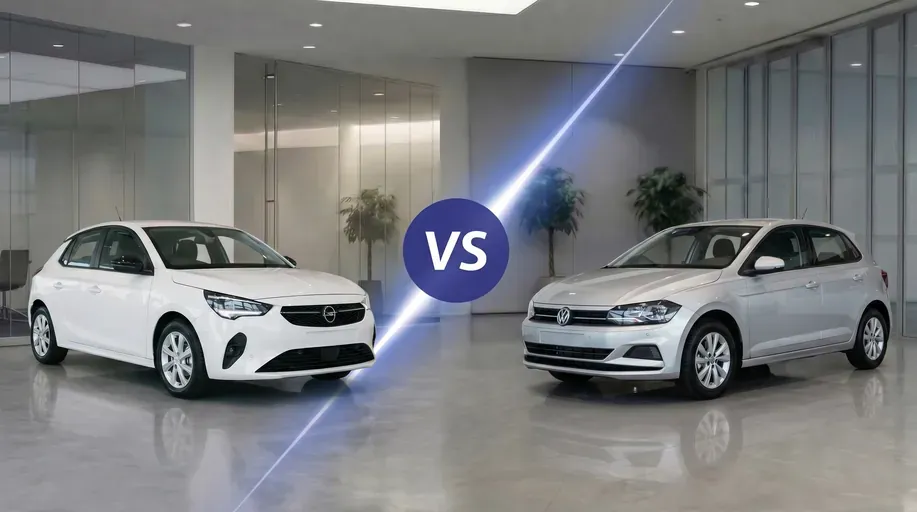
Detailed comparison of Opel Corsa vs. Volkswagen Polo (VW Polo). Discover real-world experiences, differences in equipment, and the verdict for choosing the ideal used hatchback.
Oct 16, 2026