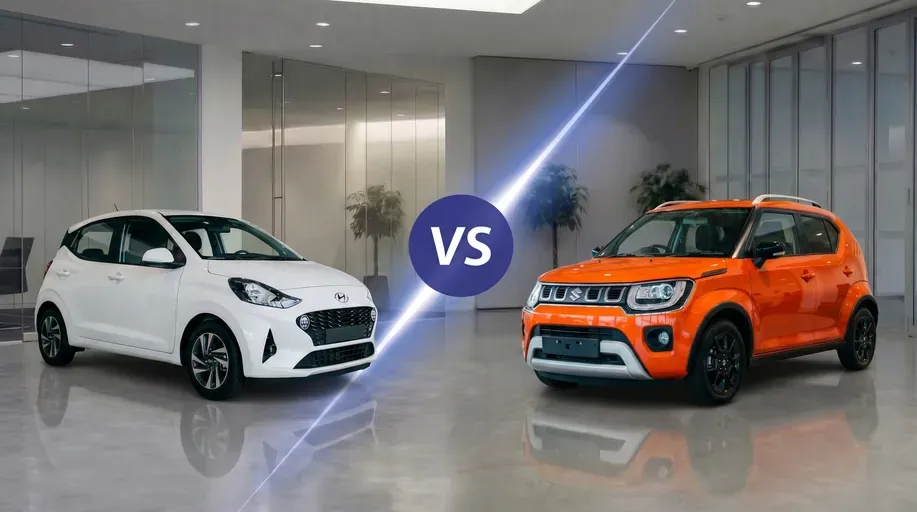
Car battle
Hyundai i10 vs. Suzuki Ignis: Complete comparison 2026
Hyundai i10 vs Suzuki Ignis Comparison: A classic city mini or a small crossover? Discover the differences in equipment, fuel consumption, and driving characteristics.
May 7, 2026
Suzuki Swift review: real owner experience, mild-hybrid efficiency, practicality and prices — our comprehensive verdict before you buy.
October 22, 2026
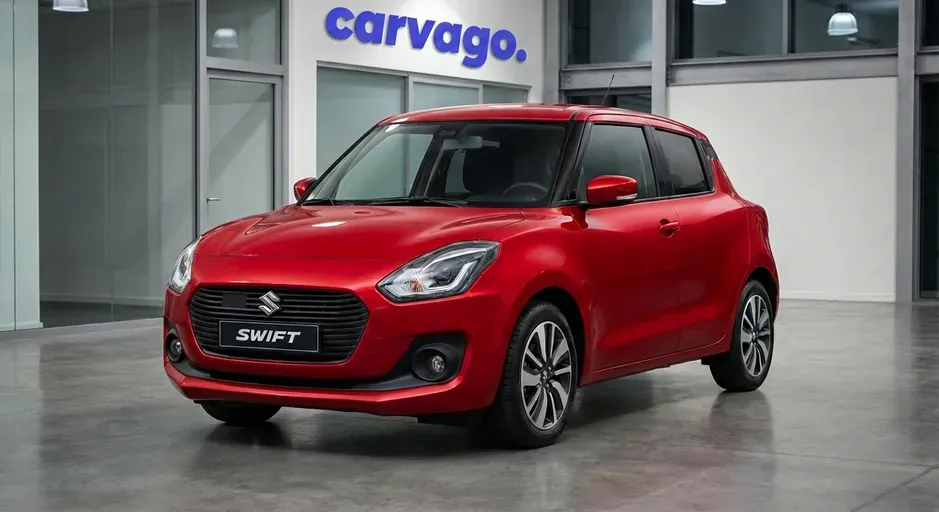
The Suzuki Swift occupies a distinct niche in the European subcompact class. While many rivals have expanded in exterior size or migrated toward crossover styling, this model maintains a traditional, compact footprint tailored for urban driving. This review focuses exclusively on the fourth-generation model, which entered production in late 2023, reached European showrooms with first customer deliveries in April 2024, and remains in production through October 2026.
Sold exclusively as a five-door Suzuki Swift hatchback, the fourth generation has received no mid-cycle facelift to date and continues in its original launch specification. The lineup features mild-hybrid petrol power, offered with either standard front-wheel drive or an optional mechanical four-wheel-drive configuration—a rare offering within the supermini segment.
Typical buyers include private owners seeking straightforward city transportation, daily commuters aiming for manageable running costs, and drivers in rural or winter-prone regions who require all-weather traction without stepping up to a larger vehicle.
European customer deliveries of the fourth-generation Suzuki Swift commenced in April 2024. Because this model has been on European roads for under thirty months, long-term reliability and high-mileage component durability are not yet established. Early feedback from owners and fleets shows an initial production run free from systemic mechanical breakdowns or chronic component failures.
Official safety registers across Europe record zero safety recalls for this generation across both front-wheel-drive and all-wheel-drive versions. Recall notices that occasionally surface in generic online databases belong strictly to earlier generations of the nameplate and do not apply to this car.
Electronic and assistance systems show no software defects or sensor failures. While drivers frequently note sensitive alerts from the standard driver alertness tracking and traffic-sign recognition systems, this behaviour is a mandated regulatory operating characteristic rather than a vehicle fault.
Practical wear on early used examples primarily concerns luggage handling. The cargo area's unpadded plastic trims and painted sills are prone to surface scrapes if previous owners loaded bulky cargo carelessly over the tall boot threshold.
The engine line-up for the current Suzuki Swift is radically streamlined compared to earlier generations. A single naturally aspirated three-cylinder petrol unit paired with a 12-volt mild-hybrid system powers every variant, offered with front-wheel drive or all-wheel drive.
| Engine | Fuel | Power | Gearbox | Drivetrain | Model years |
|---|---|---|---|---|---|
| 1.2 Dualjet Hybrid | Petrol mild hybrid | 61 kW (82 hp) | 5-speed manual | Front-wheel drive | 2024 – present |
| 1.2 Dualjet Hybrid | Petrol mild hybrid | 61 kW (82 hp) | CVT automatic | Front-wheel drive | 2024 – present |
| 1.2 Dualjet Hybrid ALLGRIP | Petrol mild hybrid | 61 kW (82 hp) | 5-speed manual | All-wheel drive | 2024 – present |
For urban stop-and-go commuting, the automatic Suzuki Swift equipped with the continuously variable transmission is the most practical choice. The belt-driven integrated starter-generator provides responsive assistance from a standstill, while the stepless automatic eliminates pedal work in dense city queues.
For mixed everyday driving on suburban and rural roads, the manual Suzuki Swift represents the most balanced choice. Its five-speed manual gearbox features a short, precise shift action that allows the driver to keep the non-turbocharged engine working efficiently within its powerband when joining faster traffic.
Long motorway journeys require realistic expectations. Because peak output is delivered high in the rev range and maximum pulling power is modest, cruising on highway inclines and executing overtakes require shifting down into third or fourth gear to build speed, accompanied by an audible three-cylinder note under load.
Buyers living in hilly areas or regions with regular snowfall should consider the all-wheel-drive Suzuki Swift. Its viscous-coupling ALLGRIP system automatically transfers drive to the rear axle upon front-wheel slippage, providing dependable cold-weather traction that remains a rare advantage in the supermini segment, though it is offered exclusively with the manual gearbox.
Towing capability is strictly limited across the entire range, making any variant suitable only for light utility trailers rather than heavy loads.
For a detailed evaluation of mechanical durability, running patterns, and verified issues, see the owner experiences section.
| Dimension / Metric | Hatchback |
|---|---|
| Length (mm) | 3,860 |
| Width (mm) | 1,735 |
| Height (mm) | 1,495 |
| Wheelbase (mm) | 2,450 |
| Boot volume, seats up / folded (l) | 265 / 589 |
The height measurement does not apply to all-wheel-drive versions, which sit taller due to increased ground clearance.
Front passenger accommodation in the Suzuki Swift hatchback is adequate for daily commutes, but cabin proportions require clear compromises in the rear. Adults up to average height fit with acceptable headroom and legroom, while taller occupants find their knees brushing the front backrests and hair grazing the headliner. The rear bench is flat and thinly padded, offering minimal lateral support and limited thigh comfort on longer journeys.
Luggage versatility is constrained by a fixed rear bench that lacks fore-and-aft sliding adjustments, though asymmetrical split-folding backrests come standard. Loading heavier cargo is hindered by a tall rear sill that drops down into a deep cargo floor, and folding the seatbacks creates a noticeable step rather than an unbroken loading surface.
Professional road tests describe the Suzuki Swift as nimble and easy to thread through city traffic. Its low kerb weight pays dividends in agile cornering and crisp turn-in, assisted by clear outward visibility and a light clutch action. The chassis dampens larger road undulations adequately, yet testers consistently report a fidgety secondary ride over rough city tarmac. The optional four-wheel-drive Suzuki Swift rides noticeably firmer. Testers diverge on steering feel: while some praise its alert weighting off-centre, others find it numb and vague around the straight-ahead position, with weak self-centring. Multiple tests strongly criticise the long stopping distances on factory low-rolling-resistance tyres.
Lean soundproofing is a recurring complaint across test reports. Road rumble, wind noise, and three-cylinder engine vibrations filter freely into the cabin at motorway speeds. Inside, the dashboard layout is straightforward, retaining physical climate buttons beneath a responsive central display. However, the screen omits physical rotary volume controls and suffers from reflections in direct sunlight. Hard, unpadded plastics dominate every touchpoint, notably on the rear door panels. Testers find the front seats adequate for short commutes but lacking thigh and lateral support. Testers also agree that the driver-assistance audible alerts are overly intrusive, requiring multi-step menu scrolling to mute on every journey.
All the charts in this section are drawn from Carvago listings of the whole Suzuki Swift model family, including other generations represented in the data rather than the reviewed generation alone. Because listings combine multiple production series, this data does not establish a separate price level for the newest generation. Across the advertised model years, the median asking price stands at €13,700 for 2019 cars, €19,000 for 2024 models, and €19,400 for 2026 examples.
Advertised Suzuki Swift counts began at 4,970 in April 2026 and peaked at 5,426 in July 2026, as shown in the monthly figures below.
Active listings over time
| Month | Suzuki Swift |
|---|---|
| 2026-04 | 4 970 |
| 2026-05 | 5 047 |
| 2026-06 | 5 121 |
| 2026-07 | 5 426 |
| 2026-08 | 5 092 |
| 2026-09 | 5 053 |
Source Carvago
With inventory closing at 5,053 listings in September 2026, buyers have consistently had around 5,000 vehicles to choose from across this six-month span.
Among used listings advertised today, the median asking price of cars built in 2019 is €13,700, while the median asking price of cars built in 2026 is €19,400. The chart below details these median figures across the intervening model years.
Median advertised price by year of manufacture
| Model year | Suzuki Swift |
|---|---|
| 2019 | 13 700 |
| 2020 | 13 900 |
| 2021 | 14 500 |
| 2022 | 15 900 |
| 2023 | 17 900 |
| 2024 | 19 000 |
| 2025 | 19 000 |
| 2026 | 19 400 |
Source Carvago
Buyers focusing on cars built in 2019 face a median asking price of €13,700 among listings advertised today. Stepping up to models built in 2024 or 2025 requires a median asking price of €19,000 in current listings.
This depreciation curve shows how the Suzuki Swift's value falls with age, shedding about 10% of its initial residual value in the first year and 23% by age three. The chart below traces the pace of this decline across seven years.
Residual value by vehicle age
| Vehicle age | Suzuki Swift |
|---|---|
| New | 19 700 |
| 1 yr | 17 700 |
| 2 yrs | 16 300 |
| 3 yrs | 15 100 |
| 4 yrs | 14 300 |
| 5 yrs | 13 100 |
| 6 yrs | 12 400 |
| 7 yrs | 10 800 |
Source Carvago
Across the seven-year span, the model sheds roughly 45% of its initial residual value, retaining more than half of its value over this period. The rate of loss moderates noticeably between ages three and six, where annual depreciation slows before steepening again at seven years.
Between April and September 2026, the volume of advertised cars was dominated by petrol, which rose from 4,822 listings in April to a peak of 5,289 in July. The chart tracks the monthly number of active listings across all recorded fuel types.
Supply composition by fuel type
Petrol
Diesel
Hybrid
Electric
CNG
LPG
| Month | Petrol | Diesel | Hybrid | Electric | CNG | LPG |
|---|---|---|---|---|---|---|
| 2026-04 | 4 822 | 10 | 103 | 1 | 1 | 9 |
| 2026-05 | 4 909 | 17 | 84 | 0 | 1 | 9 |
| 2026-06 | 4 980 | 16 | 87 | 0 | 0 | 8 |
| 2026-07 | 5 289 | 11 | 90 | 0 | 1 | 10 |
| 2026-08 | 4 960 | 8 | 97 | 0 | 1 | 6 |
| 2026-09 | 4 952 | 4 | 74 | 0 | 1 | 5 |
Source Carvago
By September 2026, petrol accounted for 4,952 listings, compared to 74 hybrids, 5 LPG cars, 4 diesels, and 1 CNG vehicle. Anyone browsing the used market will find their realistic choices concentrated almost entirely in petrol engines, while alternative powertrains appear in only negligible quantities.
The chart tracks the average asking price for Suzuki Swift listings from April 2026 to September 2026, opening at €17,900 and finishing at €18,000.
Average price development over time
| Month | Suzuki Swift |
|---|---|
| 2026-04 | 17 900 |
| 2026-05 | 17 800 |
| 2026-06 | 17 900 |
| 2026-07 | 17 800 |
| 2026-08 | 17 900 |
| 2026-09 | 18 000 |
Source Carvago
Across the recorded months, the average fluctuated within a narrow range between €17,800 and €18,000, representing a shift of less than one percent rather than a pronounced trend.
Optional mechanical all-wheel drive provides dependable traction in poor weather
Agile urban handling with clear outward visibility and easy manoeuvrability
Physical buttons retained for climate control functions
Intrusive driver-assistance warning chimes that reactivate on every startup
Lean cabin soundproofing with noticeable wind, road, and engine noise at higher speeds
Awkward luggage loading due to a high bumper lip and stepped cargo floor
Long-term reliability is not yet established as European deliveries began in April 2024, but early feedback shows no systemic breakdowns and official registers record zero safety recalls. Check the VIN through an authorised dealer to confirm there are no pending service actions.
The CVT automatic Suzuki Swift is best for urban stop-and-go traffic because it eliminates pedal work, while the five-speed manual remains preferable for mixed suburban routes.
Yes, the all-wheel-drive Suzuki Swift is available with an optional mechanical ALLGRIP system for dependable cold-weather traction. It is offered exclusively with the manual gearbox and delivers a firmer ride than front-wheel-drive versions.
Check the luggage threshold and rear plastics for loading scratches, and verify on a test drive that the forward camera and radar show no warning alerts.
Sources: media.suzuki.co.uk, adac.de, euroncap.com, autocar.co.uk, autoexpress.co.uk
This article was prepared using artificial intelligence tools. The section guarantor is Petr Dušek.
Hyundai i10 vs Suzuki Ignis Comparison: A classic city mini or a small crossover? Discover the differences in equipment, fuel consumption, and driving characteristics.
May 7, 2026
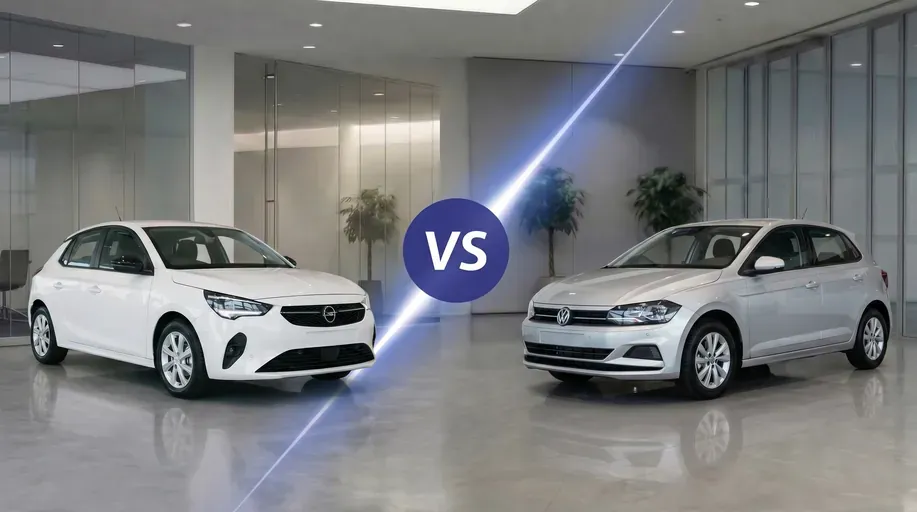
Detailed comparison of Opel Corsa vs. Volkswagen Polo (VW Polo). Discover real-world experiences, differences in equipment, and the verdict for choosing the ideal used hatchback.
Oct 16, 2026
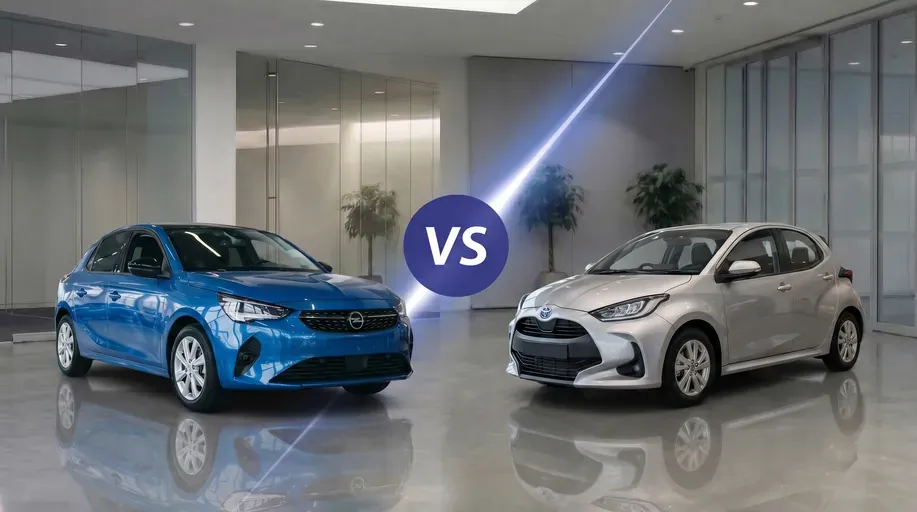
Detailed comparison of Opel Corsa vs. Toyota Yaris. Find out which city hatchback offers better reliability, fuel consumption, and equipment. Read our clear verdict!
Oct 16, 2026