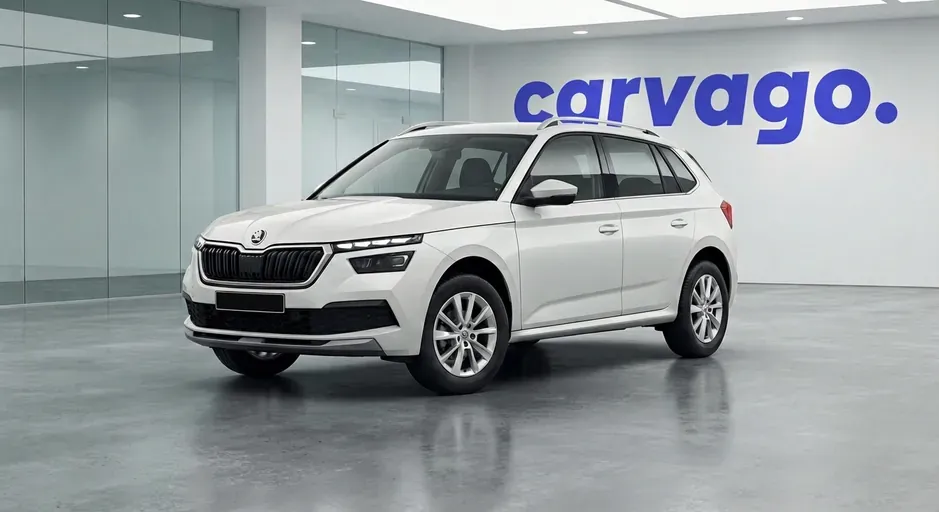
Review
Review Škoda Kamiq: What do owners and experts really say?
Škoda Kamiq review: real owner experience, common faults, running costs, engine picks and prices — our comprehensive verdict before you buy.
Oct 27, 2026
Peugeot 3008 review: real owner feedback, electric range, hybrid performance, specs, and our verdict on the third-generation fastback SUV.
October 31, 2026
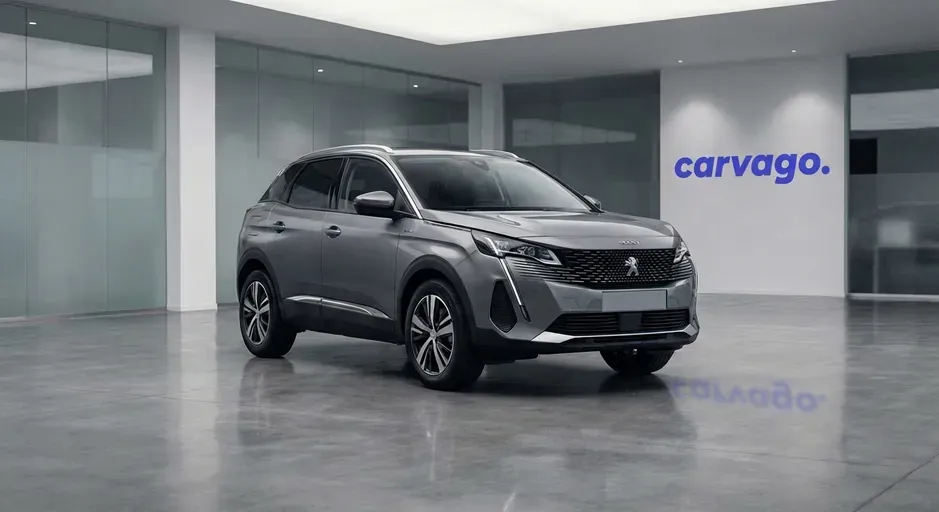
The third-generation Peugeot 3008 marks a technical shift in the European C-segment crossover category, adopting a fastback profile built on the Stellantis STLA Medium platform. Following its world premiere in September 2023, series production commenced in late 2023 at the Sochaux plant in France. European customer deliveries began in March 2024 in France and rolled out across wider European markets in May 2024, with active production continuing into 2026. To date, this generation has received no mid-cycle facelift.
Offered exclusively as a five-door fastback Peugeot 3008 SUV, the model is aimed at private families and fleet drivers seeking a modern compact crossover across petrol-hybrid, plug-in hybrid, and fully electric configurations.
European order books initially opened for the mild-hybrid petrol and standard front-wheel-drive electric models. Peugeot subsequently expanded the lineup: orders opened for a plug-in hybrid variant in September 2024 (with customer deliveries commencing in early 2025), a Long Range version of the electric Peugeot 3008 in October 2024 (deliveries starting in the first half of 2025), and a dual-motor all-wheel-drive electric model in July 2025 (deliveries beginning in late 2025).
Because customer deliveries of the third-generation Peugeot 3008 began in March 2024 across European markets, long-term reliability and high-mileage wear patterns are not yet established. Early ownership data focuses primarily on software refinement and initial factory safety campaigns. The mild-hybrid petrol engine uses a timing chain rather than an oil-submerged belt, and diesel variants are not offered in this generation.
Professional tests describe recurring software stability glitches on models fitted with the curved 21-inch panoramic display (standard on higher trims and optional on entry versions). Reported issues include delayed boot-up times during cold starts, intermittent drops in wireless smartphone connectivity, and occasional touchscreen freezes that require a system reboot. Dealership control-module updates have improved responsiveness. On early production hybrid Peugeot 3008 models, tests and owners also report hesitation or abrupt engagement from the electrified dual-clutch transmission during low-speed crawling and parking manoeuvres, which workshops address with transmission management re-flashes. For the all-electric Peugeot E-3008, early fleet tracking indicates standard battery health without premature cell degradation.
Several official European safety campaigns have been registered for this generation, addressing early assembly tolerances, component batches, and module software.
| Affected Component | Production Window | Scope | Remedial Action |
|---|---|---|---|
| Front suspension ball joint mount screws | 24 July 2023 to 28 February 2024 (extended to 04 December 2024) | Worldwide (94,584–95,767 vehicles across shared platforms) | Defective fixing screws on the front lower suspension arm ball joint mount could break, potentially leading to restricted or lost steering control. Authorized workshops replace the ball joint mounts and mounting hardware on both sides. |
| Interior door handle software | 09 October 2023 to 12 February 2026 | Worldwide (110,065 vehicles across shared platforms) | A software glitch in the vehicle supervision module can cause an unexpected deactivation of the interior door handles while the vehicle is running, which could prevent occupants from exiting in an emergency. Dealers update the module software. |
| Wheel nut torque | 19 November 2024 to 13 June 2025 | European market | Insecurely torqued wheel nuts could work loose while driving or lead to wheel detachment. Workshops verify tightening torque on all four wheels and retorque them to factory specification. |
| Front headrest locking mechanism | 23 September 2024 to 05 November 2024 | Worldwide (9,447 vehicles across shared platforms) | Defective locking notches on headrest supports can allow headrests to slide down or loosen, reducing crash protection. Dealers inspect and replace defective headrests or supports. |
| Front bumper air guides | 29 June 2026 to 16 July 2026 | Worldwide (1,299 vehicles; hybrid models only) | Inadequately fitted air guides in the front bumper obstruct required cooling airflow to the combustion engine and the 48-volt electrical system, potentially degrading performance. Workshops remove the misaligned guides. |
| Dual-clutch transmission inverter | 19 March 2026 to 20 March 2026 | European Union (hybrid models only) | Soldering residue within the transmission control inverter can create an electrical short circuit and stuck relay, presenting an overheating and fire risk. Dealers inspect and replace the defective electronic control assembly. |
| Engine piston cooling nozzle | 25 November 2025 to 27 November 2025 | European Union (hybrid models only) | Cylinder blocks missing a piston cooling nozzle can suffer insufficient piston cooling, resulting in component warping, sudden engine failure, or fire risk. Dealers inspect cylinder blocks and replace affected engines. |
| Tyre homologation label mismatch | 07 March 2025 to 16 April 2025 | Worldwide (1,076 vehicles across shared platforms) | Certain vehicles were factory-fitted with rolling-resistance class B tyres instead of registered class A+ tyres, causing a discrepancy with certified CO2 documentation. Workshops inspect fitted tyres, replace non-conforming sets, and update paperwork. |
Before buying a pre-owned vehicle, buyers should always verify that all open safety campaigns have been resolved by an authorized franchised dealer. If you want a specialist to inspect a specific car in person, you can book an inspection through CarAudit.
The third generation of the Peugeot 3008 eliminates standalone, non-electrified petrol engines and drops diesel entirely, shifting the line-up to mild-hybrid, plug-in hybrid, and fully electric powertrains. Manual gearboxes have also been phased out, leaving automatic transmissions standard across the entire range.
| Engine | Fuel | Power | Drivetrain | Gearbox | Model years |
|---|---|---|---|---|---|
| 1.2 Hybrid 136 | Petrol Mild-Hybrid | 100 kW (136 hp) | Front-wheel drive | 6-speed automatic | 2024–present |
| 1.6 Plug-In Hybrid 195 | Petrol Plug-in Hybrid | 143 kW (195 hp) | Front-wheel drive | 7-speed automatic | 2025–present |
| Electric 210 | Electric | 157 kW (210 hp) | Front-wheel drive | Automatic | 2024–present |
| Electric 230 Long Range | Electric | 170 kW (230 hp) | Front-wheel drive | Automatic | 2025–present |
| Electric 325 Dual Motor AWD | Electric | 239 kW (325 hp) | All-wheel drive | Automatic | 2025–present |
For urban driving and short daily commutes, the entry mild-hybrid powertrain suits buyers without home charging facilities. It uses an electric motor integrated into the dual-clutch transmission to handle parking manoeuvres and low-speed crawling silently. However, because it relies on a compact three-cylinder petrol engine to pull a vehicle with substantial unladen weight, it works noticeably harder under brisk acceleration on open roads.
For mixed driving and suburban commuting, the hybrid Peugeot 3008 in plug-in hybrid specification is the most versatile compromise. Provided there is access to regular charging at home or work, daily trips can be completed on electricity alone. On longer cross-country trips, its four-cylinder petrol unit delivers smoother running, lower cabin noise, and quicker overtaking responses than the mild-hybrid once the battery is depleted.
For drivers who spend significant time on motorways, the long-range electric Peugeot 3008 is designed for extended stints between rapid-charging stops due to its larger battery capacity. If regular fast-charging stops during long-distance travel are inconvenient, the plug-in hybrid serves as the primary alternative for uninterrupted motorway cruising.
For towing, the plug-in hybrid variant provides the highest braked towing limit in the third-generation line-up. For drivers who frequently encounter winter roads, steep gradients, or loose surfaces, the dual-motor Peugeot 3008 4x4 delivers all-wheel traction through its dedicated rear electric motor, though its extra weight blunts cornering agility.
For detailed information on known mechanical faults, software updates, and manufacturer recalls affecting these powertrains, refer to the owner experiences section.
| Dimension / Capacity | Standard (Front-Wheel Drive) | Dual Motor (All-Wheel Drive) |
|---|---|---|
| Length (mm) | 4,542 | 4,542 |
| Width (mm) | 1,895 | 1,895 |
| Height (mm) | 1,641 | 1,641 |
| Wheelbase (mm) | 2,739 | 2,739 |
| Boot volume – seats upright (l) | 520 | 470 |
| Boot volume – seats folded (l) | 1,480 | 1,430 |
The fastback silhouette of the Peugeot 3008 shapes both its passenger space and everyday utility. While front occupants benefit from an open layout, the sloping roofline compromises the second row, where adult passengers find headroom and knee room merely adequate on longer journeys. Practical flexibility has clear limits: the rear seat bench is fixed rather than sliding on tracks, ruling out the ability to prioritise rear legroom or boot depth on demand.
Everyday loading is helped by a standard 40/20/40 split-folding rear backrest, which allows narrow cargo to slide between outboard passengers without dropping a full seat section. Chassis packaging preserves identical boot capacity under the parcel shelf across front-wheel-drive hybrid, plug-in hybrid, and single-motor electric derivatives, whereas the dual-motor all-wheel-drive version sacrifices underfloor luggage storage to accommodate the rear drive motor.
Professional road tests depict the Peugeot 3008 as a comfortable, design-led cruiser that prioritises cabin ambience over driver engagement. The suspension is set up on the firmer side; while it absorbs gentle motorway undulations smoothly, it transmits short-wave ripples and urban potholes into the cabin, especially on versions fitted with larger wheels available on higher trims. The mild-hybrid models feel somewhat lighter on their feet over broken tarmac than the substantial battery-electric variants, though the latter can exhibit vertical heave over sudden crests. Handling remains secure with stable road-holding, but the steering is ultra-light, synthetic, and largely devoid of road feel, and front-driven electric models can suffer from torque steer under sudden acceleration.
Acoustic insulation is a clear highlight, with wind and tyre roar muted effectively at motorway pace, though the three-cylinder petrol engine sounds strained under heavier loads. Inside, testers commend the high perceived build quality, tactile dashboard textiles, and supportive front seats during long trips. However, the unconventional driving position continues to divide opinion: the compact, squared-off steering wheel can obscure the digital instrument cluster for taller drivers. Furthermore, operating the sweeping curved display (standard on higher trims or optional on entry specifications) requires a stretch to reach distant touch targets, the infotainment menus can feel convoluted, and drivers note the absence of an automatic brake auto-hold function.
Testers agree that the electric Peugeot 3008 succeeds as a quiet, stylish long-distance transport rather than an agile cornering companion. Disagreements centre mainly on damping control, where evaluations vary between cushioned low-speed isolation and unsettled rebound control on undulating secondary roads.
All market data and charts in this section reflect advertised listings across the wider Peugeot 3008 model family, encompassing earlier generations alongside newer iterations rather than isolating the third generation alone. Consequently, these figures do not establish a standalone price level for the reviewed generation. Across the available inventory, the median asking price starts at €18,600 for 2019 models, stepping up through €27,200 for 2024 to €32,900 for 2025 and €35,700 for 2026 as late-model examples enter the market.
The chart tracks the volume of advertised Peugeot 3008 listings across six months, starting at 14,883 in April 2026 and finishing at 14,687 in September 2026.
Active listings over time
| Month | Peugeot 3008 |
|---|---|
| 2026-04 | 14 883 |
| 2026-05 | 15 071 |
| 2026-06 | 15 032 |
| 2026-07 | 15 397 |
| 2026-08 | 14 380 |
| 2026-09 | 14 687 |
Source Carvago
With monthly counts remaining between 14,380 and 15,397 across the period, buyers can expect a broad selection of vehicles to choose from.
Across used listings advertised today, the median asking price is €18,600 for cars built in 2019 and reaches €35,700 for those built in 2026.
Median advertised price by year of manufacture
| Model year | Peugeot 3008 |
|---|---|
| 2019 | 18 600 |
| 2020 | 19 500 |
| 2021 | 21 900 |
| 2022 | 23 000 |
| 2023 | 25 500 |
| 2024 | 27 200 |
| 2025 | 32 900 |
| 2026 | 35 700 |
Source Carvago
Buyers focusing on earlier model years face a median asking price of €18,600 for 2019 or €19,500 for 2020, while the newest vehicles require a median asking price of €32,900 for 2025 or €35,700 for 2026.
This depreciation curve illustrates how the Peugeot 3008 loses value as it ages, shedding 18% of its initial residual value in the first year and 40% by age three. The chart below details this progression across vehicle age.
Residual value by vehicle age
| Vehicle age | Peugeot 3008 |
|---|---|
| New | 36 300 |
| 1 yr | 29 700 |
| 2 yrs | 24 900 |
| 3 yrs | 21 600 |
| 4 yrs | 19 700 |
| 5 yrs | 18 000 |
| 6 yrs | 15 900 |
| 7 yrs | 14 600 |
Source Carvago
Over the seven years shown, the model sheds 60% of its initial residual value. The sharpest decline occurs over the first three years, after which the rate of depreciation moderates significantly.
Across recent months, petrol and diesel variants have made up the bulk of listings, with September 2026 recording 7,561 petrol and 4,396 diesel cars on offer.
Supply composition by fuel type
Petrol
Diesel
Hybrid
Electric
LPG
| Month | Petrol | Diesel | Hybrid | Electric | LPG |
|---|---|---|---|---|---|
| 2026-04 | 7 251 | 4 507 | 2 505 | 541 | 1 |
| 2026-05 | 7 380 | 4 694 | 2 404 | 510 | 2 |
| 2026-06 | 7 539 | 4 620 | 2 321 | 475 | 3 |
| 2026-07 | 7 979 | 4 559 | 2 320 | 466 | 4 |
| 2026-08 | 7 409 | 4 251 | 2 140 | 504 | 5 |
| 2026-09 | 7 561 | 4 396 | 2 129 | 528 | 5 |
Source Carvago
Petrol and diesel models clearly dominate the available supply, whereas hybrid options numbered 2,129 and fully electric versions stood at 528 in September 2026, meaning buyers looking for electrified variants will face a much narrower selection.
The chart below illustrates the average asking price for the Peugeot 3008 between April 2026 and September 2026, opening at €23,700.
Average price development over time
| Month | Peugeot 3008 |
|---|---|
| 2026-04 | 23 700 |
| 2026-05 | 23 400 |
| 2026-06 | 23 300 |
| 2026-07 | 23 200 |
| 2026-08 | 23 300 |
| 2026-09 | 23 400 |
Source Carvago
Overall movement was minimal across the period, with the average dipping to €23,200 in July 2026 before finishing at €23,400 in September, representing a net change of just over 1%.
Quiet cabin with effective acoustic insulation against road and wind noise at motorway speeds
High perceived interior build quality with tactile dashboard textiles and supportive front seats
Consistent boot capacity across front-wheel-drive powertrains and versatile three-way split-folding rear backrest
Sloping fastback roofline limits rear headroom and knee room, combined with a fixed rear bench
Driving position and compact steering wheel can obscure the digital instrument cluster for taller drivers
Infotainment display software glitches and hesitant dual-clutch transmission engagement at parking speeds
Early indications are positive thanks to a timing-chain engine design replacing older wet belts, though long-term durability remains unproven. Early ownership issues are mostly confined to infotainment software glitches and low-speed transmission hesitation on hybrid versions.
The plug-in hybrid Peugeot 3008 offers the best balance, combining zero-emission daily commuting with relaxed long-distance capability and the highest towing capacity in the range. Drivers without home charging should consider the mild-hybrid, while high-mileage motorway users are better served by the long-range electric Peugeot 3008.
Verify through an authorised dealer by VIN that all safety recall campaigns—particularly the front suspension mounts and door-handle software—have been completed. On a test drive, ensure the curved display boots smoothly from cold and check hybrid models for smooth low-speed clutch engagement.
The fastback Peugeot 3008 provides a practical boot with a versatile split-folding rear seat for everyday family luggage. However, its sloping roofline restricts rear passenger headroom and knee room, and the rear bench cannot slide forward or backward.
Sources: media.stellantis.com, adac.de, ec.europa.eu, autocar.co.uk, autobild.de
This article was prepared using artificial intelligence tools. The section guarantor is Petr Dušek.
Škoda Kamiq review: real owner experience, common faults, running costs, engine picks and prices — our comprehensive verdict before you buy.
Oct 27, 2026
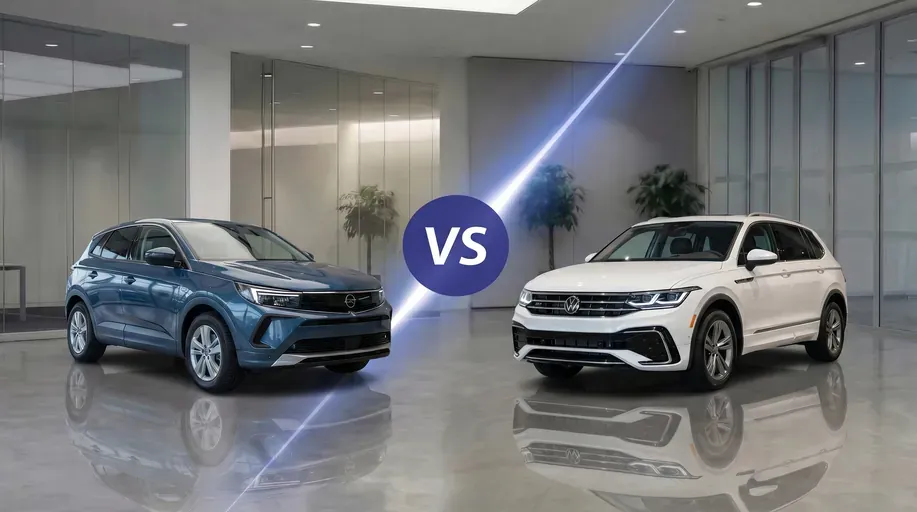
Comparison of the Opel Grandland (formerly Grandland X) and the Volkswagen Tiguan. Discover real-world experiences, equipment comparisons, and find out which used SUV is the right one for you.
Oct 16, 2026
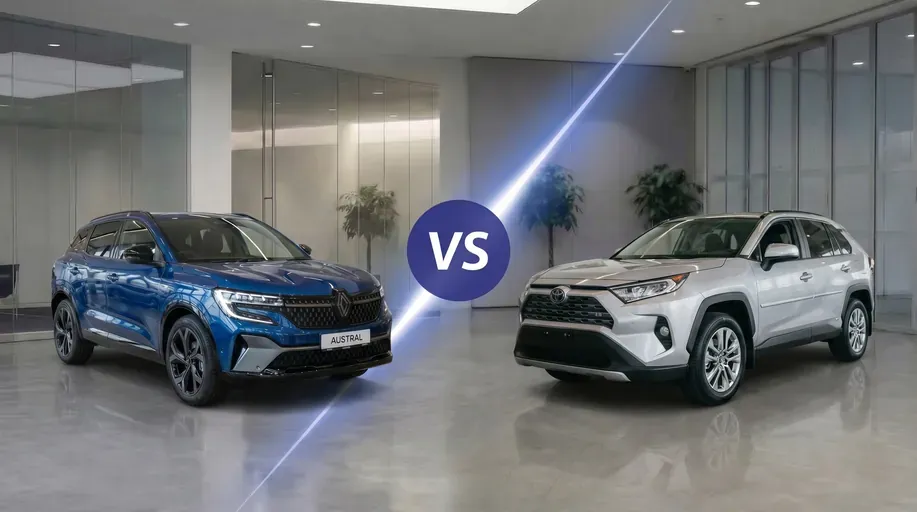
Complete comparison of Renault Austral vs. Toyota RAV4. Read real-world experiences, equipment comparisons, fuel consumption, and our clear verdict for choosing the ideal SUV.
Oct 16, 2026