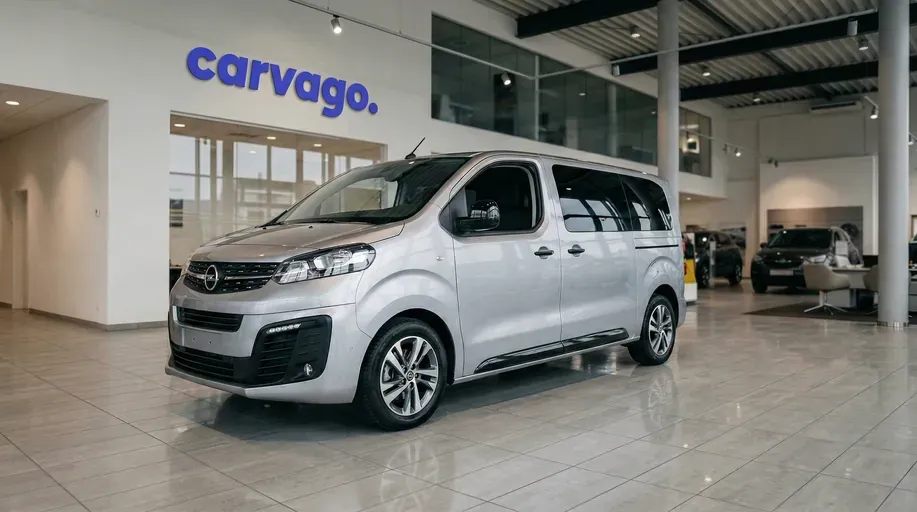
Review Opel Zafira Life: What do owners and experts really say?
Explore our in-depth Opel Zafira Life review. Backed by real owner feedback and expert road tests, we evaluate space, reliability, comfort, and running costs.
October 16, 2026
Verdict at a Glance
Who it suits: Large families and shuttle operators prioritising interior modularity and passenger space over car-like handling.
Recommended engine: The mid-range 2.0 diesel for balanced everyday driving, or the top-output diesel for relaxed motorway cruising and towing.
What to avoid: 1.5-litre diesels built from 2019 to 2021 without the reinforced camshaft chain upgrade, and vehicles with unverified recall histories.
Introduction
The fourth-generation Opel Zafira Life marked a fundamental shift for the badge when it premiered in January 2019. Transitioning from a traditional compact MPV to a full-size passenger van built on Stellantis’s multi-energy architecture, it trades car-like packaging for commercial-van versatility. Customer deliveries began in July 2019, initially offering diesel engines across three body lengths: Small, Medium, and Large.
The line-up evolved steadily in subsequent years. The battery-electric Opel Zafira Electric joined the range following its premiere in June 2020. The compact Small variant was dropped from passenger price lists in July 2021, and passenger diesel options were temporarily withdrawn across Europe in January 2022 before a 2.0-litre unit returned in 2025 and a newly developed turbo diesel reopened for ordering in February 2026. A mid-cycle facelift, unveiled on 13 December 2023 and delivered to customers from October 2024, brought revised exterior styling with the brand's Vizor front identity alongside an updated digital cockpit.
Aimed at large families, outdoor enthusiasts, and commercial shuttle operators, the Opel Zafira people carrier focuses on cabin flexibility. Available in five- to nine-seat configurations, it targets buyers who prioritise passenger accommodation and sliding-door accessibility over passenger-car handling.
Owner Experiences: Common Faults and Recalls
Real-world ownership reports for the fourth-generation Opel Zafira Life show a vehicle capable of high-mileage family and commercial service, though distinct mechanical and electrical weaknesses require attention depending on the drivetrain. Long-term reliability data for the newer 2.2-litre diesel homologated in 2025 remains limited due to its recent entry into European customer hands.
Diesel and Electric Powertrain Issues
On diesel Opel Zafira models, owners frequently report dashboard engine warnings accompanied by AdBlue system alerts and non-start countdowns. The fault typically stems from crystallisation within the urea dosing unit, physical deformation of the tank, or electrical failure of the non-serviceable internal pump mechanism. Because the pump and heating hardware are integrated into the tank assembly, resolving the issue requires replacing the complete reservoir unit.
Early 1.5-litre diesel variants built between 2019 and 2021 present a more severe mechanical concern. Professional tests describe premature wear of the factory 7 mm camshaft interconnecting chain synchronising the intake and exhaust camshafts. If the chain stretches or snaps under operating stress, catastrophic valvetrain and engine damage can occur. The technical fix requires installing an upgraded valvetrain assembly featuring a reinforced 8 mm chain and revised housing.
On the electric Opel Zafira (originally badged as the Zafira-e Life), owners report recurring issues with the optional 11 kW three-phase on-board AC charger on vehicles manufactured between 2020 and 2023. Drivers note that AC charging unexpectedly aborts within thirty seconds of connection, illuminating a solid red light at the charging port while DC rapid charging continues to function normally. Because software updates rarely rectify the problem, a hardware replacement or rebuild of the charger module is necessary in many cases.
European Safety Recalls
Several official safety recall campaigns apply to this generation across European markets:
Front suspension lower control arms: In August and September 2025, a recall affecting 76,778 vehicles worldwide (including 22,088 in Germany) was issued for models built between 23 September 2020 and 30 June 2022. The notice warned that corrosion on the front control arm bushings could lead to sheared mounting bolts, causing unpredictable steering behavior. Workshops replace the mounting bolts and bushings on both front control arms.
Water pump pulley detachment: Announced in April 2026 for 12,781 vehicles worldwide produced between October 2025 and February 2026, slippage of the water pump pulley could cause timing belt misalignment, engine failure, and separation of the pulley into the road. Authorised workshops replace the water pump assembly.
Underbody fuel line routing: In January 2023, a campaign covering 21,596 vehicles worldwide built between 06 October 2020 and 21 January 2022 addressed fuel lines that could chafe against the body and plastic underbody trim, creating a fuel leak hazard. Dealers inspect the line and fit protective sleeving or fit a new pipe assembly.
Seat row attachment hardware: Announced in May and June 2025 for roughly 15,000 vehicles built between 28 August 2024 and 08 October 2024, loose rail bolting posed a risk of unintended seat movement during an accident, potentially preventing proper seat airbag deployment. Workshops check and retorque the seat rail fastenings.
Urea tank emissions control: In March 2023, a recall for diesel variants produced across the 2020 and 2021 model years resolved an emissions defect where the vehicle could operate without urea injection. Dealers replaced the urea tank assembly and updated engine control software.
Battery cable routing: In June 2026, a campaign in Austria addressed potential contact between the positive battery wiring harness and the starter motor casing, requiring workshops to inspect and reroute the cable.
🔍 What to check before buying
Request an official dealer database check using the car's VIN to verify that all mandatory recalls—particularly the front control arm bolts and underbody fuel line inspections—have been completed.
On 1.5-litre diesel models built from 2019 to 2021, listen carefully for metallic ticking or rattling at the top of the engine at idle, and verify the service history through CarAudit to confirm if the reinforced 8 mm camshaft chain has been retrofitted.
On diesel versions, verify that no AdBlue warning messages or restart countdown timers appear during a cold start, which indicates a failing urea pump or crystallised dosing system.
On electric models, connect the car to an AC charging station during the inspection to ensure the 11 kW on-board charger charges continuously without aborting or triggering a red port indicator.
Inspect the sliding door mechanisms for roller binding or alignment sag, checking the rear quarter panels for paint abrasion caused by misaligned door edges.
Engines: Which One to Choose
The powertrain line-up for the Opel Zafira Life centres entirely on turbocharged four-cylinder diesels and battery-electric variants. Depending on the engine and production period, power is routed to the front wheels via a six-speed manual gearbox or an eight-speed torque-converter automatic.
Engine
Fuel
Power
Gearbox
Model years
1.5 Diesel
Diesel
75 kW (102 hp)
6-speed manual
2019–2021
1.5 Diesel
Diesel
88 kW (120 hp)
6-speed manual
2019–2021
2.0 Diesel
Diesel
90 kW (122 hp)
8-speed automatic
2019–2020
2.0 Diesel
Diesel
106 kW (145 hp)
6-speed manual
2020–2021
2.0 Diesel
Diesel
106 kW (145 hp)
8-speed automatic
2020–2021
2.0 Diesel
Diesel
110 kW (150 hp)
6-speed manual
2019–2020
2.0 Diesel
Diesel
130 kW (177 hp)
8-speed automatic
2019–2022
2.0 Diesel
Diesel
130 kW (177 hp)
8-speed automatic
2025
2.2 Diesel
Diesel
132 kW (180 hp)
8-speed automatic
2025–present
Electric (50 kWh)
Electric
100 kW (136 hp)
1-speed reduction gear
2020–present
Electric (75 kWh)
Electric
100 kW (136 hp)
1-speed reduction gear
2020–present
Which engine to choose
City driving and short commutes For urban shuttle duties, daily school runs, and local errand driving, the electric Opel Zafira Life is the smoothest option. It delivers silent, step-free acceleration and zero local exhaust emissions, making heavy traffic far less tiring. On the second-hand market, the base 1.5 diesel can manage light unladen local driving, although professional tests noted that it quickly feels sluggish when loaded with passengers.
Mixed daily use Families and transport operators who drive a mix of secondary roads, suburban routes, and occasional motorway trips are best served by the mid-range 2.0 diesel. Offered on the used market with a choice of manual or automatic transmissions, its low-end pulling power easily copes with full seating capacity without requiring frequent gear changes.
Long motorway journeys Sustained motorway speeds expose the aerodynamic drag and charging limitations of the electric versions. For cross-country touring, an automatic diesel Opel Zafira Life equipped with the top-output 2.0 diesel or the newer 2.2 diesel is the most capable choice. The eight-speed automatic keeps engine revs low at cruising pace, ensuring relaxed long-distance travel and confident overtaking reserves.
Towing and heavy loads If you regularly pull a trailer or travel with maximum permissible payload, choose the top-output 2.0 diesel or the 2.2 diesel. Their substantial pulling power provides the necessary low-rpm muscle, and the diesel Opel Zafira Life models offer far higher certified towing capacities than the electric variants.
For a detailed overview of component vulnerabilities, emission-system issues, and verified safety recall campaigns affecting these powertrains, refer to the owner experiences section.
Space & Practicality
Dimension
Small (S, 2019–2021)
Medium (M)
Large / XL
Length (mm)
4,606
4,956–4,981
5,306–5,331
Width (mm)
1,920
1,920
1,920
Height (mm)
1,890–1,905
1,890
1,890
Wheelbase (mm)
2,925
3,275
3,275
Boot volume, seats up / folded (l)
224 / 3,600
603 / 4,200
989 / 4,900
Width is measured without exterior mirrors. Battery-electric variants retain identical boot capacities because their drive batteries are mounted beneath the floorpan.
Configured with between five and nine seats, the Opel Zafira Life provides modular interior adaptability. Floor-mounted aluminium rails allow individual passenger armchairs and split-folding benches across the second and third rows to slide fore and aft, fold flat, or be removed entirely to balance legroom against cargo space. Certain layouts permit the second-row seats to pivot rearward to face the third row around an optional central folding table. Headroom accommodates tall adults across all seating rows, while wide sliding side doors simplify access and child-seat installation. Folding the front passenger seat backrest forward creates an extended, flat carrying floor for lengthy items, and an independently opening rear tailgate glass, fitted on higher trims or as an option, allows smaller bags to be dropped into the cargo area when parking clearance prevents lifting the full tailgate.
What the Tests Say
Road tests describe the Opel Zafira Life as a softly sprung highway cruiser that prioritises suppleness on gentle undulations over dynamic poise. In tight corners and roundabouts, body lean is pronounced, and the chassis feels ponderous during quick direction changes. The steering rack is slow and heavily geared, requiring plenty of wheel winding in tight parking spaces while offering almost no road feedback. Battery-powered versions feel more planted on motorways because the low-mounted pack suppresses the rear-axle bounce typical of unladen vans, though sharp transverse joints still produce abrupt tremors into the cabin. Acoustic insulation keeps general travel quieter than in workaday vans, but wind rustle around the upright windscreen and large door mirrors becomes noticeable at higher motorway speeds.
Inside, passenger accommodation is practical, with smooth-sliding rail-mounted seats that are simpler to unlatch and shift than those in some rival passenger vans. However, the ambience draws consistent criticism for its utilitarian origins: unyielding, hard plastics dominate the dashboard and door cards, falling short of dedicated passenger-car standards. Professional reviewers agree on the seating versatility and relaxed straight-line cruising, but diverge on secondary ride quality, where some highlight compliant bump absorption while others note fidgety low-speed reactions over ridges. The facelift introduced modernised digital cockpit displays, yet the underlying commercial architecture and hard-wearing cabin trim remain unchanged.
Prices and Market Offer
All the charts in this section are drawn from Carvago's listings of the whole Opel Zafira model family, including other generations represented in the data, rather than only the reviewed generation. Because the dataset does not establish a separate price level for the newest generation alone, the median asking price sits at €16,500 for 2019 models, compared to €32,500 for 2020 and €39,800 for 2022. Later offerings reflect shifting powertrain mixes across diesel and electric variants, recording medians of €47,900 for 2023 and €40,200 for 2026.
Between April and September 2026, active listings for the Opel Zafira Life rose from 929 to a peak of 1,075 in June before trending downward.
Opel Zafira Life - availability over time
Active listings over time
Month
Opel Zafira Life
2026-04
929
2026-05
998
2026-06
1 075
2026-07
1 014
2026-08
940
2026-09
864
Source Carvago
Available stock finished at 864 listings in September 2026, showing that while choice has narrowed over the late summer, buyers still have several hundred vehicles to compare across the market.
The median asking price of used listings advertised today is €16,500 for models built in 2019, compared to a median asking price of €47,900 for those built in 2023.
Opel Zafira Life - median price by model year
Median advertised price by year of manufacture
Model year
Opel Zafira Life
2019
16 500
2020
32 500
2021
35 400
2022
39 800
2023
47 900
2024
41 500
2025
45 100
2026
40 200
Source Carvago
Buyers can expect a median asking price of €16,500 for 2019 models and €32,500 for 2020 models. Across the newest model years, median asking prices do not strictly climb with build year, sitting at €41,500 for 2024, €45,100 for 2025, and €40,200 for 2026.
This curve tracks how the Opel Zafira Life loses value as it ages, shedding approximately 32% of its initial residual value by age three. The chart below illustrates how that depreciation unfolds year by year.
Opel Zafira Life - value loss by age
Residual value by vehicle age
Vehicle age
Opel Zafira Life
New
39 700
1 yr
36 600
2 yrs
33 800
3 yrs
26 900
4 yrs
26 800
5 yrs
24 700
6 yrs
23 900
7 yrs
14 100
Source Carvago
Across the seven years shown, the model sheds roughly 65% of its starting residual value. The decline slows markedly between age three and four—where value drops by less than 1%—before experiencing another sharp drop at age seven.
Across the six recorded months, advertised listings were consistently led by diesel and petrol models, starting in April 2026 with 570 diesel and 343 petrol vehicles on offer. The breakdown below tracks how advertised counts across each fuel type shifted month by month.
Opel Zafira Life - supply by fuel over time
Supply composition by fuel type
Petrol
Diesel
Hybrid
Electric
CNG
LPG
Month
Petrol
Diesel
Hybrid
Electric
CNG
LPG
2026-04
343
570
1
3
7
5
2026-05
365
612
1
1
12
7
2026-06
377
677
1
1
14
5
2026-07
340
650
0
2
17
5
2026-08
302
618
0
1
14
5
2026-09
255
594
0
0
10
5
Source Carvago
By September 2026, diesel remained the primary choice with 594 active listings alongside 255 petrol models, while alternative fuels like CNG with 10 listings and LPG with 5 listings formed only a small fraction of the total. A prospective buyer will realistically find their selection concentrated almost entirely in diesel and petrol options.
Between April 2026 and September 2026, the average asking price for the Opel Zafira Life started at €21,000, following the monthly path shown below.
Opel Zafira Life - price trend over time
Average price development over time
Month
Opel Zafira Life
2026-04
21 000
2026-05
21 300
2026-06
22 300
2026-07
22 600
2026-08
23 000
2026-09
23 200
Source Carvago
Across the six months tracked, the average increased each month, rising from €21,000 to €23,200, an overall gain of roughly 10%.
Highly versatile passenger compartment with smooth-sliding, foldable, and removable rail-mounted seating
Relaxed straight-line cruising when paired with the larger diesel engines and automatic transmission
Practical cabin access and loading through wide sliding side doors and an available opening tailgate window
Cons
Ponderous cornering with noticeable body lean, slow steering response, and wind noise at motorway speeds
Commercial-grade interior ambience dominated by hard, unyielding plastics on the dashboard and doors
Documented powertrain faults including diesel urea tank failures, early camshaft chain wear on smaller diesels, and electric on-board charger issues
Frequently asked questions
Is the Opel Zafira Life reliable as a used car?
It is generally robust for commercial shuttling and family duties, though specific powertrains require caution. Early 1.5-litre engines can suffer from camshaft chain failure, and diesel Opel Zafira models can experience urea tank and pump issues.
Which engine is best for long-distance family travel?
The 2.0-litre diesel with an automatic gearbox provides the most balanced combination of relaxed motorway cruising and towing capability. The electric Opel Zafira excels in short-distance urban shuttle duties, but motorway aerodynamic drag and charging stops limit its touring convenience.
What should you check before buying a used model?
Have a dealer verify via the car's VIN that all official safety recalls have been completed. Buyers should also inspect the service history for valvetrain or AdBlue repairs depending on the engine.
How much does a used model cost?
Median asking prices for the Opel Zafira start around €16,500 for 2019 models, with newer examples commanding higher prices. Earlier vehicles offer an accessible entry point, though early 1.5-litre diesels require verified service records confirming valvetrain updates.