Review
Review BMW iX: What do owners and experts really say?
BMW iX review: real owner experience, true battery range, common faults, running costs and prices. Everything you need before you buy.
Oct 25, 2026
Articles
Review
Nissan Ariya review: real owner experience, electric range, common faults, and used prices — everything you need to know before buying.
October 27, 2026
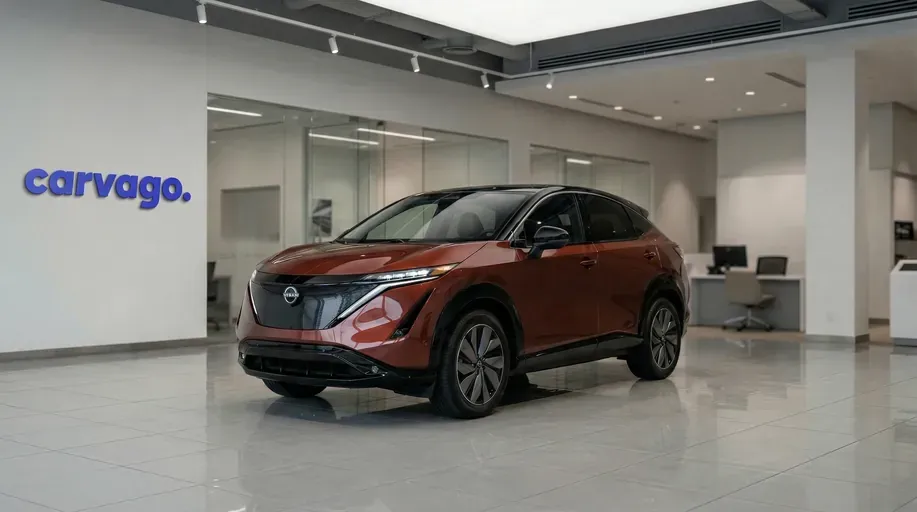
The electric Nissan Ariya SUV is the Japanese manufacturer's dedicated entry into the competitive mid-size electric crossover segment. Developed on the Alliance CMF-EV platform, this five-door crossover is targeted primarily at family buyers and corporate drivers seeking a spacious, fully electric vehicle with a focus on serene travel.
This review covers the first-generation Nissan Ariya, which entered series production in January 2022. Initial European customer deliveries began in July 2022 for front-wheel-drive variants, followed by dual-motor all-wheel drive Nissan Ariya versions in November 2022. The lineup expanded further when the high-performance NISMO model went on sale across European retailers in January 2025.
In May 2026, Nissan announced a rolling Model Year 2026 update, with customer deliveries beginning in September 2026. Sold exclusively as a five-door crossover with single-motor front-wheel drive or dual-motor all-wheel drive, the Ariya continues production in this configuration.
Early owner experiences and professional workshop tests indicate that the Nissan Ariya delivers solid mechanical reliability, though early production years have faced several low-voltage electrical and software-related teething issues. Because series production began in 2022, long-term durability over high mileages is not yet fully established across the European fleet.
The most frequent issue reported by owners and noted in technical assessments concerns the 12-volt auxiliary battery on 2022 to 2025 models. Frequent telematics polling can cause rapid parasitic discharge when the car sits idle for several days. A depleted auxiliary battery prevents the high-voltage contactors from engaging, locking the car out of ready mode and generating spurious dashboard error warnings despite a healthy traction battery. Telematics software updates reduce standby power consumption, and owners report that replacing the factory lead-acid battery with an equivalent absorbent glass mat unit resolves repeated no-start complaints.
Tests also describe occasional stability issues with the dual-screen dashboard on 2022 to 2024 models. Drivers have encountered temporary screen freezing, sluggish boot-up responses, and paused over-the-air firmware installations. Complete diagnostic re-flashing by authorised workshops usually restores system responsiveness. Outside of the electrical architecture, owners report that front-wheel-drive variants exhibit rapid tyre wear on the inner shoulder of the front tyres, caused by the vehicle's unladen mass working against instant electric torque.
Several official safety recalls apply to earlier production runs. In late 2023, a campaign affecting 11,929 vehicles built between 2022 and 2023 was launched across Europe and worldwide. Conductive shavings from the drive motor slip rings could cause a momentary short circuit; while the shavings vaporised without physical component damage, the inverter fail-safe protocol interpreted the spike as an overcurrent and cut motor torque, disabling drive until the car was stopped and restarted. A workshop control software update rectified the fail-safe logic. A smaller worldwide recall in August 2024 covered 485 vehicles from the 2022 to 2023 model years for drive motor O-rings that were damaged during factory assembly, which could cause an oil leak and require complete drive motor replacement. Instrument cluster displays on select 2022 vehicles were also recalled for software updates to correct intermittent screen flickering.
| Defect in Official Notice | Affected Model Years | Scope | Official Remedy |
|---|---|---|---|
| Inverter overcurrent fail-safe cuts motor torque | 2022–2023 | Worldwide (11,929 vehicles) | Inverter control module software reprogramming |
| Drive motor O-ring damage causing oil leak | 2022–2023 | Worldwide (485 vehicles) | Complete drive motor replacement |
| Instrument cluster screen switches off intermittently | 2022 | Worldwide (approx. 3,200 vehicles across two campaigns) | Instrument cluster software update |
The Nissan Ariya powertrain line-up relies entirely on dedicated electric traction motors, offering front-wheel-drive single-motor layouts alongside dual-motor all-wheel-drive configurations badged as e-4ORCE. The available variants cover multiple power steps and battery capacities, updated through rolling technical revisions across the production cycle.
| Engine | Fuel | Power | Drivetrain | Gearbox | Model years |
|---|---|---|---|---|---|
| Ariya (63 kWh) | Electric | 160 kW (214 hp) | FWD | Automatic (1-speed) | 2022–2026 |
| Ariya (87 kWh) | Electric | 178 kW (238 hp) | FWD | Automatic (1-speed) | 2022–2026 |
| Ariya (87 kWh) Facelift | Electric | 178 kW (238 hp) | FWD | Automatic (1-speed) | 2026–present |
| Ariya e-4ORCE (87 kWh) | Electric | 225 kW (302 hp) | AWD | Automatic (1-speed) | 2022–2026 |
| Ariya e-4ORCE (87 kWh) Facelift | Electric | 225 kW (302 hp) | AWD | Automatic (1-speed) | 2026–present |
| Ariya e-4ORCE Performance (87 kWh) | Electric | 290 kW (388 hp) | AWD | Automatic (1-speed) | 2023–2024 |
| Ariya NISMO e-4ORCE (87 kWh) | Electric | 320 kW (429 hp) | AWD | Automatic (1-speed) | 2025–2026 |
Choosing the right configuration depends largely on your regular driving cycle and weather environment. For urban commuting, school runs, and general suburban duty, the entry front-wheel-drive electric Nissan Ariya with the smaller battery represents a sensible baseline. It delivers smooth low-speed motor responses and avoids carrying the extra weight of the larger battery pack.
Motorway drivers and frequent long-distance travelers will be better served by the front-wheel-drive variant paired with the larger battery. The extra energy storage significantly extends uninterrupted cruising distances, while the single-motor layout keeps energy consumption lower than that of the twin-motor models on open roads.
For colder climates, mountainous terrain, or towing duties, the all-wheel-drive electric Nissan Ariya with e-4ORCE is the recommended pick. Buyers shopping on the used market will find the earlier dual-motor Performance derivative offering rapid straight-line response, whereas the dedicated NISMO derivative adds revised chassis hardware and rear-biased torque distribution for sharper cornering stability.
Real-world owner reports indicate that the liquid-cooled battery pack sustains a stable fast-charging curve on long journeys, provided the cells are properly warmed beforehand. In sub-zero winter temperatures, owners note a visible decline in cruising range caused by cold battery chemistry and cabin climate draw. Later production revisions streamline cold-weather fast-charging through automated route-linked battery pre-conditioning, bringing the pack up to optimal charging temperature ahead of arrival at rapid charging hubs.
| Parameter | Front-Wheel Drive | All-Wheel Drive |
|---|---|---|
| Length (mm) | 4,595 | 4,595 |
| Width (mm) | 1,850 | 1,850 |
| Height (mm) | 1,660 | 1,660 |
| Wheelbase (mm) | 2,775 | 2,775 |
| Luggage volume – seats up / folded (l) | 466 / 1,350 | 408 / 1,280 |
Exterior dimensions do not apply to the high-performance NISMO version, which features extended aerodynamic bumpers.
Built on a dedicated electric platform, the Nissan Ariya SUV provides an open cabin layout with a flat floor and well-padded seating across both rows. Rear passengers benefit from substantial knee room, though the downward-sloping roofline noticeably restricts headroom for taller adults. The rear bench is fixed in place rather than sliding fore and aft, but standard split-folding seatbacks drop flat to expand cargo length. Everyday practicality is shaped by the vehicle's component packaging: while two-wheel-drive variants retain useful underfloor storage, all-wheel-drive models sacrifice that compartment for the rear electric motor. Furthermore, locating climate-control components beneath the bonnet means there is no front boot, requiring charging cables to share space in the main luggage compartment. On higher trims, an electrically sliding centre console moves fore and aft to adjust cabin storage access between front and rear passengers.
Professional road tests describe the Nissan Ariya as a relaxed cruiser with suspension tuning that leans toward the firm side. The chassis absorbs long undulating crests smoothly, but sharp transverse joints, potholes, and patched asphalt transmit abrupt thumps into the cabin. Wheel choice plays a decisive role: standard smaller wheels provide noticeable compliance, whereas optional larger rims amplify low-speed stiffness and generate tyre roar on coarse road surfaces. The dual-motor all-wheel-drive Nissan Ariya provides noticeably tighter vertical body control than front-wheel-drive variants, which testers found prone to a floating, pitching motion at motorway speeds. Handling is safe and predictable, featuring light, direct steering that makes urban maneuvering straightforward despite offering little road texture. Mechanical whine and wind rush remain well suppressed.
Testers consistently commend the interior for its lounge-like ambience, tactile finishes, and cushioned seating. In contrast, control ergonomics draw near-universal criticism. The touch-sensitive haptic climate buttons integrated flush into the wood-effect dashboard lack physical boundaries, demand an unnaturally deliberate push, and inevitably pull the driver's eyes away from the road. In addition, thick pillars and the sloping tailgate glass restrict rearward visibility.
While testers diverge on whether the ride is supple enough on broken secondary roads, they broadly agree that the car prioritises relaxed gliding over sporty cornering. Later production updates addressed early multimedia criticisms by adopting Google built-in software, delivering faster menu responses and cleaner route ergonomics than the initial proprietary interface.
All charts in this section are drawn from Carvago listings covering the whole model family, including other generations represented in the data, rather than isolating the reviewed generation alone. For buyers comparing available build years today, the median asking price for the Nissan Ariya stands at €36,900 for 2022 examples and €40,700 for 2023 cars. Later model years reflect varying specification mixes across available listings, showing a median asking price of €48,000 for 2024 builds, €45,000 for 2025 cars, and €43,500 for 2026 vehicles.
Advertised Nissan Ariya listings decreased across each month shown, falling from 528 in April 2026 to 396 by September 2026. The chart below traces how active inventory developed over this six-month span.
Active listings over time
| Month | Nissan Ariya |
|---|---|
| 2026-04 | 528 |
| 2026-05 | 478 |
| 2026-06 | 417 |
| 2026-07 | 413 |
| 2026-08 | 407 |
| 2026-09 | 396 |
Source Carvago
Although selection has narrowed since the spring, advertised numbers flattened out between 413 and 396 cars toward late summer, leaving buyers with around 400 options to choose from.
For Nissan Ariya cars advertised today, the median asking price of listings built in 2022 is €36,900, while the median asking price of listings built in 2024 is €48,000. The chart below illustrates how these median asking prices compare across build years.
Median advertised price by year of manufacture
| Model year | Nissan Ariya |
|---|---|
| 2022 | 36 900 |
| 2023 | 40 700 |
| 2024 | 48 000 |
| 2025 | 45 000 |
| 2026 | 43 500 |
Source Carvago
Buyers examining earlier model years encounter a median asking price of €36,900 for 2022 and €40,700 for 2023. Asking medians are not higher with every successive year, peaking at €48,000 for 2024 listings while 2025 and 2026 models show lower medians of €45,000 and €43,500 respectively.
This depreciation curve illustrates how the model's residual value decreases with vehicle age, shedding 18 % of its value by age two and 22 % by age three.
Residual value by vehicle age
| Vehicle age | Nissan Ariya |
|---|---|
| New | 39 800 |
| 1 yr | 37 500 |
| 2 yrs | 32 600 |
| 3 yrs | 30 900 |
| 4 yrs | 28 000 |
| 5 yrs | 26 000 |
| 6 yrs | 23 100 |
| 7 yrs | 21 600 |
Source Carvago
Over the seven-year span shown, the vehicle loses 46 % of its initial residual value, with the steepest single-year drop occurring between age one and age two. The decline continues steadily in subsequent years, leaving the model with over half of its initial value through age seven.
Between April and September 2026, advertised listings for the model were exclusively electric, moving from 528 cars in April down to 396 cars in September. The breakdown across each month is illustrated in the chart below.
Supply composition by fuel type
| Month | Electric |
|---|---|
| 2026-04 | 528 |
| 2026-05 | 478 |
| 2026-06 | 417 |
| 2026-07 | 413 |
| 2026-08 | 407 |
| 2026-09 | 396 |
Source Carvago
With petrol, diesel, and hybrid counts all remaining at 0 throughout the period, electric power represents the entire offer. Anyone shopping for the model will be selecting strictly from fully electric vehicles.
The chart tracks the average asking price for the Nissan Ariya from April 2026 to September 2026, starting at €39,200.
Average price development over time
| Month | Nissan Ariya |
|---|---|
| 2026-04 | 39 200 |
| 2026-05 | 39 100 |
| 2026-06 | 38 900 |
| 2026-07 | 38 600 |
| 2026-08 | 38 400 |
| 2026-09 | 39 200 |
Source Carvago
After dipping to a low of €38,400 in August 2026, the average returned to €39,200 in September 2026, showing very little net variation across the period.
Serene cabin ambience with well-suppressed road noise and ample rear knee room
Composed body control and higher towing capacity on all-wheel-drive versions
Stable fast-charging performance during long-distance motorway travel
Flush haptic climate controls are distracting to operate while driving
Sloping roofline restricts rear headroom for taller adults and there is no front boot
Firm low-speed ride over sharp potholes and patched road surfaces
The Nissan Ariya demonstrates solid mechanical reliability, though earlier production years experienced low-voltage auxiliary battery drain and software teething issues. Long-term durability over high mileages is not yet established across the European fleet.
The front-wheel-drive variant paired with the larger battery is the most suitable choice, offering the longest driving range and lower motorway energy consumption. Drivers who frequently travel in cold climates or need stronger towing capacity should choose the all-wheel drive Nissan Ariya.
Verify through the VIN that official safety recalls have been completed, and test the health of the 12-volt auxiliary battery. Front tyres on front-wheel-drive models should also be inspected for uneven inner-shoulder wear.
Median asking prices on the used market start around €36,900 for 2022 models, with newer examples varying by specification.
Sources: nissannews.com, adac.de, autocar.co.uk, whatcar.com, autobild.de
This article was prepared using artificial intelligence tools. The section guarantor is Petr Dušek.
BMW iX review: real owner experience, true battery range, common faults, running costs and prices. Everything you need before you buy.
Oct 25, 2026
Hyundai Ioniq 5 vs Toyota bZ4X: Which electric SUV is worth it? Read our detailed comparison of real-world range, equipment, and prices, including our verdict.
Apr 26, 2026
Ford Mustang Mach-E review: real owner experience, real-world range, common faults, specs and prices — everything you need before you buy.
Oct 20, 2026