Jaguar XE vs. Volkswagen Arteon: Complete comparison 2026
Detailed comparison of Jaguar XE vs Volkswagen Arteon. Discover the differences in driving characteristics, equipment, and reliability, and choose the best used car for you.
Apr 26, 2026
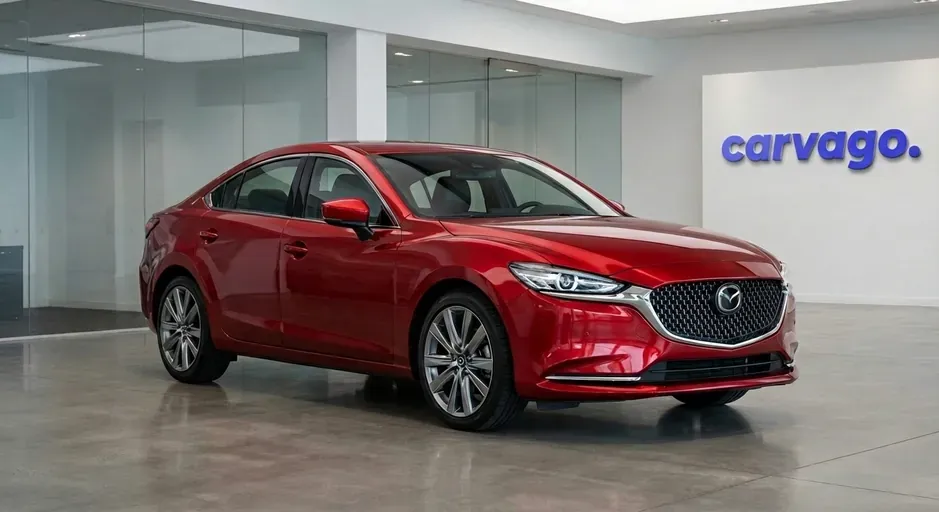
Mazda 6 (2012–2024) review: real owner experience, common faults, engine picks and used prices — everything you need before you buy.
October 25, 2026

The third-generation Mazda 6 competed in the European mid-size segment as a traditional alternative to tall crossovers, targeting long-distance commuters, company car fleets, and families. Following series production commencing in Japan in August 2012, the first European customer deliveries arrived in January 2013, with production concluding in April 2024.
Across its lifespan, the model was offered in two body styles: a four-door Mazda 6 Saloon and a five-door Mazda 6 Tourer. Instead of launching a clean-sheet replacement, the manufacturer updated the platform incrementally, with a first facelift reaching European showrooms in spring 2015, followed by a second major update in summer 2018.
Further adjustments arrived late in the model cycle. European production of the diesel engine ceased in October 2020, turning the lineup petrol-only, followed by a final model-year update in December 2022. While UK sales ceased in January 2023, orders across continental Europe continued until assembly officially wrapped up in 2024.
The third-generation Mazda 6 earned a solid reputation for mechanical durability, particularly when fitted with naturally aspirated petrol engines. Across European markets, petrol variants have proven straightforward and durable even past high mileages, showing no systemic mechanical defects. The ownership narrative is distinctly different for early diesel models, however, where engine oiling issues and emissions hardware demand rigorous maintenance verification.
On the diesel Mazda 6, especially vehicles manufactured between 2012 and 2016, workshops and owners report two related mechanical risks. Degraded copper sealing washers beneath the fuel injectors allow combustion gases to blow past into the valve cover, creating heavy carbon deposits in the engine oil. Concurrently, premature surface wear on the exhaust camshaft lobes sheds fine metal particles into circulation. Both contaminants accumulate in the oil sump and clog the fine mesh screen of the oil pickup strainer, starving the engine of oil and causing premature turbocharger and vacuum pump failure. Furthermore, repeated interrupted particulate filter regenerations cause diesel fuel to wash down cylinder walls into the sump, which is monitored via an embossed "X" mark on the factory dipstick.
Chassis and hardware issues predominantly involve braking components and folding mirrors. Workshops and inspection reports describe front brake discs that are susceptible to thermal warping, as well as caliper guide pins that can bind, causing uneven friction wear, steering wheel judder, and pedal pulsation during high-speed deceleration. Power-folding door mirrors, fitted on higher trims and optional equipment packages, represent another repeated complaint on owner forums; moisture ingress corrodes the internal motor actuator and strips the internal plastic gears, causing the motor to whir continuously without folding the mirror housing.
In the cabin, electronic systems are largely reliable, though owners report two known trouble spots. On models produced between 2015 and 2018, the central touchscreen digitiser adhesive can deteriorate over time, causing uncommanded inputs, erratic navigation panning, or unresponsive areas. Additionally, vehicles fitted with the optional premium surround-sound setup can experience transistor failure within the separate boot-mounted amplifier, producing loud popping noises, static hissing, or complete audio cut-out.
Several European safety recall campaigns were issued over the generation's lifespan, addressing mechanical components, fuel systems, and engine control software:
| Production Window | Affected Variant | Defect and Remedial Action |
|---|---|---|
| July 2012 to December 2014 | Manual handbrake models | Corrosion forming on the parking brake shaft in the rear caliper causes reduced holding force; workshops fit a protective boot or replace the caliper assembly. |
| July 2012 to December 2015 | Mazda 6 estate | Water penetration into the tailgate strut cylinder causes corrosion, risking sudden tailgate collapse; workshops replace both struts. |
| January 2012 to January 2016 | Diesel models | A short circuit in the injector control circuit can stall the engine and reduce braking assistance; resolved by software reprogramming and wiring inspection. |
| January 2012 to June 2018 | Diesel models | Soot accumulation around the intake shutter valve can cause the valve to stick shut and stall the engine; workshops inspect, clean, or replace the valve. |
| March 2018 to April 2019 | Petrol with cylinder deactivation | Valve clearance adjuster control software may operate incorrectly, causing engine stalling; corrected with an engine control software update. |
| April 2018 to October 2018 | Petrol and diesel models | Low-pressure in-tank fuel pump impellers can deform, leading to pump failure and stalling; workshops replace the pump with an improved resin design. |
| March 2025 to January 2026 (module manufacture) | Retrofitted genuine trailer modules | Software error prevents trailer position lights from activating when daytime running lights are on; workshops reprogram the trailer module. |
Throughout its production run, the third-generation Mazda 6 relied on four-cylinder powerplants from the naturally aspirated Skyactiv-G petrol and sequentially turbocharged Skyactiv-D diesel engine families. The European lineup did not include downsized turbocharged petrol units or full hybrid powertrains.
| Engine | Fuel | Power | Gearbox | Drivetrain | Model years |
|---|---|---|---|---|---|
| 2.0 Skyactiv-G 145 | Petrol | 107 kW (145 hp) | 6-speed manual, 6-speed automatic | FWD | 2013–2024 |
| 2.0 Skyactiv-G 165 | Petrol | 121 kW (165 hp) | 6-speed manual, 6-speed automatic | FWD | 2013–2024 |
| 2.5 Skyactiv-G 192 | Petrol | 141 kW (192 hp) | 6-speed automatic | FWD | 2013–2018 |
| 2.5 Skyactiv-G 194 | Petrol | 143 kW (194 hp) | 6-speed automatic | FWD | 2018–2024 |
| 2.2 Skyactiv-D 150 | Diesel | 110 kW (150 hp) | 6-speed manual, 6-speed automatic | FWD, AWD | 2013–2020 |
| 2.2 Skyactiv-D 175 | Diesel | 129 kW (175 hp) | 6-speed manual, 6-speed automatic | FWD, AWD | 2013–2018 |
| 2.2 Skyactiv-D 184 | Diesel | 135 kW (184 hp) | 6-speed manual, 6-speed automatic | FWD, AWD | 2018–2020 |
For city commutes and regular short trips, a petrol Mazda 6 equipped with the entry-level 2.0 Skyactiv-G and manual gearbox is the most practical choice. As an atmospheric petrol engine without turbocharging hardware, it reaches operating temperature quickly and tolerates urban stop-and-go driving without the risk of oil dilution.
Drivers looking for balanced performance in mixed driving conditions will find the more powerful 2.0 Skyactiv-G petrol better suited to their needs. It delivers smooth, linear acceleration and works well with either the six-speed manual or the torque-converter automatic, providing adequate reserve power for country-road overtaking when worked into higher rev ranges.
For long-distance motorway driving with passengers or cargo, the 2.5 Skyactiv-G petrol offers relaxed cruising refinement. Available exclusively with the six-speed automatic gearbox, it relies on larger engine displacement for progressive throttle response, while post-facelift versions incorporate cylinder deactivation to limit fuel consumption during steady cruising.
For regular long-distance travel and towing duties, a diesel Mazda 6 provides strong low-end pulling power. The sequentially turbocharged 2.2 Skyactiv-D pulls cleanly from low engine speeds and was available on estate models with all-wheel drive for improved wet-weather traction, though it requires sustained operating temperatures and is unsuited to repeated short urban trips.
For an in-depth breakdown of mechanical longevity, known servicing requirements, and specific trouble spots across these powertrains, refer to the owner experiences section.
| Dimension / Capacity | Saloon | Tourer |
|---|---|---|
| Length (mm) | 4,870 | 4,805 |
| Width (mm) | 1,840 | 1,840 |
| Height (mm) | 1,450 | 1,480 |
| Wheelbase (mm) | 2,830 | 2,750 |
| Boot capacity – seats upright (l) | 480 | 522 |
| Boot capacity – seats folded (l) | Unverified | 1,664 |
Stated boot volumes follow the VDA measurement standard and include sub-floor storage; vehicles fitted with the optional premium audio subwoofer in the spare-wheel well have slightly reduced underfloor capacity.
The Mazda 6 displays an unusual packaging layout across its body styles: the Mazda 6 Saloon rides on a longer wheelbase than the estate Mazda 6. Consequently, the saloon offers slightly more rear legroom, though its descending roofline tightens rear headroom for taller passengers. The estate counters with an upright roof profile that delivers greater rear headspace, although the shorter distance between axles trims knee clearance. Both variants accommodate five occupants, though the narrow middle seat has a firmer, raised cushion and sits over a pronounced floor tunnel. Neither model offers a sliding rear bench.
Everyday loading favours the estate, which includes release levers inside the luggage compartment to drop the 60:40 split-folding rear backrests flat with minimal effort. Its load bay features a low loading lip, a flush floor, and a retractable tonneau cover that lifts with the tailgate. The saloon retains a deep load area, but its fixed rear parcel shelf and narrower opening restrict the loading of bulky cargo.
Professional road tests consistently characterise the Mazda 6 as an agile mid-size car, offering natural steering feedback, tight body control through corners, and a precise manual gearshift. Ride comfort, however, divided reviewers. Early production models delivered a noticeably firm chassis setup that felt fidgety over sharp urban potholes on larger wheel options, though high-speed motorway damping remained settled. Acoustic isolation in early cars also drew criticism for allowing coarse tyre rumble into the cabin.
Later revisions addressed refinement and interior finish. A comprehensive update introduced retuned suspension damping that absorbed highway undulations with greater composure, alongside thicker acoustic glass and extra bulkhead insulation that curbed road and wind noise. Inside, the post-2015 restructured dashboard layout and physical rotary controller for the freestanding central display earned consistent praise for straightforward ergonomics, complemented by supportive front seats with optional ventilation.
Testers agree that the Mazda 6 balances driver engagement with long-distance cruising stability, and that its engines remain subdued at steady speeds. Disagreements emerge mainly when comparing it directly against segment rivals: while some testers rated its handling sharpness above conventional competitors, others noted that rival models offered superior secondary bump compliance around town, or pointed out that the optional automatic transmission felt sluggish during manual gear selection.
All the charts in this section are drawn from Carvago listings of the entire Mazda 6 model family across all generations represented in the data, rather than exclusively reflecting the reviewed generation, and do not establish a separate price level for it. Across current advertisements, the median asking price sits at €21,000 for 2019 models and reaches €26,600 for 2022 examples. The most recent model years command higher positions in the market, with 2024 cars posting a median asking price of €33,500 and 2026 entries standing at €39,000.
The number of advertised Mazda 6 listings tracked each month moved from 834 in April 2026 to 1,011 in September 2026, as outlined in the chart below.
Active listings over time
| Month | Mazda 6 |
|---|---|
| 2026-04 | 834 |
| 2026-05 | 811 |
| 2026-06 | 849 |
| 2026-07 | 896 |
| 2026-08 | 924 |
| 2026-09 | 1 011 |
Source Carvago
Buyers can expect a broad selection of vehicles, with overall availability expanding over the six months after an initial dip to 811 listings in May.
For used listings advertised today, the median asking price of cars built in 2019 is €21,000, whereas the median asking price of cars advertised today built in 2026 reaches €39,000. The chart below shows how these median figures compare across consecutive build years.
Median advertised price by year of manufacture
| Model year | Mazda 6 |
|---|---|
| 2019 | 21 000 |
| 2020 | 23 000 |
| 2021 | 23 300 |
| 2022 | 26 600 |
| 2023 | 29 800 |
| 2024 | 33 500 |
| 2025 | 36 200 |
| 2026 | 39 000 |
Source Carvago
Buyers looking at earlier model years will find a median asking price of €21,000 for 2019 and €23,000 for 2020. Securing a newer vehicle requires a larger budget, where the median asking price reaches €33,500 for 2024 and €39,000 for 2026.
This depreciation curve traces how the Mazda 6 loses residual value across vehicle ages from zero to seven years. The car sheds roughly 9% of its initial residual value in its first year and 18% by age three.
Residual value by vehicle age
| Vehicle age | Mazda 6 |
|---|---|
| New | 39 300 |
| 1 yr | 35 600 |
| 2 yrs | 35 000 |
| 3 yrs | 32 200 |
| 4 yrs | 29 200 |
| 5 yrs | 26 000 |
| 6 yrs | 23 100 |
| 7 yrs | 22 200 |
Source Carvago
Across the seven years shown, the model sheds approximately 44% of its initial residual value. The steepest drop occurs in the first year, after which value loss temporarily eases to under 2% between age one and age two.
Looking at advertised cars across recent months, petrol listings fell from 603 in April 2026 to 456 in September 2026, while electric listings rose from 189 to 506 over the same period. The chart tracks this monthly breakdown across all recorded fuel types.
Supply composition by fuel type
Petrol
Diesel
Hybrid
Electric
LPG
| Month | Petrol | Diesel | Hybrid | Electric | LPG |
|---|---|---|---|---|---|
| 2026-04 | 603 | 40 | 0 | 189 | 1 |
| 2026-05 | 545 | 52 | 0 | 213 | 1 |
| 2026-06 | 532 | 51 | 2 | 262 | 1 |
| 2026-07 | 513 | 45 | 3 | 332 | 1 |
| 2026-08 | 482 | 41 | 2 | 394 | 1 |
| 2026-09 | 456 | 42 | 2 | 506 | 1 |
Source Carvago
By September 2026, the available selection is divided almost entirely between electric and petrol models, which stood at 506 and 456 listings respectively. Buyers searching for diesel have a much narrower pool of 42 cars on offer, while hybrid options with 2 listings and alternative fuels are negligible.
The chart tracks the average asking price for the Mazda 6 from April 2026 to September 2026, starting at €27,000.
Average price development over time
| Month | Mazda 6 |
|---|---|
| 2026-04 | 27 000 |
| 2026-05 | 27 200 |
| 2026-06 | 27 800 |
| 2026-07 | 28 400 |
| 2026-08 | 29 500 |
| 2026-09 | 30 600 |
Source Carvago
Across this six-month span, the advertised average increased in each consecutive month, rising by roughly 13% from €27,000 to €30,600.
Durable naturally aspirated petrol engines with minimal mechanical complications
Agile handling balance paired with natural steering feedback and a precise manual gearshift
Straightforward dashboard ergonomics aided by an intuitive physical rotary controller
Early diesel models suffer from serious risks of oil starvation, injector washer failure, and fuel dilution
Early production cars exhibit a fidgety low-speed ride and noticeable road noise
Vulnerabilities with warped front brake discs, sticking caliper pins, and failing power-folding door mirrors
Naturally aspirated petrol Mazda 6 models are mechanically durable and have proven free of systemic defects over high mileages. Early diesels built between 2012 and 2016 require far more scrutiny due to oil starvation risks from degraded injector washers.
The naturally aspirated 2.0 Skyactiv-G petrol is the most sensible choice because it reaches operating temperature quickly and avoids oil dilution. The sequentially turbocharged diesel offers strong motorway pulling power, but is unsuited to frequent short trips.
The Mazda 6 Tourer is more practical for everyday loading thanks to greater rear headroom and a flush load floor. The saloon offers slightly more rear legroom due to its longer wheelbase, but its sloping roofline restricts rear headspace for taller occupants.
Inspect the oil dipstick on diesel variants to confirm the level has not risen toward the dilution mark, and have a dealer verify by VIN that all factory recall campaigns are complete. On the test drive, ensure the brakes decelerate smoothly without judder and that the power-folding mirrors operate correctly.
Sources: uk.mazda-press.com, adac.de, autobild.de, autocar.co.uk, autoexpress.co.uk
This article was prepared using artificial intelligence tools. The section guarantor is Petr Dušek.

Detailed comparison of Jaguar XE vs Volkswagen Arteon. Discover the differences in driving characteristics, equipment, and reliability, and choose the best used car for you.
Apr 26, 2026

Comparison of the Mercedes-Benz C-Class and Volvo V60. We compared driving characteristics, engines, and space. Our verdict will make it easier for you to choose a premium used car.
May 5, 2026

Detailed comparison of Alfa Romeo Giulia vs Volvo V60. Discover the differences in driving characteristics and equipment, and read our verdict for a safe used car choice.
Oct 16, 2026