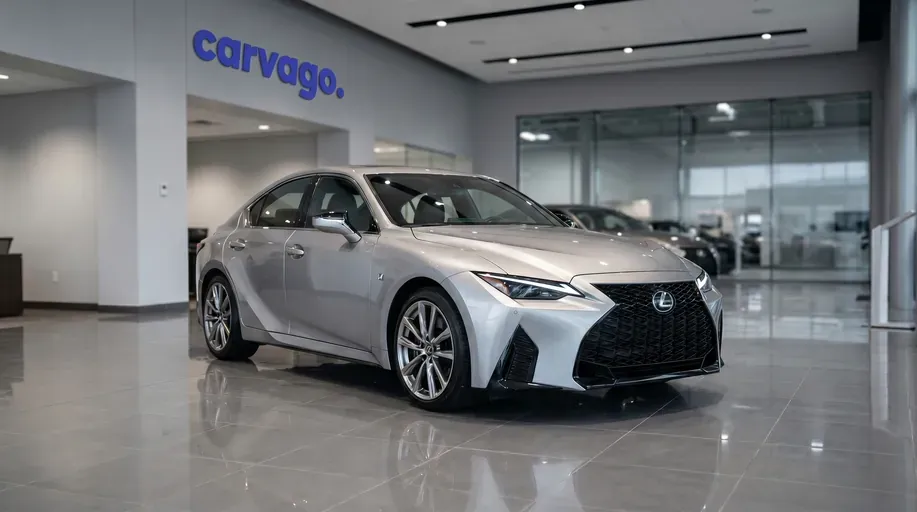
Review Lexus IS: What do owners and experts really say?

Lexus IS (2013-2020) review: real owner experience, hybrid running costs, common issues and used prices — everything you need before buying.

October 24, 2026

Lexus IS

Verdict at a Glance

  • Who it suits: Commuters seeking a dependable, quiet saloon with low-stress hybrid running and solid cabin comfort.
  • Recommended engine: The hybrid IS 300h for city and mixed use, or the turbocharged IS 200t for regular motorway cruising.
  • What to avoid: Cars without documented recall repairs for the fuel vent tube or fuel pump — check by VIN.

Introduction

The third-generation Lexus IS arrived as the Lexus challenger in the competitive compact executive saloon segment, conceived as an alternative to established German rivals. Sold exclusively as a four-door saloon, first customer deliveries across Europe began in July 2013 with a choice of naturally aspirated petrol and full-hybrid powertrains. A turbocharged petrol variant joined the range when order books opened in September 2015, replacing the initial V6 engine.

Following its European premiere in September 2016, a mid-cycle facelift reached European showrooms in January 2017. The update introduced revised front and rear styling, subtle chassis adjustments, reworked cabin controls, and expanded driver-assistance systems.

Official European imports ceased in October 2020, with sales continuing from remaining dealer stock into early 2021. Because subsequent global updates were not homologated for Europe, this generation stands as the final version of the saloon delivered new to European customers. On the used market, it attracts buyers looking for sharp design and dependable mechanicals, particularly those interested in petrol refinement or the low-stress running of a self-charging hybrid.

Owner Experiences: Common Faults and Recalls

On the European used market, the third-generation Lexus IS carries an established reputation for mechanical durability, though real-world ownership highlights a few specific chassis quirks and verified safety campaigns. Unlike some premium rivals, major powertrain failures are largely absent across both the petrol versions and the widespread hybrid. Instead, documented issues centre primarily on suspension geometry behaviour, braking components, and auxiliary electrical health.

A widely documented issue across all third-generation models involves premature front inner tyre wear. Both professional tests and owners report that the inside edges of both front tyres can wear down to the cords in as little as 15,000 to 25,000 km, even when static wheel alignment checks fall entirely within factory specifications. This occurs because the compliant factory rubber bushings in the rearward lower control arms deflect under dynamic cornering and braking forces, inducing toe-out while driving. In documented owner cases, replacing these worn items with stiffer factory rubber bushings from platform relatives or aftermarket polyurethane units curbs dynamic deflection and helps resolve uneven wear, whereas fitting standard factory replacement bushings tends to let the issue recur.

Another frequent finding relates to the rear brakes, particularly on the hybrid variant. Because the regenerative braking system handles routine deceleration, the rear hydraulic friction brakes are underutilised. In wet or salted European winter conditions, owners report that the floating caliper slider pins corrode and seize within their brackets. This leads to brake drag, uneven pad wear, and grooved rear discs. Routine inspection, cleaning, and re-greasing of the slide pins during annual maintenance helps prevent binding, whereas neglected assemblies often demand complete caliper replacement.

On the electrical side, hybrid models occasionally suffer from 12-volt auxiliary battery discharge when parked for consecutive weeks. The boot-mounted auxiliary battery powers the control modules required to boot the hybrid inverter into ready status. Quiescent drain from the keyless entry and alarm systems, combined with charging logic that limits alternator output on short urban trips, can leave an aging auxiliary battery depleted. When this occurs, the car cannot start despite a charged high-voltage traction pack. Additionally, owners report occasional multimedia system restarts on early production years.

Two significant European safety recalls were issued for the third-generation car:

Verified European Safety Recalls
Defect / Affected ComponentAffected Production WindowEuropean & Worldwide ScopeRemedial Action
Fuel tank ventilation tube crack (risk of fuel leak and fire)18 October 2011 to 22 August 2018 (multi-model range; hybrid from 20 May 2013 to 16 April 2018, petrol from 24 October 2012 to 11 April 2018)Worldwide (~250,000 vehicles); EU Safety Gate alert confirmed in Germany, France, and UKAuthorised workshops replace the fuel tank ventilation tube assembly with an improved component free of charge.
Low-pressure fuel pump impeller deformation (risk of engine stall)2 September 2013 to 11 May 2019 (petrol variants only; hybrid excluded from this European campaign)Worldwide (>5.8 million Toyota/Lexus vehicles); EU Safety Gate alertReplacement of the in-tank low-pressure fuel pump assembly with an upgraded design.

🔍 What to check before buying

  • Inspect the innermost shoulder of both front tyres with the steering wheel turned to full lock, checking for premature inner-edge cord wear caused by control arm bushing deflection.
  • Verify rear brake disc condition and caliper free movement, ensuring pads are not dragging or unevenly worn from seized slide pins.
  • Test the health and voltage of the boot-mounted 12V auxiliary battery on hybrid models, especially on cars with intermittent or low annual mileage.
  • Inspect the active pedestrian-protection bonnet for dashboard warnings or misaligned shut lines, as minor bumper taps can trigger costly pyrotechnic actuator deployment.
  • Check the car's vehicle identification number (VIN) with an authorised dealer to confirm that open recall work—specifically the fuel vent tube and the petrol fuel pump—was officially completed.

Engines: Which One to Choose

For the European market, Lexus offered the third-generation IS exclusively with petrol and petrol-electric hybrid powertrains driving the rear wheels through automatic transmissions. Manual gearboxes and diesel variants were not produced for this generation.

EngineFuelPowerGearboxModel Years
IS 250Petrol153 kW (208 hp)6-speed automatic2013–2015
IS 200tPetrol180 kW (245 hp)8-speed automatic2015–2018 (Europe)
IS 300hPetrol hybrid164 kW (223 hp)E-CVT automatic2013–2020

Urban driving and short trips

For city commuting and regular short journeys, the hybrid IS 300h is the most practical choice as a used buy. Its electric motor handles low-speed stop-start traffic, which limits engine idling and reduces cold-start wear typical of pure combustion engines during short hops. In mixed daily driving, the automatic transition between electric drive and the petrol engine suits urban congestion, where the pure petrol alternatives suffer from noticeably higher fuel usage.

Motorway journeys and mixed use

Drivers covering regular long-distance motorway routes will find distinct trade-offs across the range. The turbocharged petrol IS 200t provides the strongest mid-range overtaking acceleration at high cruising speeds without the high-revving noise characteristic of the hybrid under full throttle, though its eight-speed automatic can hesitate when downshifting.

The naturally aspirated petrol V6 in the IS 250 delivers linear acceleration, yet its peak pulling force arrives high in the rev range, requiring the engine to be worked harder to maintain rapid highway pace.

Towing duties

Towing capability is heavily dependent on the chosen powertrain. The turbocharged IS 200t and the petrol V6 IS 250 offer the highest factory towing limits in the lineup, making them the only practical options for pulling a braked trailer. In contrast, the hybrid IS 300h has a strictly limited towing capacity on standard specifications, while entry-level versions are not certified to tow a trailer at all.

Reliability note

Powertrains across the range are mechanically durable, with systemic issues largely confined to auxiliary components detailed in the owner experiences section.

Space & Practicality

Dimension / ParameterPre-facelift (2013–2016)Facelift (2017–2020)
Length4,665 mm4,680 mm
Width (mirrors folded / unfolded)1,810 / 2,027 mm1,810 / 2,027 mm
Height1,430 mm1,430 mm
Wheelbase2,800 mm2,800 mm
Boot capacity – petrol (seats upright)480 l480 l
Boot capacity – hybrid (seats upright)450 l450 l
Boot capacity (seats folded)UnverifiedUnverified

Maximum cargo capacity with the rear seats folded was not published in official European manufacturer specifications.

Inside the Lexus IS saloon, passenger accommodation reflects classic rear-wheel-drive saloon packaging. The outer rear seats offer supportive sculpting and decent knee clearance for average-height adults, but taller occupants will find headroom constrained by the sloping roofline. A prominent transmission tunnel also significantly restricts foot space for a middle passenger, making the rear bench best suited to two occupants.

Everyday practicality relies on a conventional saloon boot aperture, which limits the loading of bulky or tall items despite a reasonably deep floor. An asymmetrical split-folding rear bench extends load length for carrying longer objects; while standard across the range from 2017, it was omitted on entry-level pre-facelift versions. In hybrid versions, the high-voltage battery pack sits beneath the luggage deck board, slightly reducing overall compartment depth compared to petrol-only models.

What the Tests Say

Professional road tests describe the Lexus IS saloon as a quiet, composed cruiser with a split personality between town and motorway. On early pre-facelift examples fitted with firmer sports suspension and larger wheels, testers observed a brittle low-speed ride over urban bumps and potholes. Once up to cruising speeds, however, the suspension settles into an absorbent, stable stride accompanied by minimal wind and road noise. Steering is accurate and weighted linearly, delivering tidy turn-in and predictable roadholding, although reviewers consistently noted that it provides less road feedback than contemporary rear-wheel-drive rivals.

The cabin earns widespread praise for solid construction, tight panel fit, and supportive front seats. However, testers universally criticised the infotainment controls. The console-mounted controller acts like an erratic computer mouse, demanding sustained driver concentration and proving clumsy to operate on the move. Some testers also disliked the cluttered array of dashboard buttons and the foot-operated parking brake.

Facelift refinements

Revisions introduced for 2017 addressed several chassis complaints. Retuned dampers and a revised front anti-roll bar noticeably improved ride compliance over patched roads without compromising stability. While the infotainment display grew in size, the clumsy controller interface remained. Testers universally agree on the hybrid drivetrain’s serene refinement in low-speed city driving, but also agree on its primary drawback: demanding full acceleration causes the engine to rev loudly and drone until vehicle pace catches up.

Prices and Market Offer

All the charts in this section are drawn from Carvago's listings of the whole Lexus IS model family across all generations represented in the data, rather than being filtered exclusively to the reviewed third generation. Because no verified generation-specific price data or model-year asking prices are recorded in the current dataset, these figures do not establish a separate price level for the third generation. Asking prices on the broader market instead reflect individual vehicle condition, documented maintenance history, and powertrain specification across the model range.

From April 2026 to September 2026, the count of advertised Lexus IS cars shifted from 9 listings in April to a low of 6 in June 2026, as tracked in the chart below.

Lexus IS - availability over time

Active listings over time

MonthLexus IS
2026-049
2026-058
2026-066
2026-0710
2026-0810
2026-0910

Source Carvago

Choice remains limited for prospective buyers, though availability has settled at 10 listings in each of the last three months.

Between April and June 2026, the volume of advertised petrol cars moved from 9 listings down to 6. The chart below illustrates how active listings split across each fuel type over the six-month period.

Lexus IS - supply by fuel over time

Supply composition by fuel type

MonthPetrol
2026-049
2026-058
2026-066
2026-0710
2026-0810
2026-0910

Source Carvago

In September 2026, all 10 active listings were petrol models, with 0 diesel, hybrid, or electric options recorded. For prospective buyers, the realistic choice on the market is currently limited to petrol alone.

The chart tracks the average asking price for the Lexus IS from April 2026 to September 2026, beginning at €11,300 and climbing to €12,000 the following month.

Lexus IS - price trend over time

Average price development over time

MonthLexus IS
2026-0411 300
2026-0512 000
2026-0622 200
2026-0718 500
2026-0818 000
2026-0916 900

Source Carvago

Values peaked at €22,200 in June 2026 before decreasing across each subsequent month to end at €16,900 in September 2026.

Pros & Cons

Lexus IS

Pros

Proven mechanical durability across petrol and hybrid powertrains

Quiet and absorbent ride quality at motorway cruising speeds

Refined, low-stress operation of the hybrid system in urban traffic

Cons

Fiddly and distracting console controller for the infotainment system

Dynamic front bushing deflection causing premature inner tyre wear

Constrained rear headroom and a bulky transmission tunnel limiting cabin space

Frequently asked questions

Yes, powertrains across the third-generation Lexus IS are durable and largely free from major breakdowns. However, chassis wear items such as front lower control arm bushings demand regular inspection.

The hybrid IS 300h is the most sensible option for urban driving and daily commutes thanks to low running costs and minimal wear in stop-start traffic. Motorway drivers may prefer the turbocharged IS 200t for stronger overtaking punch, though its automatic gearbox can hesitate on downshifts.

Yes, models produced from 2017 onward offer noticeably better low-speed ride comfort thanks to retuned suspension. However, the update retained the clumsy console-mounted infotainment controller.

Inspect the inside edges of the front tyres for accelerated wear caused by bushing deflection, and verify rear brake condition. Buyers should also check the car's VIN with an authorised dealer to confirm all safety recall work was completed.

Sources: newsroom.lexus.eu, media.lexus.co.uk, adac.de, ec.europa.eu, autocar.co.uk

This article was prepared using artificial intelligence tools. The section guarantor is Petr Dušek.

Related articles

Car battle

Mazda 6 vs. Peugeot 508: Complete comparison 2026

Detailed comparison of the Mazda 6 vs. the Peugeot 508. We compared real-world driving characteristics, engines, and equipment. Read the verdict that will make choosing a used car easier.

May 2, 2026

Car battle

Mercedes-Benz C-Class vs. Volvo S60: Complete comparison 2026

Used car comparison: Mercedes-Benz C-Class vs. Volvo S60. Read a detailed comparison of engines, driving characteristics, and a clear verdict for the right choice.

May 7, 2026

Car battle

BMW 3 Series vs. Jaguar XE: Complete comparison 2026

Detailed comparison of the BMW 3 Series vs. Jaguar XE. We compared real-world experiences, used car reliability, and driving characteristics to make your choice easier.

Oct 22, 2026

We accept online card payments as well as wire transfers.

visa payment provider logovisa-electron payment provider logomastercard payment provider logomaestro payment provider logodiners-club payment provider logodiscover payment provider logo